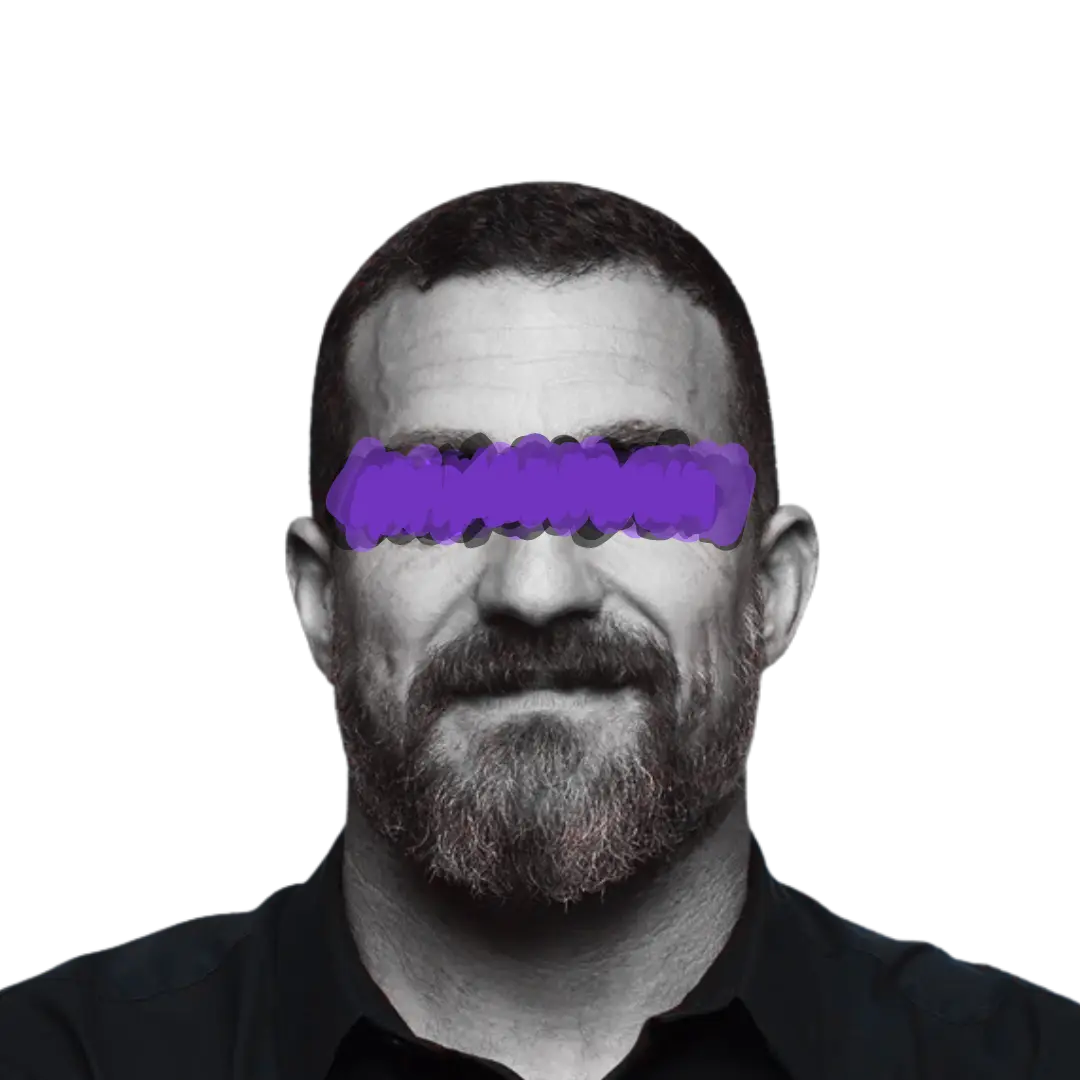
“I was probably depressed, pretty heartbroken over my home life, which at that time was empty, but I had the benefit of working with this incredibly talented therapist who started teaching me about introspection and self-care."
You've probably listened to Andrew Huberman explain the science of dopamine, sunlight, or sleep protocols. Maybe you've adopted his morning routine or tried his breathing techniques. But beneath the lab coat and Stanford credentials lies a story most fans don't know: a story of a rebellious skateboarder who nearly ended up dead or in jail before becoming neuroscience's most trusted voice.
What drives a man to obsessively collect knowledge, structure every moment of his day, and translate complex science into protocols millions can use? As Huberman himself puts it: “Effort is the currency of brain change." The answer reveals something profound about how certain minds are wired to understand the world.
TL;DR: Why Andrew Huberman is an Enneagram Type 5
- The Investigator Pattern: From childhood weekends with encyclopedias to his current three-hour podcast deep dives, Huberman exemplifies the Type 5's core drive to understand and collect knowledge.
- Detachment as Survival: After his parents' divorce at 12 and subsequent emotional turmoil, he retreated into skateboarding and later science, withdrawing from chaos to find stability through knowledge.
- Systematic Mastery: His famous routines and protocols represent the need for competence and self-sufficiency. Every aspect of life becomes a system to be mapped, measured, and refined.
- Stress Patterns: The 2024 scandal revealed disintegration: scattered attention across multiple relationships, seeking stimulation over depth, and compartmentalizing different areas of life.
- The Knowledge Empire: Building a multi-million dollar business around explaining complex science reflects the deepest desire: to be valued for what you know and understand.
What is Andrew Huberman’s Personality Type?
Andrew Huberman is an Enneagram Type 5
A kid develops a grunting tic he can only suppress two ways: hitting his head during sports, or learning something new and talking about it. Decades later, that same kid runs one of the most popular science podcasts on earth, spending three hours at a stretch explaining neurobiology to millions. The tic didn’t go away. It became a career.
That’s Huberman’s Type 5 in a sentence. The Investigator doesn’t just want to learn — they need to. Knowledge isn’t a hobby; it’s how they regulate their nervous system and feel safe in the world. When Huberman’s childhood fell apart (divorce, emotional chaos, a home that went “empty”), he didn’t act out randomly. He withdrew into encyclopedias, then skateboarding, then science. Each was a system he could master when the people around him were unpredictable.
His protocols, his three-hour deep dives, his insistence on citing primary research — none of it is performance. It’s the architecture of a mind that learned early: if you understand enough, you can survive anything.
Andrew Huberman’s Formative Years: When Knowledge Became Survival
Andrew Huberman was born in 1975 at Stanford Hospital in Palo Alto, California. His father, Bernardo Huberman, was an Argentine physicist who worked at Xerox PARC and later became a consulting professor at Stanford. His mother was a children’s book author.
Growing up with a brilliant scientist father created both opportunity and pressure. Bernardo Huberman predicted the existence of phase transitions in large-scale distributed systems and authored books on the ecology of computation. Young Andrew was surrounded by discussions of science from an early age, but perhaps also by an implicit standard of intellectual achievement against which to measure himself.
By third grade, he was spending weekends with encyclopedias, independently researching topics (biology, medieval weapons) and creating detailed reports with pictures and bullet points. But he wasn’t just bookish. He developed what he describes as a “grunting tic" that he discovered two ways to control: hitting his head while playing sports, or learning something new and talking about it.
His nickname was “Froggy" after the raspy-voiced Little Rascals character. In class, he would talk to kids around him in his “deep man’s voice," distracting everyone. The solution his teachers found? Let him lecture the entire class. This early discovery, that knowledge and communication could regulate his nervous system, would shape his entire career.
The Divorce That Changed Everything
When Huberman was around 12, his parents divorced. His father moved to Denmark. His older sister left for college around the same time, leaving Andrew alone with his mother.
“My mom had a really hard time dealing with that separation,” Huberman has said. “She was very family oriented and it was just me and her at home.” He describes her as “a tough lady, protective” — but in his dozens of long-form interviews, she rarely appears beyond that. His father, the physicist, looms large in the narrative. His mother, the children’s book author from New Jersey, remains a background figure. That asymmetry tells its own story about where a young Type 5’s attention goes: toward the intellectual model, away from the emotional caretaker.
He disengaged from traditional academics and found a new world: skateboarding. Unlike soccer or other organized sports, “parents weren’t involved,” he says. “You didn’t need a mom or a dad to go to the game.”
He latched onto the EMB crowd, the legendary Embarcadero skaters of San Francisco — the epicenter of street skating in the late ‘80s and early ‘90s. “We were all pretty feral teenagers,” he recalls. “That became my first nonbiological family.”
He wasn’t particularly good. He usually finished last in contests and earned only modest money from skating between ages 14 and 16. Steve Ruge, a team manager at Thunder/Spitfire, told him bluntly: “You’re never going to be one of the big guys.” But skating gave him something else. Jim Thiebaud, co-founder of Real Skateboards, once rolled up to 14-year-old Andrew at the Embarcadero, sat down, handed him a cup of coffee, and gave him two books: Loose Change and Do the Distance. “I still have Loose Change,” Huberman says.
He was “equal parts delinquent and industrious” — forging a work permit at 13 to work at local shops, while also successfully lobbying the Palo Alto City Council to build Greer Skatepark, which opened in January 1991 when he was 15. A third of his childhood friends from this era are “dead or in jail.” Another third went on to start companies, become athletes, academics, and scientists.
The Detention Center Turning Point
By 10th grade, Huberman was skipping school so often he was sent to a detention center for at-risk youths. It could have been the end of his story. Instead, it was the beginning.
At the center, he was required to attend therapy, and for the first time, encountered someone who genuinely listened. The therapist emphasized a message that would become foundational: “No one was going to look after him—he had to do so himself."
This validation of self-reliance, paired with tools for introspection, catalyzed his transformation.
The Most Revealing Habit Nobody Talks About
Here is arguably the most interesting fact about Andrew Huberman: he has done therapy twice a week since he was a teenager. Over 30 years. With the same therapist.
"I've done therapy twice a week since I was a kid," he told Lex Fridman. "I had to as a condition of being let back in school." But the condition became a commitment. When he was a broke postdoctoral researcher at Stanford, he took an extra job writing a music column for Thrasher Magazine — not for career advancement, but to afford his sessions. The therapist's office was conveniently located "within a half mile of my favorite skateboard spot."
He compares it to physical training: "Therapy is hard work, especially if you're trying to gain real insights. It's like going to the gym and doing an effective workout." And he's specific about what he wants from it — not comfort, but confrontation: "Someone who has rapport with me" but not "someone who's going to make it easy... then that means they're not talking about the difficult things."
This is the tension that makes Huberman's Type 5 psychology fascinating. His public empire is built on neuroscience protocols — dopamine optimization, cold exposure, NSDR, measurable biological interventions. But the thing he has done longest and most consistently is old-fashioned talk therapy. Twice a week. For three decades. With the same person. The public persona says "here's the protocol." The private life says "I sit with another human and talk about my feelings, and I have done so since I was a teenager."
Andrew Huberman’s Rise: From Feral Teenager to Stanford Professor
The July 4th Epiphany
On July 4, 1994, 18-year-old Huberman arrived at a friend’s barbecue to find four young men burglarizing it. A fight ensued. Afterward, he took stock of his life.
“I remember thinking, I’m officially a loser,” he says. He worried he would end up dead or in jail, as had already happened to a number of his friends. He wrote a letter to his parents — one he still has: “Whatever happened in our family, it’s not your fault, and it’s not my fault. I’m gonna get my life together.” Then he moved home and enrolled at Foothill College.
The Academic Climb
After attending Foothill College, Huberman returned to UC Santa Barbara as a straight-A student passionate about biopsychology. The intensity he’d once channeled into skating now drove him through a psychology degree at UCSB, a master’s at Berkeley, and a Ph.D. in neuroscience at UC Davis, where he earned the Allan G. Marr Prize for Best Dissertation.
The question lingers: Was he driven purely by curiosity, or also by something to prove? A son of a celebrated physicist, perhaps needing to establish his own intellectual territory. Either way, by 2016, he was an associate professor of neurobiology at Stanford, right back where he was born.
Throughout this climb, he maintained his skateboarding roots, even congregating with other skaters at Stanford’s Quad during his postdoc years.
Andrew Huberman’s Personality in Action
The Protocol Obsession
Watch any Huberman Lab episode, and you’ll witness systematic thinking in action. His morning routine includes sunlight exposure within the first hour, caffeine delay of 90-120 minutes, cold exposure, and 90-minute focused work blocks, each element tied to specific neuroscience research.
But here’s what most fans wonder: Does he actually follow his own protocols?
Huberman is surprisingly candid about this. He’s been doing variations of his fitness routine for over 20 years, but he describes his protocols as “more of a rough guide than a strict program," recommending that people swap days, combine workouts, and modify as needed. He does a 10-30 minute Yoga Nidra session when he wakes up, not feeling rested, rather than powering through.
This isn’t wellness influencer performance. It’s a genuine need to systematize variables, while acknowledging that rigidity itself can become counterproductive.
The Research-First Approach
Huberman’s lab has published over 75 peer-reviewed articles in journals like Nature, Science, Cell, and Neuron, focusing on visual system development and neural plasticity. This research isn’t separate from his podcasting; it’s the foundation that gives him credibility.
Neuroscientist David Berson, who has known him since his postdoc days, notes that Huberman’s research “is respected among neuroscientists" and calls his podcast “a fabulous service for the world" that helps “open the doors" to science. Though Berson also noted that the research community doesn’t always approve of Huberman’s monetization through sponsors and partnerships, a tension Huberman navigates constantly.
Why The Podcast Works
The X-factor isn’t the protocols. It’s the person delivering them. As Air Mail described him: “this big, hulking, power-lifting, former-skateboarder Stanford research scientist in his late 40s who still talks with this irrepressible, dorky teenageryness that’s contagious.”
That childhood tic — controlled only by learning something new and talking about it? It wasn’t just managed. It was transmuted into his life’s work.
Costello: The Dog Who Changed Him
One rarely discussed aspect of Huberman’s personality is the emotional impact of his bulldog mastiff, Costello. The “laziest creature" Huberman ever knew, Costello was a regular presence on early podcast recordings, often heard snoring in the background.
When Costello passed away, Huberman publicly mourned the loss. Lex Fridman comforted him during this time, and Huberman later thanked him: “It has brought (and continues to bring) me comfort."
For someone whose public persona is built on mechanisms and protocols, this grief became a gateway. Huberman has acknowledged that Costello’s death influenced his “views on relationships and even his desire to become a father," a surprising admission about the emotional territory that systematic thinking can’t map.
What the Empire Reveals About the Psychology
Huberman Lab launched in 2021 and within two years was top 10 globally, with over 7 million YouTube subscribers. His early Joe Rogan appearances — particularly a 2021 sleep episode that became one of the most-shared health conversations on the internet — pulled him from academia into mass culture.
For a Type 5, the impulse to organize and disseminate knowledge is the same whether the audience is twelve graduate students or twelve million listeners. The scale changed. The drive didn’t.
What’s telling is the structure he built around it. No network. No studio. No publishing house. He controls the entire information architecture — a self-sufficient system, which is exactly what a Type 5 craves. And underneath the podcast celebrity, his peer-reviewed research in vision science continues independently. Those credentials aren’t decoration. They’re the foundation his identity rests on — the assurance that the knowledge is real, not performed.
The Psychedelics Question
Huberman has dedicated multiple episodes to psilocybin, MDMA, and microdosing — interviewing researchers like Dr. Robin Carhart-Harris, who noted on the show that “the evidence doesn’t currently support any benefits of microdosing, just macrodosing under clinical supervision.” For someone obsessed with controlling brain function, psychedelics represent the opposite of everything he does: they dissolve boundaries, shatter routines, and produce insights that can’t be predicted or replicated.
How does a protocol-builder engage with substances that dissolve control? The only way he can — through rigorous research and expert interviews, making the unpredictable as predictable as possible. It’s the Type 5 move: if you can’t control the experience, at least systematize the knowledge around it.
Controversies and Type 5 Disintegration
The 2024 Exposé
In March 2024, New York Magazine published a detailed exposé alleging that Huberman had secretly dated five women simultaneously, each believing they were in an exclusive relationship.
The article portrayed a pattern of compartmentalization, manipulation, and behavior that stood in stark contrast to his wellness persona. One woman, referred to as “Sarah," claimed to have contracted HPV as a result of Huberman’s infidelity. The women eventually discovered each other’s existence and confronted Huberman together.
A spokesperson for Huberman denied many claims but did not contest that he had conducted multiple concurrent relationships.
The “Non-Apology Tour”
For over a month after the article dropped, Huberman remained silent — the Type 5's first instinct under pressure. Withdraw. Process privately. Control the information until you're ready. When he finally addressed the allegations, it was on Jocko Willink's podcast in a carefully controlled environment.
In approximately 15 minutes of a three-plus-hour conversation, Huberman offered what critics called a “non-apology." As writer Derek Beres observed: “Men in the bro cave don’t apologize."
Key moments from Huberman’s response:
- “I’ve had challenges maintaining one girlfriend" (intellectual acknowledgment without emotional vulnerability)
- “Whatever they throw at me, the response internally for me is nothing like the response when I see friends getting attacked" (deflecting to loyalty rather than accountability)
- “The punishing features of being public-facing suck, but they are nothing compared to the humbleness and privilege of being able to share what you want with the world" (reframing as sacrifice for mission)
Critics noted he mentioned cheating once, immediately qualifying it by stating he too had been cheated on, a move described as “introduce the demon, deflect."
Some fans were disappointed not by the behavior itself, but by his hiring a PR firm to manage the response. These listeners had expected the “strong masculinity and problem-solving" Huberman promotes to extend to his personal crises.
The Pattern Under Stress
What does this reveal psychologically?
When stressed, Type 5s disintegrate toward Type 7: becoming scattered, seeking stimulation over depth, and losing the groundedness that makes them effective. The compartmentalization of multiple relationships reflects the tendency to keep different areas of life separated, taken to an unhealthy extreme.
The month of silence after the scandal is also characteristic. Withdraw when overwhelmed. Process privately. Then respond in a controlled environment where information flow can be managed.
The Credibility Questions
Beyond the personal scandal, Huberman faces sustained professional criticism, particularly around his promotion of AG1 (Athletic Greens), for which he’s reportedly paid millions as brand ambassador.
A company spokesperson noted he drank AG1 for a decade before the sponsorship began, suggesting genuine belief. But scientists aren’t convinced. Jonathan Jarry of McGill University characterizes AG1 as “backed by very little scientific support," comparing it to Flintstones vitamins. ConsumerLab found it contains lead in amounts that children and pregnant women should avoid. Proprietary blends mean consumers don’t know exact ingredient amounts.
The deeper question: is Huberman compromised by money, or does he genuinely believe in products that lack rigorous evidence? The answer is probably both, which makes it complicated.
Critics have also targeted his scientific methods:
- Andrea Love characterized some content as pseudoscience that “appears scientific but lacks evidence."
- Joseph Zundell criticized extrapolating animal research to humans without justification.
- New York Magazine reported his Stanford lab “barely exists," with only a single postdoctoral researcher.
- Cannabis experts slammed his marijuana claims as “word salad," technical-sounding language obscuring inaccurate information.
These criticisms point to a shadow: becoming so attached to being the expert that one stretches beyond actual expertise. When knowledge equals identity, admitting uncertainty feels like admitting incompetence.
Andrew Huberman’s Legacy and Current Work
Despite the controversies, Huberman continues producing content and maintaining influence. His response to the scandal (silence and continued work) reflects both strengths and limitations of his psychological makeup.
He remains a tenured Stanford professor, though questions about his lab’s activity persist. The podcast continues to attract millions, suggesting his audience values the information regardless of personal revelations.
The Father-Son Reconciliation
One of the most psychologically significant recent developments: Huberman featured his father on the podcast.
Bernardo Huberman, now Vice President of Next Gen Systems at Cable Labs, joined his son for a conversation covering relativity theory, chaos theory, quantum computing, and, notably, “cultural differences and their familial relationship."
For someone whose childhood was marked by his parents’ divorce and his father’s move to Denmark, this public conversation suggests integration. The son who once retreated from emotional chaos into encyclopedias now sits with his physicist father, discussing both science and family. The observer becomes participant.
Recent Personal Life
Huberman’s current girlfriend, Harper Carroll, has a Stanford background in computer science and AI; they likely met through the university. The relationship became public around April 2024, after the scandal. He does not have children, though his acknowledgment that Costello’s death influenced his desire for fatherhood suggests this may be evolving.
In December 2025, Huberman appeared on Tyler Ramsey’s “Punk Rock Sober" podcast for an interview with Tyler’s nine-year-old son, River. The conversation covered fear, gratitude, addiction, and “what it means to live a meaningful life," suggesting growth beyond pure intellectualism.
The Lasting Question
Can someone offer valuable guidance on health and well-being while struggling with their own relational health? Thirty years of twice-weekly therapy suggests genuine commitment to growth. The 2024 scandal suggests the gap between understanding and integration remains wide.
Investigators often understand things intellectually long before integrating them emotionally. The question is whether the integration eventually catches up.
Disclaimer: This analysis of Andrew Huberman’s Enneagram type is speculative, based on publicly available information, and may not reflect the actual personality type of Andrew Huberman.
What would you add?