The Enneagram, decoded.
9 emotional types. Each one leads with a different read of the same situation. Here's what each one sees first — and what every type misses.
49 reads. Decoded the way a real psychologist would — centers, wings, stress lines, growth lines, and the moments those patterns show up.

Featured.
Most recently updated. Worth your full attention.

Enneagram Harmonic Approaches: How Each Type Handles Conflict
Every Enneagram type defaults to one of three conflict styles: react, reframe, or detach. Decode the Harmonic Approaches and you'll predict friction before it happens.

Attachment, Frustration, Rejection: Object Relations by Type
Your earliest relationships shape every later one. The Enneagram sorts the 9 types into 3 patterns — Attachment, Frustration, Rejection. Find yours and loosen its grip.
Recently updated.
Fresh insights, latest revisions.

Enneagram Social Styles: The Hornevian Triads, Decoded
Three social styles. Three core wants. Nine types. Read the field guide that turns Karen Horney's framework into a tool you can actually use.

Best Free Enneagram Test (2025): Which One Actually Works?
Most Enneagram tests are garbage—too short, outdated, or designed to sell you something. Here's an honest comparison of the best free and paid tests, ranked by accuracy and value.

Enneagram Self-Development: What I Got Wrong as a Type 8
I overtrained until my body broke. Joined the Marines because 'pain is weakness leaving the body' felt like home. Personality isn't to overcome — it's to decode.

Enneagram Team Dynamics: Which Pairs Click, Which Implode
Some Enneagram pairs amplify each other. Others quietly destroy projects. Here are the high-synergy combinations to build teams around — and the volatile pairings that need conscious management before they blow up.
By topic.
Eight angles on the Enneagram. Pick your entry point.
The Nine Types.
One read per type. Nine reads per situation.
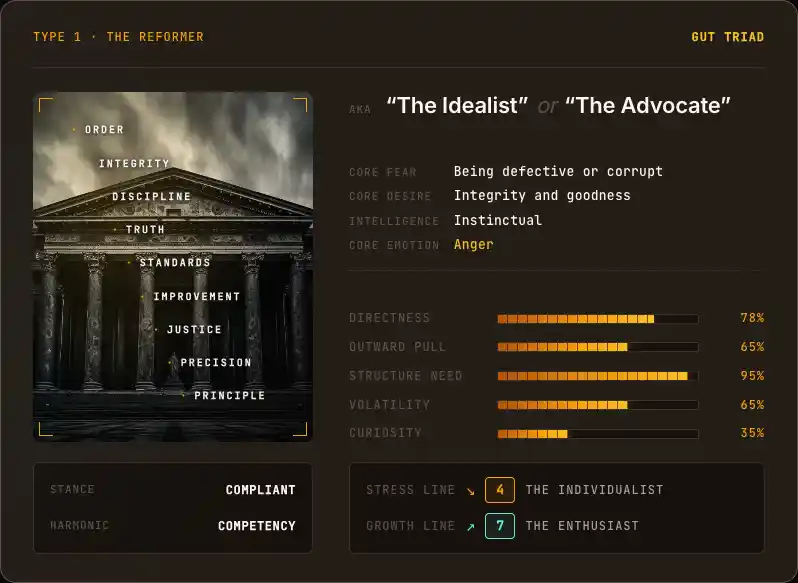
Enneagram Type 1: Perfectionist - The Inner Courtroom
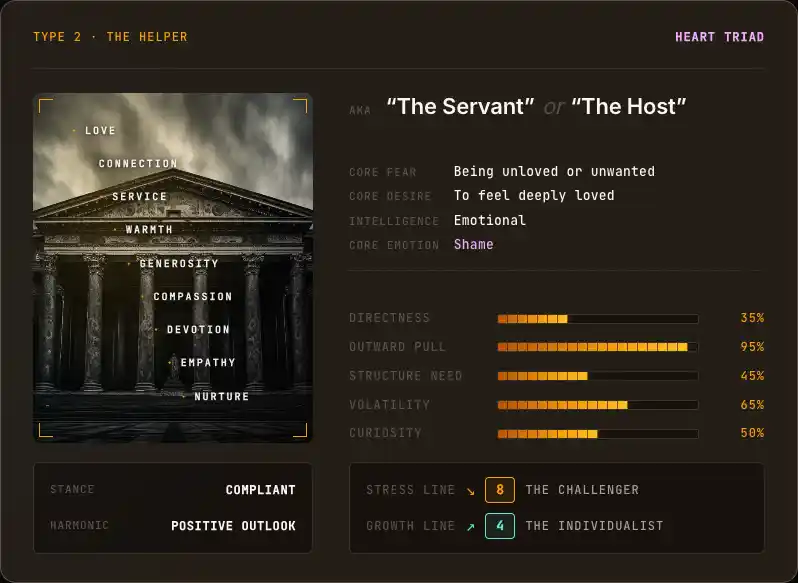
Enneagram Type 2: Helper - The Hidden Cost of Giving
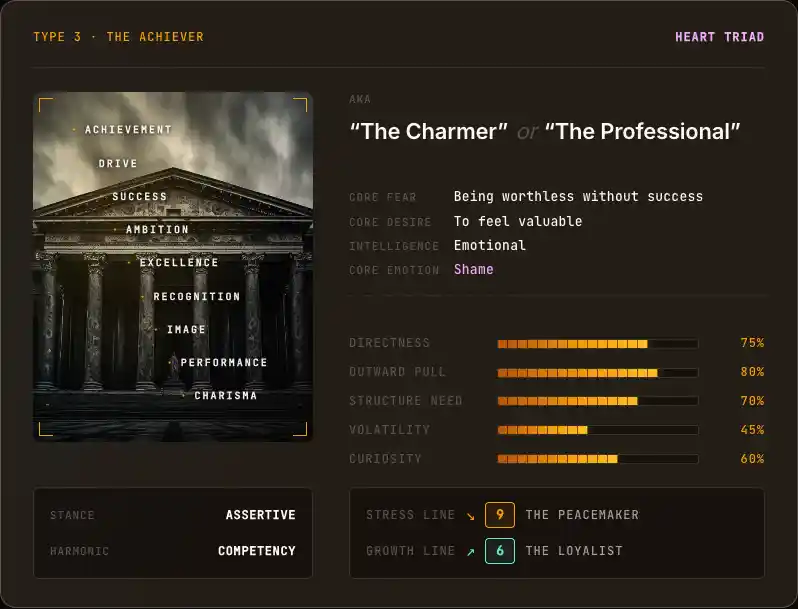
Enneagram Type 3: Achiever - Success Becomes Identity
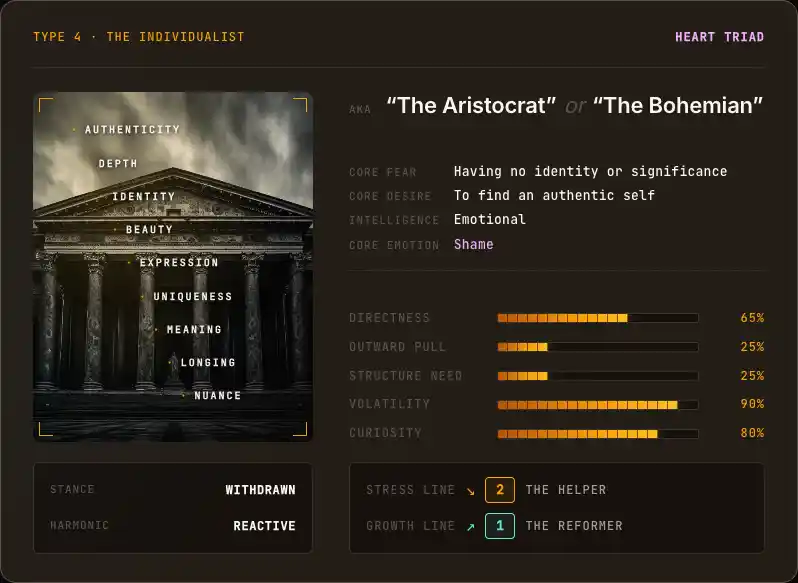
Enneagram Type 4: Individualist - The Missing Piece
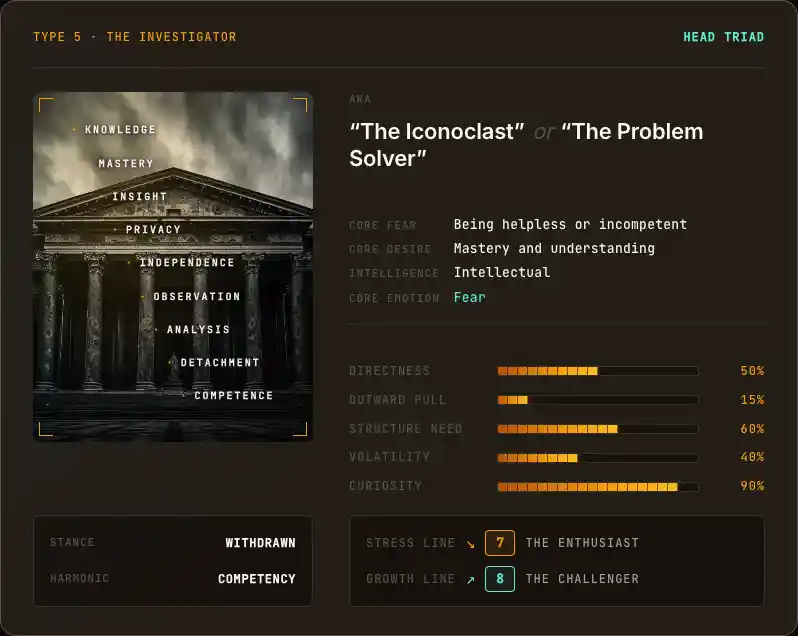
Enneagram Type 5: Observer - Inside the Fortress Mind
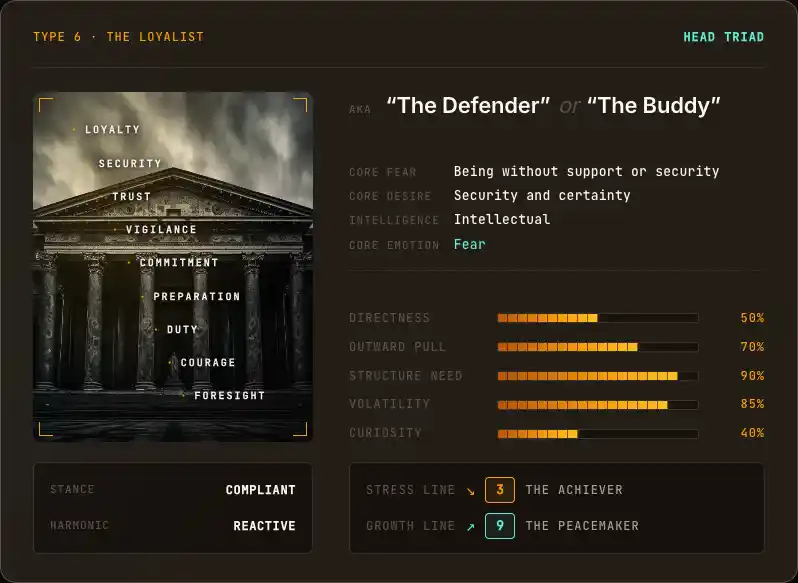
Enneagram Type 6: Loyalist - Search for Solid Ground
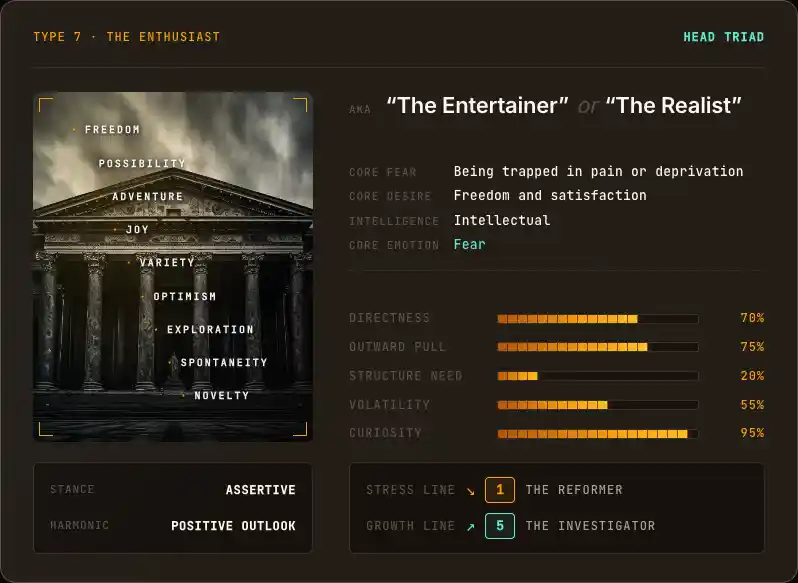
Enneagram Type 7: Enthusiast - The Possibility Engine
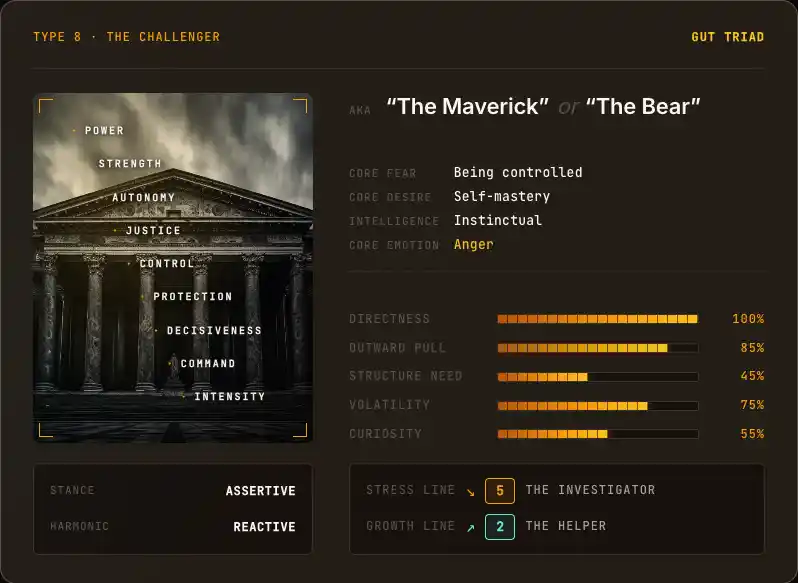
Enneagram Type 8: Challenger - Behind the Armor
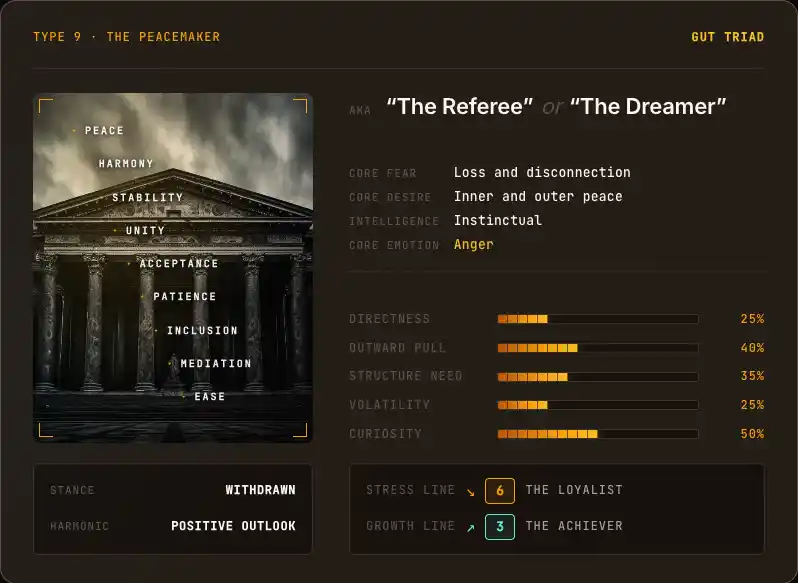
Enneagram Type 9: Peacemaker - Finding Your Voice
Foundations.
Core concepts behind the Enneagram framework.
Enneagram Harmonic Approaches: How Each Type Handles Conflict
Every Enneagram type defaults to one of three conflict styles: react, reframe, or detach. Decode the Harmonic Approaches and you'll predict friction before it happens.
Attachment, Frustration, Rejection: Object Relations by Type
Your earliest relationships shape every later one. The Enneagram sorts the 9 types into 3 patterns — Attachment, Frustration, Rejection. Find yours and loosen its grip.
Enneagram Social Styles: The Hornevian Triads, Decoded
Three social styles. Three core wants. Nine types. Read the field guide that turns Karen Horney's framework into a tool you can actually use.
Best Free Enneagram Test (2025): Which One Actually Works?
Most Enneagram tests are garbage—too short, outdated, or designed to sell you something. Here's an honest comparison of the best free and paid tests, ranked by accuracy and value.

Why You Don't Match Your Enneagram Description (It's Your Wing)
Confused why you don't fit your type perfectly? Your wing explains everything. Find out if you're 4w3 or 4w5, 6w5 or 6w7, and why it changes everything about your personality.

Enneagram Connecting Lines: The Hidden Dynamics of Growth and Stress Patterns
Discover how the Enneagram's connecting lines reveal your transformation during growth and stress phases - with real-world examples for all 9 types
Growth.
Move past your automatic patterns — with type-aware strategy.
Enneagram Self-Development: What I Got Wrong as a Type 8
I overtrained until my body broke. Joined the Marines because 'pain is weakness leaving the body' felt like home. Personality isn't to overcome — it's to decode.

Why Nobody Understands You (It's Your Enneagram Speaking)
Every misunderstanding is a translation problem. Decode the 9 hidden communication languages and finally understand why your message keeps getting lost.

Shadow Work by Enneagram Type: Your Dark Side Has a Pattern
Your shadow is shaped by your Enneagram type. Discover type-specific shadow patterns, triggers, and integration practices that actually work for your personality.

The Stress Paradox: Why Emotional Patterns Outlast Situations
Your stress triggers change. Your emotional reactions rarely do. Learn why your responses follow predictable patterns and how to break the cycle.

Your Type's Fatal Flaw (And Secret Superpower) Based on Enneagram
Every type has a fatal flaw that sabotages success and a hidden superpower others wish they had. Find out why Type 1s self-destruct through perfectionism, why Type 7s can't focus, and what your type's kryptonite really is.

The 90-Day Personality Maxing Blueprint
A 90-day system for maxing your personality — perspective-taking, the Enneagram, and protocols from Brené Brown, Andrew Huberman, and Carl Jung.
Relationships.
Why people react differently to the same situation.

Love Languages & Enneagram Types: The 45-Combination Compatibility Guide (2025)
Discover how your Enneagram type shapes your love language. Complete guide to 45 personality + love language combinations with relationship tips that actually work.

Enneagram Dating Guide for Men: Type-Specific Strategies That Actually Work
Discover how your Enneagram type shapes your dating style, blind spots, and path to authentic connection — with how to read her type, compatibility patterns, and what each of the 9 types does at every stage of dating.

Online Dating, Decoded: A Guide for Real Connection
Online dating is two completely different games for men and women. Here's what each side needs to know — including what she's actually thinking when she looks at your profile.

Enneagram Types in Relationships: How Each Type Loves (And Why It Goes Wrong)
How each Enneagram type behaves in relationships — love patterns, compatibility, conflict styles, and what to say to each type. The guide that actually helps your relationship.

How to Apologize by Enneagram Type: The Nine Scripts Each Type Skips
Each Enneagram type skips a different part of the apology. See which components your type swallows, the one-line fix, and a script you can actually say out loud.

Enneagram Types on a First Date: What to Expect
Discover what each Enneagram type thinks, feels, and values on a first date - plus red flags and green flags to watch for.
Mental Health.
Where psychology meets the Enneagram framework.

Enneagram and Addiction: Why Each Type Self-Medicates Differently
The Type 1 billing 80-hour weeks isn't dedicated. The Type 7 life of the party isn't fun. Each type runs from a different pain — and generic recovery misses most of them.

How Each Enneagram Type Survives Trauma
Type 8s fight. Type 7s flee. Type 9s freeze. Type 2s fawn. Your personality often formed around the wound — here is how each Enneagram type tends to survive trauma, where it lives in the body, and the healing approaches that fit your pattern.

Why You're Burning Out at Work (Your Enneagram Type Reveals It)
Type 1s burn out fixing broken systems. Type 2s burn out as everyone's unpaid therapist. Type 5s burn out in open offices. Each type's exact burnout formula.

Depression Patterns by Enneagram Type
How depression manifests differently across all 9 Enneagram types. Understand your unique patterns, triggers, and pathways to healing based on your personality type.

How Each Enneagram Type Resists Therapy
Your therapist can see your defense patterns playing out in real time. Here is how each Enneagram type gets stuck, resists, and accidentally sabotages their own healing.

How Your Enneagram Type Shapes Your Relationship with Medication
Explore how each Enneagram type tends to approach psychiatric medication — common fears, resistance patterns, and strategies for better conversations with your provider.
Career.
How each type leads, follows, and burns out at work.
Enneagram Team Dynamics: Which Pairs Click, Which Implode
Some Enneagram pairs amplify each other. Others quietly destroy projects. Here are the high-synergy combinations to build teams around — and the volatile pairings that need conscious management before they blow up.

The 9 Coworker Types: Each Enneagram as Boss, Peer, Report
Every team has nine ways of working — and nine ways of falling apart. Here's what each Enneagram type brings, what to never do with them, and the feedback that actually lands.

Why You Hate Your Job (It's Not the Boss, It's Your Enneagram Type)
Stuck in the wrong career? Your Enneagram type reveals why you're miserable at work and exactly what jobs will actually make you thrive. Find your perfect career match based on your core motivations, not just your skills.

Enneagram Leadership: Why Your Approach Keeps Backfiring
Each Enneagram type has a leadership superpower that becomes their fatal flaw when overused. Find your blind spot and the specific fix that works for your type.

Why Your Team Keeps Having the Same Ideas (Enneagram Fix)
Stop hiring people you click with. Build teams that actually think differently using the Enneagram triads.

Enneagram at Work: What Each Type Needs, Fears, Brings
The behaviors that frustrate you at work follow predictable patterns. Here are all 9 Enneagram types mapped to their workplace triggers, blind spots, and exactly what they need from a leader.
Real Life.
The same moment, decoded nine different ways.

How Type 8 Challengers Actually Succeed (It's Not What You Think)
Every famous Type 8 grinded. None of them broke through by grinding alone. The 6 patterns that actually produced their breakthroughs, from Bezos to MLK to Rihanna.

Enneagram and ADHD: Which Types Struggle Most (And Why)
Do you have ADHD or is it just your personality? Discover how ADHD affects each Enneagram type differently, plus type-specific coping strategies that actually work.

9 Childhood Stereotypes Based on the Enneagram
The childhood pattern behind each Enneagram type — and why you are still running it

Neurodiversity vs. Personality: Stop Looking for Labels, Start Looking Inward
Why TikTok self-diagnosis misses the point — and how the Enneagram gives you what diagnostic labels never will: a roadmap for actual change.

Why Therapy Doesn't Work the Same for Every Personality Type
Therapy wasn't designed for everyone. The talking cure assumes you process emotions through words — but what if your brain works differently? Here's why the system fails certain types.

Enneagram Parenting Styles: Why You Parent the Way You Do
Your parenting struggles aren't random — they're rooted in your Enneagram type. Decode your superpowers, triggers, and blind spots, type by type.
Resources.
Books, tools, and tests worth your time.

Enneagram Books, Websites, Podcasts & Influencers
The definitive guide to Enneagram resources: 60+ vetted books, podcasts, YouTube channels, apps, certification programs, and online communities for every learning style.

Why Your Enneagram Clients Aren't Changing (And the Homework That Actually Works)
Your session was brilliant. The pattern clicked. Then she came back next week and nothing had changed. Most Enneagram coaching dies in the gap between insight and action — here's the type-specific homework that closes it.

Enneagram vs Myers-Briggs: Which Actually Explains You Better?
INTJ or Type 5? ENFP or Type 7? Here's the difference between MBTI and the Enneagram, and when each one gives you the insight you're actually looking for.

Find Your Enneagram Type in 10 Minutes (4 Simple Steps)
Skip the confusion. Discover your true Enneagram type with this proven 4-step method that focuses on motivations, not behaviors.
Enneagram Questions Answered
Quick answers to common questions
What is the Enneagram personality system?
The Enneagram is a personality framework describing 9 interconnected types, each driven by distinct core fears, desires, and motivations. Unlike behavioral tests, it reveals WHY you act the way you do, not just what you do. Each type has predictable patterns of thinking, feeling, and responding to stress.
How do I find my Enneagram type?
Start by reading descriptions of all 9 types and notice which core fear resonates most deeply. Focus on motivation, not behavior. Many people mistype initially because they identify with healthy traits of other types. Consider taking a validated assessment and exploring how you respond under stress.
How is the Enneagram different from MBTI?
MBTI categorizes how you process information and make decisions (cognitive functions). The Enneagram maps your core emotional drivers and unconscious patterns. MBTI describes what you do; Enneagram explains why. Many find the Enneagram more useful for personal growth and understanding relationship dynamics.
Can my Enneagram type change over time?
Your core type remains constant throughout life, as it forms in childhood. However, you can grow within your type, accessing healthier behaviors and integrating traits from other types. Growth means expanding beyond your automatic patterns, not becoming a different type.
What are Enneagram wings?
Wings are the two types adjacent to your core type on the Enneagram circle. Most people lean toward one wing more than the other, which adds flavor to their personality. For example, a Type 9 might have a stronger 8 wing (9w8) or 1 wing (9w1), each creating distinct subtypes.
Is the Enneagram scientifically validated?
Research on the Enneagram is growing but limited compared to other personality systems. Studies show reasonable reliability and validity for typing. Its value lies in practical application: understanding motivations, improving relationships, and guiding personal development rather than statistical prediction.
How can the Enneagram improve my relationships?
The Enneagram reveals why people react differently to the same situation. Understanding your partner's type helps you stop taking their behavior personally and communicate in ways that actually land. It transforms "they're being difficult" into "they need something different than I do."
Ready to discover your type?
Start with the nine types, or build the foundation behind the framework first.