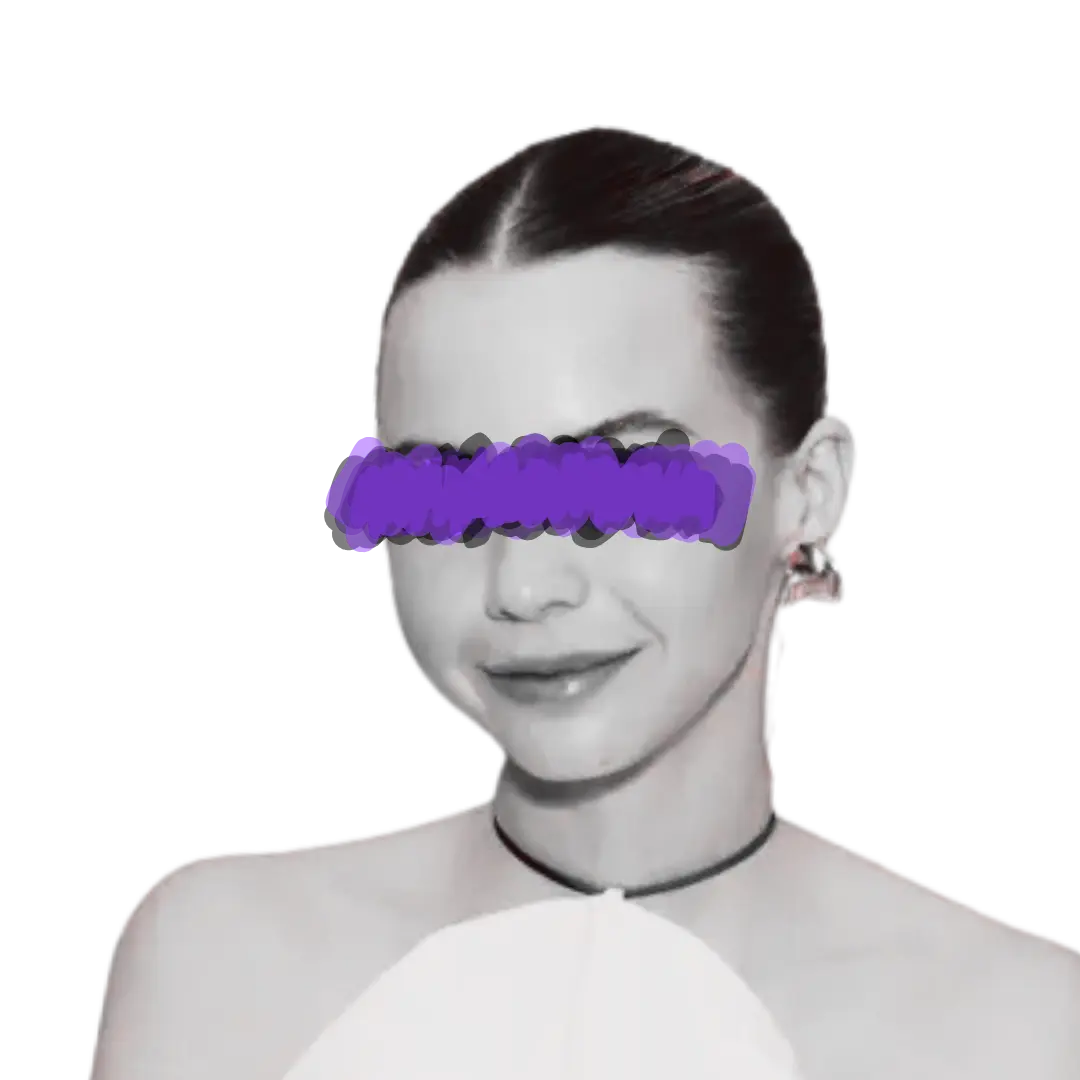
Disclaimer This analysis of Bobbi Althoff's Enneagram type is speculative, based on publicly available information, and may not reflect the actual personality type of Bobbi.
The woman who made Drake lie awkwardly in bed while she asked him if he prefers cats or dogs has a secret most viewers never see.
Behind the deadpan stares, the uncomfortable silences, and the viral interview clips that launched her into the stratosphere, Bobbi Althoff is running a masterclass in transformation. She took everything she hated about herself and turned it into a multimillion-dollar brand.
But this isn't just a story about internet fame. It's about a girl from Perris, California who tried to end her life at 14, who "hated who she was as a person," and who found a way to make her deepest insecurities into something people can't look away from.
Understanding Bobbi Althoff means understanding why her "awkward" persona isn't an act. It's alchemy.
TL;DR: Why Bobbi Althoff is an Enneagram Type 4
- The wound: "I hated who I was as a person" and "felt uncomfortable in my own skin" — Type 4 feelings of fundamental defectiveness that began in childhood.
- Transforming Pain into Art: Her deadpan persona embodies her "biggest insecurities without shame", taking what made her feel broken and making it her signature. Type 4 creative alchemy.
- Deep Emotional Intensity: Depression since childhood, a suicide attempt at 14, postpartum depression — Type 4s absorb all of it.
- The Outsider Feeling: "I didn't fit in" and felt she'd never "find my place in this world": the Type 4's lifelong sense of being unlike everyone else.
- The 5 Wing: Her withdrawn nature, debilitating social anxiety, dry intellectual humor, and observer-like quality in interviews point to a 4w5 "Bohemian" subtype.
What is Bobbi Althoff's Personality Type?
Bobbi Althoff is an Enneagram Type 4 (The Individualist)
Bobbi Althoff embodies the Enneagram Type 4—"The Individualist." These individuals are defined by a deep sense of being alien to everyone around them, often feeling flawed or defective in ways they can't quite name. They channel this pain into creating something uniquely meaningful, transforming their wounds into art.
Type 4 Characteristics in Bobbi Althoff:
- What drives her: Finding herself and her significance, creating an identity that expresses her unique inner experience
- Basic Fear: Having no identity or personal significance; being defective at the root
- Key Traits: Emotionally intense, introspective, creative, feeling different from others
- Defense Mechanism: Introjection, taking in criticism and making it part of her identity, then transforming it
What makes Bobbi's Type 4 expression fascinating is her 5 wing. The 4w5 is called "The Bohemian" or "The Free Spirit", more withdrawn, intellectual, and observational than the more emotionally expressive 4w3. This explains her dry, cerebral humor rather than dramatic flair, and her tendency to create distance in interviews rather than emotional intimacy.
The Making of a Deadpan Queen: Bobbi's Turbulent Childhood
Financial Instability and Family Chaos
Bobbi Heck was born in Moreno Valley and grew up in Perris, California. Not exactly Hollywood adjacent. She was the second youngest of six children, with a father who worked as a handyman and a family that struggled financially.
Then 2008 hit.
The recession devastated her family. The bank constantly threatened to take their house. Her parents, who she describes as "very toxic together," divorced during this period, but in a twist that captures the chaos of her childhood, they continued living in the same house until she was 14.
Imagine being a teenager trying to figure out who you are while your divorced parents share walls, while the threat of losing your home looms constantly, while five siblings compete for resources and attention.
The Attempt at 14
What happened next reveals the depth of Bobbi's early struggles.
At 14, Bobbi attempted suicide.
In a devastating interview with Rainn Wilson on his Soul Boom podcast, she shared that her mother found her "hours later" in her bedroom, "passed out on the bed and very pale." Her parents rushed her to the hospital.
After that, she was sent to live with her brother for a while.
"I hated who I was as a person," she told Wilson. "I felt uncomfortable in my own skin... I felt like I just didn't fit in."
These aren't just teenage feelings. This is the Type 4's defining terror crystallized in adolescence: I am different in a way that can't be fixed. Something is wrong with me. I don't belong here.
Feeling Like an Outsider
What drove a 14-year-old to such despair?
Bobbi has described feeling uncomfortable "in every room she was in." She didn't embrace herself at all. During her freshman year of high school, she became convinced she would never fit in or "find her place in this world."
For Type 4s, this sense of being an outsider isn't just social awkwardness. It's an existential condition. They feel their inner experience is so different from everyone else's that true connection seems impossible.
Rise to Fame: From Nanny to Viral Sensation
The Pre-Fame Years
After high school, Bobbi didn't pursue college. She worked as a nanny, modeling on the side, trying to figure out her path. At 21, she met Cory Althoff on Bumble, a programmer nine years her senior who worked as a senior vice president at CompTIA.
They married in January 2020 and had two daughters: Luca and Isla.
But becoming a stay-at-home mom didn't heal her. As she later revealed, she was isolating herself at home, focusing on her kids to the detriment of her own emotional well-being. Her mental health was "so bad."
The TikTok Pivot
In 2021, Bobbi started posting on TikTok. Her first video, dancing with a banana during her pregnancy, hit nearly 2 million views.
But here's what changed everything: her engagement video went viral because she seemed awkward. Then her wedding content went viral for the same reason.
Most people would try to course-correct. Not Bobbi.
"So I was like, you know what, let me lean into this weird self that I am," she recalled on the Women On Top podcast.
This is Type 4 genius at work. Instead of hiding what made her different, she amplified it. Instead of performing the polished influencer persona everyone else was doing, she did the opposite. And made that her brand.
The Really Good Podcast
In April 2023, Bobbi launched The Really Good Podcast with an unconventional premise: awkward celebrity interviews in intimate settings.
Her style defied every rule of celebrity journalism. Alex Abad-Santos of Vox described it as "unfazed, dry, bored in an ironic way... She meets most of her guests with deadpan sarcasm and silence, making her guests live in the discomfort of whatever they just revealed."
Comparisons to Zach Galifianakis's "Between Two Ferns" and Amelia Dimoldenberg's "Chicken Shop Date" followed, but Bobbi insists she hadn't watched either before starting. Her inspiration was the dry comedy of "The Office" and "Modern Family."
The truth? This wasn't imitation. It was finally having permission to be the person she'd always been underneath the shame.
The Drake Interview That Changed Everything
July 2023: In Bed With Drake
When Drake appeared on The Really Good Podcast in July 2023, lying in bed beside Bobbi while she asked mundane questions in her trademark deadpan, the internet lost its mind.
The contrast was electric. Here was one of the world's biggest rappers, charming, confident, used to controlling every narrative, reduced to nervous laughter by a relatively unknown podcaster who seemed genuinely unimpressed by his presence.
Clips went viral. Followers skyrocketed. Bobbi went from TikTok mom to cultural phenomenon overnight.
The Mysterious Deletion
Then, one month after the interview garnered millions of views, it disappeared.
Both Bobbi and Drake unfollowed each other. Rumors exploded. She was seen at his concert looking unimpressed. Then she was reportedly kicked out of his SXSW after-party by security because she showed up uninvited.
The speculation turned dark. Because Bobbi's marriage was ending around the same time (Cory filed for divorce in February 2024, listing their separation date as July 4, 2023. Just before the Drake interview aired), people assumed the worst.
Affair rumors swirled despite zero evidence. Bobbi strongly denied sleeping with Drake.
The Truth Revealed (2025)
In September 2025, Drake and Bobbi reconciled publicly when she launched her new podcast "Not This Again" with him as the first guest.
Finally, Drake explained what actually happened:
"You came around at an interesting time in your life and I think that I took a lot of the weight and blame at that time when you needed to get a little active on somebody. I think I took some hits, verbally."
He added: "You made me feel like our interview was the reason your life was bad. So I just said I'm gonna get rid of the interview and you won't ever have to see it again a day in your life."
Bobbi admitted she got "mad" at Drake "one time" and blamed him for her struggles when she probably shouldn't have.
This is Type 4 behavior under stress. When 4s are overwhelmed, they can become envious and resentful, projecting their internal chaos onto others. Drake became a convenient target for feelings that had nothing to do with him.
The Persona as Transformation
"My Biggest Insecurities Without Shame"
This is where Bobbi's psychology becomes truly fascinating.
In interviews, she's described her podcast persona as "an amalgamation of her biggest insecurities, just without shame."
Let that sink in. She took everything she hated about herself: the awkwardness, the discomfort, the feeling of not fitting in. And created a character who owns those traits. Who isn't apologetic about them. Who makes celebrities uncomfortable with the same energy that once made her feel like an outsider.
"Podcast Bobbi owns her discomfort," she explains. "She says what she thinks and she doesn't care about what people think about her. She leans into the things that people think are stupid about her."
This is Type 4 alchemy: transforming pain into something meaningful, creating art from wounds: the same creative transformation we see in artists like Billie Eilish and Lana Del Rey.
The Real Bobbi vs. The Character
There's a significant gap between persona and person.
"100% of my guests so far have been in on the joke," she says, frustrated by people who think she blindsides celebrities with rudeness. "They know full well what they're getting themselves into."
In real life, Bobbi describes herself as a people pleaser. She's nervous on Zoom calls before interviews. She has debilitating social anxiety. She stopped posting as much because the hate comments were "so mean."
The character is everything she wished she could be, confident in her differentness, while the real Bobbi still struggles with the same insecurities that haunted her childhood.
The Psychological Complexity of Type 4w5
The "Bohemian" Subtype
Bobbi's Type 4 personality is flavored by a strong 5 wing, creating the 4w5 "Bohemian" subtype. This explains several distinctive aspects of her presentation:
Withdrawn Energy: Despite massive fame, she isolated herself as a stay-at-home mom. She has "debilitating social anxiety." The 5 wing pulls Type 4s inward, toward observation rather than expression.
Dry, Intellectual Humor: Her comedy isn't emotionally expressive like a 4w3 might be. It's cerebral, deadpan, almost clinical. The 5 wing brings intellectual distance.
Observer Quality: In interviews, she creates space and watches what happens. She's not trying to connect emotionally, she's studying reactions from a remove.
Reserved Emotional Expression: Even when she's emotional (like her tearful response to hate comments), she's more contained than dramatic. The 5 wing tempers the 4's expressiveness.
Stress and Growth Patterns
Under Stress (Goes to Type 2): Type 4s move toward Type 2 behaviors when stressed. Bobbi admits she's a people pleaser. The hate comments affect her deeply because she wants to be liked. Her children became her reason for living, an intense attachment characteristic of the 4-to-2 movement.
In Growth (Moves to Type 1): When healthy, Type 4s access Type 1's discipline and principle. Bobbi's work ethic, maintaining multiple podcasts, a tour, content creation, shows this integration. Her honesty about mental health, even when it's uncomfortable, reflects Type 1's commitment to truth.
The Divorce and Its Aftermath
The End of Her Marriage
The timing of Bobbi's rise and her marriage's end is inseparable.
She met Cory at 21 when he was 30. They married quickly. She became a mom quickly. And by the time she was famous, she was also single.
Sources told TMZ that her fame "didn't jibe with Cory's desire to live a more normal, low-key kinda life." But Bobbi offered a more nuanced explanation: she'd read that divorce has the least impact on children before age three. Their youngest was three. "If we are going to do this, it needs to be now because our kids won't know."
The divorce was finalized in August 2024. Peaceful by celebrity standards, joint custody, no spousal support, their own finances.
The Online Backlash
What wasn't peaceful was the internet's response.
After Bobbi posted a video with her new boyfriend, Ty Hawkins, in late 2025, the comments section erupted. Men accused her of being "ran through", having too many sexual partners post-divorce.
In a tearful four-minute TikTok, Bobbi confronted the hate:
"I'm human, and if you got this many negative things said about you every day it would get to you, too. I don't want sympathy from people. I'm saying this because I hope if you're one of the people who hate me, maybe you'll watch this and reconsider it."
She's particularly worried about her daughters eventually reading these comments about their mother.
For a Type 4 who already lives with the baseline suspicion that something is wrong with her, this kind of public shaming hits directly at that belief.
Mental Health: The Ongoing Journey
From Shame to Advocacy
Bobbi hasn't hidden her mental health struggles. She's spoken openly about:
- Depression since childhood
- The suicide attempt at 14
- Postpartum depression after her daughters
- Debilitating social anxiety
- Going on anxiety medication, which "single-handedly changed her life"
She didn't start therapy until after her divorce. "I just winged it for a long time," she admitted.
What Keeps Her Going
Her children have become her anchor.
"My kids are definitely the reason why when I have those thoughts, I'm like, 'Well, you can't do that to them.'"
This isn't just motherhood as motivation. It's a Type 4 finding meaning outside herself. The 4's journey toward health often involves connecting their unique gifts to something larger than their own emotional experience.
"My kids are my purpose, and if I have to get a job at freakin' McDonald's after all of this, that's what I'll do. My kids need a mom to provide for them, and I will."
Controversies and Criticisms
The Industry Plant Accusations
Because of her rapid rise and high-profile guests, Bobbi has been repeatedly accused of being an "industry plant", someone with hidden connections who faked their grassroots success.
The allegations intensified after the Drake interview. How did a relatively unknown mom podcaster get one of the world's biggest rappers in bed?
Bobbi's response has been consistent: "I work hard and it didn't come easy." She secured guests on her own. She doesn't have industry parents or hidden backers.
The nepo baby accusations particularly sting because they dismiss the years of struggle before fame: the nannying, the failed attempts, the isolation.
The Scarlett Johansson Clip
In 2024, a clip of Bobbi interviewing Scarlett Johansson went viral, but not in a good way. Viewers felt Bobbi's deadpan routine crossed a line, making the interaction genuinely uncomfortable rather than comedically awkward.
The debate crystallized ongoing criticism: Is Bobbi's schtick entertaining, or just rude? Is she in on a joke, or making celebrities the butt of one?
The Tour Cancellation
In 2024, Bobbi embarked on a live podcast tour with comedian Funny Marco called "Open Thoughts vs. Really Good Podcast." But Marco canceled the remaining dates, citing concerns about the show's format and audience engagement.
Marco implied that Bobbi's anxiety was affecting the live performances. Fans noted that stage presence requires different skills than intimate podcast recordings. And Bobbi's withdrawn 4w5 energy may not translate well to large venues.
The Drake Partnership Redux
Not This Again (2025)
After years of speculation about their "feud," Bobbi and Drake's reconciliation came full circle when she announced "Not This Again", a new podcast with Drake as a recurring presence.
The first episode, released September 2025, addressed their history directly. Drake discussed everything from his fake abs rumors to his beef with Rick Ross, but the real headline was the restoration of their friendship.
For Bobbi, this represents growth. The version of her that lashed out at Drake, that blamed external circumstances for internal pain, has evolved into someone who can acknowledge her mistakes and rebuild.
Bobbi Althoff isn't just a podcaster who interviews celebrities awkwardly. She's a case study in what happens when someone stops trying to fix themselves and starts building with the broken pieces instead.
The girl who tried to end her life at 14 because she "hated who she was" found a way to build an empire on that very self. Not by hiding what was "wrong" with her. By making it the product.
The next time you watch Bobbi sit in uncomfortable silence while a celebrity squirms, remember: you're not just seeing a bit. You're seeing someone who finally found a way to make the discomfort she's always felt into something valuable.
What would you add?