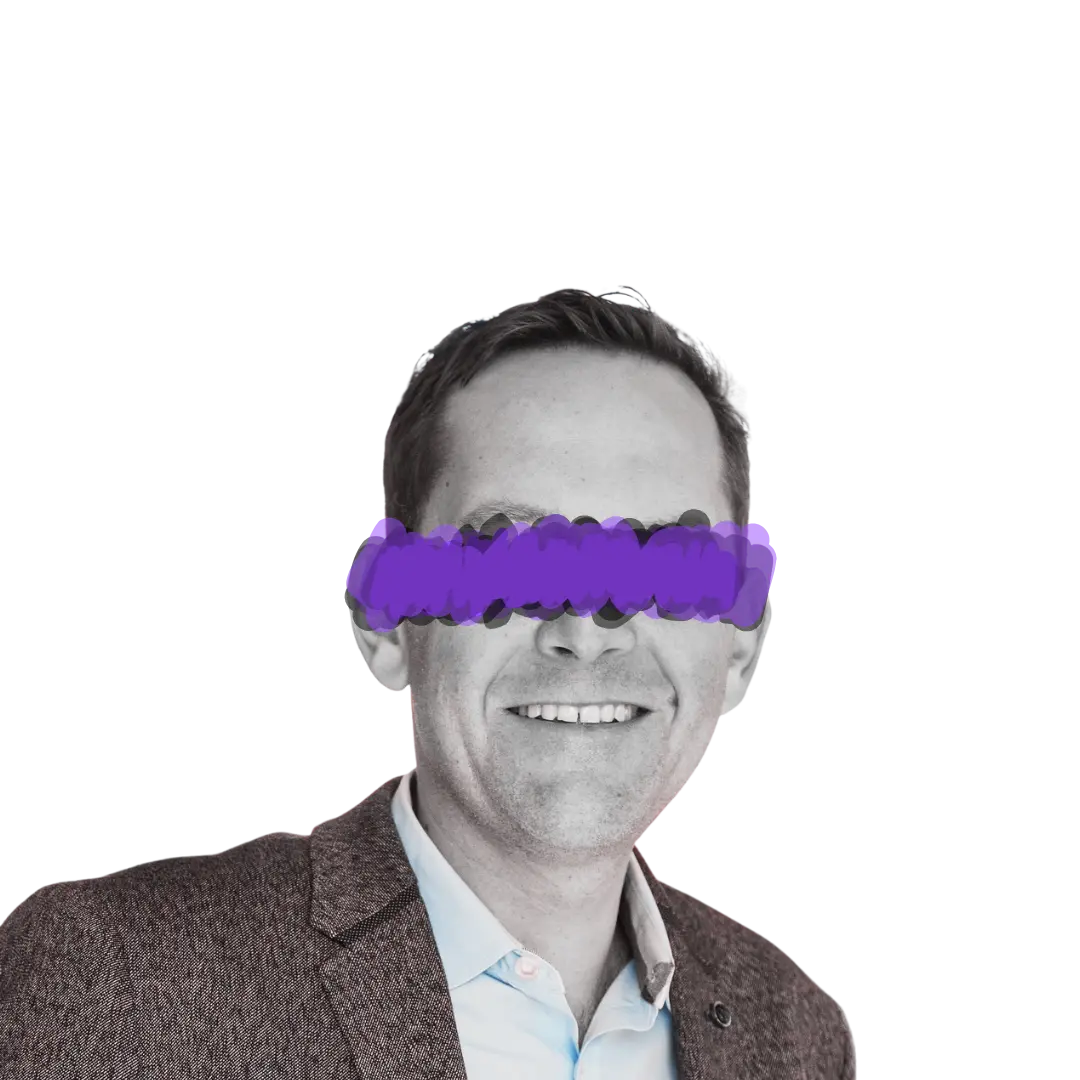
"Monsanto?! The most evil company in the world?! I thought you were trying to make the world a BETTER place!"
That wasn't a Twitter troll or a protest sign. That was David Friedberg's father — Lionel Friedberg, an Emmy-winning documentary filmmaker who made one of the first films ever to spotlight global warming. The year was 2013. His son had just sold The Climate Corporation to Monsanto for $1.1 billion. The biggest agtech deal in history. And the loudest criticism didn't come from environmentalists or journalists. It came from across the dinner table.
Friedberg later wrote in an email to his employees that "to be chastised for this exciting decision was really, really hard."
He sold anyway.
That moment tells you more about David Friedberg than any podcast episode or TED talk ever could. Here is a man whose father literally filmed the climate crisis — and whose son built a billion-dollar company to fight it using data. When the data told him that Monsanto's distribution network could reach more farmers than any startup ever would, he followed the data. Even when it meant his own father couldn't look at him the same way.
"I make decisions as a scientist," Friedberg has said. But what happens when the scientist's data leads him somewhere his heart can't follow?
TL;DR: Why David Friedberg is an Enneagram Type 5
- The Reducer: Friedberg approaches every problem — beverages, weather, crop yields — by isolating the one variable that matters and building a system around it.
- The Outsider: A South African immigrant who described himself as "not very socially well adjusted," he learned early that understanding a system is safer than belonging to one.
- The Scientist-CEO: He puts poker on his resume, earns an astrophysics degree, and reduces billion-dollar companies to probability equations — then builds them anyway.
- The Tension: The man who retreats into data keeps founding companies that force him into the messiest parts of human existence: farming, food, feeding the world.
Cape Town to Los Angeles, With Nothing
David Albert Friedberg was born on June 6, 1980, in Cape Town, South Africa. His parents were documentary filmmakers — his father Lionel would go on to win multiple Emmys — and the family lived in the middle of apartheid-era turmoil.
In 1986, when David was six, they left. The Friedbergs immigrated to Los Angeles with almost nothing. Friedberg has described those early years in LA as a period of scarcity — a word that sticks in the mind when you realize how much of his adult life has been spent trying to create abundance.
His father kept a sign that read "Go for Gold" — a reminder, Friedberg has said, of the enormous risk his parents took. Two young adults, two young kids, no money, no connections, arriving in a country they didn't know. Friedberg later reflected that "there was likely some relationship between his parents' attitude towards making life decisions and what he ended up doing in his life."
The kid who watched his parents abandon everything familiar and start from zero would spend his career doing the same thing. Over and over.
The Astrophysicist in the Card Room
At sixteen — an age when most American teenagers are learning to drive — Friedberg enrolled at Clarkson University in Potsdam, New York. He worked in a pool hall. He learned to play poker.
Then he transferred to UC Berkeley and earned a degree in astrophysics. His GPA was 2.7.
"In lab classes, I got an A plus," Friedberg told the How I Invest podcast. "In classes where you go to a lecture hall and they lecture you and then you take an exam at the end of the semester, I got like C minuses because it just wasn't a good sitch for me."
A teenager who aces the lab and fails the lecture hall. Learning by doing, not by being told. That pattern never changed — it just got more expensive.
But it was the poker that paid. Friedberg played the card rooms around the Bay Area during college, pulling in around $10,000 in a single summer during his sophomore year. When it came time to find a real job, he put poker as the headliner on his resume.
In 1999, that was a bizarre move. He was applying to investment banks, and there it was — poker — above the astrophysics degree, above everything else. And it worked. The banks called.
Here was a twenty-year-old who had already identified the pattern: most of life is probability management. The cards don't matter as much as knowing what you don't know. "When you say you got lucky," Friedberg later said at Stanford, "you got lucky because you didn't know what was going to happen. The corollary is, if you know what's going to happen, then there is no luck."
He doesn't believe in luck. He believes in removing the unknown.
"Your pursuit should always be to remove the unknown from the equation."
That sentence could be carved on a tombstone for a certain kind of mind.
Watching the Bike Hut Disappear
By 2004, Friedberg had left investment banking and joined Google as one of its first 1,000 employees. He worked in corporate development under Larry Page, negotiating acquisitions and helping run AdWords.
But the story everyone remembers started in the rain.
Friedberg was driving home from Google's offices when he passed the Bike Hut, a small rental shop near the San Francisco waterfront. It was raining. The shop was closed. The next day, same thing. And the next. He realized the owner had probably just stopped showing up.
A bike rental shop, losing everything because of weather. Friedberg started pulling the thread. How many businesses were weather-dependent? How much revenue was lost every year to rain, heat, drought? The answer stunned him: upwards of 70% of businesses are affected by weather, and the losses in U.S. agriculture alone represented a $20 billion opportunity.
He knew nothing about insurance. He knew nothing about weather modeling. He founded the company anyway.
"People that like to run marathons are not running marathons because they like to feel good," Friedberg later explained. "There's an orientation where going through the pain of running the marathon is part of the process for them."
He wasn't describing marathoners. He was describing himself.
"Why would you undertake any activity where you get your ass kicked every day, don't get paid enough, and suffer through years of misery," he asked a Stanford audience in 2011, "only to maybe find a problem worth solving?"
He called it WeatherBill. He built it while still working at Google. "There is a reason I look like I'm 50," he told an audience when he was 31, "and I'm only 31 years old, okay?"
For two full years, almost nobody bought anything.
The $1.1 Billion Education in Humility
Friedberg had arrived at WeatherBill with the confidence of a data-driven Google exec. "Seventy percent of the world's businesses are affected by weather," he thought. "They'll show up and buy."
They didn't.
His team expanded from 200 to 400 weather stations. No change. They cold-called construction companies. Nothing. They pitched ski resorts — and discovered that ski resorts manufacture their own snow. The entire thesis was wrong.
It took two years of grinding through failed hypotheses before Friedberg found the customer who actually needed what he was building: American farmers. They couldn't manufacture their own weather. They couldn't hedge their risk. And they were losing billions every year.
He renamed the company The Climate Corporation in 2011 and built a machine-learning platform that could predict hyper-local weather conditions and insure farmers against losses they couldn't control. The data grew at 40x per year. The models got sharper. The farmers signed up.
In 2013, Monsanto offered $1.1 billion. Friedberg accepted.
"I thought they were just this evil company in St. Louis that did terrible things to the world and to people," Friedberg admitted later. But then he looked at the data. Monsanto's field representatives reached more farmers than any startup could dream of. Their distribution network was the fastest path to impact.
"Calling a company evil is easy," he wrote in Salon. "It took me a lot of research into the history and business practices of Monsanto to understand this."
His father berated him. Environmentalists protested. And Friedberg — the man who removes the unknown from the equation — had done the math. The math said sell. So he sold.
He never said it wasn't the right decision. He said it was hard.
What is David Friedberg's Personality Type?
David Friedberg is an Enneagram Type 5
The Enneagram Five's core fear is being useless, helpless, or incapable. Their response to that fear is to master — to understand systems so thoroughly that they can never be caught without an answer. Where other types seek love, approval, or control, Fives seek competence. They hoard knowledge the way others hoard money or affection.
Friedberg's entire career is a Five's biography.
The reduction instinct: Every venture starts the same way — Friedberg finds a massive, complex problem and reduces it to its essential variable. Beverages? Only 1% of the chemistry matters. Weather risk? It's a data problem, not an insurance problem. Crop yields? One genetic breakthrough could feed the planet. He doesn't add complexity. He strips it away until the core mechanism is exposed.
The outsider who learned to observe: He's described himself as "a little bit constrained, a little bit as an outsider and not very socially well adjusted." That's not self-pity. A South African immigrant kid who arrives in LA at age six and spends his teenage years in card rooms learning to read probability — you don't build that skill set without spending a lot of time watching other people from the outside. The watching came first. The doing came later, after he'd mapped the system.
The knowledge-as-safety instinct: Poker on the resume. Astrophysics at Berkeley. Weather modeling at a startup. Data science for agriculture. Gene editing for crop yields. Each leap goes deeper into more complex systems. A Five doesn't feel safe until they've understood the architecture.
The privacy reflex: Friedberg keeps his personal life almost entirely out of public view. He has a wife, Allison Broude Friedberg, and three children in San Francisco. You'd barely know from anything he's ever said publicly. His co-hosts on the All-In Podcast — Chamath Palihapitiya, Jason Calacanis, David Sacks — are flamingly public personalities. Friedberg is the one who shows up with data.
Under stress, Fives move toward Type 7 — becoming scattered, impulsive, chasing new stimulations to avoid the anxiety of not knowing enough. You can see this in Friedberg's portfolio: Climate Corporation, Metromile, Eatsa, Cana, Ohalo, The Production Board. The ventures multiply. The scope expands. When the tension between knowing and doing becomes unbearable, a Five starts more projects.
In health, Fives move toward Eight — becoming decisive, action-oriented, willing to use their knowledge to claim power and make change in the physical world. The Monsanto sale was peak Eight integration. He had the data. He made the call. He took the hit. He didn't flinch.
The Sultan Who'd Rather Be in the Lab
On the All-In Podcast, Friedberg occupies a specific role: he's the science guy. His co-hosts gave him the nickname "The Sultan of Science," and he hosts a recurring "science corner" segment where he explains complex topics — gene editing, AI models, nuclear energy — to an audience of millions.
It's a strange position for a self-described social outsider.
But watch how he operates on the show. While Chamath argues from conviction, Sacks argues from principle, and Calacanis argues from enthusiasm, Friedberg argues from data. He corrects imprecise language. He reframes debates around causal mechanisms rather than opinions. When someone makes a claim, he asks for the source.
In the All-In "Science Corner" segments, he'll walk through the mechanism behind a new AI model or a gene editing advance with the same energy a Five brings to any domain where they've pre-done the homework. He isn't performing expertise. He arrived having already read it.
"I'm a big believer that sustainability in the 21st century does not arise from convincing consumers to consume less," he told the My First Million podcast. "Technology allows us to build solutions that let consumers consume more, dropping the price and the environmental impact."
That's a Five talking. Don't change people. Change the system. People are unpredictable. Systems are knowable.
And yet the Five can't stop learning, can't stop starting. "I get great joy out of constantly learning," he has said. "I've never stopped trying to learn about new subjects, new areas of interest." On the All-In podcast, he described his own struggle with this: "Every time I focused and avoided distractions, it's made a huge impact. The biggest piece of advice that I still struggle to take every day."
Focus. The thing that matters most. The thing the Five with infinite curiosity struggles with the most.
Feeding Ten Billion
After leaving Monsanto in 2015, Friedberg did what every Five eventually does: he went back to studying.
Months of conversations with Larry Page. The answer they landed on was enormous — a holding company for startups focused on food, agriculture, decarbonization, and life sciences. Page, through Alphabet, agreed to finance it. Friedberg would operate it. Another system to build from scratch.
He called it The Production Board. By 2021, it had raised $300 million from Alphabet, Baillie Gifford, BlackRock, and Morgan Stanley. The portfolio reads like a lab notebook: Pattern Ag (soil biology), Ohalo Genetics (plant breeding), Culture Biosciences (fermentation), Supergut (gut health), Cana (molecular beverages).
The Cana story is pure Friedberg. In late 2018, he sat down with a group of scientists over drinks. Someone mentioned a study showing that most beverages are 99% water — only about 1% of the chemistry creates the unique flavor. Someone else wondered: could you build a machine that synthesizes any drink from that 1%?
That night, the concept for a molecular beverage printer was born. The Production Board spent $30 million building it. A toaster-sized device that could theoretically print thousands of different drinks from a single cartridge of flavor compounds.
It was audacious. It was possibly insane. It was exactly what a Five does — find the essential variable, build a system around it, and see how far reduction can go.
But the investor years also taught Friedberg something uncomfortable about himself. "I am so convinced that I cannot let things fail because that's how I operated as an entrepreneur," he admitted. "I made the mistake of making sure that nothing failed, which was a naive approximation for my success as an entrepreneur."
A Five who can't let anything fail. Who needs to understand every system, control every variable, fix every problem. That instinct built The Climate Corporation. The same instinct nearly sabotaged him as an investor, because portfolio companies aren't systems you can fully understand — they're people, with their own unknown unknowns. Friedberg the operator could remove variables. Friedberg the investor kept discovering he wasn't the one holding the controls.
Then Friedberg did something unexpected. In November 2023, he stepped away from The Production Board's broad portfolio and became full-time CEO of Ohalo Genetics — a single company, focused on a single breakthrough.
Ohalo uses gene editing to combine the entire genetic material of two parent plants, creating offspring with dramatically higher yields. In trials, potato yields increased by 50 to 100%.
"We'll need to increase global food production by north of 50% by 2050," Friedberg said in his TED talk. "How do we create a technology that unlocks the ability to not have to put more in or take more land and get more out?"
The astrophysicist who played poker in Bay Area card rooms is now trying to feed ten billion people by editing the DNA of potatoes.
"I believe there won't be shortages of problem-solving opportunities in my lifetime."
The Documentary Filmmaker's Son
There is a version of David Friedberg's story that looks like pure Five detachment — the cold optimizer, reducing every problem to data, selling to whoever has the best distribution, moving on to the next system to master.
But that version ignores where he came from.
His father, Lionel Friedberg, made Crisis in the Atmosphere in 1989 — one of the first documentaries ever produced about global warming. He spent his career filming the destruction of the natural world. The family dinner table conversation in 2013, when Lionel called Monsanto "the most evil company in the world," wasn't the first time David had heard this worldview. He'd grown up watching his father try to move people through images and stories. He'd watched it work on some people and fail on most.
David chose a different method. Not a warmer one. A different one.
He didn't make documentaries. He didn't try to convince people. He built systems that made the problem irrelevant. Weather destroying farms? Insure the farms. Not enough food for the planet? Edit the crops. Beverages creating waste? Print the beverages.
His father saw the crisis and pointed a camera at it. His son saw the same crisis and built a machine.
"Figure out what you don't know," Friedberg told a Stanford audience, "and then know it."
He's been doing this his entire life — the six-year-old who arrived in LA with nothing, the teenager who mastered probability in card rooms, the Google employee who saw a bike shop close in the rain and built a billion-dollar company. Every time, the same motion: observe the system, identify the essential variable, reduce, build, solve.
The reduction instinct is the thing his father couldn't do and Friedberg can't stop doing. Lionel Friedberg pointed a camera at a crisis and hoped people would feel enough to change. David Friedberg concluded that feelings don't scale. Systems do. So he builds the system, sells it to the most efficient distributor — even when that distributor is the most evil company in the world — and moves to the next problem.
Whether that's wisdom or a specific kind of emotional avoidance dressed up as strategy is the question Friedberg's Type 5 would rather not answer. He prefers to stay in the lab. The yields are cleaner there.
What would you add?