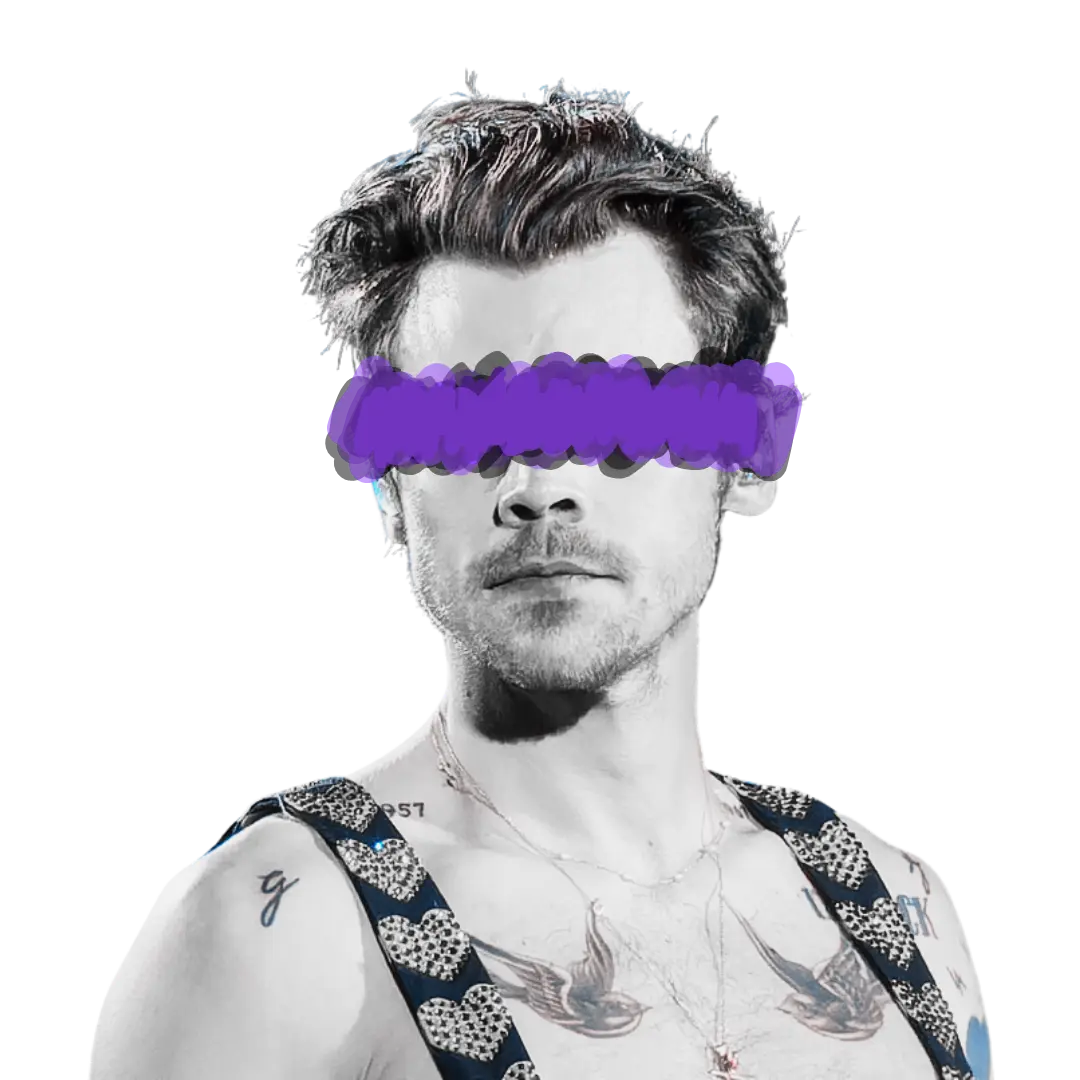
"Since I've been 10, it's kind of felt like—protect Mom at all costs."
That quote stops me every time I read it. Not because it's surprising coming from Harry Styles, but because it explains everything that came after.
When Harry was seven, his parents divorced. Most kids retreat inward during that kind of upheaval. Harry did the opposite. He became the one checking on his mother Anne, his sister Gemma, sensing when tension was rising and defusing it with humor. He discovered something that would shape the next 25 years: making other people feel okay made him feel like he mattered.
This is the origin story of an Enneagram Type 2. Everything that followed traces back to it.
TL;DR: Why Harry Styles is an Enneagram Type 2
- The childhood pattern: Seven-year-old Harry became his family's emotional anchor after his parents' divorce, learning that his worth came from making others feel cared for.
- The career expression: Love On Tour wasn't just a concert series. It was Harry creating ritual moments of connection for 5 million people, raising $6.5M for charity along the way.
- The growth edge: His 2024-2025 hiatus represents a Type 2's hardest lesson: you can't pour from an empty cup.
- The shadow side: Boundary struggles, stalking incidents, the Grammy speech backlash. Wanting to be all things to all people has real costs.
When Making Everyone Okay Becomes Your Operating System
Here's what most people miss about Type 2s: their kindness isn't a choice. It's closer to breathing.
Harry described it plainly in an early interview: "When I was younger, I always felt like I wanted to make sure everyone around me was okay. It mattered to me that people felt happy."
That sentence sounds sweet. It's also a tell. Most kids that age want to play, test limits, cause trouble. Harry wanted to ensure the emotional temperature of the room. By age ten, he'd appointed himself protector of his mother. His stepfather Robin Twist died of cancer in 2017 — another person to protect, then grieve.
The pattern held through X Factor, through One Direction, through the solo career. Watch any interview from any era and you see the same thing: Harry reading the room, adjusting his energy, deflecting attention back toward the other person.
One Direction: Finding a Family to Hold Together
When the X Factor producers grouped Harry with Niall Horan, Zayn Malik, Liam Payne, and Louis Tomlinson, they accidentally gave a Type 2 the perfect container.
Harry wasn't competing anymore. He was part of a unit. A family.
Years later, he reflected on what that meant: "I look at people who went through some version of what we went through, but on their own. I can't imagine having done that. I feel really lucky that we always had each other to be this unit that felt like you could keep each other in check."
The language matters. Not "we had fun together" or "we made great music." We kept each other in check. That's a Helper talking about what actually mattered: the mutual care.
Liam Payne put it plainly. He once said Harry has "a sixth sense for if I'm struggling or if one of us is in trouble." During hard periods, Harry would call to check in. Not because it was his job. Because he couldn't not.
When Zayn left in March 2015, the remaining members processed it publicly. Louis called it crushing. Harry went quieter. Type 2s often absorb the departure of someone they cared for as a kind of failure.
The band announced their hiatus in 2016. The unit that had kept Harry grounded was dissolving. He was 22 years old, already one of the most famous people on the planet, and about to discover what it meant to navigate the world without a family holding him together.
Going Solo: Building a New Container
When the band dissolved, each member had to answer the same question: who am I without the unit? The answers diverged quickly.
Harry signed with Columbia Records in June 2016 and retreated to a rented house in Jamaica with producer Jeff Bhasker. No crowd to read. No bandmates to calibrate against. The result was "Sign of the Times" — a five-minute piano ballad about mortality and survival that sounded nothing like One Direction and nothing like what pop radio expected from him.
Fine Line (2019) went further. "Falling" — "I'm in my head again / I'm falling" — was his most internally honest recording to that point: a Type 2 publicly marking the gap between the cheerful exterior and the inner world he'd spent years not examining.
What made Harry different from his former bandmates post-split wasn't talent. He'd been in the band long enough to internalize what it gave him — and could build something new from scratch when it was gone.
The fashion choices arrived in the same period. The pearls, the flared trousers — and then the December 2020 Vogue cover, where Harry became the first solo man in the magazine's 128-year history to appear alone on the cover, wearing a ruffled dress. After six years of adjusting himself for audiences, he was finally asserting: this is what I like.
He'd also landed the Dunkirk role. Christopher Nolan wanted someone with no prior dramatic associations. Harry walked into that audition with no crowd energy to feed off. He got the part.
Love On Tour: Creating Church at Scale
If you want to understand Harry's Type 2 psychology at full expression, forget the Grammys. Study Love On Tour.
The numbers are staggering: $617 million gross, 5 million tickets, 173 shows, fifth-highest grossing tour in history. But numbers miss the point. What Harry built was something closer to a ritual.
Every night, he scanned the crowd for signs asking for help. He stopped shows for coming-out moments, marriage proposals, gender reveal announcements, sobriety milestones. These weren't planned segments. They were Harry looking for people who needed him.
Milwaukee, November 2021. A fan named McKenzie Grace held up a sign: "My mom is in section 201... Will you help me come out?"
Harry spotted it. Asked what she wanted to tell her mother. Then offered: "I can do it if you'd like?"
He sprinted to center stage and shouted "Lisa, she's gay!" to 17,000 people. When mother and daughter reunited after the show, Lisa told McKenzie: "YES I DO LOVE YOU AND YOU CAN BE WHOEVER YOU WANT TO BE."
Wembley Stadium, June 2022. An Italian fan held a sign: "From Ono to Wembley: Help me come out."
Harry grabbed a rainbow flag. "When this flag goes over my head, you are officially out. I think that's how it works."
The crowd chanted the fan's name. Harry raised the flag above his head. "Congratulations, you're a free man!"
The same impulse drove him to write "Matilda" from Harry's House (2022). He wrote it for a specific person — a song about someone whose childhood home was somewhere to escape rather than return to. The chorus doesn't offer consolation; it offers permission: "You don't have to be sorry for leaving and growing up." He gave the song to its subject, then performed it live and asked audiences to hold space for anyone who'd had to parent themselves. It's one of the most explicit Type 2 acts in his catalog: making art to help someone else heal, not to express himself.
For a Type 2, this is the peak — being the catalyst for someone's most significant moment, being needed without ambiguity.
But here's the shadow side: when being needed is oxygen, you'll keep giving until you collapse. Love On Tour ran 22 months. By the end, Harry had facilitated hundreds of intimate moments for strangers while processing a public breakup, stalking incidents, and the relentless scrutiny that comes with being Harry Styles.
The Costs of Being Everyone's Person
Every personality pattern has a price. For Type 2s, it's boundaries.
Harry's desire to be accessible collided with darker realities. A woman broke into his North London home in 2022 after he'd already obtained a restraining order against her. A different stalker broke in and assaulted a member of his entourage.
For someone wired to make fans feel seen, this creates an impossible tension. He can't wave to everyone outside his house when some of those people mean harm. The same openness that lets him create coming-out moments at concerts makes him vulnerable in ways most people never have to navigate.
He'd learned this early. His 2012 relationship with Taylor Swift was brief; its reverberations weren't. "Style," "Out of the Woods," "Clean" — Swift processed what happened across multiple albums while Harry said nothing. Other people narrating his story. Him refusing to narrate it himself.
His relationship with Olivia Wilde, his Don't Worry Darling director, became another iteration. They went public in January 2021 and split in November 2022 under constant tabloid dissection. The "Spitgate" drama at Venice Film Festival. The chaos of the film's premiere. For a Type 2 who pours everything into relationships, having that intimacy analyzed by millions is its own kind of violation.
And then there's the Larry Stylinson phenomenon.
Since One Direction's early days, fans have insisted Harry and Louis are secretly a couple. Louis called it "the biggest load of bullshit I've ever heard." Harry stays silent.
That silence is Type 2 paralysis. Confirming it isn't true feels cruel to fans who've built identities around the theory. So he says nothing and hopes the discomfort passes.
His choice to play a closeted gay man in My Policeman (2022) lands differently in this context. Here was someone who had spent years navigating fan projections about his sexuality while raising Pride flags at every concert — and he chose a character whose tragedy is a lifetime spent repressing his identity. Whatever his personal reasons, it was a psychologically loaded role for the most private man in pop.
The Grammy speech backlash fit the same pattern. When Harry won Album of the Year for Harry's House, he said "this doesn't happen to people like me very often." Critics pointed out the obvious: wealthy, white, male, center-lane. Through a Type 2 lens it reads differently — imposter syndrome, the Helper's suspicion that success is luck, not worth. Both readings can be true.
His response? Retreat. When Type 2s have their good intentions questioned, they often go quiet rather than defend themselves. The pain of being misunderstood cuts deeper than most criticism.
The Hiatus: When the Helper Finally Stops
After Love On Tour ended in July 2023, Harry disappeared.
No award shows. No social media. Occasional sightings in London studios, running marathons in Tokyo and Berlin. But essentially gone.
He'd articulated the pull years before: "You can't pour from an empty cup. Taking time for yourself makes it possible to give more to others."
Knowing it and living it are different things.
Therapy: Opening Doors He Didn't Know Existed
Harry's journey with therapy reveals how Type 2s resist, then transform.
He told Zane Lowe about his initial reluctance: "I think for a really long time, especially when I started coming to California, there was a big thing for me where I felt like everyone went to therapy. And I think for a long time I was like, 'I don't need that.' A very British way of looking at it."
The breakthrough came when he recognized a pattern he couldn't see before:
"I feel like for a really long time I kind of emotionally coasted. I didn't really feel anything. We'd go through real highs in the band and stuff, and it would always just feel like a relief. Like, 'Oh, we didn't fail.' I never really felt like I celebrated anything."
Read that again. The biggest moments of One Direction's success, Harry experienced as relief that he hadn't let people down. Not joy. Not pride. Just absence of failure.
That's the Type 2 shadow exposed. Orienting so completely around others that you lose access to your own experience.
Therapy gave him a powerful metaphor: "You open a bunch of doors in your house that you didn't know existed, you find all these rooms and you get to explore them... you feel everything that's bad so much harder, you feel the good moments so much harder."
And then the observation about fame that explains his isolation: "It's impossible to not, at times, feel like, 'Oh, everyone else is on the other side of the glass, and I'm on this side of the glass, and no one really gets it.'"
Type 2s need to feel connected. When fame puts you behind glass, the drive to connect becomes a source of pain rather than fulfillment.
Losing Liam
On October 16, 2024, Liam Payne died after falling from a hotel balcony in Buenos Aires. He was 31.
Harry's statement captured something essential about both himself and Liam:
"His greatest joy was making other people happy, and it was an honour to be alongside him as he did it. Liam lived wide open, with his heart on his sleeve, he had an energy for life that was infectious. He was warm, supportive, and incredibly loving."
The words Harry chose to describe Liam describe Harry just as well.
He continued: "The years we spent together will forever remain among the most cherished years of my life. I will miss him always, my lovely friend."
At Liam's funeral in Amersham, Harry reunited with Louis, Zayn, and Niall for the first time in years. Witnesses described him as profoundly emotional.
For someone who had described the band as having "a very deep love for each other," who had explained that One Direction was the unit that kept him grounded during chaos, losing Liam wasn't just losing a colleague. It was losing part of the family he'd found after his first one fractured.
You can't protect everyone. Type 2s often learn this the hardest way.
Coming Back: A Different Kind of Connection
After two years away, Harry resurfaced in late 2025 with "Forever, Forever" — eight minutes of footage from Love On Tour's final show — and a new album, Kiss All The Time. Disco, Occasionally, due March 2026.
Reports suggest he's been dating Zoë Kravitz since August 2025. At 31, this looks less like Harry the Helper finding someone to care for and more like Harry finding an equal. Which is what growth looks like for a Type 2.
The Helper is coming back. But maybe, after everything, with healthier boundaries.
What Harry Teaches Us About Type 2s
Harry Styles shows what happens when the drive to connect becomes world-class talent.
Three Grammys, one of the highest-grossing tours in history, and thousands of strangers whose biggest moments he personally catalyzed. A Vogue cover in a dress. A generation given permission to be whatever they are.
But also: the stalking incidents, the relationships picked apart by tabloids, the years-long hiatuses needed to recover from the giving. His story traces the arc from compulsive giving to conscious choice.
The seven-year-old who made himself responsible for his mother became the 31-year-old who finally learned to take time for himself.
Harry's mantra still holds: Treat People With Kindness.
The mature version adds an essential word: yourself.
Disclaimer: This analysis of Harry Styles' Enneagram type is speculative, based on publicly available information, and may not reflect his actual personality type.
Curious about your own personality patterns? Explore our questions and discover your Enneagram type.
What would you add?