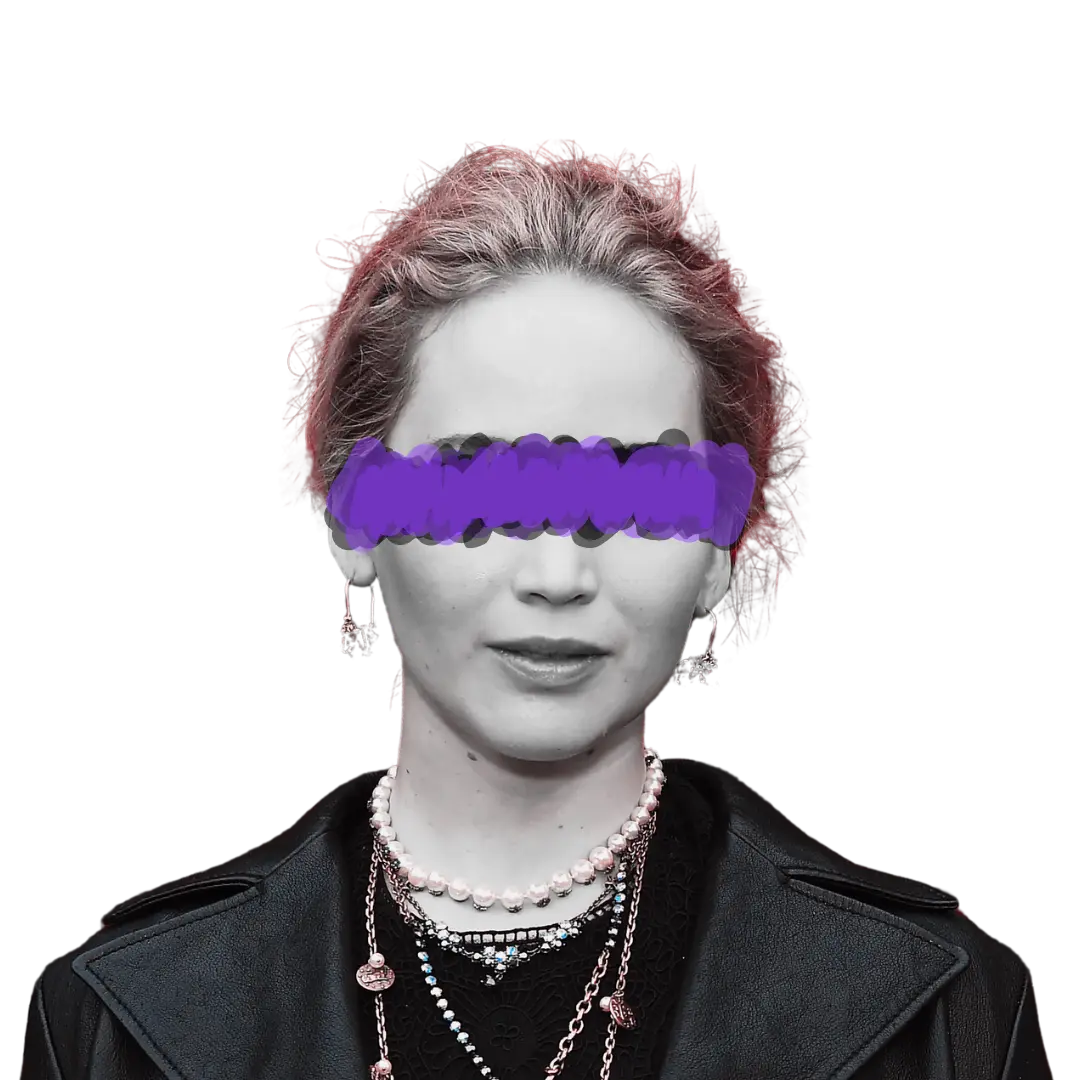
"Well, it is, or it was, my genuine personality, but it was also a defense mechanism. It was a defense mechanism, to just be, like, 'I'm not like that! I poop my pants every day!'"
In 2025, sitting across from a New Yorker journalist, Jennifer Lawrence finally said the thing that explained everything. The woman who built a career on radical candor — tripping at the Oscars, talking about bodily functions on live television, making faces during acceptance speeches — looked back at that person and called her "annoying."
Not ironically. Not with the trademark self-deprecating wink. She said it like someone describing a stranger they'd been forced to impersonate for a decade.
"I look at those interviews, and that person is annoying. I get why seeing that person everywhere would be annoying."
Then she added the line that cracked the whole thing open: her famous authenticity was "also a defense mechanism." Both things were true. The candor was real. And it was armor. At the same time.
This is the contradiction that most people miss about Jennifer Lawrence. They see the high-energy Kentucky girl who ate pizza on the red carpet and assume she was just having fun. She wasn't. She was managing terror.
TL;DR: Why Jennifer Lawrence is an Enneagram Type 6
- Not a carefree Type 7: Her humor and energy aren't joy-seeking — they're anxiety management. She's said so herself.
- People-pleasing as survival: "Working made me feel like nobody could be mad at me." When the approval stopped, she collapsed for two years.
- Charges at fear, doesn't flee it: From Winter's Bone to Die My Love, she runs toward the roles that terrify her — the counterphobic Six pattern.
- The phobic/counterphobic oscillation: Bold political stance, then total withdrawal. Aggressive candor, then silence. The Six's signature dance between defiance and doubt.
The Light That Went Out
Jennifer Shrader Lawrence was born in Indian Hills, Kentucky, to Gary, who ran a construction company, and Karen, who managed a summer camp called Camp Hi-Ho. She had two older brothers, Ben and Blaine. They gave her a nickname: Nitro.
As in nitroglycerin. Explosive. Volatile. Too much.
Her mother deemed her "too rough" to play with other girls. She was banned from the girls' group in preschool. She played basketball on a boys' team coached by her father. She wrestled with her brothers. She did cheerleading, softball, field hockey. Karen Lawrence didn't raise a delicate daughter. She raised a third son.
This is the origin of the "cool girl" — not a persona crafted for Hollywood, but a survival adaptation forged in a Kentucky household where toughness was the price of belonging.
But then something happened that the "Nitro" narrative never includes.
"When my mother talks about my childhood, she always says there was a light within me," Lawrence told Madame Figaro in 2013. "When I went to school, this light went out. We never knew what it was, a kind of social anxiety. I went to see a shrink, nothing worked."
The explosive, fearless kid collapsed in social settings she couldn't control. She thought she was stupid. She "felt worthless." No therapist helped.
"I finally found a way to open the door to a universe that I understood, that was good for me and made me happy, because I felt capable, whereas before I felt worthless."
That door was acting. Not because she wanted attention or excitement. Because it gave her a structure — lines to say, a character to inhabit, a framework where social interaction had rules. The girl who couldn't survive recess could survive a film set.
Her mother begged to take her to New York for auditions at 14. A talent scout spotted her at Union Square. She told agencies she would only sign if they let her act, not model. By 14, she'd dropped out of school entirely.
The light came back on. But the anxiety never left.
The Winter's Bone Walk
When Lawrence auditioned for Winter's Bone in LA, they told her she was too pretty. A Type 7 — the type she's been mislabeled as for years — would have shrugged and moved to the next opportunity. Lawrence took a red-eye to New York, walked 13 blocks through sleet to the casting office, and auditioned with a runny nose and hair she hadn't washed in a week.
She got the part.
This wasn't spontaneous adventurousness. This was a 19-year-old with something to prove, who described having "this gloomy monster living inside me" that she channeled into the role. The film launched her career, and she's named it as the project she's most proud of — not The Hunger Games, not Silver Linings Playbook. The dark, unglamorous one that nobody expected her to get.
"I like when things are hard; I'm very competitive," she's said. "If something seems difficult or impossible, it interests me."
That's not a Seven chasing novelty. That's a counterphobic Six running at the thing that scares her.
What is Jennifer Lawrence's Personality Type?
Jennifer Lawrence is an Enneagram Type 6
Most personality databases type Jennifer Lawrence as a Type 7 — the Enthusiast. It's easy to see why. The energy, the humor, the rapid-fire speech, the apparent spontaneity. She looks like someone chasing joy.
But the Enneagram isn't about surface behavior. It's about what drives the behavior. And when you listen to what Jennifer Lawrence actually says about herself — in the unguarded moments, the long-form interviews, the confessions that slip out between jokes — the engine underneath is not excitement-seeking.
It's fear.
The core fear of Type 6 is being without support, guidance, or security — being cast out, left alone, unable to survive on your own. Every major pattern in Lawrence's life traces back to this:
- Her humor is anxiety management, not joy. She named it herself: "a defense mechanism." Type 7s are funny because they love being funny. Lawrence is funny because the alternative is being seen — really seen — and that terrifies her.
- Her people-pleasing is survival. "I was people-pleasing for the majority of my life. Working made me feel like nobody could be mad at me." This isn't Type 7 charm. It's Type 6 compliance — doing whatever it takes to not be rejected.
- She doesn't run from pain — she charges at it. Winter's Bone, Causeway, Die My Love — her best work is her darkest. A Type 7 reframes pain as opportunity. Lawrence sits in it until it breaks something open.
- She oscillates between boldness and withdrawal. Aggressively political, then silent. Hyper-candid in interviews, then dreading press. This phobic-counterphobic dance is the signature rhythm of the Six.
- She sought an anchor. She married "the opposite of me — so organized, an anchor." She describes grocery shopping as her favorite activity. The woman famous for chaos privately craves structure.
The Enneagram Institute specifically notes that counterphobic Sixes with a Seven wing are among the most commonly mistyped as Sevens. The distinguishing factor is motivation: Sevens are driven by a desire for positive experience. Sixes are driven by anxiety management. Lawrence has never described seeking joy. She has described, over and over, managing fear.
"Working Made Me Feel Like Nobody Could Be Mad at Me"
The people-pleasing confession is the Rosetta Stone of Jennifer Lawrence's psychology.
In a 2021 Vanity Fair profile, she laid it out with startling clarity: "I think that I was people-pleasing for the majority of my life. Working made me feel like nobody could be mad at me: 'Okay, I said yes, we're doing it. Nobody's mad.' And then I felt like I reached a point where people were not pleased just by my existence. So that kind of shook me out of thinking that work or your career can bring any kind of peace to your soul."
Read that again. The most spontaneous-seeming woman in Hollywood was saying yes to everything — not because she wanted to, but because she was terrified of what would happen if she said no. The films, the press tours, the interview persona — all of it was partly a protection racket. As long as she was working, producing, being "on," nobody could be angry with her.
This is the Six's bargain: loyalty and effort in exchange for safety.
When she wrote her famous pay gap essay in Lena Dunham's newsletter, she admitted the real reason she hadn't negotiated harder: "I didn't want to seem 'difficult' or 'spoiled.'" Not a strategic calculation. Not a principled stand she'd been building toward. A fear response. The terror of being labeled the difficult woman.
"I'm never going to starve myself for a part. If anybody even tries to whisper the word 'diet,' I'm like, 'You can go f**k yourself.'"
"I didn't want to seem 'difficult' or 'spoiled.' I failed as a negotiator because I gave up early."
Both statements are completely true. She could tell a studio executive to go to hell about her body — that was the counterphobic bravado, the Nitro energy, the part of her that charges at threats. But she couldn't ask for fair pay without apologizing. That was the phobic underbelly — the part that needs to be liked more than it needs to be right.
The Imposter in the Bathroom
In 2014, Lawrence's intimate photos were stolen from her iCloud account and distributed globally. She refused to call it a scandal.
"It is not a scandal. It is a sex crime. It is a sexual violation."
She started to write a public apology. Then stopped. "I don't have anything to say I'm sorry for."
The counterphobic Six in full force: naming the threat, refusing to accept blame, turning toward the thing that was meant to destroy her. She later deliberately chose a nude scene in Red Sparrow specifically to reclaim what had been taken — "getting something back that had been taken from me."
But the wound didn't close.
A year and a half after the leak, someone at an event told Lawrence she was a good role model. She had to excuse herself, walk to a bathroom, and sob. "I felt like an imposter."
The woman who had just reframed a sex crime into a civil rights issue — who had been defiant and articulate and brave on camera — crumbled the moment someone offered her admiration she didn't feel she'd earned. This is the Six's relationship with praise: it doesn't land. It bounces off the armor and hits the vulnerability underneath.
"My trauma will exist forever," she said years later. She wasn't being dramatic. She was being accurate.
"What doesn't kill you makes you stronger? It made me a lot weaker."
The Cool Girl Cage
By 2015, the public had begun to turn. The tripping, the pizza references, the "I'm just like you!" energy that had made her America's sweetheart started to feel rehearsed. At the 2016 Golden Globes, she teased a foreign journalist for using his phone — possibly for translation — and the internet decided she was arrogant.
Anne Helen Petersen's 2018 BuzzFeed essay crystallized it: "Jennifer Lawrence Is A Prisoner Of Her Cool Girl Image." The argument was that the persona that made her famous had become an albatross. The authenticity machine couldn't be turned off.
What happened next is what separates a Six from a Seven.
A Seven, faced with an image that no longer worked, would have pivoted. Rebranded. Reinvented. Moved on to the next thing. The Seven's relationship with identity is fluid — if this version isn't working, try another.
Lawrence didn't pivot. She collapsed.
"I was not pumping out the quality that I should have. I just think everybody had gotten sick of me. I'd gotten sick of me. It had just gotten to a point where I couldn't do anything right. If I walked a red carpet, it was, 'Why didn't she run?'"
The rejection wasn't strategic — it was existential. She didn't lose a brand. She lost herself. "I felt rejected not for my movies, not for my politics, but for me, for my personality."
She vanished for two years. Fired her agency. Married an art gallerist from Vermont who had nothing to do with Hollywood. Had a baby. Was "at peace with never returning."
A Seven runs from pain to the next experience. A Six retreats to the bunker and reassesses everything.
"I Married the Opposite of Me"
On the SmartLess podcast in January 2026, Lawrence described her marriage to Cooke Maroney with a detail that says everything:
"I married somebody who is the opposite of me. He is so organized. He's an anchor. Everything is ordered. I have to keep the closet doors closed, and I have my little jobs that I work really hard to do."
Jennifer Lawrence. Working hard. To keep closet doors closed.
The image is almost comically small for one of the most famous women on earth. But that's the point. The woman who seemed to thrive in chaos was actually drowning in it. She needed an anchor — someone outside the industry, someone organized, someone stable. The Six's deepest need is for a reliable base of support, and Lawrence found it not in Hollywood but in a quiet art gallerist who gets her to bed by 9:15 PM.
She describes grocery shopping together as her favorite activity. "Okay, we've got this list. These are the things we need. Let's work together and get this done."
The woman who once seemed like the wildest person at every party was actually craving a grocery list.
The Secret TikTok Account
In November 2025, Lawrence revealed something that would have been unthinkable during her "I don't care what anyone thinks" era: she has a secret TikTok account where she gets into fights with strangers.
It started with Real Housewives debates. Then the Kardashians. Then it "got really intense" when she began defending the British royal family. When co-star Robert Pattinson pushed her on it, she admitted: "I guess I rage-bait on TikTok."
This is the counterphobic Six in miniature. She withdrew from public engagement — stopped doing press she didn't have to, stopped sharing political opinions, stopped performing the "cool girl." But the need to engage, to test, to argue, to scan for threats didn't go away. It just went underground.
The woman who fled fame didn't flee confrontation. She just found a way to have it anonymously, without the vulnerability of being Jennifer Lawrence while doing it.
The Political Oscillation
No pattern in Lawrence's life maps the phobic-counterphobic cycle more clearly than her political involvement.
The counterphobic charge: She declared, "I don't f--k with people who aren't political." She took a year-long sabbatical for activism. She wrote passionate essays. She endorsed candidates. She said she wanted to use her platform for change.
The cost: Her political stance created a rift with her Kentucky family. "I worked so hard in the last five years to forgive my dad and my family."
The phobic retreat: By 2025, she had reversed completely. "As we've learned, election after election, celebrities do not make a difference whatsoever on who people vote for." She would no longer share political opinions in interviews, citing a desire to "protect my craft" and avoid "adding fuel to a fire."
Bold charge. Painful consequence. Complete withdrawal. This is the Six's cycle — not indecision, but the perpetual recalibration between "I need to fight this" and "fighting this might destroy me." She now channels political energy exclusively through documentary production — Bread & Roses about Afghan women, Zurawski v Texas about reproductive rights — keeping the activism but removing the personal exposure.
The engine is still running. She just built a better bunker around it.
"Terrified of Being Invisible"
In Die My Love (2025), directed by Lynne Ramsay, Lawrence plays Grace — a new mother descending into postpartum psychosis on a remote farm. She filmed it while five months pregnant. Then experienced "really bad postpartum" herself after her second child was born.
She described Grace as someone "terrified of being invisible. She would rather her husband be mad at her than not see her."
That line isn't acting. It's autobiography.
Lawrence has spent her entire adult life oscillating between two fears: the fear of being seen (which drove her withdrawal from public life) and the fear of being invisible (which drove her back). The cool girl persona was the solution to both — a way to be visible without being vulnerable. When it stopped working, she had to find a new answer.
Motherhood provided part of it. "The morning after I gave birth, I felt like my whole life had started over. Like, 'Now is day one of my life.'"
But it also deepened the contradiction. "It feels vain and selfish that I love being a creative person as much as I do. My kids and my family are more important, obviously, but they feel like an equal part of me." The guilt of wanting something beyond the safe domestic world she'd built — that's the Six's perpetual negotiation between security and selfhood.
"Having kids is sacrificial. It's gratifying and it's amazing and rewarding, but it's not not sacrificial."
The double negative says everything. She can't bring herself to call motherhood a sacrifice without immediately qualifying it. Even in honesty, the people-pleasing reflex fires.
The Defense Mechanism That Became a Career
David O. Russell saw it before anyone. When he cast Lawrence in Silver Linings Playbook at 21, he described her as "a raw talent that had no neuroses and no self-consciousness" who was "completely fearless" and would "come into the scene like a weather system."
He was wrong about the neuroses. He was right about the weather system.
Bradley Cooper, who made four films with her, put it differently: "She's the person you want on set with you at 4:00 in the morning when you're losing your mind." And: "I feel very safe with Lawrence. I can turn my brain off as an actor."
There's the word. Safe. The person driven by anxiety creates safety for everyone around her. The person who can't quiet her own mind quiets everyone else's. This is what healthy Sixes do — they transform their hypervigilance into reliability. Their scanning-for-threats becomes anticipating-what-you-need.
Lawrence on Russell: "David and I will never, ever, ever, ever not do movies together. I love him so much that sometimes I can't talk about him without tearing up. I understand every look, every eyeball move, every word he says or doesn't say."
Four "evers." The Six's loyalty, once earned, is absolute and almost desperate in its intensity.
"Please, Lord Jesus, Let Me Keep My Hair"
In 2017, Lawrence was on a private plane when both engines failed at 31,000 feet. The pilots were crying. Passengers were preparing to die.
Her prayer: "Oh, my God, maybe we'll survive this? I'll be a burn victim, this will be painful, but maybe we'll live. Please, Lord Jesus, let me keep my hair."
The vanity-within-mortality. The self-deprecation deployed even at the edge of death. The inability to face annihilation without making it funny.
This is the defense mechanism stripped to its molecular level. At the exact moment when most people would drop every pretense, Lawrence's deepest reflex was to perform — not for an audience, but for herself. The joke was the last wall between her and the terror.
"What doesn't kill you makes you stronger?" she said afterward. "It made me a lot weaker."
That admission — that vulnerability doesn't build character, it just hurts — is more honest than almost anything any celebrity has ever said about fear. And it's the most Six sentence she's ever spoken. Not spinning the pain into growth. Not reframing the trauma as empowerment. Just sitting in the weakness and naming it.
The Closet Doors
The Jennifer Lawrence of 2025 is not the Jennifer Lawrence of 2013. She knows it. She's said so. She looks back at the woman the world fell in love with and sees a stranger she understands but can no longer be.
"I look at those interviews, and that person is annoying."
She is in bed by 9:15 with her Kindle. She has two sons. She identifies as a stay-at-home mom. She fights strangers anonymously on TikTok about the British royal family. She keeps the closet doors closed and considers it a real accomplishment.
The defense mechanism that made her famous — the radical candor, the charming chaos, the "I don't care" energy — was never the core of who she is. It was the armor a deeply anxious Kentucky girl built to survive being seen by the entire world. And now that she's found a bunker sturdy enough — a quiet husband, a domestic routine, a career she controls — she's slowly taking the armor off.
But not all of it. She still rage-baits on TikTok. She still runs at dark roles. She still can't do a press interview without thinking, "I can't do this to myself again."
The anxiety never left. She just got better at choosing when to charge at it and when to close the door.
Disclaimer This analysis of Jennifer Lawrence's Enneagram type is speculative, based on publicly available information, and may not reflect the actual personality type of Jennifer Lawrence.

What would you add?