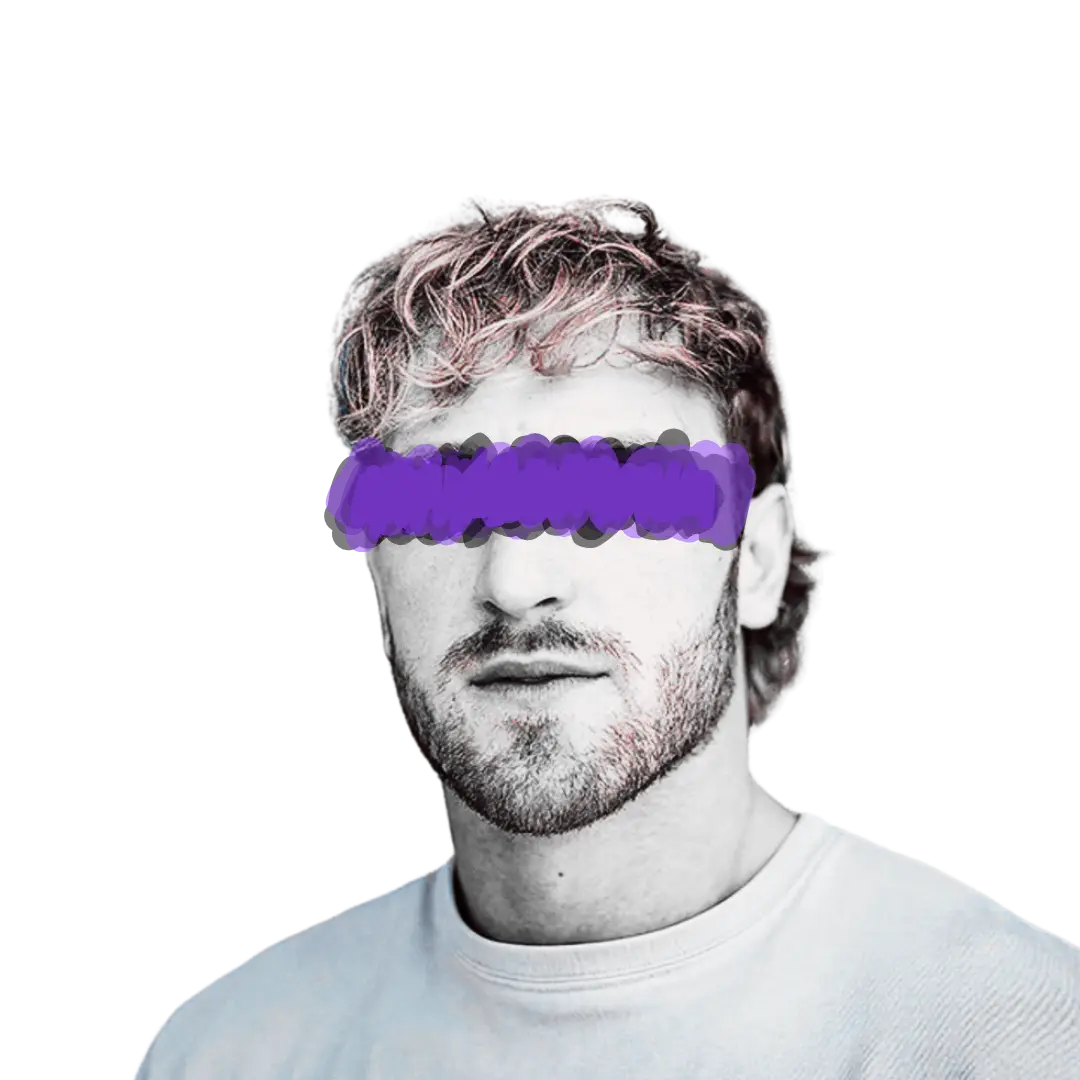
"How do you leave actual, meaningful impact? That's the golden question. Cos it's not through just video content. I don't know what it is yet but I will figure it out."
Crown Jewel 2022. Midway through a 26-minute match against Roman Reigns, Logan launches a frog splash through the announce table while filming himself on his phone. On the landing, he tears his MCL, his meniscus, and possibly his ACL. He finishes the match.
That image is the whole story. The phone is still out. He's documenting the injury as it happens. Not because he's shameless, but because this is how he's wired: the moment is only real if it's captured, and the capture is only worth something if the moment was hard.
The pivots aren't random. They orbit one need: to turn attention into legitimacy. In the Enneagram framework, Logan is a Type 3 (the Achiever): keep winning, keep upgrading, keep rewriting the story. Because slowing down feels like disappearing.
TL;DR: Why Logan Paul is an Enneagram Type 3
- Life as a scoreboard: Followers, views, headlines, belts, deals. He builds his identity around wins.
- Reinvention as reflex: When one platform peaks or turns hostile, he pivots (YouTube → boxing → WWE → consumer products) without losing momentum.
- Image repair as strategy: When reputation collapses, he doesn't hide. He engineers a comeback storyline and tries to outwork the shame.
- Legitimacy hunger: He keeps chasing arenas with stricter rules (sports, business, live performance) where respect feels harder, and therefore more real.
What is Logan Paul's personality type?
Logan Paul is an Enneagram Type 3
Before he was "Logan Paul," he was a kid in Westlake, Ohio, one who later described himself in a way most fans wouldn't expect: "I was the isolated kid. I was the weird kid."
He wasn't just a camera kid. He was a serious athlete: football at Westlake High, and wrestling at a level most fans don't realize. He placed fifth at the Ohio Division I state tournament in 2013, which means he was competing against the best wrestlers in one of the strongest wrestling states in the country. That kind of placement requires years of grueling off-season training, cutting weight, and grinding through tournament brackets where one loss ends your season. The competitive wiring predates the internet entirely.
He started making videos young, creating a YouTube channel around age 10. That mix of performance and competition, the camera and the mat, is the earliest version of the pattern that defines his adult career.
In the Enneagram framework, Type 3s run on a core equation: achievement = worth. They learn what "winning" looks like in a given arena, then optimize for it. The gift is adaptability. The cost is that identity starts to feel like a brand you have to keep feeding.
Logan runs on that pattern: relentless output, constant upgrades, and a refusal to stay in any lane that stops producing status. He can look like a Type 7 (loud, novelty-driven) or a Type 8 (confrontational, high-stakes), but the center of gravity is different. Consider his "greatest entertainer" list: a professional MMA fight, a feature film, stand-up comedy, and digital domination. On the surface, that looks like 7 behavior: scattered interests, always chasing the next shiny thing. But listen to how he frames it: "I'm willing to suffer an immense amount to achieve my goal, which is to be the greatest entertainer in the world." A Type 7 avoids suffering. Logan volunteers for it. The diverse list isn't about pleasure or novelty. It's about conquering every vertical so no one can dismiss him. His language is always wins and losses, not experiences and adventures. That's the tell.
Family dynamics matter here. Logan and Jake have both described a complicated relationship with their father: strict, physical at times, and formative. Their father had one rule the boys never broke: you could never say "I can't."
In Paul American (the HBO docuseries), Jake explicitly framed their upbringing as abuse. Logan resisted: "Jake will use the word 'abusive.' I will not because I don't believe we were abused." Same home, two different ways of making sense of pain.
The lesson isn't "this caused everything." It's simpler: when love and safety feel conditional, being impressive becomes a survival strategy.
The Camera Became the First Scoreboard
Long before Prime bottles and WWE pyro, Logan and his younger brother Jake Paul treated the internet like a ladder: post, learn what hits, post again.
Vine (2013) rewarded punchy spectacle, and Logan learned quickly: attention is currency. When Vine died, he moved to YouTube without hesitation. Different platform, same game.
By the time he branded himself a "Maverick," he wasn't just making videos. He was selling an identity. Not merch as a side hustle. Merch as proof that the audience didn't just watch you; they joined you.
In February 2021, he relocated to Dorado, Puerto Rico, and was blunt about why: taxes were "96% of the reasons." Under Puerto Rico's Act 60, capital gains taxes drop to effectively zero. For someone who'd been paying California rates, the math was obvious. Critics called it exploitative, noting the tax breaks available to wealthy transplants aren't available to native Puerto Ricans. But for Logan, it was optimization, the same instinct applied to geography.
When Attention Becomes a Trap
In January 2018, Logan posted the video that became his defining low point: a visit to Japan's Aokigahara Forest that included footage of a dead body. The backlash was immediate and global.
In creator economies, escalation is rewarded. Bigger stunts mean bigger numbers. But the same system that pays you for pushing limits punishes you when you cross a line the audience didn't agree to.
For someone whose identity is built on being admired, that moment isn't just moral failure. It's identity collapse. Public disgust can feel like being erased.
The Comeback Instinct
Most people respond to humiliation by shrinking. Logan responded by building.
He apologized ("a severe and continuous lapse in my judgement"), pledged $1 million to suicide prevention, and tried to reframe the moment as a turning point.
Years later, on The MMA Hour, his reflection was more honest than any apology video: "Japan was the biggest blessing of my life. I needed a reset. I needed life to check me, and it did." He admitted he'd been chasing "clout, money, fame, wealth, which is all just superficial bullsh*t, and it doesn't make a person great."
He even acknowledged that creators who make "half-ass" apologies aren't being cynical. They just haven't actually changed yet: "You kind of understand. But you don't really and you are still the same person who made the mistake."
Then he went looking for arenas with stricter rules: boxing demanded physical discipline YouTube never required, WWE demanded craft in front of a live crowd, and Prime converted cultural relevance into retail shelf space.
But the move that mattered most for credibility was quieter: Impaulsive, his podcast. Over 450 episodes, it became the space where Logan could sit with serious guests, listen, and show range that short-form clips flatten. Over three years on that show, he went from mocking co-host George Janko's Christianity to sitting with a pastor for three hours of sincere theological questioning. He didn't arrive at neat answers, but the searching was genuine.
He also admitted attending a retreat in Nashville where he turned his phone off for four days and "really talked about trauma, talked about sh*t that I've been facing for a long time." That's not a clip-worthy moment. It's the kind of detail you only share if it actually changed something.
Earning It: Prime, WWE, and the Legitimacy Test
After stepping into the ring with Floyd Mayweather, Logan framed the experience like a win: just being there, making it through, sharing space with a legend. He later described it as "the epitome of my life... I'm always proving myself."
When you're wired to prove yourself, you can always find a way to frame an outcome, even one that isn't a clean victory. But some arenas resist spin. A wrestling ring gives you bruises. A drink brand puts your name on a shelf next to Gatorade. Both demand something views alone can't provide.
In the Graham Bensinger documentary 5 Months with Logan Paul, the cameras follow him through WrestleMania 39 prep, and what shows up isn't the showman. It's the student. He calls WWE "the perfect concoction for everything I've ever done": stunts, storytelling, camera instincts, and the willingness to take real hits. Performing live in front of 80,000 people with no edits, no algorithm, no second take is the purest test of whether the skills are real.
That Crown Jewel moment — the frog splash, the torn MCL and meniscus, the phone still out, the match finished — is the kind of detail that changes a locker room's opinion.
Randy Orton, a 22-year veteran, offered a verdict that carries weight: "He's just very good. He's an amazing athlete. He's charismatic. He works very hard. He's one in a million."
Prime's origin was itself a Type 3 move: co-founding it with KSI (a former rival) converted competition into alliance, then converted that alliance into a retail shelf. At its peak in 2023, Prime surpassed $1.2 billion in annual sales. Cultural capital, cashed out.
The pattern's downside shows in what came next. Prime Energy's 200mg caffeine per can drew an FDA investigation and bans in multiple countries. Lunchly, a kids' lunch kit launched in 2024, drew nutritionist backlash and more FDA complaints. By mid-2024, US Prime sales had fallen 40%. For a Type 3, the failure stings twice: once in the wallet, once in the identity. The brand that was supposed to prove he was a real businessman became the thing people used to call him a scammer.
WWE became the more durable arena. In January 2025, Logan signed a long-term full-time contract and announced it with visible relief: "Feels good. Feels good to have a job." He put it more plainly elsewhere: "I was born to wrestle. Every single skillset I've ever garnered throughout my life has culminated into this insane balance of ability that is the WWE."
Cody Rhodes, asked about Logan on The Undertaker's podcast, offered a compliment that doubles as a character read: "He really doesn't have a reason... You don't have to do this." The implication: this isn't a publicity stunt anymore. He's here because he wants to be.
The Public vs. Private Gap
The easiest way to dismiss Logan is to assume the on-camera version is all there is: loud, attention-seeking, chaotic.
But in the places where "real" is measurable, training rooms, rehearsals, live performance, people around him describe something different: work ethic. Seth Rollins said he was "surprised" and "didn't know the guy had the work ethic that he does." Paul Levesque (Triple H) put it bluntly: "I don't see him as an outside celebrity that came in to do what we do anymore."
This gap matters psychologically. People wired to perform often become caricatures in public because performance is what gets rewarded. The unglamorous reps, the obsession with details, the fear of not being good enough: none of that trends.
Then there's the brain scan. In 2019, Logan walked into Amen Clinics and got a SPECT scan. The results showed reduced activity in his prefrontal cortex, the region tied to impulse control, empathy, and learning from mistakes, likely from repeated head trauma. He has a titanium plate from a seventh-grade skull fracture.
He titled the video "I have holes in my brain" and framed it as an explanation for everything: the controversies, the focus issues, the relationship patterns. For someone who'd just been called the worst person on the internet, finding a biological reason for bad judgment offers narrative relief: maybe I'm not fundamentally broken. I'm injured, and I can fix it.
That instinct to manage the story even at its worst is worth noticing. Logan references being "the most hated person on the planet" with a mix of bravado and genuine bewilderment. If you can't outrun the narrative, get ahead of it. Name it yourself, and it stings less.
The shift has actually changed his output, not just his podcast monologues. Logan's YouTube channel has entered what you might call a "big swings only" era: infrequent uploads, high production, no more daily vlogs. He's been explicit about why: "I'm coming more and more into my own as a businessman. My creative energy that I was putting into YouTube videos is now just gone all into business." He said he already "pulled a David Dobrik," conquered the daily vlog format, and doesn't need to prove anything in that lane again. A Type 3 doesn't just lose interest. They graduate. There's a difference.
When Control Gets Taken Away
Logan met Nina Agdal at a New York event in 2022. She convinced him to come upstairs for a drink; they talked all night and, as Logan put it, "literally have not left each other's sides since." Nina is a Danish supermodel with her own career and agency. She takes Logan to Denmark annually, grounding the relationship outside the creator ecosystem. When things are normal, they look like a stabilizing partnership: she has her lane, he has his, and neither orbits the other.
That stability got tested in the worst way. In August 2023, MMA fighter Dillon Danis launched a harassment campaign against Nina to promote their upcoming boxing match. Danis posted over 250 times targeting her, including nonconsensual sexually explicit photos taken over a decade earlier.
For someone whose identity hinges on controlling the narrative, having someone he loves targeted publicly, and being unable to stop it with content or charisma, was a different kind of crisis. Logan's response was notably restrained: no viral clapback, no escalation. Nina filed a lawsuit and obtained a restraining order. Logan's only public comment: "He picked a fight with an innocent woman who is standing up for herself the only way she can: by holding a predator legally accountable for breaking the law."
In Paul American (the HBO docuseries), Nina described it as "the most traumatic experience of my life" and admitted she was "in such a dark place... I wanted to do things to myself I don't even want to talk about." Logan said simply: "It really took a piece of her soul."
The episode is revealing because it's one of the few times Logan chose legal action over content. No video response, no podcast rant. Just a courtroom. For a performer, silence can be the hardest move.
Rivals as Mirrors (Jake and KSI)
Logan's rivals aren't just enemies. They're mirrors.
Jake Paul is the most obvious one: same last name, same internet origin story, same obsession with "wins," different brands. A brother that close is a permanent comparison machine. Even when the relationship is loving, the competition never fully turns off.
KSI is the more complicated arc: rival, opponent, business partner, and the source of the brothers' worst rift. Jake publicly accused Logan of "playing both sides" by partnering with KSI while expecting Jake to honor the brotherhood. Their relationship hit what Jake called a "breaking point" in 2023.
Logan's response was revealing: "Dude, you're living your life. You're your own entity." Translation: loyalty matters, but not more than the next opportunity.
Launching Prime with KSI converted competition into alliance. But the cost was a fracture with the person who shares his last name, his origin story, and his drive.
Friendships: The Loyalty Test
Rivals reveal one side of the pattern. Friendships reveal another.
George Janko was a co-host on Impaulsive and one of Logan's closest friends for nearly a decade. The rupture came in layers.
After Janko was groped by a guest on the podcast, Logan reportedly told him to apologize for walking off set, or be fired. After Janko left to start his own show in 2023, his name was allegedly blocked from Impaulsive's YouTube comments. After Janko took a sponsorship from Celsius (a Prime competitor), Logan posted a four-minute "fact-check" video with exact dollar amounts to counter Janko's claims about unfair pay. The pattern: independence gets treated as disloyalty.
Mike Majlak, who has co-hosted since the beginning, has survived every conflict because he keeps coming back. He's been kicked out of Logan's house over a birthday gift, publicly called out for badmouthing Logan behind his back, and left behind when Logan moved to Puerto Rico without inviting him. In 2023, he told Logan on-air: "You don't give a sh*t about this show anymore... We don't even like each other, dudes."
He's still the co-host.
The contrast is telling. Janko pushed back and lost the friendship. Majlak absorbs the tension and keeps his seat. The people who stay are the ones willing to orbit.
When the Business Becomes the Controversy
Creator economies blur a line most industries keep separate: the person is the brand, and the brand becomes the product.
Logan's CryptoZoo project is a clean example. It pulled him into a different kind of backlash: not "that was offensive" but "that cost people money." When investigative YouTuber Coffeezilla published a series calling the project a scam, the fallout went deeper than PR damage.
In the Graham Bensinger documentary, he described the aftermath with a rawness that's hard to fake: "For the first time in my life, I was having suicidal thoughts." He described a breakdown while visiting Nina Agdal's family in Denmark, crying, spiraling, feeling "weak, which is uncommon for me. I'm supposed to be the leader."
He responded the way he always does: by building. He announced a buyback program for NFT holders, fought the allegations in court, and sued Coffeezilla for defamation. When the public narrative becomes "fraud," the whole self feels contaminated. The drive to fix it isn't just PR. It's identity triage.
Integration: What Healthier Would Look Like
An Achiever doesn't stop wanting to win. The healthier version changes what "winning" means.
For Logan, integration would look less like a total personality flip and more like a reweighting: fewer reinventions that feel like escapes, more long-term commitments that don't need an audience.
There are hints of that direction. When his daughter Evelynn was born in September 2024, Logan described the shift in terms that sound less like branding and more like actual rearrangement: "I'm no longer my first priority. It's made me less selfish." He ranked himself third, behind Evelynn and Nina, and added with blunt sincerity: "I would die for these women. I haven't been able to say that about anyone."
He married Nina Agdal in August 2025 at Lake Como. When he signed his full-time WWE contract in January 2025, the goals he listed were telling: "I want to become the best wrestler I can be, become the best husband, father, and business partner I can be." Husband and father made the list alongside wrestler. For the old Logan, the list would have started and ended with the performance.
The ranch is another signal. His father, Greg Paul, lives on the property as a groundskeeper, a quiet arrangement that says more about repair than any podcast confession. In the Bensinger documentary, Logan admitted he'd been bad at prioritizing family and that his parents "had to beg me to call." Putting his dad on his land, away from the noise, is a concrete act. Not content. Not branding. Just proximity.
Even the ranch content itself didn't optimize for virality the way old Logan would have demanded. Quieter energy, parrots, off-grid rhythms. It represented something the old Logan would never have tolerated: a version of himself that isn't performing.
Money tells its own story here. Early Logan was blunt: "If it don't make money, it don't make sense." Current Logan acknowledges that billionaires "a lot of the time will tell you that it doesn't fulfil them" and that "99.9% of people's goals, their main objective, is to just simply be happy." But he still upgraded to a $32.5 million Puerto Rico compound in 2025. The insight hasn't slowed the optimization. It's just reframed it. Now the money isn't "for me," it's "for them," for Evelynn and Nina. That's a meaningful psychological shift even if the behavior looks similar from the outside. The scoreboard didn't disappear. It got a better justification.
The Cost of Never Stopping
In a February 2025 Impaulsive episode with T.I., Logan talked about depression not as a past chapter but as a present one. Not a dramatic crisis but a chronic undertow, the kind of low-grade dread that persists even when the numbers are good.
He also admitted his relationship with alcohol was functional at best: "The only reason I drink is so I could talk to people." These aren't retrospective confessions polished for a comeback arc. They're real-time disclosures. For someone wired to project strength, admitting that success hasn't solved the inner problem is one of the hardest things to say out loud.
That question from the top of this piece, about leaving meaningful impact, wasn't a tagline. It came from this era. He knows content alone isn't the answer, but he doesn't have the replacement yet. That's a new position for him. He always had the next move.
The Achiever's Real Question
Logan once described his philosophy as "every f**king day, I craft a better version of myself." Type 7s don't "craft." They explore, taste, experience. The word "craft" implies deliberate construction of identity. That's the center of a Type 3: not to enjoy life more but to become someone more impressive.
He's said he doesn't know yet what leaves meaningful impact. For someone who always has a plan, "I don't know" is its own kind of progress. The scoreboard didn't disappear when Evelynn was born — he just found a better justification for the numbers. Which might be enough. Or it might be the same drive wearing a different jersey.
He'll keep winning. The open question is whether he can let a quiet day exist without needing it to become a comeback.
Disclaimer: This analysis of Logan Paul's Enneagram type is speculative, based on publicly available information, and may not reflect his actual personality type.
What would you add?