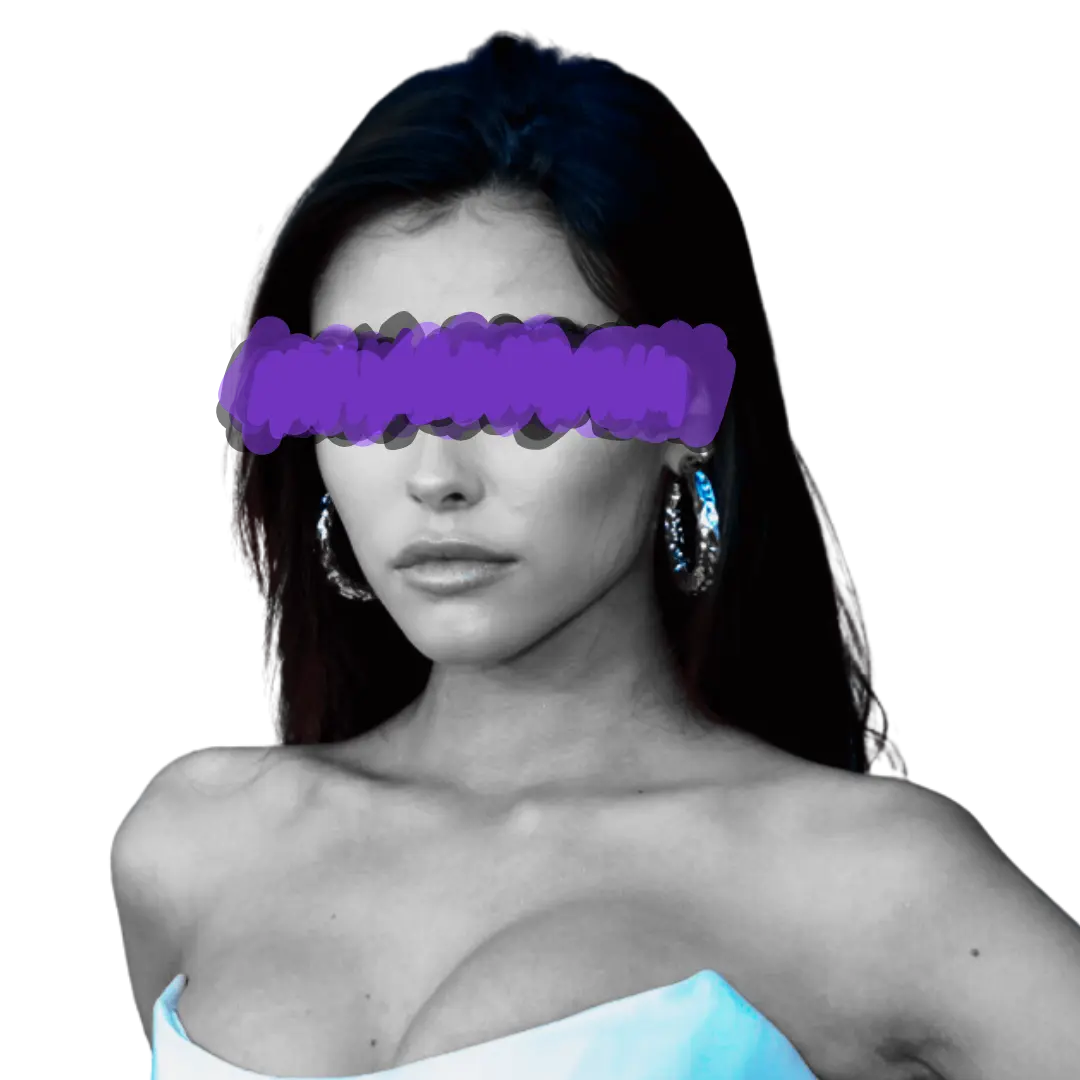
"I built myself around what everyone else expected of me instead of figuring out who I was."
On her last tour, Madison Beer developed an unusual habit. Every city, she'd find an antique store. Not vintage clothing or designer jewelry — antique lockets. Delicate, tarnished, forgotten containers that once held photos of people she'd never meet. She filled her Los Angeles apartment with them.
She put photos of her cats inside her favorite one.
Then she named her entire third album after them. "They hold important things, and memories, and people, and places," she told Numero. "Both the locket and my album serve as a means of capturing something personal and passing it along to someone else."
A 26-year-old pop star, at the height of her commercial success, spending her free time alone in antique stores, collecting other people's discarded intimacy. Opening each one, wondering what was inside, then filling it with something of her own.
That's the whole story. The girl who was made famous before she knew herself, who has spent a decade trying to find out who she is — in public, with cameras, while millions watch. Every album a locket she cracks open. Every interview another attempt to be understood. And every time the world looks inside, it decides she's showing them something fake.
TL;DR: Why Madison Beer is an Enneagram Type 4
- Self-discovery as survival: She wrote a memoir at 24 and attends therapy three times a week — not as self-care but as a structured excavation of identity.
- Comparison as engine: She has openly described feeling like "a failure" while watching peers sell out arenas, even as fans told her they wanted to be just like her.
- Pain into product: She was writing songs about wanting to leave a relationship while still sitting in the same room as the person she was writing about. The music exposed the truth before she could face it.
- The authenticity wound: Dropped at 16 for being "too sexy," accused of plastic surgery, called an industry plant — every controversy attacks the one thing she needs most: to be seen as real.
What is Madison Beer's Personality Type?
Madison Beer is an Enneagram Type 4
Enneagram Type 4s carry a core fear that cuts deeper than most: the terror of having no identity, no significance, nothing that makes them irreplaceably them. They process life through an intensely personal lens, turning every experience into material for self-understanding. Their dominant emotion is shame — the quiet conviction that something about them is fundamentally defective, and that everyone else got a manual for living that they never received.
Most people see Madison Beer and think: beautiful girl, industry connections, manufactured career. The "industry plant" accusation has followed her since Justin Bieber tweeted her cover of "At Last" when she was 13.
But that framing misses what's actually driving the machine.
Madison Beer needs to be understood as her real self. The problem is she became famous before she knew who that self was. She was 13 when the world started watching, 14 when grown men called her "too sexy," 16 when her manager, lawyer, and label all dropped her in the same twelve hours. Every act of self-discovery since then — the albums, the memoir, the BPD diagnosis, the therapy — has been performed in front of an audience that keeps telling her the version she's showing them isn't real.
That's the engine. Not pain alone. Not talent alone. The need to find yourself while the world is already deciding who you are.
She's a 4w3 — blending the Individualist's emotional depth with the Achiever's hunger for recognition. The wing distinction matters. A 4w5 Madison might have retreated after being dropped at 16. Disappeared into songwriting without caring if anyone heard it. Instead, she rebuilt her public presence. Fought for visibility. Turned her pain into a Grammy-nominated career.
The 3 wing doesn't make her less authentic. It means she wants to be authentically successful. Not just authentically suffering.
The Girl Who Was Famous Before She Was Anyone
Madison Elle Beer was born March 5, 1999, in Jericho, Long Island, to a Jewish family. Her father Robert, a Moroccan Jewish real estate developer. Her mother Tracie, an Ashkenazi Jewish interior designer who would eventually become her daughter's manager, booking agent, and last line of defense.
The first fracture came at seven. Her parents divorced in 2006. Her father's "multiple relationships" afterward planted something in Madison that wouldn't fully bloom until her teens: abandonment issues that would replay in every romantic relationship for the next decade.
She taught herself piano, drums, and guitar from books and YouTube tutorials. No formal instruction. Just a kid alone in her room, learning instruments from strangers on the internet, building an internal world she could control.
At 13, she posted a cover of Etta James's "At Last" to YouTube. Justin Bieber tweeted it to his millions of followers. Overnight, she went from eighth-grader to trending topic. Scooter Braun signed her before her 14th birthday. The machine started.
Labels told her: "We all love you; you're going to be the female Justin Bieber, give it a year."
Then the year ended.
Twelve Hours
At 16, her manager dropped her. Her lawyer dropped her. Her label dropped her. All in the same day.
The reason: "too sexy."
"There was a conversation around me when I was 14," she told Cosmopolitan. "I remember people being like, 'She's too sexy' and 'We can't sell that because she's so young, so we'd have to wait.' This was a real conversation, grown men talking about how I was too sexy. I was 14."
"I felt like I was a dollar sign to them and when I didn't bring enough money, they didn't care about me anymore."
In her memoir, she confronted the people who dropped her: "You guys just stole years of my childhood that I'll never get back. And now it's just 'good luck' and 'have fun'? I can't go to college because I've been homeschooled. I have a high school degree and nothing else because of my career. My whole family uprooted and moved to Los Angeles with no connections. I have no friends. Are you guys kidding me?"
They told me I was too much. They told me to wait. Then they left.
The professional loss was secondary. The real wound was being rejected for being herself. The industry told a teenage girl she was too much — too provocative, too something — and then vanished. For someone whose deepest fear is being without significance, whose identity was just beginning to form, that message didn't just sting. It lodged.
Her mother Tracie pivoted from interior design to management. Took on contracts, tours, merchandise deals. Madison would later write: "She has the biggest heart ever and is so selfless and amazing. An added bonus is that not only is she my mom, but also my best friend."
What happened between 16 and 21 gets glossed over. It shouldn't. It's where Madison became Madison.
The Wilderness Made Her
From 16 to 21, she existed in industry limbo. No major label. No powerful manager. Just a teenager with a YouTube following, releasing independent singles, fighting for every scrap of visibility.
"Dear Society" in 2019 attacked the pressures directly: "Dear society, why do I have to fit your beauty? / Tell me who decided / What's right or wrong for me and my body."
She was the only female solo artist on the Billboard Mainstream Top 40 chart without a major label. She performed at Lollapalooza. She joined Riot Games and (G)I-DLE for the viral "Pop/Stars" track. She did all of it without the infrastructure her peers took for granted.
"For a very long time, I felt very silenced by older men in the industry who actually didn't know what they were talking about and steered me in all the wrong directions," she told NME. "When I was younger, gatekeepers would say: 'Oh sweetheart, we know better than you — you don't know what you're talking about.'"
In August 2019, she finally signed with Epic Records. But the relationship would prove complicated. When Life Support arrived in 2021, she revealed Epic gave her "almost zero support" for "Reckless," including having to pay for the music video herself.
The irony: the mainstream visibility the industry denied her at 16 came through a TikTok algorithm, not an executive's decision. "Selfish" went viral. "Reckless" debuted with over 729,000 first-day Spotify streams.
She had clawed her way back. And the people in power, once again, weren't the ones who got her there.
The Comparison She Can't Shake
Here's where the Enneagram cracks something open that surface-level analysis misses.
Type 4s don't just feel different. They feel deficient. They look at others and see an ease of being that seems permanently out of reach. The core emotion isn't sadness or melancholy — it's envy. A quiet, corrosive certainty that everyone else got something they didn't.
Madison has been devastating honest about this.
"For a long time, I compared myself to other artists who were on paper bigger than me," she told Grazia Daily. "They were selling out arenas or getting number one hit records and I felt like a failure."
Read that again. Fans are telling her she's their dream. And she's standing there wondering what they see. The admiration can't land because she's already decided she's insufficient.
"I tried to be somewhat of a role model for so long that I ended up not even allowing myself to make human errors — that's unhealthy."
The comparison had a target. She never named names, but the context is legible: Olivia Rodrigo, Billie Eilish, Sabrina Carpenter — generational peers who achieved the mainstream dominance that kept eluding her. Evie Magazine even ran an article titled "Why Hasn't Madison Beer Reached Olivia Rodrigo's Level of Success?"
She says she's "fiercely protective of her female peers." But protectiveness and comparison coexist. You can root for someone and still measure yourself against them every night.
The shift came slowly. "My biggest gift to myself has been understanding that I have to allow myself to be proud of where I am. I can't continue to compare myself." And by 2026, with Locket debuting at number 10 on the Billboard 200: "It's a big deal for me to feel freed from the shackles of pressure and comparisons."
Freed. Not cured. Freed — like a prisoner who got out but still dreams about the cell.
Writing Songs About Leaving While Still Sitting in the Room
Madison's creative process reveals more about her psychology than any interview answer.
"Definitely melodies first," she told Interview Magazine. "I can't write without the melody."
She records vocals straight through — no jumping in and out of the booth. She keeps her creative circle small, working with the same producer, Leroy Clampitt, across multiple albums. Clampitt, who is Grammy-nominated and has produced for Justin Bieber and Sabrina Carpenter, has called Madison his "idol, mentor, one of his biggest influences, deepest collaborators and dearest friends." When a producer of his caliber calls his artist his mentor, it tells you who leads in the room.
But the revealing detail is this:
"I was still in a relationship while I was writing a song about not being happy," she admitted to Interview Magazine. "So you're kind of forced to be really honest with yourself."
She was writing songs about wanting to leave while still sitting in the same room as the person she was writing about. The music knew the truth before she did. That's not just artistic process. It's self-discovery by accident — the kind that happens when you can't stop being honest in your art even when you're lying to yourself in your life.
"Getting that deeply into some really serious things that I've been through, and just facing certain facts that maybe I'd been running from prior, it made me want to write about them."
Lana Del Rey, who became Madison's friend and mentor, heard Beatles influence throughout Silence Between Songs and called it "the perfect record." Lana also reportedly approached Madison in a coffee shop to tell her she was a fan — and taught her "not to put so much pressure on herself when it comes to releasing music."
The woman who feels like a failure being told by her idol that the pressure is self-imposed. That's the kind of moment that either changes someone or bounces off entirely.
What Happens When a Four Falls in Love
The pattern is visible once you know what to look for.
Type 4s under stress move toward Type 2 — they become clingy, people-pleasing, abandoning their own identity to keep the other person from leaving. The independence evaporates. The person who writes entire albums about authentic self-expression loses herself completely in another person's orbit.
Madison's relationship with Vine star Jack Gilinsky was where this pattern crystallized. They dated from roughly 2015 to 2017 — she was 15 to 18. Leaked audio revealed him verbally abusing her, calling her a "slut" repeatedly. A second recording captured her walking in on him cheating.
She stayed. She tried to "fix him." She feared that if she left, he'd treat another girl the same way. The caretaking instinct — the Type 2 stress response — overrode every self-preserving impulse.
"Don't make the same mistakes I did," she later told fans. "Your safety is never worth it."
On Call Her Daddy in December 2025, she admitted the pattern ran deeper than one relationship: she's "rarely been single for very long, instead jumping headfirst into serious long-term relationships." From Gilinsky to Zack Bia to Nick Austin to Justin Herbert — a near-continuous chain. Each relationship a new container for the identity she couldn't locate on her own.
"I've been a bit codependent in my romances."
That single sentence cost her something to say. For someone who has spent her entire public life insisting on authenticity and independence, admitting codependency is admitting the gap between who she presents and who she becomes behind closed doors.
Her current relationship with NFL quarterback Justin Herbert sounds different. "I feel supported and taken care of in a way that I can break down and I have someone to lean on." Not fixing. Not caretaking. Leaning.
The Balcony and the Brother
In her memoir The Half of It, published at 24, Madison describes the darkest moment.
She climbed over the edge of her balcony in Los Angeles. Not planning to jump — reassuring herself that she could if it came to that. She stood there until her younger brother Ryder saw her and screamed for their parents.
The detail that stops you isn't the balcony. It's the brother. A kid watching his sister stand on the wrong side of a railing, too young to understand what he's seeing, old enough to scream.
The memoir also reveals what the public narrative missed: she was sexually assaulted at the first party she ever attended in L.A. She was 14. She told nobody.
She sent an intimate video to a boy she liked, and it ended up online. She suspected that incident was part of why her label dropped her — though the industry dressed it up as being "too sexy."
By summer 2019, she was dependent on Xanax to sleep.
"I didn't want to die," she wrote, "but now I needed to figure out how to turn my life into one I wanted to live."
She made the memoir interactive — journal prompts on some pages invite the reader to answer questions alongside her. She didn't just tell her story. She built self-reflection into the reading experience, turning her private excavation into a shared exercise.
Her BPD diagnosis in 2019 brought something unexpected: relief.
"I felt a weird sense of relief because, for a long time, I was like, 'Am I crazy?' The diagnosis gave me a lot of actual insight and actually provided me with so much clarity and peace."
Most people would feel devastated. Madison felt named. Having a word for the chaos meant she could finally study it instead of drowning in it.
The Discipline Nobody Sees
There's a version of Madison Beer's story that's only about pain. It would be incomplete.
She attends therapy three times a week. Not casually, not sporadically — three structured sessions, every week, for years. She's set boundaries with social media after it nearly destroyed her: "I set a lot of boundaries with myself now. I'm very self-aware if I'm in a comment rabbit hole."
She used to stay up until 4 AM. Now she can't make it past 10 PM.
She plays video games — Fortnite, Dress to Impress on Roblox. She kept this hobby secret for years because she was "too nervous" and thought she was bad at it. "Now I'm just publicly bad," she joked.
She swims for hours in her pool and leaves her phone inside. The one place she's unreachable is the one place she feels most herself.
"I'm picking myself apart. Everything I say and do, I'm like, 'You're being annoying,'" she admitted. A woman with 40 million followers walks through the world believing she is fundamentally irritating. But the self-awareness has become a tool rather than a weapon. "I used to look at my sensitivity as a weakness," she wrote in her memoir. "But now it is my true superpower."
"Industry plant. Manufactured. Fake. Too sexy. Not talented enough."
Therapy 3x/week. Asleep by 10 PM. Collects antique lockets. Swims alone for hours. Believes she's annoying everyone.
This is what integration looks like for someone with her wiring. The healthy version of a Type 4 moves toward Type 1 qualities: discipline, structure, principle applied to the emotional chaos. Three therapy sessions a week isn't casual self-care. It's a rigorous system for self-understanding. The early bedtime, the small creative circle, the boundary-setting — all of it is structure imposed on a personality that could easily dissolve into feeling.
"You have to try to be better, always," she said about her BPD. She won't use her diagnosis as an excuse. That's the principled streak at work.
The Controversies That Keep Hitting the Same Wound
Every major controversy in Madison's life attacks the same nerve: authenticity.
The "industry plant" accusation denies that her career is real. The plastic surgery speculation denies that her face is real. The Lolita controversy — when she said on Instagram Live that she "definitely" romanticized the novel, setting off a firestorm — denied that her intellect was trustworthy. Her tearful response to cosmetic surgery rumors: "This would break anyone... I'm hurting."
Even the Israel-Gaza controversy struck the same place. As a Jewish woman, she faced criticism for her silence — but revealed she'd received "threats of contract termination and expulsion" if she spoke out. Being silenced on an issue touching her identity. The pattern never changes: someone else deciding that the version of Madison she's showing them can't possibly be the real one.
"A very real thought is whether I want to exist as a public entity," she told HotPress.
That's not a throwaway quote. She has genuinely considered whether public life is survivable.
And then she kept going.
Locket: The Album That Named the Pattern
Locket debuted at number 10 on the Billboard 200 in January 2026 — her first top-ten album. Her second Grammy nomination came for "Make You Mine," nominated for Best Dance Pop Recording.
She conceived the title before writing any songs. That's the process: start with the emotional concept, build the art around it.
"After writing the album, it feels like each song lives within this metaphorical locket for safekeeping. Each album feels like an era and once the albums are out in the world, the chapter for me, usually with what I wrote about, is closed."
Clash called it "an intimate and self-assured body of work shaped by memory and emotional reflection." Paste called it "Beer's most focused and enjoyable project to date."
She learned something making it: "how to navigate writing about a relationship while it was still happening, then when it ended."
Songs that start as love letters and end as autopsies. The locket closes, the chapter ends, and she moves to the next one.
When asked about competing with her peers, she said something that would have been impossible for the Madison of five years ago: "This isn't everything to me."
The woman who fought for a decade to be taken seriously, who measured herself against every arena tour and number-one record — now insisting the thing she fought for doesn't define her. Whether that's growth or the next layer of protection is the question she hasn't answered yet.
The Locket She Keeps Opening
Madison Beer collects containers designed to hold something precious close to your heart. She fills them with photos of her cats, not her Grammy nominations. She named an album after them because "they're very delicate and beautiful, and feminine, and they hold important things."
She was writing songs about wanting to leave before she could leave. She was collecting antique intimacy in cities where she was performing for thousands. She was going to therapy three times a week while telling interviewers she was fine, then admitting she'd been codependent her entire adult life.
"I feel like I'm constantly anxious and feeling like I want to delete all my social media," she said. "It's something I actually struggle with weekly."
Weekly. Not in a crisis. Not after a controversy. Every week, she considers disappearing.
She keeps choosing not to. She keeps opening the locket. She keeps showing people what's inside, even though they keep telling her it's fake, or too much, or not enough. At some point you have to ask whether the compulsion to be understood is the thing that saves her or the thing that won't let her rest.
Disclaimer: This analysis is based on publicly available information and aims to explore Madison Beer's personality from an Enneagram perspective. It's not a definitive assessment but an invitation to reflect and engage.
What would you add?