"I'm that kind of girl that will work until they physically pull me off set or out of the studio... I always want the best of what I can offer, and I think that's a blessing and a curse."
David Carpenter built his youngest daughter a purple recording studio in the basement of their East Greenville, Pennsylvania house. Not a toy. Not a phase. A working studio, because by then it was obvious that Sabrina's obsession with music was — in his read — "something to invest in." Her parents called her "bumblebee" to keep her humble. The nickname existed because her drive was noticeable enough to need tempering, and she hadn't yet hit double digits.
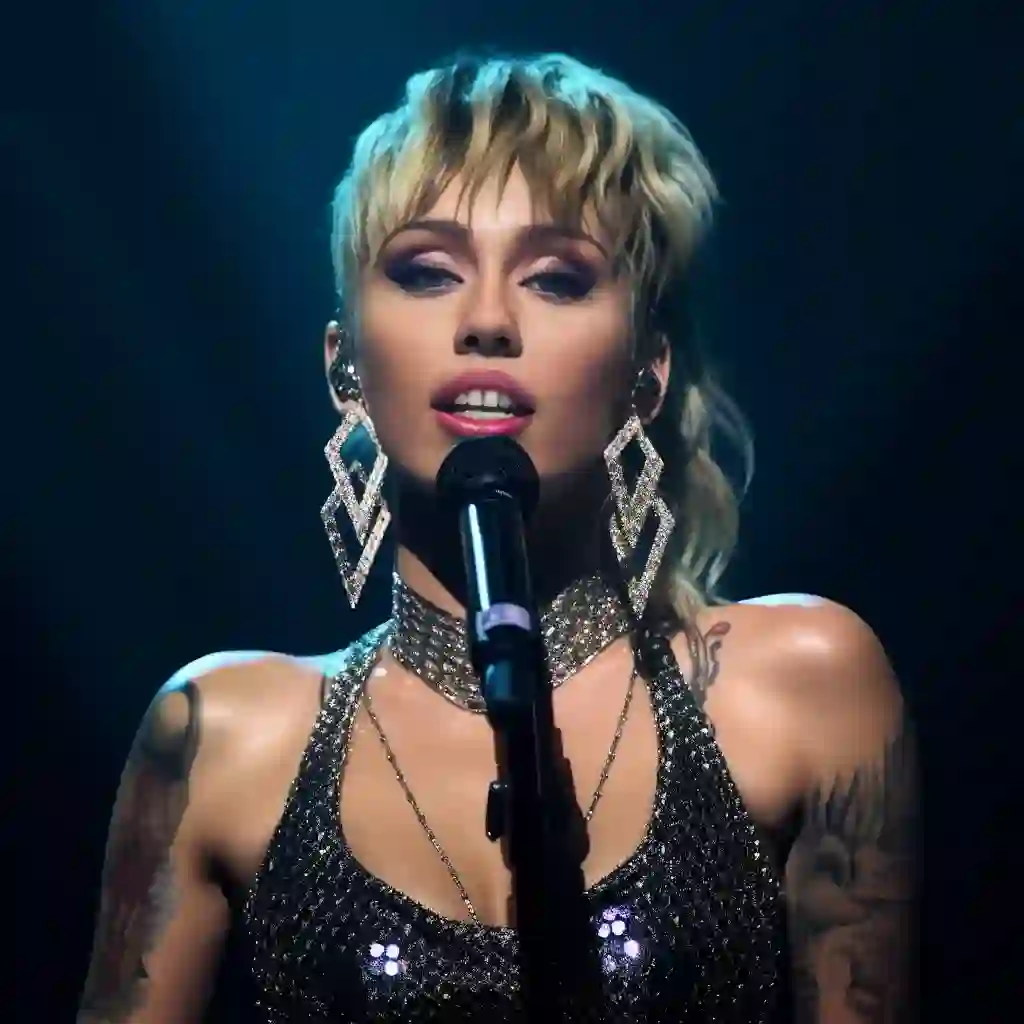
That basement is where the YouTube covers started. From there: Disney Channel at 14. A debut EP at 15. By 26, Sabrina Carpenter had become the first artist since The Beatles to chart her first three top-five hits in the same Hot 100 week. She'd won two Grammys, hosted SNL, executive-produced a Muppets revival, grossed over $77 million on the Short n' Sweet Tour, and announced herself as the 2026 Coachella headliner — a slot she'd publicly promised herself two years earlier. At 5'1", she did all of it while making everyone around her feel like the short one.
What separates her from other Disney alums isn't talent alone — talent at that level isn't rare. It's an internal engine that's been running since the YouTube uploads at age 10. The engine has a name in personality psychology: Enneagram Type 3, The Achiever.
TL;DR: Why Sabrina Carpenter is an Enneagram Type 3
The Control Girl: "I like control and I think I have a lot of it," she told Interview Magazine. "Other people might deem me a control freak, but I don't think I'm a freak. I think I'm just a control girl." She arrives 10 minutes early to every session and refines mixes obsessively up to release day — the production isn't happening around her, it's happening because of her.
Image as Architecture: Her evolution from Disney kid to retro-glam bombshell wasn't accidental. She creates mood boards with her stylist, channels Brigitte Bardot deliberately, and uses fashion as narrative. For a Type 3, the visual identity IS the achievement.
Controversy as Content: The church video became a "Jesus was a carpenter" t-shirt. The love triangle became "Skin." The White House attack became a political stand. Where other artists issue Notes App apologies, Carpenter metabolizes problems into brand moments faster than the news cycle can keep up.
Fear of Being Worthless: "People in the past had told me my music didn't have symmetry," she admitted. Her breakthrough came when she stopped chasing what others wanted and leaned into being herself — the core struggle of every Type 3.
Achievement Beyond Validation: Executive-producing the Muppets, raising $1M for charity faster than any PLUS1 partner, taking political stands that cost fans — these are signs of a Type 3 who's learned that some things matter more than winning.
What is Sabrina Carpenter's Personality Type?
Sabrina Carpenter is an Enneagram Type 3
The Achiever's gift is the ability to read what success looks like in any room and deliver it. The trap is mistaking the delivery for a self. Type 3s at their best route the engine into work that genuinely matters to them. At their worst, they vanish into the chase, losing the person underneath the performance to whatever the next milestone wants.
Sabrina's arc — from the openly described 2022 low point, through "Espresso," through two Grammys, through stepping behind the producer's desk on "Man's Best Friend" — is the story of someone who figured out how to keep winning without losing the person doing it.
The Family That Built the Machine
Sabrina is the youngest of four. Her three older sisters — Cayla, Shannon, and Sarah — set the household tone before she was born. Cayla, the oldest and a half-sister from her father David's earlier relationship, became a freelance makeup artist and hairstylist. Shannon trained as a dancer and choreographer. Sarah, closest to Sabrina in age, appeared with her on Girl Meets World. Sabrina grew up watching three older versions of herself audition for what they wanted.
Her mother Elizabeth was a dancer. Her father David played in garage bands. Creativity in the Carpenter house wasn't encouraged — it was assumed.
But the most consequential family member for Sabrina's career isn't a sibling or a parent. It's her aunt.
Sabrina's father is the stepbrother of Nancy Cartwright — the voice of Bart Simpson since 1989. Cartwright has called Sabrina her niece since Sabrina was eight years old. That's the age Sabrina told her aunt she wanted to be on Disney Channel. Nancy didn't laugh it off. She let the family live with her in Los Angeles "four months at a time during pilot season," helped Sabrina get her first management, and helped her land her first agent.
For a kid in rural Pennsylvania, that connection collapsed years of grinding into a runway. Most Disney aspirants spend a decade trying to get noticed. Sabrina had an aunt at the top of the industry — and twenty years of insider relationships — by the time she was old enough to ask for help.
That doesn't make her an industry plant. It makes her someone whose ambition met a half-open door — and who walked through it harder than most kids would have.
The homeschool decision flowed from that runway. Other kids split their lives between school and extracurriculars. Sabrina's entire world centered on getting better — dance lessons at 2, vocal lessons by 6, six days a week of classes. Being "off" wasn't a state she was familiar with.
The sarcasm came from home too. "My parents are both extremely sarcastic," she told Vogue Italia. "Anytime I didn't really want to be nice and please people, I could use sarcasm as a tactic of being transparent, and I didn't come across as rude or bitchy." The humor that would later define her brand wasn't learned in Hollywood. It was inherited at the dinner table.
In October 2008, at age nine, Sabrina entered "The Next Miley Cyrus Project," an online singing contest run by Cyrus's official site. She placed third out of 7,000 entrants. (She isn't related to Miley Cyrus, despite the rumor that won't die.) By nine, she was already entering national competitions and finishing in the top tier.
By 10, she was uploading covers to YouTube: Adele, Taylor Swift, Christina Aguilera, even Ozzy Osbourne and Guns N' Roses. The range was deliberate. She was already learning that versatility pays.
ENNEAGRAM TYPE 3 · THE ACHIEVER
TYPE 3 · THE ACHIEVERHEART TRIAD
ACHIEVEMENT
DRIVE
SUCCESS
AMBITION
EXCELLENCE
RECOGNITION
IMAGE
PERFORMANCE
CHARISMA
STANCE
Assertive
HARMONIC
Competency
AKA“The Charmer” or “The Professional”
CORE FEARBeing worthless without successCORE DESIRETo feel valuableINTELLIGENCEEmotionalCORE EMOTIONShame
She got her first audition at 11. Her breakthrough role came at 14 — Maya Hart on Girl Meets World (2014–2017), the spiritual sequel to Boy Meets World. The character was the rebellious blonde best friend, played by Carpenter with a wit that suggested someone older was hiding inside the show's PG dialogue. She released her debut EP "Can't Blame a Girl for Trying" the same year at 15.
Then came the part nobody talks about: the middle.
The Singular Years Nobody Mentions
Between Girl Meets World wrapping and "Espresso" detonating, Sabrina released four studio albums in six years. "Evolution" (2016). "Singular: Act I" (2018). "Singular: Act II" (2019). "Emails I Can't Send" (2022). She co-wrote every song on the Singular albums — the first time her songwriting was the headline.
Critics noticed. Earmilk gave Act I nine stars. Affinity called it "a pop masterpiece." One reviewer called it "one of the finest and most underrated albums from 2018." Act II turned darker — Refinery29 said it "sways between boastful, playful pop, and soulful confessions about anxiety."
The commercial response was muted. Singular: Act II debuted at number 138 on the Billboard 200.
This is the period people skip when they tell the "overnight success" story. She wasn't an overnight anything. She was a working pop star in her early twenties with four albums behind her and a music industry that wasn't sure where she fit. "I was definitely hard on myself as a kid," she told Teen Vogue. "I wanted to be the best at everything." By her twenties, the self-criticism had a target: why isn't this working yet?
The Breaking Point
"I was at a really, really low point in my life about two years ago," she told Interview Magazine in 2024. "So I was writing very few optimistic love songs."
Type 3s hit walls when effort stops producing results. The unhealthy response is chasing a different image. The healthy one is excavation.
"People in the past had told me my music didn't have symmetry, that I didn't have every song sounding the same, and that got in my head," she told Interview Magazine. That note — be more consistent, be more legible, be more like a thing we already know how to sell — is exactly the pressure her wiring is built to absorb. The breakthrough came when she stopped absorbing it. "Emails I Can't Send" (2022) was, in her words, "more dangerous," more vulnerable, more her.
Then came Taylor Swift's Eras Tour. Opening for Swift through 2023–2024 gave Carpenter stadium-sized audiences and a two-decade master class in how a career sustains itself. During a 10-day tour break in France, she wrote "Espresso" in a beautiful studio just outside Paris — sleeping rooms upstairs, one little creperie down the road. The melody locked in within 20 minutes. "I had my shot of espresso, and then I might have had some champagne, and before I knew it the song was written."
The song that changed everything came from rest. For an Achiever, doing nothing feels structurally impossible — even the rest had to produce something.
"I do feel like the timing wasn't a coincidence," she told Rolling Stone. "Because I've always felt a really weird relationship with the universe, and I always felt like it was going to work out. But I also feel at the same time, 'How the fuck did that all happen?'"
The Music: What Sabrina Actually Made
Pop discourse has a hard time taking pop on its own terms. Carpenter's songs keep getting framed as vehicles — for personality, for thirst, for marketing — when the more honest question is whether the music itself is good. It is. And the architecture is more deliberate than the takes around it usually credit.
Where Olivia Rodrigo turns heartbreak into catharsis and Gracie Abrams often keeps it intimate, Carpenter puts the wound through comic timing before she lets it have reverence.
The hooks are simple. The craft sits in the layering.
"Espresso" is a disco-leaning earworm built on a guitar loop and a bassline the team locked down in under an hour, then refined for months. The "Short n' Sweet" album as a whole leans into '70s soft rock with current vocal production. Pitchfork's Quinn Moreland called it "refreshingly light," "cheeky, clever, and effortlessly executed," and the magazine's Jaeden Pinder noted "dashes of Dangerous Woman-era Ariana Grande in her whispery vocal runs."
The follow-up, "Man's Best Friend" (2025), pushed further. Critics compared it to ABBA and Fleetwood Mac's "Tusk." The reference points matter. Tusk was Fleetwood Mac at their most willfully un-commercial — Lindsey Buckingham fighting his own band's success. ABBA was meticulous studio pop that hid its labor under glitter. Carpenter is borrowing from architects, not from charts.
Her method runs title-first. She decides what a song is called, then writes outward from the punchline. "Manchild" was "Manchild" before it had a melody. "Please Please Please" came together in a single afternoon at Electric Lady Studios with Amy Allen and Jack Antonoff — three songs done in one day, including the one that would become her first #1. Allen recalled the room: "It feels like two best friends sitting down. We have so many shared experiences." On recognizing Carpenter's talent in particular: "It's really hard to find somebody and be like, 'Oh, undoubtedly, you are the thing.'"
The "Nonsense" outros — the city-by-city dirty rhymes that made her a viral phenomenon before "Espresso" did — started on opening night of the Emails I Can't Send Tour, September 29, 2022, in Atlanta. She made up a verse on stage: "Come over tonight my room is spotless / I'm sorry this outro is so chaotic / Atlanta it's official you're the hottest." It was, in her words, "a random decision two years ago" that "really changed the course of my daily schedule." The bit kept getting hornier and funnier for two years, became the most-screenshotted moment of her live show, and traveled with her onto the Eras Tour. She retired it for the Short n' Sweet Tour. Once a bit is a brand obligation, the joke stops being hers.
That decision says a lot about how she runs the music. The bit worked, and she retired it anyway, because the next thing had to be hers — not the audience's.
How Sabrina Turns Control Into Momentum
The Perfectionist's Loop
Producer Julian Bunetta revealed how Carpenter approaches a song: "She likes to hear the song over and over so that everything is crystallised and it all has purpose."
"Right until the moment the song was coming out, Sabrina and I just chipped away at it," Bunetta explained. "That's when we really got into the weeds of it — her voice, the sections, the effects."
Flaws in the work feel like flaws in the self when the work is the self. Achievers refine until refinement is impossible. But with "Man's Best Friend," something shifted. "I started to ask myself the question of, what does perfect mean?" she told Interview Magazine. That question — what does perfect mean? — is the sound of a Type 3 growing up.
Humor as the Control Room
The thing people talk about most when they talk about Sabrina Carpenter isn't her voice or her chart stats. It's her comedy. The deadpan one-liners. The between-song banter that makes arena crowds feel like they're at a stand-up show. The way she says something filthy and then looks at you like you're the one who should be embarrassed.
"Humor is such a healing part of my life," she told Variety. "And I use it in everything — that's how a lot of my songs happen." Her Nonsense tour outros — 80-plus unique, city-specific dirty rhymes improvised across the Emails I Can't Send and Eras Tour dates — became the most viral moments of every show.
In Philadelphia: "This crowd is giving me all the endorphins / I wish someone could rearrange my organs." In Chicago: "Water ain't the only thing I swallow."
Her producer Jack Antonoff identified what makes it work: "She's as intelligent as someone can possibly be, which is why she's funny. When she says something incredibly profound and then chucks it away with a joke, it almost hits deeper." He added: "There's a seamless, effortless vacillation between the most dark and depressing topics and the absolute silliest and funniest."
NPR compared her to Barbara Stanwyck in screwball comedies: "a character who is smarter than everyone around her and lets the audience in on the joke." Her 2025 Grammy performance channeled Goldie Hawn's 1978 special — pratfalls on a Busby Berkeley staircase, fumbling a baton, "accidentally" walking down too many stairs. The performance said: I'm a comedian doing pop, not a pop star doing comedy.
For a Type 3, humor is a sophisticated form of control. The joke sets the terms. When she tells critics of her sexual content, "Those are the songs that you've made popular — clearly, you love sex," she's not defending herself. She's reframing the entire conversation.
"You can be sure that anything I do and say has a little bit of a wink to it," she told Variety. That wink is the tell. It says: I know exactly what I'm doing.
Off-Camera
Strip away the stage, the glam, and the wink — what's left?
She moved to New York in 2021. The thing that sold her on the apartment was the fire escape. "I felt like I was living in my own little movie and I could watch the rats from above," she told Vogue Italia, "which is important to me." A girl from rural Pennsylvania who'd just become a touring pop star wanted, more than anything, somewhere she could watch the city without being in it.
She doesn't own a TV. "It sounds like I'm so disconnected and old school, but when I'm here, I just listen to music." Mostly '70s — Fleetwood Mac, the soft-edged rock she'd later channel on "Man's Best Friend." She draws. Her grandmother, who passed away recently, was an artist who "threw that gene to me." Carpenter sketches people, animals, landscapes "when I'm lucky enough to be a little bit bored." Her best ideas, she says, arrive right as she's about to fall asleep — "unfortunately." She knocks on wood compulsively: "I'm very intentional about the words I speak. I really feel that they are the most powerful thing."
She doesn't have a vice. "Genuinely. I don't smoke, I don't drink to deal with things. I let loose by not answering texts." Sometimes she cancels plans last-minute: "The universe says I shouldn't go tonight."
What scares her? "Not spending enough time with the people I love. That scares me sometimes — and spiders."
This is the part of Carpenter the Achiever framework alone can't account for. The diagnostic says she's always performing — and she mostly is. But the part of her that picked that specific fire escape, the one overlooking the rats, has nothing to do with achievement. She told Vogue Italia: "My shows may give the impression that I'm playing a character. But when I talk to the audience, I speak as myself. I talk about what I did that day and how I feel... those are the moments I keep to myself, the real ones."
The healthy Type 3 isn't the one who stops performing. It's the one who figures out which moments aren't part of the show.
Writing as Confession
"I think a lot of people think because I have a producer and co-writers that I love that I'm sitting in the room on my phone, not writing."
She's not. She drives the process — title first, then everything else. The songs become documentation of her actual life. The public reads them as diary entries and dissects lyrics for clues about Barry Keoghan, Shawn Mendes, Joshua Bassett, every other rumored ex.
Keoghan is the most public case. They hard-launched at the Vanity Fair Oscars party in March 2024, debuted on the red carpet at the Met Gala in May, and he starred in the "Please Please Please" music video in June — playing, with deliberate wink, exactly the kind of bad-news boyfriend the song was begging not to be. They split in December 2024 after roughly a year together. "They are both young and career-focused," a source told E! News at the time.
"Manchild" arrived in June 2025. Fans instantly mapped the song onto Keoghan. Carpenter pushed back lightly in her release caption: she'd written it "on a random Tuesday with Amy and Jack not too long after finishing Short n' Sweet" — before the timeline most fans wanted to assign it to. She described the song as documentation of "the very confusing and fun young adult years of life," not a kiss-off.
When Rolling Stone asked about her relationship status in June 2025: "Am I doing the single thing right now? I'm doing the 25-year-old thing right now, whatever that means." The line is doing exactly what the songs do — present, witty, and giving you nothing.
The public gets the art. The person behind it stays hers.
The Inner Circle
The hardest test for an Achiever isn't the work. It's whether the people closest to her have seen the person under the performance — or whether the performance has consumed everything, including them.
Her closest relationships, on the available evidence, are built around creative work. When announcing "Man's Best Friend," Carpenter wrote: "I've never had greater memories making something before. How fitting I made it with my 3 brilliant best friends Amy, Jack and John!" — songwriter Amy Allen, producer Jack Antonoff, and songwriter John Ryan. These aren't just collaborators. They're the inner circle.
Allen, who co-wrote every song on both "Short n' Sweet" and "Man's Best Friend," described their sessions: "It feels like two best friends sitting down. We have so many shared experiences." On recognizing Carpenter's talent: "It's easy to meet somebody and be like, 'Oh, I think they have it in them.' It's really hard to find somebody and be like, 'Oh, undoubtedly, you are the thing.'"
Antonoff described their creative process as unstructured and spontaneous: "I never know what's gonna happen next. It's always an off-the-cuff surprise — dinner at the house that turns into messing around in my little studio that turns into a new idea." For someone as control-oriented as Carpenter, choosing to work this way — surrendering the plan to follow the moment — says something about how safe she feels in that room.
Outside the studio, her best friend is actress Joey King. They'd known each other for a decade as Disney Channel alums but weren't close until around 2020. Carpenter sang at King's wedding — performing a Swedish song in Swedish. When King attended Carpenter's Chicago show, she chose the mosh pit over the backstage VIP. "I wanted to mosh, babe."
Her stylist Paloma Sandoval has been described as "a muse, a confidante, and a key player in Carpenter's life," traveling with her on tour.
"When meeting people that feel very genuine and pure, I hope to keep them in my life," she told Variety, "because that's the only way that I'm going to stay close to the ground in any capacity."
That's the work — keeping people around who know her as a person, not a brand. Her admission that what scares her most is "not spending enough time with the people I love" suggests she's aware of the Achiever's classic trap: winning everything, connecting with no one.
The Taylor Swift Dynamic
Their connection began when a young Carpenter uploaded a cover of "Pictures to Burn." By 2023, she was opening for the Eras Tour. By 2024, she was calling Swift "one of my best, best friends."
What makes the relationship interesting is how Swift mentors. Carpenter told CBS Sunday Morning: "I wouldn't say it's, like, a verbal thing as much as just, like, she's very supportive of me and knows who I am as a person." Swift has never given her specific advice. She's "modeled what fame should look like."
"You just watch her walk in a room and it's very easy to understand that she's so composed, she's graceful, she's gracious," Carpenter said. For someone who learns by observing what works and then doing it, modeling beats instruction every time.
The Eras Tour was the accelerant. "Your tour enabled me to do mine," Carpenter told Swift directly. "Watching her keep their attention as if she's playing in their living room." She studied the master class and then built her own version.
When Swift featured Carpenter on the title track of her 12th album "The Life of a Showgirl," the dynamic shifted from mentee to peer: "Ten-year-old me, for so many reasons, could not believe it — to hear our voices together."
Insiders say Carpenter sends Swift snippets of new music for feedback. When she has a "boy problem," Swift is "one of the first people she calls." The relationship isn't only emotional support; it's strategic modeling. Swift showed Carpenter what a career looks like when the person behind it stays intact. For an Achiever terrified of disappearing into her own image, that's the most valuable lesson anyone can teach.
Fashion as Part of the Machine
Sabrina Carpenter's transformation from Disney kid to retro-glam bombshell wasn't an accident. It was architecture.
Her hairstylist Scott King told ET: "Sabrina is very hands on with how she wants to look. She's very specific about what she wants." They create mood boards together. The reference point is always the same: "Brigitte Bardot is always the inspo. We just love a fluffy blowout."
"I love glam. I really, really do," she told Interview Magazine. "My mom was a dancer, so growing up, makeup and dance recitals and dress-up, all of it was very, very normal for me."
But this isn't an alter ego. "Short n' Sweet is absolutely me. There's no alter ego," she told Vogue. "It's definitely a more emphasized version of me." The look amplifies — it doesn't conceal.
The Short n' Sweet Tour channeled Cher, Twiggy, and Bardot through go-go boots, lingerie, and rhinestones, which one critic described as "pure Betty Boop: a wink, a pout, and an audacious love affair with vintage glamour."
"I remember feeling inspired by images of women that felt very strong and hyperfeminine," she told Vogue. "And then being like: 'If only she said what she was actually thinking.'" That's the whole brand in one sentence.
Off-stage? "I dress like a little boy for most of the day, if I'm trying to hide." The hyper-glam stage Sabrina and the boyish hiding-Sabrina are the same person operating two registers — one for the world, one for herself.
The Fan Relationship: Intimacy by Design
Every night on the Short n' Sweet Tour, Carpenter "arrests" someone in the crowd for "being too hot," complete with fuzzy pink handcuffs and a mugshot-style graphic on the jumbotron. The targets range from celebrities (Nicole Kidman in Nashville, Anne Hathaway in New York, Miss Piggy on closing night) to random fans who go viral.
In Austin, she full-on flirted with a fan who blew up on TikTok. At one European stop, a fan said he was from Liverpool and she replied: "I'm gonna marry you, is that cool?"
During "Juno," she asks the crowd to "get down to your knees if you can... if your knees are working." When a fan couldn't because of bad knees, she pivoted immediately, laughing along. It went viral.
Every "arrest," every improvised flirtation, every self-deprecating height joke is part of a repeatable, tour-tested format. But calling it "manufactured" misses something. The format is rehearsed. The warmth inside it isn't. You can see it in the pivots — the knee joke, the way she reads a crowd's energy and adjusts. The structure gives her freedom to be genuinely present, because she's not worrying about what comes next.
That's the healthy Type 3 paradox: the performance creates the conditions for authenticity. The audience leaves feeling like they got the real Sabrina. And maybe they did — just delivered through a framework she controls.
Turning Controversy Into Material
The Olivia Rodrigo Question
The defining controversy of Sabrina's early career wasn't a scandal she made. It was a song someone else released.
In January 2021, Olivia Rodrigo's "Drivers License" detonated. The pre-chorus described the "blonde girl" the narrator's ex had moved on to. The internet did the math instantly. Carpenter had been spotted with Joshua Bassett — Rodrigo's High School Musical: The Musical: The Series co-star — at a Black Lives Matter protest in July 2020, including a kiss on the forehead. The timeline was murky. The blonde-girl assignment wasn't.
Carpenter responded with a song titled "Skin," released later that month. She put her side of it into the music rather than a statement, then went quiet. The track was widely read as a direct shot at Rodrigo; Carpenter has since pushed back on that read.
Neither woman has confirmed the romantic timeline in public. What's documented is that Bassett's relationship with Rodrigo was unclear when he and Carpenter began appearing together. What's also documented is that Carpenter — three years older, four albums into her career — became the villain in a narrative built around a song by a then-17-year-old with massive public sympathy. The piece nobody writes is the one where Sabrina got cast as the antagonist of someone else's breakup.
By 2024 both women were operating as peers — Rodrigo headlining her own arena tour, Carpenter topping the Hot 100. They've publicly de-escalated. But "Drivers License" is the moment Sabrina became famous to a generation of listeners who had never seen her on Disney. That introduction shaped years of public reception, and the easy framing — "she handled it well by not engaging" — undersells how much she had to swallow to do that.
For a Type 3, being publicly cast as the villain of someone else's story is the worst-case scenario. The whole engine is built on being read correctly. She wasn't. And she kept building anyway.
The Church Video Fallout
Her "Feather" music video, filmed in a Brooklyn Catholic church with permission, led to the dismissal of Monsignor Jamie Gigantiello, who authorized the shoot. The fallout connected to a federal investigation that may have inadvertently exposed corruption tied to Mayor Adams. At her first Madison Square Garden show, she paused mid-set: "Damn, what now? Should we talk about how I got the mayor indicted, or..."
Rather than apologize, she leaned in. At Coachella 2024, she wore a shirt reading "Jesus was a carpenter" — her own surname turned into a punchline that absorbed the scandal and spat it back as a brand moment.
Where other artists issue Notes App apologies, Carpenter metabolizes controversy into content. The scandal becomes a joke. And she keeps moving.
The White House Attack
In December 2025, the Trump administration used her song "Juno" in a TikTok video showing ICE agents detaining people. Carpenter, who had endorsed Kamala Harris, responded immediately: "This video is evil and disgusting. Do not ever involve me or my music to benefit your inhumane agenda."
The White House escalated, posting a manipulated clip from her SNL appearance that made her appear to call a cast member "illegal" instead of "hot." Both videos were quietly deleted after backlash.
This moment reveals growth. The Achiever's core vulnerability is the need for approval, and alienating any audience segment is exactly what the wiring is built to avoid. Taking an unambiguous political stand — knowing it would cost fans in certain demographics — is the move of someone whose identity has finally anchored in values, not validation.
The Business Brain Behind the Pop Persona
Man's Best Friend: The Producer Emerges
In August 2025, Carpenter released her seventh album "Man's Best Friend" and made her debut as a record producer, co-producing all tracks with Jack Antonoff and John Ryan. The album debuted at #1 on the Billboard 200 and in 18 countries.
"Manchild," the lead single, became her second number-one hit on the Hot 100. Critics compared the album's sonic landscape to ABBA and Fleetwood Mac's "Tusk" — a far cry from her Disney pop origins. At the 2026 Grammys it earned six nominations, including Album of the Year. She went home empty-handed — a widely discussed "snub" — but delivered one of the night's most memorable performances: "Manchild," sung in a pilot's uniform while walking down luggage conveyor belts atop a massive airplane set piece.
The producer credit matters. Achievers don't only want to be the face; they want to build the machine. Stepping behind the board is a shift from performer to architect — controlling the product, not just delivering it.
The Grammy snub stings. The performance is the part she got to control anyway.
The Muppets: Achievement Beyond the Resume
In February 2026, Carpenter hosted and executive-produced The Muppet Show's 50th-anniversary revival for Disney+ and ABC, earning a 97% score on Rotten Tomatoes.
This wasn't a career calculation. She performed "The Muppet Show Theme" with the Muppets during the 2020 pandemic singalong. She's listed Kermit as her "favorite Hollywood date." She channeled Miss Piggy at the VMAs. In the special's trailer, she gushes to Miss Piggy: "I grew up watching you, my parents grew up watching you... their parents grew up watching you." When the special premiered, she wrote on Instagram: "Dreams really do come true!!"
She performed "Manchild" in a rowdy bar setting and sang "Islands in the Stream" as a duet with Kermit before Miss Piggy interrupted to replace him. A UVA media studies professor noted that Carpenter's "cheeky, slapstick sense of humor" is naturally compatible with the Muppets' universe.
This is significant. A pure achiever would see a Muppets gig as a step down — not cool enough, not edgy enough, not chart-relevant. Carpenter saw it as a dream come true. The gap between what someone in her position "should" want and what she actually wanted is the tell: she's operating from passion, not just calculus. Healthy Type 3s integrate toward authenticity. The Muppets gig is what that integration looks like.
The Business Machine
The Short n' Sweet Tour grossed between $55.5 million and $77.4 million across 72 shows, ranking as the 6th highest-grossing pop tour of 2025. Forbes reported her annual earnings at $29 million.
But the numbers only tell part of the story. The tour raised over $1 million for charity through PLUS1 faster than any artist the organization had partnered with. The Sabrina Carpenter Fund supports mental health, animal welfare, and LGBTQ+ causes. Her production company, At Last Productions, has sold a modern "Alice in Wonderland" musical to Netflix. Her Sweet Tooth fragrance line has generated over $15 million in retail sales.
The charity and the creative ventures signal evolution beyond pure achievement. She's building things meant to outlast her.
The Industry-Plant Question
The accusation has shadowed her since "Espresso" hit. Spotify is somehow inflating her numbers. The Beatles comparison is engineered hype. The Disney pipeline plus the Antonoff machine plus the Aunt Nancy connection adds up to manufactured success.
Some of it is observably real. Spotify's autoplay was demonstrably funneling "Espresso" to listeners who hadn't asked for it; The Week ran a 2024 piece walking through the conspiracy theories. She has a major-label apparatus behind her. Jack Antonoff has produced for half the women on the Hot 100. The Cartwright connection got her into rooms most Pennsylvania nine-year-olds never see.
But "industry plant" is the wrong frame for someone with twelve years of professional credits before her breakthrough. The Singular albums exist. Girl Meets World exists. Five tours before Short n' Sweet exist. If Carpenter were a plant, the planting was incompetent — the industry doesn't usually let its candidates marinate in mid-tier success for a decade.
The harder critique is the "Man's Best Friend" album cover, released August 2025 — Carpenter on her knees, a man's hand in her hair. Women-led organizations called it regressive. Other critics read it as satire of the exact dynamics it depicted. Carpenter released an alternate cover she described as "approved by God" and largely declined to litigate the original.
Whether that cover is feminist or regressive is a real debate. What it isn't, on the available evidence, is accidental. She knew exactly what she was making. The wink isn't deniable — the question is whether the wink earns the image, and reasonable people answered that question differently.
This is the live edge of the type: the brand is calculated, and the calculations include controversy as fuel. That isn't dysfunction — it's how the engine works at full power. The cost is that some of the audience won't follow you there, and the artist has to be okay losing them.
Carpenter, by her own admission, is increasingly okay losing them.
SNL and the Comedian Under the Bombshell
Carpenter hosted Saturday Night Live in October 2025, and the episode became the season's most acclaimed. She appeared in eight sketches — a Home Shopping Channel host selling a suspiciously anatomical pillow, a girlboss motivational speaker who keeps delivering platitudes after being thrown through a window, a teenage boy on a Gen Z podcast.
Her monologue set the tone: "Everyone thinks of me as this, like, horndog pop star, but there's really so much more to me. I'm not just horny. I'm also turned on and I'm sexually charged." Then, deadpan: "And I love to read. My favorite book is the encyclopedia. It's so big and it's hard..."
SNL was a proof-of-concept: she could command a room without a backing track, and the persona held up in someone else's format. The comedian wasn't a bit. She was the whole show.
Then came the announcement that sealed her status: headlining both Fridays at Coachella 2026. When Billboard asked, she responded: "Woman of my word."
The Reinvention She's Building in Real Time
At 27, Carpenter has built what most pop careers chase for decades. The more interesting story is the pivot. The Disney kid who wanted to be the best at everything has become someone who'd rather be the funniest person in the room. The woman who described 2022 as her "really, really low point" stopped trying to look like the next thing — and made something only she could have made.
She compared herself to a cat in W Magazine: "I'm smart, I love a little cat eye, I'm soft sometimes, I love a nap, and I can jump. And I've got so many lives."
The lives are accumulating. Pop star. Comedian. Producer. Executive producer. Entrepreneur. The girl on the fire escape and the woman onstage making 20,000 people scream — they're the same person, and she finally knows which version is the performance and which is the rest.
"I never want to feel like I've peaked. There's always room to grow, to learn, to be better."
That's still the Achiever engine. The sound coming out of it is different now.
She can jump. And she's got so many lives.
ONE QUESTION · NINE WAYS TO ANSWER IT
When you have worked hard to create something meaningful, how much does its reception change your own sense of its worth?
A sentence is enough.
You answer before you see. That is the whole point.
Former USMC infantry turned personality psychology nerd. I built 9takes to help people see
the underlying emotions and logic behind their worldview. Ask a question, see 9 takes.

Add your read on Sabrina Carpenter