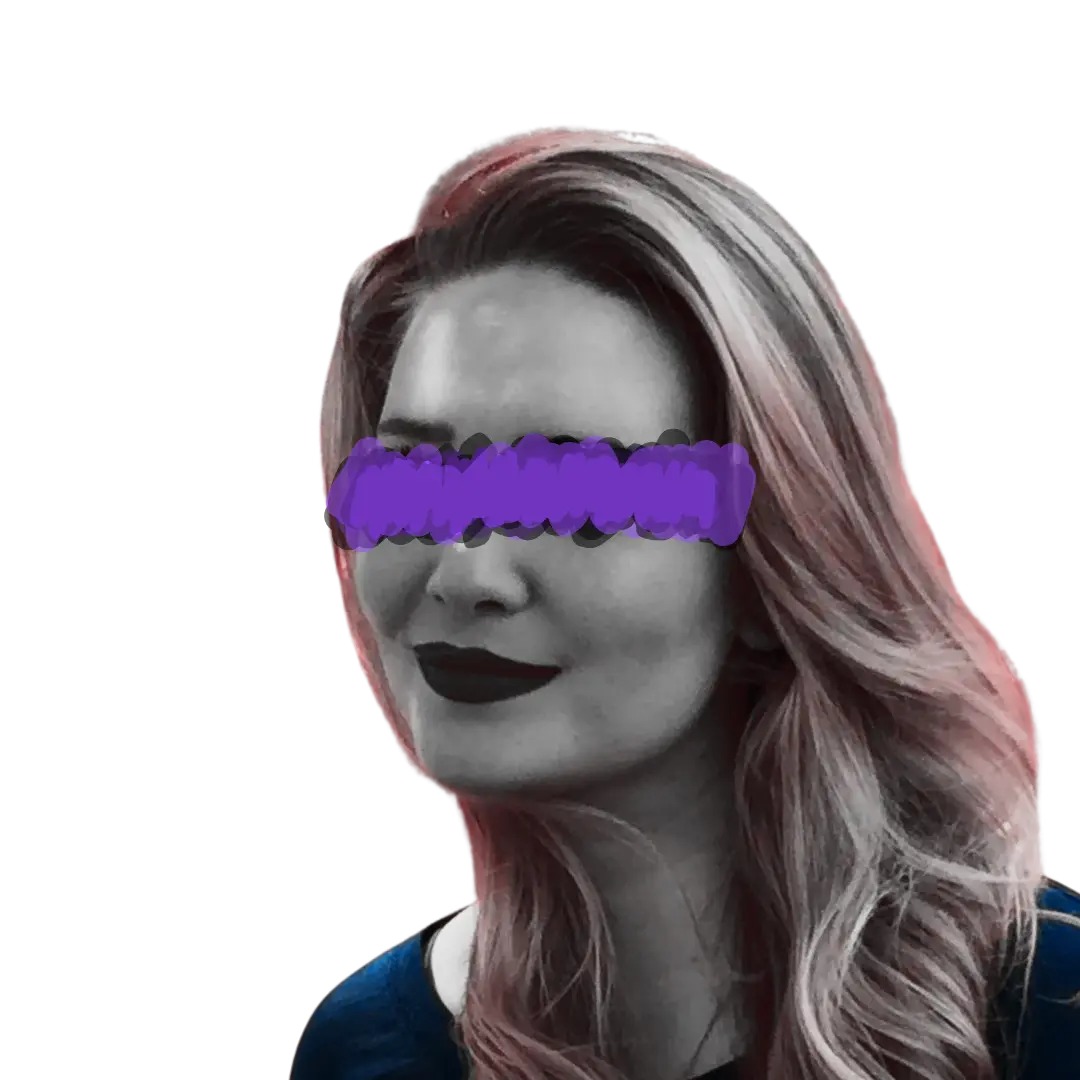
"I literally had to block out the thought of my family while I wrote this book. Like, I became an orphan."
She said it as a joke on a podcast. The hosts laughed. She laughed. But Sarah J Maas — an actual adopted child — chose the word orphan to describe the headspace she needs to write her most honest work. Not "focused." Not "private." Orphan. Alone in the dark with the story and nothing else.
There's a mirror behind her desk. A full-length one, positioned so she can watch herself act out every scene as she writes it. She swings invisible swords. She cries real tears. She mouths dialogue to see if it lands in the body before it lands on the page.
Seventy-five million copies sold. Three interconnected fantasy series. The bestselling author of 2024. Bloomsbury credits her — personally — for their record-breaking $436 million revenue year.
And she describes her daily existence as "constantly feeling like such a hot mess."
That gap — between the woman who built the most commercially dominant fantasy empire of her generation and the woman who eats peanut butter from the jar because she's "too lazy to make a proper lunch" — is not performance. It is the central engine of everything she creates. She controls every word so precisely that she'll scrap a hundred thousand of them and start over. Then she fills those controlled words with the most uncontrolled version of herself: her panic attacks, her rage, her depression, her longing for a place to belong.
She controls the creation. The creation is where she loses control.
TL;DR: Why Sarah J Maas is an Enneagram Type 4
- The missing piece: She built elaborate mythologies about fated mates and found families — belonging as destiny rather than chance — because she's spent her whole life searching for where she fits.
- Art as self-discovery: She doesn't write about mental health on purpose. She writes characters who mirror her own unprocessed pain, then crawls through recovery alongside them.
- The perfectionist paradox: Scraps entire manuscripts because she refuses to give the world her "second grade work" — yet pours her rawest vulnerability into what survives.
- The silence: Writes fierce women who fight back against every injustice, then goes quiet when criticism comes for her personally.
The Girl Who Rewrote Cinderella
She was sixteen years old, listening to the score from Disney's Cinderella, when the thought arrived.
The music was too dark. Too intense for a girl in a ballgown running down stairs. "The music fit much better when I imagined a thief — no, an assassin! — fleeing the palace."
That sentence became Throne of Glass. She posted chapters on FictionPress.com, where it accumulated nearly 7,000 reviews — the most-reviewed story on the entire site. She was a teenager writing about a teenage girl assassin, and thousands of strangers were reading along in real time, chapter by chapter, year after year.
But here's the detail that matters: she wrote and scrapped four or five other complete novels between ages sixteen and twenty-two. Finished drafts. Thrown away. "Even if it took me until I was 90 years old, I just wanted one book to publish. That would be it."
When she finally queried agents in 2008, her manuscript was 240,000 words — three times the industry standard. She didn't know or didn't care. The first round yielded three rejections. She trimmed it to 150,000. Queried sixteen more agents. Found one. Spent months cutting further. Received a publisher's offer only after agreeing to restructure the entire first book.
Ten years from first draft to publication. A decade of revision, rejection, and starting over — driven by a teenager's conviction that this specific story needed to exist in the world exactly right.
What is Sarah J Maas's personality type?
Sarah J Maas is an Enneagram Type 4
The core wound of Type 4 is a feeling of fundamental incompleteness — the sense that everyone else received something essential that somehow never reached you. They search for the missing piece through creative expression, emotional depth, and an almost painful commitment to authenticity.
"Each book I write allows me to face and explore more parts of myself."
That's not a marketing line. It's a diagnostic statement. Maas doesn't choose to write about mental health or trauma or belonging. Her characters become vessels for whatever she's processing in real time, and the writing itself is the processing.
The evidence runs through everything:
- The found-family obsession. Every series she's written is built on fated bonds and chosen kinship. Mates who are destined for each other. Chosen sisters. Unbreakable courts. She writes worlds where belonging isn't earned or conditional — it's cosmically guaranteed. Where no one can be unclaimed.
- The emotional cartography. "I have to have music on when writing, or else the silence swallows me whole." She sees entire climactic scenes while listening to scores on airplanes and starts crying in her seat. She uses the Deathly Hallows soundtrack to access sadness and action scores to choreograph fights. The inner landscape is so vivid it overtakes the external world.
- The sixteen-year-old's birthday. She was "genuinely upset" that no fantastical creature appeared to tell her she had special powers. Not disappointed. Not amused. Upset. The longing for a sign that she was different — that she was chosen — was real.
- The perfectionist who scraps everything. She threw away an entire completed draft of House of Flame and Shadow and started from page one. Even after fifteen-plus books, she calls her first drafts "a dumpster fire." But she won't let a dumpster fire reach the reader. "I'm never going to give my second grade work to the world. That's just who I am." If the work isn't worthy, the self isn't worthy.
- The identity crisis on repeat. Celaena Sardothien spends an entire series hiding behind a false name because her real identity — Aelin Galathynius, heir to a destroyed kingdom — is too painful to claim. She grieves Sam Cortland, her first love, for books. Feyre Archeron processes her trauma Under the Mountain not through talking but through painting — smearing her nightmares onto canvas because language can't hold what happened to her. Maas keeps writing the same emotional architecture: characters who fracture into false selves to survive, then fight their way back to whoever they actually are.
The Three Wing That Ships on Schedule
The three wing gives her something most Fours lack: the drive to actually finish and ship. Compare Maas to a classic 4w5 author like Donna Tartt, who published three novels in thirty years — each a masterpiece, each requiring a decade of hermetic withdrawal. Tartt retreats into the work. Maas launches it.
Before she had kids, Maas was writing two books a year. She's written 20,000 words of a novella in a single day. She publishes on schedule, meets deadlines, planned a three-series multiverse crossover years in advance, and built a commercial empire that generated $436 million in revenue for her publisher in a single year. The "Aristocrat" variant of the 4w3 channels emotional intensity into visible creative achievement — and then does press tours, podcast appearances, and BookTok engagement to make sure the world notices.
But the engine is Four. The ambition serves the need to be seen and understood, not the other way around. She doesn't write fast because she's disciplined. She writes fast because the characters are in her and she needs to get them out.
"I Became an Orphan"
In 2019, about a year after her son Taran was born, the floor dropped out.
"I was having such rampant anxiety and depression that it was devouring me. That was probably the lowest point in my life, both emotionally and creatively."
She started therapy. And then something happened that would be hard to believe if she hadn't described it so precisely across multiple interviews: she wrote her way through recovery in real time, using a fictional character as her partner in the climb.
"When I wrote A Court of Silver Flames, I was in the very earliest stages of my own climb out of a pit of despair. So I crawled out of that pit alongside Nesta."
Nesta Archeron — the cold, sharp, self-destructive sister who had been deliberately written as unlikable in previous books — became the vehicle for Maas's most personal work. The character's anxiety manifests as cold water flooding through her body, a detail Maas added after therapy helped her map her own somatic symptoms onto the page.
"It was easy because I knew exactly how Nesta felt. And it was hard because putting myself through that journey with Nesta — going on that emotional walk with her, literally as I was going through it, facing my anxiety, my depression, my trauma — it was draining, but it was so healing for me."
She cried writing two-thirds of the book.
"When I reread it now, I feel sad for my past self. You were so mean to yourself, you were suffering so much."
This isn't an author who decided to write a "mental health book." This is a woman who couldn't separate her psychological survival from her creative process — and didn't try to. The Four's fundamental belief is that the only way out is through, and "through" means converting raw internal experience into external form. Not to package it. Not to sell it. To survive it.
The Rage She Never Named
Source: Smart Podcast, Trashy Books Episode #447 — "Hanging Out with Sarah J. Maas" (2021)
A long-form conversation during the A Court of Silver Flames launch where Maas discussed mental health, female rage, and shared college experiences she'd never disclosed publicly.
There's a story Maas told on that podcast that she'd never shared publicly before.
Her freshman year of college, she was flirting with Josh — who would become her husband — at a party. Out of the corner of her eye, she saw a friend being led toward the door by a guy she didn't recognize. Her friend could barely stand. Maas grabbed her arm. The guy told her to get the fuck out of his way. Called her a bitch.
Josh came over, six-foot-two and furious, and threatened the guy. The guy backed off. Her friend spent the night vomiting boxed wine and red M&Ms.
"It took another guy," Maas said. "A six-foot-two, jacked guy coming up to this shithead and threatening him for him to back off."
Two years later, as an RA, she encountered the same man. Drunk, banging on doors at two in the morning. When she told him to leave, he hurled a full container of soda at her face with enough force that the plastic shattered against the wall. If it had hit her, her therapist later told her, it would have broken her nose. Possibly more.
The school gave him a slap on the wrist. His coach emailed her to say he was "a really nice guy."
She quit her RA job. She didn't understand why the incident haunted her so deeply until, years later, her therapist named it: "That was assault."
"I found myself making excuses for what I went through. Diminishing that. Saying, well, the guy didn't break my face when he threw that thing at me, so it wasn't assault. If it had hit me, that would have been assault. But because he missed in his drunken rage, that doesn't count."
She paused.
"And that's so fucked up."
That rage didn't disappear. It went into her characters. Nesta's fury at male violence. Celaena's assassination of her abuser. The women in her books who refuse to feel helpless. Maas channeled decades of accumulated female rage into fantasy worlds where women don't just survive — they become the most dangerous thing in the room.
"Seeing her just destroy them was so satisfying. And I will never get sick of writing about that kind of thing."
The Man Who Stayed
The guy from the party — Josh Wasserman, six-foot-two and furious on her behalf — became her husband. They married in 2010, two years out of Hamilton College. They have two kids, Taran and Sloane.
What matters for the Enneagram analysis isn't the romance. It's the access. Fours build elaborate interior fortresses. Letting someone past the walls requires extraordinary trust — and usually, extraordinary usefulness. Josh became "Papa Maas" to her fanbase because fans at book signings started lining up to thank him. "You make it possible for Sarah to write." He manages the household. He gives her the guilt-free space to disappear into the work. She credits him with the reason her male characters appeal to female readers: "I'm really blessed to have someone who treats me like an equal and celebrates all my successes."
At a signing in the Philippines, he had his own line. She told Jenna Bush Hager: "It was wonderful that the readers recognized him as part of this creative process. They embraced him and included him."
A Four doesn't let someone in because they're charming. They let someone in because that person makes the inner world more possible, not less.
The House That Held Her
During the pandemic, Maas didn't leave her house from March until August. Not even for a walk. She lived in a hundred-and-ten-year-old home built just before the Spanish flu pandemic, and the parallel wasn't lost on her.
"This house lived through one pandemic, and now it's going through another, and we're sailing into the unknown."
She suffered from migraines — probably stress-triggered — and spent hours lying in darkness, unable to look at a screen, listening to Rosamund Pike's narration of Pride and Prejudice over and over. "With all that sensory deprivation required to get through a migraine, it was like seeing a movie in my head."
The magic house in Silver Flames — the sentient building that draws baths, delivers food, produces romance novels on request, and does its own dishes — came directly from this period. "I channeled my quarantine living fantasies into the house." She wrote it as comedy, but the psychological function was transparent: a home that takes care of you without being asked. That anticipates your needs. That you don't have to earn.
One of the things Nesta is searching for, Maas explained, "is a sense of home and feeling like home is a safe place for her. And the house kind of becomes that."
The readers who reread her books three times during lockdown understood this instinctively. The fictional world felt more like home than the real one.
The Gap No One Mentions
There is a version of Sarah J Maas that writes female characters who scream at injustice, who refuse to minimize their own pain, who call out men and systems and power structures with volcanic clarity.
And there is the real Sarah J Maas, who — when criticized for killing off Nehemia, her sole major positively-represented Black character, to fuel Celaena's revenge arc; for forcing her bisexual character Mor to out herself in a scene readers found exploitative; for mentioning Breonna Taylor's murder in a book cover reveal post — said nothing.
Not a defense. Not an apology. Not an acknowledgment. Silence.
"I'm constantly learning and trying to do my best. When I make a mistake, I learn from it." That's the closest she's come to addressing it directly. One sentence. Then back behind the wall.
Her fanbase — millions strong, operating with the intensity of a political movement — filled the silence for her. Critics, particularly marginalized critics, were met with organized backlash. BookTok creator @wellreadnurse gave the pattern a name: "The SJM Effect" — defined as "a fanbase's failure to hold a white public figure responsible for problematic or bigoted behavior while simultaneously blaming and/or attacking the community harmed by that person's actions."
The Four's shadow includes this precise mechanism. When the inner world is so vast and so carefully protected, external criticism doesn't register as feedback. It registers as an attack on identity itself. And the response to an identity threat isn't engagement — it's withdrawal into the fortress of the self. Let the world rage outside. The walls hold.
Her characters fight. She retreats. The woman who wrote "find something new to call us" in response to being called a bitch — who channels her college trauma into warrior women who destroy bro-dudes and never apologize — cannot bring herself to face real-world criticism with the same directness.
That gap is not hypocrisy. It's the Four's fundamental architecture: the inner world is where power lives. The outer world is where you get hurt.
Why BookTok Chose Her
The #ACOTAR hashtag on TikTok has over 8.5 billion views. Not million. Billion. Maas is arguably the defining BookTok author — the one whose audience doesn't just read her books but inhabits them, making fan art, casting dream adaptations, arguing about ships with the intensity of constitutional scholars.
Why her? Why not any of the other fantasy romance writers?
Because the emotional extremity is the product. Maas doesn't write books where feelings are proportionate and reasonable. She writes books where grief levels cities and love literally reshapes the laws of physics. That's the Four's frequency — and it's the frequency BookTok runs on. The platform rewards intensity, sincerity, and the kind of reading experience that makes you ugly-cry on camera. Maas was engineered for this audience before the audience existed.
"I'm sitting here today because of social media," she told Jenna Bush Hager. But the deeper truth is that social media didn't create her audience. It revealed how many people were already reading with that same emotional voltage and had nowhere to go with it.
"I Have Zero Interest in Writing About Sweet Little Perfect People"
There's a question Maas keeps returning to, across every series and every interview: Why?
Why is someone cruel? Why is someone broken? Why does this person destroy the things they love?
"Even before I went into therapy, I wanted to know — why are these characters like that? What's their secret backstory that led them to act this way? Sometimes they're just an asshole. But then sometimes they actually do have reasons."
She wrote Nesta deliberately as abrasive and cold across three previous books before giving her a redemption arc. Not because she didn't understand Nesta. Because she understood her too well to simplify her. "I didn't want to make her this nice, sweet sister. That wasn't interesting to me."
What interests her is the iceberg. The cold exterior and the wreckage underneath. "She's the kind of character I'm drawn to, where she acts a certain way — like the tip of the iceberg. You see that cold exterior, and then beneath the water there's all this stuff going on that's going to destroy the Titanic."
This is the Four's gift: the willingness to sit with darkness long enough to understand it. Not to fix it or moralize about it but to know it — to feel around in the wreckage until a pattern emerges. Maas approaches her characters the way a therapist approaches a patient, not asking "what's wrong with you?" but "what happened to you?"
"Every single person is worthy of that journey of self-discovery and self-love, and the past doesn't have to define you."
She said it about Nesta. But she was sitting in a chair with a therapy appointment in two hours, still processing her own college assault for the first time publicly, still making jokes about being uncomfortable when people say nice things about her. Still describing herself as "deeply uncomfortable with people being nice to me."
"In my day-to-day life, I feel constantly like such a hot mess that anyone saying nice things, I'm like — you don't know."
The most commercially successful fantasy author alive writes every book as if she's the only person who will ever read it. She built worlds where everyone finds their fated mate and their unbreakable found family and their cosmic home — not because she has those things figured out, but because writing toward them is the only way she knows how to look for them.
She is still writing. She is still in therapy. She still has a mirror behind her desk. The sword is still invisible. The tears are still real.
What would you add?