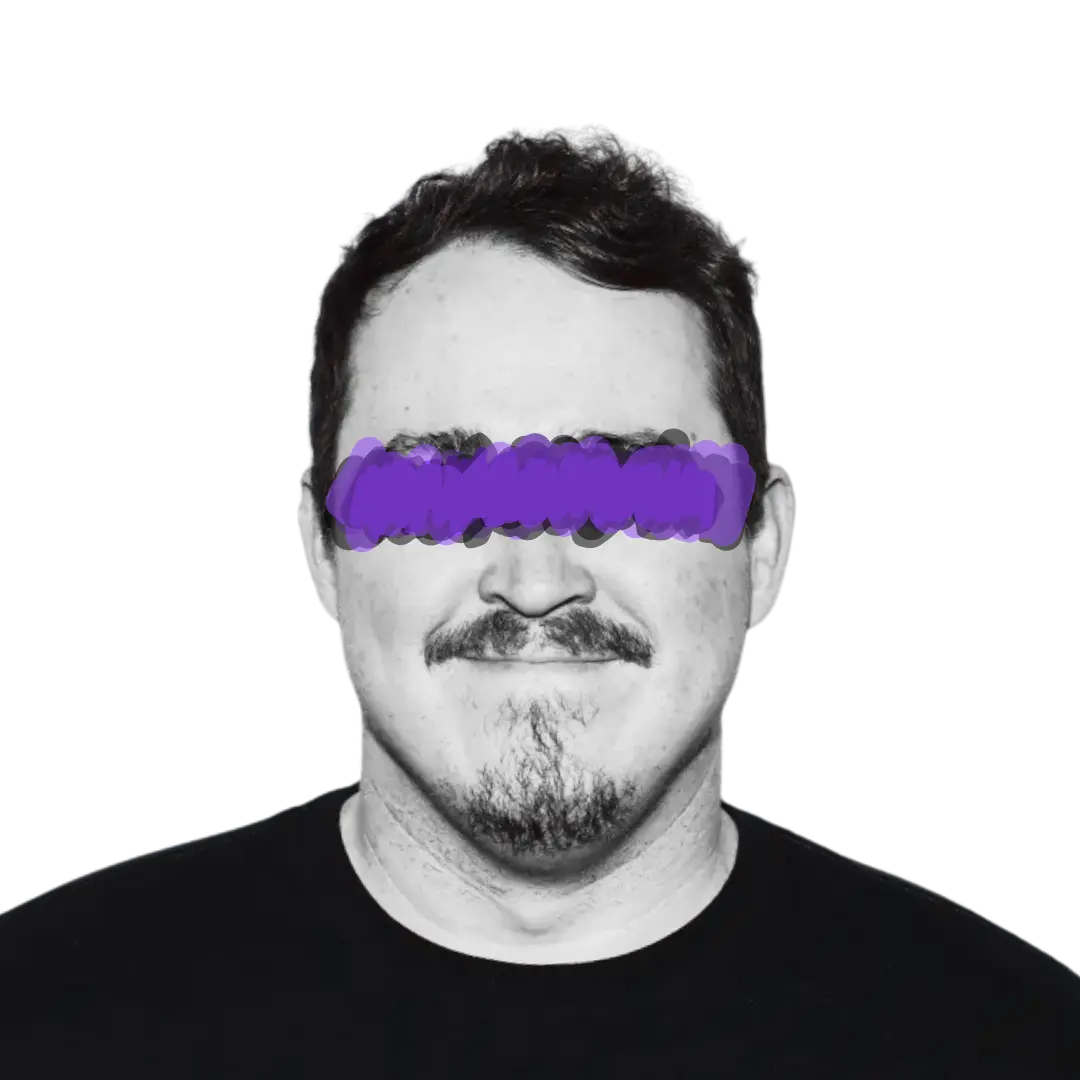
"Saying that I felt fucking corny."
In September 2019, Shane Gillis released a carefully worded statement after getting fired from Saturday Night Live. "I'm a comedian who pushes boundaries," he wrote. "I sometimes miss."
It was exactly the kind of thing you're supposed to say. Measured. Contrite. PR-approved.
Two months later, on his own podcast, he took it back.
"Saying that I felt fucking corny. I don't know if I really hurt too many people."
A Type 3 would have maintained the apology because it managed his image. A Type 8 would have never apologized in the first place. Only a Type 9 accommodates to keep the peace — then quietly takes it back when the peace no longer requires it.
This is the pattern you need to understand about Shane Gillis. He agrees, he goes along, he exits without a scene — and then he does exactly what he was going to do anyway. He quit West Point in two weeks. Got asked to leave Elon University. Got fired from a desk job at the State Theatre in Harrisburg. Got fired from Saturday Night Live before his first episode aired.
And somehow, the man who quit or got fired from everything he ever tried is now filling stadiums that seat 60,000.
How? By finding the one thing he couldn't quit.
TL;DR: Why Shane Gillis is an Enneagram Type 9
- The quiet exit: West Point (two weeks). Elon University (asked to leave). Honda dealership. State Theatre (fired). SNL (fired). Every time someone put Shane in a box, he slipped out without a fight. Then he found comedy and became immovable.
- Accommodation that turns to stone: After the SNL firing, his first instinct was to accommodate — "I respect the decision they made." Two months later he retracted his own apology: "Saying that I felt fucking corny." The peace was optional. The stubbornness was permanent.
- Ambition disguised as accident: "I don't think I had a goal. I just liked doing it." He now holds ticket records at six arenas and runs the most subscribed-to podcast on Patreon. Type 9s build empires while insisting they're just hanging out.
- The 8 wing's edge: 6'4", former offensive tackle, pushed back on Andrew Schulz on camera for mocking people with Down syndrome — his niece has Down syndrome. His comedy pushes boundaries. His instinct protects those who can't protect themselves.
- The feelings he processes alone: Cried watching Norm Macdonald clips. Cried when Dave Chappelle picked him up in his Jeep. Told a girl in Spain "we could have been in love" — but only after she was crying at the airport on his last day. The emotions are there. He just arrives at them late, and usually alone.
What is Shane Gillis's Personality Type?
Shane Gillis is an Enneagram Type 9
Here's what most people get wrong about Type 9s: they think the easygoing exterior means there's nothing underneath. That the guy who says "I'm fine" is actually fine. That the comedian who shrugs off a national scandal genuinely doesn't care.
Shane cares. He just processes it on a delay.
The 9 is sometimes called "The Peacemaker," but that label misses the engine beneath the calm. The real driver isn't peace-seeking — it's resistance to being shaped by external force. A 9 will agree with you to your face and then quietly do whatever they were going to do anyway. They'll accommodate until accommodation costs more than stubbornness, and then they become the most immovable people in the room.
Shane with an 8 wing makes this pattern sharper. The 9 core provides the ease — the "I'm just a guy from Pennsylvania" energy that makes audiences feel he's one of them rather than above them. The 8 wing provides the edge: the willingness to push into territory most comedians avoid, the physical presence (6'4", 275 pounds, former college offensive tackle) that prevents the laid-back persona from getting walked over.
But here's the part the public persona obscures. Shane doesn't push boundaries to provoke. He pushes them because pretending the boundary exists would feel dishonest, and for a 9w8, inauthenticity is more uncomfortable than conflict.
"I didn't want to become, like, a free speech guy," he told RVA Mag after the cancellation. "I just wanted to keep doing comedy."
A Type 3 would have leveraged the controversy into a brand. A Type 7 would have reframed it as a plot twist. A Type 1 would have written a manifesto about comedy and truth. Shane just kept doing comedy. He refused to let the cancellation define him — the way he refused to let West Point define him, or Elon, or Honda, or any of the other boxes people tried to fit him into.
The quiet exit. Then back to the thing he actually likes.
The Pennsylvania Blueprint
Shane Michael Gillis was born on December 11, 1987, in Mechanicsburg, Pennsylvania — a small town outside Harrisburg where nobody takes themselves too seriously.
His father Phil was a Marine, a cop, and later a food-packaging equipment salesman. His mother Joan raised Shane and his two older sisters, Kait and Sarah, in a traditional Irish Catholic household. Football was the family religion. Shane's grandfather Frank Gillis played offensive line for Notre Dame in the late 1930s. His cousin Ryan played there in the early 2000s. Eight-hour drives from Mechanicsburg to South Bend were routine.
"My dad was a Marine and a cop, so I grew up with a lot of discipline," Shane told The New York Times. "He taught me the importance of hard work and never giving up."
Phil shows up in Shane's material as the loveable "Fox News Dad" and occasionally appears on Matt and Shane's Secret Podcast. But the real influence runs deeper than comedy material. Phil taught Shane that being genuine matters more than being polished — that you don't have to perform for the people who actually know you.
The tension in Shane's upbringing was blue-collar authenticity on one side, military discipline on the other. He absorbed the authenticity completely. The discipline, he mostly escaped.
At Trinity High School in Camp Hill, Shane was a football standout — 6'4", 275 pounds, offensive tackle, recruited by the Army Black Knights at West Point.
The Man Who Quits
West Point demands structure, hierarchy, and obedience without question.
Shane lasted approximately two weeks.
He's told the story across multiple podcasts — The Honeydew with Ryan Sickler, Pardon My Take, Are You Garbage — turning his brief military career into comedy material. But underneath the jokes is a pattern that defines his entire pre-comedy life.
9s don't rebel. They don't argue with the system or write angry letters to the dean. They just... leave. The quiet exit. Shane didn't storm out of West Point in protest. He simply couldn't breathe inside a structure that rigid, and his body made the decision his mouth wouldn't.
He transferred to Elon University in North Carolina, where he played football for a year before being "asked to leave" — practicing with the team and neglecting everything else. Then back to his parents' house. Community college. Finally, a history degree from West Chester University.
After graduating, he sold Hondas at a dealership in Mechanicsburg. A 6'4", 275-pound former football player trying to convince people they need extended warranties.
Then he did something that doesn't fit the story of a small-town jock who can't hold a job.
The Hemingway Detour
At 24, Shane moved to Madrid.
"I got really, really into Ernest Hemingway," he told Ari Shaffir on You Be Trippin'. "And I was like, I should live in Spain."
When pressed for a more sophisticated explanation, he offered: "I'm gay and like Ernest Hemingway."
He taught English for nearly two years — not six months, as often reported. His Spanish was worse than he'd imagined. He briefly lived in El Bion, a mountain village: "If I opened my front door, it was like a dirt road and a rock fence and sheep." He lasted three days there.
He became obsessed with jamon, the Spanish cured ham. His fellow teachers held meetings about it. "All you're eating is ham. We've noticed all you eat is the fucking ham."
He got his phone stolen by a fake cocaine dealer in an alley. He got drunk at a bar called Loyberstar and delivered impassioned speeches about Catalonian independence to confused locals. He wandered the Prado museum. He became an Atletico Madrid fan. He still has prints of Caravaggio, Goya, and Hieronymus Bosch's The Garden of Earthly Delights on his apartment walls.
The history nerd hiding inside the offensive tackle. The aesthete disguised as a dropout. Nobody who met Shane Gillis at a Honda dealership in Mechanicsburg, Pennsylvania would have guessed he'd spend two years walking the halls of the Prado and reading Hemingway in cafes.
And then there was the girl.
A fellow teacher he'd worked alongside for months. He was faithful to a girlfriend back home and never made a move. On his last day in Spain, she started sobbing.
"I didn't know she had feelings for me until the day I left. She started sobbing. And I was like, 'oh, we could have been in love.'"
Pause.
"Yeah, I blew it."
That's the 9 in a single exchange. Asleep to his own desires. Recognizing what he wanted only after the window closed. Then processing the loss with a two-word shrug that hides something real underneath. The same pattern plays out across his career — he had SNL, lost it, said "I respect the decision," and moved on. But unlike Madrid, comedy was the one thing he circled back to.
Years later, when Shane got canceled from SNL, those Spanish friends saw it on the news. They reached out: "Shane, you're racist?"
Back in Pennsylvania, he got a job at the State Theatre in Harrisburg. They fired him quickly.
"When I got fired from that job, I knew it was time to go. I'm such a bad employee, I couldn't work in an office. I had to give it a shot."
West Point. Elon. Honda. Madrid. The State Theatre. Five quiet exits. Five times the world tried to give Shane a shape, and he slipped out of it.
The sixth time was different.
The Only Thing That Stuck
Shane started doing stand-up in 2012, at rough open mics in Harrisburg and Lancaster. He washed dishes at a friend's restaurant and performed anywhere with a microphone.
His first time on stage, he blacked out.
"The first time I ever did it I literally blacked out. And I wasn't drinking."
Pure adrenaline. He bombed catastrophically. His assessment of the other comics that night: "Nah, these guys suck. I can do this." Then he went up and couldn't.
He came back the next week.
This is the moment the quitting pattern broke. The man who left West Point in two weeks, who couldn't survive a desk job, who wandered across continents — found something he wanted to keep doing even when it felt terrible.
"There was only one club you could do five minutes a week on. And it was rough. It was a rough open mic, but it was fun."
Notice the word fun. Not "challenging" or "my calling." Fun. 9s don't chase greatness. They follow enjoyment until enjoyment leads them somewhere great.
"I don't think I had a goal. I just liked doing it. Of course, in your head you're going to do a theater, but if anything was the goal it's to be able to host at the club."
No master plan. No five-year vision. Just showing up because it felt right. Two years in, he was named Baltimore New Comedian of the Year. By 2015, he placed third at Helium Comedy Club's "Philly's Phunniest" tournament. He won the whole thing the next year.
He moved to Philadelphia, living near University City with Matt McCusker. The two launched Matt and Shane's Secret Podcast in 2016. The name says everything about their ambitions: a secret podcast, almost apologizing for existing.
"With me and Matt it's just fun, you know," Shane told Beat Magazine. "He's my best friend and it's just fun to sit there and fuck around."
Today it's the most subscribed-to podcast on Patreon.
9s build empires while insisting they're just hanging out.
Shane Gillis's Inner World
Shane's comedy occupies a strange space. Critics call him a "blue-collar everyman" but also note he's "very thoughtful, educated and precise." His persona seems simple, but the architecture underneath is sophisticated. The Bosch prints on the apartment wall of the guy who jokes about being fat.
The Man Who Hates Compliments
On the Flagrant podcast with Andrew Schulz, Shane admitted something revealing: he hates compliments.
This is the 9's deepest discomfort — being singled out, even positively. Praise creates pressure. It sets expectations. It separates you from the group. Shane would rather deflect through self-deprecation than sit with the idea that he might be special.
His Netflix special Beautiful Dogs opens with material about his girlfriend's ex-boyfriend being a Navy SEAL. The entire bit centers on Shane's own inadequacy — following a literal elite warrior in the dating lineup. It's hilarious because he commits fully to his own humiliation. But the bit works because the self-deprecation is real. The 9 genuinely believes he's less remarkable than the room keeps telling him he is.
"I Should Be Home"
During his first SNL hosting monologue in February 2024, The Hollywood Reporter noted Shane "struggled throughout and was visibly anxious." He opened with:
"I probably shouldn't be up here. I should be home. I should be a high school football coach."
Then: "This is the most nervous I've ever been. This place is extremely well-lit. I can see everyone not enjoying it."
9s don't seek the spotlight. They end up there and then wonder how it happened.
The Pandemic That Seeped In
On Joe Rogan's podcast (#2074, December 2023), Shane got unexpectedly candid:
"It fucked me up as far as like, because for like a year I was afraid of talking close to people. I was afraid for quite a few months... I feel like until I got to Texas I was afraid."
This surprised listeners used to Shane's unbothered persona. But 9s absorb the anxiety of their environment the way a sponge absorbs water — silently, completely, without anyone noticing until they're saturated. The ambient fear of the pandemic seeped into Shane and created a social anxiety that took months to shake. Moving to Austin helped. The city's more relaxed energy matched his own frequency.
Clarity Through Absence
On Theo Von's podcast, Shane discussed doing ayahuasca — the intense psychedelic ceremony popular among comedians seeking insight. He described it as something that "enabled him to gain clarity by not being mentally present."
Other personality types seek psychedelics for revelation, ego death, transformation. Shane found value in temporary absence from his own mind. For a 9 who often feels foggy or disconnected from his own desires, the relief of not thinking is itself therapeutic.
He told Flagrant he hated traditional therapy. The framework asks you to articulate your feelings, identify your desires, and advocate for yourself — precisely what 9s struggle with most. Therapy felt like pressure to have emotions he wasn't sure he was having.
Comedy became the alternative. A way to examine his life from a safe distance, through the protective layer of jokes.
"I don't want to be known for the guy who fucking chugs beers," he told The Spectator. "I want to be good."
That last word. Not famous. Not vindicated. Not rich. Good. A 9 naming a desire is rare enough. A 9 naming a desire about quality rather than comfort means the growth arrow to Type 3 is active — the drifter becoming deliberate, the man who "just liked doing it" evolving into someone who wants to master it.
When the Guard Drops
Crying Alone
After Norm Macdonald's death in September 2021, Shane's girlfriend found him in his apartment, crying while watching Norm's final appearance on Late Night with David Letterman.
"She was in the other room and just heard me. She came out, and I was like, 'Fine, I'm fine.'"
Pause.
"Yeah, Norm got me."
(Bertcast #485, October 2021)
9s feel intensely. They just process it alone, usually late, and always through a layer of deflection. "Fine, I'm fine" — the automatic response. Then the admission that can only come once the emotional moment has passed and the composure is back. Two separate Shanes: the one who weeps at a dead comedian's clips, and the one who tells his girlfriend he's fine.
The Jeep
Dave Chappelle eventually invited Shane to perform at his club in Yellow Springs, Ohio. The trip became legendary. Post-show fried chicken and waffles at 1:30 a.m. Dancing in a private barn. Chappelle picking up guests from the airport himself in his Jeep, offering private gear shopping sprees.
But the detail that stuck: both Shane and Matt McCusker admitted to crying after Chappelle picked them up.
Shane was so nervous about asking Dave to appear on the podcast that he almost didn't do it. "I was so scared to ask. Literally rather shit my pants than be like, 'Hey can you do my podcast?'"
That mix of gratitude and disbelief cracked open the emotional management that 9s spend their entire lives maintaining. Being welcomed into the inner circle by the people he admired most overwhelmed the man who insists he's just a guy.
The Line the Provocateur Won't Cross
Here's the moment that reveals what the "offensive" comedian actually protects.
On the Flagrant podcast, Andrew Schulz and his co-hosts pulled up a TikTok of a person with Down syndrome dancing and started laughing. Shane pushed back.
"So you're insulting them by saying I look like them, or you're insulting me by saying I look like them."
When Schulz deflected, Shane held: "No, no, I'm not being a victim. I'm saying the jokes you're doing, it's not cool. You're making fun of these Down syndrome dudes putting out TikTok videos."
Shane Gillis's niece has Down syndrome. His family opened a coffee shop where people with Down syndrome work. In his SNL monologue, he joked about the shop with obvious tenderness: "Line around the corner every day. Not because there's a ton of people going, but service is... Everyone's getting apple juice. We don't know how to fix that problem."
The man who got canceled for offensive comedy drew his actual line in public, on camera, against a friend. He'll push boundaries for comedy, but he won't let someone punch down at people who can't fight back. That's the 8 wing's protective instinct channeled through the 9's quiet sense of what's right.
His Sister
Shane's most vulnerable material isn't about himself.
In his Live in Austin YouTube special — over six million views — Shane tells the story of his sister's heroin addiction, cancer, and recovery. He describes tricking her into coming home from Pittsburgh for an intervention by saying they won tickets. She showed up high, wearing a Hines Ward Steelers jersey and yellow Steelers crocs.
The bit is devastatingly funny. It's also the closest Shane gets to emotional nakedness on stage. He processes his family's pain through comedy the same way he processes everything — at a distance, through a layer of humor, arriving at the real feeling only after wrapping it in a joke.
The SNL Saga
In September 2019, Shane was announced as a new cast member alongside Bowen Yang. Four days later, he was fired after clips surfaced from a 2018 podcast where he used ethnic slurs and mock accents. The timing was brutal — fired the same week SNL hired its first full-time Asian American cast member. Advertisers threatened boycotts. NBC made the call over Lorne Michaels's objections.
The Accommodation
Shane's public response was a model of 9 de-escalation:
"Of course I wanted an opportunity to prove myself on SNL, but I understand it would be too much of a distraction. I respect the decision they made."
No counterattack. No victim narrative. No lengthy dissection. He created space rather than filling it with noise.
Then two months later, the stubbornness beneath the accommodation surfaced. On his podcast: "Saying that I felt fucking corny. I don't know if I really hurt too many people."
Accommodation, then stone. The 9 pattern in two acts.
The Legends Who Called
Something unexpected happened after the firing. The comedians Shane admired most — the ones at the absolute top — started reaching out.
"Norm, Louis, Dave: these guys reached out and were like 'hang in there,'" Shane told Bert Kreischer on Bertcast. "A lot of them just wanted to get to know me better, like, 'who is this dude getting cancelled? Is he a bad dude?'"
Norm Macdonald tweeted publicly: "Of course you know, this means WAR." Then he called privately. Shane: "I got to talk to Norm on the phone for a while and got to know him slightly. It was awesome. And he said some really encouraging things."
Andrew Yang — then a presidential candidate, and arguably the person most directly offended — publicly forgave him: "He does not strike me as malignant or evil. He strikes me as a still-forming comedian from central Pennsylvania who made some terrible and insensitive jokes."
And Lorne Michaels, years later, revealed his side to Variety: "I was angry. I thought, you haven't seen what we're going to do, and what I'm going to try to bring out in him, because I thought he was the real thing."
The real thing. From the man who has launched more comedy careers than anyone alive.
The Nightmares
Under stress, 9s move toward Type 6 patterns: anxiety, hypervigilance, worst-case thinking. Shane experienced the full weight of it internally. He had nightmares about the negative articles. The surreal experience of becoming nationally famous for the worst possible reason left marks that didn't show on the surface.
But externally, the stillness held. The 9's calm face stayed in place while everything underneath churned.
"I didn't want to become, like, a free speech guy," he told RVA Mag. "I just wanted to keep doing comedy."
He refused to let the cancellation become his identity. He wouldn't be the martyr, the provocateur, the cautionary tale. He went back to open mics and podcasts and the slow, quiet work of getting better.
The Return
When Shane hosted SNL in February 2024, he opened by telling the audience not to Google why he was there. A joke that acknowledged the history without relitigating it. Then he moved on.
Don't ignore the conflict. Don't feed it either.
Lorne Michaels, watching from backstage, told the Wall Street Journal afterward: "And when he came back to the show, we saw, 'Oh right, he's really talented, and he would've been really good for us.'"
What He Built
Shane's 2023 special Beautiful Dogs reached Netflix's Top 10 in five countries. Tires, a workplace comedy he co-created with John McKeever and Steve Gerben, debuted at number seven on Netflix's English-language TV charts with 3.8 million views in its first few days. It's been renewed through season three.
Here's a detail worth sitting with. Shane self-funded the first season of Tires before Netflix picked it up. The show is set in an auto shop — and it's based on a real tire shop in West Chester, Pennsylvania. The former Honda salesman who couldn't survive a dealership built a hit TV show around the world he failed in. 9s don't leave things behind. They circle back and find the story in what didn't work out.
In 2024, Shane set the all-time ticket record at Toronto's Scotiabank Arena. Then Philadelphia's Wells Fargo Arena. Then San Antonio's Frost Bank Arena. Each venue's largest comedy show ever. In July 2026, he'll perform for over 60,000 people at Lincoln Financial Field — the Eagles' stadium, twenty minutes from where he used to wash dishes and bomb at open mics.
He quit drinking. Lost approximately 40 pounds. "I just found out I was fat," he joked. "I'm from a white trash enough town that I thought I was just built like a linebacker." But the real shift was deliberate. For a 9, choosing discipline over comfort is the growth arrow to Type 3 in action — the drifter becoming purposeful without losing the ease that makes the work feel effortless.
He declined an offer to impersonate Donald Trump for SNL's entire 50th season, choosing instead to attend Skankfest in Las Vegas with the comedy community. The choice is pure 9. He'd rather be in the room with his people than chasing prestige alone. He shares that instinct with Dave Chappelle, another 9 who weathered cancel campaigns by simply continuing to work.
His career goal, he's said, is to work with his friends — "similar to Adam Sandler's approach." Not to be the biggest. Not to dominate. To enjoy the work with the people he actually likes.
And to be good at it.
The Man Who Stayed
Shane Gillis quit West Point in two weeks. Got asked to leave Elon. Got fired from a desk job. Got fired from Saturday Night Live before taping a single episode. Left a girl crying at an airport in Spain.
Then he found a rough open mic in Harrisburg. Blacked out from adrenaline. Bombed. Came back the next week.
"I don't think I had a goal. I just liked doing it."
He still just likes doing it.
Disclaimer: This analysis of Shane Gillis's Enneagram type is speculative, based on publicly available information, and may not reflect his actual personality type.
What would you add?