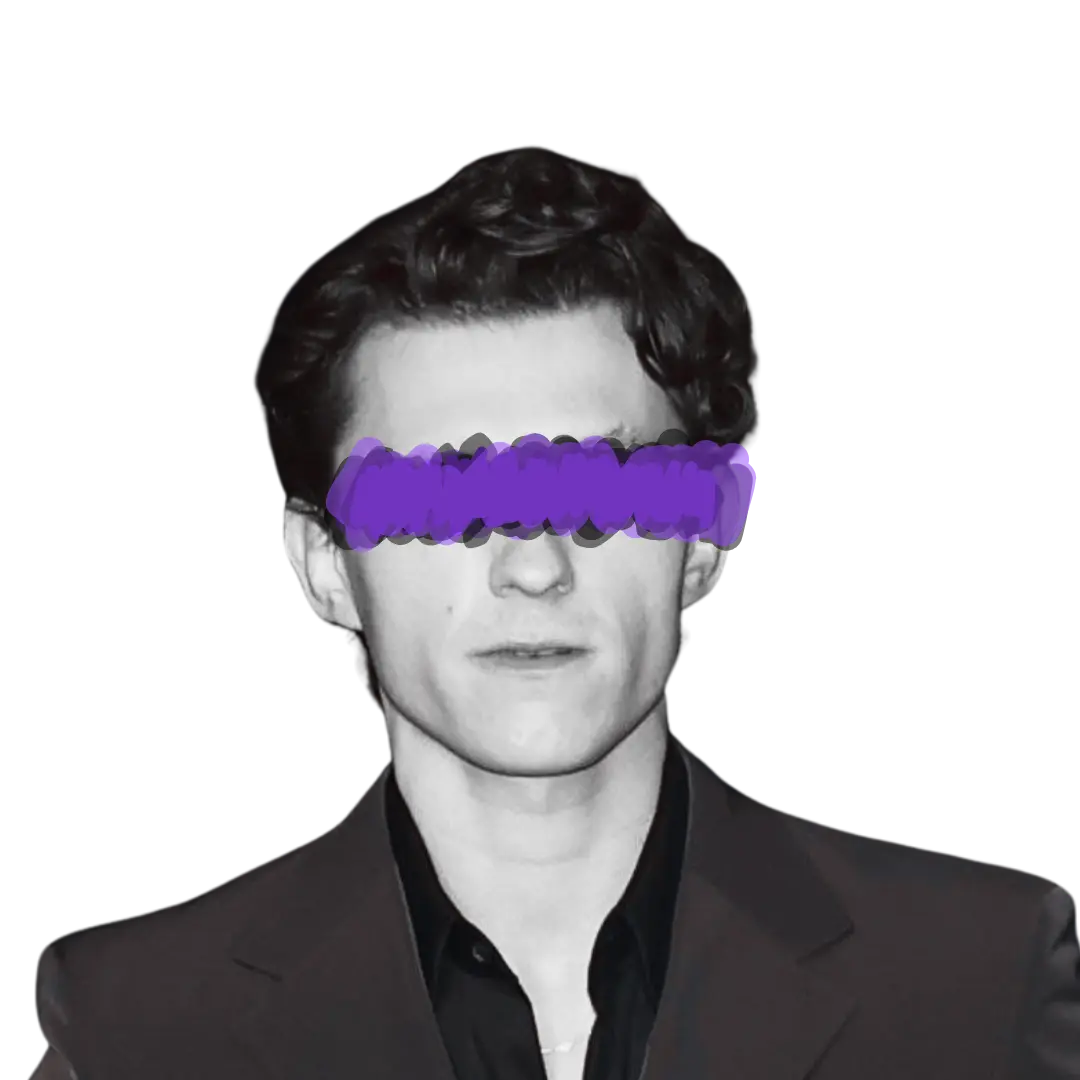
"I got the nickname Sick Note, which frustrates me to my core, even today."
He was twelve years old, performing three shows a week on London's West End in Billy Elliot: The Musical. He was the youngest person in the cast. He was physically underdeveloped, exhausted, and getting sick constantly. So the adults around him (grown performers, seasoned crew) gave him a name.
Sick Note.
It was a joke. It stuck like a scar. Tom Holland says it "frustrates me to my core, even today" — over a decade later, as one of the most bankable actors on earth.
"Now as an actor I push through everything," he told GQ, "because I'm not going to be Sick Note."
That sentence explains more about Tom Holland than any Spider-Man origin story. The relentless energy. The backflips at press junkets. The inability to sit still. The insistence on doing his own stunts, on saying yes to everything, on being the most enthusiastic person in every room he enters.
It also explains why he quit drinking. Why he deleted social media. Why his retirement fantasy is to "disappear off the face of the earth."
A boy was called weak. He spent the next two decades proving he wasn't. And somewhere along the way, the proof became its own kind of trap.
TL;DR: Why Tom Holland is an Enneagram Type 7
- The mask of enthusiasm: Holland's infectious energy hides a self-described "impossible people pleaser" who was terrified of disapproval since childhood
- The sobriety revelation: He was "definitely addicted to alcohol," using drinks as social armor before getting sober in 2022
- The silence choice: The man who can't keep Marvel's secrets chose total silence about his own inner life: quitting social media, keeping his engagement private, planning to vanish from Hollywood
- The wound that drives it all: A childhood nickname haunts him "to my core" and fuels everything from his work ethic to his people-pleasing
The Kid From Kingston Who Couldn't Sit Still
Tom Holland grew up in Kingston upon Thames, southwest London, in a house that was never quiet. His father Dominic is a comedian and author. His mother Nikki is a photographer. He has three younger brothers: twins Sam and Harry, and Paddy. The family mantra: "As long as you try your best."
He was diagnosed with dyslexia at seven. Reading was brutal. Scripts were worse. But his body could do things his mind struggled with on paper. At nine, he started hip hop classes at Nifty Feet Dance School in Wimbledon. A choreographer named Lynne Page spotted him and suggested he audition for Billy Elliot.
Two years of training in ballet, tap, and acrobatics. No formal ballet background. He got the role of Michael Caffrey, Billy's best friend, and debuted at Victoria Palace Theatre in June 2008.
He was twelve.
At his all-boys school, he played rugby. Ballet was the opposite of cool.
"There were times when I was bullied about dancing and stuff," he said. "But you couldn't hit me hard enough to stop me from doing it."
That stubborn physical defiance, the kid who absorbed the punches and kept dancing, tells you something essential about what came next. Holland's language for processing the world was never words. It was his body. A dyslexic boy who struggled to read found expression through movement. Dance, gymnastics, backflips, stunts. When he couldn't articulate it, he performed it.
His father wrote a book about their relationship called Eclipsed. The subtitle: "How Tom Holland Eclipsed His Dad." Dominic Holland, a working comedian with a modest following, watched his son become one of the most famous people on the planet. The audiobook features short chats between father and son after each chapter. For a kid already wired to please, the knowledge that his success had literally eclipsed his own father added another layer of guilt to navigate. One more person whose feelings he had to manage, one more dynamic where just being himself caused disruption. Golf became their shared language, something they could do side by side without the strange gravity of fame pulling them apart.
What "Sick Note" Did to Him
By September 2008, barely three months after his debut, he was promoted to the title role of Billy Elliot and performed it until 2010. Three shows a week. Daily rehearsals. A body that hadn't finished growing, doing the work of an adult.
On his debut night, he had tonsillitis. He cried backstage some nights, "afraid he wasn't good enough."
The nickname didn't just sting. It rewired him.
"I was too young to do that show," Holland told GQ. "I was incredibly underdeveloped as a kid." The adults saw a child struggling physically and turned it into a punchline. Holland internalized it as a permanent verdict on his character: you are weak. You are a liability. You are the reason things go wrong.
Everything that followed (the compulsive work ethic, the inability to say no, the desperate eagerness that colleagues would later find both charming and concerning) traces back to a twelve-year-old's terror of being perceived as the person who lets everyone down.
Elizabeth Olsen, his Avengers co-star, eventually had to teach him the most basic act of self-preservation. She told him something she'd learned from her twin sisters Mary-Kate and Ashley:
"'No' is a full sentence. 'No' is enough."
He couldn't do it. Not naturally. Not without someone modeling it for him. The boy called Sick Note had built an entire adult personality around never being unavailable, never being insufficient, never giving anyone a reason to write him off.
Spider-Man and the Performance of Openness
The way Tom Holland found out he was Spider-Man tells you everything about the gap between his public image and what's actually happening inside.
He'd been playing golf with his dad. He lost. He was upset. He went upstairs, sat on his bed with his dog, and started checking Instagram. Marvel had posted a Spider-Man cartoon but nobody had called him. He typed "Marvel" into his laptop, found an article that said "We would like to introduce our new Spider-Man, Tom Holland." He flipped the laptop in the air. It broke. The dog went nuts. He ran downstairs screaming to his family.
His brother Harry, the tech-savvy one, was skeptical. Sony had just been hacked. Nobody at Marvel had bothered to call him first.
The story is charming. It's also revealing. Holland didn't get a phone call from his agent or a congratulatory email from Kevin Feige. He found out about the biggest moment of his career the same way a fan would, scrolling the internet, alone in his room. The most important news of his life arrived as content.
Six auditions. A screen test with Robert Downey Jr. where RDJ calmed him by saying, "Look, I felt exactly the same as you did when I did my test for Iron Man, but just relax, let your body take over."
Then came Day 1 on set of Civil War. Holland arrived and discovered his lines had been "cut significantly." He was a kid. He didn't know what to do. Robert Downey Jr. went to the Russo Brothers and advocated for all of Holland's lines to be shot. "Shoot it all," RDJ said. "You can cut it later if you want."
"I owe that to him," Holland said.
RDJ is still listed as "The Godfather" in Holland's phone. They FaceTime regularly.
During Spider-Man: Homecoming, Holland spent roughly eleven hours a day in the Spider-Man suit filming the Washington Monument sequence. The suit had no front zipper. He was too young and too eager to impress to ask for bathroom breaks. He called his mom during their daily check-in and mentioned he was struggling. Two days later, a producer pulled him aside: "How are your kidneys?"
His mum had called Marvel.
One of the biggest studios in the world, contacted by a photographer from Kingston, because her son was too polite to ask to use the toilet. The most helpful intervention in Holland's early career came not from an agent, a manager, or a publicist. It came from his mom, doing what the boy called Sick Note could never do for himself: admitting he needed something.
Then came the spoilers.
He revealed there would be Spider-Man sequels before the first film was released. He spoiled an Infinity War plot point to a live audience. He almost blurted out who bought Avengers Tower on camera before Zendaya physically covered his mouth with her hand. Jimmy Kimmel asked his castmates who was least trustworthy with secrets. Everyone pointed at Holland.
Marvel started giving him incomplete scripts.
"I don't know why I can't keep my mouth shut," he laughed during a Kimmel appearance. The world saw a lovable goofball with no filter.
Here's what was actually happening: an "impossible people pleaser" was performing transparency as a form of connection. Sharing secrets made people laugh. Laughter meant approval. Approval meant safety. The spoilers weren't carelessness. They were currency — the price of admission to being liked.
"One of my biggest faults is that I'm an impossible people pleaser," he told GQ. "I don't like the idea of people not liking me. So I will do whatever I can to make that not the case."
The man famous for being unable to keep a secret was actually the most guarded person in the room. He gave the audience Marvel's secrets so he wouldn't have to give them his own.
What is Tom Holland's personality type?
Tom Holland is an Enneagram Type 7
The Enneagram has a name for the engine that runs Tom Holland. Type 7, sometimes called the Enthusiast, is driven by a core fear of being trapped in pain and a core desire for freedom and fulfillment. Sevens process the world through possibility. They reframe setbacks as opportunities. They fill silence with energy. They run.
The public reads Holland's personality as effortless enthusiasm. The Enneagram reveals the machinery underneath: a mind that automatically generates excitement as a way to outpace discomfort. Not fake. Not performed. But not the whole picture either.
The evidence runs deeper than "he's energetic":
- His childhood wound, "Sick Note," is a textbook Seven origin: the discovery that being seen as limited or weak is unbearable, and the subsequent construction of an identity built on limitless availability
- His alcohol use followed the classic Seven escape pattern: substances as social lubricant, then substances as avoidance, then the terrifying realization that the avoidance had become dependency
- His stress response, "I push through everything," shows the Seven moving to the rigid, self-punishing side of their stress pattern, where the person who usually seeks joy instead becomes a grinding perfectionist who cannot allow himself weakness
- His growth (sobriety, golf, carpentry, choosing fewer projects, learning to say "no") tracks the Seven's integration path: trading scattered breadth for focused depth
- His retirement fantasy, wanting to "disappear," hints at the Seven's shadow: the belief that the only alternative to full-volume performance is total absence
Holland's specific flavor is 7w6, the Entertainer wing. The 6 wing adds a layer of loyalty, anxiety about security, and a deep need to belong that the core Seven doesn't always show. It's why Holland is so family-oriented. Why he created The Brothers Trust charity with his parents and brothers. Why he keeps a "Spider-Boys" group chat with Andrew Garfield and Tobey Maguire, three people who've been through something "so unique that we really are like brothers."
But the 6 wing runs deeper than loyalty. It shows up as a persistent vigilance about threats, especially the threat of Hollywood itself. "I really do not like Hollywood; it is not for me; the business really scares me," he told Jay Shetty. "I've seen so many people come before me and lose themselves, and I've had friends that I've grown up with that aren't friends of mine anymore because they've lost themselves to this business." His sobriety decision was driven not by a dramatic rock-bottom but by fear: "It just really scared me." The loss of control scared him. The enslavement scared him. He quit not because something terrible happened, but because his 6 wing could see where the road led.
Even his confidence has a 6-wing crack in it. "I'm a very confident person," he told Rich Roll, "but I'm more confident when I'm pretending to be someone else because the ramifications of your actions aren't real." Acting is the safe container. Real life is where things can go wrong. The man who does backflips in front of millions feels more exposed ordering a drink at a pub than performing stunts on a Marvel set.
The contradiction that the Enneagram resolves: how can the most openly enthusiastic person in Hollywood also be someone whose default response to real vulnerability is withdrawal? Because the enthusiasm and the withdrawal are the same mechanism. Both are ways of managing a nervous system that equates stillness with exposure.
"I Was Definitely Addicted to Alcohol"
After a "very, very boozy" Christmas in 2021, Tom Holland tried Dry January.
It didn't go well.
"All I could think about was having a drink," he said on the Jay Shetty podcast. "It really scared me."
He couldn't be social without alcohol. He couldn't go to the pub. He couldn't go out for dinner. "I just felt so much pressure," he told Fortune. The drink wasn't recreation. It was armor, the thing that stood between Tom Holland and the raw exposure of being himself around other people without a performance to hide behind.
He set himself a test: stay sober until his birthday, June 1. If he could do it, he'd prove he didn't have a problem.
By six months, something unexpected happened. "The happiest I've ever been in my life," he said. "I could sleep better. I could handle problems better. Things that would go wrong on set, that would normally set me off, I could take in my stride. I had such better mental clarity."
He kept going. Eventually, he said the words out loud:
"I was definitely addicted to alcohol. I'm not shying away from that at all."
The man who couldn't keep Spider-Man's secrets finally revealed one of his own. Not on camera by accident. Deliberately, in a long-form podcast, with the careful precision of someone who'd thought about it for a long time.
"Why?" he asked himself. "Why am I enslaved to this drink? Why am I so obsessed by the idea of having this drink?"
He's now been sober for over three years. The drinking had been straining everything: his sleep, his patience, his ability to be present with the people closest to him. After quitting, his relationship with Zendaya got better. His work got sharper. His capacity for stillness — the thing a Seven fears most — began to expand.
Then came the real test.
"This Show Absolutely Broke Me"
In 2023, Holland filmed The Crowded Room for Apple TV+. He appeared in virtually every scene, playing Danny Sullivan, a character loosely based on Billy Milligan, who was diagnosed with dissociative identity disorder. It was a psychological role that required him to do the one thing a Seven is built to avoid: sit in pain without escaping it.
"Waking up every day going to work and having to cry for six hours every day is a really taxing thing to do," he told CBC Arts. He wasn't performing action sequences or cracking jokes. He was accessing trauma. Repeatedly, methodically, for months. "We were exploring certain emotions that I have definitely never experienced before."
He was only two months into sobriety when filming started.
"I lost a lot of weight. I had this crazy haircut. I was gone. I was tired. I was emotionally drained," he said. "I'd look in the mirror and I wouldn't see the person that I would see today." The set itself was toxic ("quite a lot of animosity... a lot of arguing and butting heads"), and the pressure of producing on top of starring compounded everything.
The show was horribly reviewed. Holland acknowledged this publicly.
The real danger was the sobriety. The Crowded Room tested it in real time. "If I start drinking again now, with all this going on, it's gonna get worse, right?" He held. But the character started bleeding into his life. "I was seeing myself in him, but in my personal life. I remember having a bit of a meltdown at home and thinking, 'I'm going to shave my head. I need to shave my head because I need to get rid of this character.'"
He took a year off acting, his longest break since childhood. He went to Mexico for a week. Then he came back to London and started building things with his hands.
But the experience left something useful behind. Learning about mental health through the role, speaking to psychiatrists about Danny's struggles, taught him to recognize his own triggers. Social media was one of the biggest. "I find Instagram and Twitter to be overstimulating, to be overwhelming," he said. "I get caught up and I spiral when I read things about me online."
The man who'd spent two decades running — from the Sick Note shame, from stillness, from the discomfort of being alone with himself — finally stopped. Not because he'd found peace. Because he'd run out of road.
The Person Who Keeps Him Here
Through all of it — the sobriety, the Crowded Room breakdown, the social media spiral — there was Zendaya.
"Having her in my life was so instrumental to my sanity," Holland told British GQ. He doesn't talk about the relationship in romantic clichés. He talks about it in terms of survival infrastructure. "I'm lucky that I have someone like Zendaya in my life," he said on the Smartless podcast. "You can share your experiences and all that sort of stuff, and that's worth its weight in gold."
She saw things he couldn't see about himself. Early in his fame, Holland would react coldly or defensively when fans approached him in public. Zendaya "quickly told me that this sort of reaction was going to be more aggro than just smiling and taking the picture," he said. "She totally changed the way I am able to be more comfortable in public." The people-pleaser who would do anything for approval in a controlled setting couldn't handle the unscripted version. She taught him how.
During The Crowded Room, she endured ten months of watching him disappear into a character who was destroying him. "Bless Zendaya," he said, "she had a lot to put up with."
Zendaya describes their dynamic as complementary opposites: "I'm more shy and kind of quiet, so it takes a little bit more to pull me out of my shell. But he's great at just talking to people and getting to know people." She provides the stillness he can't generate alone. He provides the energy she doesn't always want to summon. What she values most about him isn't the charm or the fame but "how people treat their crews." He's "kind to everyone, not just actors, directors or producers."
They protect the relationship with a vigilance that borders on secrecy. "Our relationship is something that we are incredibly protective of and we want to keep as sacred as possible," Holland said. "We don't think that we owe it to anyone." For a man who gave Marvel's secrets away for free, he guards this one with everything he has.
The Carpenter, the Golfer, and the Beer Brewer
Between acting jobs as a teenager, Holland's mother sent him to carpentry school in Cardiff, Wales. He was studying carpentry right before he booked Spider-Man.
He still builds furniture. He made his mum's kitchen table. He made her office desk. He built all the cupboards in his bedroom. When he and Zendaya got together, he built her cupboards and a fitted wardrobe in her guest room. He takes "huge pride" in it.
"I want to set up a carpentry shop and be a dad," he said. That's his retirement fantasy. Not a vineyard. Not a production company. A carpentry shop.
Golf became the other anchor. His dad taught him as a child, and it's now their primary language, the thing they do together that has nothing to do with fame. Holland plays at a 2.4 handicap, which is very good. He turns his phone off on the course. He describes himself as "addicted to golf."
The word matters. Addicted. He replaced one compulsion with another, but this time, the compulsion requires presence. You can't play golf drunk. You can't play golf while spiraling about what people say about you online. The sport forced him into the exact state his mind resists: here. Now. This shot. Nothing else.
Then he built Bero.
His non-alcoholic beer company, co-founded with brewing veteran John Herman, became Target's top-selling NA beverage launch ever. Nearly $10 million in sales in its first year. The four beer varieties are named after the mundane anchors of Holland's real life: Kingston (his hometown), Edge Hill (his school), Noon (his dog). Not Spider-Man Ale. Not Web-Slinger IPA. The man behind the biggest franchise in Hollywood named his products after the small, ordinary things that keep him tethered to who he actually is.
The Proposal Nobody Saw Coming
He spoke to Zendaya's father first. He planned "when, where, how, what to say, what to wear." He proposed between Christmas and New Year's 2024, in one of her family's homes, with no one else present.
She revealed it by wearing the ring to the Golden Globes in January 2025. No announcement. No social media post. She just showed up wearing a five-carat diamond and let the world figure it out.
Holland won't walk red carpets at her premieres. "Because it's not my moment, it's her moment," he said, "and if we go together, it's about us."
In February 2026, she swapped the engagement ring for a plain gold band. Neither has said a word.
The man who can't keep any secret kept the biggest one.
What He's Building Now
Two Tom Holland movies release in July 2026, two weeks apart. Christopher Nolan's The Odyssey (July 17), where he plays Telemachus, Odysseus's son, alongside Matt Damon, Zendaya, and Anne Hathaway. Then Spider-Man: Brand New Day (July 31), his fourth turn in the suit. Sony moved the release date specifically so he wouldn't compete with himself for IMAX screens.
"The script is the best script I've ever read," he said about The Odyssey. "The job of a lifetime, without a doubt."
He wants to do a straight-up comedy next. "That genre's really taken a hit over the last few years," he said. He plans another break in 2027.
"When I have kids," he told Men's Health, "you will not see me in movies anymore. Golf and dad. I will just disappear off the face of the earth."
Disappear.
Not slow down. Not step back. Disappear. As if the boy called Sick Note can only imagine two modes: proving he's not weak, or vanishing entirely.
But look at what he's actually doing. The sobriety is three years and counting. The breaks between projects are getting longer. The phone goes off on the golf course. The furniture gets built by hand, slowly, one piece at a time. He's not disappearing. He's arriving — learning to occupy the space between performance and absence that he's never known how to inhabit.
"I think it's really disappointing," he told Rich Roll, "that a young person in my position who's lucky enough to have the power to say 'I'm going to take some time off for myself' gets painted as something negative." He's not defending a break. He's defending the right to exist without performing his existence.
The carpentry. The golf. The non-alcoholic beer named after his dog. The engagement no one saw. The sobriety he kept quiet for months before speaking about it on his own terms. None of it is vanishing. All of it is a man building a life designed for the version of himself that exists when the cameras stop. And discovering, maybe for the first time, that this version is enough.
He's closer than the kid they called Sick Note ever thought possible.
Disclaimer: This analysis of Tom Holland's Enneagram type is speculative, based on publicly available information, and may not reflect the actual personality type of Tom Holland.
What would you add?