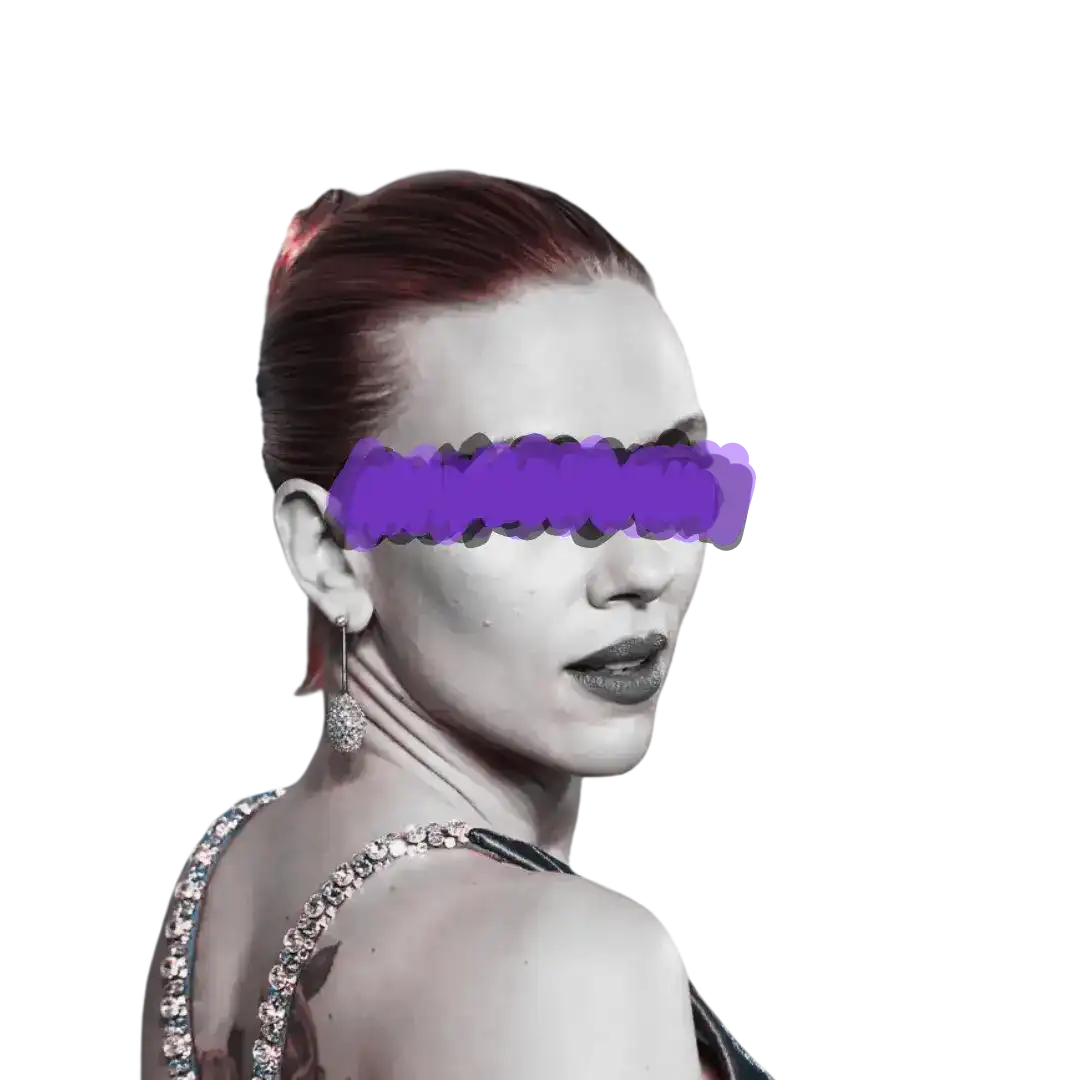
Shailene Woodley: The Enneagram Type 9 Who Keeps Disappearing
She forages her own food, got arrested at Standing Rock, and lost herself inside a relationship. How the Enneagram explains Shailene Woodley's paradox.
"I'm very open as a human. I love easy and I care easy, but I do not love lightly, and I do not care lightly."
In 2014, at the peak of the Divergent franchise, studio executives sat Shailene Woodley down and told her how to be a movie star. Dress more cosmopolitan. Be more polished. Play the game.
Her response, at nineteen: "Bitch, I'm 19. I want lovers. I want to see the world."
She got rid of everything she owned and moved to Europe.
For the next decade, Shailene Woodley lived out of a carry-on suitcase. She met strangers on trains and in hostels, offered to wash their dishes in exchange for language lessons, and picked up dishwashing shifts when she needed money. Some years she earned $15,000. She was one of the most recognizable young actresses on the planet, and she was sleeping on strangers' sofas.
And then, every few years, she'd fall in love. And the woman who needed no one would vanish inside someone else. "I fell in love over and over with unavailability," she said later. Each time, she poured herself into the empty space until there was nothing left.
The woman who can't be contained by anyone keeps handing herself away to someone. That's the contradiction nobody has been able to explain about Shailene Woodley. Until you understand what made her this way.
TL;DR: Why Shailene Woodley is an Enneagram Type 9
Trained as a peacemaker from birth: raised by a psychologist father and counselor mother who literally made her hug out conflicts for hours
Fierce independence masking a merging pattern: built a radically self-sufficient life, then dissolved herself inside relationships
Hidden pain, silent endurance: wore a scoliosis brace 18 hours a day as a teenager, suffered a mystery illness that took her hearing, and never told the public what was wrong
The peacemaker who fights: got arrested at Standing Rock when her buried anger finally found a cause worthy of surfacing
"What Do You Think That Person Was Feeling?"
Shailene Woodley grew up in Simi Valley, California, in a household run by people who understood pain for a living. Her father was a psychologist. Her mother was a school counselor. Their front door was always open. Not metaphorically. They hosted families escaping domestic violence. Strangers lived in their home.
When Shailene and her younger brother Tanner fought, their parents didn't send them to separate rooms. They sent them to the front lawn with instructions to hug each other. Not for five minutes. For hours. In front of the neighbors.
"My parents, my dad's a psychologist, my mom's a counselor, they taught us to literally embrace conflict," Woodley has said.
And when she came home upset about something at school, her parents didn't commiserate. They asked: "I'm so sorry you're feeling this way, but what do you think that person was feeling?"
It was a beautiful thing to teach a child. It gave her extraordinary empathy. She learned to read rooms, to feel what other people felt, to hold space for everyone's experience simultaneously.
It also taught her something she wouldn't recognize for thirty years: other people's feelings come first. Yours can wait.
"I had food on the table every night, I had parents who loved me, who worked very hard to give me and my brother the best life possible," she told Net-A-Porter. Then, quieter: "My family is super-fucked up in many ways, but they are also my everything."
She never elaborated on what "super-fucked up" meant. She just held both truths at once, the way she'd been trained to.
The Brace She Never Talked About
At fifteen, a friend noticed Shailene's spine twisting into an S-shape while she was bent over in a bathing suit. The diagnosis: idiopathic scoliosis, 38-degree curvature.
The treatment was a chest-to-hips plastic brace, worn eighteen hours a day, for two years. Every two weeks, the brace was tightened. She felt like her organs were moving. Her entire body was sore. She cried. She wanted to rip it off.
She wore it.
This is a pattern that shows up over and over in Woodley's life: suffering in silence, enduring physical pain that most people would make their entire identity, and never once making it the center of her story. She has scoliosis. She also has endometriosis. She rarely mentions either.
The brace came off. She went back to work. Nobody saw what it cost her.
ENNEAGRAM TYPE 9 · THE PEACEMAKER
TYPE 9 · THE PEACEMAKERGUT TRIAD
PEACE
HARMONY
STABILITY
UNITY
ACCEPTANCE
PATIENCE
INCLUSION
MEDIATION
EASE
STANCE
Withdrawn
HARMONIC
Positive Outlook
AKA“The Referee” or “The Dreamer”
CORE FEARLoss and disconnectionCORE DESIREInner and outer peaceINTELLIGENCEInstinctualCORE EMOTIONAnger
"Bitch, I'm 19": How Shailene Woodley Rejected Hollywood
Woodley started acting at ten, landing small TV roles before being cast as Amy Juergens in ABC Family's The Secret Life of the American Teenager at fifteen. It was steady work, not prestige. She played a pregnant teenager for five seasons.
Then Alexander Payne saw something in her. She was working at American Apparel, still shooting Secret Life, when she flew to New York on a day off to audition for The Descendants. She got the part. At twenty, she stood across from George Clooney and held her own. The New York Times called her performance "one of the toughest, smartest, most credible adolescent performances in recent memory."
The Fault in Our Stars followed in 2014, a $307 million worldwide hit on a $12 million budget. Richard Roeper called her performance as Hazel Grace Lancaster "Oscar-worthy." For most people under 35, that's still the first thing they know her from: a dying teenager who fell in love knowing exactly how it would end. The role demanded someone who could hold enormous pain without performing it. Rolling Stone called her "a sublime actress... incapable of making a false move on camera."
The Divergent franchise overlapped. Box office success, but Woodley was already pulling away. The final film was never completed. She called her agents: "Please don't send me any more scripts. I need to explore other avenues." They didn't send her anything for nearly a year.
What she did instead: moved to Hawaii, then Europe. Lived out of a carry-on suitcase for a decade. Slept on sofas. Washed dishes. "When I wasn't working, I would meet somebody on a train or in a hostel, and I'd ask if they wanted to learn English, and in exchange, they could teach me their language, and I would do their dishes, and I just lived with strangers for almost ten years."
She ate clay, actual bentonite clay, because an African cab driver told her about its traditional medicinal use. She foraged 30% of her diet from the wild. When David Letterman asked about the clay, she didn't flinch. "Clay is one of the best things you can put in your body."
The press called her quirky. A hippie. "I get called weird a lot," she said. "It's humorous because I actually think I'm very normal and boring. I'm drawn to the simple things in life, like a flower on the street or a smile from anyone."
The foraging, the clay, the nomadic years. All of it was a woman building a life that was undeniably, unmistakably hers. Something no one else could take away. Something she couldn't lose inside someone else.
What is Shailene Woodley's personality type?
Shailene Woodley is an Enneagram Type 9
Enneagram Nines are called Peacemakers, but the name undersells what's actually happening inside them. (Here's our full guide to Type 9.) Nines don't just want peace. They need it the way other people need oxygen. And their primary strategy for achieving it is self-erasure. They become so flexible, so accommodating, so attuned to everyone else's needs that their own preferences go quiet. Then dormant. Then missing entirely.
The core fear of a Nine is fragmentation. Loss. Separation. The core desire is wholeness, internal peace. And the trap is that they pursue peace by sacrificing the one person they should be fighting for: themselves.
But two things separate Woodley from the passive-Peacemaker stereotype. First: her body. Nines are often described as "asleep to themselves," and Woodley's relationship with her physical self reads like a textbook case. The scoliosis she endured in silence, the mystery illness that took her hearing, the body dysmorphia that followed. All of it points to a Nine whose suppressed inner life started leaking through in physical symptoms.
Second: she has a strong One wing, the 9w1, sometimes called "The Dreamer." This is the principled side. The moral compass that turned an otherwise peace-seeking woman into someone who would get arrested at Standing Rock, livestream it to 40,000 people, and refuse to back down. The One wing is the reason she describes herself as "chronically and constantly fired up about injustice." The Nine provides the deep empathy. The One wing provides the fury.
"I'm attracted to truth," she told UPI. "I feel like I'm allergic to anything other than that."
A Peacemaker with a blade.
What the world sees
The quirky hippie. The clay-eating barefoot girl. The actress who walked away from fame to forage in the woods.
What's actually happening
A woman anchoring herself to the physical world (spring water, wild plants, her own body) because she knows how easily she disappears inside other people.
Standing Rock and the Anger That Couldn't Stay Buried
On October 10, 2016, Indigenous Peoples' Day, Shailene Woodley stood among 200 water protectors at the Standing Rock Reservation in North Dakota. The Dakota Access Pipeline was being built through sacred Sioux land, threatening the water supply for millions.
She was arrested. Her phone was livestreaming to 40,000 viewers when they took it from her hands.
"It is our civic and civil responsibility, especially me as a non-Native, to recognize what my ancestors did," she said afterward. She was charged with criminal trespassing and engaging in a riot. She was strip-searched in jail. She pled not guilty.
But what stayed with her was something quieter. She described the protest culture at Standing Rock: "It's so grounded in ceremony and in prayer. I can't stress that enough."
Even in her anger, she found the peace. Even in protest, she was drawn to the sacred. This is the Nine in full expression. Not passive, not disengaged, but choosing which battles deserve the fire that's been banked inside her for years. (When Nines do finally break under pressure, it's usually because they've absorbed too much for too long.)
Standing Rock was the flashpoint, but not the whole story. In 2010, at nineteen, she and her mother co-founded All It Takes, a youth nonprofit built around teaching empathy and compassion. In 2019, she became a Greenpeace Oceans Ambassador and spent three weeks on the Sargasso Sea studying microplastics. In 2023, she was in Paris lobbying the UN for a global plastics treaty. The activism was never performative and never one-off. It was a quiet, sustained commitment. The Nine's channeled anger, directed outward so it wouldn't turn inward.
"There are a lot of people out there who don't have the support that I have because of my name," she said. Even in her own arrest, she was thinking about everyone else.
The Storyteller Who Almost Quit
In late 2015, Woodley was done. Not with activism. With acting. She was "really dead-set on finding myself" and about to leave for India when Laura Dern called her.
Dern had one thing to say: "What I see in you, Shai, is your purpose, at least in this moment in your life, is to be a storyteller. And I think it's a massive mistake for you to walk away from this opportunity."
The opportunity was Big Little Lies, alongside Nicole Kidman and Reese Witherspoon. Woodley took the role of Jane Chapman, a young single mother carrying a sexual assault she'd never fully processed. Quiet and internal. Absorbing the chaos of the women around her while her own trauma stayed buried.
It was the most Nine role she could have played. Jane doesn't explode. She endures. She watches. She holds everyone else's drama at arm's length while her own pain quietly runs the show. Woodley earned Emmy, Golden Globe, and SAG nominations for the performance, her first in all three categories.
"It forever changed my life," she said of taking the role. But what's telling is why she almost didn't. She was mid-retreat, mid-disappearance, building another version of the carry-on-suitcase life. It took someone who could see her more clearly than she could see herself to pull her back.
Look at the roles she's drawn to: Hazel Grace Lancaster in The Fault in Our Stars, a girl who holds her own dying with grace. Jane Chapman, processing assault in silence. The writer in Three Women, spending years documenting other people's pain. Diana in Cult of Love, her 2024 Broadway debut, a woman with mental illness she refuses to acknowledge, radiating need she can't name. Every role is someone holding more than they can carry and refusing to put it down.
She keeps finding herself on screen.
The Body That Kept the Score
In her early twenties, while filming the Divergent sequels, something went wrong inside Shailene Woodley's body.
"I was losing my hearing," she said on the SHE MD podcast in 2024. "I couldn't walk for longer than five minutes at a time without having to lay down for hours and hours and sleep. Everything I ate hurt my stomach."
Doctors gave her conflicting diagnoses. "It was this conflation of issues and diagnoses and different doctors telling me different things."
She has never publicly disclosed what was wrong. "I haven't spoken about what exactly it was because that feels like a personal thing that I don't need to disclose."
But she has spoken about what it did to her mind. The stomach pain made her afraid of food. The fear became body dysmorphia. "Going into the mental f--kery that can happen with that, of body dysmorphia and confusion about identity and feeling safe in my own capsule."
Confusion about identity and feeling safe in my own capsule.
That sentence is the Nine experience compressed into twelve words. The person who spends so long accommodating everyone else's reality that they lose track of their own body. Their own skin. The physical container that is supposed to be home.
"It forced me to take a really deep look and become introspective," she said. "Looking at real traumas and real PTSD that I had experienced at various times in my life... they definitely took a toll on my body."
The illness "resolved itself." She is now, she says, "very healthy." But the resolution didn't come from medicine alone. It came from the thing she'd been avoiding her whole life: looking inward instead of outward. Asking herself the question her parents never taught her to ask.
Not what is the other person feeling?
What am I feeling?
"I Fell in Love Over and Over With Unavailability"
Shailene Woodley and Aaron Rodgers met in 2020 through mutual friends who were musicians. Within months, they'd moved in together in Los Angeles. She confirmed their engagement on The Tonight Show in February 2021. The woman who had lived out of a carry-on suitcase for a decade, who needed no one, who had built a life of radical self-sufficiency. She moved in with someone almost immediately.
By February 2022, it was over.
"It was hard to film because I was going through the darkest, hardest time in my life," she said of shooting Three Women during the aftermath. "My personal life was shitty, so it felt like a big pain bubble for eight months." She was grateful for the work: "I could go to work and cry and process my emotions through my character."
The deeper wound wasn't the public scrutiny, though that was new. "It was the first time that I'd had a quote-unquote 'famous' relationship, and I watched scrutiny, opinions, the desire for people to know my life and his life and our life. It just felt violating."
The deeper wound was the merging. "I haven't shared much about my relationship with Aaron because it always makes me cry," she told Outside magazine. "It was not right. But it was beautiful."
Then, in a 2024 Bustle interview, the clearest admission: "I fell in love over and over with unavailability."
"I find the performance of being something else in order to receive love or acceptance or work from others to be the ultimate form of soul death."
There it is. The Nine pattern, named out loud. She kept choosing people who couldn't fully show up. And each time, she filled the gap with herself. Poured herself into the empty space until there was nothing left.
"It's not on me to fix or heal or do anything about [a relationship] other than protect the deep care and love that I have for the world and for my people," she said. "Ultimately, that has helped me walk away without the need to understand why certain things didn't play out the way that I may have desired them to."
No bitterness. No blame. Just a woman learning to leave without dissolving.
Shailene Woodley's Slow Return to Herself
In 2024, the pieces started landing differently.
She starred in Three Women on Starz, playing a writer who spends years documenting other women's intimate lives. The observer. The listener. The person who holds space and isn't the center of the story. It was the role she'd been rehearsing since childhood.
She appeared in Hope in the Water, a PBS docuseries about ocean conservation. She dove with urchin divers off the California coast, the same waters she'd surfed as a girl, and watched them turn ecological disaster into something sustainable.
And in December, she made her Broadway debut in Cult of Love, playing Diana, a pregnant young woman with mental illness she refuses to acknowledge. Critics said she brought "winsome charisma and bottomless need" to the role. One reviewer argued she deserved Tony consideration. Another internal character. Another woman who can't name what's happening inside her.
Then she sat for interviews in which she said things she'd never said before. Not about her relationships. Not about her health. About what she will and won't accept from the world.
"I am the queen of saying no."
"I'm very uninterested in the performance of people at this moment in life."
"I'm a loner. I'm not a people person. I really enjoy solitude."
These aren't the words of someone who has given up on connection. They're the words of someone who has finally stopped confusing connection with self-erasure. Who has learned, at thirty-two, the difference between holding space for someone else and disappearing into it.
"I've always been a little bit of a late bloomer," she said. "Learning things at 32 that many of my friends learned at 20."
The Late Bloomer's Advantage
She says it like an apology. Like she's behind.
But the late bloomer isn't behind. The late bloomer has been gathering data that the rest of us skipped. Feeling every room, absorbing every person, carrying what she couldn't name until her body forced her to look.
And now, at thirty-two, she's asking the question her parents never thought to teach her:
What do I think I'm feeling?
She hasn't answered it yet. She's still asking. But the asking, for a Nine, is everything.
ONE QUESTION · NINE WAYS TO ANSWER IT
When you have to choose between keeping the peace or standing up for what you believe, how do you decide what to do?
A sentence is enough.
You answer before you see. That is the whole point.
Former USMC infantry turned personality psychology nerd. I built 9takes to help people see
the underlying emotions and logic behind their worldview. Ask a question, see 9 takes.




Add your read on Shailene Woodley