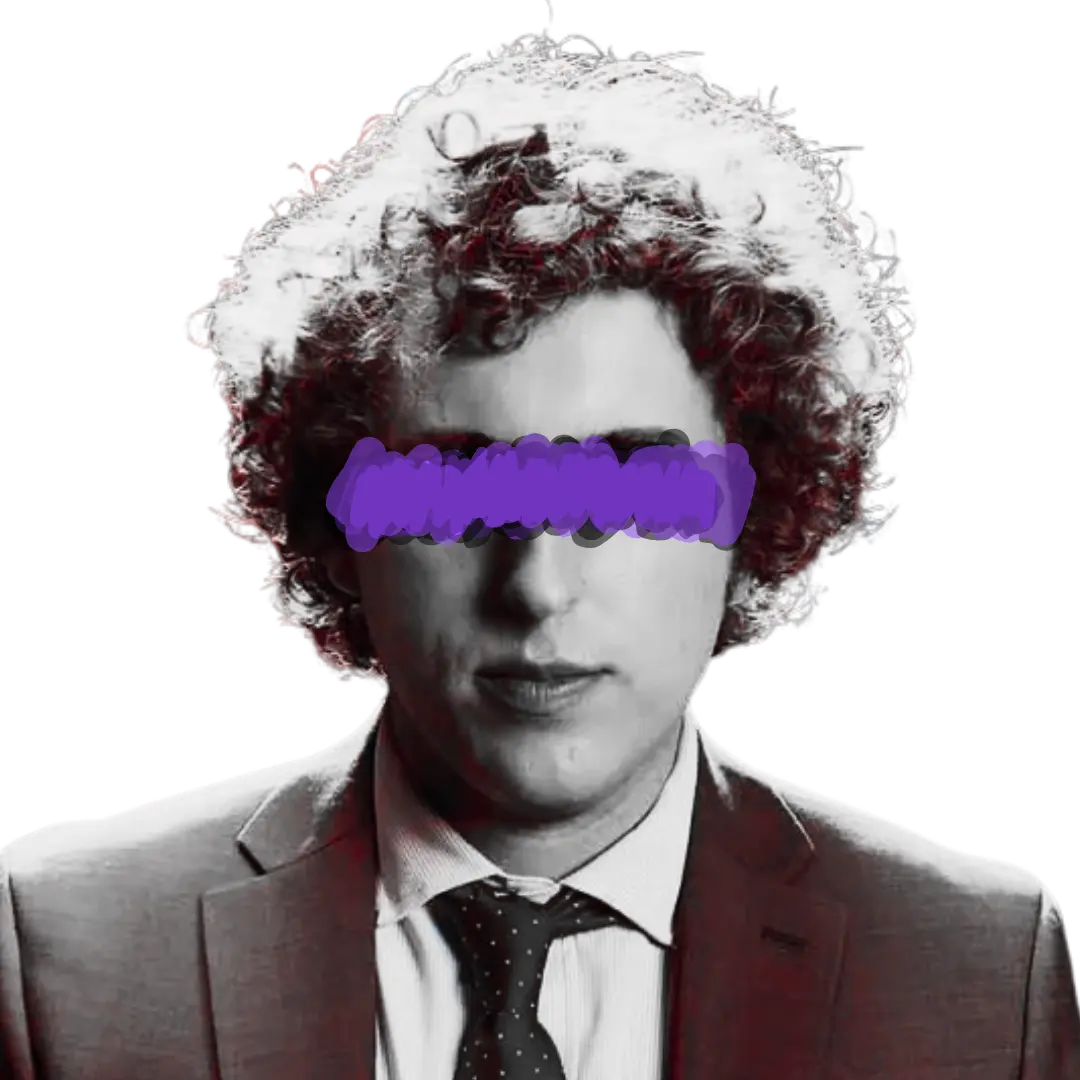
A 16-year-old kid interviews drug dealers on the darknet. At 19, he hitchhikes across America for 70 days. By 22, he's living in an RV, chasing QAnon believers and Flat Earthers across the country with a microphone and genuine curiosity.
That kid became Andrew Callaghan. And the pattern driving him reveals something most people miss entirely.
"I've always been a radically empathetic person. Since I was a little kid, I always wanted to talk to everyone."
This isn't just a personality quirk. It's a survival strategy that built a journalism empire from an RV.
TL;DR: Why Andrew Callaghan is an Enneagram Type 7
- Built his career on motion: At 16 he was embedding with Occupy protesters and interviewing Silk Road contacts. At 19 he hitchhiked America for 70 days. By 22 he was chasing Flat Earthers from an RV. He has never voluntarily stopped moving.
- Finds the human being inside the fringe: Where other journalists see subjects to debunk, Andrew sees people who want to be heard. He walked into a white supremacist rally in Huntington Beach and kept returning for four years until the result was Dear Kelly.
- Exits the moment he's caged: When Doing Things Media owned his IP and took 60% of Patreon revenue, he didn't negotiate — he left, rebuilt from scratch, and bought All Gas No Brakes back years later with documentary proceeds.
- "Interview like a toddler": His technique is genuine curiosity extended without limit. The silence, the nod, the simple question — it's not a strategy, it's what he'd do anyway. The journalism just gave it a purpose.
- Collapsed when the camera turned on him: During the 2023 allegations, the same man who'd walked into armed QAnon confrontations ended up in a psychiatric facility with panic attacks. He called his own thinking "binary" — good guy or bad guy, no middle. That's the stress pattern, not the public persona.
What is Andrew Callaghan's Personality Type?
Andrew Callaghan is an Enneagram Type 7
Enneagram Type 7s are called "The Enthusiast." They see possibilities everywhere, transform pain into adventure, and have an almost physical reaction to boredom and limitation.
Here's what most people miss: Type 7 enthusiasm isn't optimism. It's armor.
The core wound forms when a child experiences deprivation or pain and concludes the world can't meet their needs. The solution? Become endlessly resourceful. Stay moving. Turn every dark moment into something meaningful before it traps you.
Andrew interviewing QAnon believers from an RV makes perfect sense through this lens.
Type 7s reframe everything. They find humor in darkness, humanity in extremism, and unexpected angles where others see only absurdity. This makes them magnetic storytellers. Think Theo Von, another Type 7 who transforms trauma into comedy.
The cost? They're always moving toward the next experience, staying ahead of feelings they'd rather not face.
Andrew appears to be a 7w6, the Seven with a Six wing. This adds anxiety, skepticism, and fierce loyalty to his inner circle. It explains a contradiction: he can walk into white supremacist rallies without flinching, yet spiral into panic attacks during personal crisis.
The Gonzo Lineage
Andrew claims Hunter S. Thompson as an influence. "I became a 16-year-old freelance gonzo journalist for my school newspaper," he's said.
Both reject objectivity as pretense. Both insert themselves as characters. Both immerse in chaotic subcultures and let subjects reveal themselves.
But here's where Andrew diverges: Thompson dripped contempt for his subjects. Andrew practices radical empathy.
He's also cited Louis Theroux's disarming interview style and the anarchist art-collective Indecline. The result is a hybrid: Thompson's boldness filtered through Theroux's warmth.
Andrew Callaghan's Upbringing: The Making of a Restless Mind
Andrew was born in Philadelphia in 1997 to an Irish-Italian family. They moved to Seattle's Capitol Hill when he was nine.
He "hated every class from the first day of kindergarten to the last day of college." One exception: a journalism class junior year.
His teacher Calvin Shaw recognized something the system couldn't contain. Shaw made a deal: Andrew could leave school whenever he wanted, marked present. One condition. He had to write about what he did when he skipped.
What did he write about? Interviewing people connected to the Silk Road darknet market. Embedding with Occupy Seattle protesters. Spending time with Juggalos. At 16, he was already doing the work that would define his career.
Give someone like Andrew structure without constraint and they produce brilliance. Try to contain them and they resist.
His mother saw what the school system couldn't. Without telling Andrew, she submitted his work on Seattle graffiti culture to a congressional award program. He won a bronze Congressional Award during the Obama administration. That scholarship got him to Loyola University in New Orleans.
But something else shaped him first.
As a teenager, Andrew watched Seattle police shoot John T. Williams, a 55-year-old deaf Native American woodcarver. He joined protests. Aligned with black bloc anarchists. Devoured Emma Goldman and Angela Davis.
"I grew up to realize how incompatible that anarchistic worldview is with reality and with American society," he later reflected. "It can only exist in a small, little chamber."
Enthusiasts flirt with extreme ideologies because anything promising a more interesting reality attracts them. The healthy ones eventually recognize when a belief system becomes a cage rather than a key.
At Loyola, Andrew worked as a doorman on Bourbon Street. He witnessed what he called "hellish scenes."
Instead of running from the darkness, he ran toward it with a camera.
Rise to Fame: From Bourbon Street to 3 Million Subscribers
Andrew's path matches his interview subjects: unconventional.
While doorman on Bourbon Street, he started "Quarter Confessions," interviewing drunk people about their darkest secrets. Raw. Uncomfortable. Weirdly compelling.
In 2019, at 22, he published All Gas, No Brakes: A Hitchhiker's Diary, a memoir about hitchhiking across America for 70 days at 19. That same year, he launched the YouTube series.
The concept was simple: show up at the weirdest events in America and let people talk. Flat Earth conferences. Furry conventions. QAnon rallies. Phish parking lots. No judgment. No gotcha moments. Just a microphone and genuine curiosity.
All Gas No Brakes exploded. 1.7 million subscribers and 100 million views in the first year.
Then it fell apart.
In 2021, Andrew discovered his contract with Doing Things Media was a trap. He'd signed away intellectual property rights for a $45,000 salary. Patreon revenue split 60% to the company, 20% to Andrew, 20% to crew.
Trapped. The one thing he can't tolerate.
Instead of spiraling, he pivoted. He left with two friends: Nic Mosher (a videographer he'd met in college) and Evan Gilbert-Katz (a videographer he'd known since age 13).
Within months, they launched Channel 5 through Patreon. Bought a decommissioned news van. By October 2021, they'd hit 1 million subscribers. By 2022, Channel 5 was pulling roughly $100,000 per month through Patreon alone.
Today: 3.38 million subscribers. The content has shifted from pure comedy toward serious documentary journalism.
The Documentary Pivot
His HBO documentary This Place Rules premiered in December 2022, chronicling events leading to January 6 through Andrew's signature style. Produced with Tim Heidecker, Eric Wareheim, and Jonah Hill, it proved he could operate beyond YouTube.
In January 2025, Dear Kelly became the highest-grossing direct-to-consumer documentary since Kony 2012, pulling $100,000 opening weekend.
Dear Kelly is his most ambitious work. Four and a half years following Kelly Johnson: former bankruptcy attorney, QAnon adherent, January 6 participant. Andrew first met him at a White Lives Matter rally in Huntington Beach in 2021.
The film documents Kelly's radicalization, his estrangement from his three children, and an emotional family intervention. Kelly's daughter Kaylee allowed cameras to capture their fractured relationship. "Our relationship is still surface-level," she said after filming. "He has yet to become more active in our lives."
One scene reveals how intertwined filmmaker and subject had become. During the 2023 allegations against Andrew, Kelly left him a voicemail about staying strong. Andrew was researching suicide methods when the message arrived.
At $5.55 per rental through DearKellyFilm.com, Andrew bypassed traditional gatekeepers entirely.
From Bourbon Street doorman to one of the most influential independent journalists of his generation — built on the same restless energy that made him hitchhike across America at 19.
Andrew Callaghan's Personality: The Patterns Behind the Microphone
The Toddler Method
"Interview like a toddler."
That's Andrew's technique. Ask simple questions. Don't lead. Just listen. Let silence work. He calls the key move "toddler nodding": "You give people just enough of a nod and affirmation to keep going down their tangent, but not so much as to agree with them completely."
Sounds basic. In practice, it unlocks things no other technique can.
During the Minneapolis protests after George Floyd's murder, a collaborator handed Andrew a microphone and told him to go talk to a man who'd just burned down a Kmart. His only question: "What's on your mind?" That single opener, the simplest possible, generated raw testimony that cable news crews standing nearby couldn't get.
In This Place Rules, the technique produces something darker. Andrew spent hours interviewing Dave Todeschini, a QAnon believer who ranted about pedophiles and the Clintons. Andrew nodded. Let him talk. Then, at a Culver's restaurant, he pulled out legal paperwork: "On May 19, 1999, you were convicted of sexual abuse in the first degree and sodomy in the second degree of an eight-year-old boy in New Jersey. So, according to this paper, you are a registered sex offender and a convicted pedophile." Todeschini insisted it was a "false conviction." He had a gun on his waist. Andrew later admitted he feared for his life.
The patience makes the confrontation devastating. Traditional journalists would have led with the records. Andrew let the subject build his own scaffold first.
"Everyone wants to be covered, everyone wants to be talked to, and everyone loves attention," Andrew has observed. "If you're a journalist, you basically get a free pass into any walk of life."
This isn't manipulation. It's genuine curiosity weaponized as journalism.
The Exploitation Question
Is Andrew exploiting his subjects?
Critics say yes. One wrote that his work prioritizes "entertainment over genuine journalistic inquiry." Another called Dear Kelly "not journalism" and Andrew "not a journalist."
The charge: by making extremists entertaining and sympathetic, Andrew platforms people who don't deserve it. He elevates fringe figures to mainstream attention. News and entertainment blur.
Andrew's response is nuanced: "I really care about the people that I'm interviewing. They teach you in journalism school that you're not supposed to do that, right, that it goes against journalistic ethics. But that's just not a good way to live your life. I mean, to me that feels exploitative."
He's also acknowledged the broader problem: "You have very little legal liability for content creators. They're not journalists, they don't have to uphold ethical Fourth Estate standards. There's no printed retractions. There's no fact-checking apparatus."
The defense: empathy isn't endorsement. Understanding why someone believes something is different from agreeing with it. Dear Kelly didn't celebrate Kelly Johnson's extremism. It documented his pain, his estranged children, and the family trauma that made conspiracy theories attractive.
Whether empathy equals enablement? That question has no clean answer.
The Character in the Story
Traditional journalism claims objectivity. Andrew rejects it.
"Objectivity is impossible in reporting," he's said. "Human biases inevitably shape coverage."
So he inserts himself as a character. He's been described as "a tall, lanky man with bushy hair and bad posture in an ill-fitted suit and acne." He leans into the awkwardness.
One observer noted: "Andrew's the type of person who, were he not holding a microphone, would be one of his subjects."
Strategic vulnerability. By appearing slightly out of place, he becomes non-threatening. People see a peer, not a predator. They talk.
The Frugal Enthusiast
Despite success, Andrew shops at Walmart. His take on sunglasses: "If you spend more than a hundred bucks on sunglasses, you've officially gone off the deep end."
He still has his RV, though it's become "more of a leisure item than an actual method of journalism." He rents in LA as an "editing center of operations" but remains fundamentally nomadic.
This frugality isn't poverty cosplay. It's freedom insurance. The less you own, the faster you can leave.
The 2023 Allegations: Spiral and Rebuild
In January 2023, multiple women accused Andrew of sexual coercion. The timing was brutal: two days after This Place Rules premiered on HBO.
A woman named Caroline Elise posted a TikTok alleging Andrew had stayed at her house and "wore her down" with requests for sex until she agreed.
Days later, another woman named Dana made a public allegation: "I told him to stop. I told him to get off of me multiple times."
In February 2023, The Stranger published a story with two additional women alleging rape and sexual assault at Loyola University in 2017.
What followed was a public breakdown.
Within 48 hours, his closest collaborators denounced him. His name appeared in 40 different news outlets next to "sexual misconduct." Both Nic Mosher and Evan Gilbert-Katz, the friends who built Channel 5 with him, unfollowed him on all social media. Neither has been affiliated with Channel 5 since October 2023.
Tim Heidecker, who produced This Place Rules, addressed the allegations on his podcast: "We have no professional relationship with Andrew at this time and have no plans going forward to have any relationship with him. We believe these women that came forward and, of course, totally condemn the type of behavior that Andrew's being accused of."
"I just kind of spiraled into a mental health crisis," Andrew admitted in a YouTube apology video. He ended up in a psychiatric facility with panic attacks. He characterized his own behavior as "sex pest behavior" that he believes has been normalized among young men.
This is the Enthusiast's stress response, textbook.
Under extreme pressure, Sevens disintegrate toward Type 1. They become harshly self-critical. Binary in their thinking. Desperate to "fix" what's broken.
"Up until this point, I didn't really realize that I had this pattern that had affected multiple people," Andrew said. "Before treatment, I had a pretty binary view of how things unfolded. It was either you're the good guy or you're the bad guy."
His recovery path was characteristically Enthusiast: therapy, a 12-step program, and a reframe. "What I learned is there's actually a middle ground between fucking up and getting fucked over."
He acknowledged using substances to "feel something" or "feel anything." He now has a girlfriend who's "dead sober," which he credits as part of maintaining his sobriety.
Nine months later, he returned to YouTube. "I take my job a lot more seriously now," he's said.
The controversy hasn't disappeared. No legal consequences have been publicly reported. But the professional fallout was real: collaborators gone, HBO relationship ended, reputation permanently complicated.
Whether that's sufficient accountability is a separate question. Psychologically, the pattern is recognizable: don't sit in wreckage. Build something new from it.
Andrew Callaghan's Legacy and Current Work
Why He Resonates
Andrew proved something the industry didn't want to admit: man-on-the-street interviews can capture America's political unconscious better than cable news.
"I provide a gateway to engagement with reporting for people who don't watch the news," he told the Nieman Journalism Lab in 2022. "People who don't watch the news watch me."
That's the cultural itch he scratches. As trust in mainstream media collapsed through the 2020s, viewers flocked to creators who felt unmediated and authentic. The Michigan Daily described his work as capturing "the American condition in a twenty-minute vignette — a condition of confusion, contradiction, absurdity, animosity and hilarity." He doesn't explain fringe subcultures from a studio. He stands inside them and lets viewers draw their own conclusions.
His work on January 6, QAnon, and fringe political movements will be studied for years. At 28 in 2026, he's positioned for decades more.
The New Operation
After Nic and Evan's departure, Channel 5 rebuilt. Dear Kelly was co-directed by Jarrod Nicoson and Elliot Liedgren, signaling the new core team. The production has scaled beyond the original three-man RV model — though Andrew's on-camera presence and interview style remain the throughline.
The content itself has shifted. The early All Gas No Brakes videos were short, comedic man-on-the-street edits. Now Channel 5 produces long-form documentaries, a podcast (5CAST) with sit-down interviews featuring figures like Pete Buttigieg, and recent episodes tackling San Francisco's drug crisis, Las Vegas underground tunnel communities, and carjacking teenagers in Connecticut known as the Kia Boyz.
"I'm trying to get out of troll territory," Andrew has said. "I care about politics."
2025: The Comeback Year
In May 2025, Channel 5 reacquired All Gas No Brakes. Andrew used Dear Kelly proceeds to buy back the brand, announcing it on Patreon: "WE BOUGHT ALL GAS NO BRAKES BACK!!" The name that started it all was his again.
In July 2025, he released a three-hour interview with Hunter Biden on 5CAST that generated immediate controversy. Biden discussed substance use, called George Clooney's op-ed questioning his father's 2024 candidacy bullshit ("Fuck him," he said), and sat for what became one of Channel 5's most-viewed episodes.
The bigger explosion came in August, when a follow-up segment aired Biden claiming that Jeffrey Epstein introduced Melania to Donald Trump. Within 24 hours, Melania's attorney sent a letter demanding a "full and fair retraction" and threatening a billion-dollar lawsuit. Biden refused: "Fuck that, that's not going to happen."
The fallout spread. Andrew had written an op-ed for the New York Times about the pitfalls of new media — a "survival guide" for young journalists. The Times pulled it 24 hours before publication, telling him "We have to pick our battles here." He published the full redacted text on Patreon.
"New media's rise threatens press legitimacy," Andrew warned in subsequent interviews. Podcasters and social media influencers "are run by pundits, not journalists, who rely on the news broken by traditional outlets" and have "a parasitic relationship with the very industry they're trying to replace."
In early 2026, Channel 5 launched Canal Cinco — Spanish-language reporting from Latin America with professional dubbing of classic Channel 5 episodes. He's also touring nationally with the "All Gas No Brakes x Channel 5 Carnival," a live show featuring musicians, rap battles, and forbidden video screenings, hitting venues from Brooklyn Paramount to San Francisco's Palace of Fine Arts.
3.38 million subscribers. A reacquired brand. A Spanish-language expansion. A national tour. Whatever you think of Andrew Callaghan, he's not slowing down.
What would you add?