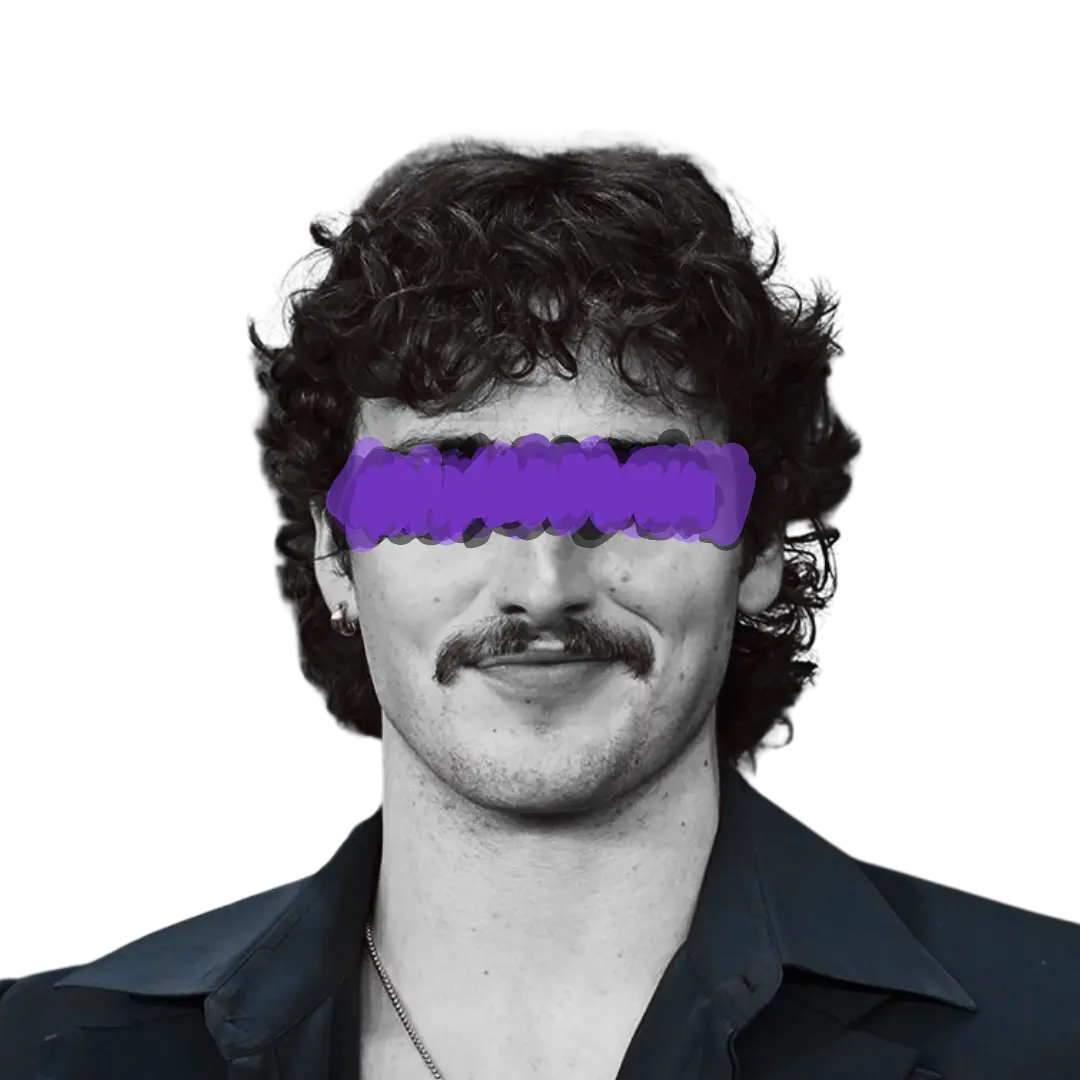
"If my younger self could see me now, they wouldn't believe it."
Benson Boone has never tried drugs. Never tried alcohol. When a Rolling Stone interviewer asked how a 23-year-old touring pop star could be so sure he had an "addictive personality" without ever testing it, his answer was two words: "Dude, candy."
Then he got specific. "I would die. I feel like if I started, I would do it so much that my health would just decline."
This is the same guy who backflips off grand pianos at the Grammys, scales the walls of Wembley Stadium mid-set, and once leaped 629 feet off Auckland's Sky Tower for the rush. The kid who won't touch coffee because it "literally tastes like burnt wood" will absolutely hurl his body off a skyscraper.
Decode that contradiction and you decode Benson Boone.
TL;DR: Why Benson Boone is an Enneagram Type 7
- Relentless experience-seeking: From cliff jumping 629 feet off Auckland's Sky Tower to competitive diving to backflips off pianos, Boone's life revolves around the next rush.
- Self-acknowledged addictive personality: He avoids all drugs and alcohol because he knows he'd go all in. His evidence? "Dude, candy." The same all-or-nothing intensity that drives the backflips governs his relationship with sugar.
- Fear of being trapped: He quit American Idol despite Katy Perry predicting he'd win, left the Mormon Church, dropped out of college. All to avoid being defined by something he didn't choose.
- Multi-talented restlessness: Self-taught on piano, guitar, drums, and bass. Studied architecture. Designs his own album art. Owns an ice cream truck. Cooks for fun. The man cannot sit still.
What is Benson Boone's Personality Type?
Benson Boone is an Enneagram Type 7
Enneagram Type 7s carry the label "The Enthusiasts." Their core drive: pursue experience, dodge pain, resist limitation. They always seem to have three projects running, five ideas brewing, and zero interest in slowing down.
The childhood wound typically involves a sense that their needs wouldn't be fully met, that they had to manufacture their own joy. This doesn't mean neglect. It means they learned early that the world's offerings felt finite, and the way to survive emotionally was to chase everything with intensity before it disappeared.
Boone grew up as the only boy among four sisters in a tight-knit Mormon household in Monroe, Washington. He learned piano not through formal lessons but by eavesdropping on his sisters' practice. He taught himself guitar, drums, and bass. He joined the diving team. He played tennis. He started flipping off couches at age three.
Nobody told him to do any of this. He couldn't stop himself.
Benson Boone's Upbringing
Born June 25, 2002, in Monroe, Washington, a small town about an hour northeast of Seattle. His parents, Kerry and Nate Boone, raised him alongside four sisters: Kaylee, Natalee, Emma, and Claire.
Two forces shaped the household: the Church of Jesus Christ of Latter-day Saints and an unusually deep emotional openness. Growing up "surrounded by girls 24/7," Boone says, made him "more emotional and aware of other people's emotions and my emotions." He credits his sisters for shaping his ability to write emotionally vulnerable songs. Claire sometimes joins him onstage during performances.
His father introduced him to physical fearlessness early. By high school, he was one of Monroe High's first competitive divers, placing sixth at the 2020 state championships despite lacking a dedicated diving coach at his school. He sought outside coaching on his own.
Music came almost by accident. He didn't discover he could sing until his junior year of high school, when a friend asked him to perform at a battle of the bands. Then he attended a Jon Bellion concert that shifted something inside him. He watched Bellion perform and thought: that's what I want to do.
Leaving the Church
The religious dimension of Boone's upbringing runs more complicated than it appears. He grew up in the LDS Church and participated fully for years. But something never clicked.
"Growing up, a lot of people at church would talk about these experiences that they've had and these personal revelations and feelings and voices," he told Rolling Stone. "I never felt it as physically present as they did, and so I was always confused and frustrated."
The worst part was the silence. He was afraid to say any of this out loud. "I was always scared to bring that up to people because I just didn't want to accept that I wasn't feeling what everyone else was feeling." He carried that disconnect quietly until he confided in a friend, who responded, "Thank goodness. I feel the same way."
That moment of shared honesty broke something open. Boone eventually left the church, though not in a scorched-earth way. He enrolled at BYU-Idaho for a semester to study architecture and interior design, then left that too. His parents gave him room. "Whatever I come to, and whatever I feel is right, that's what they want for me," he has said.
What replaced the church wasn't another system. "I don't want to be a part of one religion," he told Consequence of Sound. "I have my own opinions. Some are from this religion, some are from this religion, some are from no religion." He kept certain values, sobriety in particular, as personal choices rather than religious mandates. Coffee? He tried it. "It literally tastes like burnt wood."
The irony is hard to miss. A kid wired for intensity, walking out of the one place in his life that was supposed to deliver the most vivid experience available: voices, revelations, feelings so strong they rearranged you. That was the promise. Instead, the room where everyone else seemed to be lit up was the one room where his inner life went quiet. The kid who felt everything everywhere else felt nothing there.
So he left. Not because he stopped believing in everything, but because the container felt too rigid for what he was actually experiencing. That same instinct drove him off American Idol, out of college, and into a career built entirely on his own terms.
Rise to Fame
The American Idol Quit
In early 2021, Boone auditioned for American Idol Season 19. Katy Perry told him, "I see you winning American Idol." He got three yeses and a standing ovation. Then he did a backflip out of the audition room.
He advanced to the Top 24. And then he quit.
Why? Because he didn't want to be "the American Idol guy." He wanted to build something on his own terms. "I want to be Benson Boone because I write smash hits and they love my music," he said. He walked away from a sure thing because it felt like a cage.
The Dan Reynolds Mentorship
What happened next was the real turning point. Dan Reynolds of Imagine Dragons had discovered Boone's singing videos on TikTok and reached out via Instagram, saying he loved Boone's vibe and voice and wanted to work with him.
There was a problem: Boone had never written a song. Not one. He flew to Las Vegas anyway.
Over three days, Reynolds taught him the fundamentals of songwriting. The experience hit differently because Boone had grown up listening to Imagine Dragons. Here was someone who had accomplished everything he dreamed of, sitting across from him, treating him like a peer.
At the end of those three days, Reynolds said he wanted to keep working together. Boone's response: "I packed up and moved to Vegas the next day."
What Reynolds gave him went beyond craft. The advice Boone cites most often: "Whenever you make a decision, always think ahead, is this what you really want?" In an industry where young artists get exploited constantly, Reynolds became a guardrail. "A lot of people get screwed in this industry," Boone has said. "He is such a good human and always wants what's best for me."
Reynolds signed him to his Night Street Records label under Warner Records. And Boone's very first solo composition, a song he wrote after observing Reynolds work, with a chorus melody that popped into his head during an Uber ride, was "Ghost Town." It has since amassed over 350 million Spotify streams.
The Explosion
Everything after that happened at a speed that defies normal career timelines.
"In The Stars" hit Platinum. "Beautiful Things," written at 2 AM on his grandmother's old piano in his LA living room, became the biggest-selling global single of 2024, with 2.11 billion streams and the #1 spot in 19 countries. His debut album Fireworks & Rollerblades hit #6 on the Billboard 200. His sophomore album American Heart debuted at #2. His first all-arena world tour: 50 shows across North America and Europe.
All of this in roughly four years. From a kid who had never written a song to a global pop star with a world tour.
The Brian May Moment
At Coachella 2025, Boone was playing his first festival slot of that scale. At the end of the set, he sat down at his piano and started "Bohemian Rhapsody." The vocal held. Then he shed the fur he was wearing over his jumpsuit, flipped off the piano, and Brian May — Queen's actual guitarist — walked out from the top of the stage for the solo. May stuck around for "Beautiful Things" and closed the set with him.
The crowd reaction was lukewarm. A lot of the Gen Z audience didn't seem to know who they were looking at. Boone saw it happening in real time and got visibly annoyed. Afterward he posted a TikTok lip-syncing "Bohemian Rhapsody" into a banana, captioned: "Me trying to get the crowd at Coachella to understand what an absolute legend Brian May is." For weekend two, he walked out with a life-sized Brian May cardboard cutout as a running joke on the people who hadn't clapped for the real one.
The moment is worth sitting with. For months, the dominant criticism of Boone had been that he was a Freddie Mercury impersonator without an artistic identity. Then Queen's surviving founder, the man who wrote Freddie's guitar parts, walked onto a stage and played with him. The "copy of a copy" charge gets harder to hold when the original sends its guitarist.
Benson Boone's Personality Quirks and Habits
The Adrenaline Addiction
The stage stunts are the most visible layer, but the same wiring runs through his off days. He cliff jumps. He rollerblades. He hikes, rock climbs, and fishes. At one Salt Lake City show, he'd done five flips by his seventh song. He's launched himself into crowds and crawled up arena walls between verses.
When asked why he does things like the Sky Tower jump, his answer was unsettling and honest: "Maybe a part of me has a death wish, and I just don't know that part of me yet, because I don't want to die."
For Type 7s, physical intensity isn't showing off. It's how they feel alive. When the body moves, the mind can't spiral.
The Sobriety Paradox
The candy answer isn't a joke, though it reads like one. It's a kid at 23 who has watched himself run all-in on every small pleasure he gets near and drawn the obvious conclusion: if he started drinking, he wouldn't just drink. If he tried a drug, he wouldn't just try it. So he drew a hard line before he had a reason to.
The discipline this takes inside a touring pop bubble is the part worth noticing. Most people with that level of intensity find out about their addictive tendencies the hard way, usually around year three of success. Boone mapped himself preemptively and refuses to negotiate the line. Not because a church told him to. Because he knows what he'd do.
The Ego Check System
Fame distorts self-perception. Boone knows this and built a system to fight it. Every two weeks, he does what he calls "ego checks" with his manager Jeff Burns, a man he credits as "the reason I am here today." The purpose: to remind himself he is "not the king of the world."
He once snapped at his mother during a phone call and felt so awful that he called her back twenty minutes later to apologize. He cited this as a wake-up call. "It is incredibly easy to get carried away with my ego," he has admitted. That level of candor from someone in his position is unusual, and deliberate.
The Jumpsuit and the Body
Boone's stage aesthetic is sparkle. Sequined mesh jumpsuits, open down the chest, flared legs, bright colors that catch every light. It's glam rock as translated by a diver from Monroe, Washington, and it's as load-bearing to his show as the backflips. Refusing to be muted is a very Type 7 posture: the world owes you spectacle, or you'll build it yourself.
The Grammys jumpsuit, though, is a useful snapshot of the contradiction underneath. He performed "Beautiful Things" in a baby blue sequined onesie cut down to the navel. On camera, at the end of the song, he grabbed the crotch of the suit and yanked down, hard, before bowing. He apologized on Instagram later that night: "Sorry for adjusting my jumpsuit so aggressively on stage tonight. That thing was extremely restricting in certain areas." The next day, instead of moving on, he posted a video of himself still wearing it — adjusting, grabbing whipped cream, riding a motorcycle — captioned "when it hurts but you still like it."
Read that line twice. It's the whole thing in one sentence.
Because here is what Boone has actually said about his body, off the stage, on the record. "Dude, it affects me so much. Because I'm so incredibly hard on myself, and when I start to think about my appearance too much, it kills me because there's always something more I could do. There's always a hairstyle or, like, my arms could be bigger. My shoulders could be bigger. It's never-ending."
Then the part almost no male pop star says out loud: "I can't be the sex icon of the century, because that's not who I am. I don't want people to come to a show expecting me to take my shirt off and it to be like a gun show."
So: a kid who tells Rolling Stone he doesn't want to be looked at as a body, who then zips himself into an outfit that physically hurts him, in front of the biggest TV audience of his life, and then turns the pain into a bit. The jumpsuit is the joke, the armor, and the problem at the same time.
This maps to the Type 7 stress pattern. Under pressure, 7s move toward Type 1 behavior: perfectionism, self-criticism, the feeling that nothing measures up. Boone's body is where his relentless drive turns inward. The same energy that makes him flip off pianos and write songs at 2 AM also whispers that his shoulders aren't big enough, while he's wearing a costume that can't breathe.
The Piano at 2 AM
"Beautiful Things" is a useful x-ray of how his brain writes. On the night of September 29, 2023, Boone couldn't sleep. He went down to his grandmother's old piano in his LA living room and played two different unfinished song ideas neither of which had a chorus. The next day, with collaborator Jack LaFrantz, they suggested combining the two. Producer Evan Blair showed up and grabbed a distorted guitar left over from a previous session. Blair watched Boone's eyes go wide. The problem: the two pieces were in different time signatures — 4/4 and 6/8. It took about a month to stitch them.
He plays drums, guitar, and piano on his own recordings, designs his own cover art (Ghost Town, In The Stars, Room For 2 are all his), and prefers late-night sessions with a small circle he actually likes. "Nobody is going to relate to your lyrics if they're not real," he's said. "Being vulnerable is the most important thing in songwriting." The architecture student never fully went away.
Controversy and Criticism
What People Actually Say
The most persistent criticism of Benson Boone: he's a copy of a copy. Someone doing impressions of Harry Styles and Freddie Mercury without a unique artistic identity.
Pitchfork gave his American Heart album a 3.7/10. Critic Jeremy D. Larson called it "music for people who like how music sounds, but not for people who like music." He described the cover art as "the movie poster for Zack Snyder's lost Bruce Springsteen biopic" and noted that despite the Americana branding, "these songs are American insofar as they do not evoke a specific time or place and have nothing really to say."
TikTok creators have been more blunt. Lincoln Presley: "He doesn't understand that he's not being authentic because I don't think he knows who he is yet." Tell The Bees: "There's no grit, there's nothing to grab onto. It feels very shiny and polished and fake, a copy of a copy, and it's not interesting to the average person." One viral trend paired his songs with plates of white food (plain chicken breast, rice, yogurt) to argue his music was flavorless.
Then there's the purely visceral hatred, the people who can't explain why. One commenter wrote: "idek why I hate Benson Boone but it feels right." Boone saw it and responded in a (now-deleted) TikTok: "Like WHAT!? How am I supposed to improve after reading that?"
How He Handles It
Rather than spiraling into defensiveness or retreating entirely, Boone turned the criticism into comedy. His "Mr. Electric Blue" music video is a masterclass in self-deprecation: he opens wearing a "One Hit Wonder" t-shirt, walks into a meeting at fictional "Industry Plant Records," and his agent (played by songwriting partner LaFrantz) tells him his investments in backflips and "moonbeam ice cream" aren't paying off. The agent suggests "good songwriting" as a new gimmick. Boone replies: "You know I can't do that." He then wears a "Your Music Is Terrible" shirt, mows lawns for "Auto-Tune Trimmers," and sells his sparkly jumpsuits.
Which is where the Type 7 question comes in. There's a version of turning pain into a bit that is real resilience and a version that's outrun. Boone can clearly do the first. Whether he can do the other — actually sit with something that hurts — is the part the record doesn't answer yet.
Benson Boone's Legacy and Current Work
At 23, Boone occupies a fascinating cultural position. His American Heart album draws on Bruce Springsteen and Americana, suggesting he's searching for a more grounded artistic identity. His first all-arena world tour proves his commercial power is real.
He lives in a sharp-angled luxury fortress overlooking Utah Lake, about 30 minutes south of Salt Lake City. He owns a pink and orange ice cream truck called "Moonbeam Ice Cream and Popsicles." When asked about his plans for it, he said: "drive it around." Crumbl created a limited-edition moonbeam ice cream cookie to coincide with his album drop.
And then there's Maggie Thurmon. Boone dated Thurmon for almost two years, went Instagram official in March 2024, and split in September 2025. The split went public the way these things do now: fans noticed they'd unfollowed each other. Then a fan left a comment on one of Thurmon's TikToks saying "Bro if Benson cheated I will turn this car right around." Thurmon replied, "Put your blinker on babe," and deleted the comment after it started spreading. Boone has said nothing publicly.
This is the test case. A Type 7 facing a messy, unflattering, painful public breakup is a specific stress test, because the reflex will be to metabolize it into momentum — a song, a workout, a trip, a flip off something tall — before anyone catches him flat-footed. It's too early to know which version of Boone shows up for this one. His closest relationships still seem to be with people who knew him before fame: his best friend Dawson Wills, his lifelong friend Eric (whose near-fatal car accident as teenagers inspired "Young American Heart"), and his sisters. If any of them are going to make him sit with it instead of skip past it, it'll be one of them.
The question hanging over Benson Boone isn't whether he's talented. His voice, his energy, and his songwriting instincts are obvious. The question is whether he'll slow down long enough to find the depth that critics say is missing.
Growth, for someone wired like Boone, comes from stopping the motion and letting the uncomfortable feelings catch up. He's shown glimpses of this. "Beautiful Things" sits in fear rather than escaping it. His body image honesty, his ego checks, his sobriety: these don't belong to someone purely avoiding pain.
They belong to someone learning that the most thrilling experience of all might be standing still.
Disclaimer: This analysis of Benson Boone's Enneagram type is speculative, based on publicly available information, and may not reflect the actual personality type of Benson Boone.
What would you add?