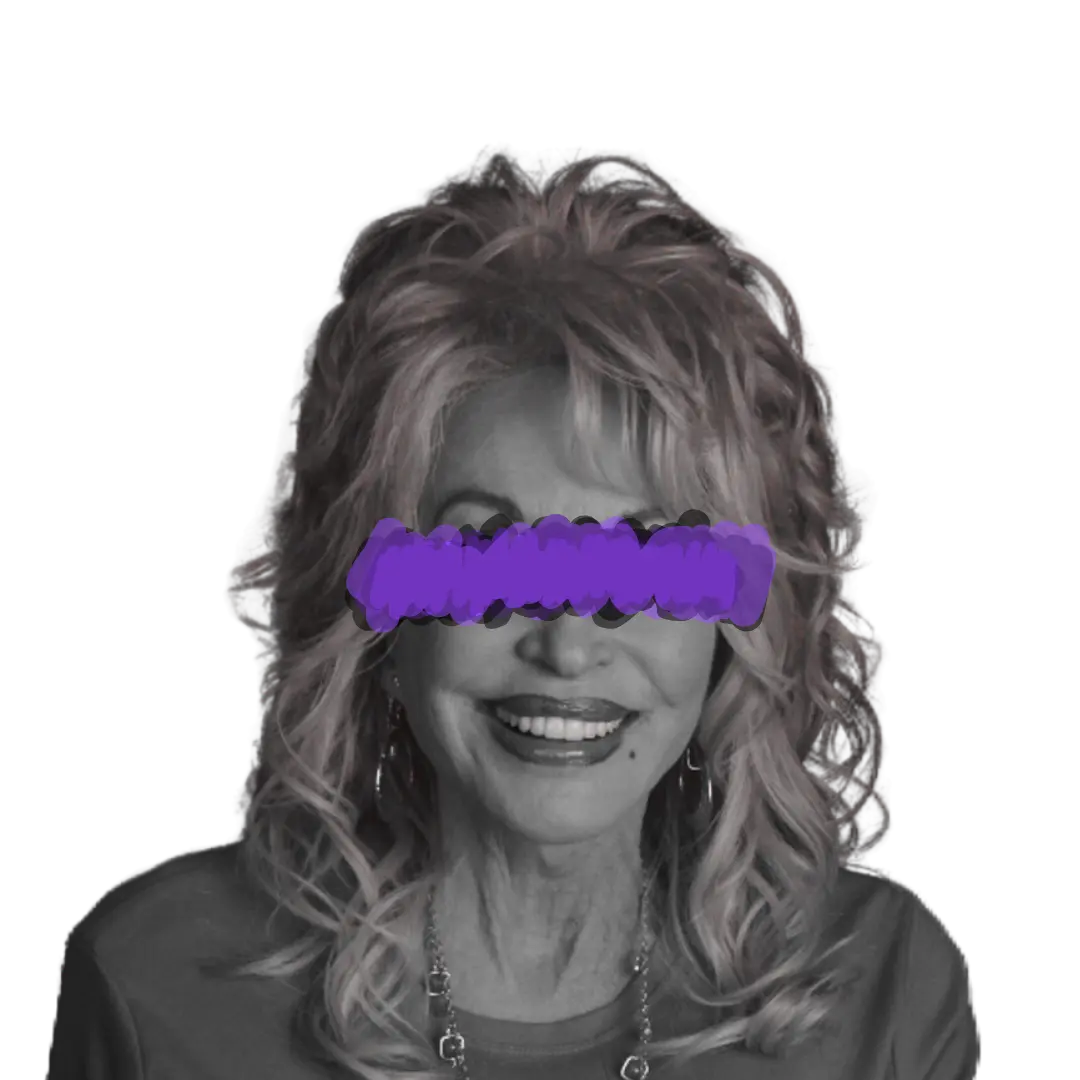
"I'm just the kind of person that rather than lashing out at something that hurts me, I usually cry about it and pray about it."
You know the look. The rhinestones. The impossible wigs. That voice like honey poured over gravel.
But most people miss what's really going on with Dolly Parton.
She's a walking paradox. Dirt-poor roots with a $650 million empire. Self-deprecating humor with executive intelligence. Over-the-top glamour behind a coal-country accent she never bothered to smooth out.
Every business decision, every charitable initiative, every sequined outfit points to the same core need.
TL;DR: Why Dolly Parton is an Enneagram Type 2
- The Compulsion to Give: Dolly's Imagination Library has gifted over 224 million books to children worldwide. She's poured millions into her hometown through Dollywood, transforming an impoverished region. This isn't strategic philanthropy. It's a Type 2's core need to help others made manifest.
- Heart Triad Processing: Type 2s live in the Heart Triad, processing life through emotions. Dolly channels this into 4,000+ songs. She wrote "Jolene" and "I Will Always Love You" on the same day. Her emotional depth is her creative engine.
- Connection Is Oxygen: Despite massive career success, her nearly 59-year marriage to Carl Dean, a man who wanted nothing to do with fame, shows where her real values lie. She doesn't abandon people. Ever.
- Disguised Strength: People underestimate her. She's used this to her advantage in negotiations for decades. That Smoky Mountain accent and self-mocking humor mask executive intelligence. She tells Elvis no. She walks away from Porter Wagoner. She keeps her publishing rights when everyone tells her not to.
What is Dolly Parton's Personality Type?
Dolly Parton is an Enneagram Type 2
Enneagram Type 2s, called "The Helper," are driven by a deep need to be loved through being needed. They remember who cried at what party, who needed a ride home, who didn't get a birthday call. Connection isn't a nice thing to them. It's urgent.
But here's the thing most people don't get about Type 2s: underneath all that giving lies a profound fear of being unwanted. They help because connection is oxygen to them. Being useful feels like being loved.
Dolly has built her entire life around this pattern. The Imagination Library wasn't just a good idea. It was born from a personal wound — her father's illiteracy. She saw a need. She filled it. That's not philanthropy strategy. That's a Type 2 doing what Type 2s do.
Dolly Parton's Upbringing
The One-Room Cabin That Built an Empire
Dolly Rebecca Parton was born on January 19, 1946, in a one-bedroom cabin in Locust Ridge, Tennessee. No running water. No electricity. The fourth of twelve children.
Her father, Robert Lee Parton, was a sharecropper who couldn't read. But Dolly has called him "one of the smartest people she has ever known" when it came to business. That combination shaped her. Humble origins. Sharp instincts.
Her mother, Avie Lee, raised twelve kids while often in poor health. Despite the hardship, she filled the home with Smoky Mountain folklore and ancient ballads. Music wasn't entertainment. It was survival.
The doctor who delivered Dolly was paid with a sack of cornmeal.
That poverty shaped everything. She's written about being "peed on" in the bed she shared with siblings. And being grateful. The warm urine was better than the freezing cold.
But here's the Type 2 twist: Dolly insists her home was "so rich in love that every material poverty was mitigated."
The Coat of Many Colors
One story captures both the love and the pain of Dolly's childhood better than any other.
Her mother took a box of rags someone had given the family and stitched them into a patchwork coat. As she sewed, she told young Dolly the biblical story of Joseph and his coat of many colors.
Dolly ran off to school, proud to show off her new coat. Her classmates didn't see love. They saw rags. They mocked her. Then, in a detail Dolly only revealed later, the other children stripped the coat off her. Half-naked and screaming, they locked her in a dark coat closet.
She still sleeps with a light on.
Years later, on a tour bus with Porter Wagoner, Dolly wrote "Coat of Many Colors" on the back of a dry cleaning receipt. It became her signature song. Not "Jolene." Not "9 to 5." Her favorite.
"That memory had been painful to me," she told an interviewer, "but I didn't realize it until I wrote the story." The Library of Congress added the recording to its National Recording Registry.
The song transformed childhood trauma into something healing. Pain into connection.
Dolly Parton's Rise to Fame
From the Grand Ole Opry to National Treasure
At 10, Dolly was singing on local radio. At 13, she recorded her first single and appeared at the Grand Ole Opry. Johnny Cash himself encouraged her to "follow her own instincts."
The day after graduating high school in 1964, she moved to Nashville.
Her partnership with Porter Wagoner launched her career. It also almost trapped it. When she wanted to go solo, she didn't leave in anger. She wrote "I Will Always Love You" as a goodbye. A love letter of gratitude wrapped in a breakup.
That song would later earn her an estimated $20 million from Whitney Houston's cover alone.
Then came the call that would have broken most songwriters.
Elvis Presley wanted to record "I Will Always Love You." The King. The biggest star in the world calling to record her song.
Dolly was thrilled. Then Elvis's manager, Colonel Tom Parker, delivered the terms: Elvis would only record it if Dolly gave up half the publishing rights.
Standard practice. Many artists would have jumped at the exposure.
Dolly cried all night. Then she said no.
"I said, 'I'm sorry, but I can't give you the publishing,'" she recalled. "I wanted to hear Elvis sing it so bad. But I had to keep that copyright in my pocket."
That decision was worth millions when Whitney Houston covered it decades later. People mistake Type 2 warmth for weakness. They learn.
Inside Dolly's Head
The Sensitive Soul Behind the Sparkle
"Seriously, I am a very sensitive person. I feel everything to the core."
In the 1980s, Dolly hit rock bottom. Career struggles. Personal problems. She later admitted she'd contemplated suicide.
When asked how she deals with pain, she said she'd "rather cry about it and pray about it" than lash out. Type 2s process hurt through emotional absorption, not aggression.
The Over-the-Top Look That Matches Her Heart
Her iconic appearance? Not an accident.
"I'm so outgoing inside in my personality," she's explained, "that I need the way I look to match all of that."
The wigs (she names each one). The rhinestones. The figure-hugging outfits. Exterior reflecting interior. A woman who feels everything big expressing herself big.
"It costs a lot of money to look this cheap," she famously quipped.
She once entered a Dolly Parton lookalike contest as herself... and lost.
The Compulsive Songwriter
Dolly carries a tape recorder and notepad everywhere. By her bed. On the tour bus. In her purse. At her vanity table while doing makeup at 3 a.m.
"I ain't never far away from a pencil and paper or a tape recorder," she's said. "I write every day, even when I'm on a plane, in the tub, or on the bus."
She'll write on tablecloths, napkins, Kleenex boxes, McDonald's receipts, even the back of her hand with a Maybelline pencil. Over 3,000 songs this way.
Why the obsession?
"If I dream a song, I have to write it down right then," she's explained. "You have to be on the job when you're a writer, because you don't want to lose any great lines."
She wrote "Jolene" and "I Will Always Love You" on the same day. Both became iconic. That's not luck. That's an emotional world so rich it overflows into output.
The Business Mind They Never See Coming
That Smoky Mountain accent fools people.
She's retained ownership of over 3,000 songs. A rare move that ballooned her wealth. She owns a 50% stake in Dollywood, which draws 3 million visitors annually. She's built cake mix lines, pet apparel brands, cosmetics companies, and wine labels.
Her 2w3 wing shows up here. The warmth of a Type 2 with the strategic drive of a Type 3. She knows her brand. She knows her value. She just doesn't feel the need to advertise her intelligence.
The Collaborations That Define Her
Type 2s collect people. They nurture relationships across decades.
Kenny Rogers became like a brother. When they recorded "Islands in the Stream" in 1983, the chemistry was immediate. "We really had that magic sound," Dolly said. They collaborated for over 30 years until his death in 2020.
Emmylou Harris and Linda Ronstadt formed the Grammy-winning Trio with Dolly. Three powerhouse voices choosing to harmonize rather than compete. Their albums together remain some of the most critically acclaimed country recordings ever made.
Then there's Miley Cyrus. When Billy Ray Cyrus was touring during his "Achy Breaky Heart" era, he connected with Dolly. She became Miley's honorary godmother. "Fairy godmother," Dolly corrects.
Dolly has covered Miley's "Wrecking Ball." Miley has covered Dolly's "Jolene" countless times. When Dolly finished her rock album, she wanted to play it for Miley first—just the two of them. "I think she's the rock chick of now," Dolly said.
She doesn't just make music with people. She makes family.
What Dolly's Giving Reveals About Her Psychology
The Imagination Library: A Wound Given Back as a Gift
Her father Robert Lee Parton was a sharecropper who couldn't read. Not one word. He signed contracts without knowing what they said. He built a life with raw intelligence and no access to the thing Dolly would later spend her fortune on.
In 1995, she started the Imagination Library to send one free book per month to every child under five in Sevier County, Tennessee. Today that program mails books to over 3 million children monthly across five countries. 224 million books and counting.
She loves the title "Book Lady" more than any Grammy she's ever won.
That's not accident. For a Type 2, giving is how you love. The bigger the wound, the bigger the giving. Her father never had books. So she gives every child in reach the one thing he didn't.
Dollywood: Giving Back to "My People"
When Dolly bought into a struggling East Tennessee amusement park in 1986 and renamed it Dollywood, the county was economically gutted. Coal had dried up. Tourism hadn't arrived.
Today Dollywood employs 12,000 workers and draws 3 million visitors annually. It's the largest employer in Sevier County.
She started the Buddy Program in the early '90s — $500 for every 7th and 8th grader who graduated high school. The dropout rate fell from 35% to 6%. Not a headline she's chased. Just a problem she saw in the people she grew up with.
"I wanted to give back to my people," she's said. There's no irony in that sentence when Dolly says it.
Funding Moderna: The $1 Million That Changed Everything
April 2020. Weeks into a global pandemic that nobody understood. Dolly donated $1 million to Vanderbilt University for coronavirus research. That contribution helped fund the development of the Moderna vaccine.
When her shot was ready, she waited her turn. She filmed herself getting vaccinated and posted it online — not to take credit, but to shame the hesitant.
"I just want to say to all of you cowards out there—don't be such a chicken squat," she joked. "Get out there and get your shot."
She invested the Whitney Houston royalties from "I Will Always Love You" into an office complex in a Black neighborhood in Nashville. She calls it "the house that Whitney built." The money came from one relationship. She put it back into a community.
Every one of these moves traces back to the same instinct. She sees who has nothing. She gives them what she has. That's not strategy. That's a Type 2 operating from their core.
Dolly Parton's Challenges and Controversies
Navigating the Political Tightrope
Dolly has stubbornly refused to declare political allegiances.
"I don't do politics. I have too many fans on both sides of the fence," she told the Dolly Parton's America podcast.
Some praise her for it. Some criticize her for staying silent on important issues.
But here's the Type 2 calculus: if she picks a side, she loses connection with half her audience. For a Type 2, connection isn't optional. It's survival.
The LGBTQ+ Support Criticism
When Federalist writer Ericka Andersen criticized Dolly's stance on LGBTQ+ inclusion, arguing that a Christian should call out homosexuality as a sin, Dolly's response was classic.
"I've got transgender people. I've got gays. I've got lesbians. I've got drunks. I've got drug addicts. All within my own family. I know and love them all, and I do not judge."
She doesn't abandon people. That's the same unwavering acceptance that defined Mr. Rogers. You're hers, and she's keeping you.
Dolly Parton's Legacy and Current Work
The Love Story That Made No Sense
How does a Type 2, driven by connection and needing to be needed, thrive in a nearly 59-year marriage to a hermit?
Carl Dean never wanted fame. When Dollywood opened in 1986, the only way he'd agree to a photo was with a bag over his head. When reporters staked out their home, he'd tell them he wasn't Dolly's husband. He was the gardener.
After their first date, he asked her to never make him go to another awards show. She didn't.
Here's what most people miss: Carl gave Dolly the one thing most people couldn't. Freedom without abandonment.
"He's not jealous and I'm not jealous of him," she explained. "He knows I flirt. He flirts too. At the end of the day we love each other madly."
He was secure enough to let her be herself. She was devoted enough to protect his privacy. The world's most famous woman married a man who wanted nothing to do with her world. It worked because she didn't need Carl in the spotlight. She needed to know she was loved.
Carl Dean died on March 3, 2025. He was 82.
"Words can't do justice to the love we shared for over 60 years," Dolly wrote.
Days later, she released "If You Hadn't Been There." Even in grief, she turned pain into something others could hold onto.
That's the Type 2 paradox: she's one of the most famous people on Earth, but her greatest joy was "sitting on the porch swing with my husband, watching the sunset."
The Nashville Library Gift
In late 2024, the Dollywood Foundation donated $4.5 million to kickstart Nashville Public Library's "Begin Bright" early literacy program. The largest gift in the library foundation's 27-year history.
She keeps giving. Because that's who she is.
How Dolly Shows Her Type 2
The Integration and Disintegration Patterns
When Type 2s are healthy and secure, they move toward Type 4. Accessing deeper creativity, emotional authenticity, and comfort in their uniqueness.
Watch Dolly in creative mode. Composing "Coat of Many Colors" to process childhood trauma. Writing thousands of songs that mine her emotional depths. Turning the pain of leaving Porter Wagoner into "I Will Always Love You" instead of burning bridges. That's Type 4 integration at work. Using her inner world as creative fuel rather than just giving to others.
When she's stressed? Watch for Type 8 behaviors. Assertive. Protective. Unwilling to be pushed around.
Telling Elvis no. Walking away from Porter Wagoner when the partnership no longer served her. Fighting to keep her publishing rights when industry norms said otherwise. In 2020, when critics questioned her support for Black Lives Matter, she didn't apologize or explain away. She stated her position directly: "Of course Black lives matter. Do we think our little white a**es are the only ones that matter?"
That's the steel under the rhinestones. Type 2s can be the fiercest protectors when they drop the need to please.
Why She Keeps Winning
People underestimate Type 2s. They see the warmth and miss the will.
Dolly has used this to her advantage for six decades. She builds empires while making everyone feel loved. She negotiates ruthlessly while everyone smiles.
"I'm not offended by all the dumb blonde jokes," she once said, "because I know I'm not dumb. And I also know that I'm not blonde."
Why the Wiring Never Changes
Dolly Parton has spent 80 years turning poverty into generosity, pain into songs, and fame into service.
That's not just talent. That's personality structure in action.
Type 2s find their worth through connection. Their deepest fear is being unwanted. Their deepest desire is to be loved. Dolly took that wiring and built a $650 million empire, 4,000+ songs, 224 million free books, and the largest employer in Sevier County. Not by fighting who she is, but by leaning all the way in.
She turned the coat made of rags into a song that made the Library of Congress. She turned the man who paid her doctor in cornmeal into the reason she mails books to 3 million children a month. And when her husband of 60 years died in March 2025, she wrote a song. Days after his funeral. Because that's the only language she has for grief that goes too deep for words.
Disclaimer This analysis of Dolly Parton's Enneagram type is speculative, based on publicly available information, and may not reflect the actual personality type of Dolly Parton.
What would you add?