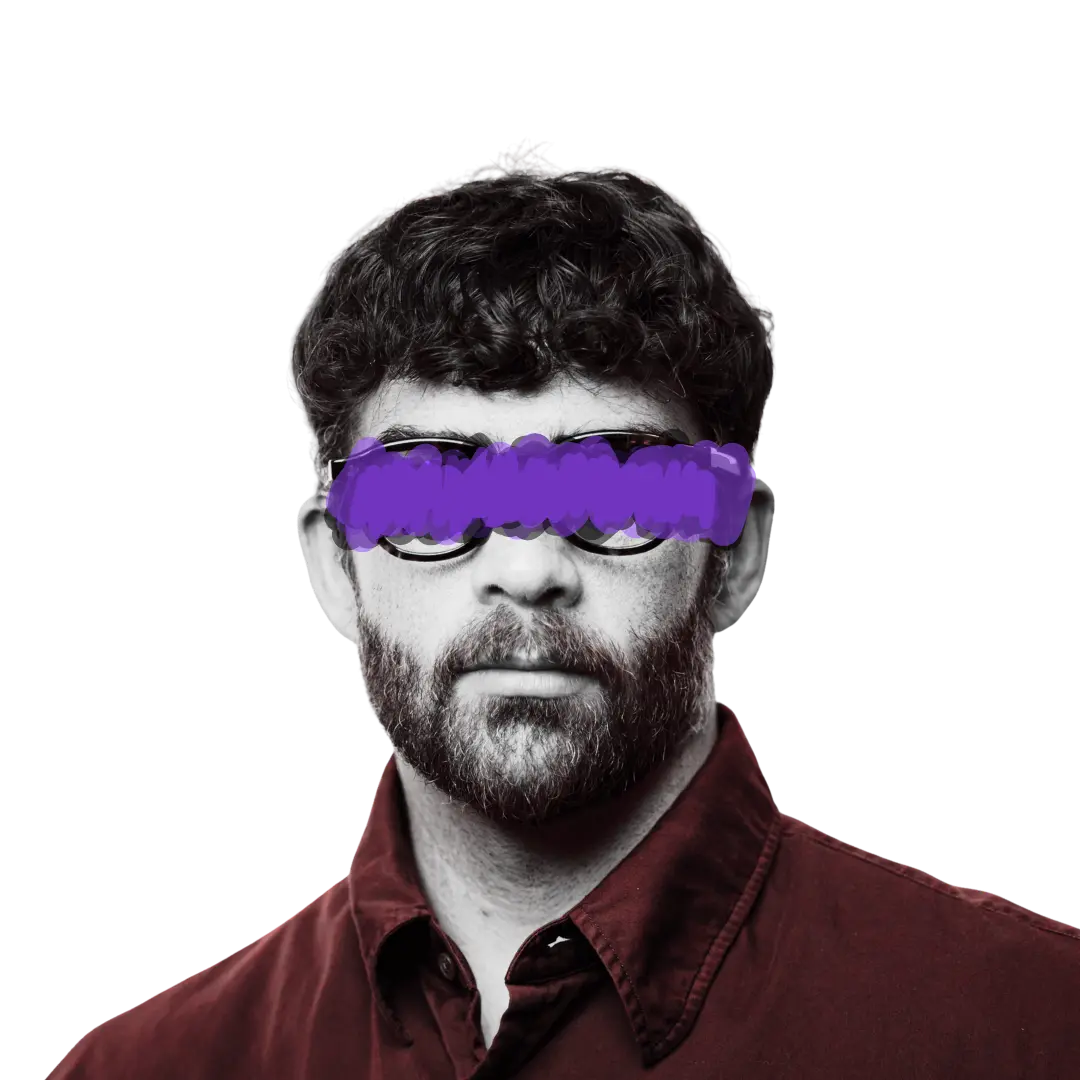
"America deserved 9/11, dude. Fuck it, I'm saying it."
That quote got Hasan Piker banned from Twitch for a week. It also captures everything that makes him the most polarizing political voice on the internet. Not because he said it. Because he refused to fully walk it back.
Every day, from 11 a.m. to 7 p.m. PT, the 6'4" bodybuilder sits at his desk and rages against the machine to hundreds of thousands of viewers. A sitting congressman called him a terrorist sympathizer. Others praise him as the Left's answer to Joe Rogan. He's raised millions for disaster relief in single streams.
Love him or hate him (and most people do one or the other), you have to ask: what drives someone to spend a decade screaming into the void while building the biggest political audience on Twitch?
TL;DR: Why Hasan Piker is an Enneagram Type 8
- Never Backing Down: From the house purchase controversy to defending protesters outside a synagogue, Hasan's defining trait is his refusal to apologize or moderate his positions under pressure—even when it threatens his career.
- The "Himbo Gateway Drug": He embraces this label. Muscular gym bro delivers leftist politics in an accessible package. The self-deprecating humor is strategic vulnerability, disarming viewers who might otherwise dismiss political content.
- Protective Rage: His aggressive political commentary frames itself as defending the powerless against the powerful, from Palestinian civilians to exploited workers. Type 8s are protectors who express care through confrontation.
- Absolute Domain Control: He'll ban a 33-month subscriber mid-sentence for a perceived slight. He purged an entire faction of viewers for "parasocial behavior." Type 8s tolerate no challenges to their authority in their space.
- Work as Armor: Streaming 8+ hours daily, 7 days a week, while maintaining a rigorous workout routine reveals the Type 8 pattern of using compulsive activity to avoid sitting with difficult emotions.
What is Hasan Piker's Personality Type?
Hasan Piker is an Enneagram Type 8: "The Challenger"
Type 8s are the powerhouses of the Enneagram. Confrontational. Self-confident. Protective. Absolutely unwilling to be controlled by anyone.
They fear being harmed or controlled, so they project strength to prevent vulnerability. They'd rather be respected than liked. They fight hard for what they believe in. Sometimes too hard.
Personality typing communities consistently place Hasan as an 8w7 (Eight with a Seven wing), called "the Maverick." This subtype fuses the Eight's confrontational energy with the Seven's enthusiasm and intellectual restlessness.
"I don't think masculinity is associated with MAGA," Hasan has said. "I think what we consider to be masculine is just confidence and a demonstration of leadership skills."
His political approach follows: "I give a lot of leeway to people for having somewhat bigoted views," he said in a recent interview. No hesitation. Radically different from liberal orthodoxy. Where most commentators perform outrage at the wrong opinions, Hasan would rather engage and convert.
The Making of a Challenger: Hasan's Formative Years
Hasan Doğan Piker was born into a family straddling two worlds.
His father, Mehmet Behçet Piker, served on the Board of Directors of Sabancı Holding—one of Turkey's largest conglomerates—and later co-founded Turkey's conservative Future Party. His mother, Ülker Sedef Piker, teaches art and architectural history at the New Jersey Institute of Technology. His uncle is Cenk Uygur, co-founder of The Young Turks.
The family dynamics are striking. His father—a corporate executive tied to Turkish conservatism—stands on the opposite end of the political spectrum from his son. His mother, the sister of a progressive media figure, represents a different current entirely. Hasan grew up at the intersection of Turkish corporate conservatism and American progressive media. That tension shaped him.
Born in New Brunswick, New Jersey, Hasan moved to Istanbul as a toddler. There, his father made a deliberate choice: send him to public school rather than elite private institutions.
The intention was to instill discipline and humility. The result was something else.
"I was a total outcast," Hasan has recalled of his Turkish school years. Bullied for his weight. Punished for questioning. He describes rebelling against the repressive culture he faced.
Eights develop in environments where vulnerability meant harm. The bullied kid learned a lesson he'd carry into adulthood: if you're going to get hit, hit first. Hit harder.
Growing up under Recep Tayyip Erdogan's regime shaped his politics. Not in the abstract. Personally.
"One of my first interactions with government repression," Hasan has explained, "was when Recep Tayyip Erdogan sued one of the cartoon newspapers that I used to read, a political satire."
Watching an authoritarian systematically consolidate power gave him both his left-wing views and his willingness to express them loudly.
His Turkish upbringing also gave him something else: an anti-imperialist worldview baked in from childhood. "Growing up in Turkey, always had an anti-imperialist slant," he's said, "which is a given usually for people on that side of the planet, who are privy to the negative consequences of American empire, who get to experience it firsthand or at least secondhand."
This dual perspective sets him apart from most American political commentators. He sees U.S. foreign policy not as an abstraction but as something that affects people he knows and cultures he comes from.
He returned to the United States for college, attending the University of Miami before transferring to Rutgers, where he joined the Theta Delta Chi fraternity and graduated cum laude with a double major in political science and communication studies.
The kid who was bullied for being overweight transformed himself into a 6'4" bodybuilder. The outcast became one of the most-watched streamers on the planet. He weaponized his wounds.
From TYT to Twitch: Hasan's Rise to Fame
Hasan's career follows a pattern: find a bigger platform, then dominate it.
He started as an intern at The Young Turks during his senior year of college. By 2016, he created and hosted "The Breakdown," a political show on Facebook that earned a Shorty Award nomination.
But Hasan saw something others missed: a generation getting their news from gaming platforms, not cable networks.
"I shifted my attention from Facebook to Twitch in order to reach a younger audience," he explained, "and because of what I felt was a preponderance of right-wing commentators on YouTube and a lack of leftist representation among streamers."
The move was strategic. The execution was confrontational, relentless, impossible to ignore.
By 2020, HasanAbi was the largest political streamer on Twitch. His 2020 election coverage peaked at 227,000 concurrent viewers. When Alexandria Ocasio-Cortez, Ilhan Omar, and Pokimane joined him for an Among Us "Get Out the Vote" stream, 700,000 people watched.
By 2022, he was the most-watched Twitch creator in the U.S. His 2024 election night coverage drew 7.5 million total viewers. As of early 2026, HasanAbi commands 3 million Twitch followers.
He didn't build an audience. He conquered one.
Hasan's Personality: Anger as a Love Language
Spend any time watching Hasan's streams and you'll notice something: the man is almost always angry.
Not performatively. Actually angry.
The Rage Machine
Eight hours a day, seven days a week, Hasan consumes and reacts to content that infuriates him. He watches every Candace Owens video. He reads through the worst takes on the internet. He deliberately exposes himself to things that trigger his outrage.
"I watch every Candace Owens," he's admitted. "I am fascinated by conspiracy theories."
Eights channel difficult emotions through anger. Sadness becomes anger. Fear becomes anger. Helplessness becomes anger. Rage feels better than vulnerability because it mobilizes rather than paralyzes.
What the Stream Actually Looks Like
If you've never watched, picture this: Hasan broadcasts from a home studio in Los Angeles with three desktop monitors, fueled by cold brew, zero-sugar sodas, and stacks of ZYN nicotine pouches. The format is "Just Chatting"—basically AM radio for Zoomers.
A typical session opens with the day's political headlines. He watches and reacts to news clips in real time, flipping between a dizzying number of tabs—one NBC reporter described a single broadcast covering "Rep. Ilhan Omar's primary victory, campaign polling data, the Gaza conflict, and Arizona abortion legislation." Interspersed: viral TikToks, memes, chat interaction, and gaming segments later in the stream.
"A lot of people see what I have to do as almost like zoomer NPR," Hasan has explained. "They just tune in while they're doing chores or at work. And I'm just kind of speaking and walking them through the day's news."
The average concurrent viewership hovers around 40,000. The vibe, as NBC put it, "feels more like hanging out with a politically savvy friend than watching traditional news coverage."
Physical Dominance
His workout routine (one to two hours daily, including basketball) isn't vanity. It's control.
When you can't control the world, you can at least control your body. The 6'4" muscular frame projects exactly what Hasan wants: invulnerability.
The Work Addiction
Hasan has acknowledged being "addicted to work, exercise, and healthy habits as ways to manage the stress from constant online attacks."
Keep moving. Keep fighting. Keep streaming. If you stop, the vulnerability catches up.
The Himbo Gateway Drug: Redefining Leftist Masculinity
A fan on TikTok called Hasan "the himbo gateway drug to leftist thought."
When NPR asked if that accurately describes him, Hasan's response was simple: "Yeah, I think that nails it, I guess. Just gateway drug to empathy."
This is the most important thing to understand about Hasan's cultural position. He's become the central figure in the "can the left appeal to young men?" debate.
The Bro Left Dilemma
With all the discourse about young men flocking to the political right because of Joe Rogan and manosphere influencers, Democrats have been asking if Piker could be their answer.
He's skeptical.
"People keep asking me about whether or not we need a Joe Rogan of the left, or whether or not I am the Joe Rogan of the left," Hasan has said. "And I keep repeating to the Democrats at least, that a Joe Rogan is not going to solve their problems. They need to change their policies."
His diagnosis of why young men drift right isn't about ideology. It's about identity and attention. Right-wing influencers, he argues, are "coddling these guys" by telling them "'You should be getting girls. You should be rich. You're being wronged.' That's intoxicating."
Young men "desperate for a sense of community, desperate for an identity, they find themselves in right-wing circles. And they unironically wear it as a brand where they think that being politically right wing is a way to demonstrate your machismo."
His prescription? "You can't win back these guys with think pieces about toxic masculinity."
Reclaiming Masculinity
The New York Times profiled him with what he recalls as the headline "Progressive Mind In A MAGA Body." He pushed back hard.
"I think that's deliberate, and I think it's wrong. I don't think masculinity is associated with MAGA. I don't even think masculinity is necessarily associated with working out. I think what we consider to be masculine is just confidence and a demonstration of leadership skills."
His whole brand proves a point: you can be a gym bro and a socialist. You can care about workers' rights and also talk about lifting. The aesthetics of masculinity don't have to come with right-wing politics attached.
He's described himself as the "Rush Limbaugh for Zoomers." Inflammatory, sure. But accurate about his role in the media ecosystem.
What He Actually Believes
For all the controversy about his personality, Hasan's actual policy positions are surprisingly concrete. He identifies as a democratic socialist and Marxist who wants nationalized healthcare, free public college, strong unions, and aggressive wealth redistribution.
"When it comes to the material conditions that we're subjugated to as the American working class, people are not doing all right," he's said. "We don't have any sort of social safety net, like public healthcare. We have no unions. We have no collective bargaining. We have no community."
His 2028 electoral litmus test is blunt: "Do you want free healthcare? Do you want free college? Do you want to stop Israel? I'll vote for anyone who sincerely believes in making that happen."
On organizing: "Through organizing, through solidarity, through joining different organizations, through engaging in activism, direct action, mutual aid... you will develop a better future." He's endorsed the idea that the left needs to "persuade, not scold"—a message that cuts against his own confrontational reputation in ways he seems aware of.
He points to New York politician Zohran Mamdani's campaign as a model: door-to-door canvassing, identifying voters' five biggest material concerns, and running on those. Rent freezes. Free buses. More housing. Not culture war rhetoric—kitchen table issues.
The Self-Deprecating Twist
Here's what makes the "himbo" label interesting: Hasan leans into it. He'll play dumb. He'll joke about being just a "hot guy who reads Wikipedia."
For a Type 8 (a personality defined by projecting strength and invulnerability), this self-deprecation is strategic. It disarms. It makes the political content more approachable. It prevents him from seeming like he's lecturing. Calculated vulnerability that works.
Why Millions Actually Watch
Beyond the politics and the controversies, what's the emotional pull? Why do millions tune in every day?
"Emotional Support Streamer"
Multiple TikToks describe Hasan as an "emotional support streamer." Fans keep his stream on while working, doing chores, or just existing in a world that feels overwhelming.
"I didn't realize that there were other people who also felt this exact same way," Hasan has said. "That's my job... I am angry a lot of times. And I think that anger is something that they also share."
The appeal isn't information. It's validation. This guy gets exactly what I'm upset about.
The De-Radicalization Stories
Some of his most devoted fans came from the opposite end of the political spectrum. One former centrist recalls being fearful of the "stigma of socialism" until watching "a guy who was young, sexy, and strong" debunking a right-wing talking point. They've swung left ever since.
Another viewer describes going down a darker path: watching Ben Shapiro and Steven Crowder, sympathizing with white nationalist rhetoric. Over time, they started watching some of Hasan's non-political content. They found his personality charming, and it slowly drew them into the movement.
The gym bro aesthetic that critics mock is precisely what makes this possible. He reaches people who'd never click on a lecture from a stereotypical leftist.
The Charitable Reality
When the Turkey-Syria earthquake hit in February 2023, Hasan raised $1.3 million in four days, personally donating $45,000. Within 15 minutes of going live, he'd already raised $150,000.
His Gaza relief drive raised over $1 million. NPR noted he'd raised "1% of the entire US government's contribution to humanitarian aid for Gaza on Twitch in just four days."
He raised $126,000 in a single day from merch sales for strike funds and made massive donations to LA-area animal shelters.
The rage gets the attention. The charity reveals the person underneath.
More Than Politics: Entertainment and Chat Culture
This article might make Hasan sound like C-SPAN with muscles. That misses a huge part of his appeal. Nobody watches pure rage for eight hours.
The Comedy of It All
Hasan's "small head" is one of Twitch's most persistent memes. Even his uncle Cenk Uygur joins the bit. When his chat annoys him, he'll bust out impressions: "I'm 12 and I cringe at everything... Fortnite! Poggers!"
The Debatelords charity event in September 2024 captured his range. Topics included "Best Cracker: Ritz vs. Saltine" (fellow streamer Cyr repeatedly just said "cracker" as a callback to Hasan's 2021 ban). The night ended with Hasan getting pies thrown in his face, having raised nearly $50,000 for charity.
He got an eyebrow transformation in Japan. He handled a Madagascar hissing cockroach on stream with Maya Higa. He finally cried watching One Piece after fans had been waiting for it.
The rage is real. But so are the moments of absurdity and genuine fun.
The Entertainment Machine
A significant chunk of his streams aren't political at all. He'll disappear into GTA roleplay on NoPixel servers for 10+ hours, fully inhabiting a character. He co-hosts the Fear& podcast with Will Neff, QTCinderella, and AustinShow. He collaborates with Kai Cenat, another streaming giant with completely different energy. He "ruminates endlessly on the legacy of LeBron James."
The political stuff lands harder because it's surrounded by entertainment. And for an 8w7—where the Seven wing craves stimulation, variety, and intellectual restlessness—this isn't just strategy. Hasan needs all of it to stay engaged. The moment he gets bored, he moves to the next thing.
Chat: The Love-Hate Relationship
Hasan's relationship with his chat is complicated.
He's famous for banning viewers mid-sentence. In November 2025, he banned a 33-month subscriber who told him to "work out more" and told them to "die" in the process. The clip went viral. Critics called it disproportionate. Supporters said streamers can moderate their spaces however they want.
In September 2025, he ordered his moderators to ban all mentions of ultra-left creator Bad Empanada and purge his supporters from chat entirely. His reasoning? He wanted "less drama content" and "less parasocial behavior where viewers get too invested in streamer relationships."
He went after viewers who "treat politics like entertainment drama," calling this behavior "morally repugnant." His space, his rules.
The Inner Circle
His mom is a recurring character on stream whether he likes it or not. She walks in during Valorant matches (prompting the universal struggle of explaining you can't pause an online game), brings him plates of food mid-broadcast, and generally embodies the Turkish mother who doesn't care that 40,000 people are watching. It's the most humanizing element of the HasanAbi experience: a 34-year-old man with a massive platform, still getting interrupted by his mom with snacks.
Will Neff is his best friend. They met through mutual friends at Rutgers, but the real bonding moment came at a restaurant: when another couple at their table had a heated argument and stormed out, Will turned to Hasan and asked, "Do you want to eat their food and stiff them with the bill?" Hasan enthusiastically agreed. They've been inseparable since.
Will knew him "back when he was a fat, sweaty mess." He's watched Hasan's entire transformation, and pushed back when Hasan was about to quit streaming, getting him drunk one night and telling him: "You're gonna buy a gaming PC and you're gonna stream, bitch."
"Ultimately, I'm so happy with Hasan's success and I think he's a much better rounded person now," Will has said. Then, with typical best-friend honesty: "There are days that I miss the sweaty Backyardigans version of him."
Pokimane has defended their friendship when rumors circulated: "This is so f***ing gross, and untrue. Every single time I hang out with someone, some of you all are so weird. Let me live my life and be friends with who I want."
His only publicly confirmed relationship was with Janice Griffith from 2018-2019. After their breakup, she said they remain friends. He's been notably private about relationships since.
Controversies: What Happens When an Eight Won't Apologize
Hasan's career is defined by controversies that would end most creators. His response to each one reveals the Type 8 pattern: never fully back down.
The 9/11 Statement (2019)
While reacting to Dan Crenshaw on Joe Rogan's podcast, Hasan said: "America deserved 9/11, dude. Fuck it, I'm saying it."
He also mocked Crenshaw's war injury (a lost eye) with crude sexual language.
Twitch suspended him for a week. His uncle Cenk Uygur publicly called the joke "crass and offensive."
Hasan's response? He called his comments "inappropriate" and a "poor attempt at satire," then added: "I didn't say Americans deserved 9/11. I said America deserves 9/11."
When Cenk pushed back, Hasan said: "Maybe you can chalk it up to English being my second language or whatever you want to chalk it up to."
He later acknowledged: "I apologized for this remark, but I still hold the sentiments behind it." The minimal concession possible without surrendering the underlying position.
The $2.7 Million House (2021)
When news broke that the self-described "democratic socialist" bought a $2.74 million home in Beverly Grove, the internet exploded with accusations of hypocrisy.
This is the "champagne socialist" critique that follows Hasan everywhere. Socialist activist Alexis Isabel argued it's "just flat out unethical to be profiting off of socialism and buying yourself a 3 million dollar home in a state that has one of the highest homelessness rates in the country."
His response was immediate: dismissive of the criticism, defensive of his choices.
"Everyone collectively needs to calm down," he wrote on Twitter. "I bought a house for my family. It's also where I intend to stream every day." He pointed to the absurd LA housing market and his need for space.
Then he went further, arguing the critique was incoherent: his only options were renting (throwing money away), buying a cheaper house in a less affluent neighborhood (gentrification given his wealth), or what exactly?
"The idea that you're a good leftist or a bad leftist revolves around how you spend your money is so stupid," he said.
His broader argument: "The necessity of charity is an indication of systemic failure. It's still useful to help out mutual aid orgs in the short term but that's not how you solve structural problems." His solution? "Listen, if you're mad at me tax the fuck out of people like me."
Critics weren't satisfied. Defenders pointed out that "being a socialist does not mean taking a vow of poverty." He received death threats. He moved on.
The Houthi "Pirate" Interview (2024)
In January 2024, Hasan interviewed a 19-year-old Yemeni who went viral for filming himself aboard a Houthi-hijacked ship. Critics accused him of "fangirling over a terrorist." Congressman Ritchie Torres called him "dangerous" in a letter to Twitch executives.
Watch the Type 8 logic at work: the interview wasn't recklessness. It was a deliberate choice to humanize a figure the media had already rendered into a symbol. Eights are drawn to power confrontations, and the Houthis—a non-state actor disrupting global shipping lanes—represented exactly the kind of anti-imperial force that Hasan's worldview centers. Whether or not the interview was wise journalism is a separate question. For Hasan, refusing to do it would have felt like giving ground to the people telling him what he was and wasn't allowed to platform. The controversy confirmed his instinct: this is what he's willing to pay a price for.
The Hamas Synagogue Controversy (January 2026)
And then came the controversy that may define his career.
On January 8, 2026, masked protesters chanted "We support Hamas here" outside a Queens synagogue hosting an Israeli real estate event. When Mayor Zohran Mamdani and Rep. Alexandria Ocasio-Cortez condemned the chants, Hasan attacked them for it.
He went further. On his stream, Hasan told his audience that Hamas is "a thousand times better than the fascist settler colonial apartheid state."
Critics note that Hasan has called Orthodox Jews "inbred" and compared Zionists to Nazis. He's dismissed reports of Hamas sexual violence as "rape fantasies" and "hallucinations."
Congressman Ritchie Torres escalated his campaign against Hasan, writing to Amazon and Twitch executives about "concerning antisemitic and anti-American propaganda" from one of the platform's largest streamers.
Most public figures, facing potential career destruction, would moderate. Issue a clarification. Walk it back just enough to create plausible deniability.
Hasan doubled down. The wound from his Turkish childhood—being forced into compliance, watching authoritarians punish dissent—created someone for whom compromise under pressure feels worse than any consequence.
The Ethan Klein Feud (2023-Present)
Hasan and Ethan Klein co-hosted the "Leftovers" podcast until October 2023, when an on-air fight over Israel-Gaza killed it permanently. Over the next 18 months the fallout escalated into dueling callout videos and a public debate that drew 1.7 million viewers.
The feud reveals a specific Type 8 vulnerability: when a conflict breaks out inside the circle, the Eight's response is the same as when it breaks out outside the circle. There's no internal diplomacy mode. Hasan couldn't negotiate a soft landing with Klein because the Eight's operating system doesn't have that setting. You either hold your position or you don't. The friendship became collateral damage of a principle. For an Eight, that's painful—but losing the principle would be worse. The feud fractured online left communities and cost Hasan real credibility with people who had previously been his allies. He moved forward anyway.
The Criticism From His Own Side
The most interesting critiques of Hasan don't come from right-wing politicians. They come from the left.
Fellow leftists have accused him of intellectual shallowness—one commentator suspected "Marxism is more a part of his identity rather than a theory that he has adequately grasped," noting his reliance on foundational Marxist concepts without engaging with well-known objections. The Communist Party of Australia published an analysis arguing he "is in practice a successful capitalist" who "advocates for bourgeoisie interests: owning a means of production, employing a staff, and managing a substantial revenue stream."
This is the Eight's blind spot in its most legible form. Type 8s are so oriented toward action and confrontation that sustained theoretical rigor can feel like stalling. Hasan knows the enemy. He knows what he's fighting for. The people demanding he refine his theory of surplus value before he's allowed to call himself a Marxist read to him as exactly what he calls them: "pamphlet communists" more invested in purity than change. When his own viewers challenge him on contradictions—like endorsing a Democratic Senate candidate with a Blackwater background—he doesn't engage the substance. He dismisses the challenger. The Eight doesn't draw a distinction between the external threat and the internal critic. They both require the same response: hold the line.
The "authoritarian apologism" critique cuts deeper. Critics on the left argue that his reflexive defense of any regime opposing the U.S.—regardless of that regime's own human rights record—reflects not political analysis but Type 8 tribalism: if you're against the people I'm against, I'm with you. As one liberal publication put it: "A left that wants to oppose right-wing tyrants can't embrace people like Piker without losing moral credibility."
These aren't bad-faith attacks. They're the specific failure mode of a Type 8 running on opposition as a worldview: the thing that makes him impossible to co-opt also makes him impossible to course-correct.
The Stress and Security of a Type 8
To understand Hasan, you need to see how Type 8s function under pressure and when they feel safe.
Under Stress: Moving Toward 5
When overwhelmed, Type 8s take on negative characteristics of Type 5. They become withdrawn, paranoid, isolated.
By late 2025, observers noted concerning changes in Hasan's demeanor. He was experiencing "serious personal and professional strain," visible in his energy, engagement, and overall presence on stream.
The stressors were layered: sustained harassment campaigns (including viral fake "dog abuse" allegations), being named by politicians on national television, and general burnout from endless streaming.
He has experienced SWATTING, federal interrogation, and believes he is under government surveillance. Journalist Taylor Lorenz noted: "He gets the entire internet weaponized against him. He is the only straight man I've ever seen that has been Gamergated."
This is the Type 8 nightmare: being attacked from all sides with no safe space. The response is often to retreat further into work and isolation.
By early 2026, Hasan told CNN he wants to "stream less in 2026." For a Type 8 who's built his entire identity around relentless output, this admission signals serious burnout. Whether he'll actually follow through remains unclear. Type 8s rarely surrender territory voluntarily.
In Security: Moving Toward 2
When healthy, Type 8s access the positive qualities of Type 2: becoming warmer, more nurturing, focused on helping others.
You see this in the charitable drives detailed above, but also in smaller moments. "I say no all the time to a lot of deals, like a lot of money," he's said about turning down offers that conflict with his values. His manager fielded a $1 million offer from a betting platform for election night. Hasan said no. When the Eight is healthy, the intensity that infuriates critics becomes the engine for defending boundaries and helping the powerless.
Legacy and Current Work: The Streamer Who Changed Political Media
As of early 2026, Hasan remains one of the most influential voices on the American left. And one of the most controversial.
His YouTube channel has over 1 million subscribers. His election night coverage rivals cable news in viewership. More importantly, he proved a concept: you can build a massive political audience without moderating your views for mainstream palatability.
Since Trump's re-election, Hasan has achieved something remarkable: a breakthrough to mainstream media. Variety, GQ, and Wired have all interviewed him in recent months. Not as a curiosity, but as a political force that must be understood. The establishment didn't change him. He forced them to come to him.
His influence has grown so substantial that Democrats are eyeing his stream as a strategic stop for the midterm campaigns—a remarkable shift from outsider to kingmaker. NPR has explored how he and similar creators are reshaping how young men engage with politics.
The question isn't whether Hasan matters. It's what his prominence means for political discourse. Has he opened space for left-wing voices that don't soften themselves for mainstream palatability? Or has his confrontational style contributed to a political environment where everyone screams and no one builds anything?
The Bullied Kid Who Became the Loudest Voice in the Room
Hasan Piker represents something specific in American political culture: the personality that refuses to moderate.
The bullied kid in Turkey who learned that vulnerability gets you hurt built a political identity out of that wound. Every controversy, every doubling down, every refusal to issue the clean apology that would make the problem go away—it all runs back to the same operating system. Backing down under pressure doesn't feel like wisdom to Hasan. It feels like the thing that got him hurt in the first place.
By early 2026, he told CNN he wants to stream less. For a Type 8 who has built his entire identity around relentless output, even saying that out loud is a significant admission. Whether he follows through is another question. He's built genuine friendships, raised millions for disaster relief, and created a space where young men encounter a different story about what masculinity can look like. He's also defended positions that cost him credibility with people who share his actual values.
The burnout is real. So is the impact. That's not a contradiction—it's the Eight's dilemma, running at full speed in a direction they believe in, until the body or the mind finally sends the bill.
Disclaimer This analysis of Hasan Piker's Enneagram type is speculative, based on publicly available information, and may not reflect the actual personality type of Hasan Piker.
What would you add?