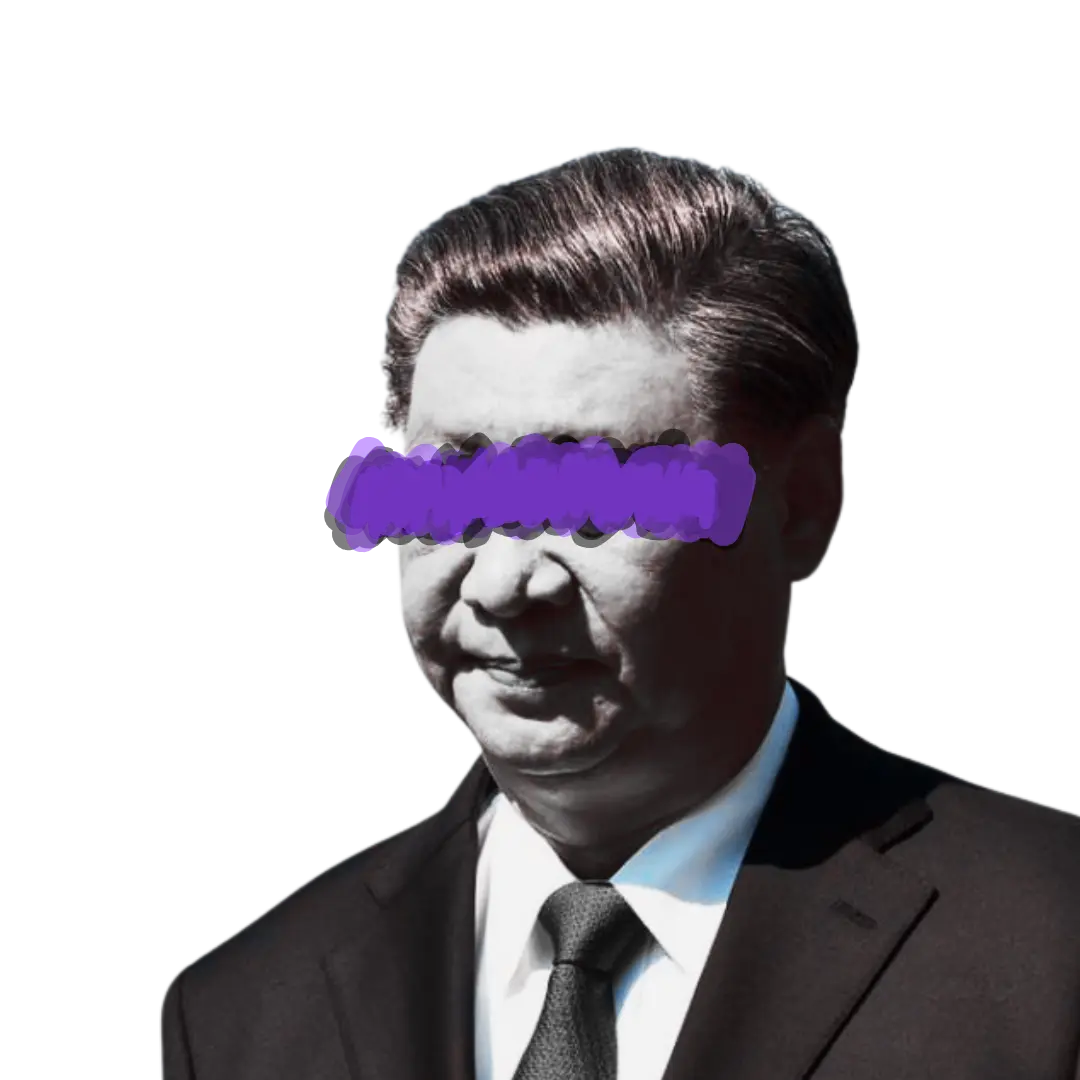
"The knife is sharpened on a stone, people are strengthened in adversity."
These aren't the words of a self-help guru. They're from Xi Jinping, a man who spent his teenage years sleeping in a flea-infested cave, eating corn bread, and hauling buckets of human waste across frozen fields.
Fifty years later, he controls the world's second-largest economy and commands the largest standing army on Earth. No Chinese leader since Mao has held this much concentrated power.
The distance from that cave to Zhongnanhai isn't a rags-to-riches story. It's what happens when you try to crush someone who refuses to stay down.
TL;DR: Why Xi Jinping is an Enneagram Type 8
- Trauma-forged strength: Xi survived the Cultural Revolution's destruction of his family and emerged with the classic Type 8 belief: vulnerability equals death.
- Control as survival: Type 8s fear being controlled or harmed by others. Xi has centralized power more than any leader since Mao, not from simple ambition but from a psychological need to never be powerless again.
- Protector identity: Healthy Type 8s become fierce protectors. Xi frames himself as defending China from foreign threats and corrupt officials, drawing on his seven years among peasants.
- Pressure pattern: Under pressure, Xi becomes secretive, rigid, and withdrawn. The zero-COVID response showed the pattern clearly: doubling down on a failing policy rather than admitting error.
- Emotional fortress: Lee Kuan Yew compared Xi to Nelson Mandela for his "enormous emotional stability." The controlled exterior over an intense interior is textbook Type 8.
What is Xi Jinping's Personality Type?
Xi Jinping is an Enneagram Type 8
Type 8s are called "The Challenger." Their core fear is being at someone else's mercy.
Think about that in the context of Xi's childhood: at age nine, watching his father dragged away on false charges. Red Guards ransacking his family home. Enduring "struggle sessions" where mobs screamed denunciations and called him an "enemy of the revolution."
What comes out the other side isn't just trauma. It's a determination — iron, quiet, patient — that sounds like: This will never happen to me again.
But here's what trips people up: Xi doesn't look like a Type 8. The stereotypical 8 is loud, confrontational, obviously dominant — think Trump working a rally. Xi smiles. He listens. He waits years before making a move. Diplomats consistently describe him as polite and restrained.
That restraint does not contradict the typing. It changes the tempo. Xi's power drive is not explosive; it is immovable. He applied to the Communist Party ten times over several years. He consolidated slowly, watched carefully, and moved only when the terrain was ready.
The aggression isn't cruelty for its own sake. It's protection. Beneath the armor is someone who deeply fears betrayal. That distinction matters, because it's also what makes the psychology so hard to argue with from the inside.
Xi Jinping's Upbringing: From Palace to Peasant
Xi Jinping was born in 1953 into Chinese royalty. His father, Xi Zhongxun, was a revolutionary hero who had fought alongside Mao and risen to Vice Premier.
Young Jinping attended the exclusive August 1st School, where the children of party elite were groomed. Servants. Chauffeurs. Access to the walled compound where China's leaders lived.
Then everything collapsed.
In 1962, when Xi was nine, his father was purged over a novel. Someone had written a book, and Mao decided Xi Zhongxun had approved it. That was enough. The elder Xi would spend the next 16 years beaten, imprisoned, paraded through streets while crowds screamed "traitor."
The family disintegrated overnight. Xi's half-sister hanged herself at her military academy. Xi himself was labeled a "black element" and sent to a detention school at 13.
When he snuck home to beg his mother for food, she turned him in to authorities. His own mother.
At 15, detained for interrogation, he later admitted he "collapsed from sickness" and "even thought of death."
Then something shifted.
In 1969, Xi was "sent down" to the countryside like millions of urban youth. For most educated kids, this was devastating. For Xi, it was salvation.
"On the entire train everyone was crying, but I was smiling. If I didn't leave, I didn't even know if I'd survive."
The persecution couldn't follow him to a remote village. For the first time in years, he could breathe.
Rise to Power: The Cave, The Rejections, The Climb
Xi spent seven years in Liangjiahe, a poor village in Shaanxi province. He slept in a yaodong, a flea-infested cave carved into the yellow hillside. He ate the same coarse grain as the peasants and hauled buckets of human waste to fertilize the fields.
He arrived carrying two suitcases filled with books. Russian literature. French philosophy. Ancient Chinese classics. He read Dostoevsky by oil lamp after 12-hour workdays.
He applied to join the Communist Party. Rejected. His father's disgrace made him politically untouchable.
Ten times, Xi submitted applications. Ten times, higher authorities blocked him.
A lesser person would have accepted the verdict. Xi refused.
He built relationships with the villagers. Won their trust. Learned their dialects. When a new commune secretary arrived in 1974, the villagers vouched for Xi. The secretary pushed his application through.
At 21, Xi became the village party secretary.
This pattern would repeat for four decades: rejection, perseverance, building from the ground up. Provincial leadership in Fujian. Governor of Zhejiang. Party chief of Shanghai.
At each step, Xi cultivated allies carefully. He demonstrated competence without threatening his superiors. He watched. He waited. He remembered who helped him and who stood in his way.
In 2012, he became General Secretary. By 2022, he had secured an unprecedented third term. The sent-down youth had become supreme leader.
The timeline explains how Xi got there. The psychology explains what he did once he arrived — and why he can't stop.
Enneagram Rabbit Hole: Wings, Subtypes & Connecting Lines for Xi Jinping
For Enneagram readers going deep on Xi Jinping. Skip if you're here for the story — the rest of the analysis stands on its own.
Xi Jinping's Wing: 8w9
Xi reads as 8w9 — the Challenger with a Peacemaker wing. An 8w7 version would be louder, faster, more openly provocative, and more visibly appetite-driven. Xi's dominance is quieter. He absorbs pressure, waits through rejection, remembers the landscape, and then consolidates in ways that are hard to reverse.
The 9-wing explains why outsiders can underestimate the force. He does not need the rally performance or the constant public escalation. The power is in patience: ten party applications, decades in provincial posts, gradual ally cultivation, and then the abolition of term limits once the machine was sufficiently under his control. The aggression is not theatrical. It is structural.
Xi Jinping's Instinctual Subtype: sp/so
Xi reads as self-preservation dominant with social second. The sp-8 pattern is about security, territory, infrastructure, family protection, and never again being exposed to forces that can destroy you. The state becomes the bunker. The family pseudonym at Harvard, the harsh response to leaks, the surveillance apparatus, and the obsession with supply chains all fit the instinct stack.
Social sits second because power is routed through rank, party legitimacy, national destiny, and China's place in the global order. Belt and Road is not just concrete; it is a social map with China at the center. Sexual reads last. Xi can form intense loyalties, but the dominant pattern is security first, hierarchy second.
Stress and Growth Arrows
Under stress, Type 8 moves toward Type 5. Xi's retreat into books during Liangjiahe was adaptive; the later version becomes secrecy, information control, and withdrawal into a small circle. Zero-COVID showed the unhealthy edge: when reality challenged the policy, the system became more rigid before it changed.
In growth, Type 8 moves toward Type 2. See the connecting lines in Xi's protector identity: village loyalty, anti-corruption as defense of ordinary people, and fierce protection of his daughter. The healthy move is strength used to protect without needing total control. Xi shows flashes of that protector impulse, but the control impulse usually wins.
Counterarguments: Why Xi Jinping Might Not Be Type 8
Type 1 is plausible because Xi speaks in moral campaigns, discipline, rectification, and national renewal. But the engine is not purity. It is control. Rules matter because they secure the system and expose disloyalty.
Type 5 also has a case because of the reading, secrecy, and emotional reserve. But a core 5 usually withdraws to conserve energy and autonomy. Xi gathers power, centralizes command, and extends control outward. The cave made him intellectual; it did not make him detached.
Xi Jinping's Psychology: The Patterns Behind the Power
The Reader Who Survived
Xi's love of books isn't a PR talking point. It's how he survived.
"I have many hobbies. I love reading the most. Reading has become a way of life for me."
He devoured Dostoevsky — whom Xi has called "the deepest Russian writer" — along with Tolstoy, Shakespeare, and Victor Hugo. In the cave, the books gave Xi somewhere the physical world couldn't reach him.
Today, Xi name-drops authors constantly. Some former princelings attribute this to insecurity about his interrupted education. One who has known him for decades remarked: "Xi is not cultured. He was basically just an elementary schooler. He's very sensitive about that."
The reading is genuine. It's also armor.
Both things are true. They're the same thing.
The Emotional Fortress
Former Singapore Prime Minister Lee Kuan Yew, who had met every Chinese leader including Mao, assessed Xi before he became supreme leader:
"A person with enormous emotional stability who does not allow his personal misfortunes or sufferings affect his judgment... I would put him in Nelson Mandela's class of persons."
Chinese observers describe Xi as "smiling on the outside and hard on the inside." Kevin Rudd, the Mandarin-speaking former Australian PM who has spent hours in conversation with Xi, put it differently: "What he says is what he thinks. There's not a lot of artifice." The smile disarms; the hardness protects. Both are real.
The Micromanager Who Trusts No One
Xi is definitively a micromanager. Party media reports he "personally" advances major initiatives, "personally" scrutinizes discipline of senior cadres, "personally" plans regional development. The word "personally" appears so often in official coverage that it reads less like emphasis and more like a compulsion.
In 2017, he made the demand explicit, calling on officials to "personally arrange major tasks, personally address significant issues, personally coordinate key stages, and personally oversee implementation."
Xi has also expressed frustration with this dynamic — which is the more interesting tell. "Some people will only take action when the party's central leadership instructs them to do so. I issue instructions as the last line of defense." Without his involvement, he complained, "nothing would get done."
He built a system that can't function without him. Then he complained that it can't function without him.
For someone who watched his powerful father destroyed overnight by a party apparatus he no longer controlled, delegation doesn't feel like efficiency. It feels like handing someone else the knife.
The Father and Husband
The private Xi reveals patterns the public Xi conceals.
His wife Peng Liyuan was already China's most famous folk singer when they met on a blind date in 1986. She deliberately wore loose army pants to test if he was only interested in her fame. Xi's response: "After only 40 minutes together, I feel you are my wife."
They maintained a long-distance marriage for 20 years while Xi climbed provincial ranks. He called her daily. When she performed at the CCTV Spring Festival Gala, he made dumplings and waited for her to come home. When winters were cold in Fujian, she sewed him a quilt.
Their daughter Xi Mingze studied at Harvard under the pseudonym "Chu Chen." Fewer than ten people knew her identity. She lived frugally, joined a sorority, and "studied all the time." When her personal information was leaked online, the man responsible received 14 years in prison and was reportedly tortured.
He shields his family with the full power of the state because he knows exactly what happens when that protection fails. He watched it fail once already.
The Son Who Couldn't Forget
One of the most emotionally revealing episodes occurred in June 1976. A neighbor found Xi Zhongxun, by then exiled to a factory in central China, drinking cheap liquor and crying alone in the dark.
It was his son Xi Jinping's birthday.
"Your father is better than I am," the old man said. "I am also a father, but because of me... Jinping only narrowly escaped death!"
When Xi Zhongxun was finally rehabilitated in 1978, he couldn't recognize his own sons after eight years of isolation. "Are you Jinping or Yuanping?" he asked. Everyone cried.
Seven months before his father's death in 2002, Xi Jinping wrote him a birthday letter:
"When people yelled at us for being bastards, I always stubbornly believed that my father was a great hero... Compared to his father's example, I am too mediocre, and I am blushed with shame."
He signed it: "Son. Jinping. Kowtow."
Xi once revealed his father's final instructions: "My father entrusted me with two things: don't persecute people and tell the truth. The first is possible, while the second is not."
That admission — that truth-telling is impossible within the system — is also a confession. Xi knows. He has always known. He just decided to work inside the system anyway, which may be the most revealing thing he has ever said about himself.
How Xi Builds: The Psychology of His Projects
Xi's major initiatives make more sense through a psychological lens than a purely geopolitical one.
Take the Belt and Road Initiative. On paper it's infrastructure — ports, railways, highways across 150 countries. But the underlying logic is the logic of someone who never wants to be isolated again. China at the center of a global network China itself built cannot be strangled the way the West tried to strangle it in the 1990s. The whole architecture is about ensuring there's no position from which an adversary can cut off the oxygen.
The anti-corruption campaign is harder to read, because it's doing two things at once. Over a million party members punished since 2012 — some of that is genuine. Xi grew up watching corrupt officials destroy his father's career on fabricated charges. He knows what abuse of power looks like from the receiving end. But the campaign also swept out rivals, filled the Politburo with loyalists, and concentrated accountability in Xi himself. A leader can believe he is cleaning the system while also clearing the field of threats. Both motivations are real. That's what makes it effective.
The Inner Circle: Loyalty and Its Limits
The anti-corruption campaign is abstract until you watch it operate at close range.
In June 2023, Foreign Minister Qin Gang — one of Xi's hand-picked protégés — vanished from public view. No explanation. State media simply stopped mentioning him. Four months later, he was formally stripped of his position. The government never said why.
That same summer, the entire senior leadership of the PLA Rocket Force — the branch controlling China's nuclear arsenal — was replaced. Commander Li Yuchao, political commissar Liu Guangbin, and former Defense Minister Li Shangfu all disappeared into investigation. By June 2024, nine senior military officers had been expelled from the Party for "serious violations of discipline." Reports surfaced that corruption in the Rocket Force was so severe that some missiles had been filled with water instead of fuel.
Xi's response wasn't to reform procurement oversight or distribute accountability. It was to purge the leadership and install new loyalists. The pattern is always the same: when trust breaks, the Type 8 doesn't build better systems. He finds better people and holds them closer.
He remembers loyalty too. The villagers who vouched for him in 1974? Xi has returned to Liangjiahe multiple times as leader. He remembers who helped him when no one else would.
The Surveillance Architect
Xi's most consequential project may be the one that gets the least psychological analysis: technology as control infrastructure.
Under Xi, China has built the most sophisticated digital surveillance apparatus in history. Facial recognition cameras blanket major cities. Social credit scoring systems track financial, legal, and social behavior. The Great Firewall blocks information the Party considers destabilizing.
And Xi isn't just building these systems domestically — he's trying to write the global rules. China's AI governance regulations require AI-generated content to reflect "socialist core values." At the international level, Xi has pushed for a Global AI Governance Initiative, arguing that developing nations deserve an equal voice in AI regulation — a framing that also conveniently positions China as a counterweight to Western-led AI standards.
The psychology is consistent. Belt and Road ensures China can't be physically isolated. The surveillance state ensures dissent can't organize before it's detected. AI governance ensures no one else writes the rules. Every system Xi builds solves the same problem: eliminating the conditions under which someone like his father could be destroyed.
Controversies and Criticisms
The Enneagram framework isn't exculpatory. Understanding why someone does something is not the same as justifying it.
Zero-COVID: When Control Becomes Obsession
For three years, China locked down entire cities when a handful of COVID cases appeared. Residents were sealed in apartments. People starved waiting for government food deliveries that didn't arrive. In some cities, workers were locked inside factories to keep production lines running.
By 2022, the rest of the world had moved on.
China was still welding doors shut.
Under extreme pressure, Xi doubled down rather than admit error. Admitting the policy had failed would mean admitting vulnerability. For someone whose entire psychology is built around never being exposed, never being wrong in a way others can use against him, that calculus doesn't bend to infection curves.
The policy ended only when protests erupted across multiple cities in November 2022, the largest demonstrations since Tiananmen. Xi reversed course within weeks.
His greatest strength had become his greatest liability. The man who survived by refusing to yield had turned that same refusal on a virus.
Power Consolidation
In 2018, Xi abolished presidential term limits. He installed loyalists across the Politburo Standing Committee. He centralized decision-making to a degree China hadn't seen since Mao.
The psychological logic isn't subtle. He saw what happened to his father — a man who had fought alongside Mao, held real institutional power, and was destroyed in a single political season. Power can evaporate overnight. The only insurance is making sure the mechanisms that can take it away are in your hands.
But the same drive that shielded his daughter with state power turns that power against anyone he reads as a threat. The line between "protector" and "threat-eliminator" is one Xi has never drawn. He imposed 18-year sentences on critics, built surveillance systems that monitor citizens in real time, and crushed whatever space for dissent had survived his predecessors.
Xinjiang, Hong Kong, Taiwan
Human rights organizations have documented mass detention of Uyghurs in Xinjiang — what the U.S. State Department and others have called genocide. The crushing of Hong Kong's autonomy ended commitments that were supposed to last until 2047. Military pressure on Taiwan has escalated steadily.
Each of these can be read through the same lens: eliminate the threat before it grows. Don't negotiate with instability. Don't leave a crack that an adversary can widen.
Detention camps are detention camps. That sentence has to survive the psychological framing, and it does. The question isn't whether Xi believes he's protecting China's territorial and political coherence — he almost certainly does, in the same way he believes he's protecting his daughter and his party's future. The question is what that belief has cost the people it's been used against. That accounting doesn't reduce to psychology.
Economic Headwinds
The numbers are stark. Youth unemployment hit 21.3% in June 2023 — so alarming that China stopped publishing the statistic entirely, then resumed months later with a revised methodology that excluded students and produced friendlier numbers. Evergrande, once the world's most indebted property developer, was ordered to liquidate. Home prices fell across most major cities through 2024. Consumer prices flirted with deflation for over a year.
These aren't abstract statistics. They represent the kind of instability that, in Xi's formative experience, precedes political collapse.
Xi's response reveals the pattern at its most rigid. He named Western "containment" as the primary cause and prescribed more state control as the solution — directing investment toward advanced manufacturing and AI while tightening Party oversight of the private sector. When a September 2024 stimulus package briefly rallied markets, the underlying structural problems remained unresolved.
What's observable is the same control response scaled to macroeconomics: when pressure increases, the external threat narrative intensifies and internal tolerance for dissent decreases. The psychology tightens. It doesn't open up. Whether China's economy actually needs more state control or more market freedom is a legitimate debate among economists. But the choice Xi makes is never in question. More control is always the answer, because for someone with his psychology, less control is never an option.
Xi Jinping's Legacy and Current Work
Xi's 2025 New Year's message captured his psychology in a single phrase:
"China can prevail with our hard work."
Self-reliance. Resilience through adversity. The same themes from his sent-down years, now applied to a nation of 1.4 billion.
His current priorities center on what he calls "New Quality Productive Forces" — steering China away from the debt-fueled property model that is now collapsing and toward advanced manufacturing, semiconductors, and AI. It's a massive bet: that state-directed investment can leap ahead of Western innovation while China's traditional growth engines sputter.
At home, Xi's name is enshrined in party doctrine alongside Mao and Deng. No successor is visible. No faction has room to organize. The sent-down youth who arrived at that remote village with suitcases of books has created a political structure designed, above all, to ensure that no one can ever do to him what was done to his father. Whether that structure survives him — or collapses the moment the one person it was built around is gone — is the question history will answer.
The Costs of a Psychology That Works
Xi's psychology works. That's the uncomfortable part.
The sent-down youth who refused ten party rejections, who built trust in a remote village through actual labor, who climbed every ladder without a single obvious patron — that's not a fluke. Type 8 determination at its healthiest produces exactly that. Relentless. Patient. Unusually good at reading who's trustworthy.
But the same psychology that got him there doesn't stop once he arrives.
Protection becomes control. Control becomes the only thing that feels like safety. And the people inside the fortress don't get a say in the arrangement. His father's dying instruction — "don't persecute people" — has become the instruction Xi has most conspicuously failed to follow.
He protects his daughter with the ferocity of someone who watched his sister hang herself. He consolidates power with the determination of someone who saw everything evaporate overnight. He trusts almost no one because, at a formative moment, almost no one proved trustworthy.
None of that makes detention camps less real. None of it softens the surveillance state or the 18-year sentences for critics. The psychology explains the shape of the choices. It doesn't justify them.
What it does do is make Xi comprehensible. And comprehensible actors are easier to anticipate than mysterious ones — which matters when the person in question commands the largest standing army on Earth.
FAQs About Xi Jinping's Personality
How does Xi compare to Putin?
Both are Type 8s, but the tempo difference is everything. Putin is shaped by KGB training and Soviet collapse: overtly aggressive, theatrical, willing to gamble. Xi is shaped by Cultural Revolution trauma and rural exile: controlled, patient, playing decades-long games. Putin invades countries. Xi builds infrastructure across 150 of them. Both refuse to show weakness. The methods couldn't be more different.
Why doesn't Xi seem like a "typical" Type 8?
Because most people picture the loud, confrontational version of Type 8. Xi's calm, absorptive quality reads as restraint rather than aggression. But watch what he does rather than how he appears: abolishing term limits, purging the entire senior leadership of a nuclear missile force, building the most extensive surveillance state in history. The power drive is unmistakable. It's just quieter than people expect.
What is Xi's relationship with the Chinese people?
He genuinely identifies with rural peasants from his sent-down years and returns to Liangjiahe periodically. His anti-corruption campaign is broadly popular. But he's also crushed dissent, imposed pervasive surveillance, and detained over a million Uyghurs. He protects "his people" as he defines them — while controlling absolutely who counts as his people.
Disclaimer: This analysis of Xi Jinping's Enneagram type is speculative, based on publicly available information, and may not reflect his actual personality type.
What would you add?