"I have ADHD, and I love situations that I'm not expecting. It gives me a dopamine rush."
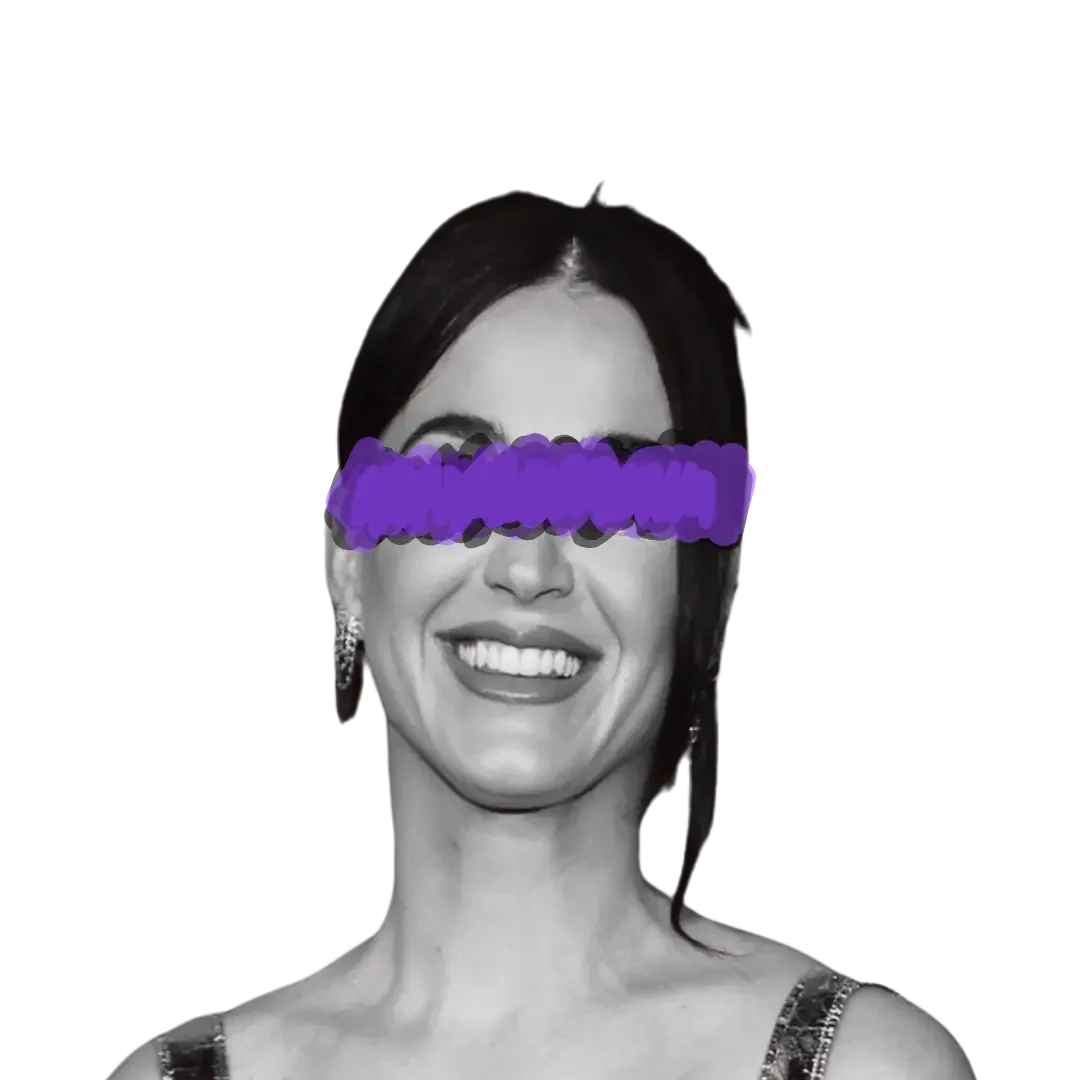
Alysa Liu, ESPN, 2025
The Cup of China is November 2024 and Alysa Liu is in the middle of her triple lutz when the landing collapses.
Most skaters at this level have a contingency for this. They simplify. They smooth out. They grit their teeth and wait for the score.
Liu does something else. She reroutes the rest of the program in real time. She adds a combo. She adds another. When the music ends and the cameras find her face, she is grinning.
She explained it later without a trace of embarrassment. She has ADHD, and the situations she does not see coming are the ones she loves most. Her brain, she said, releases chemicals when she has to improvise. Then a beat: "What next? I have to add a combo here and here."
This is the first thing to know about Alysa Liu. The second is that she had quit this sport entirely two years before. She announced her retirement on Instagram at 16, a month after her Olympic debut, with the words "Heyyyyy so I'm here to announce that I am retiring from skating." She had been the youngest U.S. women's champion in history. At 12, she was the youngest skater ever to land a clean triple axel in international competition. At 14, she became the first American woman to land a quadruple lutz, then the first skater of any gender to land a quad and a triple axel in the same program. Her father had spent close to a million dollars on her career. She walked away from it like someone leaving a job that had stopped paying.
Then she came back, in less than a year of training, and won Olympic gold in Milan.
Almost everyone who tells this story tells it as a redemption arc. Burnout, recovery, triumph. That story is wrong in one specific way. Alysa Liu did not return to win. She returned because skating, on her own terms, was the most fun thing she could think of. The Olympic gold she now owns is incidental to the actual transformation. The transformation is that the engineered prodigy became a person who can grin when she falls.
TL;DR: Why Alysa Liu is an Enneagram Type 7
Joy is the operating principle. Type 7s organize their lives around possibility and pleasure. Liu calls medals incidental, calls falling fun, calls Olympic pressure an idea she does not understand.
The escape, then the return. Sevens leave when the joy leaves. She quit at 16 when skating felt like a burden. She came back when skiing reminded her what speed for its own sake felt like.
ADHD as accelerator. She frames the unpredictability of her own brain as an advantage. The dopamine of improvisation is the same chemical the rest of the field is trying to suppress.
Autonomy is the precondition. Her coaches say complete freedom is non-negotiable. Not a single step gets taken without her consent. The puppet has cut the strings.
The 6 wing. The loyalty to her father, her best friend, her coaching team, plus the underlying anxiety that drove the burnout, is the security-seeking 6 shading her core 7.
What is Alysa Liu's Personality Type?
Alysa Liu is an Enneagram Type 7w6
Type 7s, the Enthusiasts in classical Enneagram language, are wired to convert limitation into possibility. Their minds run a constant scan for what is fun, what is next, what is interesting, what could be. Their core fear is being trapped in pain or deprivation. Their core defense is to keep moving, keep planning, keep finding the next thing.
Most descriptions of Sevens emphasize the escape. The 16-year-old who quit her sport on Instagram looks like an escape. Most descriptions emphasize the chase. The teenager who flew to Mount Everest Base Camp during her retirement and then took up skiing looks like a chase.
Both are real. Neither is the whole picture.
What separates Liu from the textbook Seven is what happened next. Sevens at their healthiest do not run forever. They integrate toward Type 5: they slow down, go inward, and choose depth. Liu's two-year retirement was a teenager doing exactly that. She enrolled at UCLA to study psychology. She walked to 17,000 feet of elevation in Nepal with her best friend. She got evaluated for ADHD and started untangling why structure outside the rink had collapsed. She came back to the ice not because she had to but because she had figured out how to want to.
The 6 wing explains the texture. Sevens with a 6 wing are loyal, anxious, and bonded to their inner circle. The pure 7w8 would have powered through the burnout, doubled down, treated retirement as defeat. Liu did not. She left, named what was wrong, and returned only when the people around her, her best friend, her father, eventually the coaches, would honor the terms she set. The freedom she now insists on is the negotiation a 7w6 has to win to function at all.
The Father Who Designed Alysa Liu
Arthur Liu was born in 1964 in a Sichuan mountain village without electricity. He organized pro-democracy protests in Guangzhou during Tiananmen, landed on the CCP's wanted list, escaped China by boat to Hong Kong at 25, and arrived in the United States as a political refugee. He worked as a busboy. He earned an MBA, then a JD. He passed the California Bar and opened a small immigration law firm in Oakland.
At 40, he was unmarried and unwilling to wait for a partner. So he engineered a family. He used his own sperm, anonymous Caucasian egg donors, and gestational surrogates to father five children between 2005 and 2009. Alysa first. Then Selina. Then triplets: Joshua, Justin, Julia.
When Alysa was eight, she looked at her face in the mirror and noticed it did not match her parents' faces. She asked her father why. He told her the truth.
By then she had been skating for three years. He had picked the rink, the coach, the schedule. He would eventually spend somewhere between five hundred thousand and one million dollars on her career. She was 13 the year she won her first U.S. national title, the youngest woman ever to do it.
He had built a champion the way he had built everything else: from a vision, through obstacles, in a country that did not have to give him anything.
📰
U.S. Department of Justice indictment, March 2022
United States v. Ziburis et al.
Alleges that operatives hired by the People's Republic of China conducted surveillance on Arthur Liu and Alysa Liu in the run-up to the 2022 Beijing Olympics, including impersonating an international sports official to request copies of their passports.
There is a piece of the story she did not learn until much later. In October 2021, while Alysa was preparing for her Olympic debut, the FBI told Arthur that the Chinese government had hired a private investigator to surveil the family and obtain copies of his and his daughter's passports. Arthur knew. Alysa did not. He carried it alone until the Olympics ended.
This is the texture of the household she grew up in. Her father had survived a system that wanted to disappear him. He raised her to win at the system that almost did. The skating was the visible part. The unseen part was a daughter being shaped by a man who had every reason to believe that what he engineered for her would be better than whatever she would have engineered for herself.
She thought, for a long time, that he was right.
ENNEAGRAM TYPE 7 · THE ENTHUSIAST
TYPE 7 · THE ENTHUSIASTHEAD TRIAD
FREEDOM
POSSIBILITY
ADVENTURE
JOY
VARIETY
OPTIMISM
EXPLORATION
SPONTANEITY
NOVELTY
STANCE
Assertive
HARMONIC
Positive Outlook
AKA“The Entertainer” or “The Realist”
CORE FEARBeing trapped in pain or deprivationCORE DESIREFreedom and satisfactionINTELLIGENCEIntellectualCORE EMOTIONFear
The published version of Alysa Liu's burnout is that practices were intense and the pressure got to her. The version she has told in interviews is more specific.
"I never made a single decision," she told Rolling Stone. "I was put in dresses and hair and makeup that I wasn't comfortable in." She did not pick the music. She did not pick the choreography. She did not pick the facilities. "I didn't pick where I was going. They just sent me off to certain facilities."
She has used a particular word for how this felt. Not unhappy. Not exhausted. Puppet.
"Practice was so serious. I would cry after falling on every jump."
The quitting did not happen at the Olympics. The quitting happened a year before. "I was done a year before I quit," she told the Dying To Ask podcast. "I knew I wanted to be done way before I actually announced my retirement." She skated through the 2022 Beijing Olympics anyway, finished seventh, came home, and announced her retirement on Instagram the next month. The opening word of the post was "Heyyyyy."
The detail that stayed with people was the casualness. She was 16 and walking away from the thing her father had given her his money, his attention, and most of a decade for. Asked later if her exit had hurt him, Arthur Liu told ESPN: "A little bit. It's like I brought you up to two U.S. national titles."
A few months later, in her senior year of high school, she found 145 unfinished homework assignments on her school portal. She had not been managing them. She had not been managing herself outside the structure of the rink. She got evaluated for ADHD and was diagnosed.
She enrolled at UCLA in fall 2023 to study psychology, and is still a student there. She got on a plane to Nepal. She trekked to Mount Everest Base Camp. "We were 17, we were tired, we were cold a lot of the trip," she said later, "but it was spiritual."
The point of the retirement was not the retirement. The point was that she had never had a moment in her life where she got to find out what she would choose if no one chose for her.
The Skiing Trip That Pulled Alysa Liu Back to the Ice
In January 2024 she went skiing.
The thing she had loved as a five-year-old when she first stepped onto the ice was not the artistry. It was the speed. The wind in her face. The going-fast. Skiing reminded her. "I need to find a way to satisfy this urge to go fast," she said.
She went to a public session at her local rink with her best friend. She put on skates for the first time in nearly two years. Within minutes, she said, the thought arrived: "Why don't I just skate? I need to not be so stubborn."
She called her former coach Phillip DiGuglielmo and told him she wanted to come back. She would build the comeback on her own terms: at Lakewood Ice in Los Angeles County, near UCLA, with day-to-day coaching from Amy Evidente and Ivan Dinev, and DiGuglielmo and Massimo Scali consulting from the Bay Area where they had first trained her as a child.
DiGuglielmo had every reason to say no. The list of figure skaters who have successfully returned to elite competition after a multi-year retirement is short, and most of those came back over a longer runway than Liu was proposing. He told her so. He listed the reasons. He kept listing them.
"I tried every single thing I could tell her about why she shouldn't do it," he said. "She had a reason to counter every one of my points." He told her others had tried this and it had not worked. She said: "But they're all older than me." He told her it was really hard to get back to Worlds. She said: "No, I can do it."
The conversation ended the way every conversation about Alysa Liu's life now ends. With Alysa Liu making the call.
The thing to notice is what she had counter-points for. She did not have an argument for why she would win. She had an argument for why she would skate again. The first answer was the only answer she needed; the second answer was the byproduct.
Alysa Liu's ADHD and the Dopamine Rush of Going Wrong
Most elite athletes spend their careers trying to suppress the unexpected. They drill until movement becomes muscle memory. They build redundancy into their programs. They cultivate a flat, stoic affect under pressure.
Liu does the opposite.
Go back to the Cup of China stumble from the open. The cautious play was obvious: absorb the loss, simplify the back half, protect the score. She went the other way, and going the other way is the part she enjoyed.
"I have ADHD, and I love situations that I'm not expecting. It gives me a dopamine rush."
This is not a personality trait dressed up as a coping mechanism. It is a coping mechanism dressed up as a personality trait. The same brain that left 145 homework assignments unfinished is the brain that thrives on the live problem of a competition gone sideways. Routine work is the hard thing for Liu. The unexpected is the easy thing. Most figure skating careers are built on the opposite assumption.
By understanding her own wiring, she stopped trying to fight it. "Although it's not ideal to make those mistakes in competition," she said after the Cup of China stumble, "my brain released chemicals."
Tara Lipinski watched her skate in Milan from the NBC booth and could not name what she was seeing. "I don't know what secret she has, but she is skating in this little bubble. She has what every athlete is searching for, the secret of how to mentally be that tough."
There is no secret. There is just a brain that finds the unpredictable more interesting than the predictable, in a sport whose entire structure is designed to reward the predictable. She is the only person at the top of women's figure skating right now who has stopped fighting her own neurology.
What Happened When She Picked Her Own Music
The first thing she did when she came back was take the controls.
She picks her music. She helps build the choreography. She wears a frenulum piercing on competition day. And she dyes her hair a new color for every year of the comeback, a tradition she calls her "tree rings." Count the colors and you can read the seasons off her, the way you would read a stump. None of this is curated for sponsors. None of it is approved by a federation. It is the look of someone who had her image made for her since she was small and is now making it for herself.
The same autonomy governs what she withholds. She once kept they/them pronouns and pro-LGBTQ+ posts on her socials, then quietly took them down before Milan and has never explained either move. She drew that line herself and then erased it herself, and her private life has stayed exactly that.
Before the retirement: "I had no art to show before. People were making me skate to this music, putting me in that dress, I had no control. I didn't even know who was making the decisions and I didn't want to be there anyways."
After the comeback: "I'm so intentional now. I'm so grounded. Everything I do has a reason. I have such a different team and I treat myself differently."
The cleanest test of the autonomy came in the fall of 2024, during her first full season back. She and Scali had built a new free skate to a Lady Gaga track, but the music rights ran into trouble days before the Cup of China. Most teams in that situation would scramble for something safe. Liu's team did the opposite. They went back to a program she had built herself, a Donna Summer "MacArthur Park Suite" set on her own choreographic instincts.
She rode that program to the World title in Boston the following March, beating three-time defending champion Kaori Sakamoto and becoming the first American woman to win Worlds since Kimmie Meissner in 2006, a 19-year drought. The home crowd in Boston was the first audience to see what the comeback actually looked like at full strength. By most accounts it was the same MacArthur Park program she carried to the podium in Milan eleven months later.
Massimo Scali described the working relationship in plain terms: "We have an open dialogue. We know her well and understand that complete freedom is essential for her to achieve results. Not a single step is taken without her consent." DiGuglielmo, who has known her since she was a child, said the change is what now makes her interesting to watch. "Before she retired, she was your little model athlete. She did exactly what every coach ever asked her to. She tried as hard as she could. She succeeded at almost everything she tried. But I don't think that we ever got to see who Alysa Liu was. Now, when she's come back, the magic about her is that you get to see who she is as the athlete."
The model athlete won two national titles. The artist won the Worlds and the Olympics.
How Alysa Liu Won Olympic Gold by Refusing to Compete for It
In the lead-up to Milan, a reporter asked Liu how she was managing Olympic pressure. Her response has now been quoted in roughly half the profiles written about her since.
"You're going to have to explain to me what Olympic pressure is. Like, who's giving it? What's the pressure?"
She was not being cute. She has said versions of this for two years. "Winning and losing don't affect me anymore. Medalling doesn't fulfill me. I skate because I like to skate." Also: "I don't need a medal. I just need to be here and show people what I can do." Also: "Winning isn't all that, and neither is losing. It's just something that happens. It's the outcome. But what matters is the input and the journey."
A skater saying this kind of thing at the Olympics ordinarily reads as image management. With Liu it reads as a fact about her schedule. Massimo Scali, on how the team prepared for Milan: "We genuinely came to the Olympics without any expectations. Zero, absolutely zero!"
The win was not a runaway. Liu sat third after the short program, behind two Japanese skaters, and had to chase the gold down in the free skate. She did, posting the night's top free skate to finish with a total of 226.79. Kaori Sakamoto took silver at 224.90, a margin of 1.89 points, with 17-year-old Ami Nakai third. A 20-year-old who had been retired two years earlier came from behind to win it. Her only error of the night was a flying camel spin that traveled too far across the ice. Brian Boitano, who won an Olympic gold in 1988, watched it from the stands and reached for the only word that fit. "She approaches the competition with this 'joie de vivre,' like she's performing in her backyard on a frozen pool."
She was the first American woman to win a singles figure skating gold since Sarah Hughes in 2002, a 24-year drought.
The clearest evidence that this was not an act came a few weeks before Milan, at the U.S. nationals. Liu was the world champion. The defending national champion was Amber Glenn, a 26-year-old who has known Liu since 2016, when Liu was ten and used to sit on Glenn's lap eating goldfish crackers. Glenn, Liu, and Isabeau Levito had spent two years calling themselves the "Blade Angels," a self-named sisterhood of the U.S. women's team. At nationals, Glenn was trying to defend her title and Liu was the favorite to take it. Liu lost. She came in second. Then she stayed by the boards while Glenn skated and cheered her on.
Ashley Wagner, who skated for the U.S. at the 2014 Olympics, watched her watching Glenn and noticed what every other competitor in the building was not doing. "Alysa is watching ice-side because she doesn't care about her reaction. She is truly just supporting Amber and what she's going after. That's the difference."
The difference, in plain language, is that Liu has stopped performing the game theory of competition. She is not modeling who is watching her. She is not protecting her image. She is not banking the narrative for the next round. She is just at a skating rink, paying attention to skating, with a face that does what her face does.
There is a reason this kind of detachment outperforms anxiety at the Olympic level. Liu is, structurally, no longer trapped. The pressure her competitors feel cannot reach her, because she has already made the trade pressure asks you to make. The medal arrives at someone who is genuinely not waiting for it.
The Inheritance Alysa Liu Refused to Name
Arthur Liu wanted his daughter to win an Olympic gold medal. She has one now. He wanted her to be a champion. She is one. He wanted her to be the kind of person who could survive what he had survived, the boats, the wanted lists, the impossible odds of building a life in a country that gave him nothing, and come out the other side with something to show for it.
What he did not engineer is the part that made it work.
She fell at the Cup of China and grinned. She skated to MacArthur Park because Lady Gaga had a music issue. She showed up in Milan and told the cameras she was just there to share her art. She won the Olympics with the loudest absence of effort the sport has ever seen at the top of the podium.
The medal is the thing he asked for.
The grin is the thing she kept for herself.
ONE QUESTION · NINE WAYS TO ANSWER IT
When something you once loved becomes a heavy burden, what truly compels you to return to it?
A sentence is enough.
You answer before you see. That is the whole point.
Former USMC infantry turned personality psychology nerd. I built 9takes to help people see
the underlying emotions and logic behind their worldview. Ask a question, see 9 takes.





Add your read on Alysa Liu