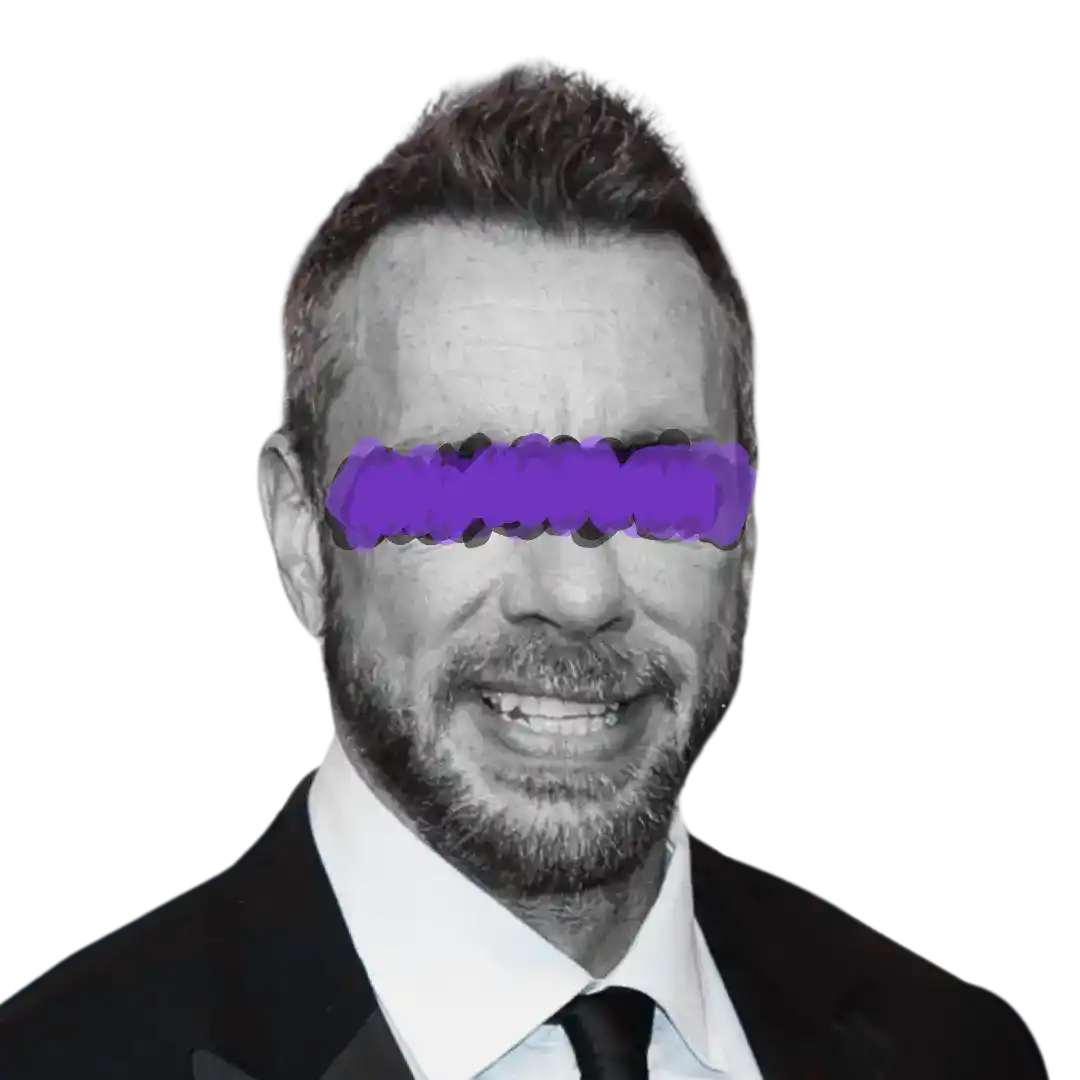
The man who gave away Teslas and manufactured viral joy for millions couldn't face what his content had done. David Dobrik's Enneagram Type 7 analysis.
"I'm so, so hard on myself. I think there are definitely dark moments, but those aren't the moments you want other people to see."
Watch any David Dobrik vlog and you'll notice something strange. He's almost never in the middle of the frame. He's at the edge. Holding the camera or standing just off to the side, grinning. The vlog is almost always about someone else's face — the stranger who just got handed a Tesla, the friend whose childhood dream just materialized in a hotel lobby, the girl from the pizza place who has no idea she's on camera. David watches. The joy is always theirs.
For four years at the peak of YouTube, he was one of the most-watched creators on the platform — yet his content was structurally about everyone except him. He manufactured ecstatic moments like a craftsman and then stood back to watch them land.
That inversion is the key to understanding who David Dobrik is. Not the Teslas. Not the stunts. Not the Vlog Squad. The fact that the boy who gave everyone else's dreams never seemed to know what to do with his own — or how to sit with any of it when things went catastrophically wrong.
TL;DR: Why David Dobrik is an Enneagram Type 7
The joy engine: Dobrik built his entire brand on engineering peak experiences for others — a compulsive expression of the Type 7's core drive to generate positive intensity.
The avoidance: Behind the giveaways and the vlogs was a man who admitted he was "so, so hard on himself" and whose dark moments "aren't the moments you want other people to see." Classic 7: perform joy outward, hide the weight inward.
Trapped by America: As a DACA recipient until 2021, Dobrik literally lived the Type 7's core fear — being trapped, restricted, unable to move freely.
The escalation: Three vlogs a week, every week, with progressively higher stakes. The content couldn't slow down. It had to keep getting bigger, louder, more extreme. The machine required more fuel.
The reckoning: When the scandals came in 2021, his apologies were thin and inadequate — a man with no practiced emotional architecture for sitting with pain. The comeback in 2025 was, predictably, a return to the same formula.
What is David Dobrik's personality type?
David Dobrik is an Enneagram Type 7
Enneagram Sevens are called the Enthusiasts. Their inner world runs on a specific logic: pain is a threat, joy is a solution, and movement — physical, creative, experiential — is the way you stay safe. What drives them isn't simple hedonism. Somewhere early, they concluded that the best defense against suffering is to outrun it — flood the schedule with new peaks before the darker valleys can catch up.
No creator on YouTube has made the Type 7 pattern more legible — or more costly — than David Dobrik.
His signature giveaways — the Teslas, the Lamborghinis, the stacks of cash handed to strangers — look like generosity, and at one level they genuinely were. But they were also the most direct expression of what drives a Seven: manufacturing ecstatic moments. "Once you have money you're gonna want to give back. And it's the best, best feeling," he said. Notice what's doing the work there. The giving feels best. It produces a sensation. The reaction on someone's face when they get a Tesla is, for a person wired like David Dobrik, the purest hit of what they're chasing.
There's a structural tell in the videos, too. In most of the giveaway vlogs, the cut goes to the other person's face — not Dobrik's. He engineers the moment and then steps aside to watch it happen. Sevens don't just want to experience joy. They want to create it. The production itself is the pleasure.
What makes this a specifically Type 7 pattern — and not simply a generous personality — is what was happening underneath the output. Three vlogs a week, every week, for years without breaks, even holidays. One collaborator noted he once waited hours in a backyard to nail a single basketball shot. That's not just work ethic. That's a man who treated a blank Tuesday like a thing to be afraid of.
The 16-Year-Old Who Found Out He Wasn't American
David Dobrik was born in Košice, Slovakia, and his family moved to Vernon Hills, Illinois, when he was six. He grew up there, went to Vernon Hills High School, played tennis, qualified for the state tournament. He was, as far as he knew, American.
He found out he was wrong at sixteen, when he tried to get his driver's license.
"He had always believed that he was American through and through," as he later described it — until the paperwork surfaced that reality. His family had brought him to the country undocumented when he was a child. He would spend the next several years as a DACA recipient: allowed to stay, allowed to work, but unable to leave the country. If he traveled internationally before securing his green card, he might not be let back in.
Consider that for a moment through a Type 7 lens. The core fear for this type is being trapped, deprived, unable to access what they need. For most Sevens, that fear lives in the imagination — a future scenario to be outrun. For David Dobrik, it was a legal and administrative fact. He was, for years, physically unable to travel. He couldn't leave. He was building a global brand while being literally restricted to one country.
He eventually got his green card in 2021, writing a public thank-you note describing it as "a super super big deal for me." The relief in that sentence is obvious. Of course it was a big deal. For a Seven, the ability to leave is what makes staying feel like a choice. For years, it wasn't. The country wasn't home — it was the walls.
But there's a thread that runs from that driver's license moment to his entire career: when the ground shifted under him at sixteen, he didn't turn inward. He built outward. He started making Vines in 2013. Then YouTube vlogs. Then a universe of friends and giveaways and pranks and increasingly elaborate stunts — a world so full of movement and noise that the question of what he was running from never had to surface.
ENNEAGRAM TYPE 7 · THE ENTHUSIAST
TYPE 7 · THE ENTHUSIASTHEAD TRIAD
FREEDOM
POSSIBILITY
ADVENTURE
JOY
VARIETY
OPTIMISM
EXPLORATION
SPONTANEITY
NOVELTY
STANCE
Assertive
HARMONIC
Positive Outlook
AKA“The Entertainer” or “The Realist”
CORE FEARBeing trapped in pain or deprivationCORE DESIREFreedom and satisfactionINTELLIGENCEIntellectualCORE EMOTIONFear
His format was a work of design, not accident. The vlogs ran exactly four minutes and twenty seconds. Every one of them. They were cut like highlights packages — fast, compressed, each clip landing a punch before the next one started. There were no boring parts because there was no footage that wasn't a moment. He understood, before most people did, that attention on the internet is won and lost in seconds.
The Vlog Squad gave him a recurring cast. Jason Nash, Zane Hijazi, Heath Hussar, Jeff Wittek, Corinna Kopf, Natalie Noel — rotating friends who became characters. The ensemble made it feel like a show rather than a diary, and it meant the camera always had somewhere interesting to point. More importantly, it gave every video someone whose reaction could be genuine and unscripted. He wasn't acting surprised. He was watching someone else be surprised.
At his peak around 2019-2020, he was uploading three videos a week and drawing 18 million subscribers on his main channel. The Wall Street Journal dubbed him "Gen Z's Jimmy Fallon." There were Tesla giveaways. There was a TV pilot. He was building the kind of content empire that only a handful of creators — Kyle Forgeard, MrBeast — would match.
He was twenty-three years old.
"It's the best, it's so weird because, having your camera on constantly is known to be such a bad thing because it's like, 'Live in the moment,' but we genuinely have so much fun when we turn the camera on."
That quote is worth sitting with. He's defending the act of constant filming — the choice to never be off the record. And his defense is joy. The camera doesn't interrupt the moment. It generates one. For a Seven, that makes perfect sense: you don't live in the moment, you construct the moment, and then you document it for the next time you need to remember what the good feeling felt like.
The One Time He Filmed Something Real
David Dobrik dated Liza Koshy — fellow YouTuber, rising star in her own right — from 2015 to 2018. When they ended it that summer, they did something almost no couple does: they made a video about it. Together. On his channel.
Within 24 hours it had 13 million views. It eventually reached 45 million — one of the most-watched YouTube videos of 2018.
This is the moment readers who know Dobrik will object: You said he avoids pain. He sat in front of a camera and cried.
Fair. The video is genuinely emotional. Both of them visibly fall apart. They take breaks to compose themselves. He says they were "living separate lives" and hadn't been honest about it. She says she needs to love herself before she can love someone else. The emotion is real.
But look at what happens to the grief. It gets a container: a 9-minute arc with a soft ending, a mutual decision, a "we're still friends" conclusion that makes it bearable to watch. It goes live on the platform. The unfilmed weeks — whatever they actually looked like — stayed offscreen.
This is the Seven's pattern in its most honest form. Not the absence of vulnerability, but vulnerability routed through output. The camera doesn't just capture the feeling. It gives the feeling somewhere to go. The pain becomes watchable, manageable, something other people can hold too.
What Dobrik did with his grief, in real time, was make content out of it. The raw unstructured experience happened privately. What went on camera was a produced version — same two people, but the format imposed shape on something shapeless. And then the 45 million views arrived, confirming that this particular vulnerability had been useful.
The Liza video is the exception that confirms the rule. He can feel deeply. He just can't seem to feel deeply without making something out of it.
Why the Stunts Had to Keep Getting Bigger
There's something that happens to Type 7 content creators over time that is almost structurally inevitable. The baseline shifts. What was thrilling last year is ordinary this year. The audience's expectations — and the creator's internal threshold for what counts as a peak experience — both creep upward.
You can watch this happen in real time in Dobrik's catalog. Early vlogs: friends goofing off, small pranks, first kisses. Later vlogs: excavators in lakes, alligators in swimming pools, celebrities appearing at parties, Lamborghinis handed to strangers. The escalation wasn't greed. It was physics. Each high requires a slightly larger dose.
By 2020, the stunts were genuinely dangerous. And the scaffolding that made them possible — the trust Dobrik commanded, the social currency he'd accumulated, the willingness of people around him to do whatever the camera required — had become something else. Not a playground. A machine that needed feeding.
His collaborators knew this. The people in the Vlog Squad knew that being close to David meant being available to the camera, which meant being available to whatever the video required. Some of them were fine with that. Some of them, it would turn out, were not.
What Happened in 2021
In March 2021, a Business Insider report described a 2018 incident in which a woman had been raped by Vlog Squad member Dominykas Zeglaitis at a filming event. She had been too intoxicated to consent. The video had been posted — and had remained posted for years.
That detail is what shifts this from a scandal about someone else's behavior to a question about Dobrik's. The more damning fact isn't what Zeglaitis did. It's that an editorial decision was made to publish footage connected to the incident, and to leave it up. A system that treated content as the priority and the people in it as material had been running for years. In 2021, it became impossible to look away from.
Around the same time, former Vlog Squad member Seth François came forward with his own account. In a "Valentine's Day prank" video, he had been told he'd be kissing Corinna Kopf — who would be wearing a mask. The person behind the mask was Jason Nash. "I realized that I was just touched by someone I did not consent to," François said.
Dobrik's response to both situations was brief and inadequate. To François, he said: "I'm sorry to Seth, because like I said, I just want to make videos where everybody in it, whether you're participating or watching, is enjoying and having a good time, and I missed the mark with that one."
"Missed the mark" is Type 7 language. It's the reframe. The uncomfortable reality — that a person had been non-consensually touched while filming content that made David Dobrik money — got soft-focused into a quality-control problem. He didn't make a bad ethical choice. He "missed the mark" the way a dart player misses the bullseye.
Sponsors started dropping. HelloFresh. Dollar Shave Club. SeatGeek. EA Sports. The machine that had seemed unstoppable reversed overnight.
And it wasn't limited to YouTube. Dobrik had co-founded Dispo — a photo-sharing app that launched in 2019 and had climbed to the top of the App Store. By February 2021, it had raised a $20 million Series A at a $200 million valuation, with Spark Capital leading and Alexis Ohanian's Seven Seven Six among the backers. One month after that Series A closed, the Business Insider story landed. Within days, Spark Capital announced it would "sever all ties" with Dispo. The other investors followed. Dobrik stepped down from the board. The entire tech-adjacent career he'd been building — the one that suggested a post-YouTube future — evaporated in the same two weeks as the sponsorships.
Then came Jeff Wittek.
In 2020, during the filming of a stunt video in Utah, Dobrik had operated an excavator while Wittek swung from a rope attached to its arm. Dobrik brought the arm to a sudden stop. Wittek smashed into the machine. The injuries were severe: fractured skull in nine places, fractured eye socket, broken hip, broken foot, torn knee ligament. Nine surgeries on his eye alone over the following years.
Dobrik's handling of the aftermath became its own story. In a 2022 podcast appearance, he said: "The Jeff thing is the f--king worst. That day is like, the worst, the worst thing that's ever happened to me and I wish I would f--king do anything to take that day back."
Notice what Dobrik did there — he centered himself in the pain. Not "I hurt someone badly." But "the worst thing that has ever happened to *me*." The weight landed on his experience of the day, not on Wittek's nine surgeries.
Jeff Wittek filed a $10 million lawsuit. The internet was not convinced by the apology. In March 2022, Dobrik posted his last vlog on his main channel and went quiet for nearly three years.
Three Years of Stillness
For a Type 7, a forced hiatus is not a vacation. It is precisely the thing they've been running from.
Dobrik had admitted, even before the scandals, that the relentless pace was taking a toll. In December 2020, during an earlier vlogging break, he said: "I really want to get a therapist, but they all want to do it on Zoom." The avoidance is almost comic in its clarity — he wanted help, but on terms that didn't require sitting still and being vulnerable on a screen. The justification is thin enough to see through.
From March 2022 to January 2025, he was largely absent from the main channel. He kept active on TikTok and Snapchat — platforms designed for short, dopamine-optimized content, platforms where you can stay in motion without saying anything heavy. He opened Doughbrik's, his pizza restaurant, and watched it draw four-hour lines at the grand opening. He traveled. He got in shape.
What he didn't do, publicly at least, was reckon. The apologies didn't deepen. The reflection didn't land on the page. Seth François noted publicly that Dobrik never called him: "Not calling me to sincerely apologize man to man," he wrote, "is equivalent to having me kiss a man without my consent." The apology video had been posted to YouTube with comments disabled. The private version, apparently, never happened.
The three years were, from the outside, remarkably quiet — which is either evidence of serious internal work that he chose not to publicize, or evidence that the stillness was its own form of running.
The Return
On January 7, 2025, he posted a 14-minute video following him and friends through seven of the world's great natural wonders. He gave away Teslas to employees of Doughbrik's. He linked up with MrBeast. He looked good — visibly transformed physically, having used the years away to train seriously.
The internet responded the way it always responds to David Dobrik: with noise and warmth and the particular enthusiasm of an audience that missed something familiar. Kai Cenat had held the streaming crown in his absence. An entire generation of creators had emerged. Dobrik still landed like an event.
"He's only going to post videos every other week," he said of his plans going forward. A marked change from three a week. He cited the changed landscape of YouTube, the different metrics. Whether the pacing reflects something internal — a slower metabolism, a harder-won comfort with being still — is impossible to know from the outside.
What's certain is that the formula was the same. Friends. Reactions. Moments engineered for maximum impact. A Tesla.
In June 2025, the Wittek lawsuit settled — for $10,000, a fraction of the $10 million claimed, with some dispute about the terms afterward. The legal chapter closed. The every-other-week upload cadence has largely held since the return, the machine running at a different speed than before.
Enneagram Sevens under pressure move toward the rigid, critical qualities of Type 1 — harsh self-judgment dressed up as perfection-seeking. In recovery, they move toward the depth and focus of Type 5. The question with David Dobrik's return isn't whether he can still generate joy. He clearly can. The question is whether he's spent three years somewhere different, or just somewhere quieter.
The camera is back on. His friends are laughing at the edges of the frame. The Tesla keys are in his hand.
Type tells you nothing about the highlight reel. It tells you everything about what happens between takes.
Note on sourcing: David Dobrik has never publicly confirmed his Enneagram type. This analysis is based on public interviews, documented behavior patterns, and the internal logic of the Enneagram framework. The Enneagram is a tool for self-understanding, not a definitive psychological label.
ONE QUESTION · NINE WAYS TO ANSWER IT
When a pursuit of happiness causes harm, how do you know if you should keep going or stop entirely?
A sentence is enough.
You answer before you see. That is the whole point.
Former USMC infantry turned personality psychology nerd. I built 9takes to help people see
the underlying emotions and logic behind their worldview. Ask a question, see 9 takes.

Add your read on David Dobrik