"Honestly, I didn't know the book was ever going to come out. For the first couple years, I was just vomiting stories onto my laptop. Some days I would get halfway through a painful story and find my keyboard covered in tears and basically have a breakdown for an hour or two."
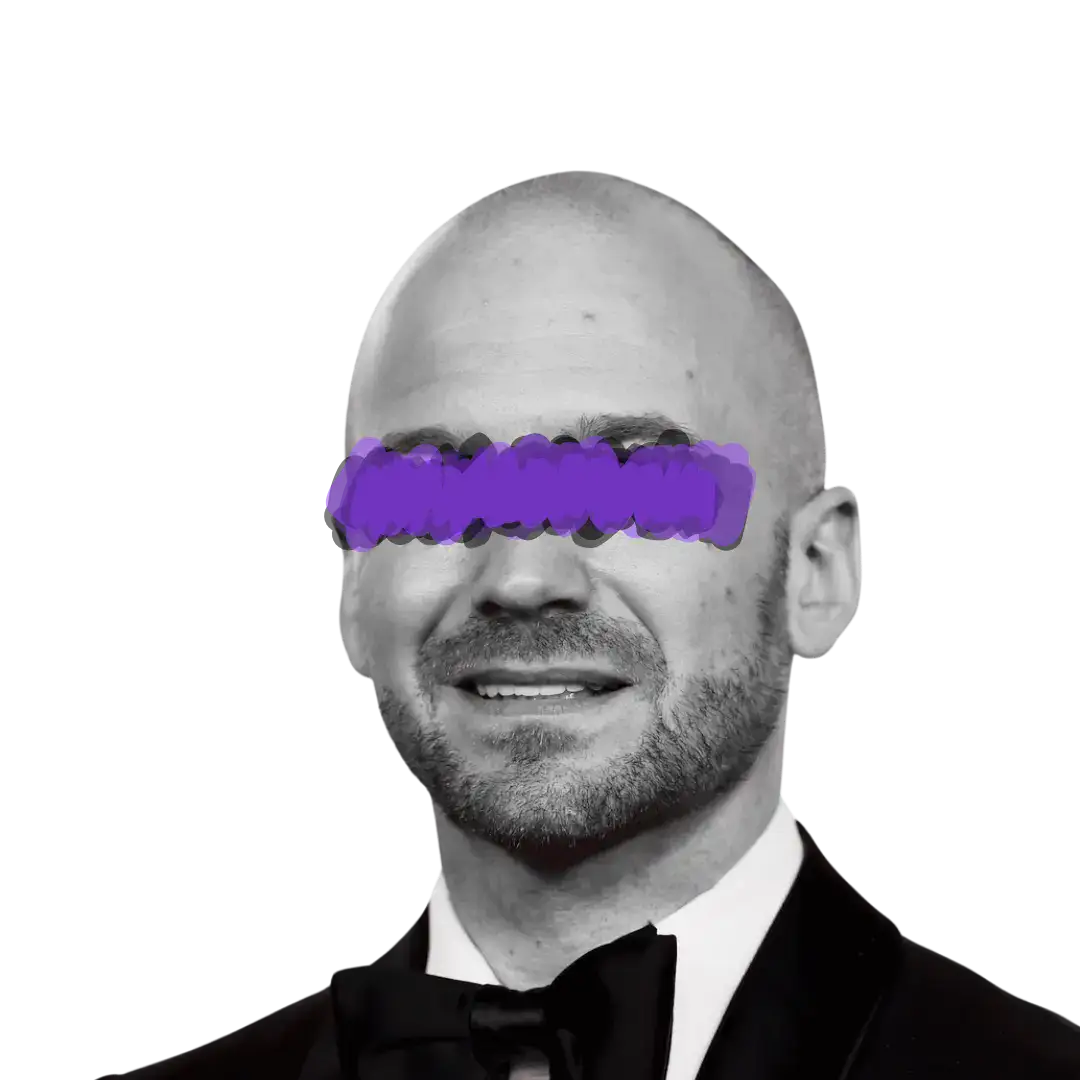
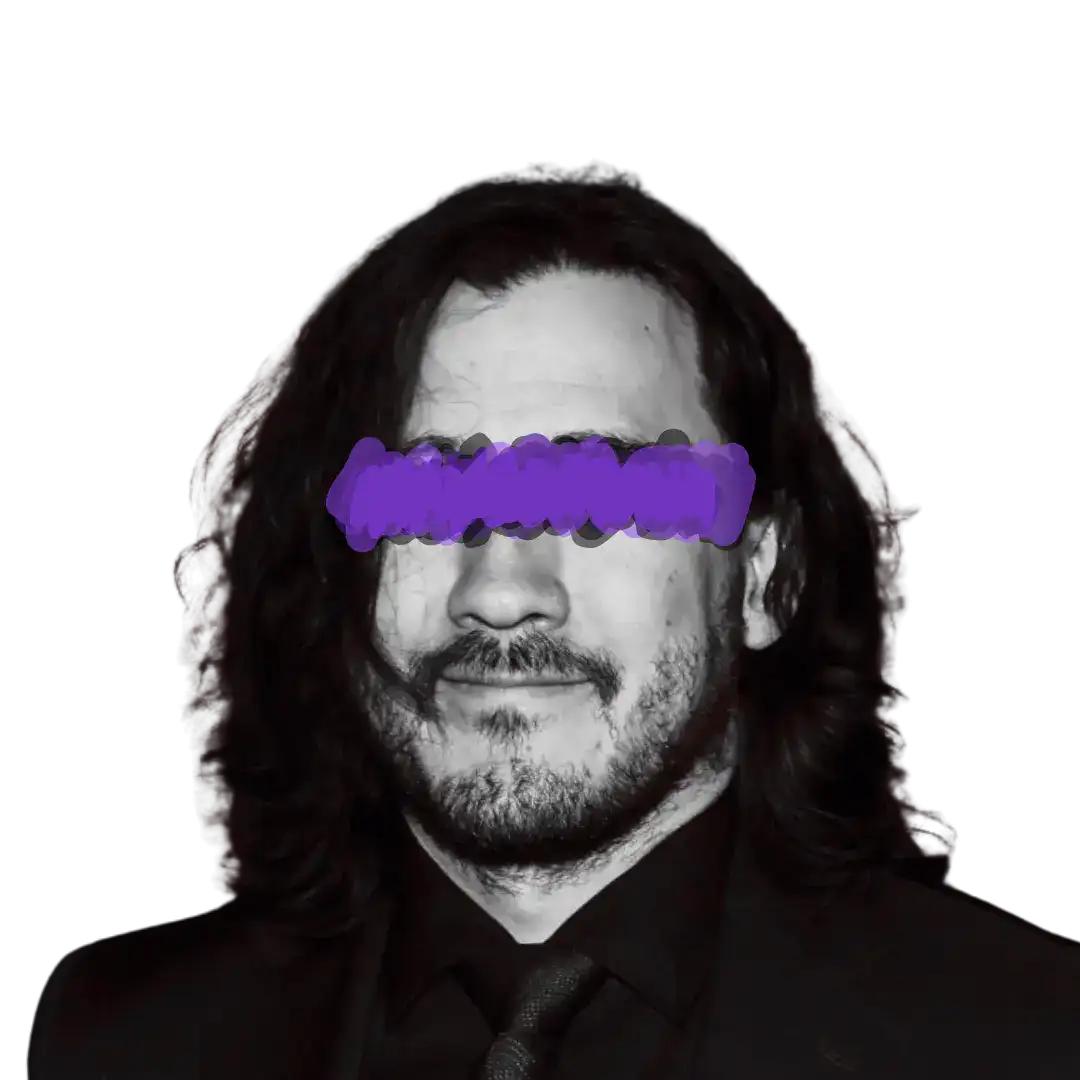
That image (a grown man hunched over a laptop, tears pooling between the keys, forcing himself to stay in a memory his entire nervous system is screaming at him to leave) tells you more about Mike Majlak than his follower count ever will. For a decade, every cell in his body was calibrated for one function: escape. OxyContin, heroin, cocaine, crack, dealing, running, always the next substance, always the next high, always one chemical step ahead of whatever was underneath. And then one day he sat down at a keyboard and did the hardest thing he'd ever done. He stayed.
That tension between the part of him that runs and the part of him that stays is the engine behind everything Mike Majlak has built and everything he's destroyed. The same wiring that cycled him through every drug in Connecticut by age 25 is what makes him one of the most compelling voices in addiction recovery today. The machine didn't change. The fuel did.
TL;DR: Why Mike Majlak is an Enneagram Type 7
The escape artist: A decade of cycling through OxyContin, heroin, cocaine, and crack. One substance after another, never sitting still long enough to feel what's underneath
Relentless reinvention: After recovery, the same energy that drove his addiction powered a 100-lb weight loss, a bestselling memoir, and a podcast empire
The pain reframer: His entire philosophy centers on transforming suffering into purpose, the signature move of a healthy Seven
The depth he almost missed: His greatest work came from doing what Sevens resist most: sitting in the pain long enough to write about it
The Brainiac Who Became the Dealer
Mike Majlak was born January 13, 1985, into a middle-class family in Milford, Connecticut. His father worked as a marketing manager in the tech industry and coached basketball. His mother, Robin, worked in retail. He had two sisters. His parents called him "Brainiac."
That nickname matters. The kid was sharp, sharp enough that when his parents divorced when he was 15 and the family couldn't afford Catholic school anymore, the transition to Milford's public school system hit him like a different planet. New school. New social hierarchy. A clever kid suddenly unmoored.
"I was fascinated by the power the drug dealer appeared to have," Majlak has said about this period. "I craved that power."
There it is. Not the drugs themselves, but the power. The intelligence his parents celebrated found a new application. He started selling weed and became, by his own account, very successful at it. The Brainiac didn't disappear. He just found a darker market.
Then at 16, a freak basketball accident shattered his femur. The hospital gave him OxyContin for the pain. It was 2001. Pain had just been reclassified as "the fifth vital sign" by the Joint Commission, and Purdue Pharma was flooding emergency rooms with OxyContin, marketing it as safe and non-addictive.
A broken bone. A bottle of pills. A pharmaceutical industry that had decided pain was something to be eliminated rather than understood. For Mike Majlak, smart, restless, already drawn to the edge, the deck was stacked from the first pill.
A Decade in the Dark
By his senior year of high school, he was hooked. While his classmates were filling out college applications, Mike was snorting OxyContin. While they were graduating, he was climbing out of cars at gunpoint. While they were buying houses and having children, he was burying his childhood friends.
The progression was textbook, and relentless. OxyContin led to heroin. Heroin led to crack cocaine. He started dealing to fund the addiction. His mother found out and kicked him out. He was homeless for two years.
"In 2010 I had been addicted to heroin for eight years," Majlak wrote on Twitter. "From the age of 18 I had never known anything but extreme pain and agony. Day after day of witnessing horrors that I still haven't talked about to anyone."
Eight years. From 18 to 26. The entirety of what most people call their formative adult years: college, first apartments, first real relationships, first careers. Erased. Replaced by a single, unbroken loop of use, crash, escalation, repeat.
The title of his memoir, The Fifth Vital, comes from the Purdue Pharma marketing campaign that started the whole catastrophe. The "fifth vital sign" was pain. As Mike later put it: "Accepting that the human condition invariably involves some degree of suffering… It's how we manage pain that is the question."
That line reads like philosophy. It was written in blood.
ENNEAGRAM TYPE 7 · THE ENTHUSIAST
TYPE 7 · THE ENTHUSIASTHEAD TRIAD
FREEDOM
POSSIBILITY
ADVENTURE
JOY
VARIETY
OPTIMISM
EXPLORATION
SPONTANEITY
NOVELTY
STANCE
Assertive
HARMONIC
Positive Outlook
AKA“The Entertainer” or “The Realist”
CORE FEARBeing trapped in pain or deprivationCORE DESIREFreedom and satisfactionINTELLIGENCEIntellectualCORE EMOTIONFear
2010 was, by Mike's own account, "the worst year of my life."
His grandfather was dying of Parkinson's and dementia, stuck in a recliner downstairs, screaming for help. Mike was upstairs, on parole, failing drug tests. The old man screaming below. The young man drowning above. Two people trapped in the same house, neither able to save the other.
Then Mike failed another drug test, and his parole officer gave him an ultimatum. Rehab or prison.
He chose rehab. Ninety days of detox. The first sustained period of sobriety in eight years. He had been on 80mg of daily methadone for six years. He started tapering, 2mg per week down to 30mg, then went inpatient at 5mg to finish.
"To anybody struggling with addiction today," he later shared, "whatever you're addicted to, start a taper TODAY."
Milligrams. Timelines. Exact protocols. Even in recovery, he processes the world as problems to be solved, systems to be optimized. The wiring never shuts off. It just found better coordinates.
285 Pounds and a Bucket List
Mike Majlak walked out of rehab weighing 285 pounds.
He started cycling. Then the gym. Then running. Within a year, he had lost over 100 pounds. The physical work tracked with something internal. A body that had carried a decade of poison, deliberately rebuilt.
But the detail that matters most came next. He made a bucket list.
Not a vague "someday" list. A concrete, specific, written-down inventory of everything he wanted to experience now that he was alive enough to want things again. And then he started checking items off. One by one. Marketing career. Move to a new city. Build something.
"Looking back," he's said, "I've checked off pretty much every single one of them."
A person who just escaped a decade of darkness, and the first thing his brain generates isn't rest, isn't stillness. It's what's next? The hunger that nearly killed him simply changed targets.
How a Beanbag Salesman Built a Podcast Empire
In recovery, Mike landed a job at LoveSac, a furniture company. Marketing coordinator. He was good at it. The same charisma and hustle that had made him a successful drug dealer in Milford, Connecticut turned out to be remarkably effective at selling oversized beanbags.
In 2014, he noticed a kid on Vine racking up millions of views. Logan Paul. Mike recruited him for a LoveSac promotion. The result: over two million beanbags sold in a single day.
That campaign brought the two of them closer. Mike became part of Logan's inner circle, then his co-host. In November 2018, they launched Impaulsive, which would grow to over 900 million YouTube views and regularly top the podcast charts. By 2025, the show had joined the WWE and Fanatics digital content network. Mike was still at the desk.
The dynamic worked because they're complementary opposites. Logan was bold, reckless, the face. Mike was grounded (or at least, grounded relative to Logan Paul), the storyteller, the one who'd lived enough to know what questions to ask. He's also genuinely funny in a way the written word can't fully capture: dry, self-deprecating, willing to be the punchline. Mike often functioned as Logan's "babysitter," especially after the Japan controversy. The former addict keeping the young star out of trouble. An irony Mike has never shied away from.
He also launched his own YouTube series, The Night Shift, filming with MrBeast, Kai Cenat, members of the Sidemen, Mark Rober, and other top creators. Fellow Type 7 podcasters like Theo Von and Tim Dillon share that same restless momentum, but Mike's runs on a fuel they all recognize: the need to keep moving or risk feeling everything at once.
What is Mike Majlak's personality type?
Mike Majlak is an Enneagram Type 7
The Enneagram Seven is called "The Enthusiast," but that label undersells what's actually happening inside. Sevens are wired with a possibility engine: a cognitive system that automatically generates alternatives, options, and escape routes whenever reality becomes painful. Something bad happens, and within milliseconds, the Seven's mind has already reframed it, pivoted away from it, or replaced it with something more exciting.
This isn't optimism. It's architecture. The Seven's brain routes emotional energy away from dwelling on what went wrong and toward mapping what's possible next.
Here's the evidence for Mike:
Multiple simultaneous addictions: Sevens don't just get addicted. They get addicted to everything. OxyContin, heroin, cocaine, crack, dealing. Mike didn't escalate linearly. He branched. Each new substance was another option, another door, another way to stay ahead of the pain. The addiction recovery literature on Type 7 notes: "Type 7s often have three or four addictions running simultaneously."
The immediate pivot to reinvention: The bucket list. The weight loss. The marketing career. The podcast. The book. The speaking circuit. Most people who survive a decade of heroin addiction take years to stabilize. Mike came out swinging. The same brain that generated "what if I tried heroin?" generated "what if I lost 100 pounds and moved to LA?"
The empathy as superpower: "I came out of it with this insane level of empathy and understanding that you could ever have in life." This is what happens when a Seven stops running. The depth they were avoiding contains more emotional intelligence than any surface-level experience ever produced. Joy found on the other side of pain, not around it.
The pros and cons list: When his relationship with Lana Rhoades became complicated, Mike didn't sit with the ambiguity. He made a literal pros and cons list, organized into "Major Dealbreakers That Require Deep And Radical Change" and "Minor Issues That Some People Would Consider Dealbreakers." He systemized his feelings. He turned emotional complexity into a spreadsheet. That's a Seven trying to think their way out of feeling.
The 8 wing: The drug dealing at 16 wasn't just escape. It was power. "I was fascinated by the power the drug dealer appeared to have. I craved that power." The Seven seeks stimulation. The Eight wing seeks control. Together, they create someone who doesn't just chase experiences but dominates them.
The Enneagram makes something click here that otherwise wouldn't: Mike's addiction and his success aren't different chapters. They're the same chapter, written in different ink. The mind that burned through every substance in Connecticut is the same mind that sold two million beanbags, built a podcast empire, and wrote a bestselling memoir. Same hardware. Different direction.
The Relationships That Revealed the Pattern
Mike's relationship with Lana Rhoades, the former adult film actress he began dating in 2020 after being introduced by Logan Paul, became one of the most public relationship implosions in creator history.
The pattern was pure Seven in stress. They had two months of what Mike called a "good, honeymoon-level relationship" before things turned toxic for a year. His framing of the breakup was characteristically binary: "When a relationship starts to take more energy from you than it provides to your life and you don't see an end in sight for either person, it's the time when you have to start thinking about calling it quits."
But he didn't quit cleanly. They broke up. Got back together. Planned to move in. He backed out the day he was supposed to move in. They rebuilt. Planned to move in again. He bailed a second time.
Twice. The exact same escape, repeated. The man who wrote an entire book about breaking cycles was running the same cycle with the woman in front of him.
During one of those splits, he hooked up with Ava Louise, the reality TV personality from Dr. Phil. The tabloid chaos that followed was predictable. But the pattern was the point: in the gap between one version of the relationship and the next, the Seven didn't sit with the loss. He filled the space.
The pros and cons list Lana later posted publicly was almost painfully revealing. Among the "dealbreakers": she was "sickly obsessed with social normalities," meaning she wanted marriage and kids. She asked to spend time with him alone instead of surrounded by their social media friends. She was "unwilling to get involved with activities you know I like," specifically the gym and cycling.
Read that list through the Enneagram lens: a Seven in a relationship demanding that his partner share his experiences (cycling, gym, group socializing) while resisting her desire for depth (alone time, commitment milestones, a shared domestic life). He wanted a companion for the adventure. She wanted him to stop adventuring long enough to build a home.
After Lana, the pattern continued at lower volume. He dated Sara Maughan, an influencer, going public in mid-2023. By 2024, she had quietly disappeared from his content. As of 2026, he keeps his romantic life private. The Seven who once played out every relationship on camera learned, eventually, that some things work better without an audience.
The Superpower Nobody Wants
Beyond addiction, Mike has been candid about mental health battles that most public figures would bury. He's suffered from severe anxiety, obsessiveness, and intrusive thoughts since he was 13, long before the drugs. OCD. Sex addiction. Depression that he describes as "extreme bouts of despair."
"I have been recklessly harming myself, sabotaging any good in my life," he's admitted publicly.
This is the shadow side of the Seven's wiring. When the possibility machine has nothing positive to generate, it doesn't shut off. It generates negative possibilities instead. Intrusive thoughts. Catastrophic scenarios. The same brain that produces "what if I tried this?" also produces "what if everything falls apart?" Sevens belong to the Enneagram's head center, the fear triad. Underneath all that enthusiasm is a fear circuitry that never fully powers down.
But here's where Mike's story diverges from the typical Seven narrative. He didn't just outrun the anxiety by staying busy. He started therapy. Announced it publicly. Began a new treatment regimen while millions of followers watched.
His advocacy work (Shatterproof speaking engagements, recovery podcasts like The Big Silence, The Fifth Vital hitting the USA Today bestseller list its first week and distributed to prisons and rehabs worldwide) represents something specific in Enneagram terms. It's the Seven integrating toward Type 5: trading scattered breadth for focused depth. Fifteen years clean and counting. Instead of chasing the next experience, he's going deeper into the one experience that defines him. His pain. His recovery. The story he tells not because it's exciting, but because it saves lives.
He talks to his audience the way a sponsor talks to a newcomer at a meeting. Direct, specific, no bullshit. "Start a taper TODAY." "You're still here for a reason." He treats his followers like adults who need concrete information, not inspiration porn. That directness is why people trust him.
Disclaimer: This analysis of Mike Majlak's Enneagram type is speculative, based on publicly available information, and may not reflect the actual personality type of Mike Majlak.
The Fifth Vital
There's a moment in recovery literature that addicts call "the gift of desperation." It's the point where the pain of staying the same finally exceeds the pain of changing. For Mike Majlak, that moment came in 2010, in a house where his grandfather screamed downstairs and his parole officer waited on the other end of a phone line.
But the Enneagram suggests something sharper. For a Seven, the gift isn't desperation. It's stillness. The moment you stop generating alternatives, stop reframing, stop pivoting to the next possibility. And just sit in what is.
Mike sat at that keyboard writing The Fifth Vital and his tears hit the keys and he stayed. He sat in a rehab for 90 days when every nerve ending was screaming leave. He sat in therapy when his brain was generating seventeen reasons why he didn't need it. He sat with the story of his worst decade and turned it into the thing that would help the most people. And he sat back down at his mother's table, the same mother who kicked him out years earlier, and rebuilt something he'd burned to the ground. Today his family is close again. His mom, his sisters. The relationships that addiction hollowed out, filled back in.
The fifth vital sign is pain. Purdue Pharma invented the concept to sell more drugs. Mike Majlak's entire life is an argument that they got it exactly backwards. Pain isn't something to be eliminated. It's something to be sat with, understood, and transformed. He's still moving, of course. New Night Shift episodes. Impaulsive on the WWE network. New collaborations. But now there's a depth underneath the motion. The keyboard covered in tears, the mic in front of his face, the truth about the worst years of his life offered to anyone who needs to hear it.
The Brainiac from Milford found the one thing his brain couldn't outthink. And it turned out to be the only thing worth knowing.
ONE QUESTION · NINE WAYS TO ANSWER IT
When you have escaped something that once consumed you, what then makes you feel safe enough to truly relax?
A sentence is enough.
You answer before you see. That is the whole point.
Former USMC infantry turned personality psychology nerd. I built 9takes to help people see
the underlying emotions and logic behind their worldview. Ask a question, see 9 takes.








Add your read on Mike Majlak