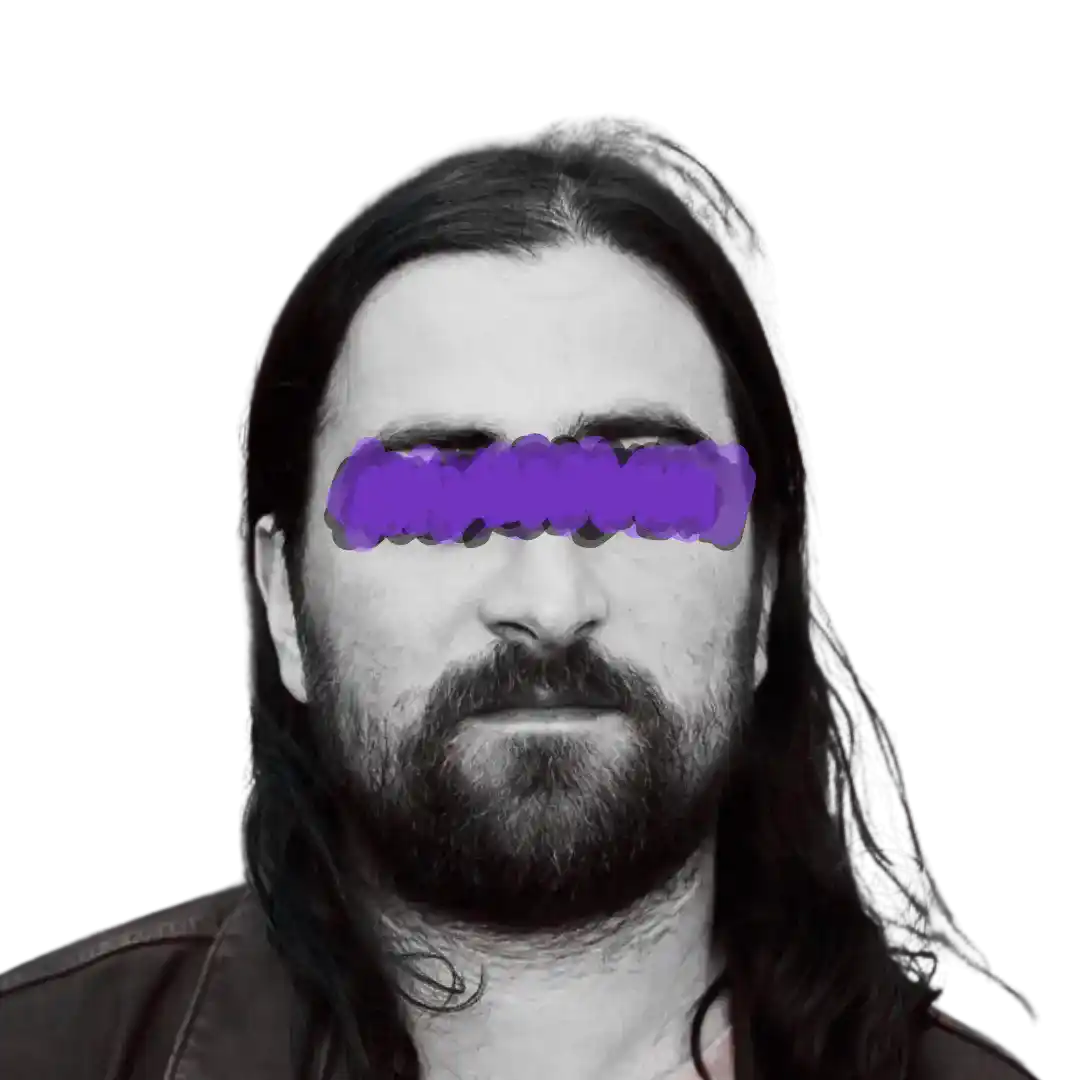
§8868 · TYPE 4 · THE INDIVIDUALIST

Elton John: Enneagram Type 4 and the Boy Behind the Costumes

Why did a shy boy named Reg Dwight hide under feathers and sequins? Inside Elton John's Enneagram Type 4 mind, where spectacle is armor for a lonely core.

3,428 WORDS · 18 MIN READ

"I spent my whole career trying to show my father what I'm made of." — Elton John, Me, 2019

On 7 January 1972, a shy twenty-four-year-old walked into an office and legally erased the name Reginald Kenneth Dwight. He walked out as Elton Hercules John. The "Elton" came from a saxophonist he had played with in a pub band. The "John" came from a blues singer named Long John Baldry. The "Hercules" came from a horse in a British sitcom.

He assembled a self out of spare parts, the way you would build a costume.

And he never changed it back. Reg Dwight did not disappear that day. He went into hiding, behind the feather boas and the six-inch platform boots and the sunglasses shaped like the word ELTON in Christmas lights. The most flamboyant performer in the history of rock spent fifty years making sure nobody would ever have to look at the ordinary boy underneath, least of all him.

Fame is the easy story. The harder one is why a man this beloved needed so much armor just to be seen.

TL;DR: Why Elton John is an Enneagram Type 4
  • Identity built from scratch: He didn't inherit "Elton John," he constructed him. A Type 4's deepest fear is being ordinary and unlovable, and Reg Dwight answered that fear by inventing someone impossible to ignore.
  • Feeling as the native language: "Your Song," "Candle in the Wind," "Sorry Seems to Be the Hardest Word." His gift is turning private ache into public melody. Fours live in their emotions the way other people live in their heads.
  • Spectacle as armor: The costumes weren't vanity. They were a shield so the shy boy never had to stand bare in front of a stadium.
  • The hole that shopping couldn't fill: The tantrums, the addictions, the fortunes spent, all of it circled the same Type 4 conviction: that something essential was missing and had to be replaced from the outside.
  • Rescued by being needed: Fatherhood and sobriety pulled him toward health, the classic Type 4 turn from self-absorption to service. His AIDS foundation has raised more than half a billion dollars.

What is Elton John's personality type?

Elton John is an Enneagram Type 4

Type 4s, the Individualists, build their lives around a single haunting question: what is wrong with me that isn't wrong with everyone else? They feel a fundamental sense of being different, of missing some piece other people were handed at birth. So they chase authenticity, beauty, and depth, and they turn their inner weather into art.

Elton fits the profile so cleanly it is almost uncomfortable. He did not just feel different as a child. He legally rebuilt himself into someone who could not be mistaken for anyone else, then poured every private wound into songs that made strangers cry. The core desire of a Four is to be seen and found worthy for exactly who they are. The tragedy of a Four is the suspicion that "who they are" would never be enough on its own, which is why so many of them, Elton included, keep adding costume and volume and reinvention until the original self is buried under the performance.

You can read the full pattern on our Enneagram Type 4 breakdown. But the short version is this: a Four wants to be loved without the mask, and cannot quite believe it is possible, so they keep building better masks. Elton built the best in the business.

How Reg Dwight from Pinner invented Elton John

He grew up in Pinner, a suburb northwest of London, the only child of a marriage that curdled early. His father, Stanley, was a Royal Air Force officer, formal and disapproving. His mother, Sheila, could turn on a sixpence, warm one minute and cutting the next. Elton has said he spent his childhood on eggshells, learning to read a room before he learned much else.

The piano was where he went to disappear. A prodigy from the start, he could play back tunes by ear as a small child and won a junior scholarship to the Royal Academy of Music at eleven. When the house filled with tension, he had somewhere to put himself.

If I play it perfectly, maybe they'll stop. If I'm good enough, maybe he'll look at me the way other fathers look at their sons. If I disappear into this, none of it can touch me.

The whole pattern starts there. A child who felt unseen found one place where he was undeniable, and built a life out of making that place bigger. He borrowed horn-rimmed glasses to look like Buddy Holly, wore them so relentlessly that his eyesight genuinely weakened to match, and by the time he was fronting bands he had already learned the central lesson: you could construct a version of yourself that people wanted, and stand behind it.

The line from that boy to the man in the sequins is not subtle. He said it himself, in his 2019 memoir Me: he spent his whole career "trying to show my father what I'm made of." A man does not chase a father's approval for fifty years unless the wound underneath is still open.


ENNEAGRAM TYPE 4 · THE INDIVIDUALIST
TYPE 4 · THE INDIVIDUALIST HEART TRIAD
  • AUTHENTICITY
  • DEPTH
  • IDENTITY
  • BEAUTY
  • EXPRESSION
  • UNIQUENESS
  • MEANING
  • LONGING
  • NUANCE
STANCE
Withdrawn
HARMONIC
Reactive

AKA “The Aristocrat” or “The Bohemian”

CORE FEAR Having no identity or significance CORE DESIRE To find an authentic self INTELLIGENCE Emotional CORE EMOTION Shame

DIRECTNESS 65%
OUTWARD PULL 25%
STRUCTURE NEED 25%
VOLATILITY 90%
CURIOSITY 80%
STRESS LINE 2 The Helper
GROWTH LINE 1 The Reformer

Why Elton John and Bernie Taupin never wrote in the same room

In 1967, a record company put out an ad in the New Musical Express looking for talent. Two strangers answered it: a shy keyboard player who insisted he could not write lyrics, and a country kid from Lincolnshire named Bernie Taupin who wrote poems and nothing else. A man behind a desk handed the keyboard player a sealed envelope of Taupin's words. He opened it on the London Underground ride home.

They became the most durable songwriting partnership in pop, and they built it on distance. Taupin writes the words alone and hands them over in a folder. Elton reads them, finds the ones that speak to him, and sets them to music, often in minutes. They have said they were never in the same room writing. One morning at a breakfast table, Taupin scribbled the lyric to "Your Song." Elton wrote the melody in about the time it takes to eat.

The method built a catalog nothing in pop has since matched. Between 1972 and 1975 the two of them put seven straight albums at number one in America, a streak no other act managed that decade (Billboard). Melodies at that speed, at that scale, out of a folder passed across a room.

Half a century in, Taupin still cannot fully explain why it works. "I don't think either he or I totally understand it," he told Time in 2019. "I don't think we take it for granted, by any means, but I think it's quite extraordinary."

The partnership has a quiet Four shape to it. Elton needed someone to hand him the raw feeling so he could pour himself into it, and he needed that person kept at exactly one folder's distance. Close enough to give him a soul to sing. Far enough that the collaboration never turned into the kind of intimacy that could reject him. He once described Taupin as the soulmate he had looked for his whole life. He also arranged their creative marriage so they almost never had to sit face to face. Both things are true at once, and both are deeply Four.

The costumes were never about vanity

Look at the outfits and the easy read is ego: the Donald Duck suit at Central Park, the Mozart wig, the winged boots, the glasses that spelled his own name. For decades the press treated Elton as the ultimate diva, and there was plenty of evidence to hang it on. The tantrums are real. The "Dwight family temper" gets its own confessional chapter in the memoir. He has told stories on himself that beggar belief, including a legendary rage over wind he demanded someone stop blowing outside his hotel window.

When Me came out, the critic Will Hodgkinson wrote in The Times that the "sad, funny memoir reveals the insecurities that drive his needy behaviour." That is the honest version of the criticism, and it lands. The shopping alone could fund a small country. This is a man who once spent millions on flowers.

But watch what the spending and the costumes were actually for. A Four feels a hole where a stable sense of self should be, and spends a lifetime trying to fill it from the outside, with beauty, with objects, with intensity, with anything that might finally feel like enough. The feathers were not "look at me." They were "please don't look at Reg." The outfit was a wall he could stand behind, so the boy who was sure he was ordinary never had to face a stadium as himself. The bigger the costume, the more there was to hide behind. It is the same move Lady Gaga would make a generation later with the meat dress and the egg, another Four hiding a raw core behind the most outrageous surface she could build.

The mockery misses the point. The diva everyone laughed at didn't think he was better than the room. He was sure that without the show there was nothing worth seeing, and he spent everything he had keeping the curtain shut on that fear.

Elton John's addiction and the funeral that got him sober

By the late 1980s the armor had become a prison. Cocaine, alcohol, and bulimia ran his life. Fame had delivered every external thing a Four thinks might fix the hole, and the hole was still there, which is its own kind of horror.

What finally cracked it open was a dying teenager. Ryan White was an Indiana boy who contracted HIV from a blood transfusion and became the face of a terrified nation's cruelty. Elton befriended the family and was at Ryan's bedside when he died in April 1990. Then he watched footage of the funeral.

Look at you. So fat. So old. You were supposed to be helping that family, and all you could think about was yourself. This boy handled dying with more grace than you've handled a single day of living.

He checked into a Chicago hospital in July 1990 and has been sober ever since. He often says Ryan's death, and his own shame in that mirror, was what saved his life. In 1992 he founded the Elton John AIDS Foundation, which has since raised more than 650 million dollars and, with matching grants, passed a billion.

This is the Type 4 growth arc in real time. Fours move toward health when they stop excavating their own pain and turn outward to serve. The most self-absorbed decade of Elton's life ended at the bedside of someone whose suffering was larger than his own, and the man who came out the other side spent the next thirty years fundraising against the disease that killed his friend.

🐇 Enneagram Rabbit Hole: Wings, Subtypes & Connecting Lines for Elton John

For the Enneagram nerds. Skip if you're not deep into the system, the rest of the analysis stands on its own.

Elton John's wing: 4w3

The showman in Elton is pure Three energy grafted onto a Four core. A 4w3 keeps the Individualist's emotional depth and hunger for uniqueness but adds the Achiever's drive to perform, package, and dazzle a crowd. That is exactly the seam running through his career: the private ache of the songwriting (the Four) fused to the relentless entertainer who will out-costume and out-sell anyone in the building (the Three). A 4w5, by contrast, would have pulled him toward the reclusive, withholding artist. Elton went the opposite direction, toward maximum spectacle, which is the 3 wing talking. Read more on the wings.

Elton John's instinctual subtype: sexual (sx) 4

The sexual Four is the most intense and demanding of the three subtypes, driven by competition, envy, and a need to be the most vivid person in any room. It fits. The volatility, the flamboyance, the historical difficulty with intimacy, the need to be extraordinary rather than merely fine, all point sx-dominant. A self-preservation Four would have suffered more quietly; a social Four would have played the wounded outsider of the group. Elton demanded the spotlight and then dared it to reject him. See instinctual subtypes.

Stress and growth arrows

Under stress, a Four takes on the worst of Type 2: clingy, resentful, over-giving to earn love, then furious it wasn't returned. You can read his addiction years and his stormiest relationships in that light. In growth, a Four integrates to the healthy side of Type 1: principled, disciplined, purposeful. Sobriety and the AIDS foundation are textbook One-ward movement, the self-absorbed romantic becoming a person of structure and service.

Counterarguments: why Elton might not be Type 4

The strongest alternate case is Type 7, the Enthusiast. The manic energy, the appetite for excess, the addiction, the sheer volume of output all read Seven. But Sevens flee pain; Elton mines it. His best work is melancholy, not manic, and he built an entire foundation around sitting with the dying. A Three case exists too, given the performance drive, but Threes chase the image of success while Fours chase the feeling of authenticity, and Elton has always been more interested in being genuinely moving than in looking like a winner. The Four core, wrapped in a 3 wing, explains the whole picture better than either neighbor alone.

</div>

Why coming out cost Elton John his American audience

In October 1976, at the peak of his commercial powers, Elton told Rolling Stone: "There's nothing wrong with going to bed with somebody of your own sex. I think everybody's bisexual to a certain degree." Walter Cronkite reported it on the evening news. In 1976, that sentence was a grenade.

It cost him. American radio cooled on him. His run of chart dominance stalled, and he has said the fallout was part of what sent him deeper into isolation and drugs. He would not describe himself as fully gay in print until 1988. Along the way he married a woman, the recording engineer Renate Blauel, in 1984, a marriage he has written about with real tenderness and real guilt, because he knew even then he was not being honest about who he was.

For a Four, the wound of feeling fundamentally different is the whole architecture. Most Fours spend their lives managing that difference privately. Elton, at the height of his fame, said it out loud into the biggest microphone in the country, and then absorbed the punishment. It was reckless and it was brave and it was, underneath, the same lifelong hunger: the need to be seen as he actually was, even when the seeing came at a cost.

Why Elton John sang "Candle in the Wind" only once

For twenty-five years, "Candle in the Wind" had belonged to Marilyn Monroe, a song about a fragile woman chewed up by the fame that adored her. In the first week of September 1997, Taupin rewrote it in a couple of hours. "Goodbye England's rose." Elton sang the new version exactly once, at Westminster Abbey, at the funeral of Diana, Princess of Wales.

He and Diana had been close for years, then broken off. She had pulled her support from a Versace book raising money for his AIDS foundation, and the two had not spoken in months. When Gianni Versace was murdered that July, she phoned him, and they made up at the designer's funeral. "Six weeks later," Elton has said, "I'm in the same house, and she's dead."

He was terrified he would break down at the piano in front of a global television audience of billions. He got through it. The single that followed sold more than 33 million copies and remains the best-selling physical single in the history of recorded music (Guinness World Records). He gave every penny to her memorial fund. Then he retired it, and has never performed the 1997 version again.

The whole world got the catharsis. The grief he sealed shut and carried off the stage, the way he had carried Reg off it his whole life.

Elton John, David Furnish, and the family Reg never got

He met the filmmaker David Furnish in 1993. They entered a civil partnership on the first day it was legal in Britain in 2005 and married in 2014. It is the longest and steadiest relationship of his life, and it changed the shape of the man.

Furnish has spoken about what he sees in Elton that the public does not. Describing a moment in the 2024 documentary Elton John: Never Too Late that shows Elton as a small boy alone in his room, Furnish told The Hollywood Reporter: it is a scene "where he's so vulnerable and scared, that moves me every time I see it." The person closest to him does not see the diva. He sees the frightened child the costumes were built to protect.

Then came the sons, Zachary in 2010 and Elijah in 2013, both via surrogate. Elton has called them his proudest achievement, and he means it as a repudiation of everything else. "Having the children changed everything for the better," he told Attitude, "because now it's all about them. It's all about their welfare and their future and it's not about me and it's not about him."

The repair reached backward too. He and his mother, Sheila, spent roughly seven years estranged, a standoff so bitter she once hired an Elton John impersonator to play her birthday party in his place. They reconciled in early 2017, months before she died at ninety-two. The boy who spent a lifetime auditioning for a parent's approval finally set the audition down.

Read that against a lifetime of Type 4 self-absorption and it is a small miracle. The boy who learned to disappear into a piano because no one was watching him gave his own children the thing he never had: two parents whose attention never wavered. Furnish keeps a scrapbook for each of them, the scans and the emails and the whole story of how they were wanted. Reg Dwight, unwanted enough to invent a new self, made very sure his sons would never wonder.

What Elton John found at the end of the yellow brick road

On 8 July 2023, in Stockholm, Elton played the final show of the Farewell Yellow Brick Road tour: 330 concerts, more than 900 million dollars grossed, the biggest run in Billboard Boxscore history. Weeks earlier he had headlined Glastonbury before 120,000 people on the field and a BBC audience of 7.3 million, the most-watched festival set the network had ever aired. In January 2024 he won the Emmy that completed his EGOT, one of only a handful of people alive to hold all four.

Then his body started taking the spotlight away. In the summer of 2024 an infection destroyed most of the sight in his right eye and badly damaged the left. For months he could not read, could not watch, could not see his own children clearly. And the detail that says everything: at a performance at the Royal Albert Hall, nearly blind, he was still leaning over to give Brandi Carlile notes on the lighting. He wrote the score for a stage musical of The Devil Wears Prada he could barely see. He says there is hope, that science may still help, and in the meantime he keeps working.

Strip away the feathers and the fear that built them, and this is who was under there the whole time. Not the ordinary boy Reg Dwight was terrified of being. A man who cannot see the stage and is still, by instinct, calling out the light.

Disclaimer: This analysis of Elton John's Enneagram type is speculative, based on publicly available information, and may not reflect how Elton John understands himself.

ONE QUESTION · NINE WAYS TO ANSWER IT

When you have poured your truest self into something, and it is received as ordinary, how do you respond?

A sentence is enough.

You answer before you see. That is the whole point.

DJ Wayne, founder of 9takes

DJ Wayne

Creator of 9takes

Former USMC infantry turned personality psychology nerd. I built 9takes to help people see the underlying emotions and logic behind their worldview. Ask a question, see 9 takes.

§03 · DISCUSSION

Add your read on Elton John