Jon Bernthal: The Psychology Behind His Intense Roles
14 broken noses, jail at 17, sober at 30. Inside the psychology that makes Jon Bernthal one of Hollywood's most compelling actors and a textbook Enneagram Type 8.
"The reason why I was getting in street fights is I didn't know how to tell my friends how much I loved them."
In 2009, on Venice Beach, Jon Bernthal stood over an unconscious man. A drunk stranger had tried to steal his dog. Bernthal hit him once. The man went down, cracked his head on the pavement, and didn't move. A police officer arrived and said five words that rearranged everything: "If that guy doesn't wake up, you're going away for life."
The man woke up. Bernthal walked out of jail and into sobriety. He hasn't had a drink in sixteen years.
That night on Venice Beach is the hinge of Jon Bernthal's life. Not the moment he became less dangerous. He decided who to be dangerous for. The hands that nearly killed a stranger over a dog are the same hands his two-year-old daughter reached for when she woke from a three-day coma. The rage that got him expelled, arrested, and broken-nosed fourteen times is the same energy that makes veterans trust him with their stories, pit bulls follow him onto film sets, and audiences believe every single character he plays.
That tension between destruction and protection is what makes Bernthal one of the most psychologically readable actors working today. The Enneagram maps exactly why.
TL;DR: Why Jon Bernthal is an Enneagram Type 8
Violence as a first language: Fourteen broken noses, jail at seventeen, street fights as emotional expression. Then sobriety, fatherhood, and a career built on channeling that force.
The protector's paradox: The same intensity that nearly destroyed him became the engine for protecting his family, his rescue dogs, and the people whose stories he tells on his podcast.
Authenticity as non-negotiable: He walked away from a Damien Chazelle film for his daughter. He confronted Kevin Spacey's bullying on set. He refuses commerce-based art.
Tenderness earned through violence: The kid who fought with nunchucks now teaches his children that kindness is masculine.
When His Calling Was Trouble
Jon Bernthal grew up in Cabin John, Maryland, a wealthy suburb outside Washington, D.C. His father, Rick, was a corporate attorney at Latham & Watkins who later chaired the board of the Humane Society of the United States. His mother, Joan, took in foster children. His brother Nicholas became an orthopedic surgeon and UCLA professor. His brother Thomas became a consulting CEO who married Sheryl Sandberg.
Jon became the kid who got arrested.
"For a long time I was lost, without any direction. I had no calling and so my calling was trouble."
He attended Sidwell Friends School, the elite Quaker institution in D.C. that educated presidential children. Quaker education builds on the principle that "there is that of God in everyone," steeped in conflict resolution, equality, and restorative justice. No principal says you're expelled. A group of your peers tries to get to the bottom of the behavior.
Bernthal couldn't hear any of it. Not yet.
He and his friends fought kids from other schools with nunchucks. His nose was broken fourteen times. His first trip to jail came at seventeen, caught with dime bags. He enrolled at Skidmore College to play baseball, then dropped out.
"I was a total mess," he said. "But unlike a lot of other people I knew, I had a family that loved me and never, ever gave up on me."
That family included a mother who modeled something Bernthal wouldn't understand for years. Joan Bernthal took in foster children others had given up on. "My mom had this incredible ability to see the light in all of these kids," he said. Whether he knew it or not, he was watching a woman who treated the most vulnerable people as worthy of protection.
The Teacher Who Sent Him to Russia
The pivot came from a woman named Alma Becker.
She was Bernthal's first acting teacher. He has her name tattooed on his body. When he walked into her class at Skidmore, something cracked open that the fighting had never reached.
"Something was happening to me. And I'm like, what the fuck is this?"
Becker saw what the juvenile system and the Quaker peer councils couldn't: the anger had somewhere to go. "She put me in a play, and I fell in love with it," Bernthal said. "From then on I knew that this was it for me."
She didn't just give him a stage. She told him to leave the country.
Becker sent Bernthal to the Moscow Art Theatre School, the institution founded on Stanislavski's method, the birthplace of modern acting technique. He was twenty-three, barely spoke the language, and had no idea what he was walking into.
"How do you do this? I thought it was like being a plumber... I wanted to be a regional theater actor and that was it."
What he found in Russia was the first discipline rigorous enough to match his intensity. His teacher was Oleg Tabakov, one of the most celebrated figures in Russian cinema and stage. The training included acrobatics, ballet, foreign language, rhythm, singing, all in a culture that revered actors the way America revered athletes.
"More rigorous than boxing, it was more rigorous than football... super unbelievably cut throat."
And for a kid who had built an identity around being the toughest guy in any room: "For a guy who's like, I'm a tough DC guy, like you are not tough."
Russia didn't soften him. It gave the hardness a purpose. He played catcher for a professional Russian baseball team to make extra rubles. A system that demanded total physical and emotional commitment every waking hour turned out to be exactly what he needed.
When he returned to the U.S., the director of Harvard's Institute for Advanced Theater Training took notice. He had a craft now. The anger hadn't gone anywhere, but it had learned a language.
The pattern running through Bernthal's life isn't random aggression. It's the architecture of a man whose first instinct is to scan every environment for threats, protect anyone in his orbit, and convert vulnerability into forward motion.
People with this personality structure share a core wound: somewhere early, they learned that the world doesn't protect the vulnerable. It eats them. The response is armor. Physical strength, emotional intensity, and a need for control that isn't about power for its own sake but about ensuring no one ever makes them feel helpless again.
Watch how this plays out in Bernthal's life:
His justice reflex never turns off. On the Baby Driver set, Bernthal watched Kevin Spacey bully crew members. "I thought he was a bit of a bully... I didn't really care for the way he was behaving toward some of the other people on set." No calculation, no career math. "I just remember losing a ton of respect for him." Type 8s have a radar for unfairness, especially toward people with less power. Bernthal's is always running.
He treats violence as a language, not a sport. "I really believe every person has to have their own fluency and relationship with violence... to understand it." This isn't glorification. It's the 8's insistence that you can't protect anyone if you don't understand force.
He sorts the world into real and fake. His podcast is called Real Ones, not Interesting People or Good Conversations. Authentic or not. In the room or out. The guest list tells the whole story: cops, gang members, veterans, trauma nurses, incarcerated people, activists. He started it out of "a real frustration and disappointment with the state of discourse in the country," and the central premise is that people with direct experience in issues are "way closer together than we think."
His emotions come out through action, not words. Go back to the opening quote. The street fights were love letters he didn't know how to write. The emotion was always there. The only available channel was his fists.
Under stress, Type 8s withdraw into isolation, and Bernthal's preparation for roles tracks this pattern exactly. Complete isolation for the Punisher. Weeks with maximum-security prisoners for Shot Caller. He doesn't just research a role. He disappears into it, alone.
In security, the armor cracks open. He fosters children, just like his mother did. He runs a nonprofit with his brother Nicholas called Drops Fill Buckets. And when he felt like an outsider in his own town, he converted a disused school auditorium into a professional theater for the community that adopted him.
The Man on Screen
Shane Walsh. Frank Castle. Wayne Jenkins. A filmography built on controlled violence and men who protect until the protection breaks them.
The Man in Ojai
School runs. Birthday parties. Foster children in the guest room. A community theater he built from scratch. An anger journal on the nightstand.
What Sobriety Actually Cost Him
The Venice Beach fight wasn't the only one. In another incident he described to Dax Shepard, he hit a man and knocked his teeth out. The next morning was Christmas. "I just woke up that next morning in this state of like absolute horror that this guy has to wake up on Christmas morning without his teeth." The horror didn't come from fear of consequences. It came from empathy, the thing the anger had been blocking.
He got sober on July 3, 2009. He went to anger management. He started keeping an anger journal, something he still maintains. "I really like keeping an anger journal and really whittling it down and doing the work," he told Shepard. Boxing replaced bar fights. Not to hurt anyone, but to process what was inside him.
"Try to not let your feelings be the boss of you. Try to not do anything out of anger, out of resentment, out of fear."
The discipline he found in Moscow was intellectual. The discipline he found in sobriety was emotional. Together, they gave him something the fighting never could: the ability to choose when the force comes out.
One year after that night in jail, on July 3, 2010, he was in Atlanta, starting The Walking Dead, engaged to his wife, a year sober. The timeline is almost absurd in its compression.
Source:Armchair Expert with Dax Shepard — Jon Bernthal episode (May 2025). Two-hour conversation covering sobriety, anger management, Quaker school values, Moscow, boxing, and fatherhood. One of his most personally revealing interviews.
Shane, Frank, and the Monsters He Doesn't Believe In
The roles that made Jon Bernthal famous are not coincidences. They are the same story told in different costumes.
Shane Walsh in The Walking Dead: a man who loves his best friend's family so fiercely that the love curdles into something violent and possessive. Frank Castle in The Punisher: a father whose family is murdered, who converts grief into a war that can never end. Wayne Jenkins in We Own This City: a cop who started out wanting to protect Baltimore and ended up becoming the thing the city needed protection from. In Fury, alongside Brad Pitt, the four months of boot camp and on-set brawling between cast members weren't an obstacle for Bernthal. They were the point.
Every one of those characters is a protector who crossed the line. Every one of them is a version of the man Bernthal almost became.
"I don't believe in monsters," he has said. "I think that every parent loves their child. I've seen really the power of what love can do for a child, unprecedented, unquestioned, unflinching love."
That line contains his entire acting philosophy: there are no villains, only people whose protection instinct went wrong. He doesn't play bad men. He plays men whose goodness broke.
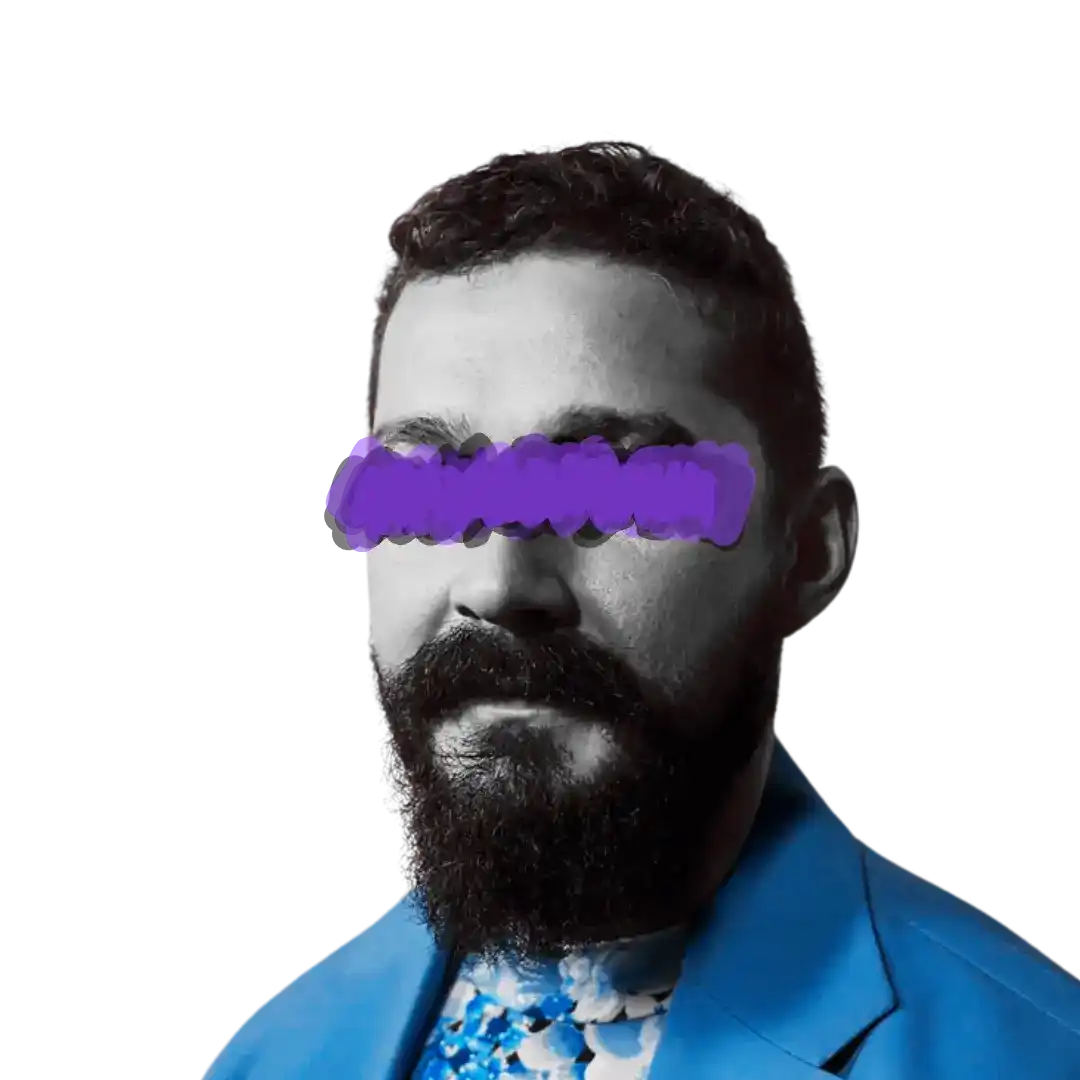
The same impulse led him to give Shia LaBeouf space on Real Ones to address FKA twigs' sexual battery and abuse lawsuit. LaBeouf said "I hurt that woman" and called her a saint who saved his life. The episode drew backlash for platforming an accused abuser, but Bernthal's instinct wasn't to excuse. It was to make a man say it out loud.
How He Approaches the Craft
He rejected method acting, or at least its abuse. Having trained at the Moscow Art Theatre, the institution where method acting was born, he knows what Stanislavski actually intended. "Making everybody call you by your character name and not showering for eight months," he has said, "was not what Stanislavski had in mind."
What he does instead is pursue authenticity at a level that borders on obsession. For Fury, he endured four months of training including a Navy SEAL boot camp where the cast physically fought each other. For The Punisher, he trained with military veterans and incorporated their stories into the character. For Shot Caller, he spent time with maximum-security inmates.
"I know I need to only work on projects that are deeply personal either to me or to the person making it. I don't want to be in commerce-based art." Meaning films made to sell tickets, not to say something.
The career bears this out. Ten years without stopping: Wolf of Wall Street, Fury, Sicario, Baby Driver, Wind River, We Own This City. Andy Greenwald of The Ringer called his Wayne Jenkins portrayal "one of the great TV performances of this century." Punisher co-creator Gerry Conway called Bernthal's Frank Castle his favorite on-screen version of the character.
In 2026, he's making his Broadway debut at the August Wilson Theatre opposite Ebon Moss-Bachrach in Dog Day Afternoon, playing the Al Pacino role, written by Pulitzer winner Stephen Adly Guirgis. He co-wrote a Marvel special presentation, The Punisher: One Last Kill, describing it as "a visceral, psychologically complex, unforgiving, no-holds-barred version of Frank" where "nothing is easy and all violence has a cost." He's in Christopher Nolan's The Odyssey alongside Matt Damon, Tom Holland, and Zendaya. The man does not slow down. That has never been the point.
Addie's Dad and Nothing Else
Years earlier, fresh off the plane from Moscow, Bernthal walked into a welcome-home party at a bar in Washington, D.C. He saw Erin Angle across the room.
"When I actually saw Erin, it was literally like angels were singing. I had never seen anyone so beautiful."
Erin is a trauma nurse from Pittsburgh, the niece of professional wrestler Kurt Angle. They briefly split before their wedding. What Bernthal did next is so perfectly him that it sounds made up.
He went to a Willie Nelson concert and snuck backstage. Found a postcard, wrote Willie a long letter, rolled him a joint, and explained the situation. "I told him the situation with me and my woman," Bernthal said. He referenced a Nelson lyric, "She's a good-hearted woman in love with a good-timin' man," and asked Willie to play "Always on My Mind" for them. Willie did.
It worked. They married on September 25, 2010, in Potomac, Maryland, and have three children: Henry, Billy, and Adeline.
Years later, Bernthal took the whole family to another Willie Nelson concert. "I turned to the kids and said, 'Hey, guys, this is Willie Nelson, and he's real important to your mama.' I'm sitting there at the show with my kids and thinking, 'This is the best moment of my life. This is peace.'"
When Adeline Fell Into a Coma
In 2017, two-year-old Adeline had a seizure and fell into a coma. She was diagnosed with encephalitis, a brain infection that causes swelling. She didn't wake up for three days. When she finally opened her eyes, she didn't recognize her family.
Bernthal was supposed to be filming First Man for Damien Chazelle. He dropped out immediately. No hesitation. No negotiation. No consideration of what leaving a Chazelle film might do to his career.
Erin, the trauma nurse, stayed calm. Adeline made a full recovery.
Ojai and the Theater
The family had moved to Ojai, California in 2015, and Bernthal calls it the best decision of their lives. "In Ojai, I'm Henry, Billy and Addie's dad and nothing else, and that's exactly what I want to be when I come home."
His three pit bulls, Boss, Venice, and Lil Bam Bam, go everywhere with him. He and Erin foster children, continuing what his mother started. "The gift has been so profound for my kids," he told Shepard about a recent placement.
Then there's the theater. Bernthal had felt like an outsider in Ojai, "one of those, for lack of a better word, L.A. jerks who came up here." So he took the Chaparral Auditorium, a disused school performance space, and converted it into a fully equipped black box theater seating three hundred, with a professional light grid and sound system. He modeled it on the Williamstown Theatre Festival, a place where young artists could take classes alongside working professionals. He funded the entire inaugural production himself: Martyna Majok's Ironbound, with Bernthal performing alongside Marin Ireland. The high school theater students watch the full professional process, from set design through showtime. Proceeds go to the school's arts program.
"I love things that you're never gonna lick, that you're gonna fail at constantly," he said about fatherhood. He means it as praise. The man who had to win every fight found the one arena where winning isn't the point.
The Kindness He's Building
"The pillars of strength, the examples of strength, in my life are all men who are very strong, very confident, but can also totally admit when they're wrong."
That sentence maps his entire trajectory. From the Quaker principle he couldn't hear as a teenager, "there is that of God in everyone," to the foster children his mother took in, to the anger journal he keeps in sobriety, to the daughter who woke from a coma and reached for him.
"I want them to see kindness as masculine. Not as weakness."
Every year, the circle of who he protects gets wider: his kids, his wife, the veterans on his podcast, the high schoolers in his theater, the foster children in his guest room. The fists are still there. They're just holding different things now.
Sixteen years sober. Three pit bulls. Three kids. The same force running through all of it, aimed, finally, in the right direction.
ONE QUESTION · NINE WAYS TO ANSWER IT
What is the hardest part about protecting what you love when it means confronting something difficult and potentially dangerous?
A sentence is enough.
You answer before you see. That is the whole point.
Former USMC infantry turned personality psychology nerd. I built 9takes to help people see
the underlying emotions and logic behind their worldview. Ask a question, see 9 takes.




Add your read on Jon Bernthal