"I'm a professional mistake maker." — Ray Dalio, Principles: Life and Work
On New Year's Eve 1974, Ray Dalio punched his boss in the face. He was 25, a commodities trader at Shearson Hayden Stone, drunk at the company holiday party, and by the next week he was unemployed.
He doesn't talk about this in his TED talks. The story sits in one sentence on his Wikipedia page and gets two lines in his 600-page bestseller. But everything Ray Dalio has built since that night — Bridgewater Associates, the world's largest hedge fund; 210 written rules he calls Principles; the videotaped meetings; the believability-weighted votes; the twenty-minute meditations bookending every workday — is the answer to a question that punch asked.
How do I make sure I never lose control like that again?
The man you know as the philosopher of finance, dispensing rules like a stoic sage, started as a guy who couldn't trust his own hands.
TL;DR: Why Ray Dalio is an Enneagram Type 5
Knowledge as armor: 50 years converting human experience into 210 written rules, recorded meetings, and believability-weighted votes — scaffolding built by a man who once couldn't trust his own emotional gauge.
Withdrawal is the practice: Twenty minutes of Transcendental Meditation, twice a day, every day since 1969. Two daily exits to recharge the only thing he believes he can govern.
The fortress runs on portfolios too: All Weather and risk parity, launched in 1996 for his own family trust, are markets engineered so the system doesn't need him to be right.
Stress looks like prophecy: Type 5s under pressure splinter outward into restless idea generation. Dalio's late career is a parade of debt-collapse warnings, books, podcasts, and LinkedIn predictions — the prophet who can't stop predicting.
Wing 6 explains the doom — and the China blind spot: The 5w6 builds intellectual systems against catastrophe. It also turns an authoritarian regime into "a strict parent" when the model has no slot marked moral question.
What is Ray Dalio's personality type?
Ray Dalio is an Enneagram Type 5
He is a textbook Type 5 with a strong 6 wing — the Investigator who builds systems against future helplessness. The 5 is the head-center type whose core fear is being depleted, overwhelmed, or rendered incompetent. Their answer is to retreat, observe, and accumulate enough understanding to never be caught off-guard. Dalio gives this away in almost every sentence he writes about decision-making.
His most-quoted concept isn't "trust your gut." It's the opposite. "There are two yous inside you," he tells Tim Ferriss. "There is the thoughtful you, prefrontal cortex-type of thoughtful you. Then there's the subliminal, emotional you." The thoughtful one is the real one. The other one is a problem to be debugged. That is not a Type 8's voice, or a Type 3's, or a Type 1's. That is a Type 5 describing his own life as a piece of software with a faulty subroutine.
The 6 wing shows up in what he watches for. Mexico's debt default in 1982. The 1987 crash. The 2008 financial crisis. How Countries Go Broke, his 2025 bestseller. A man who believes the machine is always one shock away from breaking, and that the only thing standing between him and ruin is whether he saw it coming.
"Ray and I have had (and will have) many disagreements. We have a process for handling them and both of us believe that process is working well."
— Greg Jensen, Bridgewater co-CIO
That sentence is what working with a Type 5 sounds like. The disagreement isn't human; it's a process. The relationship isn't a friendship; it's an algorithm running well.
Ray Dalio's childhood: the caddy who asked Nixon for stock tips
He was an only child. His father, Marino Dallolio, played clarinet and saxophone at the Copacabana on Manhattan nights. His mother stayed home in a small house in Manhasset, Long Island. The family was, in his own words, "middle-class or maybe a little bit lower-middle-class." He hated school. He couldn't see the point of memorizing things he didn't believe in.
He could see the point of money.
At twelve he started caddying at the Links Golf Club, a course where the bag he was carrying might belong to the Duke of Windsor or to Richard Nixon. He took the cash and bought shares in Northeast Airlines because someone he overheard said it was about to merge. The stock tripled. He was hooked. By high school, he was asking his stockbroker, his caddymasters, even his barber what they thought of the market — anyone he could classify as somewhat savvy.
What the world saw
An average kid from a Long Island suburb. Mediocre student. Paper route. Mowed lawns.
What he was actually doing
Building a private intelligence network out of every adult within speaking range. The grades didn't matter. The tape didn't lie.
The pattern locks in early. School is a system that wastes him. The market is a system he can study. Adults who know things are sources to be quietly mined. He doesn't trust authority because authority is granted; he trusts whoever can show him the cause-and-effect underneath.
This is the root of what he will later call believability weighting. The most credible voice in the room isn't the senior one. It's the one with the track record. Twelve-year-old Ray, listening to a stockbroker over the click of a payphone, has already decided.
ENNEAGRAM TYPE 5 · THE INVESTIGATOR
TYPE 5 · THE INVESTIGATORHEAD TRIAD
KNOWLEDGE
MASTERY
INSIGHT
PRIVACY
INDEPENDENCE
OBSERVATION
ANALYSIS
DETACHMENT
COMPETENCE
STANCE
Withdrawn
HARMONIC
Competency
AKA“The Iconoclast” or “The Problem Solver”
CORE FEARBeing helpless or incompetentCORE DESIREMastery and understandingINTELLIGENCEIntellectualCORE EMOTIONFear
By 1982 he had a wife, two kids, a young firm, and a thesis. He had calculated that the United States had loaned more money to developing countries than they could ever repay. When Mexico defaulted in August, he went on national television and told the House Banking Committee a depression was coming. He bet everything on it.
The depression never came. The Fed cut rates. The S&P went on the longest noninflationary bull run in American history. Dalio was, in his own words, "all the way back to square one." He laid off everyone. Bridgewater shrank to one employee: him. He borrowed $4,000 from his father to make rent.
$4,000borrowed from his father in 1982 — the loan that broke and remade him
This is the moment that does the most work in his self-mythology. He tells it in every interview. He calls it "one of the best things that ever happened to me." The reframe is so clean it almost slides past you. A man who bet his career on a forecast and was catastrophically wrong now teaches the world that pain plus reflection equals progress.
But the real lesson he took from 1982 isn't humility. It's instrumentation.
After the loss, he started writing things down. He wrote down what he had thought, what he had missed, and what rule he should have followed. He started doing it after every trade, then after every decision, then after every meeting. The rules accreted. By the time he published Principles in 2017, there were 210 of them.
A Type 4 would have made art out of the pain. A Type 8 in the Wall Street register, like Jamie Dimon, would have come back angrier. A Type 3 would have rebranded. Ray Dalio turned a personal collapse into a documentation system, because for a Type 5, the worst feeling in the world is being inside a moment you don't understand. The principles aren't a memoir. They are a fence built around 1982.
That is what makes the opening epigraph harder than it sounds. He calls himself a professional mistake maker — not a man who makes mistakes, but a man who has industrialized the relationship. The open question is whether industrializing error is how you befriend it, or how you guarantee you will never have to feel it raw again. Dalio insists on the first reading. The 210 rules are evidence for the second.
Why Ray Dalio writes everything down
Here is the hidden engine of Bridgewater. Every meeting at Bridgewater has been audio- or video-recorded for decades. Employees rate each other on iPad apps in real time using a system called "dotting." If you criticize someone, the criticism is logged. If they push back, that's logged too. A "believability score" weights your input on future questions in your area of competence. Dalio claims he hasn't made a decision contrary to a believability-weighted vote in forty years.
That last sentence is worth holding for a moment. The founder of the world's largest hedge fund publicly insists that he doesn't trust his own gut more than the algorithm.
If the system is good enough, you don't have to be reliable. That is the line that organizes Dalio's whole fortress. Idea meritocracy, his term for it, is calibrated: it's not a meritocracy of people but of ideas, evaluated by their track record, weighted against the speaker's. The ego barrier — his term for the defense system that makes you cling to bad ideas — is the enemy. The cameras and the dotting tablets are antibodies against it.
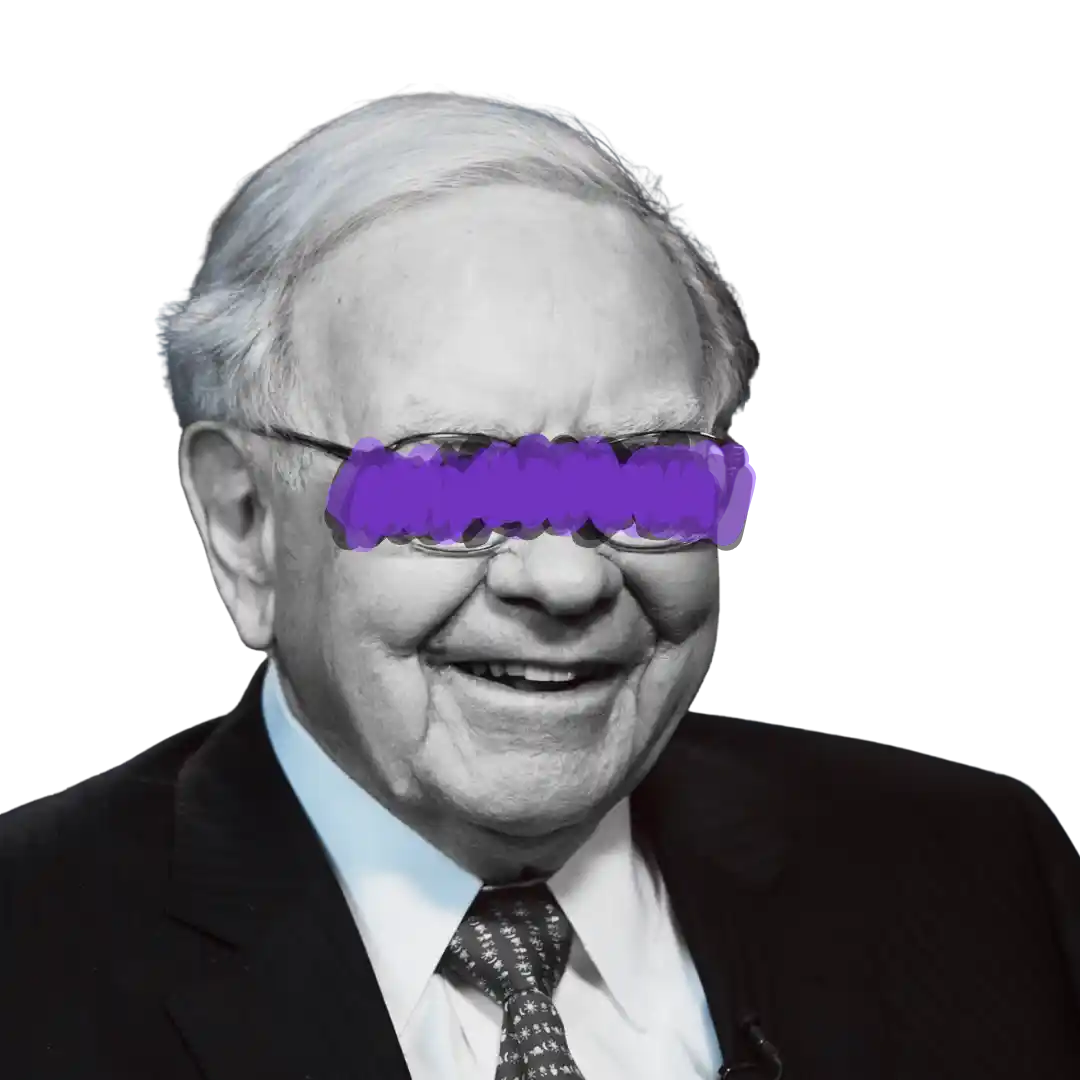
The same instinct shaped the funds. In 1996, Dalio designed a portfolio called All Weather for his own family trust because, by his own admission, he could not trust his future trustees to allocate well after he was gone. The fund pioneered what the industry now calls risk parity: balance the portfolio so each asset class contributes equal risk rather than equal capital, and the result should hold up across any economic surprise — inflation, deflation, growth, contraction. It is the financial expression of the same logic. The Type 5 doesn't want to predict the next regime. He wants a structure that doesn't need him to. That is why the comparison to Warren Buffett matters: Buffett trusts patient judgment; Dalio trusts the machine that keeps judgment from being alone in the room.
"Ray sometimes says or does things to employees which makes them feel incompetent, unnecessary, humiliated, overwhelmed, belittled, pressed or otherwise bad."
— Bob Prince, Giselle Wagner, and Dan Bernstein, internal memo to Ray Dalio, 1993
Three of his most senior people sent him that memo when Bridgewater was still small enough that they could write him a single letter and have it land. He included it in his book. He uses it to argue that radical honesty saved the company.
The other reading is that the 210 rules are what you get when a Type 5 hears that letter and decides his personality cannot be trusted to manage a workforce — so he writes a constitution for himself.
Inside Bridgewater: the family that records itself
Eileen Murray ran Bridgewater alongside Dalio as co-CEO from 2009 to 2020. In a rare 2019 interview she described the firm to a public audience.
"It's kind of a family atmosphere. I don't know about you, but for me, my family tells me things I don't want to hear. But they do it out of a sense of love and kindness…"
— Eileen Murray, Bridgewater co-CEO, 2019
Murray had already been the subject of an internal episode Dalio referenced in writing as "Eileen Lies" — a perceived inconsistency pulled from the meeting tapes and reviewed in front of a wider group. By the time she left Bridgewater in 2020, she would sue the firm over her exit pay.
Rob Copeland's 2023 book The Fund opens these tapes for outsiders. In one scene, a senior executive named Katina Stefanova is questioned by Dalio in front of the cameras about a hiring decision. She begins to cry. He pauses, then resumes. Bridgewater's editors later cut the footage down — Dalio softened, Stefanova's reaction stripped of its run-up — and the edited clip became part of new-hire orientation. The firm had its own vocabulary for this work: rating each other was dotting, internal investigations were probings, being pushed out was sorting. James Comey, Dalio's general counsel from 2010 to 2013 before he took over the FBI, was part of the apparatus that ran them. Roughly a third of new hires didn't last eighteen months. Dalio called Copeland's book "fiction, created as fact."
The gentlest read of Bridgewater is the one Murray gave: a family that loves you so much it tells you the truth. The harshest read is that a Type 5 founder who does not trust his own emotional life built an apparatus where no one else's was permitted to operate either. Both readings can be true. The fortress was built to keep the founder safe. It was not necessarily designed for the people standing inside it with him.
Source: Rob Copeland, The Fund: Ray Dalio, Bridgewater Associates, and the Unraveling of a Wall Street Legend (St. Martin's Press, 2023). The book draws on hundreds of interviews with current and former Bridgewater employees and reached the New York Times bestseller list.
Why Ray Dalio meditates twice a day
The cameras and the believability scores are the outer wall of that fortress. The other one runs on a chair, twice a day, behind closed eyes.
In 1969, six years before he founded Bridgewater, he learned Transcendental Meditation. He has done two twenty-minute sessions a day, almost every day, for over fifty years. "It's the single most important reason for whatever success I've had," he told CNBC in 2018.
Read that again. The man who built the most rule-bound workplace in modern finance attributes his success not to the rules but to the practice of withdrawing from them, twice daily, for the length of a sitcom episode. He has guarded that interior for half a century, and he has guarded it more carefully than he has guarded his money.
The contradiction sharpens here. The public Ray Dalio is generous with information. He has given away the principles. He has illustrated them in animated YouTube explainers (How the Economic Machine Works) viewed by tens of millions. He has pledged half his fortune to philanthropy. He will tell you everything he thinks.
He just won't be available to you while he's thinking it.
What Ray Dalio gets wrong about China
On November 30, 2021, sitting on CNBC's Squawk Box, Dalio was asked how China's human rights record affected his investments. He said he couldn't be an expert in those things, and compared the Chinese state's treatment of dissidents to a "strict parent." The clip moved within hours. Mitt Romney called it "a sad moral lapse." Dalio went on LinkedIn the next day to clarify — he had been "sloppy," the strict-parent line was a thing a Chinese leader had told him about Confucian governance, not his own opinion.
But the framing kept coming back. Principles for Dealing with the Changing World Order runs the Chinese system through the same machinery he uses on every regime: rises, peaks, declines, debt cycles, reserve currencies. How Countries Go Broke (2025) does it again with the United States. The throughline isn't that he's a mouthpiece for Beijing. It's that for a Type 5, no regime is ever fully a regime. It is a system with inputs and outputs, and the analyst's job is to keep his hands clean of the moral question while he traces the wiring. The 5w6 sees catastrophe risk with unusual clarity. It is less practiced at seeing the people inside the catastrophe.
This is also where the integration arrow shows itself. The Type 5's growth direction runs to Type 8 — the body-center Challenger, the type that lands on a position before reasoning back to it. You can see the integrated 8 break through under provocation: the 1974 punch, the "fiction, created as fact" line he used to dismiss Copeland's reporting, the doubling-down on China after the strict-parent moment cost him days of headlines. The fortress doesn't dissolve the 8 in him. It keeps it offstage until the wall gets hit.
The one principle Ray Dalio never wrote down
He gave up control of Bridgewater in stages. CEO in 2011. Co-CEO again in 2017. Co-CIO in 2022. His final Bridgewater stake in 2025. The succession plan he announced as a ten-year project took twelve. Multiple successors were named and then unmade. People close to the firm called the long handover an inability to actually leave.
In December 2020, his oldest son, Devon, died at forty-two when his Audi crashed into a Verizon storefront in Greenwich and burst into flames. Dalio wrote on Twitter, "It is with great pain that I am sharing with you that my 42 year old son was killed in a car crash yesterday. My family and I are mourning and processing and would prefer to be incommunicado for the time being."
That note went up. The man who had built a career out of writing came as close as he comes to silence.
Two months later he gave a long interview about how he was processing. He had a framework. He had reflections. He had principles for grief.
The Type 5's stress arrow runs to Type 7 — the restless idea generator, the mind that scatters under pressure. Late-career Dalio looks like that. The books keep coming. The debt warnings sharpen. The man who once retreated to a converted barn in Wilton to think now tweets about the dollar.
He has 210 principles. He has fifty years of meditation tape. He has $20 billion, four sons, a wife, and the tape of every decision Bridgewater ever made. He has the framework for grief and the framework for failure and the framework for finding the framework.
What he does not have, what he has never had, is a written principle for the night in 1974 when a 25-year-old kid drunk on cheap champagne hit another man in the face and didn't know why.
That principle never got written down. The other 210 are what he built in its place.
ONE QUESTION · NINE WAYS TO ANSWER IT
What is the true cost of prioritizing order and clear systems above all else in life?
A sentence is enough.
You answer before you see. That is the whole point.
Former USMC infantry turned personality psychology nerd. I built 9takes to help people see
the underlying emotions and logic behind their worldview. Ask a question, see 9 takes.




Add your read on Ray Dalio