
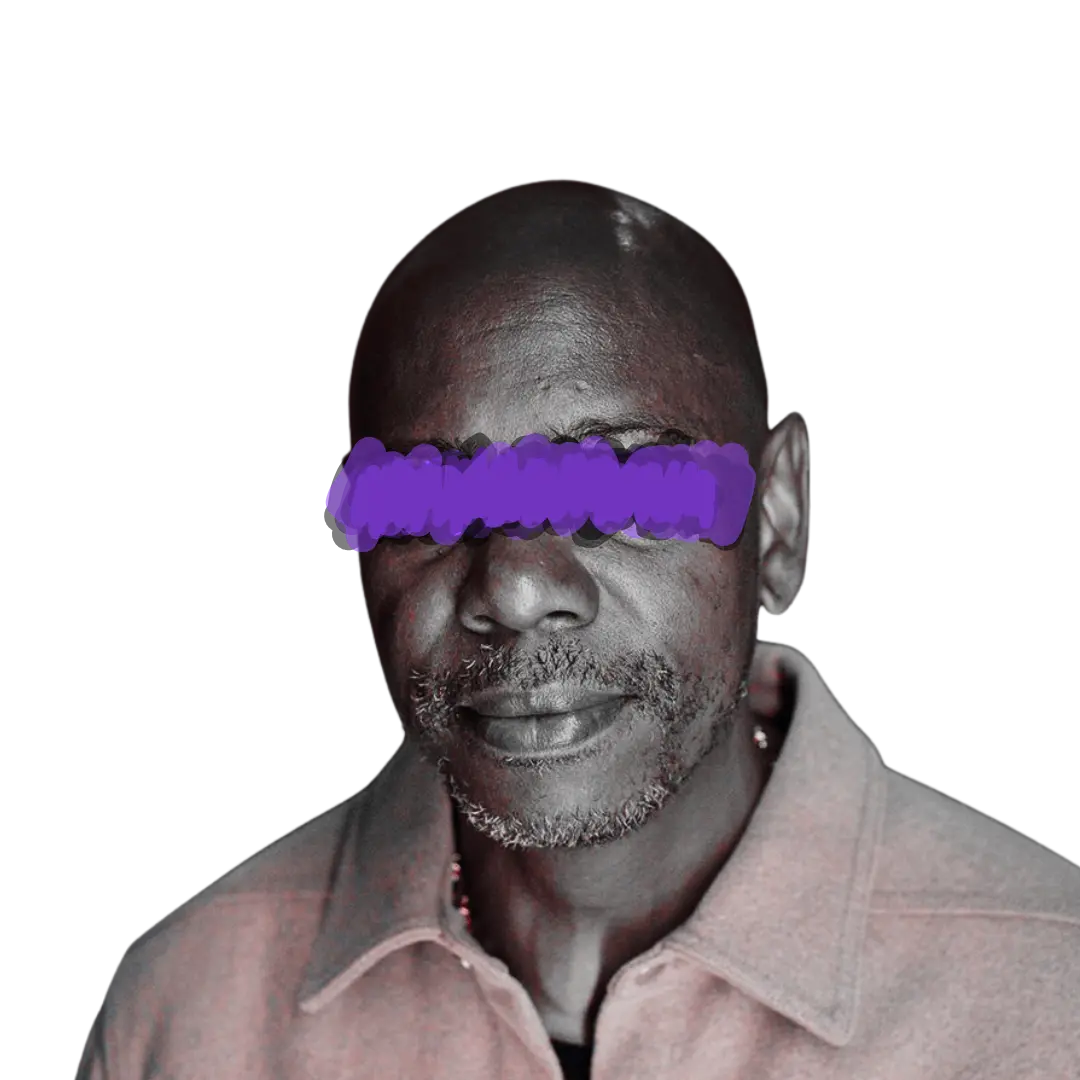


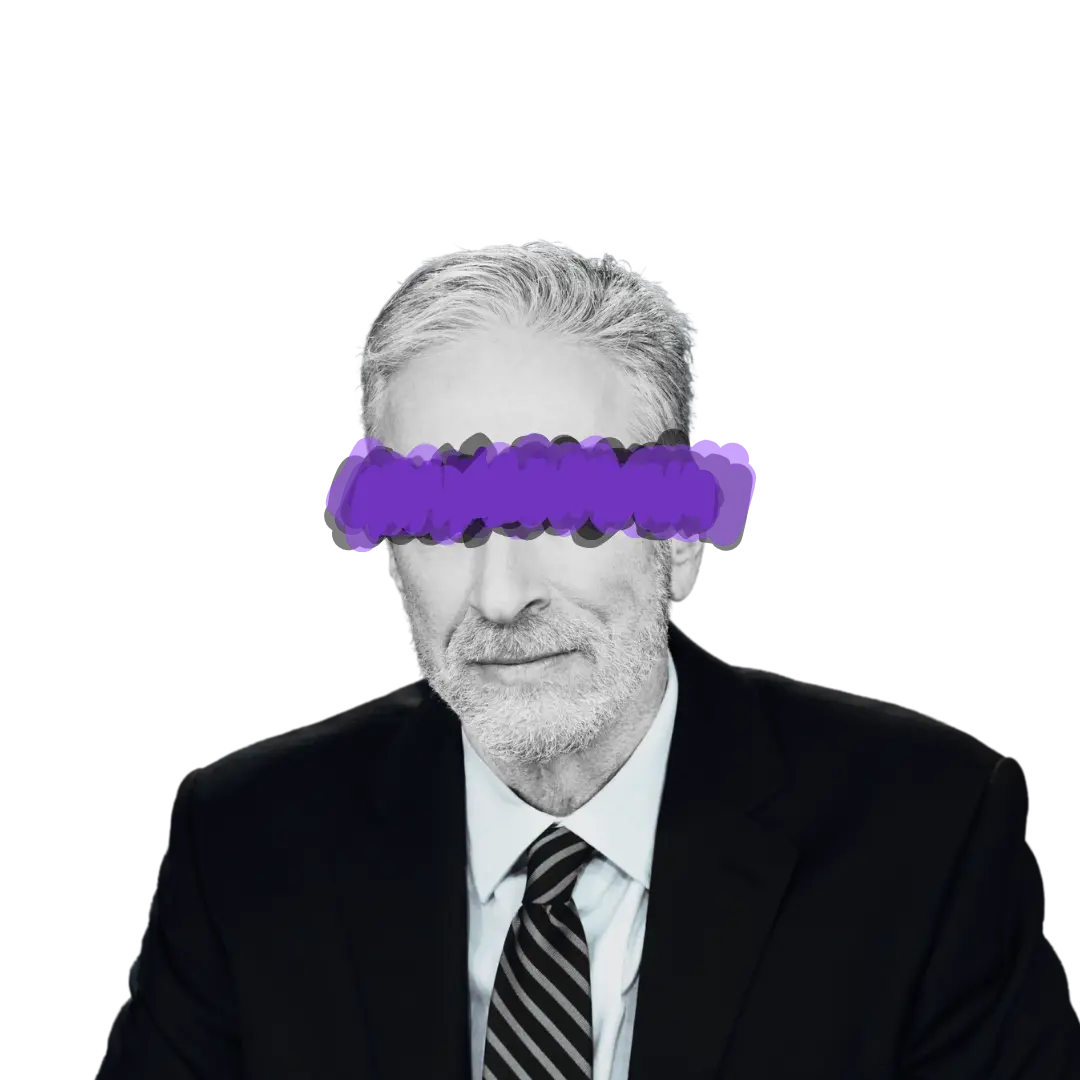

Every great comedian is running from something. The difference is what they're running from, and how fast.
Comedy doesn’t come from happy people.
It comes from people who learned early that if they could make a room laugh, the room couldn’t hurt them. The joke landed first, so the fist never had to. Humor is armor, and the shape of the armor tells you exactly what the person underneath is protecting.
The Enneagram makes that armor legible. A Type 8 weaponizes comedy to dominate the room. A Type 4 mines their own wounds and bleeds on stage for catharsis. A Type 7 refuses to sit in the wound at all.
Watch what the 7 does instead. They take the worst thing that ever happened to them, spin it into a five-minute bit, and move on before you even notice they never processed it. Same pain. Opposite machinery.
This whole piece runs along one fault line.
The Type 7 outruns pain at full speed. The Type 9 absorbs it until it disappears. Two comedians can tell the exact same dark story and mean completely different things by it, and once you can hear that difference, you can’t unhear it.
The map below breaks down who’s running, who’s numbing, and what each one is really doing in the half-second before you laugh.
Questions This Blog Will Answer
Before we break down each comedian, here are the questions you’re probably already asking:
- Why do so many comedians have traumatic childhoods? Is there a specific personality type that’s more likely to turn pain into punchlines, and is that healthy or just sophisticated avoidance?
- Why are Theo Von and Dave Chappelle both “funny” but in completely opposite ways? One can’t stop talking, the other walked away from $50 million to sit in silence. What’s driving that difference?
- Is Pete Davidson’s dating life actually a personality pattern? Kim Kardashian, Ariana Grande, Kate Beckinsale. Is there a psychological reason he attracts and merges with powerful women?
- Why did Dave Chappelle walk away from Comedy Central? Everyone says “the money wasn’t worth it.” But what was actually happening inside his head? What personality type leaves $50 million on the table?
- Are comedy podcasts replacing therapy for men? Theo Von’s podcast feels like a confessional. Tim Dillon’s feels like a manic episode you’re invited to. Why do millions of men listen to comedians process their pain instead of going to actual therapy?
- Why did Shane Gillis get fired from SNL and then become MORE famous? What is it about his personality that made cancellation fuel instead of career poison?
- What makes crowd work comedy different psychologically? Andrew Schulz built an empire on reading strangers in real time. What personality type can do that, and what does it cost them?
- Why is Kevin Hart everywhere? He’s in movies, Netflix specials, commercials, podcasts. Is that ambition or is something deeper driving the need to never stop?
- Is Dax Shepard’s openness about addiction a Type 7 thing? He talks about relapse on his podcast with millions listening. Why would someone be that vulnerable publicly?
- Do different personality types laugh at different things? If comedy is pattern recognition + pain processing, do Type 7s and Type 9s literally see different jokes as funny?
The Comedy Personality Map
| Comedian | Enneagram Type | Comedy Style | Core Wound | Content Grade |
|---|---|---|---|---|
| Theo Von | Type 7 - Enthusiast | Absurdist Southern storytelling | Chaotic childhood, absent father | 9.7 |
| Dave Chappelle | Type 9 - Peacemaker | Truth-telling through calm | Fame threatening inner peace | 9.0 |
| Shane Gillis | Type 9 - Peacemaker | Everyman observations | Being canceled, outsider status | 9.0 |
| Pete Davidson | Type 9 - Peacemaker | Self-deprecating confessional | Father’s death on 9/11 | 9.0 |
| Jon Stewart | Type 7 - Enthusiast | Righteous satirical anger | Injustice, restless moral compass | 9.0 |
| Tim Dillon | Type 7 - Enthusiast | Conspiracy-tinged rants | Running from stillness | 9.0 |
| Andrew Schulz | Type 7 - Enthusiast | Aggressive crowd work | Need for constant stimulation | 8.0 |
| Kevin Hart | Type 7 - Enthusiast | High-energy physical comedy | Small guy proving himself | 8.7 |
| Dax Shepard | Type 7 - Enthusiast | Honest vulnerability + humor | Addiction, self-destruction | 9.6 |
The Type 7 Comedy Machine: Running From Pain at 100 MPH
The Type 7’s core move is reframing.
Something terrible happens. Before the feeling can land, the 7 has already rebuilt it into a story with a punchline. This is why so many of comedy’s most prolific motormouths share the same wiring: Theo Von, Jon Stewart, Tim Dillon, Andrew Schulz, Kevin Hart, Dax Shepard. They don’t sit in pain. They transmute it into momentum.
Watch the mechanism in real time. A 7 tells you about the worst year of their life, you laugh the whole way through, and only later do you realize they walked you through genuine trauma without ever stopping to feel it. That isn’t denial. It’s metabolism. The 7 converts dread into material so fast that the bit arrives before the grief does.
The engine is a gift. It’s also a cliff.
Type 7s avoid pain, keep their options open, and stay in constant motion, because stillness is where the bad stuff catches up. So they overbook. They overstimulate. They reach for one more drink, one more trip, one more project to hold the quiet at bay. The same restless energy that fills arenas and drops three podcast episodes a week is the energy that fuels the burnout, the relapse, the 3 a.m. inability to be alone in a silent room.
Speed is the strategy. Speed is also the trap.
What follows are three 7s running at different RPMs, each chasing a different version of a finish line they’re built never to reach.
Theo Von: The Southern Gothic Storyteller
Theo Von grew up in Covington, Louisiana, in a household that reads like one of his own tall tales.
His father was an old man, somewhere around 68 when Theo was born, and gone while Theo was still a kid. What followed was a blur of drugs, dropouts, and the kind of characters most people only meet in cautionary tales. For most kids, that childhood is the opening line of a long therapy bill. For Theo, it became inventory.
He is a Type 7 who physically cannot stop moving.
Listen to him narrate his upbringing and the horror always arrives wrapped in something so vivid and absurd you laugh before you flinch. A man overdosing on the couch. A relative doing something unspeakable. A whole town of beautiful, broken people. He reframes each one into folklore, and that is the 7 engine at full throttle: take the thing that should haunt you, and hand it back to the room as a bit nobody else on earth could have written.
His podcast, This Past Weekend, runs on a quiet contradiction.
People feel like they’re getting therapy from a man far too restless to ever sit still for it himself. He asks his guests the soft, searching questions a 7 circles his whole life but rarely lands on for his own. The audience gets the depth. Theo gets to keep moving.
Then he got sober. That’s the part that matters most.
Sobriety is the 7 walking straight into the pain his entire career was built to outrun. No more chemical escape hatch. No more speed to blur the quiet. For a Type 7, choosing to sit in a room alone with your own feelings is the hardest homework there is, and Theo signed up for it on purpose. That is the most grown-up thing a 7 can do.
Jon Stewart: The Angry Optimist
Jon Stewart aims the 7’s restlessness at the system.
His is a mind that cannot stop cataloguing what’s broken. Most people with that wiring spiral. Stewart pointed it outward instead. The Daily Show became a nightly coping mechanism for a country he found maddening, a way to take the dread of watching institutions fail and convert it, segment by segment, into laughter instead of a scream.
Look closely and you’ll find the 7’s optimism hiding under the anger.
A pure cynic gives up. Stewart never did. He stayed furious precisely because he still believed the thing could be fixed, which is the most 7 contradiction there is: bottomless frustration from someone who refuses to quit hoping. The jokes were the reframe. The pressure valve that kept the despair from settling in.
Then he did something that breaks the 7 pattern entirely.
He planted himself in front of Congress. Again and again. He fought for the 9/11 first responders and the Zadroga Act, and later for the veterans poisoned by burn pits. This is a Type 7 integrating toward Type 5: getting serious, going deep, staying on one fight long enough to actually win it. No tangent. No next shiny project. No escape into the new.
That’s the move most 7s never make.
The healthy 7 stops chasing the next experience and plants a flag on the one thing that matters. Stewart at that hearing, voice cracking, not reaching for a single joke, is what a Type 7 looks like the moment it stops running and decides to land.
Tim Dillon: The Conspiracy Jester
Tim Dillon’s 7 wiring shows up as escalation.
He starts with a real observation about how broken everything is, and instead of analyzing it, he floors it. The rant builds. The absurdity compounds. The worst-case scenario becomes a character he’s gleefully narrating in a voice three sizes too big. By the end you genuinely can’t tell where the alarm stops and the performance starts, and that ambiguity is the entire joke.
Here’s the trick most people miss.
Tim Dillon isn’t actually paranoid. He’s a 7 processing anxiety the only way a 7 knows how: by turning dread into a bit. The real fears, collapse, surveillance, a future nobody’s prepared for, are too heavy to hold in your bare hands. So he picks them up, makes them ridiculous, and hands them back to you as comedy. The conspiracy framing is just a costume the anxiety wears so it can be laughed at instead of felt.
The podcast was practically engineered for his type.
No structure. No editor cutting him off. Infinite room to chase a tangent until the tangent eats the whole episode. A 7 inside a rigid format feels caged. A 7 with an open mic and three unguarded hours feels free. Dillon’s show is pure momentum, one association firing into the next, a restless mind finally handed a track long enough to actually run on.
That’s the Type 7 paradox compressed into one performer. What looks like chaos is a coping system working exactly as designed. He isn’t losing the plot. He’s outrunning it, at full speed, on purpose, and charging admission to watch.
Three more 7s, same engine
Three more names sit in that table for a reason. Same wiring. Three different paint jobs.
Andrew Schulz turned crowd work into an empire. He walks into a room of strangers, reads them in real time, and fires off reactions faster than anyone can get offended, because a 7’s mind moves quickest when the next stimulus is a live human standing three feet away. The cost is the part nobody claps for. A brain that needs a crowd to feel switched on does not do well alone in a quiet apartment with nothing left to react to.
Kevin Hart weaponized relentlessness. Movies, Netflix specials, ad campaigns, a podcast, a tequila brand, all running at once, all the time. Ask why he never stops and the honest answer is buried under the hustle: stopping is where the small kid who had to prove he mattered catches back up. Motion is the proof. As long as he is everywhere, he is safe.
Dax Shepard turned the cliff itself into the content. He talks about addiction and a public relapse on Armchair Expert with millions listening, narrating the exact pain most 7s sprint away from. That is the type at its most self-aware: still processing out loud, still allergic to stillness, but aiming the reframe at his own wreckage instead of someone else’s. The vulnerability is real. It is also, quietly, one more thing to keep talking about.
The Type 9 Paradox: Peacekeepers Who Chose War
Type 9s are the harmony seekers.
They merge with whoever they’re standing next to, sand down their own edges, and dread conflict so badly they’ll agree with you out loud just to make the tension in the room dissolve. By that logic, they should be the last people on earth to grab a microphone and deliberately poke a room full of strangers.
And yet some of the sharpest comedians alive are wired exactly this way.
Here’s why it works. Standup is the 9’s backdoor to honesty. A 9 will sit on a real opinion for years rather than say it to your face, because saying it to your face means a fight. The stage solves that. It removes the face. The mic becomes a buffer between the 9 and the confrontation they can’t stand.
The laugh is permission.
When a crowd roars at something the 9 truly believes but would never risk at a dinner table, the room has just told them it’s safe. The conflict they spent a lifetime dodging turns into a performance they control. They get to be brutally honest with nobody allowed to argue back.
That’s the paradox in one line. The type built to keep the peace found the one arena where they can say the quiet part out loud and get a standing ovation for it.
Dave Chappelle: The Man Who Walked Away
In 2005, Dave Chappelle did the single most Type 9 thing a famous person has ever done.
He was mid-production on season three of Chappelle’s Show. He was sitting on a reported $50 million deal with Comedy Central. He was, by almost any measure, the hottest comedian on the planet. Then he got on a plane and flew to South Africa. No press tour. No statement. Just gone.
People called it a breakdown. Read it as a 9 instead.
He later described the laughter starting to curdle, audiences seeming to laugh at the wrong thing, the whole machine around him drifting out of sync with his own sense of what was right. A 9’s deepest need is inner peace. When the success began poisoning that peace, he chose the peace and walked away from the money to keep himself intact. Most types can’t even picture making that trade.
Watch him work a stage and the type gives itself away.
He lights a cigarette. He takes his time. He lets a silence stretch ten full seconds while a lesser comic would panic and stuff it with noise. That stillness isn’t a bit. It’s a 9 with nothing to prove and nowhere to rush, completely at home in the calm the rest of us find unbearable.
His later specials flipped the script.
The young Chappelle kept the peace through what he refused to say. The older one decided silence had a price, that keeping everyone comfortable was its own quiet lie, and he started saying things he knew would start fights. He picked subjects that cost him. He saw the backlash coming. He walked straight into it anyway.
That’s the arc of a 9 who finally ran the numbers. Avoiding conflict had always felt like peace, but it had been quietly costing him the truth. When the bill came due, he paid it in war.
Shane Gillis: The Cancelled Everyman
Shane Gillis might be the most relatable comedian alive.
It’s because he genuinely thinks like the guy two stools down at the bar, and none of it is an act. Type 9 is the most common Enneagram type and the one most prone to blending into the crowd, so when a 9 talks, he tends to sound like the median person in the room. Gillis turned that ordinary frequency into a career.
Then 2019 happened.
SNL hired him, then fired him before his first episode aired when old podcast clips resurfaced. Plenty of comics would have spiraled, lawyered up, or gone scorched-earth on the people who cut them. Gillis basically shrugged. He kept making podcasts and specials, built an independent audience too big for the network to keep ignoring, and in 2024 SNL brought him back as the host. He won by refusing to fight the thing that hurt him.
His delivery is the tell.
Flat. Calm. A little bored, like he’s telling a story to friends and couldn’t care less whether you approve. That unbothered flatness is a 9 refusing to escalate. He’ll drop something genuinely provocative in the exact tone you’d use to order a sandwich, and the calm is precisely what lets it land.
This is the 9’s secret weapon on a stage. They spend their whole lives absorbing everyone else’s perspective and keeping their own opinions underwater, so they know exactly what the room is already thinking and too polite to say. When a 9 finally says it, plainly, with no heat behind it, it doesn’t sound like a hot take. It sounds like someone admitting the obvious.
Pete Davidson: The Lovable Disaster
Pete Davidson was seven years old when his father died.
Scott Davidson was an FDNY firefighter who ran toward the World Trade Center on September 11 and never came home. A loss that big at that age forces a survival choice, and the 9 makes the quietest one on offer: go numb. Sink into the background. Keep everyone else comfortable. Come apart somewhere no one is looking.
You can see the merging everywhere in his public life.
His run of high-profile relationships, Ariana Grande, Kim Kardashian, Kate Beckinsale and others, reads like textbook 9 behavior: borrowing the identity and orbit of a stronger partner because your own sense of self feels thin. He doesn’t pull people into his world. He dissolves into theirs. That isn’t a character flaw. It’s a type that struggles to find itself without someone bigger to merge into.
His openness about a borderline personality disorder diagnosis adds a second layer.
The core 9 pattern is self-erasure, forgetting your own needs and wants until you barely register as a person to yourself. Pair that with the instability BPD brings and the effect compounds. The result is a man who can be the literal center of attention and still seem like he’s not entirely in the room.
His comedy runs on the exact same engine.
Davidson makes himself the joke. The screw-up. The smallest, least threatening thing on the stage. The whole audience exhales, because the funniest person up there just volunteered to be beneath them. That is the deepest 9 move there is. He keeps the peace by erasing himself, and he’s turned that erasure into a career performed in front of millions.
Why Comedy Pods Replaced Comedy Clubs
A podcast studio asks for something a comedy club never did.
Not a tight five. A long hang. That one shift in format quietly handed the medium to one psychological type and held a side door open for the other.
For the Type 7, the podcast is a playground with the fences torn down.
No set list. No producer cutting you off at twelve minutes. No punchline you have to land before the check drops. You can chase a tangent about prison food into a story about your uncle into a half-baked theory about aliens, and the format rewards every single detour. Theo Von builds entire episodes out of associative leaps that would die on a club stage and thrive over two unhurried hours. Tim Dillon turns a guest into a launchpad for riffs nobody saw coming, the guest least of all. The 7 brain runs on novelty and forward motion, and the podcast is a machine designed never to make you stop.
The Type 9 gets something quieter, and just as useful. Cover.
A club demands that you command the room, own the silence, force the laugh. The conflict-averse 9 finds that posture exhausting. A podcast feels like two friends talking, so the 9 never has to seize anything, just stay in the conversation and let the truth slip out sideways. The intimacy does the work the aggression used to. That’s why the format fits the comedians who were always better in the green room than under the spotlight.
Stack those two facts together and the whole picture snaps into focus.
7-heavy comedians colonized podcasting first and hardest, because it is the Type 7’s native habitat, a place built for tangents and momentum. The 9s followed close behind, because it finally let them be honest without having to be loud. Same room. Two types. Two completely different reasons to love it. One walks in and hears freedom. The other walks in and hears safety.
The Dark Side: When the Laughter Stops
Here is the part that doesn’t make the highlight reel.
The exact mechanism that makes these comedians funny is the mechanism that can keep them from ever healing. And the two types fall apart in opposite directions.
The Type 7 outruns the pain until the pain catches up.
Reframing hurt into a bit works beautifully, right up until the bit stops working. Then the 7 reaches for whatever keeps the high alive: another show, another substance, another scheme, another hit of novelty to stay one step ahead of the thing underneath. The crash isn’t a character flaw. It’s the bill arriving for years of converting grief into momentum instead of sitting in it. Comedy is full of bright-burning performers who kept the engine redlined until something finally gave, and the audience only felt the weight of it after the fact.
The Type 9 fails the other way. By disappearing.
Where the 7 sprints, the 9 numbs. Self-forgetting feels like peace until you realize nothing was ever actually said, only softened into self-deprecation and waved off with a shrug. The unexpressed doesn’t vanish. It pools. And what pools long enough eventually leaks, in resentment that startles everyone including the 9, or in a quiet collapse that looks like it came from nowhere when it had been building the entire time.
None of this means comedians are broken or that laughter is a symptom.
Plenty of them do the work and come out steadier on the other side. The honest point is smaller and sharper. Humor is a real coping tool. And a coping tool that works this well can quietly become a reason to never look straight at the thing it’s protecting you from. Naming that cost isn’t pity. It’s respect for everything the joke is actually carrying.
What Their Types Reveal About Comedy Itself
So here’s the turn.
Comedy is two skills stacked on top of each other: pattern recognition and pain processing. You have to spot the gap between how things are supposed to go and how they actually go. Then you have to metabolize the discomfort of that gap fast enough to hand it back as a laugh. Change the type, and you change both halves of the equation at once.
A Type 7 and a Type 9 standing in the identical situation don’t even notice the same things.
The 7 clocks the escape route, the absurd upside, the story this will turn into by Friday. The 9 clocks the tension nobody is naming and the smoothest way to make it disappear. Different pain, different machinery, which is exactly why two comedians can watch one event and write two jokes that share no DNA. The joke is a fingerprint of the psychology behind it.
That’s also why a great joke lands like truth instead of mere cleverness.
It is truth, run through one person’s operating system and handed to you in a shape you can finally swallow. You laugh because you recognize something you’d been quietly avoiding, and someone got there first and made it safe to admit out loud. The funniest men alive aren’t wired the same way and trained differently. They’re wired completely differently, and the wiring is the act.
Which lands all of this much closer to home than a comedy special.
The same nine lenses that explain why these comedians are funny in opposite directions are the lenses you and everyone around you use to read the very same moment nine different ways. The argument at dinner. The email the whole team reads differently. The childhood story your sibling tells that you swear you remember another way entirely. If you want to know which pattern you notice first, and which pain you tend to reframe or soften, that’s your Enneagram type talking.
Worth finding out which one has been writing your material.
Rabbit Holes Worth Exploring
- The Comedian-to-Podcaster Pipeline: Why did every major comedian launch a podcast between 2015-2025? Is long-form conversation just standup without the structure, and which personality types thrive in that format?
- Comedy and Substance Abuse: Theo Von got sober. Dax Shepard relapsed publicly. Chappelle smokes on stage. Is there a pattern between Enneagram type and substance of choice?
- The “Canceled Comedian” Archetype: Shane Gillis, Louis CK, Dave Chappelle, all were “canceled” and all came back stronger. Is cancellation actually fuel for certain personality types? Which types crumble under it?
- Why Comedy Clubs Are Dying But Comedy Is Booming: The medium changed but the psychological need didn’t. What does the shift from clubs to arenas to podcasts tell us about how audiences want to consume emotional processing?
- The Wife/Girlfriend Dynamic: Many of these comedians’ partners become part of the content (Christina P with Tom Segura, Leila with Hormozi, etc.). What type pairings show up most in comedian relationships?
- Regional Comedy Styles and Personality: Theo Von’s Southern storytelling. Schulz’s New York aggression. Gillis’s Philly blue-collar. Does where you grew up shape which Enneagram defense mechanisms your comedy uses?