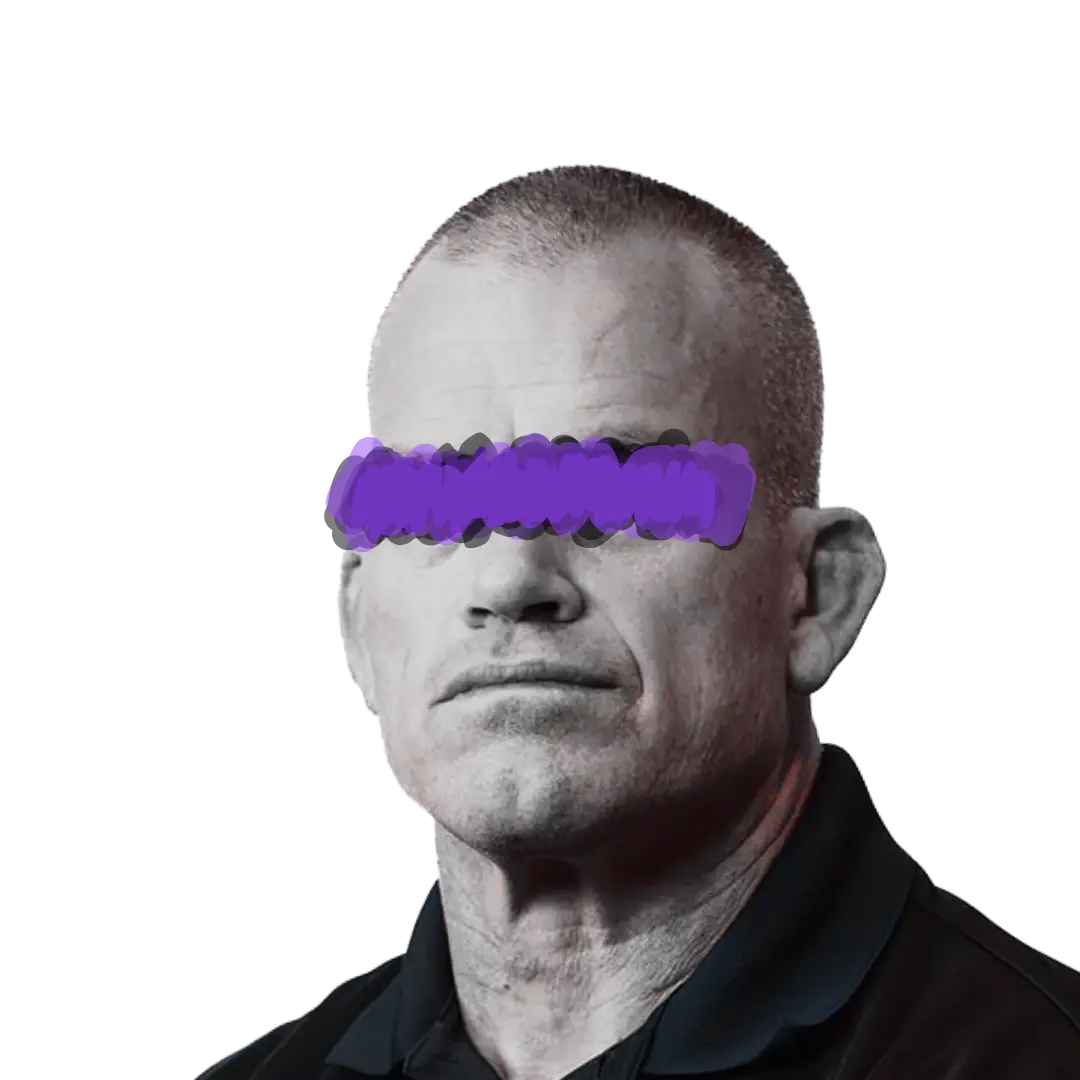
"Discipline equals freedom."
Every morning, somewhere around 4:30 AM, a bulky Ironman watch lights up in the darkness. Another photo gets posted. Another day of training begins before most people's alarms go off.
This isn't performance. This is Jocko Willink, the retired Navy SEAL commander whose philosophy of "Extreme Ownership" has transformed how millions think about leadership, responsibility, and personal discipline.
But what drives a man to embrace such relentless accountability? What psychological machinery operates beneath that stoic exterior?
The answer lies in understanding the Enneagram Type 8 personality, and how Jocko exemplifies both its tremendous strengths and its hidden vulnerabilities.
TL;DR: Why Jocko Willink is an Enneagram Type 8
- Commanding Presence: Jocko's direct, no-nonsense communication style and willingness to take full responsibility exemplify the Type 8's core desire for control and self-determination.
- Confrontational Philosophy: His advice to "go on the attack" and "move toward fear" reflects the 8's instinct to confront challenges head-on rather than avoid them.
- Protective Leadership: From commanding Task Unit Bruiser to writing children's books, Jocko channels his intensity into protecting and developing others, a hallmark of healthy Type 8 integration.
- Rebel with a Cause: His father predicted he'd "hate the military because you hate authority," yet Jocko succeeded by getting ahead of orders, transforming his anti-authoritarian nature into proactive leadership.
- Vulnerable Strength: Despite his tough exterior, Jocko openly admits he "struggles with everything" and isn't "naturally gifted" — a frank admission that costs something from a man whose brand is invincibility.
- Hidden Grief: On his 500th podcast episode, Jocko confessed to a live audience that he cries "like a child" thinking about his fallen men, asking "Is there something wrong with me?" five times, revealing the depth of emotion he systematically hides behind sunglasses and stoicism.
What is Jocko Willink's Personality Type?
Jocko Willink is an Enneagram Type 8
Type 8s are known as "The Challenger" or "The Protector." They are driven by a deep need to be strong, to resist weakness, and to protect themselves and others from being controlled or harmed.
Jocko embodies this perfectly.
His entire philosophy centers on one radical idea: take ownership of everything. No excuses. No blaming circumstances. No pointing fingers at others. When something goes wrong, the leader owns it.
This isn't just leadership advice; it's the Type 8's core psychological strategy made explicit.
Type 8s fear being controlled, manipulated, or left vulnerable. Their response? Take control first. Own the situation. Be so strong, so responsible, so utterly self-determined that no one can ever have power over you.
"The leader must own everything in his or her world," Jocko writes. "There is no one else to blame."
That's not just a leadership principle. That's Type 8 survival strategy elevated to philosophy.
Jocko's Upbringing: The Rebel Who Found His Channel
John Gretton Willink Jr. was born on September 8, 1971, in Torrington, Connecticut, a small New England town where his parents worked as school teachers.
By his own admission, Jocko was rebellious.
His father was "pretty hands-off" in raising him, and young Jocko chafed against authority from an early age. When he announced his intention to join the military, his father made a prediction:
"You're going to hate it because you hate authority and you don't like listening to people."
His father wasn't wrong about the underlying nature, but he underestimated what happens when a Type 8 finds the right arena.
Jocko didn't overcome his anti-authoritarian streak. He weaponized it.
"To overcome my dislike of authority, I tried to get ahead of the power curve," Jocko has explained. "Have things done before I was told to do them."
This is classic Type 8 adaptation. Rather than submit to external control, Jocko created his own internal discipline so demanding that external authority became irrelevant. You can't tell someone what to do when they've already done it, and more.
Rise to Fame: From Ramadi to Bestseller
The Battle That Defined Him
Jocko enlisted in the Navy at 19 and eventually rose to become commander of SEAL Team Three's Task Unit Bruiser during the Battle of Ramadi in 2006.
This wasn't just any deployment. Task Unit Bruiser became the most highly decorated Special Operations unit of the entire Iraq War.
Jocko fought alongside Chris Kyle (the SEAL immortalized in "American Sniper") and earned the Silver Star, Bronze Star, and numerous other combat decorations.
But the statistics don't capture what mattered most to Jocko: the men.
What His Leadership Produced
You can measure a leader's impact by what people do when things go wrong. Here's what Jocko's men did:
One of the first TU Bruiser casualties was a SEAL named Cowboy, hit by an armor-piercing machine gun round, possibly facing amputation. On morphine, barely conscious, Cowboy pulled Jocko close and begged: "Sir, let me stay. Let me stay. I'll sweep up."
Ryan Job was shot in the face on the same day Marc Lee was killed. Blinded. The first thing he said to Jocko from his hospital bed: "Let me come back, sir."
Mikey Monsour was evacuated for an ear infection. He immediately demanded to be returned to his platoon before they left on their next mission: "Sir, please get me back before they leave."
Three separate wounded men. Three pleas to stay. Not because they were reckless, but because they felt so protected by their commander that leaving the team was worse than bleeding.
Years later, during operations in Sadr City, SEAL officer Seth Stone emailed Jocko his last will and testament. Seth's brother, sensing the danger from his emails, offered help. Seth wrote back one sentence:
"Pray for my men."
"My harshness was not out of disgust or anger," Jocko has explained. "My harshness was out of love. Because I wanted them to be able to do their job. And I wanted them to be able to bring their guys home."
That's Type 8 protection at its purest: ferocious on the outside, tender at the core.
The Pivot to Teaching
After retiring in 2010, Jocko could have disappeared into comfortable obscurity. Instead, he did what healthy Type 8s do when they've mastered their domain: he turned his energy toward developing others.
With fellow SEAL Leif Babin, he founded Echelon Front, a leadership consulting firm. Then came the book that would change everything: Extreme Ownership: How U.S. Navy SEALs Lead and Win.
The book became a #1 New York Times bestseller, and suddenly a retired SEAL was teaching Fortune 500 executives, professional athletes, and millions of podcast listeners how to lead.
Family Life: The Protector at Home
The Saint and the Commander
In 1997, while stationed in Bahrain, Jocko met Helen Louise Willink, a British flight attendant working international routes. They've now been married over 25 years, weathering multiple combat deployments, raising four children, and building businesses together.
Jocko repeatedly calls Helen "a saint", and the transcripts show why. She's the one who found their daughter a therapist when Jocko didn't even know there was a problem. She managed three children under six during deployments. She once secretly drove their daughter partway through high school cross-country runs when the training got too hard, and they all got in trouble when they were caught.
Helen let the kids wear whatever they wanted. And if you want to understand how that played out, picture this scene from a SEAL team party: Jocko noticed his buddy's daughter was perfectly styled: braided hair with ribbons matching her skirt and shoes. Then he looked at his own family. Son shirtless in swim trunks. Oldest daughter in a grimy tutu. Rana in a stained leotard.
"If you saw my family from the outside you'd be like damn these people fell in some hard times."
Helen's attitude? "I got three freaking kids below the ages of six, I'm over it."
This is the real Jocko household. Not the hyper-disciplined compound people imagine, but a messy, loud, chaotic family anchored by a woman with zero interest in performance and a man who saves his intensity for things that matter.
The Jiu-Jitsu Rebellion
Jocko has four children: Freja, Rana, Thorsen, and a youngest daughter. They've absorbed his values in their own ways: Rana became a wrestler who made history as the first female qualifier for her tournament since 1990, Thorsen wrestles competitively.
But the road there was brutal.
Jocko made all three older children train jiu-jitsu every single day, with five-hour sessions on Saturdays and Sundays. He bumped them up in weight class, belt level, and age group at competitions, deliberately engineering harder matchups. The result was near-constant losing and humiliation.
All three children eventually hit a breaking point. As Rana described it:
"All three of us, crying, straight up rebellion, trying to get our mom to tell Dad we don't want to do this. And Dad's like, 'All right well I don't care, we're going.'"
They threw water bottles at him from the back of the minivan. They begged their mother to intervene. And for a long time, Jocko didn't budge.
This is the shadow side of Type 8 protection. The same impulse that made him a brilliant combat commander (I will not let anything bad happen to the people I love) became suffocating when applied to small children. He needed them to be able to defend themselves physically. That need was genuine. But the method was his, not theirs.
He eventually backed off. And the admission he made later is one of the most revealing things he's ever said:
"I would never impose things on my platoon... but I did it with my kids."
"Dense"—The Compliment That Became a Wound
From the time Rana was a toddler, Jocko marveled at her unusual physical density and strength. He'd have his SEAL friends pick her up and exclaim at how heavy she was. He called her "dense," compared her to a "bowling ball," and contrasted her with her older sister Freja, whom he called "a bird."
To Jocko, this was the highest compliment he could give. Strength. Solidity. Power.
What he didn't realize, for over six years, was that his daughter was internalizing these comments differently. Starting in 7th grade, Rana developed an eating disorder. She counted calories obsessively, weighed food on a gram scale, shaved excess grams off pieces of bread, refused to taste food in her college cooking class for ten weeks straight, and isolated herself from social eating.
Jocko had zero awareness. Everything looked "healthy" from the surface: she ate well, exercised, chose a nutrition science major. When she finally called him from college crying, his response was bewilderment:
"Who is this?"
The girl he'd always seen as "the most confident human I'd ever known" had been quietly breaking for years. And the words that helped break her were words he'd meant as love.
"That's how stupid I am," Jocko admitted on his podcast. "I didn't even realize that was a thing."
He later reflected: "The weight of your words as a leader is a lot more than you think they are. And the weight of your words as a parent is probably even heavier than that."
He credits a conversation with Jordan Peterson on his podcast for teaching him that psychological problems need professional help, not just discipline and toughness. Before that conversation, Jocko didn't have that framework. The man who teaches the world about leadership and problem-solving didn't know how to approach mental health.
This is the Type 8 blindspot laid bare: the assumption that strength is always the answer. Sometimes strength is the problem.
The Philosophy He Earned the Hard Way
Jocko's current parenting advice sounds nothing like the man who forced seven-day-a-week jiu-jitsu on crying children. That's because he earned every word of it through failure.
"Don't push them down the path. Don't shove them down the path. Don't cut off every other option besides the thing that you want. Put the crumbs out there."
His core principles now:
- Let them fail. "If you don't allow your kids to brush up against the guardrails and experience failure, they will not be able to contend with the vicious world that awaits them."
- Don't over-help. "If you are helping them too much, you are hurting them."
- Give honest feedback, not empty praise. "If your kid jumps off the thing and you go 'hey that was great,' it wasn't great. The message is you've achieved it. If you say 'hey that was good but here are some things,' the message is I believe in you and you can do better."
- Watch for hidden struggles. "If there's things going on in your life that you're not telling anyone, and yet you've convinced yourself that it's okay, but you know deep inside you couldn't convince anyone else of that: that's a very good red flag."
He even wrote the "Way of the Warrior Kid" children's book series because he couldn't find books that taught the values he wanted his own kids to learn.
This is Type 8 growth in action, the arc from control to empowerment. He learned it not from military manuals or leadership theory, but from damaging the people he loved most and having to reckon with the consequences.
The Psychology Behind the Discipline
Why 4:30 AM Matters
Practically half of Jocko's Instagram posts feature the same image: his watch displaying some ungodly hour like 4:17 AM or 3:57 AM. Interspersed are black-and-white photos of sweat-drenched gym floors and torn-up hands.
Critics might call it performative. But for a Type 8, this ritual serves a deeper psychological function.
Type 8s fear losing control, especially control over themselves. The early morning workout isn't about fitness (though that's a benefit). It's about proving to yourself, every single day, that you are in command of your own existence.
"I don't have some mystical ritual that prepares me mentally for the morning rise," Jocko has said. "That's just what I do."
For a Type 8, discipline isn't motivated by external rewards or approval. It's an expression of their fundamental identity: I am strong. I am in control. No one can break me because I've already pushed myself harder than anyone else could.
The "Good" in Conflict
In a revealing moment on Joe Rogan's podcast, Jocko admitted something that disturbed some listeners:
"In the SEAL teams I was an instigator. If I could talk smack to two different people and let them start to get escalating like they wanted to engage in conflict, I would do that all day long."
This seems to contradict his leadership teachings. But it's actually consistent with Type 8 psychology.
Type 8s aren't afraid of conflict; they often seek it out. Not because they're malicious, but because conflict reveals truth. It exposes weakness. It separates those who will stand their ground from those who will collapse.
In Jocko's mind, controlled conflict in training creates warriors who survive real conflict in combat.
The Radar That Never Turns Off
Here's something that surprises people: Jocko is hyper-sensitive to social manipulation.
On his Underground podcast, he admitted he gets uncomfortable when someone uses his name repeatedly in conversation, because he reads it as "a pitch," an attempt to gain leverage or create false intimacy. He explicitly calls it out: "I see what you're doing there... this is a pitch. It's some kind of a pitch."
Then comes the unexpected part. He admits: "I think I might be overly sensitive."
That's a rare moment of genuine self-doubt from someone known for ironclad certainty. He even says he "wouldn't be surprised if a waitress told me no, we like it when you use our name." He's genuinely uncertain whether his instinct is accurate.
This maps directly onto the Type 8's core fear: being controlled or manipulated by others. Jocko is constantly scanning his environment for who's trying to gain power or influence over him. It's not paranoia; it's the same threat-assessment instinct that kept him alive in Ramadi, applied to everyday social interactions.
But it also reveals something the "Discipline Equals Freedom" brand doesn't show: Jocko is a careful, nuanced reader of interpersonal subtlety. He thinks deeply about the difference between genuine warmth and transactional niceness. He distinguishes between encouraging someone and lecturing them. He notices tone, timing, body language.
The toughest guy in the room is also, quietly, one of the most socially attuned.
The Vulnerability Behind the Strength
"Is There Something Wrong With Me?"
For his 500th podcast episode, a milestone marking nearly ten years, Jocko stood in front of a live audience at the Vic Theatre in Chicago and opened with a confession no one expected:
"Sometimes I tear up when I hear the national anthem. Is there something wrong with me? I don't let anyone see. I'm good at that. Sunglasses, looking away. I can camouflage it pretty easy."
He went further. He admitted he gets emotional reading war books alone: "lump in my throat, I have to take a break, take a breath." And then the deepest cut:
"Sometimes I think of them, my men, my friends... and sometimes I'll bow my head and cry like a child."
He asked "Is there something wrong with me?" five times in the opening minutes. Not as rhetoric. As genuine self-interrogation. A man who has spent decades projecting strength was standing in front of hundreds of people asking if the war broke something inside him.
The answer he arrived at: No. This is normal. You're human. But the fact that he had to work toward that answer, that it wasn't obvious to him, reveals the cost of the Type 8's armor. When you build your identity around being unbreakable, you don't have a framework for the moments when you break.
Note the language: "I can camouflage it." A military term, applied to his own emotions. He treats vulnerability the way he'd treat an exposed position in combat: something to be concealed, managed, and controlled.
"I Struggle With Everything"
When Tim Ferriss asked what he struggles with, Jocko's answer was disarming:
"First of all, I can assure you that I am far from bulletproof. When you ask what I struggle with, I struggle with everything. I'm not naturally gifted at pretty much anything. I'm not naturally strong. I'm not naturally fast. I'm certainly not the sharpest tool in the shed."
This is the integration point for Type 8s, when they move toward Type 2, becoming more nurturing and supportive.
The unhealthy 8 denies vulnerability entirely, projecting an image of invincibility that ultimately isolates them. The healthy 8 acknowledges their struggles while refusing to be defined by them.
Jocko doesn't hide his limitations. He outworks them.
Anger First, Then Grief
In 2018, Jocko attended the commissioning of the USS Michael Monsoor, the first time Task Unit Bruiser had reunited. Walking through the halls of SEAL Team 3, he passed wall after wall of memorial photos. Walls that had been empty in 2005 were now filled with faces he knew: Marc Lee, Mikey Monsour, Ryan Job, Chris Kyle, Seth Stone.
His first reaction wasn't sadness. It was anger.
"I started to get angry. I started to get mad. I thought maybe we were cursed. Maybe death was going to follow us."
This is a critical Type 8 pattern that most personality analyses miss. For 8s, anger is the gateway emotion, the first response that feels safe to express. Grief and sadness only surface after the anger has been processed.
But then Jocko did something characteristic of a healthy 8. He made a conscious choice:
"I thought about it and I realized and I chose and I decided that that was absolutely not the case. We were not cursed at all. We were blessed. We were blessed to have known these guys."
Four verbs in sequence: thought, realized, chose, decided. The reframe wasn't automatic. It was an act of will. And that's the essence of Jocko's philosophy: you don't wait for your emotions to change. You change them through deliberate choice.
Internal Doubt as Fuel
"Internal doubt, that's a form of humility," Jocko has explained. "That fear of failure is the thing that keeps you up at night preparing. That's the thing that's not going to let you cut corners."
Most people see doubt as weakness. Jocko sees it as data.
This reframing is crucial for understanding healthy Type 8 psychology. They don't eliminate fear and doubt; they harness them. The voice saying "you might fail" becomes the voice saying "prepare harder."
The Dichotomy of Leadership
Holding Opposites Together
One word Jocko uses so frequently that people tease him about it: dichotomy.
His book "The Dichotomy of Leadership" explores how great leaders must embody seemingly contradictory qualities: "Confident but not cocky. Courageous but not foolhardy. Competitive but a gracious loser. Strong but with endurance. A leader and a follower."
This framework reveals Jocko's psychological sophistication. He recognizes that pure Type 8 energy (unfiltered aggression, dominance, control) destroys as much as it builds.
The mature leader (and the healthy Type 8) learns to modulate. To know when to push and when to yield. When to take control and when to step back.
"When a leader takes too much ownership, there is no ownership left for the team," Jocko writes. "They lose initiative, momentum. They just sit around waiting to be told what to do."
Jocko learned this dichotomy most painfully at home. The same man who gave his SEAL platoon decentralized command, trusting them to make battlefield decisions autonomously, imposed seven-day-a-week jiu-jitsu on his crying children with zero negotiation. He admits the contradiction freely: "I would never impose things on my platoon... but I did it with my kids."
The lesson he extracted: "I can ruin anything. I can make the funnest thing into a stupid competition where all of a sudden everyone's freaking stressed out for no reason."
That self-awareness, the ability to see how his greatest strength (intensity, drive, relentless standards) becomes his greatest liability when applied without modulation, is the dichotomy he now teaches others to navigate.
The Man Behind the Brand
The Jocko meme (the 4:30 AM watchface, the monotone "Good," the thousand-yard stare) is real, but incomplete.
On family camping trips, Jocko organized elaborate competitions he called "evolutions": buddy carries, sprints across the beach, ice-chest head-dunking contests, pull-up bar hangs, and a talent show where he served as the sole judge. He played guitar around the campfire and sang personalized roast songs about each child, mostly built on fart jokes and what he calls "scatological humor" that had little kids in hysterics.
He once saved a computer box for three to four years, then repackaged his own used computer and gave it to his daughter as a Christmas present. She didn't figure it out: "I honestly didn't even know... I thought it was new."
During family card games, he implemented formal "ejection" mechanics, turning casual games into dramatic elimination spectacles with specific criteria for removal.
And on his podcast, he titled one episode "THE WORST CONVERSATION I'VE EVER HAD IN MY LIFE," a title that from a man who has called families of fallen soldiers could mean anything. The actual content? A fifteen-minute comedic argument with his co-host Echo Charles about whether Echo was too condescending when he told a friend "you just got to show up" to jiu-jitsu class. Jocko brought in a witness. He refused to let it go. He was deadly serious about the tone, while the whole thing was wrapped in Hulk Hogan references and "rat mind" metaphors.
That gap, between what people imagine and what's actually there, is the real Jocko. Not less intense than the brand. Just funnier, messier, more human, and more self-aware about the absurdity of his own intensity.
What the Record Shows About a Type 8 at Full Force
The arc from Ramadi to the bestseller list isn't random. Task Unit Bruiser became the most decorated Special Operations unit of the Iraq War — Jocko earned the Silver Star and Bronze Star for his role commanding it. Three wounded men begged to stay in his unit. That's the combat evidence for how Type 8 protection, ferocious and costly from the outside, lands on the people inside it.
After retiring in 2010, he co-founded Echelon Front with Leif Babin and published Extreme Ownership, which hit #1 on the New York Times bestseller list and permanently shifted how corporate leadership training talks about accountability. Over 500 podcast episodes followed, consistently ranked among the top podcasts in their categories. Origin USA — the Maine-based manufacturing company he co-founded — and the Way of the Warrior Kid children's series (now being adapted into a feature film) extended the same impulse: build something others can use.
His BJJ black belt, earned under Dean Lister, matters less as a credential than as a demonstration: this is a man who continued competing against elite practitioners into his fifties, in a discipline where there are no shortcuts and no faking it. The 4:30 AM watch photos aren't separate from the record. They're the daily proof of the same thing everything else shows — a Type 8 who decided that control over his own existence was non-negotiable, and built a life to match.
Controversies and Criticisms
The Military Critique
Not everyone in the SEAL community celebrates Jocko. Some former operators have criticized decisions made during his command, with claims that Marines were hurt due to leadership choices. Former Navy SEAL Eric Damming has made serious accusations on podcast appearances.
Jocko has addressed criticism indirectly through his philosophy: "If you try to cover up your vulnerabilities, the only person that thinks you're actually covering them up is you, because everyone else can see right through."
The "Extreme Ownership" Pushback
Critics argue that Extreme Ownership oversimplifies complex situations and places undue pressure on individuals while ignoring systemic factors beyond one's control.
The concern: taken to extremes, this philosophy could lead to unnecessary guilt and self-blame for circumstances genuinely outside someone's influence.
Political Positioning
Jocko has waded into cultural controversies, publicly criticizing the American Psychological Association's guidelines on masculinity and speaking against Critical Race Theory on Fox News.
Some critics claim he's a "hidden MAGA guy," though Jocko generally avoids direct political endorsements, focusing instead on universal principles of discipline and leadership.
Legacy: "We Choose to Live"
In Episode 500 of his podcast, recorded live in front of an audience that included the mother of a fallen SEAL, Jocko told a story about Green Berets in Vietnam.
Forward Operating Base 4 was overrun on August 23, 1968. After the Americans repelled the attack, they found something on the enemy soldiers' bodies: headbands. Each one read the same thing:
"We came to die."
Jocko used this as the foil for his closing thesis. Against an enemy defined by death, he offered the opposite:
"They say they came to die. We came to live. We came to build. We came to help. We came to grow."
That's not motivational-poster optimism. It's a philosophy forged in burned-out Humvees and memorial hallways and 4:30 AM gym sessions and his daughter crying on the phone from college. It's a philosophy that includes the grief. The anger. The moments of wondering if something is broken inside you. The mistakes you made with the people you love most.
And choosing—deliberately, effortfully, every day—to see the blessing instead of the curse.
What Drives It All?
Understanding Jocko through the Type 8 lens reveals that his relentless productivity isn't about achievement or recognition. It's about something more fundamental:
The refusal to be weak. The determination to be useful. The commitment to protect and develop those who look to him for guidance.
Type 8s at their best become the people others rely on when everything falls apart. They're the ones who take ownership when everyone else is making excuses. They're the protectors, the challengers, the ones who face the darkness so others don't have to.
That's Jocko Willink.
Not invincible. Not superhuman. A man who called his daughter "dense" as a compliment and didn't realize the damage for six years. A man who cries like a child thinking about friends he lost in Ramadi. A man who can ruin anything by turning it into a competition, and knows it.
A man who decided early that he would rather struggle toward strength than settle into comfortable weakness. And who learned, the hard way, that strength without tenderness can break the people it's meant to protect.
"The situation does not dictate to us. We dictate the situation."
That's his life philosophy. And it applies to everything: combat, business, parenting, grief. Not by denying what's hard, but by choosing how you respond to it. Every time. Every morning. Even when you're crying.
How does Jocko's Type 8 personality show up in his daily life?
It shows up in the 4:30 AM watch photos, the daily proof that he commands his own existence before the world wakes up.
It shows up in the way he scans a room for who's being genuine and who's running an angle. In the discomfort he feels when a stranger uses his name too quickly. In the way he protects a friend's vulnerability in a jiu-jitsu gym with the same ferocity he'd bring to a combat debrief.
It shows up in the guitar around the campfire and the fart-joke roast songs. In the swimming competitions in 42-degree rivers where nobody quits and everybody gets ice cream. In the Christmas morning rules imposed after one chaotic 1 AM present-opening disaster.
It shows up in the tears he hides behind sunglasses. In the anger that comes before the grief. In the conscious, effortful choice to see blessing where others see curse.
And it shows up in the hardest lesson he ever learned: that the same intensity that made his men beg to stay on the battlefield made his children beg to leave the jiu-jitsu mat.
When you understand the Type 8, Jocko's philosophy becomes less about discipline tricks and more about identity. He doesn't wake up early because it's effective. He wakes up early because that's who he is. He doesn't take ownership because it's a strategy. He takes ownership because the alternative — being at the mercy of something outside himself — is psychologically unbearable.
That's the real challenge Jocko puts before himself, and before anyone paying close enough attention.
Disclaimer: This analysis of Jocko Willink's Enneagram type is speculative, based on publicly available information, and may not reflect his actual personality type.

What would you add?