"The best time to plan a book is while you're doing the dishes." — Agatha Christie, An Autobiography
On the evening of December 14, 1926, a woman walked up to the desk of the Swan Hydropathic Hotel in Harrogate and signed the register as Mrs. Teresa Neele. She was calm. She was well dressed. She had been dancing and doing crosswords in the lounge for over a week while the largest manhunt in English history combed the countryside for her body.
Teresa Neele was not her name. Neele was the surname of the woman her husband wanted to marry.
The guest was Agatha Christie, thirty-six years old, already a published novelist, and eleven days into a vanishing that no biographer has fully explained in the century since. The most famous plotter in the world had constructed a real disappearance with a clue buried inside it, and then claimed she remembered none of it.
That is the tension that runs under everything she wrote. Christie spent fifty years mapping human darkness with clinical precision, murder, poison, betrayal, greed, all studied from a cool analytical distance. She could take any death apart. The one time her own life came apart, she did not analyze it. She withdrew so completely that she disappeared even from herself.
TL;DR: Why Agatha Christie is an Enneagram Type 5
The observer who couldn't be observed: She built a career watching human behavior from a safe distance, then broke down the one time she became the thing being watched.
Knowledge as armor: She turned a wartime dispensary job into genuine pharmacological expertise, and made real poisons the engine of her plots.
Retreat as her default move: The 1926 disappearance was not a stunt. It was withdrawal, the Type 5's oldest coping tool, pushed past its limit.
A private person inside a public empire: She outsold every other novelist in history while dreading cocktail parties and shaking at the thought of a speech, and hid her most personal books under a second name for nineteen years.
The methodical mind that was secretly a mess: Her 73 surviving notebooks are chaos. Sometimes she started a book not knowing who the killer was.
What is Agatha Christie's personality type?
Agatha Christie is an Enneagram Type 5
Type 5s are driven by a single question: do I have enough, know enough, and hold enough of myself back to survive what the world is going to ask of me? Their instinct is to withdraw, observe, and accumulate competence before they engage. Their fear is depletion, being drained, overwhelmed, or exposed as inadequate. Their comfort is the private mind, where nothing can reach them and everything can be studied.
Christie is one of the cleanest Type 5 cases in public history, and the evidence is not the mystery novels. It is the shape of her whole life. She taught herself to read at five to avoid depending on anyone. She spent childhood alone and called it lucky. She married a man who took her to silent archaeological digs for months at a time and described that as freedom. When a marriage crisis, a career doubt, and her mother's death arrived at once, her response was not to confront any of them. It was to become someone else in a hotel two hundred miles away.
Her genius ran cold. Pattern recognition applied to people, at a temperature low enough that she could see clearly while everyone around her was busy feeling. Biographer Laura Thompson called her "an entirely private person." For a Five, privacy is the wall behind which the self stays intact.
Agatha Christie's childhood: the girl who taught herself to read
Agatha Miller was born in 1890 in Torquay, on the south coast of England, into a comfortable family that assumed she would be educated at home. She was not sent to school until her teens. She had no siblings close to her age at home. She had a garden, a nurse, a house full of adults, and enormous stretches of time by herself.
Most children would have been lonely. She built a country.
She invented imaginary friends with full biographies, gave her dolls interior lives, and taught herself to read before anyone got around to teaching her, reportedly by five. A child who learns to read on her own is a child who has decided she would rather be self-supplying than wait for the world to hand her what she wants. That instinct never left her.
Her mother Clara had a parenting theory that sounds harmless and turned out to be formative: never tell a child a thing is bad, because then they only find it interesting. It trained Agatha to watch without recoiling. She grew up studying behavior instead of judging it, which is exactly the eye a murder writer needs and exactly the eye a Type 5 already has.
"One of the luckiest things that can happen to you in life," she wrote later, "is to have a happy childhood." Notice what made it happy. Not friends. Not adventure. A rich interior she never had to share.
ENNEAGRAM TYPE 5 · THE INVESTIGATOR
TYPE 5 · THE INVESTIGATORHEAD TRIAD
KNOWLEDGE
MASTERY
INSIGHT
PRIVACY
INDEPENDENCE
OBSERVATION
ANALYSIS
DETACHMENT
COMPETENCE
STANCE
Withdrawn
HARMONIC
Competency
AKA“The Iconoclast” or “The Problem Solver”
CORE FEARBeing helpless or incompetentCORE DESIREMastery and understandingINTELLIGENCEIntellectualCORE EMOTIONFear
How Agatha Christie learned to kill people on paper
When the First World War came, Christie volunteered at a hospital in Torquay, first as a nurse and then, in 1917, qualifying as an apothecary's assistant in the dispensary. The job was chemistry with lethal stakes. The line between a dose and a fatal dose was sometimes a matter of grains, and the work demanded precision she found she loved.
Surrounded by bottles of poison, with quiet hours to think, she made a decision that shaped a genre. If she was going to write a detective novel, the murder would be done with something she actually understood.
The result was The Mysterious Affair at Styles, which killed its victim with strychnine described so accurately that a pharmaceutical journal later reviewed it for its chemistry. This is the Five's signature move: expertise quietly stockpiled in private, then deployed with an authority outsiders mistake for effortless talent. Poison became the murder weapon in more than half her novels, and the details held up.
There is a colder truth inside that skill. Christie was not squeamish about death. She could describe exactly how a body fails under a given compound because she had studied it the way you study a system, from the outside, with the feeling turned down. Two decades later, during the Second World War, she returned to a hospital pharmacy while writing in her off hours, and produced the book many consider her best.
That is the smaller, domestic cousin of the dangerous-knowledge pattern that makes Robert Oppenheimer compelling: private technical competence becoming morally loaded the moment it leaves the laboratory.
That book was And Then There Were None, which has sold roughly 100 million copies and stands among the best-selling titles in publishing history (Guinness World Records). Ten strangers on an island, picked off one by one, judged by a killer who watches and waits. She wrote the most claustrophobic thriller of her life from inside a dispensary during a war. The distance was the point.
Why Agatha Christie disappeared for 11 days
By late 1926 three things landed on Christie at once. Her beloved mother had died that spring, and the grief had flattened her. Her writing had stalled. And her husband Archie announced he was in love with a younger woman named Nancy Neele and wanted a divorce.
On the night of December 3, she kissed her sleeping daughter, got in her car, and drove into the dark. The car was found the next morning abandoned near a chalk pit, her coat inside. For eleven days, England assumed she was dead. Fifteen thousand volunteers searched. Newspapers ran her photograph. Arthur Conan Doyle, who believed in spiritualism, took one of her gloves to a medium.
She was in Harrogate the whole time, registered under her rival's name, apparently unrecognized, apparently unbothered.
Picture her at the registration desk, pen hovering. Every name she has ever invented is available to her, thousands of them. She writes down the one name that belongs to the woman taking her husband. She does not know why. She only knows that Agatha cannot be here right now, that Agatha has to think about too many things, and that Mrs. Neele has to think about nothing at all.
For a hundred years the popular verdict has been cynical: a publicity stunt, or a cruel piece of theater designed to frame Archie for murder and wreck his affair. Biographer Jared Cade has argued it was largely deliberate. The timing is genuinely suspicious. The choice of alias looks like a message. A skeptic has real material to work with here, and the disappearance did, in fact, sell books.
But watch what the Type 5 lens does to it. Christie's entire life was built on one move: when the world asked too much, she withdrew into a place it could not follow. It worked for grief, for boredom, for the demands of fame. In December 1926 the world asked for more than withdrawal could absorb, three losses stacked on top of a mind already running on empty, and the move overloaded. She did not withdraw into a room. She withdrew from her own identity.
Historian Lucy Worsley, who spent years on the case, believes Christie entered a fugue state, "a very rare condition," Worsley explained in her 2022 documentary, "and it causes you to step right outside your normal self and adopt another persona, so that you don't have to think about the trauma you've been experiencing." Two doctors at the time diagnosed genuine memory loss. The behavior fits a woman whose deepest reflex was retreat, finally retreating so far she left herself behind.
That is what the mocking version misses. The disappearance looks like manipulation from the outside. From the inside it looks like the exact opposite of control: a competent, private woman discovering that her one defense had a breaking point, and hitting it in public, with her rival's name in her own hand.
For the Enneagram nerds. Skip if you're not deep into the system, the rest of the analysis stands on its own.
Christie's wing: 5w4
The evidence points to a 5 with a strong 4 wing rather than the more clinical 5w6. Her expertise is real, but the engine underneath it is romantic and melancholic, not just analytical. She wrote poetry, married for intense feeling twice, and channeled a genuine emotional interior into her characters even while keeping her own hidden. The 4 wing shows up in the loneliness she made beautiful, the disappearance as a near-tragic act of self-erasure, and a lifelong ache for a private world "much nicer than the world outside." A 5w6 would have built systems and alliances. Christie built interiors. See the wings guide for how 5w4 and 5w6 diverge.
Her instinct organized around the sp Five's core priorities: privacy, a defended home base, and the conservation of energy. She hoarded solitude the way sp Fives do, guarded Greenway and her writing rooms fiercely, and treated public exposure as a threat to be managed rather than a stage to be enjoyed. The dread of cocktail parties and speeches is textbook sp Five, the sense that social demand physically depletes a finite reserve. More on this in the instinctual subtypes guide.
Stress and growth arrows
Under stress, Fives take on the scattered, seven-ish behavior of disintegration, and 1926 is the textbook case: the orderly plotter fleeing into an unplanned, dissociated escape she could not account for. In security, Fives move toward Eight, and you can see it in the second half of her life, when she stopped hiding, took command of her career and finances, ran archaeological households, and defended her work with quiet authority. The Christie of the 1950s was more grounded and assertive than the girl who vanished.
Counterarguments: why Christie might not be a Type 5
The strongest alternate case is Type 1 or Type 6. A Type 1 read points to her precision, her scientific accuracy, and her rule-bound plotting. A Type 6 read points to her anxiety, her dread of exposure, and her loyalty to routine and a small circle. Both capture something real. But the perfectionism serves competence rather than a moral standard, which is Five, not One. And the anxiety resolves through withdrawal into the mind rather than through seeking reassurance or testing allies, which is Five, not Six. The disappearance settles it: her crisis response was not to fight, comply, or rally support. It was to vanish inward. That is the Investigator's move.
Poirot, Marple, and the two halves of Christie's mind
Christie built two detectives who never met, and together they are a self-portrait.
Hercule Poirot is the analytical machine. He solves murders from an armchair, sorting facts with what he called "the little grey cells," refusing to be rushed, distrusting emotion as evidence. "It is the brain, the little grey cells on which one must rely," he says, and it could be Christie's own working method transcribed.
She grew to resent him the way you resent a job you cannot quit. "Why did I ever invent this detestable, bombastic, tiresome little creature?" she wrote of the character who paid for her houses. She kept writing him for decades anyway, because readers demanded it, a very Type 5 bind: private irritation quietly subordinated to a system that works.
Jane Marple is the other half. An elderly village spinster whom everyone underestimates, Marple solves crimes by noticing. She watches, remembers, and matches present behavior to patterns she has seen before in the small dramas of her village. She is the observer whom nobody thinks is observing, which is precisely how a quiet, watchful woman survives in a world that talks over her.
Christie gave one detective her intellect and the other her invisibility. Between them they cover the entire Type 5 skill set: reason nothing can fluster, and observation nobody notices happening.
The secret novels Agatha Christie hid for nineteen years
Between 1930 and 1956, Christie wrote six novels with no murders in them at all. They came out under the name Mary Westmacott. Mary was her middle name. Westmacott belonged to distant relatives. For nearly two decades, almost no one knew the Queen of Crime kept a second, quieter shelf.
The Westmacotts were the confession she would never write straight. Aching stories about love in its most destructive forms, they held the feeling she kept out of the detective novels and out of every interview. Her daughter Rosalind called them "bitter-sweet stories about love." One of them, Absent in the Spring, she wrote in three days without stopping. She called it "the one book that has satisfied me completely."
Then in 1949 a journalist unmasked her in the Sunday Times gossip column. The most private writer in England had built a hidden room for her own heart, and a reporter walked straight into it. The observer had been observed again. She wrote two more Westmacotts anyway, and never disowned a single one.
The archaeologist's wife who wrote in the bathtub
After the divorce, Christie did something a lesser Five never manages. She rebuilt.
At forty she married Max Mallowan, an archaeologist fourteen years younger, and spent months each year on digs in Syria and Iraq. It looks eccentric until you see what it gave her: long silent stretches in the desert, a husband absorbed in his own patient reconstruction of the past, and permission to disappear into work without anyone taking it personally. Archaeology is Type 5 as a profession, fragments assembled into a story by someone willing to sit still and look. Mallowan called their marriage "a living and merry companionship," and it lasted until her death.
Her writing habits stayed gloriously unbothered by her fame. She had no fixed study, wrote in whatever room happened to be free, and famously worked out plots in the bath while eating apples. She kept notebooks the way other people keep loose change, dozens of them, filled with fragments, poisons, and overheard swindles.
Those notebooks are the secret that undercuts her whole image. When archivist John Curran decoded her surviving 73 notebooks after her death, he found not a filing system but a beautiful mess, a mind he described as "restless, fertile, sharp, attentive – and almost totally devoid of anything approaching order." Sometimes, he discovered, Christie began a book without knowing who the murderer was. The woman famous for airtight solutions was improvising in a jumble of exercise books, trusting her own pattern-sense to find the killer before her readers did.
To the people closest to her, none of the empire was visible. Her grandson Mathew Prichard, who spent summers with her at Greenway, put it plainly: "It never occurred to me that she was a famous author." She was, to family, mostly quiet, watchful, and easy to be around. The best-selling novelist on earth was, at home, a woman you might not notice reading in the corner.
Why we still can't stop trying to solve Agatha Christie
She is, by the count Guinness World Records keeps, the best-selling novelist of all time, an estimated 2 billion copies across at least 44 languages, and the most-translated individual author on record. Her play The Mousetrap opened in London's West End in 1952 and reached its 30,000th performance in March 2025, a run no other production in history has touched.
And we keep re-opening her. Kenneth Branagh's Murder on the Orient Express grossed $352.8 million in 2017 and launched a film trilogy that ran through Death on the Nile and 2023's A Haunting in Venice. Every few years a new generation stages the same murders, as if the puzzles still owe us something.
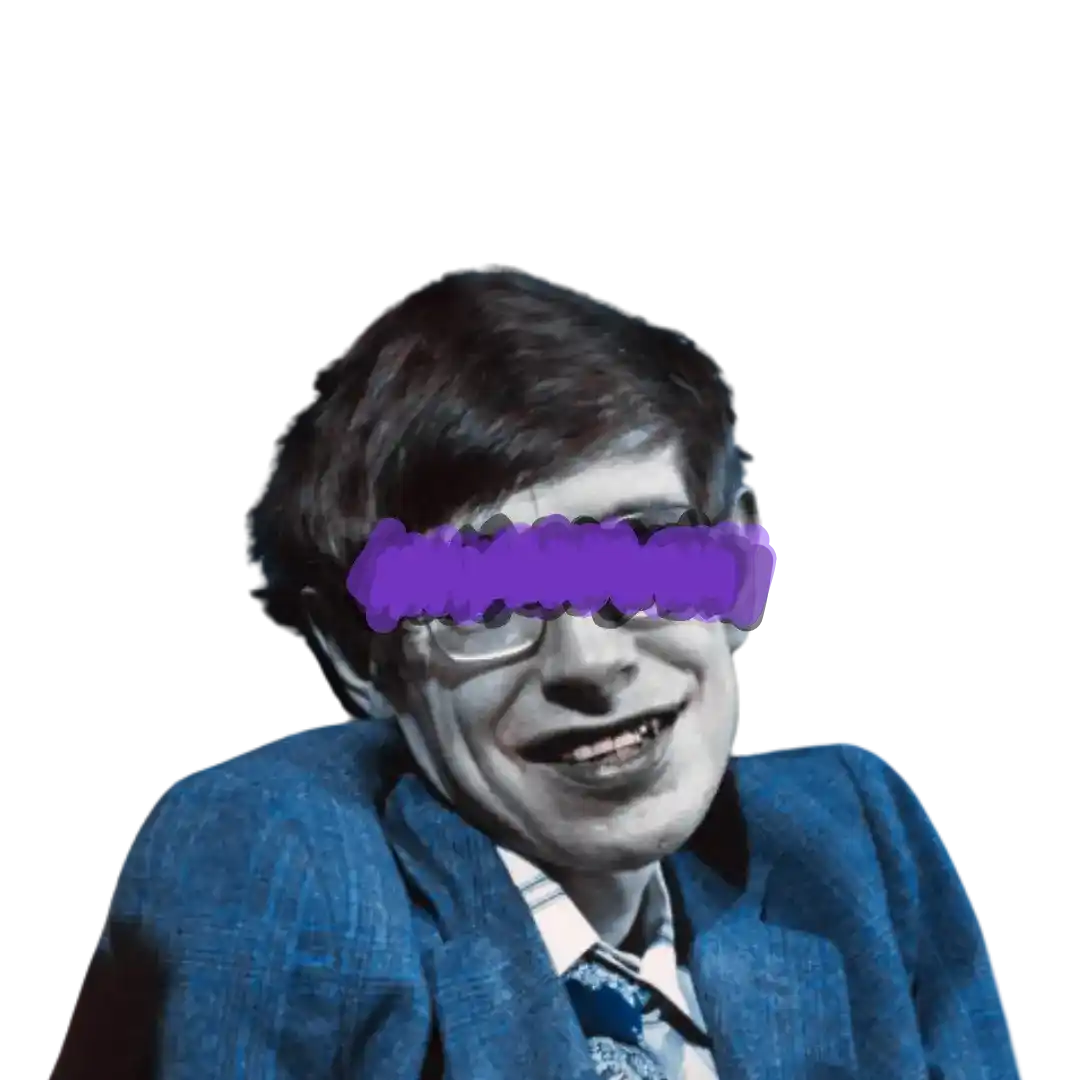
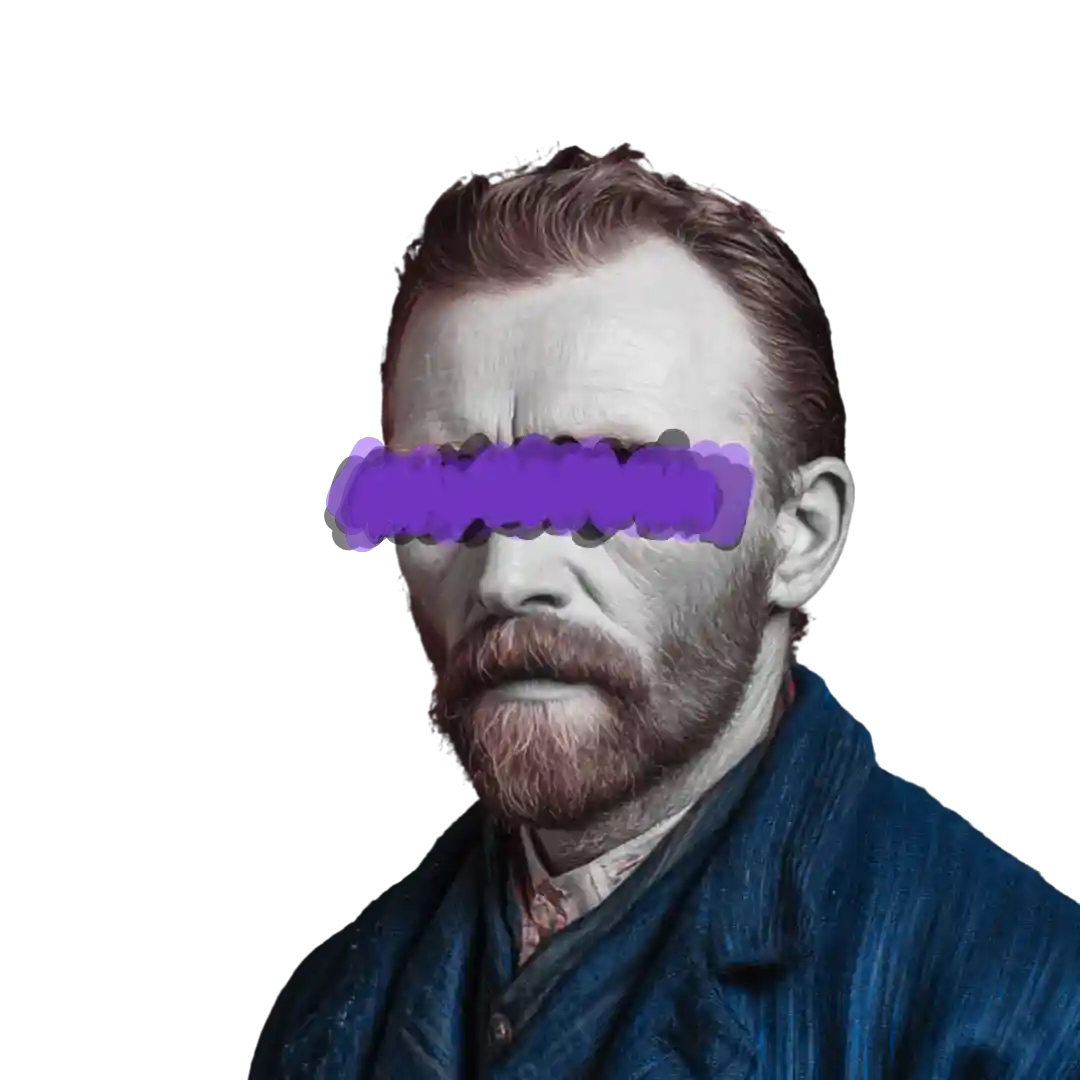
That puts Christie closer to J.K. Rowling than a simple genre label suggests: both built fictional machinery durable enough to outgrow the author. The stranger neighbors are Stephen Hawking and Friedrich Nietzsche, private minds whose public myths became puzzles readers keep trying to solve.
The reason her plots endure is the reason her disappearance does. Christie understood, better than almost any writer alive, that people are systems with hidden logic, that the quiet observer in the corner sees what the loud ones miss, and that the truth is usually held back by whoever is watching most and saying least. She built that principle into two detectives and sixty-six novels. Then she lived it out, one night in December, and left no solution.
She solved every murder she ever invented. The one she lived, she took to Harrogate and never explained. A century and a hundred adaptations later, we are still standing in the lobby of the Swan Hydropathic Hotel, reading the room she walked out of.
Disclaimer This analysis of Agatha Christie's Enneagram type is speculative, based on publicly available information, and may not reflect the actual personality type of Agatha Christie.
ONE QUESTION · NINE WAYS TO ANSWER IT
What does it feel like to finally understand a complex problem you have spent a long time observing?
A sentence is enough.
You answer before you see. That is the whole point.
Former USMC infantry turned personality psychology nerd. I built 9takes to help people see
the underlying emotions and logic behind their worldview. Ask a question, see 9 takes.







Add your read on Agatha Christie