Jordi Hays: The Dead Serious Showman Who Sold Silicon Valley's Loudest Stage
Inside the mind of TBPN's co-host: how a teacher's kid from California turned spectacle into strategy, sold the show to OpenAI, and still can't stop building.
"We don't take ourselves very seriously, but we take the work super seriously."
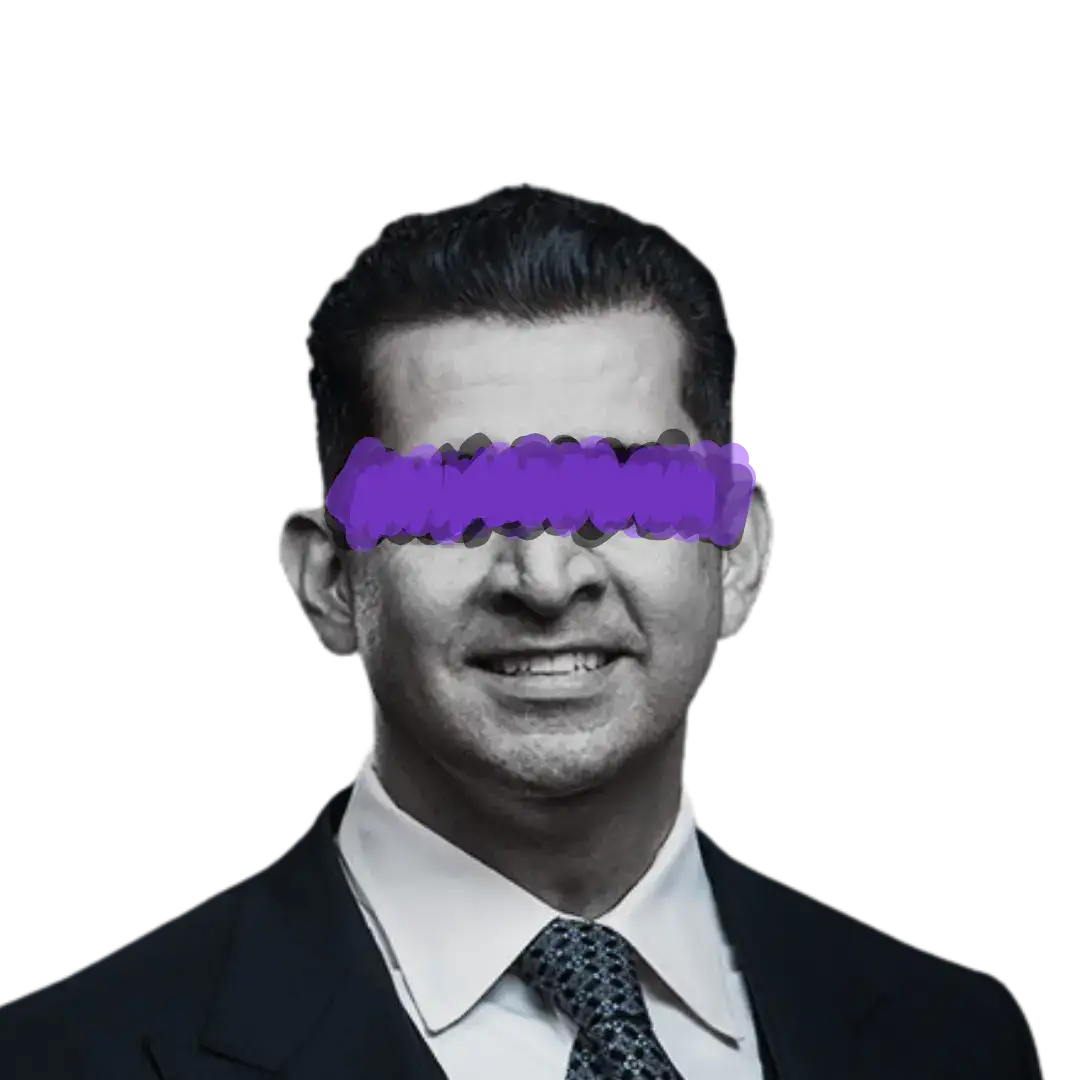
The New York Times described his style as "Patrick Bateman-core." Gray bespoke suit. Slicked-back swoop. Polished black wingtips. He runs into the camera frame waving a red flag and shouting "The timeline is in turmoil!" He eats double smashburgers for breakfast while nodding along to a guest explaining decentralized computing. He once took off his pants on set — mid-phone call with a potential guest — to change from workout clothes into a suit.
He also wakes up at 6:30 every morning to hit the gym with his co-host. Spends six hours prepping before going live. Takes essentially no days off. Has built, branded, and sold more companies by 29 than most people attempt in a lifetime — and in April 2026, sold the show built around his own face to OpenAI in a deal reported in the low hundreds of millions.
Jordi Hays treats techno-capitalism like a fantasy football league. That's what The New York Times said, and they weren't wrong. But they missed the second half of the sentence. He also treats it like his life's work. The fantasy league energy is the delivery mechanism. The seriousness underneath is the product.
That tension — between spectacle and substance, between the gong and the grind — is what makes Jordi Hays one of the most psychologically interesting figures in tech media right now.
The Patrick Bateman comparison is worth sitting with. The Times tossed it off as a style note — the suit, the hair, the polished confidence. But Patrick Bateman is a character defined by surface: impeccable taste masking nothing underneath. That's a loaded reference for a man whose entire career has been an argument that the show is not the whole story. Whether the comparison is fair or just lazy shorthand for "ambitious guy in a bespoke suit" depends on a question the article never bothered to ask: what's actually underneath?
TL;DR: Why Jordi Hays is an Enneagram Type 3
The compulsive builder: Started selling skateboards at 12 and hasn't stopped — each venture a new identity, a new stage, a new exit.
Spectacle as strategy: The bronze horses, the bespoke suits, the Super Bowl ad aren't vanity — they're calculated brand moves from a man who defines brand as "the culmination of what you make a group of people feel over time."
The hidden discipline: Behind the chaotic on-air energy is 6 hours of daily prep, a rigid schedule, and a published refusal to diversify.
The taste obsession (3w4): "Technology is too inspired by technology" — the insistence on originality reveals the Four wing's need for achievement to also be authentic and distinctive.
The OpenAI moment: Selling TBPN to the biggest subject of its own coverage is the most Type 3 thing a media founder can do — and the framing ("commentary to real impact") is textbook achievement-system reframing.
While Other Kids Worshipped Athletes
Jordi Hays was raised in California by a schoolteacher and a nonprofit worker. Not Silicon Valley royalty. Not a trust fund. A household where the definition of success probably looked like stable employment and a pension.
But something in Jordi wired differently. "Since I could read, I would read the newspaper every morning," he told Dialectic's Jackson Dahl. "My dad would get up before me, and it would be on the coffee table." That sentence is the whole movie in miniature. Most kids found cereal on the table. Jordi found a daily briefing on the state of the world.
While other kids his age looked up to athletes and astronauts, he looked up to entrepreneurs. He couldn't have been older than 10 or 11 when the pull started. He mowed lawns. He picked up cigarette butts before school at a nightclub — one of those odd jobs that sounds made up but reveals a kid who would do whatever it took to earn his way into a room.
At 12, he started a skateboard company called J Man. Raised $650. Found a manufacturer in the Midwest. Within months, he was selling product at the skatepark and to local retail stores.
Six hundred fifty dollars. A seventh grader with a supply chain.
"Since he can remember, Hays has loved everything about business," his personal site once read. That sentence is doing a lot of work. Most 12-year-olds love business the way they love dinosaurs — as a concept, from a distance. Jordi loved it the way some kids love skateboarding itself: with his hands in it, making something real, feeling the feedback loop of effort turning into results. Refreshing TechCrunch the way other kids refreshed ESPN.
That orientation — toward the news, toward the deal flow, toward the names — never turned off. Two decades later, six hours of daily show prep would feel less like a job and more like the adult version of reading the newspaper before school.
From Skatepark to Shanghai
Hays went to UC Santa Barbara from 2014 to 2018. On paper, he studied Global Studies and Technology Management. In practice, he was assembling a costume.
He worked hospitality at the Ritz-Carlton during college. That job rarely makes the bio, but it should. Ritz-Carlton is the place American luxury was operationalized — every employee drilled on the famous Gold Standards, every interaction scripted to feel unscripted, every uniform precise. The kid who would one day insist on cinema cameras instead of TV cameras and stainless steel instead of plastic learned what high-touch service feels like from the inside, while folding napkins for people who could afford to be there.
In 2016, he spent a year at Fudan University in Shanghai. The dropdown answer to "why?" is study abroad. The real answer is in the line he kept repeating: he wanted to be an "international business man." Not a developer. Not an engineer. A business man. Shanghai in the mid-2010s was the most aggressive commercial environment on earth. He wasn't going to learn Mandarin so much as learn what raw ambition looks like when it isn't apologizing.
By the time he graduated, the through-line was set: he wasn't going to be the smartest engineer in the room. He was going to be the one who decided what the room looked like.
ENNEAGRAM TYPE 3 · THE ACHIEVER
TYPE 3 · THE ACHIEVERHEART TRIAD
ACHIEVEMENT
DRIVE
SUCCESS
AMBITION
EXCELLENCE
RECOGNITION
IMAGE
PERFORMANCE
CHARISMA
STANCE
Assertive
HARMONIC
Competency
AKA“The Charmer” or “The Professional”
CORE FEARBeing worthless without successCORE DESIRETo feel valuableINTELLIGENCEEmotionalCORE EMOTIONShame
What happened after college is less a career and more a pattern. Each venture built on the last. Each one a new stage, a new brand, a new identity — and each one with a bigger audience watching the next move.
2018Founds Branded Native — a YouTube and podcast ad network connecting brands with 500+ creators. Stays profitable for 20+ straight quarters.
2019Co-founds Likewise with Matt Jung — a freelancer marketplace where top creatives earned $300K in six months.
2021Launches Party Round with wife Sarah Chase — automates startup fundraising, backed by a16z, Gradient Ventures, and Seven Seven Six.
2022Rebrands Party Round to Capital — full-stack fintech for founders. Drops the viral stunts as ZIRP ends.
2023Capital acquired by Rho. Both Hays and Sarah Chase named to Forbes 30 Under 30 in Finance.
2024Co-founds Rorra (water filtration) with Brian Keller and Charlie Carlisle. Launches "Technology Brothers" podcast with John Coogan in October.
2025Show rebrands to TBPN. Goes daily and live, 3 hours a day. Signs with CAA. Hits ~$5M in ad revenue.
2026OpenAI acquires TBPN in a nine-figure deal. Hays and Coogan keep editorial control, report to OpenAI's Chris Lehane. On track for $30M+ in revenue.
The timeline reads like a Type 3 achievement highlight reel, but the details underneath tell a more complicated story. Branded Native was profitable for 20-plus straight quarters and paid out tens of millions to independent creators. Hays stepped back as CEO at 24 — not because it failed, but because he was done. The stage had served its purpose. Time for the next one.
Likewise hit a million-dollar run rate with zero outbound sales or marketing. Party Round raised over $10 million from Andreessen Horowitz, Google's Gradient Ventures, Alexis Ohanian's Seven Seven Six, and a constellation of angel investors. They created viral stunts — "Helpful VCs" NFT drops, a Monopoly-style VC Puzzle game, a dare for big-tech employees to quit and found their own companies. They invented New York Tech Week.
"We were very comfortable saying that in the first 18 months of building this company, we're going to ignore every single possible channel except tech Twitter," Jordi told Packy McCormick. "And that was the best possible strategy we could have done."
Every venture followed the same playbook: build the brand first, monetize the attention second. He wasn't selling products. He was selling feeling — the feeling of being in on something, of being part of a moment. Nike and Red Bull were the explicit references. "Essentially marketing businesses that monetize through products," McCormick wrote of Capital's vision, "both putting their athletes front and center." The athletes, in Jordi's version of the model, were the founders.
The Year the Market Tried to Kill Him
The current Jordi Hays — the one with the bronze horse and the $30M run-rate — exists because of the chapter most profiles skip.
Party Round launched into 2021's zero-interest-rate euphoria. SPACs. Meme stocks. NFTs as marketing tools. The "Helpful VCs" drop was perfectly engineered for a moment that wouldn't survive the following year.
By late 2022, the party was over in every sense. The Fed had hiked rates. Crypto had collapsed. Tiger Global was apologizing to LPs. Every fintech with a viral hook was suddenly a business that needed to show unit economics.
"Imagine being 25, raising money from Andreessen and Google and all these prominent investors, and then like two years later you're just getting hammered by the market," Jordi told Dialectic. "We've gone through that, and I think that's really important for how we approach our coverage."
The pivot from Party Round to Capital was branded as a maturation play. What it actually was was a near-death experience. The viral stunts stopped. The NFTs stopped. Jordi started talking about business checking accounts and SAFE note automation — fintech infrastructure for a fintech winter. "Being funny and entertaining is great," he told TechCrunch, "but in the long term, we think the most important thing is building the best products and software for founders, period."
The meme king became a fintech CEO overnight. The fact that he pulled it off — that Rho eventually acquired the company in August 2023 — says more about his adaptability than any viral stunt ever did. Both Jordi and Sarah Chase landed on the Forbes 30 Under 30 list in Finance that year.
But the scar tissue from 2022 is what changed him. Every subsequent venture — Rorra, TBPN — was built with the assumption that the market would try to kill it eventually, and the only defense was a brand strong enough to survive a downturn.
They see the gong. They see the bronze horse. They don't see the year the market was trying to kill us and we had to keep smiling anyway.
"While Party Round Was Fun, Jordi Was Dead Serious"
McCormick spent time with Jordi in 2021 and 2022 and came away calling him a "Worldbuilder" — a founder who predicts something non-obvious about the world, creates a wedge into the market, and timestamps their vision publicly. "The plan Jordi laid out to me back then seemed crazy," McCormick wrote. "In the intervening year and a half, I've become more and more impressed with both Jordi and the company that he's building."
But here's what's easy to miss when you're watching the viral stunts and the NFT drops: Jordi knew exactly where all of it was going. He told McCormick in their first call — years before the exit — that he was building a media business that would monetize through financial services. He shared Figmas. He walked through the long-term memo. He had already started hiring.
The Worldbuilder framework matters because it's the rosetta stone for everything that came next. Capital was a media company that monetized through banking. TBPN, four years later, was a media company that monetized through advertising. Both are the same idea wearing different costumes: build a brand around founders, then sell them something. The fact that the second one ended up being acquired by OpenAI rather than Rho doesn't change the pattern. It just raises the stakes.
What is Jordi Hays's personality type?
Jordi Hays is an Enneagram Type 3w4 — Social Subtype
The evidence isn't subtle. It's woven into every sentence he's ever said about himself.
Enneagram Threes are driven by a core need to be valuable — not just successful, but recognized as successful. They learn early that achievement equals love, and they build their entire operating system around that equation. The performance of excellence becomes the person. The image becomes the identity.
What separates Jordi from a textbook Three is his Four wing. The 3w4 — sometimes called "The Professional" — adds an obsession with originality, craft, and taste that pure achievement-oriented Threes don't share. And within the Three spectrum, Jordi reads specifically as the Social subtype, the variant most preoccupied with prestige inside a chosen tribe rather than mass status. TBPN's deliberately narrow audience — roughly 70,000 daily viewers but exactly the right 70,000 — is the social-3 signature: status within the in-group, not across the crowd.
The evidence:
The 12-year-old skateboard CEO. While other kids worshipped athletes, Jordi worshipped entrepreneurs. The orientation toward achievement as identity started before adolescence.
The serial builder who can't stop. Six ventures by 29. Each one ended not in failure but in graduation — stepping back from Branded Native at 24, exiting Capital at 27, launching TBPN immediately after, selling TBPN to OpenAI by 30. There's no pause button.
The brand philosopher. "A great brand is the culmination of what you make a group of people feel over time." That's not a marketing insight. That's a worldview — one that reveals someone who thinks constantly about how he is perceived by the room he chose.
The originality obsession. "Technology is too inspired by technology." "Great artists actually steal from elsewhere." He draws from Formula One, SportsCenter, Hollywood cinema — deliberately not from other podcasts. The Four wing demands that achievement also be distinctive.
The discipline underneath. "We have an obligation to go live. There's a countdown every day." The rigid structure isn't just work ethic. For a Three, structure is the defense against the void that opens when the achievement machine stops.
Why not a Type 7?
The TBPN energy — the gong, the air horns, the breadth of ventures, the breakfast smashburgers — reads as 7-coded on the surface. Sevens are the Enthusiasts: scattered, optimistic, allergic to constraint. A casual viewer might watch TBPN for five minutes and assume Jordi is a high-functioning 7.
The discipline is what disqualifies it. Sevens famously struggle with follow-through and resist the daily grind. Jordi has built an operating system whose entire purpose is to make stopping impossible: 6:30 AM gym, six hours of prep, no days off except July 4th. He has publicly refused to diversify because "every time somebody does that, they are then in competition with somebody who doesn't have the other thing to do." That's not a Seven philosophy. That's the Three's terror of being beaten by someone who refused to be distracted.
The chaos is the show. The discipline is the person.
The stress and security arrows
The Three's stress pattern is revealing too. Under extreme pressure, Threes collapse toward Type 9 — the achiever becomes paralyzed, the doer becomes the avoider. Jordi's entire life seems designed to prevent this from ever happening. The daily countdown. The obligation. The six hours of prep. He built a machine that makes it impossible to stop.
And in security, Threes move toward Type 6 — developing loyalty, collaboration, and genuine commitment to community over competition. The receipts for this are specific and recent. He married his co-founder. He built a real partnership with John Coogan. He co-founded Rorra after his own child and co-founder Brian Keller's daughter Aurora developed eczema the founders traced to tap water — the company named after the kids (Ro and Rora), the product validated when symptoms cleared within two days of switching to filtered bath water. That's not a Three reaching for the next venture. That's a Three integrating to 6: protective, family-coded, willing to spend two years building a product in silence before launching it.
"Technology Is Too Inspired by Technology"
This might be the most revealing thing Jordi Hays has ever said. Not because it's a good media critique — though it is — but because it exposes the 3w4's central demand: achievement must also be original.
He watched the Browser Company name itself and thought it was brilliant. Then he watched a hundred other startups copy the naming convention and it pained him. "People in tech just copy from within the industry," he said on the Dialectic podcast. "We've been trained to think that the best people copy — that great artists steal. But I think that great artists actually steal from elsewhere."
For TBPN, that meant refusing to look at other tech podcasts for inspiration. Instead, he and Coogan studied SportsCenter broadcasts, the cinematography of The Newsroom and The Morning Show, 1980s news anchors. They shot with cinema cameras instead of television cameras.
"You can spend a billion dollars on marketing and still be bad at marketing," Jordi wrote on LinkedIn. "That's because taste isn't something you can buy, or even hire, your way into. If the founder has bad taste, it will trickle down through the whole company."
Taste. That word keeps surfacing. Not strategy, not intelligence, not hustle — taste. It's the word that separates the achiever who just wants to win from the achiever who needs the win to look a specific way, feel a specific way, carry a specific signature.
McCormick's newsletter about Capital was titled "Capital & Taste." Even the people describing Jordi from the outside keep landing on the same word.
The TBPN Machine
Here's what the audience sees: two guys riffing on tech news, ringing a gong, running a Super Bowl ad for less than $50,000 that featured Mark Zuckerberg, Sam Altman, and Marc Andreessen.
Here's what it takes to make that look effortless:
Jordi and Coogan meet at 6:30 AM to work out. By 8, they're eating breakfast and debating which stories matter. From 9 to 11, it's newsletter writing and show prep. Then they go live for three hours, 11 AM to 2 PM Pacific, on YouTube and X. After the show, they do post-mortem analysis. They take essentially no days off.
The origin story is almost embarrassingly simple. Jordi and John had talked about doing something together. John figured out the format. Jordi texted: "The name of the podcast is Technology Brothers." They recorded the first episode within a couple of weeks. By March 2025 the name had changed to TBPN (Technology Business Programming Network) — partly to escape the "Tech Bros" abbreviation, partly because Jordi wanted a four-letter domain.
What the audience sees
A 36-inch gong
A life-size bronze horse
Air horns and red flags
"Patrick Bateman-core" wardrobe
A Super Bowl ad
What the audience doesn't see
6:30 AM gym sessions daily
6 hours of prep per show
No days off except July 4th
Category-exclusive, year-long ad deals
11 employees, $30M revenue run rate, ad inventory sold out through 2026
"I wanted revenue predictability," Jordi told Axios. "And so every deal that we did this year and for next year, we did on an annualized basis, and so I pitched every advertiser that we were basically building like a kind of Formula One team."
A Formula One team. Not a podcast. Not a media company. A racing operation where every sponsor is embedded in every piece of content, where competitors can't buy in once a category is filled, where the entire revenue model is built for compounding.
"Every time somebody does that," Jordi said about diversifying into side projects, "they are then in competition with somebody who doesn't have the other thing to do."
Focus. Discipline. Obligation. These aren't the words you'd associate with the guy ringing the gong. But they're the operating system underneath the show.
What makes the machine run is the partnership at its center. John Coogan is older than Jordi — a documentary filmmaker who co-founded Soylent and Lucy Nicotine, was an EIR at Founders Fund, and was first funded by Sam Altman back in 2013. Coogan brings analytical weight to Jordi's salesmanship. Coogan has said he writes the newsletter "for one person" — Jordi — and their 6:30 AM conversations seed everything that follows. If Jordi is the engine, Coogan is the chassis. "Jordi is a concerningly good sales person," one Reddit user observed. "Even the satirical takes sound pretty convincing." What goes unsaid is that someone has to keep that energy from spinning into pure performance. That's Coogan's job, and the fact that it's invisible is evidence he's good at it.
Not everyone buys the act. The Reddit critique is consistent if not widespread: "They're moving from tech bro to ad bro territory," one commenter wrote. Others note the show has "a ton of sponsors despite having very small viewership" and question whether insider backing explains its rapid rise. The show averages around 70,000 viewers per episode and can spike to 130,000 concurrent on a big day — numbers that are modest by media standards but disproportionately influential because of who's watching. When your audience is the people writing the checks and building the companies, you don't need millions.
In a world of the Technology Brothers, Vanity Fair wrote, "a willingness to spend in service of the bit has become the bit itself." They drive expensive cars. They wear luxury watches. They bought a bronze horse modeled after Napoleon's warhorse. They're "unseriously serious."
But even that framing gets it slightly wrong. The spending isn't in service of the bit. The spending IS the bit. And the bit IS the business. And the business IS the brand. And the brand IS Jordi Hays.
Selling the Brand You Built
On April 2, 2026, OpenAI announced it was acquiring TBPN. The deal was reported in the low hundreds of millions — nine figures for a show that was a weekly podcast eighteen months earlier. The whole thing reads like a satire of itself and somehow happened anyway.
For a Type 3 media operator, this is the most psychologically loaded outcome possible.
Consider what TBPN's brand was actually built on: founder-led, independent, willing to be sharp about the powerful players in tech. Sam Altman was one of those players. So was Sundar Pichai. So was Mark Zuckerberg. The whole proposition was that two guys who'd actually built and sold companies could cover Silicon Valley with a candor that traditional press couldn't manage and corporate PR wouldn't allow.
Then the largest stakeholder in the story of AI bought the show.
Jordi's public framing of the deal is worth reading carefully. "While we've been critical of the industry at times, after getting to know Sam and the OpenAI team, what stood out most was their openness to feedback and commitment to getting this right," he told TechCrunch. "Moving from commentary to real impact in how this technology is distributed and understood globally is incredibly important to us."
This is the Three's reframe in real time. The achievement that started as build the most respected independent show in tech becomes we were never really about commentary, we were always about impact. The story rewrites itself to match the outcome. That's not cynicism — it's how Threes survive cognitive dissonance. The narrative bends to make the new chapter feel like the inevitable next stage, not a departure.
The Coogan piece of this is its own subplot. John has known Sam Altman since 2013, when Altman funded Coogan's first company. The relationship that made this deal possible has been compounding for thirteen years. It's a useful reminder that Silicon Valley acquisitions are usually less about the asset and more about the rolodex. The brand TBPN built around independence was also, structurally, the brand TBPN built around access.
Sam Altman's quote — "TBPN is my favorite tech show," with a public commitment to editorial independence and a wink about his own "occasional stupid decisions" — is the validation pinnacle for a 3w4. The most powerful person in tech declaring you his favorite, on the way to writing the check.
Whether the show stays independent in any meaningful sense is the question the next year will answer. TBPN now sits inside OpenAI's strategy organization, reporting to Chris Lehane, OpenAI's chief global affairs officer. Editorial independence has been protected on paper. The structural reality is that Jordi and Coogan now work for the subject they used to cover. The Worldbuilder built a world, then sold it to the most powerful citizen of that world. Whether that's a triumph or a tell depends on whether the next year of TBPN looks anything like the last one.
For a Three, the answer doesn't actually matter. The achievement is closed. The next stage has already started.
The Man Behind the Gong
Jordi married Sarah Chase — his co-founder at Party Round. They met when he pitched her his previous startup and ended up building a company together instead.
Sarah's background is in investor relations and fund management. She attended NYU. Chase ran the operational side of Party Round while Jordi ran the narrative — what Party Round investor Ian Kar called the "Jordi is the visionary, Sarah makes sure that everything is done to the highest standard" split. She co-built a company that raised over $10 million from a16z, Gradient Ventures, and Alexis Ohanian's Seven Seven Six, was named to Forbes 30 Under 30 in Finance the same year as Jordi, and is on her own version of the next chapter. Her Instagram bio reads "Mama ♥️ Angel Investor ✨" — a quietly precise summary of how she's chosen to be seen now that the company she co-founded is someone else's logo.
In every Party Round profile, she's mentioned and immediately passed over. TechCrunch's coverage of the rebrand quotes only "Hays." She co-built a company that got acquired by Rho, and the internet still barely knows her name.
That tells you something about how the world covers Threes. The person performing gets the camera. The person executing gets a co-founder credit and a footnote.
They live in Malibu now with their kids. Jordi co-founded Rorra in 2024 with Brian Keller and Charlie Carlisle, after Brian's daughter Aurora and Jordi's own child developed eczema that the founders traced to contaminants in tap water. The product is, in Jordi's words, "by far the most beautiful product I've been involved with making" — a 2.5-gallon gravity-fed stainless-steel countertop filtration system that targets PFAS, lead, and over 50 other contaminants, certified through NSF and leading third-party labs.
"Play the long game," he told the Superangel founder series. "I believe that when we launch we'll look like an overnight success to the world, but we've been building Rorra for two years in silence."
Two years in silence, from the man who broadcasts live three hours a day to the people writing every important check in the AI economy. That tension is the whole picture. Rorra is what Jordi looks like when he integrates to Type 6: family-protective, in-silence-for-two-years, building from a real pain point rather than a brand opportunity. TBPN is what he looks like at baseline 3: maximum visibility, maximum spectacle, maximum stage.
When asked what he does in his free time, Jordi gave an answer that is either refreshingly honest or accidentally revealing: "Hang with my family, invest in other startups, and drive fast cars."
Three activities. Only one of them doesn't involve building or performing. His LinkedIn bio tells a similar story in miniature: "I record a daily show with my friend John called TBPN and angel invest in startups." No titles, no Forbes mention, no exit history. It's the most unguarded sentence he's ever published — and possibly the closest the public gets to an off-camera Jordi.
The Performance That Became the Person
"I cannot imagine a world in the future where I wake up and I'm not interested in understanding what's going on," Jordi said on the Dialectic podcast.
It sounds like passion. It sounds like curiosity. And maybe it is both of those things. But there's another way to read it — as the confession of someone who has fused so completely with the work that separating the two isn't a choice anymore. It's not that he doesn't want to stop. It's that stopping isn't a category his operating system recognizes.
"The only thing we have a monopoly on is like ourselves," he told Axios.
He meant it as a business insight — that TBPN's competitive advantage is its hosts, not its format or its guests. But the sentence works as a psychological confession too. The monopoly IS himself. The brand IS the person. And when OpenAI wrote a nine-figure check in April 2026, what they bought wasn't a show. They bought the right to put Jordi Hays's operating system inside their org chart.
The Patrick Bateman comparison from the Times gets the surface right and the substance wrong. Bateman's taste masked nothing. Jordi's taste masks a machine that never stops building. That's the better read. Not a hollow man in a suit — a relentlessly full man whose fullness is also the cage.
The most honest moment in any Jordi interview is when he describes what he can't imagine: a future where he's not interested in what's happening. For a Three, that future doesn't have a name. It's not retirement. It's not failure. It's the absence of the stage. It's the moment the operating system has nothing to optimize for.
Whether that machine is driven by vision or by a need he can't name is the question that makes Enneagram Threes the most fascinating and the most difficult type to truly know — even for themselves. The bronze horse is in the studio. The gong is on the wall. The show belongs to OpenAI now. And tomorrow at 6:30 AM, he'll be at the gym, prepping for the next three hours, working on the next thing.
The performance became the person. And the person, by any honest measure, is still building.
Disclaimer: This analysis is speculative, based on publicly available information, and explores Jordi Hays's personality through the lens of the Enneagram framework. Jordi Hays has not publicly confirmed his Enneagram type.
ONE QUESTION · NINE WAYS TO ANSWER IT
When you have achieved a great deal, how do you decide if your accomplishments are truly yours or merely reflections of others' expectations?
A sentence is enough.
You answer before you see. That is the whole point.
Former USMC infantry turned personality psychology nerd. I built 9takes to help people see
the underlying emotions and logic behind their worldview. Ask a question, see 9 takes.

Add your read on Jordi Hays