"The idea of tying your real life to your virtual avatar has always fascinated me — you instantly raise the stakes to the maximum level and force people to fundamentally rethink how they interact with the virtual world."
In November 2022, Palmer Luckey strapped three explosive charges to a virtual reality headset. He wired them to a photosensor calibrated to detect a specific red frequency — the flash of a game-over screen. When you die in the game, the charges fire into your forehead. You die in real life.
He posted about it on his blog. He called it "a piece of office art." He called it "a thought-provoking reminder of unexplored avenues in game design."
He has never put it on.
The man who built this headset is the same one who shows up to Pentagon briefings in flip-flops and a Hawaiian shirt. Who stores the world's largest video game collection 200 feet underground in a decommissioned nuclear missile silo. Who plays Dungeons & Dragons as a chaotic-neutral wizard named Nilrim V on a campaign map that doubles as his coffee table. Who names his companies after Middle Earth — Anduril, the sword reforged. Erebor, the dwarven kingdom of gold under the Lonely Mountain.
He also builds autonomous weapons for the United States military. Anduril Industries is worth over $30 billion. The Chinese government has sanctioned him personally.
Palmer Luckey is 33 years old.
The distance between the Game Boy and the guided missile is shorter in his mind than anyone outside it is comfortable admitting. He didn't stop being the kid in the garage when he started building weapons. The garage just got bigger, the toys got deadlier, and the stakes went from virtual to very, very real.
TL;DR: Why Palmer Luckey is an Enneagram Type 7
The terror of limitation: Every venture — VR, defense, banking, Game Boys, nuclear silo museums — is an escape hatch from a single, bounded reality.
Reframing as reflex: Getting fired becomes fuel. Chinese sanctions become badges. Controversy becomes mission.
The focused evolution: The scattered inventor who bounced between twenty ideas per meeting learned to drill into one problem for weeks — without losing the spark.
The grudge that never dies: Beneath the playful surface, a capacity for patient, righteous vengeance that reveals the shadow side of all that energy.
"Boy Disorder"
Palmer Luckey's mother, Julie, pulled him out of the public school system for an uncomplicated reason: she believed no institution could devise a personalized education for someone who was, by definition, unique.
"Probably these days they'd say I have ADHD," Luckey has said. "But back then it was just called being a boy."
His father, Donald, was a car salesman who turned the family garage in Long Beach, California into a workshop. Young Palmer learned to use everything from screwdrivers to oscilloscopes before most kids learned long division. When he wasn't doing schoolwork, he was reading science fiction, teaching himself electrical engineering, or building high-powered lasers that his parents somehow didn't confiscate.
"I loved science, I loved engineering, I loved chemistry, math — like, real math," he told the Shawn Ryan Show. His mother managed to get on the Barnes & Noble educator discount registry. "Everyone knew that Palmer liked to read, and so people would sometimes buy me new books, but more often you'd have adult friends just dumping massive quantities of books."
His childhood friend Topher Andrew remembered it differently: "Palmer was always into something new every week, whether it was learning Japanese or building robots. He just couldn't sit still."
By 14, he was taking college courses. By 16, he'd built his first VR headset prototype in the garage. By the time most of his homeschooled peers were choosing universities, Luckey had rejected formal education entirely. The structure felt like a cage.
He didn't need a curriculum. He needed room.
Fifty Headsets and a Roll of Duct Tape
"I think one of my biggest strengths is being able to convince people that what I'm working on is the most important thing in the world."
He wasn't exaggerating. In 2012, virtual reality was considered a dead technology. Decades of expensive failures had convinced the industry it would never work. The latency was wrong, the field of view was wrong, the cost was wrong.
Luckey built more than 50 head-mounted displays, working through the problems one prototype at a time, funded by the paychecks he earned repairing broken iPhones.
The prototype that changed everything cost $300 in smartphone parts and duct tape. He launched a Kickstarter with a $250,000 goal.
It raised $2.5 million.
"When Palmer talked about VR, his eyes lit up like he was seeing the future crystal clear while everyone else was stumbling around in the dark," said early investor Chris Dixon. "You couldn't help but believe him."
Two years later, before Oculus had shipped a single consumer product, Facebook acquired the company for $2 billion. Luckey was 21.
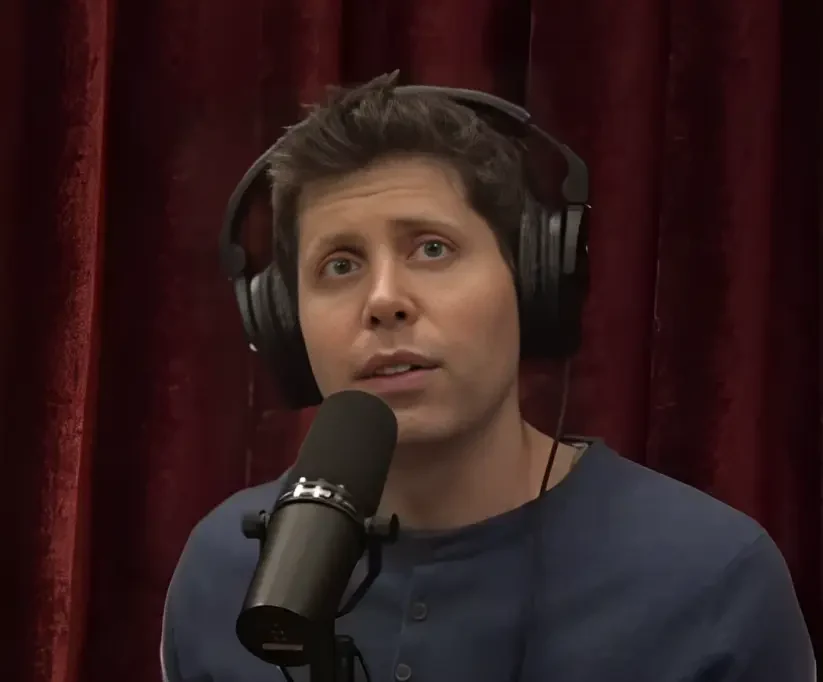
"I try to be a humble guy. I don't usually succeed," he told Joe Rogan. "But I am not humble in this one regard. I believe that I am the world's best head-mounted display designer, bar none. I took the crown with the Oculus Rift. I think I still hold it."
He was barefoot when he said this.
ENNEAGRAM TYPE 7 · THE ENTHUSIAST
TYPE 7 · THE ENTHUSIASTHEAD TRIAD
FREEDOM
POSSIBILITY
ADVENTURE
JOY
VARIETY
OPTIMISM
EXPLORATION
SPONTANEITY
NOVELTY
STANCE
Assertive
HARMONIC
Positive Outlook
AKA“The Entertainer” or “The Realist”
CORE FEARBeing trapped in pain or deprivationCORE DESIREFreedom and satisfactionINTELLIGENCEIntellectualCORE EMOTIONFear
The day he sold Oculus to Facebook, Palmer Luckey gained $2 billion and lost the only thing he couldn't buy back.
The free-wheeling garage inventor suddenly needed approval for every decision. Corporate politics. PR handlers. Mark Zuckerberg's exacting vision.
"The bureaucracy was suffocating," a former Oculus employee recalled. "Palmer went from building whatever he wanted, whenever he wanted, to needing approval for everything. You could see it wearing him down."
The breaking point came in September 2016. The Daily Beast reported that Luckey had donated roughly $9,000 to Nimble America — a pro-Trump non-profit connected to the r/The_Donald subreddit that put up anti-Hillary billboards and trafficked in meme warfare. The site listed him as "vice president." A Reddit account under the handle "NimbleRichMan" offered to match donations. Luckey later disputed authoring the posts and claimed he'd voted Gary Johnson. The reporter said otherwise.
In Silicon Valley, where supporting Trump was social poison, it was the excuse Facebook needed.
He was fired.
"I got the incredible opportunity to be part of shaping the future," Luckey later said, "and I got booted out unceremoniously."
But the thing that cut deepest wasn't the firing itself. It was what the firing threatened to prove.
"I was fired at the height of my career, my gears were ground, and I really wanted to prove that I was somebody, that I was not a one-hit wonder, and that I still had it in me to do big things."
Not "frustrating." Not "disappointing." He said being a one-hit wonder would be "so depressing." The word reveals everything. For a mind that runs at Luckey's speed, stagnation isn't just unpleasant. It's annihilating.
He initially apologized for the donation. He later told Fortune he regrets apologizing: "I cannot accomplish anything of significance if I don't care what people think of me."
Read that again. Not "I don't care." I cannot care. The grammar is doing all the work. Approval, for Luckey, became something he could no longer afford to want.
He tracked his critics. He kept receipts. Five years later, at the All-In Summit in 2022, he stood on Jason Calacanis's own stage and called him an "NPC" — a non-player character, someone who follows the script instead of thinking independently.
"After years of lies, personal attacks, and celebrating my firing," Luckey later wrote, "Jason kept telling people I refused to be on his podcast because of something he said about Oculus. No. I refused because of his crew of bullies."
Paul Graham, watching the video, called it "extraordinary."
"I am infamously good at holding grudges," Luckey admitted.
He wasn't apologizing.
What is Palmer Luckey's Personality Type?
Palmer Luckey is an Enneagram Type 7
The popular read is a provocateur who builds weapons for fun. A tech bro who swapped pretend violence for the real thing.
That gets the structure backwards.
Enneagram Type 7s are driven by a terror of limitation. Not limitation as inconvenience — limitation as existential threat. Sevens are the head-triad type that has built the most elaborate defenses against the silence that comes when motion stops.
Luckey doesn't build companies. He builds doorways. VR was a doorway out of physical reality. Defense technology is a doorway out of technological stagnation. A nuclear silo museum is a doorway into history. A Game Boy is a doorway into nostalgia. Every project — from the death headset to the autonomous submarine — is another escape route from the unthinkable: being ordinary, being stuck, being finished.
Watch how he metabolized Facebook. He didn't say the bureaucracy slowed him down — he called it "suffocating." A non-Seven might call a corporate firing a setback. Luckey called it a threat to his identity: being a one-hit wonder would be "so depressing." Depressing, not disappointing. The word lands harder once you understand what a Seven is actually scared of. Being finished. Being a closed book. Being someone whose interesting years are behind them.
Then watch the reframing reflex kick in. Three businesses considered in rapid succession after his ouster: a prison-recidivism charity, food made from sewer-system petroleum, and autonomous weapons. The mind cannot stop generating doors. When the Meta reconciliation came years later, he didn't call it a partnership; he called it a reverse acquisition: "Mark didn't acquire me. I acquired them." When Beijing sanctioned him by name, he posted it like a trophy. Sevens don't suffer losses — they re-author them in real time. The trick is the re-authoring is sincere. He isn't spinning. He genuinely believes the firing was the best thing that ever happened to him.
The shadow is the grudge. Under stress Sevens move toward the rigid moral accounting of Type 1 — and Luckey's vendetta against Jason Calacanis lived in that gear for five years before he aired it on Calacanis's own stage. "I am infamously good at holding grudges" isn't a quirk; it's the part of a Seven almost no one sees, because Sevens are supposed to keep moving. The Calacanis episode is the moment the motion stopped and the books came out.
The growth side runs the other way. Healthy Sevens grow toward Type 5's sustained focus — they get to keep the curiosity but lose the dilettantism. An engineer who worked with him at both companies described the shift cleanly: "At Oculus, he'd bounce between twenty ideas in a meeting. Now he'll drill into one problem for days, even weeks, until he cracks it. But he still has that creative energy. It's just more focused." The kid who couldn't sit still didn't become a different person. He learned to sit still on one problem long enough to actually win.
Luckey built a headset that kills you when you die in a game. He called it "office art."
He won't put it on.
The Sword Reforged
After Facebook, Palmer Luckey left Silicon Valley with hundreds of millions of dollars, a chip on his shoulder, and a reading list that included way too much Tolkien.
He considered three businesses. The first was a nonprofit private prison chain that only gets paid when ex-prisoners stay out of prison. He abandoned it — the legal issues of doing it state by state were overwhelming. The second was solving the obesity epidemic by making food from petroleum products centrifuged out of the sewer system. He abandoned that too — the FDA considers it completely illegal.
The third was autonomous weapons.
The fact that his mind even generated options one and two — a prison charity and sewer food — before landing on weapons reveals a brain that operates without conventional boundaries. There was no market analysis. No industry report. Just a mind scanning the horizon for the most interesting door.
He founded Anduril Industries in 2017 with five co-founders, the most consequential being Trae Stephens — a Founders Fund partner who'd done counterintelligence work at Palantir and had been quietly hunting for a defense-tech founder who could actually build hardware. Stephens later described his thesis bluntly: "Silicon Valley's refusal to work with the Department of Defense represented both a moral failure and a massive market opportunity." Luckey was the call.
The name was not chosen casually. In Tolkien, Anduril is reforged from the shards of Narsil — the sword that broke in the battle that mattered most, then was remade stronger. For a man fired in disgrace from the company he built, the metaphor was the brief. The boy who plays D&D as a chaotic-neutral wizard is the same one the Pentagon calls when their weapons programs fail.
But the product names tell a different story. Roadrunner, the VTOL interceptor that ambushes cruise missiles. Bolt, the backpack quadcopter. Fury, the stealth combat drone. Ghost, the quiet single-rotor surveillance helicopter. Sentry Tower, the 33-foot solar pylon now planted along the southern border. Dive-LD and Dive-XL (Ghost Shark), the autonomous submarines. Pulsar, the electronic-warfare jammer. Barracuda, the family of mass-produced cruise missiles. Lattice, the AI operating system that fuses every sensor on every Anduril platform into a single battlefield picture.
The companies are mythic. The weapons are predators and verbs. That contrast is the entire Luckey worldview compressed into a naming convention — Tolkien grandeur up top, animal pragmatism downstream.
"There were a very small number of people who welcomed me with open arms," Luckey said of his entry into defense. "Everyone else thought I was nuts."
He walked into meetings in flip-flops and khaki shorts. A sign on the floor at Anduril headquarters pokes fun at the boss's shoe choice. The defense establishment saw a tech bro playing soldier.
His thesis was simpler than they realized. The top five primes — Lockheed, Boeing, General Dynamics, Raytheon, Northrop — account for the bulk of Pentagon spending under a cost-plus business model that pays them more when projects run over. Anduril would develop with private capital, own the IP, and sell finished products at fixed prices. "It is ludicrous to have a business model that allows companies to fail at what they do and make money," Luckey told the OCBJ. He never invoked Clayton Christensen by name. He didn't have to. The Innovator's Dilemma was written about exactly this kind of moment.
Then he started winning contracts.
An AI-powered border surveillance system. Counter-drone technology deployed in Ukraine. The Air Force's Collaborative Combat Aircraft program — beating Boeing, Lockheed Martin, and Northrop Grumman. A $22 billion takeover of Microsoft's troubled IVAS augmented-reality headset program for the Army. A joint venture with General Atomics for up to $9 billion in autonomous aircraft. A $1 billion U.S. Special Operations Command contract.
In June 2025, Anduril closed a $2.5 billion funding round at a $30.5 billion valuation. Peter Thiel's Founders Fund led with $1 billion — the largest single check the firm had ever written. The round was reportedly eight times oversubscribed. By early 2026, the company was in talks to raise again at roughly $60 billion.
Then came the Meta reconciliation. In May 2025, Anduril and Meta jointly bid on the Army's wearables modernization program — the same IVAS contract Microsoft had fumbled. The product is called EagleEye: VR/AR helmets with thermal sensors, drone control, and battlefield compute. The eight Facebook executives Luckey blamed for his 2017 firing were no longer at Meta. "I've already made up with Zuck," he told Fortune. "Zuck has apologized for what happened."
He's also fond of a sharper framing. "Mark didn't acquire me," Luckey has said. "I acquired them." It is not literally true. It is also not exactly false.
Then OpenAI announced a partnership with Anduril, integrating large language models into the Lattice platform for counter-drone systems. Then Erebor — co-founded with Joe Lonsdale of Palantir and 8VC, backed by Thiel — raised $350 million at a $4.35 billion valuation, secured conditional OCC approval for a national bank charter, and positioned itself to serve the gap SVB left behind for AI, crypto, defense, and manufacturing startups. The bank's name is not subtle. Palantir means "seeing-stones." Mithril Capital is named after the rarest metal in Middle Earth. Anduril is the sword. Erebor is the hoard. Thiel and his circle have spent fifteen years building a Tolkien-coded financial-industrial empire, and Luckey is the operating arm.
"We are definitely going to be a publicly traded company," Luckey said of Anduril.
He was wearing flip-flops.
"The World Gun Store"
"I've always said that we need to transition from being the world police to being the world gun store."
Luckey said this on 60 Minutes in May 2025, standing next to a Dive XL autonomous submarine. The submarine can patrol for months without human contact. "If I told it to go off and perform some mission that's months-long — 'Go to this target, listen for this particular signature, and if you see this signature, run; if you see this one, hide; if you see this one, follow it' — it could do that all on its own without being detected."
Critics call this terrifying. The UN Secretary-General has called lethal autonomous weapons "politically unacceptable and morally repugnant."
The sharpest articulation of that critique belongs to Stuart Russell, the UC Berkeley computer scientist who co-wrote the field's standard AI textbook and produced the 2017 Slaughterbots short for the Future of Life Institute. Russell's argument isn't that one autonomous drone is unethical. It's that lethal autonomy collapses the cost structure of mass violence: a swarm of small autonomous munitions is, in his framing, a scalable weapon of mass destruction — comparable to nuclear or chemical weapons in casualty potential, but without the eighty years of diplomatic infrastructure that has kept nuclear-class threats in check. "You can launch as many as you want," Russell told the Bulletin of the Atomic Scientists.
Luckey has not engaged Russell by name. But his answer to that line of argument is the one he repeats on every podcast, and it's the answer of someone who has clearly thought about the WMD frame and rejected its terms.
"Do you think that NATO should be armed with squirt guns or slingshots? How about sternly worded letters? Would you like it if NATO just had a bunch of guys sitting at typewriters, a thousand monkeys writing letters to Vladimir Putin begging him not to invade Ukraine?"
He paused.
"Our entire society exists because of a credible backstop of violence threatened by the United States and our allies all over the world. And thank goodness for it."
This is where the discomfort lives. Not in the weapons themselves, but in the man making them — who clearly, visibly, enjoys the work.
"Societies have always needed a warrior class that is enthused and excited about enacting violence on others in pursuit of good aims," he said in 2024. "You need people like me who are sick in that way and who don't lose any sleep making tools of violence in order to preserve freedom."
Sick in that way. He chose those words. Not "dedicated." Not "hardened." Sick.
"There's no moral high ground to making a land mine that can't tell the difference between a school bus full of children and Russian armor," he explained. "It's not a question between smart weapons and no weapons. It's a question between smart weapons and dumb weapons."
At the Pentagon, where he wore flip-flops to a briefing, a 60 Minutes reporter noted that his daily uniform is "more suited for Margaritaville than the military."
"Everyone in the military has seen James Bond movies and they all like Q," Luckey said, grinning. "I'm the wacky gadget man. I'm the guy who types on the computer and pushes up my glasses, and then gives them a strange thing to help them accomplish their mission."
But he wants to be clear about one thing.
"I don't care if people think that I'm nice or cool or fashionable. But I do care that they think that I am moral. I do care if they think that I am a reliable partner who is not going to stab them in the back."
The war games say the U.S. runs out of munitions in eight days in a fight with China. Luckey thinks about this constantly. His "China 27" strategy assumes a potential Chinese invasion of Taiwan by 2027. He visited Taiwan in 2024, told local leaders their future security depends on a "techno-industrial renaissance," and opened an Anduril office in Taipei.
In July 2024, China sanctioned Anduril as a company. In December 2025, Beijing escalated and named Luckey by name, alongside nine other U.S. defense executives.
He considers it a badge of honor.
The Boy King's Arsenal
His primary residence is a 1980s-designed home in Los Angeles with 2-inch-thick teal shag carpeting, a 6,500-gallon aquarium, and what Luckey himself calls "Miami Vice vibes."
On the coffee table sits a Dungeons & Dragons campaign map. His character: a chaotic-neutral wizard named Nilrim V.
In the driveway: six helicopters, including a UH-60 Black Hawk. A Mark V Special Operations Craft purchased from the U.S. Navy — 5,000-plus horsepower, original M2 heavy machine gun mount. A 1967 Disneyland Autopia car, reportedly the only complete model outside a theme park.
"I am a little bit of a caricature," he admitted.
Underground, in a decommissioned Air Force nuclear missile base, sits the world's largest video game collection. Luckey owns multiple missile sites across the American heartland. His stated goal: "I'm in the process of collecting the entire U.S. ground-based nuclear deterrent system. There are so many air museums, quite a few naval museums, but there's literally only one missile museum in the United States."
His gun collection focuses not on power but on failure. "My main interest is failed gun designs — stabs at innovation that led to technological dead ends." The roads not taken. The possibilities that didn't survive.
He and his wife Nicole have been together since they met at 15 — at a debate camp in Washington, D.C., where Palmer's team beat hers in a round on whether DDT should be legal. Both were homeschooled. Both were makers — she sewed costumes, he built lasers. They married in 2019. At the Texas Renaissance Festival, they won first place dressed as Henry VIII and Anne Boleyn, in period-accurate Tudor garments Nicole hand-sewed after weeks of historical research.
"I don't just want to look like I'm from another time," Luckey explained. "I want to feel what it was like to live in another era, to understand the constraints and possibilities of different times and places."
It's the rare Seven relationship that has lasted from age 15 onward. The standard Seven loneliness — partners who can't keep up with the project rotation — was solved by finding someone who builds her own. Nicole sews Tudor gowns. Palmer builds VR headsets. They share a single trait that most stable couples share quietly: neither one is ever bored.
In June 2024, his side project ModRetro launched the Chromatic — a $199 handheld gaming device housed in a magnesium-alloy shell. Not a Game Boy emulator. An FPGA-based recreation of the original silicon, compatible with every Game Boy and Game Boy Color cartridge ever pressed, with a 160×144 pixel-perfect IPS display and a link cable port. The itch doesn't stop. Reshoring consumer electronics also happens to fit the Reindustrialize gospel he preaches at conferences.
He built a bypass for his peripheral nervous system to experiment with superhuman reflexes. He developed vestibular implants that pipe sounds directly into his skull so that Anduril employees could pick up a designated "Palmer Phone" and talk straight into his head.
In July 2025, he spoke at the Reindustrialize Summit in Detroit — via a VR-controlled humanoid robot wearing his exact Hawaiian shirt and khaki shorts. He controlled it from thousands of miles away, gestures replicated in real time on stage.
His post afterward: "I finally pulled off my long-standing goal of speaking at a conference via VR telerobotics! Thousands of miles of travel saved, and no chance of Luigi."
No chance of Luigi. A reference to Luigi Mangione, who had allegedly gunned down UnitedHealthcare CEO Brian Thompson on a Manhattan sidewalk seven months earlier. The joke is darker than it reads as a one-liner. He runs a company that arms one half of a potential 2027 Pacific war and is named on a Beijing sanctions list. He is not paranoid; he is a real target. A Seven who has built doorways out of physical reality for two decades looking at a humanoid robot wearing his clothes and seeing one more door — the one out of the room where the bullet lands.
Despite a net worth in the billions, Luckey flies coach. "If I'm going to ask my employees to do it, I need to do it, too," he explained. "If I don't also do it, it feels like I'm out of touch."
His grandfather piloted for United Airlines for over 40 years.
Some billionaires buy first-class seats. Palmer Luckey inherited the window seat.
He has built doorways out of every reality he has ever inhabited. Out of the classroom, into the garage. Out of the garage, into virtual worlds. Out of virtual worlds, into the Pentagon. Out of disgrace, into $30 billion. Out of physical presence itself, into a robot wearing his clothes.
The Seven's bargain is that you can always escape. Every reality is provisional, every cage is temporary, every ending is the start of the next thing. The cost is that you never get to be finished. You never get to stop. The door behind you closes the moment you walk through it.
The kid in the garage built a thing that could kill him. He hung it on a wall and called it office art. The man at the Pentagon builds things that kill other people. He runs a $30 billion company.
To Palmer Luckey, this is one continuous story.
The disturbing part is that he might be right.
Disclaimer This analysis of Palmer Luckey's Enneagram type is speculative, based on publicly available information, and may not reflect the actual personality type of Palmer Luckey.
ONE QUESTION · NINE WAYS TO ANSWER IT
What happens when the excitement of a new experience fades, and the path ahead becomes ordinary?
A sentence is enough.
You answer before you see. That is the whole point.
Former USMC infantry turned personality psychology nerd. I built 9takes to help people see
the underlying emotions and logic behind their worldview. Ask a question, see 9 takes.



Add your read on Palmer Luckey