"I don't think I'm, like, so handsome that they have to put me on TV, or so charismatic that my personality can cash the checks. I do think, on some level, I have to get in the mud and do the work." — Sean Evans, on his approach to Hot Ones
Every weekday in the 1990s, Michael Evans put a fresh VHS tape in the machine before he went to bed. By morning, Late Night with David Letterman had recorded itself onto the cassette. On Saturday, Michael's son Sean — eight, nine, ten years old — would binge-watch a week of Letterman in a row. The interview craft was being absorbed at the kitchen table before the kid knew he was studying it.
Decades later, Sean Evans has interviewed Margot Robbie, Gordon Ramsay, Conan O'Brien, Jennifer Lawrence, and Bryan Cranston. Hot Ones, the YouTube show he co-created in 2015, was acquired in an $82.5 million deal in 2024 — one Evans helped lead from the buy side. He's on Time's TIME100 Creators list. He's the calmest seat at a table where movie stars dissolve into hiccupping wrecks on wings sauced with two-million-Scoville chili extract.
He still hasn't watched some of his own episodes back. The anxiety is too loud in the recording.
TL;DR: Why Sean Evans is an Enneagram Type 6
He runs on preparation, not charisma. Ten days of research per episode. Hot Ones is built on the assumption that the host has to earn the room by working harder than anyone else in it.
He won't watch himself back. A 6 hosts a show, then can't sit through it. The vigilance doesn't switch off when the camera does.
He learned at 17 to be the steady one when someone is in crisis. The role he had to take in a hospital room as a teenager is the role he plays across the table from celebrities now.
His team is family. Co-creator Chris Schonberger across the full run. His little brother Gavin doing the reading. Booker Kelly Weber across hundreds of episodes. A 6's loyalty is not sentimental. It's structural.
At the top, he braces for collapse. The man who runs the most successful interview show on the internet describes the view as Fight Club's last scene — buildings falling down, wondering when his gives way.
What is Sean Evans's personality type?
Sean Evans is an Enneagram Type 6
Type 6s are wired around a question: what could go wrong, and am I ready for it? They prepare. They vet. They build relationships that hold under pressure, because the pressure is coming. They distrust their own footing more than anyone else does. Their best version is steady, loyal, and unusually competent under fire. Their worst version cannot put the worry down.
Evans is the show's-most-prepared-person-in-the-room variant. He has said it in nearly every long interview he gives. Charisma can't cash the checks. The face isn't enough. He has to get in the mud. The phrase "in the mud" matters — it's not "I have to do my homework." It's a soldier's image. The work is dirty and protective.
This is a 6w5, not a 6w7. The 5 wing is what makes him a researcher first and an entertainer second. A 6w7 would deflect with humor and bounce off the heat; Evans counters with depth. The same wing is what lets him read body language across hundreds of old interviews and clock the moment another host moved past a question the guest wanted to keep talking about. He files those moments. He brings them back ten years later.
The reason the typing matters is the contradiction it explains. Sean Evans's public image is composure — the dry voice, the unshaken posture, the way he keeps asking questions while a guest is openly suffering. Inside the prep room, he's the most anxious person at his own show. The composure isn't temperament. It's the byproduct of a system built to absorb the anxiety before the camera turns on.
A father's VHS tapes and a mother who didn't make it to graduation
Sean Evans was born in Evanston, Illinois, in 1986. The family moved to Crystal Lake, a Northwest suburb of Chicago, when he was small. He has told the John Hughes story about the neighborhood — every house had kids, the streets were full of bikes, the summers were idyllic, the 90s held. He played football and baseball. He had close friends. He has called himself "chameleon-like in high school" — he could sit at any table in the cafeteria. A skill, in retrospect.
His father, Michael, taped David Letterman. Every night. Sean watched the week's haul on Saturdays. By his own account, the early hosts who shaped him were Letterman, Howard Stern, Jimmy Kimmel, and Adam Carolla. The interview was a craft he saw modeled before he knew he was being trained.
His mother, Donna Arthofer, worked in the antitrust division of the U.S. government. She was diagnosed with non-Hodgkin's lymphoma when Sean was a child. It was, in his own words, "always a storm cloud" — a recurring threat that didn't stay in the background. She died in 2003, when he was 17.
The detail that opens the door is the last conversation.
"The very last conversation we ever had was her wondering what college I was going to go to... she passed away within like 48 hours of that. Now that I look back on it, it's like she knew that that was going to happen."
A dying mother spent her last lucid moments asking a teenager about his future. He has been answering ever since. He has also told the Theroux interview what he took from the moment itself:
"I felt in that moment, feelings of support — and then also feeling like I needed to be that too for other people."
He learned at 17 to be the steady one when someone else is in crisis. Hot Ones is a show built on a guest entering chemically-induced crisis while the host remains composed. The format is, in its psychological structure, the role he had to take in a hospital room when he was a teenager.
He has also said the rest of his life felt different after that. The lights got more contrasty. "I remember my whole life being like, this is a good time, feels like things are going to get better. And then this is a bad time." That is a 6's relationship to time — never neutral, always shifting between approach and threat.
ENNEAGRAM TYPE 6 · THE LOYALIST
TYPE 6 · THE LOYALISTHEAD TRIAD
LOYALTY
SECURITY
TRUST
VIGILANCE
COMMITMENT
PREPARATION
DUTY
COURAGE
FORESIGHT
STANCE
Compliant
HARMONIC
Reactive
AKA“The Defender” or “The Buddy”
CORE FEARBeing without support or securityCORE DESIRESecurity and certaintyINTELLIGENCEIntellectualCORE EMOTIONFear
How Sean Evans prepares for every Hot Ones interview
The team is small and the process is religious. Three people read everything a guest has ever produced — Evans watches the old video, Schonberger listens to the podcasts, his little brother Gavin reads the print — then merge their notes into ten topics. Each topic becomes a thesis question with three or four follow-ups. Evans rehearses the run of show until he can recite it in his sleep.
The number that matters is ten days. That's how long one episode takes from greenlight to publish. Evans likes the deadline. He's said he finalizes questions "the night before or that morning." His friend the deadline does the work that confidence would have done for someone else.
There's a specific tell in his research that gives away the type. When Evans watches an old interview of a future guest, he doesn't track the famous answers. He tracks the body. He looks for the moment a host asked a question the guest wanted to keep talking about, watches the guest lean in, and then watches the host move past it. That unanswered moment, sometimes a decade old, becomes a Hot Ones question. He picks up what other people put down.
Type 6 cognition runs on noticing what could be missed. The watcher who has been catastrophizing in private is the same watcher who catches the abandoned thread in a 2014 press junket. The anxiety isn't a flaw. It's the engine.
The pattern is not new for him. Before Hot Ones, before Complex, before anything that paid, Evans was a 22-year-old copywriter for the Chicago tourism board doing a freelance five-minute video interview with 2 Chainz in New Orleans. He told one Reddit AMA: "I remember studying note cards and being nervous as hell for, like, a five minute video interview with 2 Chainz." Five minutes. Note cards. A rapper who would not have cared if Evans had improvised. The intensity was there before the stakes were.
Why Sean Evans gets nervous on a show he hosts
When Gordon Ramsay agreed to come on Hot Ones, Evans got nervous. This is the easy joke to make about it: a chef makes the host of a wing show anxious. But the deeper read is that everyone who comes on Hot Ones makes Sean Evans anxious, and Gordon Ramsay made him admit it.
The reason is structural. Hot Ones can collapse in two directions. A guest can refuse to engage with the questions. A guest can melt down so hard the segment becomes unusable. Either failure happens live, on camera, with a host who has prepared for ten days. The thing a 6 fears most is the moment where the system stops working and they have to improvise. Hot Ones produces that moment ten times an episode. The wing gets hotter; the answers get shorter; the host has to keep the floor under both of them. Most weeks, he does.
In the stress-and-vigilance pattern that Type 6 lives inside, there is a phobic mode and a counterphobic mode. Phobic 6 freezes and asks for protection. Counterphobic 6 runs toward the danger to prove the danger can't take them. Evans operates in counterphobic mode on camera and phobic mode about the recording. The same man who calmly asks Lorde a 2014 follow-up question while eating Da Bomb hot sauce will not, after the episode is cut, watch it back. "There's a lack of refinement that is painful for me to watch."
The Fight Club image is the giveaway. He used it in a Variety interview about the 10-year anniversary — at the precise moment in his life when, by every external metric, the building is the strongest it's ever been. "You wonder when your building's going to give way." That sentence is not impostor syndrome. It's a 6's relationship to success. Stability is something you observe in retrospect, while in the moment looking for the crack.
He's also said: "You have the impostor syndrome that takes over your whole life. Once you get on top, the biggest challenge then is staying up there." The reframe is small but exact. For Evans, the top is not a destination. It's a position he might be evicted from.
The lines a 6 travels fill in the rest. In security, a 6 borrows the steadiness of Type 9, and that is the Evans the camera sees: the level voice, the stillness while a guest comes apart, a calm so complete it can read as serene. Under stress, a 6 reaches for the worst of Type 3, competitive and image-managing, the line that shows in the buy-side acquisition and the new chief creative officer title, the man who swears charisma can't cash the checks now holding the checkbook. The on-camera 9 and the boardroom 3 are the same anxious 6, leaning whichever way the ground allows.
The 10-day Rubik's Cube
Evans calls each episode "a Rubik's Cube that just solves itself." It's a Type 6 metaphor in a tuxedo. The Rubik's Cube has a fixed number of moves, a knowable algorithm, a determinable solution. There is exactly the right amount of structure to make a vigilant mind feel safe. The puzzle terrifies a 4 and bores a 7. It is the dream object for a 6 who is afraid of formless time.
Each episode is the same shape. Ten wings. Ten questions, then follow-ups. Two openings: who the guest is and why they're here. One closing: The Last Dab, the parting question, the credits. Within that shape, anything can happen. Lorde can sing a Caroline Polachek cover. Margaret Qualley can cry. Pedro Pascal can gargle milk. The shape holds them up.
The show is, in this sense, an externalization of how Sean Evans copes with the world. Build a structure that allows for chaos but never depends on improvisation to survive. Inside the structure, you can take the worst hot sauce on earth and still ask question seven. Outside the structure, you watch yourself for refinement and lose.
The format is also why guests trust him. They have been on press junkets where a host hadn't watched the movie. They get on Hot Ones and the host has read a 2007 interview where they mentioned, in passing, their grandmother's mole sauce. Josh Brolin, mid-episode, broke kayfabe to acknowledge it: "I don't know who's working for you, but don't fire them."Conan O'Brien — a man who knows what serious interviewing looks like — sat in the chair and said: "you are a very serious interviewer. You take it seriously and you ask really good questions. So I'm very impressed with your dedication to it."
A Type 6 collects compliments the way other people collect grievances. Evans has said the O'Brien line is one he still thinks about. Of course he does.
Sean Evans, his little brother, and the friend with the wing idea
By 2014, Evans had quit copywriting in Chicago and moved to New York. The pivot was NBA All-Star Weekend that February. He was in New Orleans with print interviews lined up for 2 Chainz, Snoop Dogg, and Steph Curry; Complex asked to put the conversations on video instead. The video work earned him a full-time anchor seat at Complex News. He moved a month later. Inside the same building was a young food brand called First We Feast, founded in 2012 by a Complex colleague named Chris Schonberger. The two became watercooler friends.
About a year in, Schonberger pitched Evans a show where celebrities eat increasingly spicy wings while being interviewed. His own first reaction was "I just thought it was funny." Evans's reaction, per Schonberger, was a "Cupid arrow to his heart." Hot Ones premiered in March 2015 with a Tony Yayo episode about Eminem's taco habit.
Eleven years later, in December 2024, an $82.5 million all-cash acquisition led by Soros Fund Management spun First We Feast out of BuzzFeed. Schonberger took the CEO seat. Evans took a newly created chief creative officer title and stayed on as host. Mythical Entertainment and Crooked Media joined the cap table. The two friends who had worked together for eleven years now ran the building.
This is the counterphobic 6 at scale. A man whose entire operating system is "the building could fall any second" stepped into a nine-figure deal to take ownership of the building. The 6 who buys insurance against the worst case is the same 6 who, when the worst case is "someone else owns the thing we built," writes a check large enough to take it back.
This is what Type 6 loyalty looks like in practice. It's not the loyalty of declaration. It's the loyalty of working with the same people for a decade and not seeing a reason to change. A 3 in Evans's position would have churned through partners by now in pursuit of better deals. A 7 would be onto the next project. A 6 stays because the people are vetted, the trust is built, and rebuilding a trust circle from scratch is precisely the kind of unknown a 6 will pay a premium to avoid. Loyalty is risk management with feelings on top.
There is also the brother. Sean's parents — Michael, the man who taped Letterman, and Donna, the antitrust lawyer — raised two boys in Crystal Lake. The older one grew up to host one of the most-watched interview shows on YouTube. The younger one, Gavin, is on the research team. The home that produced the show is, in a literal sense, the home that produces the show.
What Hot Ones did to the celebrity interview
Late-night TV before Hot Ones operated on a contract: the host asks the questions the publicist approved; the guest plugs the movie; the audience claps; everyone goes home. Evans's contribution was to add hot sauce to the contract, and watch the contract dissolve.
The hot sauce is a Trojan horse. It's a physical state — pain, watering eyes, capsaicin sweat — that makes it socially acceptable for a guest to drop the press persona. The talking points get harder to recite when your tongue is on fire. The mask slips. The guest becomes interestingly themselves. Evans, who has done his ten days of research, is waiting with the question that pulls the slipped mask further.
The reason the format works is that the host is the constant. Evans does not break. The guest knows he is on the same wing. The guest also knows he has read the obscure profile, watched the deleted scene, heard the bootleg podcast. Pain plus competence equals confession. The show ran on this equation for a decade before anyone built a real competitor that came close.
The exception is when the guest makes Evans part of the interview. Keke Palmer has done that better than almost anyone: first as a repeat Hot Ones guest, then with the 2025 kiss after his public crush comment, then with the May 2026 podcast reunion where both of them joked through the internet wanting them together. It is not a confirmed relationship. It is a very specific kind of host-to-host chemistry: Palmer turns the flirtation into performance, and Evans, usually the controlled variable, has to become part of the bit.
There's one other way a guest beats the format, and Paul Rudd found it in a single 2019 episode. Mid-challenge, already mixing The Last Dab, Rudd narrated the shared ordeal out loud. "Look at us. Hey, look at us." Evans: "Who would've thought?" Rudd: "Not me." The clip became the most-quoted moment in the show's history, and it's the exception that proves the thesis. Rudd isn't dissolving under the structure. He's standing inside it with Evans, treating the host as a fellow survivor rather than the examiner across the table. Most guests crack and become themselves. Rudd stayed composed and let Evans in on the bit.
The Pedro Pascal episode is the case study. In March 2023, at the peak of his Last of Us moment, Pascal sat across from Evans and steadily lost. By the back half of the wing run he was drinking milk despite hating milk, gargling it on camera, then describing in real time a gap between his back molar and his front tooth where the sauce had wedged itself and would not stop burning. Evans, eating the same wings, asks the next question. The asymmetry is the show. One man performs competence under physical duress; the other is in chemically-induced honesty, which turns out to look a lot like a real conversation.
The format also breaks. In the show's first-season finale, October 2015, DJ Khaled tapped out at wing three of ten and called for ranch and milk on camera. It became the show's canonical flameout — the moment the rest of the catalog now gets measured against. A year later, Coolio finished his episode by pouring an entire bottle of the final sauce onto one wing, then passing out in the green room afterward for two hours. Evans's format is durable because it includes the failure mode. Sit down, eat the wings, do the work. Everyone has a wing where the work stops.
The rituals have names. Wing eight is Da Bomb, the sauce that wrecks spice veterans on chemistry rather than Scoville, the wall every guest braces for. Mid-interview comes Explain That Gram, where Evans pulls up a guest's own Instagram and makes them account for it. Then The Last Dab: on the final wing, Evans tells the guest it's tradition to add an extra dab of the hottest sauce, and that they don't have to. Most do it anyway, already in pain, handed a clean exit and refusing it. That voluntary extra suffering is the most counterphobic gesture the show offers, built into the format: choose more of the thing that hurts, on purpose, to prove it can't take you.
Evans eats his. Every wing, every episode, including The Last Dab, more than three thousand of them across the run. He has described his response to Carolina Reapers as Pavlovian: his body starts rejecting the sauce before he has tasted anything. Off the clock he manages it like a tolerance, not a gift: salads and juice, TUMS within reach, no wings on his own time, and, as he told People, "I know exactly, physiologically, what's going to happen." The show that cracks the guest's composure runs on the same nerve in the host.
Hot Ones now operates in territory most YouTube interview shows never touch. Politicians have begged to come on. In 2024, both major presidential campaigns reportedly tried to book the show; Evans and Schonberger turned them down to keep the format non-political. The show that thrives on cracking the press persona refuses to host the people who have made the persona itself the product. Lorde sang on it. The "Lorde on Hot Ones" tweet was the kind of cultural earthquake YouTube interview shows don't usually get.
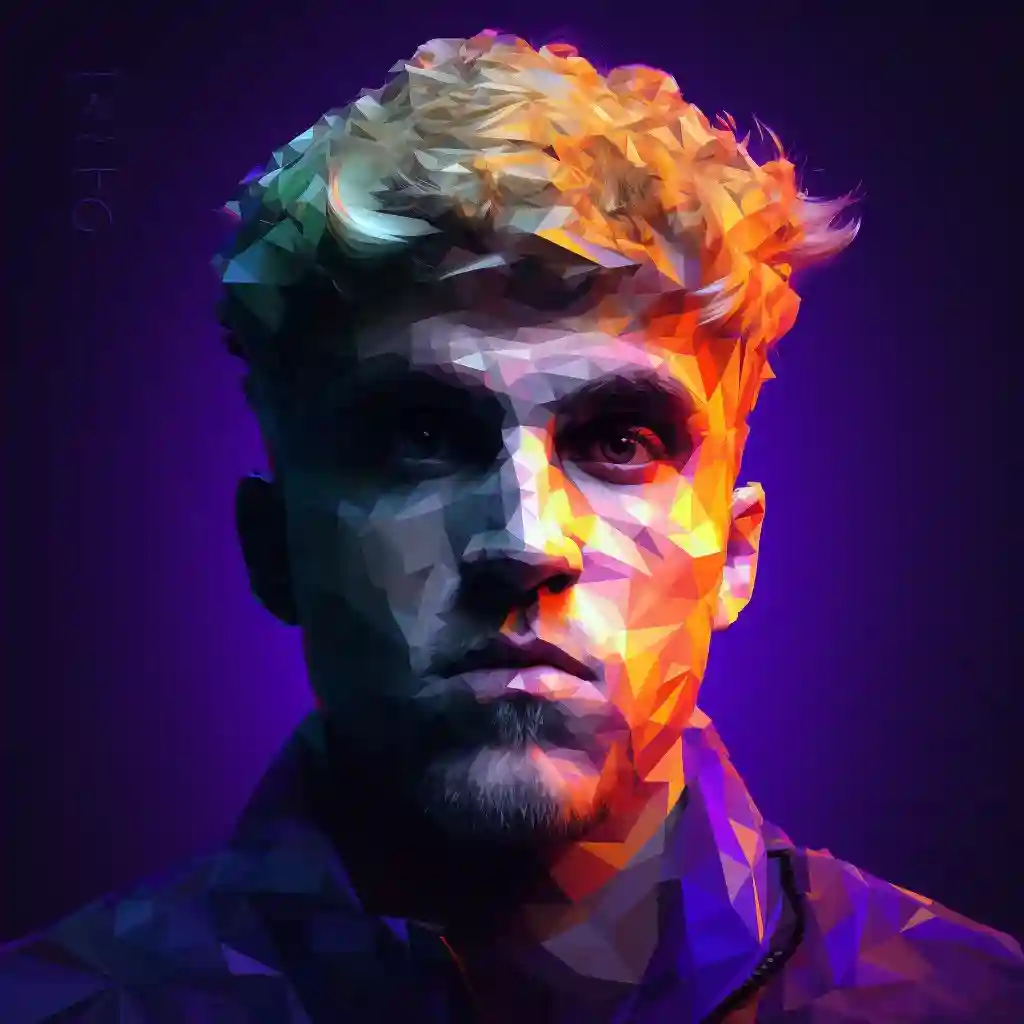
Evans has stayed almost weirdly the same. The voice is the voice. The posture is the posture. The open is the open: every episode begins with the same scripted greeting, word for word, "Hey, what's going on everybody? For First We Feast, I'm Sean Evans and you're watching Hot Ones. It's the show with hot questions and even hotter wings." Same words, every guest, every season, the 6 narrowing the start of each show to a known quantity before a stranger sits down. The shaved head, the quiet button-down, the level affect: the visual costume is exactly what a 6 narrows to when the cost of variance is too high. Whatever else is in the room, the host is a known quantity. He lives in Brooklyn and is famously private about the rest. He once described the job to the New York Times as eating scorching hot chicken wings with celebrities. He says it the way he says everything: as if the absurdity is not lost on him, but he has already moved on to the question.
The interview the steady one is still doing
In the Louis Theroux conversation, Evans returns to the memory of his mother's last day and says the same thing twice. He remembers the quiet of the house. He remembers the look on the nurse's face. And he remembers what the room taught him: how to be the steady one when someone across from you is coming apart. He was 17. The room was small. The future was about to get loud.
Two decades later, he sits across from a stranger every Thursday. The stranger eats something painful. The stranger says something they didn't plan to say. The steady one in the chair does not flinch. He asks the next question. He picks up the slipped mask. He keeps the floor under both of them.
His mother asked him, in her last conversation, where he was going to go.
He has been answering her ever since.
ONE QUESTION · NINE WAYS TO ANSWER IT
How do you decide when to trust your preparations versus when to trust your ability to adapt?
A sentence is enough.
You answer before you see. That is the whole point.
Former USMC infantry turned personality psychology nerd. I built 9takes to help people see
the underlying emotions and logic behind their worldview. Ask a question, see 9 takes.



Add your read on Sean Evans