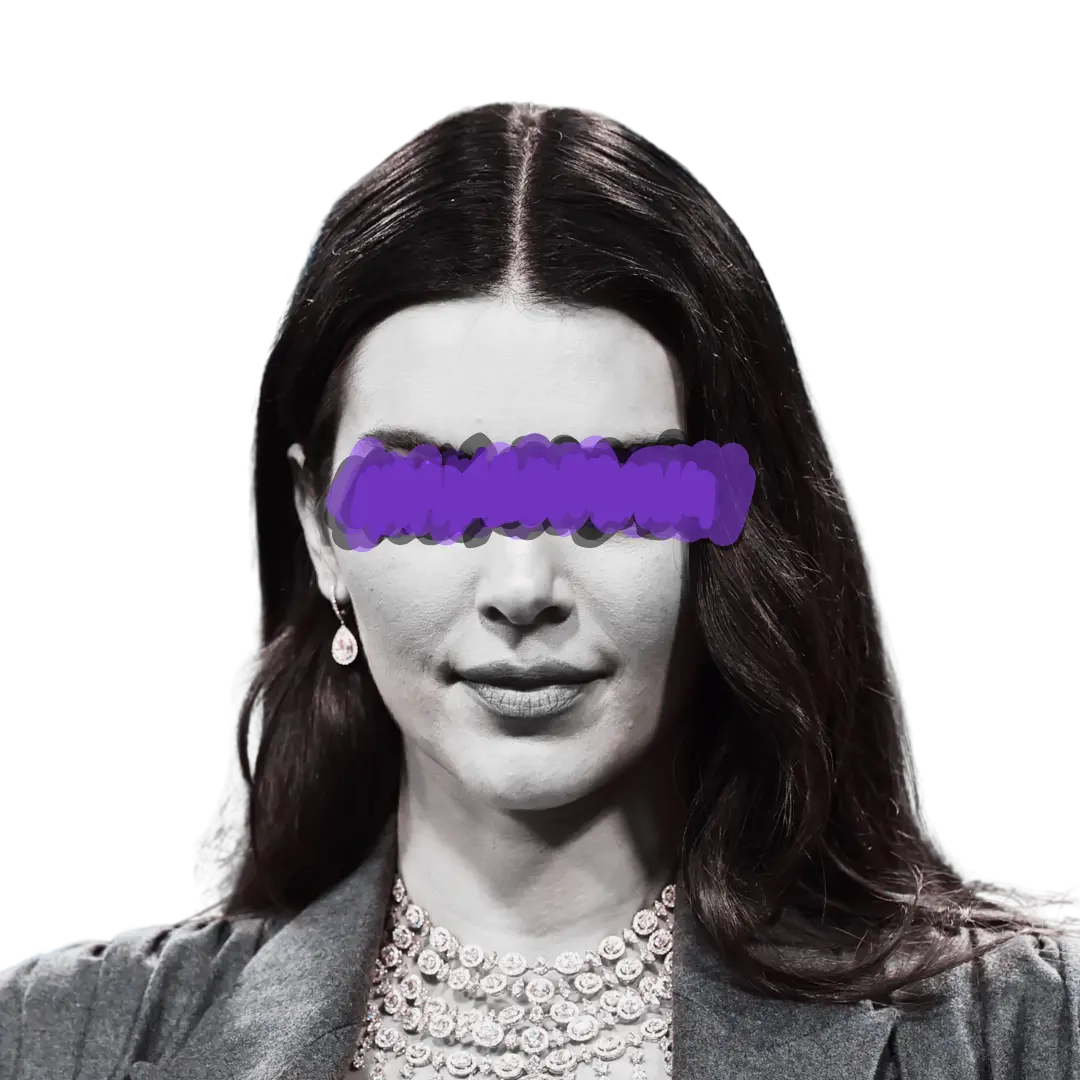

A sex tape, a murder trial, a father's death, and a momager who saw opportunity where others saw scandal. The Kardashian story is American capitalism distilled to its essence—but it's also a masterclass in family psychology that both fans and critics get wrong.
You either love them or you can’t stand them. But here’s what both sides miss: the Kardashians aren’t an accident. They’re a case study in how personality types build empires—and destroy relationships.
How did one family turn infamy into a combined net worth exceeding $2 billion? The answer isn’t just business strategy. It’s personality architecture.
Each Kardashian operates from a distinct Enneagram type, and understanding these types explains everything: why Kourtney and Kim physically fought on camera, why Kendall built a fortress of boundaries inside the most photographed family in the world, why Kylie keeps disappearing from her own life, why men who date them seem to spiral, and why Kris can monetize literally anything—including her own family’s trauma.
The Kardashian Personality Map
| Family Member | Enneagram Type | Core Drive | Shadow Side | Empire Contribution |
|---|---|---|---|---|
| Kris | Type 3 - Achiever | Success through strategy | Losing self in image | CEO/Dealmaker |
| Kim | Type 3w4 - Achiever | Beautiful, meaningful success | Sacrificing authenticity | Brand Face |
| Kourtney | Type 1 - Perfectionist | Doing things “right” | Alienating through criticism | Credibility Check |
| Khloé | Type 2 - Helper | Being needed and loved | Self-abandonment | Emotional Heart |
| Rob | Type 9 - Peacekeeper | Peace and stability | Complete withdrawal | The Cautionary Tale |
| Kendall | Type 6 - Loyalist | Security and trust | Vigilance that never powers down | Prestige Element |
| Kylie | Type 9 - Peacekeeper | Calm and merging | Disappearing into the comfort | Innovation Driver |
Before we decode each type, let’s address what critics get right—and wrong.
What the Critics Get Right (And Wrong)
If you hate the Kardashians, you’re not entirely wrong. Let’s be honest about the legitimate criticisms before we explain the psychology:
The exploitation question: Did Kris turn her children into products? Type 3s can unconsciously treat people as extensions of their achievement. The line between “supportive manager mom” and “exploitative stage parent” is genuinely blurry. When your daughter’s sex tape becomes a business opportunity, that’s worth examining.
The beauty standard impact: Kim’s aesthetic—surgically enhanced, heavily contoured, impossibly proportioned—influenced a generation. BBL procedures increased dramatically through the 2010s. Young women developed eating disorders trying to achieve bodies that don’t exist without surgery. That’s not neutral. That’s consequential.
The privilege foundation: They didn’t start from nothing. Robert Kardashian Sr. was a wealthy attorney who defended O.J. Simpson. They had money, connections, and proximity to fame before any reality show. The bootstrap narrative is partially myth.
The cultural appropriation pattern: The braids. The “boxer braids” rebrand. The accusations of blackfishing. These criticisms aren’t manufactured outrage—they reflect real concerns about a white-passing family profiting from Black aesthetics while facing none of the discrimination.
But here’s what the critics miss: understanding why someone does something doesn’t mean excusing it. The Kardashians’ psychology explains the pattern. It doesn’t justify the harm.
And here’s what the fans miss: loving someone doesn’t mean ignoring their impact. You can appreciate the hustle while acknowledging the cost.
Now let’s decode the types.
The Matriarch: Kris Jenner (Type 3 - The Achiever)
The Wound Behind the Momager
Enneagram Type 3s are driven by one core need: to be successful and admired for their achievements. They’re the chameleons of the Enneagram, capable of becoming whatever will earn them the success they crave.
But where does that drive come from?
Type 3s typically develop from childhoods where love felt conditional on performance. Somewhere, young Kris learned: you’re valuable when you achieve. You’re invisible when you don’t.
Her first marriage to Robert Kardashian gave her stability and status. When that ended, she learned a harder lesson: security comes from what you build yourself. Then Robert died of esophageal cancer in 2003—just eight weeks after diagnosis—leaving four teenagers without their father.
Kris’s response? Control what you can. Build something no one can take away.
Kris Jenner is a Type 3 operating at full power because she learned early that loss is inevitable and achievement is the only hedge against irrelevance.
After Robert Kardashian’s prominence during the O.J. Simpson trial and her tumultuous marriage to Caitlyn Jenner (then Bruce), Kris transformed family dysfunction into family business. Every scandal became content. Every child became a revenue stream. Every tragedy became a storyline.
Type 3 patterns in Kris:
- Achievement through others: She measures success by her children’s success
- Image management: Everything is carefully curated for maximum value
- Shapeshifting: She adapts her approach for each child’s personality
- Work as identity: “Momager” isn’t a joke. It’s her core self-concept
The Genius of the 10%
Kris famously takes 10% of her children’s earnings as their manager. This isn’t greed. It’s Type 3 psychology. Her worth is tied to their success. By making their careers her career, she ensures she’s always relevant, always needed, always achieving.
When Kim’s sex tape leaked in 2007, most parents would have seen disaster. Kris saw distribution opportunity. This isn’t heartless. It’s Type 3 reframing: every setback is a setup for a comeback.
“If somebody says ‘no,’ you’re talking to the wrong person.”: Kris Jenner
Kris Under Stress
When threatened, Type 3s can become disconnected from their genuine feelings and overly focused on appearances. We’ve seen this in Kris during family crises, her first instinct is always “how do we spin this?” rather than “how do we feel about this?”
Her relationship with Caitlyn’s transition revealed this pattern. Kris struggled not just with the personal betrayal but with the narrative disruption. Type 3s need to control the story.
Kim Kardashian (Type 3w4 - The Achiever with Individualist Wing)
The Image Queen
Kim shares her mother’s Type 3 core but adds a Type 4 wing, making her not just achievement-focused but aesthetically particular. She doesn’t just want success; she wants beautiful, distinctive success.
Type 3w4 patterns in Kim:
- Perfectionism about image: Hours of styling, contouring, curation
- Brand as identity: KKW, SKIMS, the law degree, all image extensions
- Emotional depth under the surface: Her prison reform work reveals genuine feeling
- Competitive with siblings: Must be the most successful AND the most distinctive
From Sex Tape to Law Student: The Numbers Tell the Story
Kim’s evolution from reality star to criminal justice advocate confuses people who see her as shallow. But it makes perfect sense for a Type 3w4—and the achievements are real:
| Achievement | The Numbers |
|---|---|
| SKIMS valuation | $4 billion (2023) |
| Instagram followers | 360+ million |
| People freed from prison | 17+ through direct advocacy |
| Bar exam attempts | Passed on 4th try while raising 4 kids |
| KKW Beauty sale | $200 million to Coty |
| Time 100 Most Influential | Named in 2015 |
Type 3s need achievement. Type 4 wings need meaning. As Kim aged, pure fame wasn’t enough. She needed to matter—to be seen as substantive, not just beautiful.
The law study isn’t random. It’s psychological evolution. Her Type 3 needs success validation. Her Type 4 wing needs to feel special and purposeful. The criminal justice work accomplishes both: it’s impressive AND meaningful.
Whether you think she’s genuinely committed or just rebranding, the results—actual humans freed from unjust sentences—are tangible.
Kim and Kanye: Two Type 3s Collide
Her marriage to Kanye West put two achievement-driven personalities in competition. Both needed to be the star. Both measured worth through public perception. Both struggled when the other’s choices threatened their brand.
The divorce became inevitable when Kanye’s behavior started damaging Kim’s carefully curated image. Type 3s will sacrifice relationships before reputation.
Kourtney Kardashian (Type 1 - The Perfectionist)
The Critic in the Family
Enneagram Type 1s are driven by a need to be good, right, and perfect. They have strong internal critics and hold themselves—and everyone else—to high standards.
Kourtney is the family’s Type 1, and it explains why she’s often frustrated with her siblings.
Type 1 patterns in Kourtney:
- Health perfectionism: Organic everything, rigid dietary rules
- Criticism of others: Constantly pointing out what’s wrong with the family’s choices
- Resentment: Feeling like the responsible one surrounded by chaos
- All-or-nothing: When she pulls back from filming, she pulls back completely
The Poosh Paradox
Kourtney’s wellness brand Poosh is pure Type 1 expression. It’s not just products. It’s a philosophy of doing things the “right” way. Clean living. Conscious consumption. Improvement.
But Type 1s often struggle with the gap between their ideals and reality. Kourtney preaches wellness while participating in a show built on drama. This internal conflict fuels her recurring threats to quit the show.
Kourtney vs Kim: The Classic 1-3 Clash
Type 1s and Type 3s often clash because they have opposite relationships to image and authenticity:
| Question | Kim (Type 3) Asks | Kourtney (Type 1) Asks |
|---|---|---|
| When making a decision | “How does this look?” | “Is this right?” |
| When facing criticism | “How do I spin this?” | “Am I living my values?” |
| When evaluating success | “What did I achieve?” | “Did I do it correctly?” |
Their physical altercation on the show wasn’t random. It was years of Type 1 resentment (feeling morally superior but less successful) exploding against Type 3 achievement (feeling successful but constantly criticized).
“I don’t want to be a part of this anymore.” —Kourtney Kardashian (a very Type 1 statement)
Khloé Kardashian (Type 2 - The Helper)
The Family Protector
Enneagram Type 2s are driven by a need to be loved and needed. They give to others compulsively, sometimes losing themselves in the process.
Khloé has always been the family’s emotional center: the one who mediates conflicts, supports siblings through crises, and puts others’ needs first.
Type 2 patterns in Khloé:
- Caretaking: Always checking on siblings, being the emotional support
- Loyalty over logic: Staying with partners despite red flags because she’s needed
- Self-sacrifice: Her own needs consistently come last
- Seeking love through giving: “Revenge body” as an attempt to be lovable
The Tristan Triangle
Khloé’s relationship with Tristan Thompson makes painful sense through Type 2 psychology. Type 2s often stay in destructive relationships because:
- They believe they can love someone into changing
- Being needed feels like being loved
- Leaving feels like abandoning someone who needs them
The Type 2 trap: “If I just love them enough, they’ll change.”
Her repeated returns to Tristan after betrayals weren’t stupidity. They were Type 2 compulsion: the belief that enough love could fix anything.
The Tristan Timeline:
| Year | Event | Khloé’s Type 2 Response |
|---|---|---|
| 2018 | Cheating scandal (before birth) | Forgave, stayed |
| 2019 | Jordyn Woods incident | Left, then reconnected |
| 2021 | Third cheating scandal | Defended him publicly |
| 2022 | Paternity scandal | Finally set boundaries |
Four years of pattern before the Type 2 growth kicked in.
Khloé’s Growth Edge
Type 2s grow when they learn that their worth isn’t dependent on being needed. Khloé’s journey toward self-prioritization—the focus on her own health, her boundaries with Tristan—represents integration toward Type 4 (finding her own identity independent of serving others).
Rob Kardashian (Type 9 - The Peacekeeper Who Disappeared)
The One Who Couldn’t Play the Game
Every dynasty has a casualty. Rob Kardashian is the Kardashian empire’s.
While his sisters thrived on camera, Rob retreated. Weight gain. Depression. Rare appearances. A tabloid-destructive relationship with Blac Chyna. A disappearance so complete that fans sometimes forget he exists.
Enneagram Type 9s seek peace, harmony, and the absence of conflict. In healthy environments, they’re grounding presences. In overwhelming environments, they disappear entirely.
Type 9 patterns in Rob:
- Merging with environment: Lost himself in relationships (with Chyna, with food, with isolation)
- Conflict avoidance: Rather than fight for space, he withdrew completely
- Numbing: Weight gain and isolation as ways to check out of overwhelming feelings
- Invisible in the system: The only male child in a matriarchal family structure
Why Rob Matters to This Analysis
Rob’s trajectory exposes the shadow of the Kardashian system. Not everyone thrives in a Type 3-dominated family culture. The constant cameras, the mandatory self-promotion, the achievement pressure—for a Type 9 seeking peace, this environment is psychologically toxic.
His sisters adapted. Kim and Kris (Type 3s) flourished in achievement culture. Kourtney (Type 1) found purpose in critique. Khloé (Type 2) found purpose in caretaking. Kendall (Type 6) built a vigilance system that doubled as a modeling career. Kylie (Type 9, like him) escaped into a persona instead of into silence.
Rob had no escape valve. He couldn’t achieve his way out (not a Type 3). He couldn’t critique his way out (not a Type 1). He couldn’t care-take his way out (not a Type 2). He couldn’t run a security system like Kendall (not a Type 6). And unlike Kylie, he never built a brand large enough to disappear inside of.
So he disappeared into nothing instead.
The family doesn’t talk about it much. That silence speaks volumes about what happens when you can’t perform in a performance family.
Kendall Jenner (Type 6 - The Loyalist)
The Vigilance Engine
People mistake Kendall for the cool one. She isn’t. She’s the most anxious person in the loudest family in America.
Enneagram Type 6s are driven by a need for security in a world they’ve learned cannot be trusted to provide it. Their minds run constant calculations: Is this safe? Can I trust this person? What’s the backup plan? It isn’t paranoia. It’s pattern recognition from someone who learned early that certainty is borrowed, never owned.
Kendall’s entire life is an architecture of safety.
Type 6 patterns in Kendall:
- Trust calculus: She stripped her last name off modeling cards so she’d know what she earned was hers
- Boundary engineering: She banned her own family from sitting front row at fashion shows
- Anxiety as biography: Panic attacks since childhood, hospitalized for exhaustion in 2015, retreats to bathrooms when the noise gets too loud
- Achievement as armor: Dethroning Gisele as the world’s highest-paid model, building 818 Tequila — proof the ground is still holding
The Highest-Paid Model Couldn’t Board a Plane
Kendall’s anxiety has, at times, been so overpowering she couldn’t get on transatlantic flights without a family member sitting beside her. The woman whose career depends on projecting effortless composure was gripping armrests at 35,000 feet, certain her heart was failing.
That single detail tells you more about her than any Vogue cover. The aloofness isn’t attitude. It’s a security system, built by someone who was placed on camera at ten and never got to decide when the watching would stop.
“I was born into this life, but I didn’t choose this life. I’m not built for this by any means.”: Kendall Jenner
She had the fewest appearances of any sibling across 20 seasons of the show. That wasn’t laziness or scheduling. That was a Type 6 rationing access — controlling the one variable she could.
“She Lets Me Call Her Dad”
When Bruce Jenner became Caitlyn, Kendall — the tomboy, the horse girl, the daddy’s girl who built her identity on being a Jenner — said the sentence that captures the entire Type 6 mindset:
“She lets me call her dad — that’s the last little piece of dad.”
Lets. Not “I still call her dad.” She lets me. It implies negotiation. Permission. A concession granted. Something she asked for and was allowed to keep.
Type 6s don’t demand security. They negotiate for it, hold what they’re given, and build systems to protect the rest. The transcendental meditation, the singing bowls, the daily journaling, the imaginary “higher goddess” her therapist taught her to invoke, the childhood photo taped to the bathroom mirror so she can tell her four-year-old self “she’s dope, and I love her” — every one is scaffolding around a nervous system that won’t fully power down.
By 2024 she’d been two years panic-attack-free. She announced it like a sobriety milestone. Because for her, it was.
Kylie Jenner (Type 9 - The Peacekeeper)
America’s Most Visible Ghost
The most-followed woman to walk the Golden Globes red carpet didn’t walk it. She snuck in through a side entrance in a silver gown so her boyfriend, Timothée Chalamet, could have his moment alone. She’d done the same thing the year before. And the year before that. Three consecutive Golden Globes, three red carpets erased.
This is not shyness. It’s the strategy you develop when you’re the youngest in a family where every personality slot is already taken and every conflict gets turned into content.
Enneagram Type 9s — Peacekeepers — organize their lives around one goal: avoiding conflict. Their core fear is loss and fragmentation. Their survival strategy is merging: absorbing the emotions, habits, and priorities of whoever sits closest until they become almost invisible. Their superpower is creating calm. Their blind spot is forgetting themselves in the process.
Kylie didn’t just grow up with this pattern. She built an empire on it.
Type 9 patterns in Kylie:
- The disappearing act: Hid a pregnancy for nine months, went dark for seven weeks after Astroworld, vanishes whenever the noise gets too loud
- The persona as shield: Told a therapist on camera, “I’ve been putting on a different persona to the world”
- Merging into partners: Joined Travis Scott’s tour within days of meeting him; wore Chalamet’s movie colors to his premiere
- Comfort as cocoon: A $36.5M Holmby Hills compound built so the sharp edges of life can’t reach her
The Lip That Built an Empire
At fifteen, a boy told Kylie her lips were too small to kiss. She rebuilt her face. The fillers became a global trend. The brand they birthed, Kylie Cosmetics, sold 51% to Coty in 2019 for $600 million.
The empire is real. So is the wound underneath it. Type 9s absorb external opinion the way other people breathe — and Kylie absorbed one boy’s offhand cruelty so deeply it reshaped beauty standards for a generation.
“I think I lost a lot of parts of myself.”: Kylie Jenner
She told her therapist on the first season of Life of Kylie: “On Snapchat I show people what I think they want to see. That’s not me. It’s a projected image. A brand.” Then she explained why: “It doesn’t really hurt me because I know that’s not really me.” The character takes the hits so the person doesn’t have to. That’s Type 9 self-protection in pure form — erase the self, replace it with something smooth and untouchable.
The 9w8 Wing: When the Ghost Hits Back
Kylie reads as a 9 with an 8 wing. The 9 hides. The 8 wing, when it surfaces, hits hard.
In 2018 she casually tweeted, “sooo does anyone else not open Snapchat anymore?” Snap’s stock dropped 7.2%, wiping out $1.3 billion in market value. She wasn’t trying to hurt anyone. The most visible invisible woman in America moved markets the moment she stopped being invisible for thirty seconds.
In 2025 she declared herself “the original baddie” and publicly disclosed her exact breast implant specifications — 445cc, moderate profile, half under the muscle — in an industry where celebrities never volunteer those details. The 9 hides. The 8 wing decides when the silence ends.
Kylie and Jordyn: When a Type 9’s World Shatters
When Jordyn Woods kissed Tristan Thompson in 2019, Kylie’s inner world collapsed. Jordyn wasn’t a casual friend. She lived with Kylie. They’d been inseparable since middle school. For a Type 9 who builds identity through merging, Jordyn was part of who Kylie was.
There was no public attack. No scorched-earth posts. Kylie went quiet, withdrew, let the family carry the public response. By 2025 they were spotted together again. Multiple times. Quietly. Because Type 9s struggle to hold onto anger — the conflict-avoidant part of them eventually seeks to restore peace, even with people who hurt them.
Family Dynamics: When Types Collide
The Kris-Kim Axis of Power
Kris (Type 3) and Kim (Type 3w4) form the family’s power center because they share achievement drive. They understand each other’s ambition intuitively. When they align, the family business thrives. When they conflict, it’s about whose success matters more.
The Kourtney Outsider
Kourtney (Type 1) often feels like she’s in the wrong family. Her values (authenticity, health, doing things “right”) clash with the family’s core business (image, entertainment, monetization). Her recurring desire to leave the show is Type 1 moral exhaustion.
The Khloé Stabilizer
Khloé (Type 2) keeps the family functioning emotionally. She’s the one siblings call during crises. She’s also the one most damaged by family chaos because Type 2s absorb everyone’s pain.
The Younger Generation Divide
Kendall (Type 6) and Kylie (Type 9), closest in age and longest-running ally pair, learned opposite survival strategies inside the same fishbowl:
- Kendall built vigilance — boundaries, rituals, retreats, an alarm system that never fully powers down
- Kylie built invisibility — a persona, a cocoon, a habit of merging into whoever sits closest
One controls access. One disappears. Both are trying to keep the cameras from reaching the part of themselves that’s actually theirs.
The “Kardashian Curse” on Men
Lamar Odom. Scott Disick. Tristan Thompson. Kanye West. Travis Scott.
Why do men who date Kardashians seem to spiral? Tabloids call it the “Kardashian Curse.” But there’s nothing mystical about it—it’s predictable type friction at scale.
The Pattern, Decoded
| Partner | Who They Dated | What Happened | The Type Dynamic |
|---|---|---|---|
| Lamar Odom | Khloé (Type 2) | Addiction spiral, near-death | Type 2 over-giving → partner doesn’t develop self-reliance |
| Scott Disick | Kourtney (Type 1) | Addiction, erratic behavior | Type 1 criticism → partner feels constantly inadequate |
| Tristan Thompson | Khloé (Type 2) | Serial infidelity | Type 2 forgiveness → no consequences for behavior |
| Kanye West | Kim (Type 3) | Mental health crisis, divorce | Type 3 outshining → partner feels emasculated by her fame |
| Travis Scott | Kylie (Type 9) | On-off for five years, eventual split | Type 9 merging → loses herself in his world, can’t fully assert what she wants |
Scott Disick: The Extended Family Case Study
Scott Disick deserves special mention. He spent 10+ years in the Kardashian orbit, fathered three children with Kourtney, and his psychological deterioration played out on camera for a decade.
Scott is likely a Type 7—the Enthusiast seeking stimulation and avoiding pain. Paired with Kourtney’s Type 1 perfectionism, the dynamic was combustible:
- She needed things done right
- He needed things done fun
- She criticized his every flaw
- He numbed the criticism with alcohol and partying
- She withdrew in moral frustration
- He acted out more to get attention
The cycle repeated until it broke both of them.
Why the “Curse” Isn’t Supernatural
The Kardashian family system has specific properties:
- Matriarchal dominance: Kris runs everything. Male partners enter a system where they have no power.
- Achievement culture: Type 3 energy means constant striving. Partners who can’t keep up feel inadequate.
- Public scrutiny: Every relationship failure becomes content. There’s no privacy to heal.
- Family enmeshment: Partners don’t just date one Kardashian—they date the whole system.
For men with their own psychological vulnerabilities—addiction, narcissism, insecurity—this environment amplifies rather than heals.
The “curse” is really just incompatible psychology + maximum pressure + zero privacy.
Why the Dynasty Works
The Kardashian empire succeeds because these personality types complement each other:
| Type | Contribution | Role |
|---|---|---|
| Kris (3) | Strategic vision, deal-making | CEO/Manager |
| Kim (3w4) | Brand embodiment, cultural relevance | Face of the brand |
| Kourtney (1) | Quality control, authenticity angle | Credibility check |
| Khloé (2) | Emotional relatability, loyalty | Heart of the brand |
| Rob (9) | Cautionary tale of system’s shadow | The cost |
| Kendall (6) | High fashion credibility, vigilance | Prestige element |
| Kylie (9) | Youth market, trendsetting through consistency | Innovation driver |
The family fights that drive ratings aren’t dysfunction—they’re the natural friction of these types rubbing against each other. The drama IS the product.
But notice Rob in that table. His withdrawal isn’t separate from the dynasty’s success. It’s the price of it. Every empire has casualties. The Kardashian machine works precisely because most family members adapted to its demands. Rob shows what happens when you can’t.
Lessons from the Kardashian Enneagram
Each Kardashian demonstrates their type’s superpower and shadow. Here’s what we can learn:
| Type | Kardashian | Superpower | Shadow | The Lesson |
|---|---|---|---|---|
| Type 3 | Kris, Kim | Achievement, adaptability | Losing self in image | Success includes knowing who you are when no one’s watching |
| Type 1 | Kourtney | High standards, integrity | Alienating through criticism | Being right matters less than being connected |
| Type 2 | Khloé | Devotion, emotional intelligence | Self-abandonment | You can’t pour from an empty cup |
| Type 6 | Kendall | Loyalty, preparation, vigilance | Anxiety that never powers down | Some ground holds even when you stop checking it |
| Type 9 | Rob, Kylie | Peace, non-reactivity, merging | Disappearing into the comfort | Your peace should include you |
The Deeper Pattern
Notice that every “shadow” involves losing connection—to self, to others, or to reality. The Kardashians succeed professionally because they lean into their type’s strengths. They struggle personally when those same strengths become prisons.
- Kris’s achievement drive built an empire but may have cost her children’s authentic development
- Kim’s image focus created a brand worth billions but nearly cost her marriage
- Kourtney’s standards created Poosh but isolated her from family
- Khloé’s giving nature made her beloved but left her repeatedly hurt
- Kendall’s vigilance kept her safe but left her crying herself to sleep in hotel rooms across three months of fashion weeks
- Rob’s peace-seeking removed him from the system entirely
- Kylie’s merging built Kylie Cosmetics but left her telling a therapist, “I think I lost a lot of parts of myself”
The question isn’t whether you have these patterns. You do. The question is whether you’re aware of them.
FAQs
Are the Kardashians actually this psychologically complex?
Yes. Every human has psychological architecture. The Kardashians’ just plays out on camera. Their types emerged through childhood experiences, family dynamics, and individual temperament—same as everyone else.
Why is there no Type 5, 7, or 8 in the immediate family?
Families often cluster around certain types. The Kardashian system rewards Types 1, 2, 3, 6, and 9 (perfecting, helping, achieving, securing, and smoothing). Types that value pure withdrawal (5), stimulation-seeking (7), or open dominance (8) tend not to thrive in a matriarchal performance culture where every conflict becomes content. Scott Disick (likely Type 7) is arguably the closest—and we saw how that worked out.
What about Robert Kardashian Sr.?
Robert was likely a Type 6 (Loyalist)—security-focused, devoted to his family, professionally successful in law. His death in 2003 shaped all his children’s psychology. Kim, Kourtney, Khloé, and Rob lost their father during formative years. That loss echoes through their adult patterns.
Why do their relationships keep failing?
See the “Kardashian Curse” section above. It’s not mystical—it’s predictable type dynamics under maximum public pressure. Type 2s over-give. Type 3s outshine. Type 1s criticize. Type 6s run trust calculations on the partner. Type 9s merge until there’s no self left to date. Add zero privacy, and even healthy relationships would struggle.
Is the show scripted to emphasize these conflicts?
The production amplifies real tensions. You can’t script Type 1 moral frustration or Type 2 caretaking compulsion. But producers know which buttons to push. The psychology is real; the emphasis is curated.
What would healthy Kardashian dynamics look like?
- Kris (Type 3) would value her children’s wellbeing over their output
- Kim (Type 3w4) would accept imperfection and privacy
- Kourtney (Type 1) would release judgment of her family’s choices
- Khloé (Type 2) would set boundaries without guilt
- Kendall (Type 6) would learn that some ground holds even when she stops checking it
- Rob (Type 9) would claim space without withdrawing entirely
- Kylie (Type 9) would stay inside her own life instead of merging into someone else’s
We’ve seen glimpses of this growth. Kourtney’s step back from filming. Khloé’s boundaries with Tristan. Kendall’s public anxiety discussions and two panic-attack-free years. Kylie disclosing her implants instead of denying her fillers. Growth is possible.
What about Caitlyn Jenner?
Caitlyn’s psychology deserves its own analysis. Her transition, her relationship with Kris, her distance from the Kardashian children—all of this reflects complex type dynamics. Likely a Type 3 or Type 5, but her journey is too significant to reduce to a paragraph.
Your Kardashian Family
Here’s the uncomfortable truth: every family has these dynamics.
You have a Kris—someone who measures worth through achievement and manages everyone’s image. You have a Kourtney—the critic who holds impossibly high standards. You have a Khloé—giving everything until there’s nothing left. You have a Kendall—running quiet safety calculations on every room she enters. You have a Kylie—merging into whoever sits closest until the self goes missing. You have a Rob—the one who couldn’t adapt and faded away.
The Kardashians aren’t special. They’re just on camera.
The question isn’t “which Kardashian are you?”
The question is: which Kardashian pattern are you living out unconsciously?
- Are you achieving your way to emptiness like a Type 3?
- Are you criticizing yourself into isolation like a Type 1?
- Are you giving until you disappear like a Type 2?
- Are you running constant safety calculations like a Type 6?
- Are you merging into other people because the environment overwhelms you like a Type 9?
Understanding your type doesn’t excuse behavior. It reveals it. And revelation is the first step toward change.
Want to decode your own personality patterns? Take our Enneagram test to discover which type drives your decisions, relationships, and conflicts.
Curious about other celebrity personality analyses? Check out The Psychology of Influence: How Each Enneagram Type Gains a Following or explore our full celebrity personality database.
Disclaimer: This analysis of the Kardashian family’s Enneagram types is speculative, based on publicly available information, and may not reflect their actual personality types. We’re interpreting public behavior through a psychological lens—not claiming definitive knowledge of their inner lives.