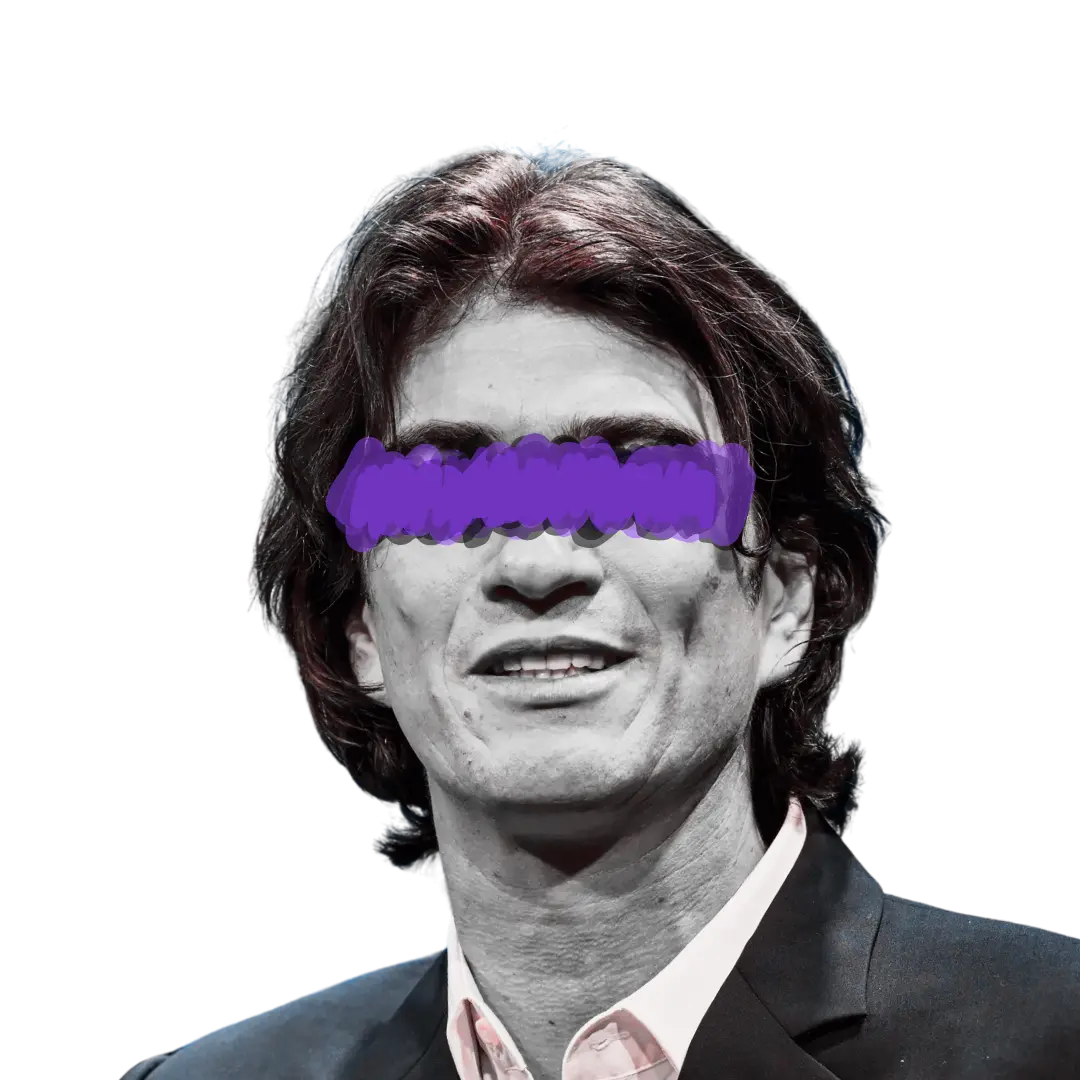
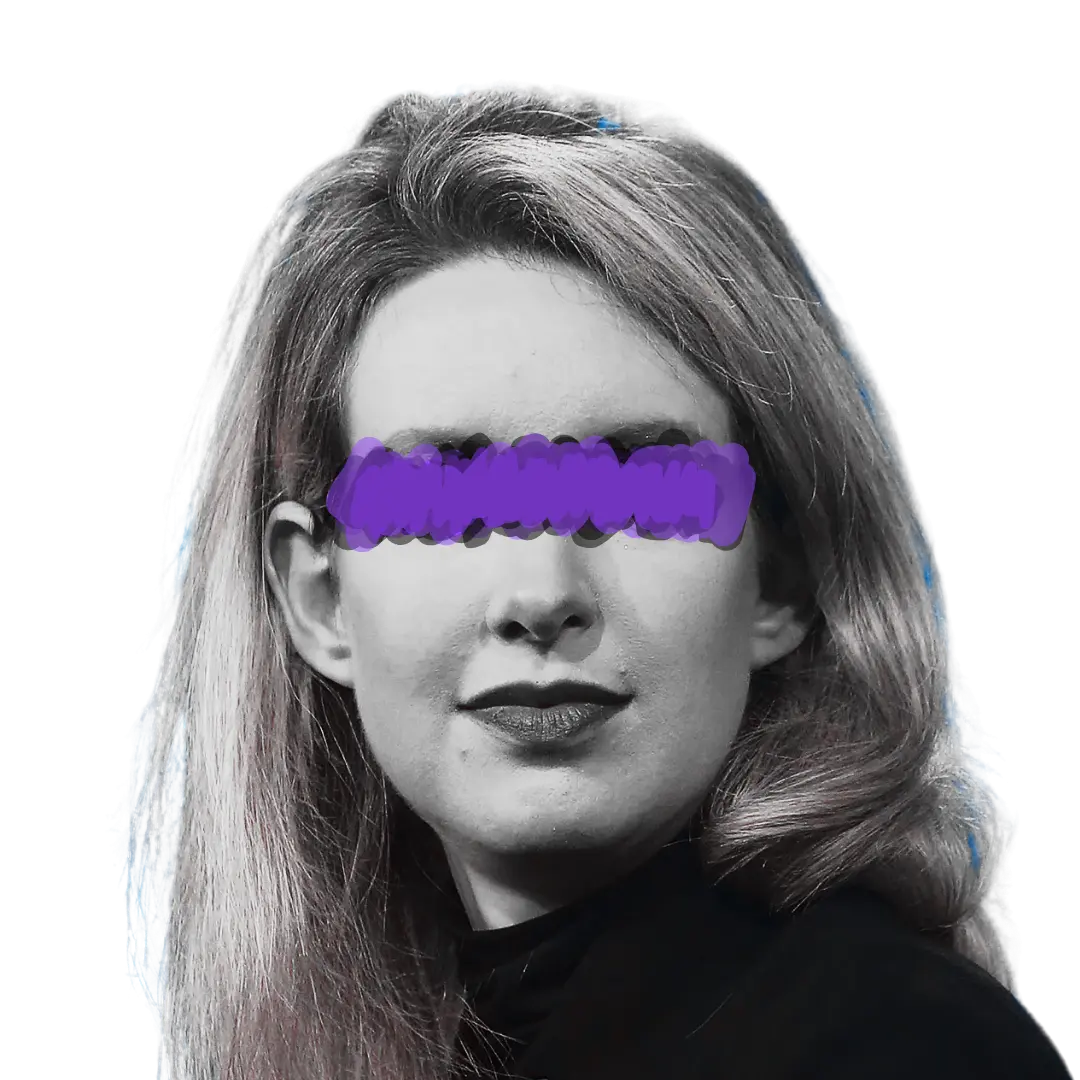
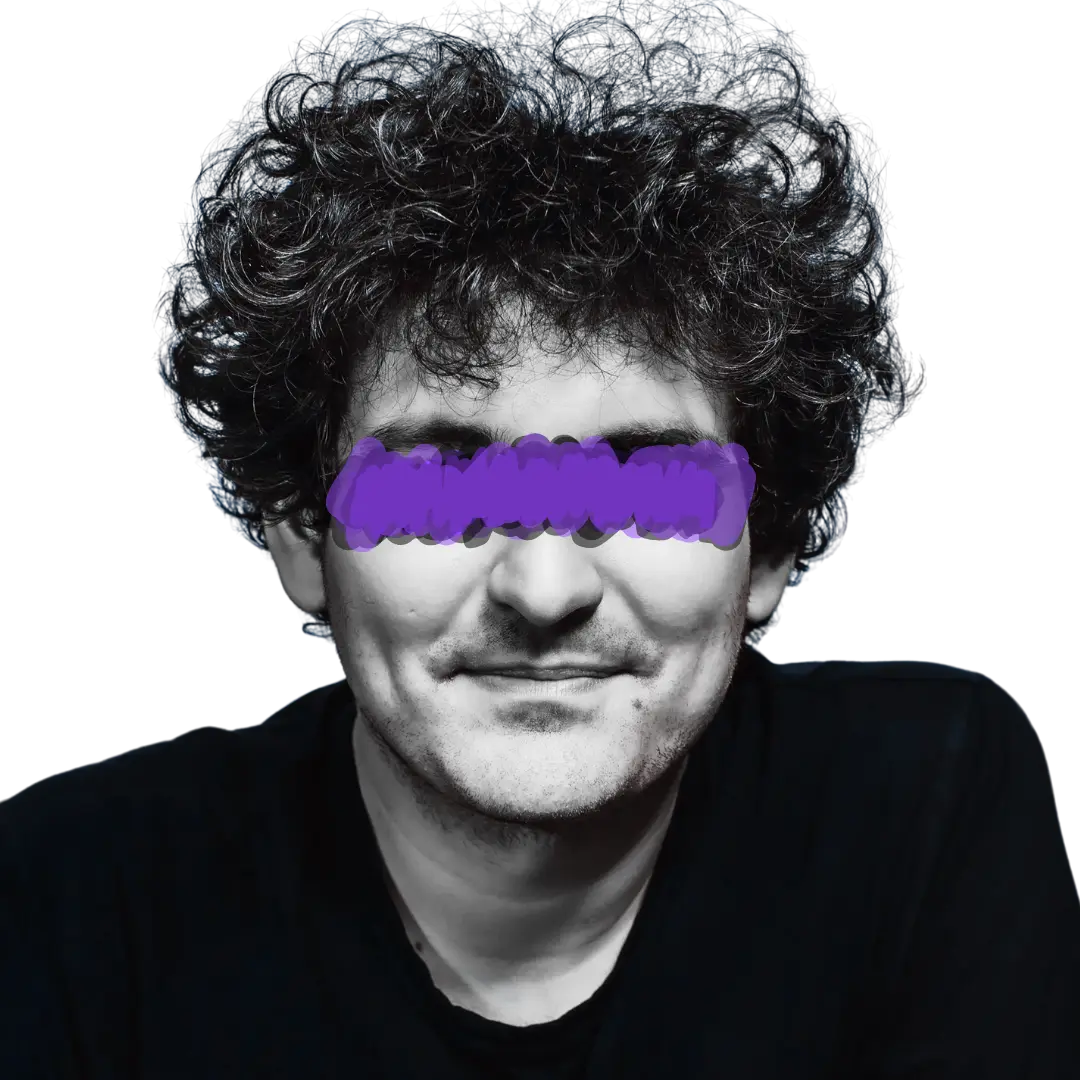
A boy in Indianapolis hands his mother $150 from a paper route and says "this is my share of the rent." A nine-year-old girl writes her father a letter saying she wants "to discover something new, something that mankind didn't know was possible to do" — and never specifies a what. A teenager at a Stanford-law dinner table is told that personal responsibility is a philosophical mistake.
Three children. Three sentences. Three later founders. Each sentence is the entire personality, already on the page. (The SBF beat is a paraphrase of his mother’s published view; the receipts are in Frame 3.) Twenty years later, one walks free with $2.5 billion in fresh funding. One is in a Texas prison camp until 2032. One is in federal custody until 2049.
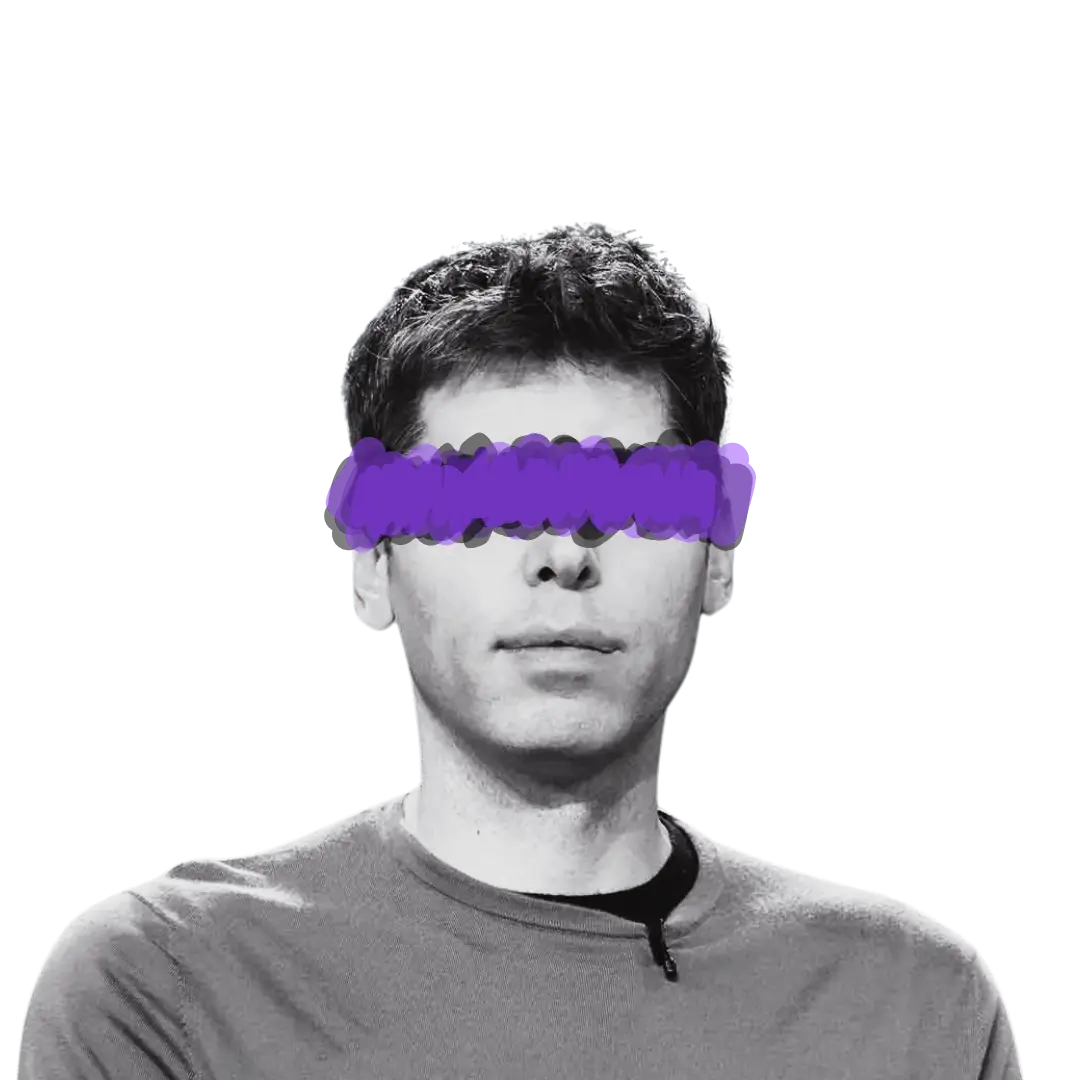
Same starting move — build the founder before the product. Three different failure paths. Three different prison terms. And a fourth founder, Sam Altman, who learned how to do all three things at once — the live experiment this piece is really about.
This isn’t a story about who lied. Every CEO lies. It’s a story about which personality types lie in which shapes — and which type the consequences let walk away.
The Sentencing Asymmetry
| Founder | Type | Company peak | Fraud type | Criminal status | Today |
|---|---|---|---|---|---|
| Adam Neumann | 3w2 | WeWork — $47B | Self-dealing, governance fraud | No criminal charges, ever | Flow ($2.5B valuation, a16z-backed) |
| Elizabeth Holmes | 3w2 | Theranos — $9B | Investor + patient fraud | Convicted 2022 | FPC Bryan, TX. Release ~late 2032 |
| Sam Bankman-Fried | 5w6 | FTX — $32B | Customer fund misappropriation | Convicted 2023 | Federal custody. Release 2049 |
| Charlie Javice (Frank) | 3w2 | Frank — $175M acquisition | JPMorgan acquisition fraud | Convicted 2025 | 7 years federal, on bail pending appeal |
| Do Kwon (Terraform) | 5w6 | Terra/Luna — $40B+ wiped | Algorithmic-stablecoin fraud | Pleaded guilty 2025 | 15 years federal |
| Sam Altman | 4 | OpenAI — $300B+ | (none charged — see Frame 4) | None | CEO, OpenAI |
The standard read is that sentence length tracks falsifiability. Holmes lied about a physical device that could be inspected. SBF and Kwon lied about balances and stablecoins that could be audited. Javice lied about a customer database JPM could email-ping. Neumann lied about a feeling, and feelings don’t appear in indictments. The cleaner read is that this is what happens when six personality engines all run the same broken loop into different substrates — the actual product underneath the pitch — with very different forensic surface area.
Fraud isn’t a personality type. Fraud is what happens when any type runs without a check.
Frame 1: Adam Neumann, the 3w2 Who Became the Pitch
Adam Neumann is a Type 3 with a 2 wing — closer to Holmes than the WeWork-party shorthand implies. The core engine is identity fused with performance: if the room buys the founder, the company becomes real.
The childhood is the engine, on the page. At ten, in Indianapolis, Neumann handed his mother $150. “I earned $300 from my paper route. This is my share of the rent.” (CTech / Calcalist, 2020.) The boy who couldn’t bear to owe his single mother fifty bucks grew up to make the self into the asset. By age 22 he had lived in 13 different homes. Home was a thing that ended without warning, so the safest move was to become the person who could sell belonging anywhere.
Then the receipt. In 2017, Masayoshi Son visited WeWork’s headquarters for a scheduled two-hour tour. The walkthrough lasted twelve minutes. Halfway through, Son pulled Neumann into the back of his SUV and sketched out a $4.4 billion investment on the way to Trump Tower. WeWork’s valuation jumped from a few billion to twenty billion before the SUV stopped moving. Nobody funds a real-estate sublease company at $47B. They fund a 3 in a twelve-minute performance — a man who, for the duration of the tour, becomes exactly the founder the room needs.
The grandiosity went on the record. Neumann told employees, friends, and reporters — repeatedly — that he wanted to be the world’s first trillionaire, the prime minister of Israel, and “president of the world.” Not a slip. A 3w2 trying on the largest available identities to see which one fit.
Under pressure, the 3 stress-arrows to 9. (“Stress arrow” is Enneagram shorthand for the failure mode each type collapses into when the home strategy stops working — for a 3, it’s 9-style disengagement: the achievement engine doesn’t fight harder, it diffuses.) In WeWork’s collapse, Neumann kept selling mission language while basic governance questions went unanswered. The self disappeared into the brand: “we,” consciousness, community, tomorrow’s Flow deck. Accountability became ambient.
And then he didn’t go to prison. After the IPO collapse and the forced ouster, he took $1.7 billion off the table. Two years later, Marc Andreessen announced Flow — a16z’s largest single check ever, $350 million for a residential-real-estate company that had not yet started operating. Andreessen described Neumann, in writing, as a “visionary leader” who would “revolutionize” residential housing. The same VC ecosystem that lit $40 billion on fire on Neumann’s first company wrote him a fresh check for his second. (Why, in Frame 5.)
Neumann is not even the only ousted founder of the era who walked. Travis Kalanick was forced out of Uber in 2017 by Benchmark — the same firm whose Bruce Dunlevie shows up in Frame 5 — and was never criminally charged either; he runs CloudKitchens now. The “founder ousted, founder uncharged, founder funded again” loop is the default outcome for a 3 with a substrate the VC class still wants to be exposed to.
Frame 2: Elizabeth Holmes, the 3w2 Who Collected Patrons First
Holmes is sometimes typed as a 3w4 — the Steve Jobs cosplayer, the black-turtleneck mimic. The stronger read is Type 3 with a 2 wing: the achievement engine wired to a helper instinct that collects powerful people as proof. The cosplay is a sub-pattern of the patron-collection engine, not the engine itself.
The 3w2 — “the charmer” — wants to be admired by the most powerful people it can collect. Mentors, generals, statesmen. The board IS the product image.
The age-9 letter to her father is the personality, complete: “What I really want out of life is to discover something new, something that mankind didn’t know was possible to do.” She did not say a what. She did not say a field, a problem, a person she wanted to help. The shape was the point.
The desk quote is the anchor. In her early years at Theranos, before the device worked, Holmes kept a single quote framed on her desk. The quote was about her. It was written by Channing Robertson, her Stanford thesis advisor and one of Theranos’s first board members:
“You start to realize, you are looking in the eyes of another Bill Gates, or Steve Jobs.” — Channing Robertson, Fortune, 2014
She had not built anything yet. Most founders work toward the comparison. Holmes installed it first, in eyeline, and worked back from there.
Then the patron board. By 2014, the Theranos board read like a Cold War reunion. Henry Kissinger. George Shultz. James Mattis. William Perry. Sam Nunn. Bill Frist. Not one had healthcare expertise. Kissinger described her in Time as “ethereal” and “like a member of a monastic order.” Mattis called her “a revolutionary in the truest sense.” Ken Auletta reported the board talked about her “as if she were Beethoven.”
That board was not assembled to govern. It was assembled to be the social proof that the company was real. They did not need to understand the device. They needed to be photographed near it.
John Carreyrou, the Wall Street Journal reporter who broke the Theranos story, captured the interpersonal mode: “the way she trained her big blue eyes on you without blinking made you feel like the center of the world.” That’s the helper wing in deployment — reading the person across from her and giving them back exactly the version of themselves they wanted to feel.
Same stress arrow as Neumann, different exit. Where Neumann’s 3→9 disengagement diffused outward into mission language (“we,” consciousness, community), Holmes’s collapsed inward — the self literally going dark on the record.
The single most documented expression of this on the public record is Holmes’s SEC deposition. She said the phrase “I don’t know” more than 600 times. Asked about emails she had sent under her own name, she did not recall sending them. Asked about language she had spoken aloud onstage, she did not know. The same woman who could speak for an hour about a single drop of blood became a person to whom nothing had ever been said. When the achievement engine cannot achieve, the 3w2 doesn’t fight harder. The self goes out.
Frame 3: Sam Bankman-Fried, the 5 Who Calculated His Way Into Prison
Sam Bankman-Fried is a Type 5 with a 6 wing. The 5’s core defense is to retreat into analysis until the world becomes safe to model. The 6 wing adds tribal loyalty — for SBF, effective altruism functioned as security tribe and moral permission structure simultaneously.
The household philosophy was on the public record. SBF’s mother, Stanford Law professor Barbara Fried, published a 2013 Boston Review essay titled “Beyond Blame,” arguing that “the philosophy of personal responsibility has ruined criminal justice and economic policy” — that individuals shouldn’t face moral criticism for outcomes because the libertarian free will the concept rests on is an illusion. SBF was raised inside that argument. The teenager-at-the-Stanford-law-dinner-table line in the lede is a compression of his mother’s published position, not a quote from SBF — but the position itself is on the page, in print, with her name on it.
In September 2022, Sequoia Capital nearly invested in FTX. The pitch happened over video. The Sequoia partners later described it as “one of those your-hair-is-blown-back type of meetings.” He was playing League of Legends through the entire call. The investors thought the multitasking was genius. Sixty days later, FTX was bankrupt and $8 billion of customer money was missing.
Then the admission. On November 16, 2022, eight days after the bankruptcy filing, Vox’s Kelsey Piper messaged him. Asked whether he still stood by the ethical framework that had defined him for a decade, he described it as “this dumb game we woke westerners play where we say all the right shibboleths and so everyone likes us.” Asked if his regulatory positioning had been “just PR,” he said: “Yeah, just PR.”
This is not a 5 who lost his way. This is the 5 admitting the framework was a costume. The 3 betrays a value because it got in the way of achievement. The 8 betrays a value because it got in the way of power. The 5 doesn’t betray a value because the value was never inside. It was a tool the observing mind used. When the tool stopped being useful, the mind set it down and walked off.
The trial put the mechanism on the record. Caroline Ellison, his Alameda CEO, testified that “Sam directed me to commit these crimes,” and that he had told her “there was a 5% chance he would become president.” Not a fantasy. An expected-value claim — the EA-flavored math where you multiply probability by payoff and treat the product as actionable, the same way a quant prices an option. A 5w6 brain applied to its own life trajectory the way it was applied to everything else.
Gary Wang, the FTX co-founder who wrote the code, testified: “We gave special privileges to Alameda Research to allow it to withdraw unlimited funds [from FTX] and lied about it.” The hidden line of credit ran first to $1 billion, then to $65 billion.
At sentencing on March 28, 2024, Judge Lewis A. Kaplan noted that Bankman-Fried had acknowledged mistakes but had “never [said] a word of remorse for the commission of terrible crimes.” Juries and judges cannot forgive a 5 who refuses to round off. Asking a 5 to say “I am sorry” without first running the expected value of saying it is asking the type to do the one thing the type is built not to do.
Under pressure, the 5 stress-arrows to 7. When the math stops protecting him, the 5 cannot retreat further into analysis — there is no more inward to go — so the energy explodes outward into manic 7 chaos. The last 18 months of FTX: Crypto.com Arena naming rights, Tom Brady and Naomi Osaka endorsements, a Larry David Super Bowl ad, MLB umpire patches, Formula 1 sponsorship, a $40 million political-donation spree that made him the second-largest Democratic donor of the 2022 cycle. And, after the collapse, an unsupervised media tour during a federal investigation that even his own attorneys publicly disowned. The 5 who could not go further inward exploded outward instead.
The standard explanation for SBF’s fraud is that EA made him do it. The Kelsey Piper DM blows that frame up. He told a reporter, in writing, that the framework was PR. Not a 5 corrupted by EA. A 5 who picked EA as the most defensible wrapper for what he was already going to do.
The substrate thesis gets its cleanest test in the same crypto cycle. Changpeng Zhao, who ran Binance through the years the DOJ called the largest AML failure in financial history, pleaded guilty in late 2023 and served four months. Same industry, same decade, sentence delta of roughly 75x. The difference isn’t who lied harder. It’s whether the underlying business — an exchange that, technically, mostly worked — could survive being told the truth about itself. Binance could. FTX could not. The substrate didn’t just determine the sentence. It determined whether there was a company left to be sentenced about.
Frame 4: Sam Altman, the 4 Who Is Still Aloft
Sam Altman is a Type 4 in the same structural position the other founders occupied right before the wheels came off. The full case for the typing is in Musk vs Altman: A Type 5 and a Type 4 Walked Into a Federal Courtroom. This section maps the latent structure with two concrete beats. It does not predict.
The Toner CSET incident. In October 2023, board member Helen Toner co-authored a Georgetown CSET paper that praised Anthropic’s safety posture and was mildly critical of OpenAI. Altman’s response, per Toner herself on the TED AI Show six months later: “After the paper came out, Sam started lying to other board members in order to try and push me off the board.” And — the harder beat — executives “actually sent us screenshots and documentation of some of the instances they were telling us about, of him lying and being manipulative.” Not vibes. Receipts.
The GPT-4 Turbo safety bypass. Altman told CTO Mira Murati that OpenAI’s general counsel Jason Kwon had cleared a new model to skip the internal safety review board. When Murati Slacked Kwon to confirm, he was confused — he hadn’t said that. Under oath in May 2026, asked whether Altman was telling the truth, Murati answered: “no.” Asked whether Altman “undermined [her] as CTO” — “yes.” Asked whether he “pit other execs against one another” — “yes.”
That is the Type 4 narrative-architect under stress: two rooms, two incompatible stories, calibrated to the audience in each room. Different reality for different listener. The same gap-between-image-and-substance dynamic that fells 3s, named in writing by people who had worked next to him for years.
Under pressure, the 4 stress-arrows to 2. The visionary narrative-architect becomes the audience-merging shapeshifter — producing the version of himself the room needs. Each room gets its own founder.
He didn’t fall in November 2023 for three reasons:
- GPT actually works. Theranos’s fraud was falsifiable. Altman’s product, whatever its limits, ships.
- Microsoft’s $13 billion is too entangled to unwind. Satya Nadella made it instantly clear that if the board pushed Altman out, Microsoft would hire him and the entire research team.
- Roughly 700 employees revolted within five days. The board capitulated. Altman returned more powerful than before.
None of these are durable. If GPT plateaus, if Microsoft renegotiates, if a credible safety incident occurs, the same dynamic that produced November 2023 is available to fuel the next chapter. Strip any of the three and the only remaining check is the 4’s own reflective work — the one check the 4’s stress-arrow specifically routes around.
Sam Altman is not the next Elizabeth Holmes. He is the live experiment in whether a Type 4 with a working product can avoid being one.
Frame 5: The Investor Side
The fraud needed a counterparty. None of these founders self-funded. Each was elevated, capitalized, and re-capitalized by people whose actual product is reading other people fast.
The clearest archival quote is Bruce Dunlevie of Benchmark on his early WeWork bet: “an indefinable feeling that you couldn’t quite put your finger on.” That’s not a thesis. That’s the 6 reading founder confidence as a status signal — the threat-detection brain inverted into a fear-of-missing-out detector. A 3w2 at full performance is exactly the answer to “what would make me look smart for believing early?” Dunlevie’s “indefinable feeling,” Masa’s twelve-minute SUV (Frame 1), Holmes’s patron board (Frame 2), and Sequoia’s hair-blowing-back call (Frame 3) are the same cognitive trade in four costumes. Certainty about the founder substitutes for due diligence on the substrate.
The investor side is the part of the story Silicon Valley reflexively obscures, because the easiest way to be early on the next big thing is to fund the person who already feels inevitable.
The Pattern Repeats: Charlie Javice and Do Kwon
If the framework only worked retrospectively on three convicted founders, it would be storytelling. Two 2025 convictions show it generalizes — and that the existing slots already had room for them.
Charlie Javice (3w2, 7 years federal). Founded the college-aid startup Frank, sold it to JPMorgan for $175M in 2021. Inflated her customer list from roughly 400K real users to 4.265M fabricated identities to close the deal — about 70% of the addresses JPM later pinged bounced. The diagnostic beat is internal: her own employees had a private nickname for her metrics. “these look like Charlie numbers,” one Slacked. “charlie is the king of finding magic numbers haha.” A third asked: “do we really have 4.25M students?” The 3w2 signature is in the nickname — coworkers had a name for the pattern because the pattern was the founder. The metric had to exist whether or not the underlying reality did. Same engine as Holmes. Younger, faster cycle, cleaner data trail.
Do Kwon (5w6, 15 years federal). Founded Terraform Labs; the May 2022 collapse of UST/LUNA wiped out roughly $40 billion. The diagnostic beat is a single tweet to economist Frances Coppola, who had questioned the algorithmic stablecoin’s design: “I don’t debate the poor.” It’s not just contempt — it’s the intellectual contempt of someone who believes math has resolved the question and the only remaining objection is the objector’s inferiority. The 5w6 signature is the conviction that being right at the whiteboard discharges the responsibility to be right in production. The 6 wing shows in the tribal in/out framing (“LUNAtics” vs. “the poor”) and the combative persona he later admitted was a deliberate construction.
Two 2025 convictions, two existing slots in the framework, no new types required. That’s the difference between a typology that pattern-matches after the fact and one that pattern-predicts before it.
What Counts as a Check?
The whole argument rests on the word “check.” Here is the working taxonomy:
- A co-founder or executive who can credibly say no. Murati and Sutskever for Altman. Wozniak for Jobs. Paul Allen for Gates, early. Caroline Ellison was almost this for SBF — she got two years for the same fraud he got 25 for, and Judge Kaplan named the gap directly: “She cooperated and he denied the whole thing.” The check on a 5 isn’t a co-founder who argues with the math; it’s a co-conspirator who breaks first and tells the prosecutor what the math actually said.
- A board with governance teeth, not patronage. Theranos’s board of generals could not be a check because it was assembled to be the proof.
- A falsifiable product. A device that runs 240 tests on a drop of blood, or doesn’t. A truck that drives — or rolls downhill, the literal Nikola demo that earned Trevor Milton four years federal in 2023. A customer database that pings, or bounces.
- A moral framework the founder cannot edit. SBF’s EA framework was a check on paper and a costume in practice — because SBF controlled which parameters got plugged in. A check has to be operated by someone other than the founder.
- Adversarial press and regulators. Carreyrou for Holmes. The Vox DM for SBF. The Frank email-bounce diligence for Javice.
A founder is integrated to the degree that their type has at least two of these in real, operating order. Strip them all and any type — including the celebrated ones — defaults to the failure shape its stress-arrow predicts.
- Jensen Huang’s 3w2 is checked by a chip in real data centers and the customers who would notice if it underperformed. Same wing as Holmes; different substrate.
- Bill Gates’s 5 is checked by a moral framework he spent decades stress-testing in public, and by Paul Allen as a co-founder peer. Same type as SBF; different integrations.
- Altman’s 4 is checked, today, by GPT working, Microsoft’s $13 billion, and a missionary employee base — none of which are operated by anyone whose only job is to say no.
The Victims Are Not a Footnote
The framework can read, on the page, like a costume game between rich people. It isn’t. Holmes shipped roughly 240 inaccurate test results through Walgreens Wellness Centers; patients made medical decisions on bad data, including pregnancy and HIV cases. SBF’s collapse vaporized retail customer balances — the FTX bankruptcy estate spent three years trying to piece together what was owed to schoolteachers, Filipino remittance senders, and mid-sized institutions that thought “regulated US-friendly exchange” was a real category. Neumann’s IPO collapse hammered employees holding strike-priced options that briefly made them paper-millionaires and then didn’t. Javice’s fraud routed through real college applicants whose data was being manufactured to inflate someone else’s exit. Kwon’s collapse fell hardest on Korean retail investors, several of whom died by suicide in the weeks after the depeg.
Personality typing is a diagnostic. The moral verdict is what happens to the people downstream of the costume.
Caveats This Frame Doesn’t Litigate
Era. All five convictions sit inside the 2010s–2020s ZIRP-era substrate of cheap money, founder-worship media, and crypto novelty. These types existed before — Equity Funding (1973), Enron (2001), Madoff (2008) — but the costume was less fundable when capital had a price. The personality engines are constant. The substrate determines whether the costume gets to a billion-dollar round.
Type 5 has a live counter-experiment. Elon Musk is the obvious Type 5 founder still aloft and still building falsifiable hardware that mostly ships; whether the same first-principles brain that built Falcon 9 is checked or unchecked is the parallel live experiment to Altman’s, and is covered in Musk vs Altman rather than re-litigated here.
Hindsight. This is a structural diagnostic, not a predictive instrument. Naming the stress-arrow shape after a collapse is easy. The Javice and Kwon sections show the framework holding on cases where the type fit existing slots without needing new ones; the Altman section is the live test of whether it can hold without a sentence at all.
What the Pattern Is For
The Silicon Valley narrative treats fraud as a moral category — a thing villains do — and expresses surprise every cycle when the villains turn out to be the archetypes the industry was lionizing six months earlier. The cycle isn’t about morals. It’s about which types are loaded into which seats, and what’s checking them once they’re in.
The next time you’re reading a founder profile, don’t ask “is this person trustworthy?” Ask: “what’s their type, and what’s checking it?” If the answer is “they’re a visionary and the only check is their own conviction,” the failure shape is already on the page. You just don’t know which prison sentence yet — or whether their substrate ships in time to keep them out of one.
If you don’t write founder profiles for a living, the question scales down. If you work for one of these companies, customer one of these products, or hold one of these tokens, the same diagnostic still runs: what’s the substrate, and what would a missing-check failure look like for you specifically? Equity that vaporizes the week after a forced ouster. A medical decision made on bad data. A balance you suddenly cannot withdraw. A college-aid account that turns out to be one of 3.8 million synthetic identities. The question isn’t whether you can spot a fraud. It’s whether you can name, before the headline, the shape of the loss the founder’s type would route toward you if their last check fell.
This is what the abstract framework piece on Dark Triad and Enneagram was pointing at. This is the named-case-study version. The next one is already in pitch meetings.
This post is part of the Tech Titans Through the Enneagram series. See also Tech Leadership by Personality Type, Dark Triad Meets Enneagram, and Musk vs Altman: A Type 5 and a Type 4 Walked Into a Federal Courtroom.