
Silicon Valley believes leadership is a skill you can learn from a book. Read the right management frameworks, hire the right coach, attend the right conference. But watch how actual tech leaders operate and a pattern emerges that no framework explains.
The same personality types keep showing up. And they lead in predictably different ways.
This isn’t a coincidence. It’s the Enneagram. And the types that DON’T show up in tech leadership tell you just as much as the ones that do.
The Tech Leadership Type Map
| Type | Leaders | Leadership Style | Strength | Blind Spot |
|---|---|---|---|---|
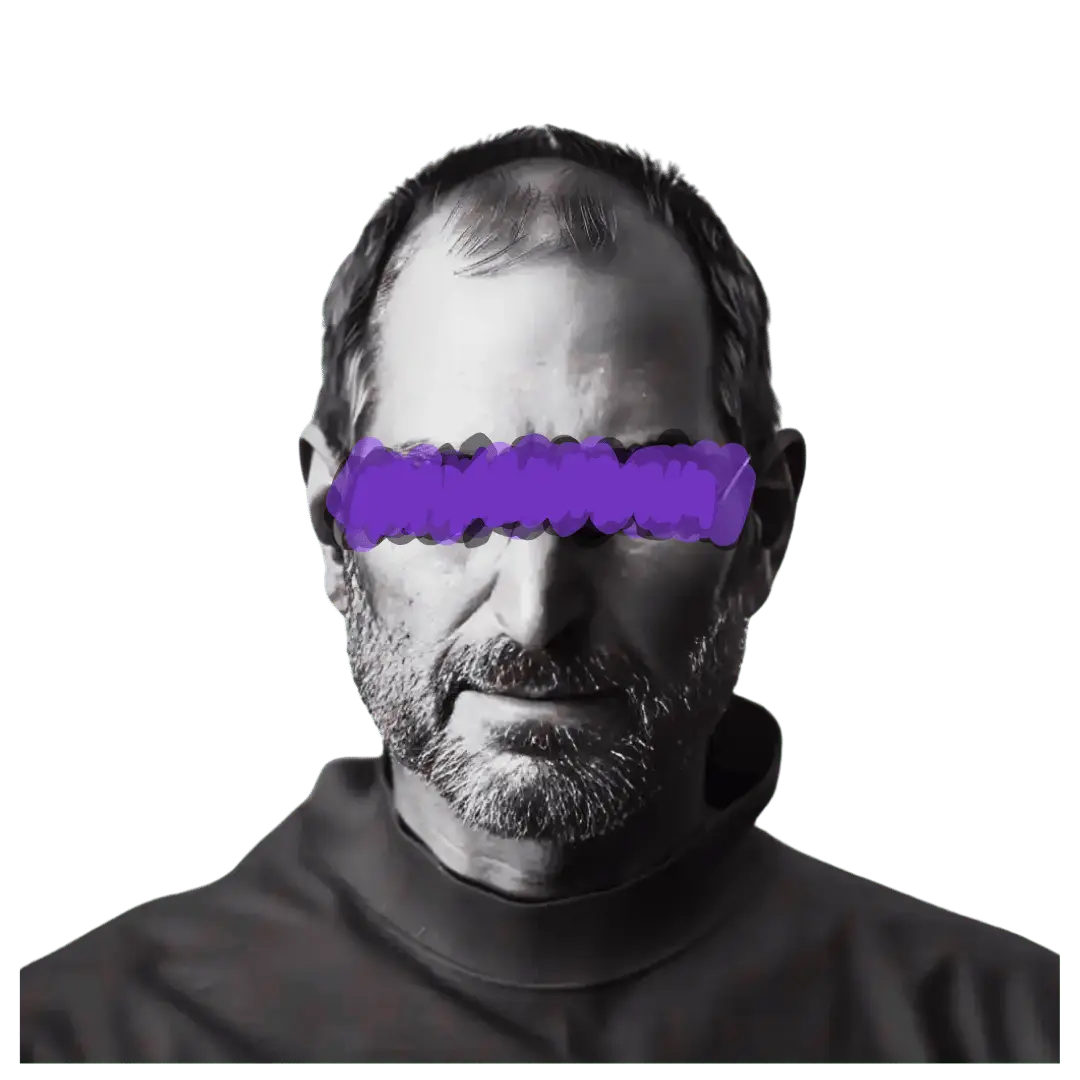
| Type 1 | Steve Jobs, Tim Cook | Standards & Perfectionism | Uncompromising quality | Crushing rigidity |
| Type 3 | Jensen Huang, Andy Jassy, Chamath | Achievement & Adaptation | Relentless execution | Image over substance |
| Type 4 | Sam Altman | Vision & Narrative | Inspiring significance | Dramatic instability |
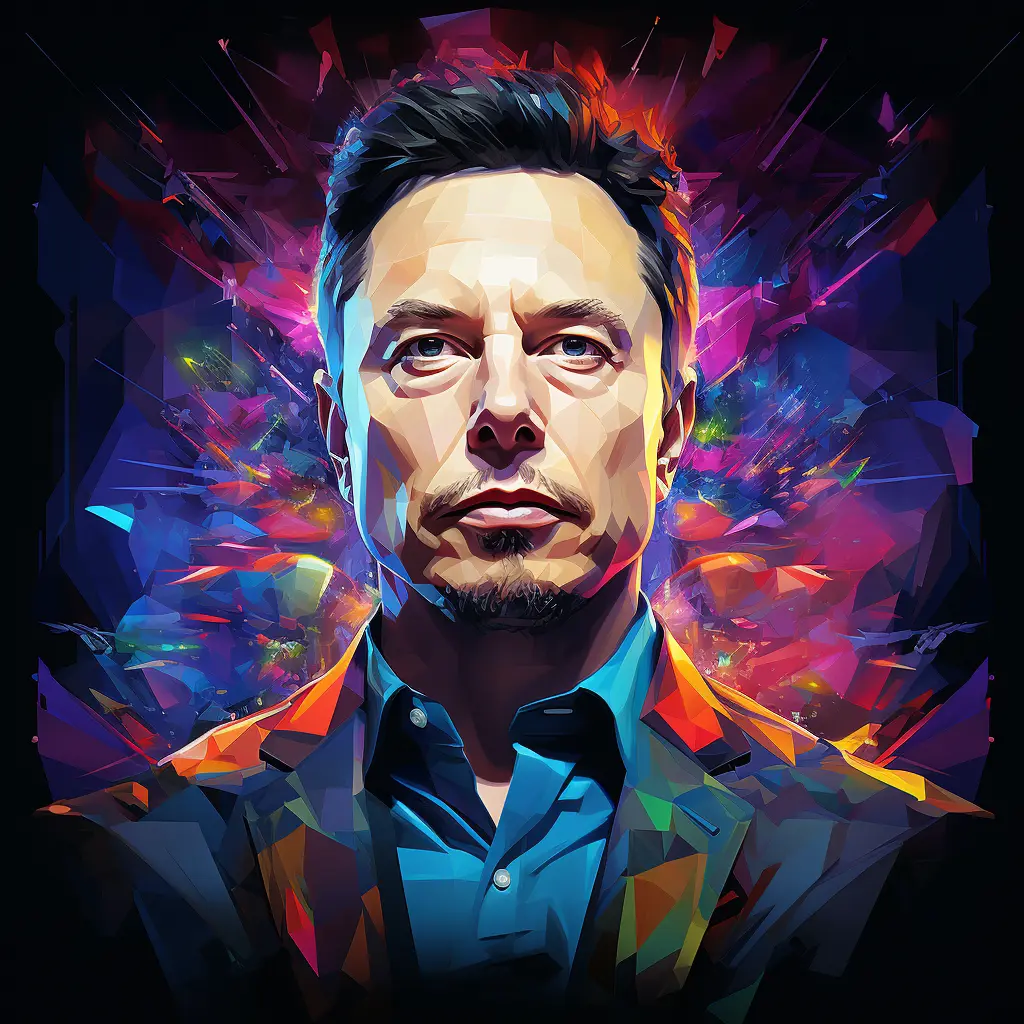
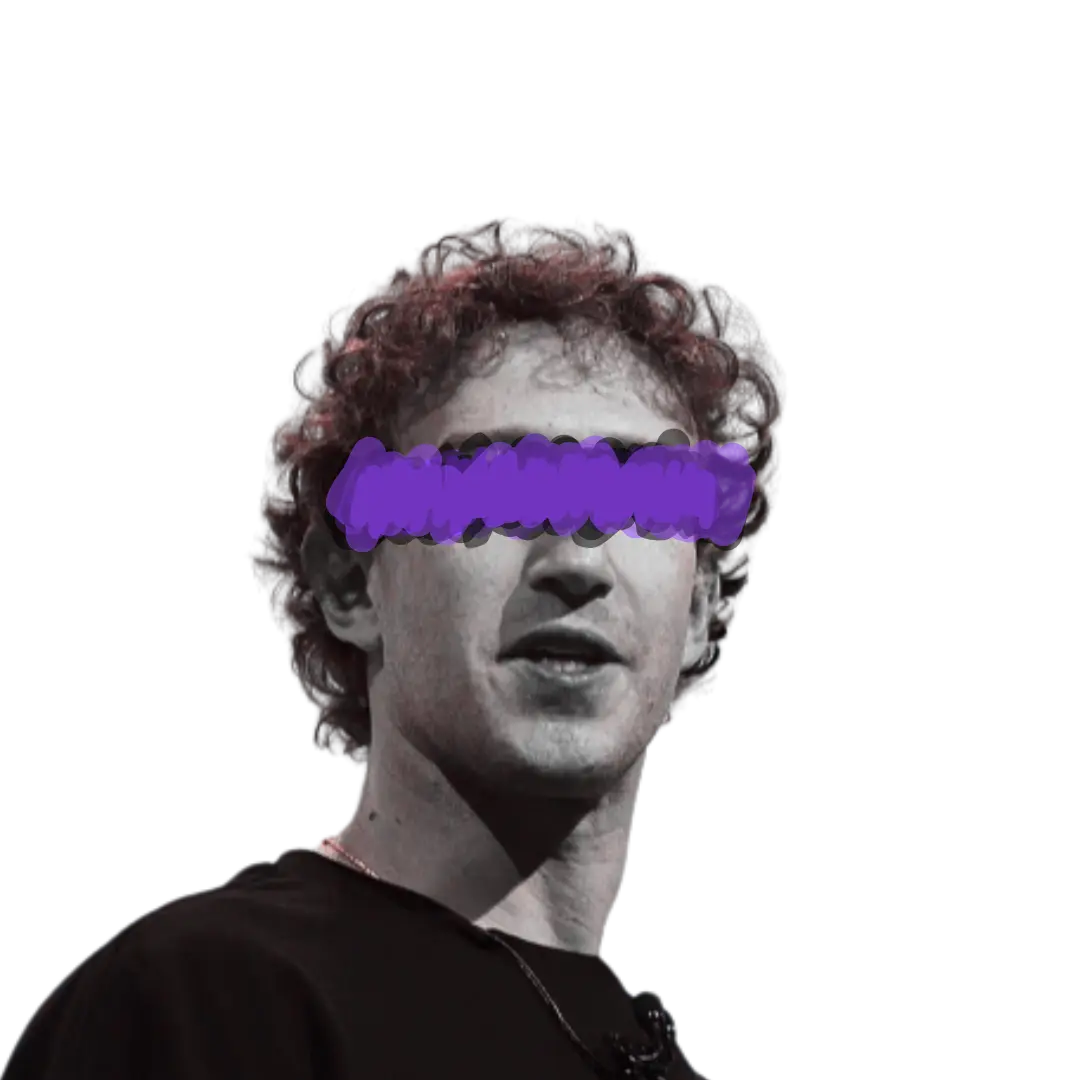
| Type 5 | Musk, Zuckerberg, Nadella, Gates, Dorsey | Systems & Mastery | Deep analytical rigor | Emotional detachment |
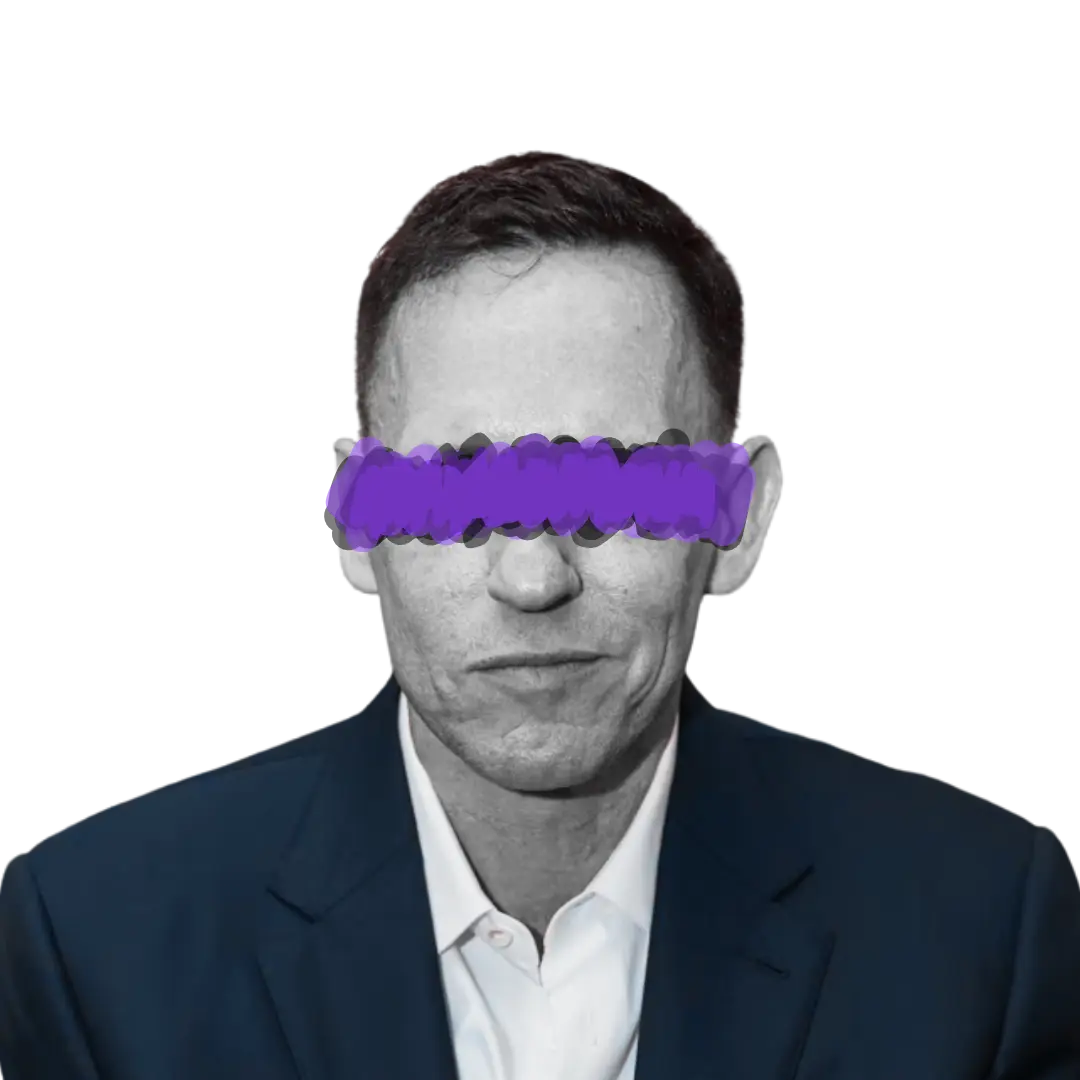
| Type 6 | Peter Thiel, David Sacks | Contrarianism & Loyalty | Threat detection | Paranoid decision-making |
| Type 8 | Jeff Bezos, Reed Hastings, Travis Kalanick | Confrontation & Dominance | Decisive force | Destructive intensity |
| Type 9 | Sundar Pichai | Consensus & Diplomacy | Organizational stability | Conflict avoidance |
Type 1 Leaders: The Standard-Setters
Steve Jobs and Tim Cook
Jobs dropped an iPod prototype into an aquarium. Bubbles rose to the surface. “Those are air pockets,” he said. “Make it smaller.” His engineers had said it was impossible. He didn’t care. There was a right size. The prototype was wrong. End of discussion.
That’s Type 1 leadership distilled. The gap between “what is” and “what should be” isn’t just noticeable to a 1—it’s physically painful. Jobs cried over font kerning. He rejected prototypes hundreds of times. He screamed at people he respected because their work wasn’t right yet. The “yet” was the only mercy his type offered.
Cook doesn’t cry over kerning. He doesn’t scream in meetings. But when the FBI demanded Apple build a backdoor into the San Bernardino shooter’s iPhone, Cook’s response was immediate and absolute: no. Not “we’ll consider it.” Not “let’s find a compromise.” No. This is wrong. We will not do it.
Same type. Different theater. Jobs applied his 1 to pixel-level product perfection. Cook applies his 1 to institutional integrity—privacy as a civil liberty, carbon neutrality as a deadline, accessibility as a human right. These aren’t marketing plays. They’re a 1’s conviction that companies, like products, should be made correctly.
The 1’s Superpower: Uncompromising Quality
The iPhone exists because a Type 1 believed the phone industry was WRONG and felt morally compelled to fix it. “It just works” isn’t a marketing slogan. It’s a 1’s core belief that things SHOULD work perfectly—and that shipping anything less is a moral failure.
This is why 1s create obsessive cultures. Jobs set the bar, and everyone below him either met it or left. Apple’s culture of secrecy, precision, and reverence for design isn’t a corporate strategy. It’s a 1’s psychology imposed on 150,000 employees. The standards cascade downward because the 1 won’t tolerate any layer of the organization operating at a lower standard than the top.
Cook inherited that cascade and redirected it. Where Jobs demanded aesthetic perfection, Cook demands operational and moral perfection. Apple’s supply chain runs like a Swiss watch. Its environmental commitments hit their deadlines. Its privacy stance is non-negotiable. Different domain, same psychological engine: things should be right, and I will make them right.
Apple under Cook feels more responsible but less magical. That’s the difference in their 1 subtypes. Jobs was a 1 trending toward 4—artistic perfectionism that turned product launches into cultural events. Cook is a 1 trending toward 7—disciplined optimism that makes the trains run on time without the turtleneck mystique. The products still meet an exacting standard. The theater around them doesn’t.
The 1’s Blind Spot: Crushing Rigidity
Jobs famously refused to acknowledge market realities. He killed products arbitrarily based on aesthetic judgments. He refused to put a stylus on the iPhone—“God gave us ten styluses”—and Apple eventually shipped the Apple Pencil after his death because the market demanded it.
Cook’s Apple has a subtler version of the same problem. The need to make everything perfect before shipping creates bottlenecks. Apple Intelligence launched behind Google and OpenAI’s AI features—partly because the privacy-first, on-device architecture a 1 demands genuinely is harder to build, and partly because a 1 won’t ship a half-version while the harder one cooks. The Apple Car project burned through $10 billion over a decade before being canceled entirely. A 1’s rigidity doesn’t always look like stubbornness—sometimes it looks like paralysis. The unwillingness to ship anything imperfect means nothing ships at all.
Type 3 Leaders: The Achievement Machines
Jensen Huang
In 1993, three engineers crowded into a booth at a Denny’s in San Jose. Jensen Huang was 30—the youngest of the three co-founders. Chris Malachowsky and Curtis Priem had deeper technical expertise. They deferred to Huang anyway. As Priem later put it: “We basically deferred to Jensen on day one. You’re in charge of running the company—all the stuff Chris and I don’t know how to do.”
That’s Type 3 instinct. Huang didn’t know more. He positioned himself as the one who could execute more. And then he proved it—even when execution meant surviving catastrophe.
Nvidia’s first real product, the NV1, nearly killed the company. Huang bet on quadratic texture mapping when the entire industry was going triangles. Microsoft released DirectX with triangle-only support. The NV1 became a $10 million loss. Sixty percent of the 80-person staff got laid off. The bank balance dropped to one month’s payroll. A Type 5 might have doubled down on the theory. A Type 1 might have insisted the industry was wrong. Huang did what 3s do: he read the room, killed the failing approach, and pivoted the entire company to the RIVA 128 chip. It sold a million units in four months.
That pattern—reading the market, becoming what it demands, executing at speed—defines everything Huang has done since. Gaming GPU company to AI infrastructure backbone. The pivot wasn’t visionary. It was adaptive. 3s don’t predict the future. They position themselves at the center of whatever the future turns out to be.
The 3’s Superpower: Becoming What Success Requires
Huang sells GPUs to everyone—OpenAI, Anthropic, Google, Meta. A Type 8 would pick a side and dominate it. A Type 5 would analyze which side is right. A Type 3 ensures they’re essential to EVERY side. He’s the arms dealer of the AI wars, and that’s not neutrality. That’s 3 optimization. You don’t pick winners when you can be the thing every winner needs.
His management style reflects the same logic. Huang has 60+ direct reports and holds no one-on-one meetings. Instead, he reads roughly 100 “top of mind” emails every morning from anyone in the company—what he calls “stochastically sampling the system.” No hierarchy filters the information. No single person gets privileged access. It’s efficiency as leadership philosophy: a 3 who eliminates every structural barrier between himself and achievement. And when the Nvidia stock hit $100, he made good on a years-old promise to employees and got the company logo tattooed on his arm. A 3 performs commitment publicly enough that the gesture itself becomes the story.
Compare Huang’s product-3 approach with Chamath Palihapitiya’s capital-3. Both are relentlessly achievement-driven, but their arenas differ. Huang executes through engineering and supply chain dominance. Chamath executes through deals, narrative, and public positioning. On the All-In Podcast, Chamath performs expertise across every domain—finance, politics, health, AI—with the confidence of someone who has mastered each one. That’s a 3’s core skill: projecting competence so convincingly that the audience can’t tell the difference between mastery and performance.
The 3 also appears as a successor type. Andy Jassy at Amazon is a quieter 3—achievement-oriented, operationally relentless, but adapted to the specific challenge of running someone else’s empire. Where Huang builds his own narrative, Jassy executes within Bezos’s framework. Same type, different stage.
And then there’s the 3 who admits the cost. Brian Chesky at Airbnb has called the company’s $100 billion IPO “one of the saddest periods of my life.” A Huang would never say that out loud. A Chamath certainly wouldn’t. Chesky is the 3 who lets the loneliness of the achievement engine show—same drive, opposite confession. The same type that builds Nvidia’s victory-lap keynotes also builds the rare CEO interview where success is described as a kind of grief.
The 3’s Blind Spot: Image Over Substance
3s can confuse achievement with substance. They optimize for looking successful, which sometimes means prioritizing optics over depth.
Nvidia’s stock story is as much about narrative as technology. Huang’s GTC keynotes are spectacles—the leather jacket, the demos, the “this changes everything” framing. The technology is real. But the presentation is pure 3: package the achievement so compellingly that the audience confuses the packaging for the product. When Nvidia’s stock dropped 17% in January 2025 after the DeepSeek announcement—a Chinese AI lab training competitive models on fewer GPUs—the market briefly saw through the narrative. The stock recovered. But the dip revealed something: a 3’s success story is always partly story.
The contrast with 5s clarifies this. A 5-led company feels like a thesis—built from first principles regardless of market reaction. A 3-led company feels like a rocket strapped to market demand. Nvidia doesn’t have a philosophical position on AI. It has a market position. And for a Type 3, that’s the only position that matters.
And when the 3’s image-management gets uncoupled from real achievement entirely, you get Elizabeth Holmes. The deepened voice, the black turtleneck, the unblinking stare—a Type 3 cosplaying Steve Jobs while the actual technology never worked. Theranos is what happens when the costume keeps performing after the substance has run out. The same 3 wiring that makes Huang’s keynotes electric makes Holmes’s deposition footage chilling. The difference between them isn’t type. It’s whether the achievement under the image is real.
Type 4 Leaders: The Vision-Casters
Sam Altman
Listen to how Sam Altman talks about AI. Not the technical details—the framing.
“This could be the most important technology ever created.” “We might be building something that transforms civilization.” “The stakes couldn’t be higher.”
That’s not marketing. That’s how a Type 4 genuinely experiences their work. Everything is weighted with historic significance. Every decision carries existential gravity. For a 4, building AGI isn’t a business. It’s an identity.
Altman doesn’t manage through systems like a 5. He doesn’t intimidate like an 8. He doesn’t build consensus like a 9. He manages through story. And the story is always the same: we are doing the most important thing anyone has ever done, and you get to be part of it.
Happening now: Altman is currently in federal court in Oakland defending OpenAI against Elon Musk, and the case is being decided on vibes—which is to say, on a Type 5 vs Type 4 personality collision in front of a jury. The trial is the cleanest live test of everything in this section.
“But Isn’t Altman a 3?”
The most common pushback on this typing is that Altman looks like a 3—Loopt, the YC presidency, OpenAI, the relentless networking, the ladder-climbing. Watch what he optimizes for, though, and the 4 wiring is the only one that fits.
A 3 wants to be the most successful person in the room and self-promotes to make sure you know it. Altman wants to be the most unique person in the room—the one whose mind sees what others can’t—and he almost never self-brags. He’s Oppenheimer, not Jobs: in love with the gravitas of the work, the weight of the moment, the melancholy of being the one who has to do this. A 3 doesn’t enjoy the melancholy. A 4 lives there.
The “Altman lies” complaints don’t read as 3-style strategic image management either. They read as a 4 under stress collapsing into 2—shape-shifting to whoever’s in the room, appeasing them in the moment, then failing to follow up on the promises made to do it. That’s not a strategy. That’s a 4 trying to make every person feel chosen and losing track of the trail of commitments behind him. The full case is in the Sam Altman Type 4 analysis.
The 4’s Superpower: Making People Feel the Weight
No other type can make a team feel the significance of what they’re building like a 4 can. Altman turns an engineering project into a civilizational mission. His people don’t stay for the salary. They stay because a Type 4 leader makes them feel like they’re part of something that MATTERS—something that will be remembered.
This is why OpenAI recruits at a level that defies its compensation packages. The 4’s pitch isn’t “we pay more.” The 4’s pitch is “we’re making history.” For certain personality types—especially 3s who want to achieve and 5s who want to work on the hardest problems—that pitch is more valuable than equity.
The 4’s Blind Spot: Dramatic Instability
November 2023. The OpenAI board fires Altman. His team threatens to quit en masse. Microsoft offers him a landing pad. Five days later, he’s back—reinstated, vindicated, more powerful than before.
That’s not just corporate drama. That’s the archetypal Type 4 narrative: the misunderstood visionary, exiled by people who couldn’t see what he sees, then triumphantly restored because the world realized it needed him.
4s create intensity around themselves. Sometimes that intensity inspires. Sometimes it becomes a liability. The drama isn’t incidental to 4 leadership—it’s structural. A 4’s need for significance generates conflict because significance requires stakes, and stakes require adversaries.
Compare Altman’s exit to Dario Amodei‘s. Same organization. Amodei faced his own breaking point at OpenAI and quietly built Anthropic without a press cycle. A 5 doesn’t need the narrative. A 4 can’t survive without it.
The Rarest Type in Tech Leadership
The tech industry selects for 5s and 3s—analytical and achievement types. 4s are rare in tech leadership because the industry values systems and metrics over narrative and meaning. Altman is the exception. And his exceptionality is itself a very Type 4 quality—he’s the unique one, the different one, the leader who doesn’t fit the mold.
This rarity matters. When a 4 leads a technology company, the company develops a missionary intensity that purely analytical organizations can’t replicate. But it also develops the 4’s vulnerability: when the narrative falters, the organization doesn’t just lose direction. It loses meaning. And a 4 who loses meaning will do almost anything to get it back—including moving faster than they should.
Type 5 Leaders: The System Masters
Musk, Zuckerberg, Nadella, Gates, Dorsey
Five of the leaders profiled here are Type 5s—the largest single-type cluster in this analysis, and that’s before counting Larry Page and Sergey Brin (both 5s, the founders Pichai inherited Google from) or Dario Amodei, who left OpenAI to quietly build Anthropic without a press cycle. The most withdrawn, cerebral type on the Enneagram dominates an industry that shapes how billions of humans connect, shop, and communicate.
This isn’t coincidence. The industry was BUILT by people whose core drive is understanding and mastering systems. The entire culture of Silicon Valley reflects 5 values: intellectual rigor, systems-thinking, emotional detachment, first-principles reasoning. If you’re a 5, tech is the one industry where your personality type IS the culture.
But not all 5s lead the same way. The variation within this single type is more dramatic than the variation between most other types.
Five 5s, Five Leadership Styles
Musk: The Conqueror 5
Musk treats every industry as a system to decode. Automotive is a battery problem. Aerospace is a reusability problem. Social media is an algorithm problem. Leads through impossible demands and first-principles obsession. Sleeps on factory floors not because he has to—because a 5 who’s mastering a system can’t stop until the system yields. Musk is the 5 who integrates toward 8—gaining assertiveness, confrontation, and a willingness to use force. This is why people keep mistyping him as an 8. And right now he’s testing that 8-energy in court: his lawsuit against Sam Altman is a Type 5’s first-principles fury at a Type 4 he believes rewrote the founding story to write him out of it.
Zuckerberg: The Systematic 5
Zuckerberg leads through data, metrics, and structured goal-setting. Annual personal challenges—learn Mandarin, build an AI assistant, read 25 books—are a 5’s need for mastery made into a public performance. His management style is emotional detachment as philosophy. When Congress demanded empathy for Facebook’s role in election interference, Zuckerberg’s response was clinical, almost robotic. That wasn’t a PR failure. It was a personality type expressing itself under pressure. 5s don’t perform emotion. When they try, it reads as exactly what it is: a simulation.
Nadella: The Integrated 5
Nadella is the exception that proves the rule. Nadella’s son was born with severe cerebral palsy. In interviews, Nadella describes this as the experience that taught him empathy—not as a feeling, but as a framework. He studied it. He read about it. He made it systematic. Encountering an emotional reality you cannot solve with analysis, and then building an intellectual structure around it anyway, is what a 5 does when they refuse to look away. His book is called “Hit Refresh”—a 5 updating their mental model. Microsoft’s cultural transformation under Nadella is a 5 who learned to value what 5s typically dismiss. He’s the proof that 5s CAN lead with emotional intelligence. But he had to consciously LEARN it, not feel it naturally.
Gates: The Philanthropic 5
Gates shifted from mastering software to mastering global health. Same personality type, different system. Gates approaches malaria the same way he approached operating systems—with analytical rigor, systematic execution, and “think weeks” where he disappears to read hundreds of pages of research. He interrogated Microsoft employees with questions so pointed they felt like traps—because they were. Now he interrogates epidemiologists the same way. The domain changed. The wiring didn’t.
Dorsey: The Withdrawn 5
Dorsey is the purest expression of 5 leadership—so withdrawn that the organization has to self-organize. Dorsey led through absence: minimal direction, philosophical frameworks, long periods of non-intervention. He got pushed out of Twitter twice. Meanwhile he meditated, fasted, and took ice baths. A 5 building the world’s microphone and then whispering into it. The product demanded constant engagement. The founder’s type demanded withdrawal. Something had to give—and it was always the founder.
The 5’s Superpower: Intellectual Depth
When Nadella says “our industry does not respect tradition—it only respects innovation,” that’s a 5 cutting through emotional attachment to focus on what the system actually requires. No nostalgia. No politics. Just analysis.
This is why 5s build empires. A 5’s willingness to subordinate everything—relationships, comfort, public image—to understanding the system means they can see moves that emotionally attached leaders miss. Gates saw that controlling the operating system was more valuable than building the best hardware. Zuckerberg saw that human connection could be engineered as infrastructure. Musk saw that rockets didn’t need to be disposable. In each case, the insight was available to everyone. But only a 5 would pursue it single-mindedly enough to build a company around it.
The 5’s Blind Spot: Emotional Detachment
When Zuckerberg testified before Congress and couldn’t fake empathy, that wasn’t a communications failure. When Musk’s management style drove away half of Twitter’s workforce, that wasn’t a miscalculation. When Dorsey left his own company to meditate, that wasn’t irresponsibility. These are all the same blind spot: 5s treat human emotion as noise in the signal. The alternative—engaging with the messiness of human emotion on its own terms—is the one thing their type resists most. And the consequences of that resistance show up not just in their management, but in the products they build and the types of leaders they exclude from the industry entirely.
The collapse case is Sam Bankman-Fried. Same wiring as Zuckerberg’s congressional testimony, same “ethics is a system to model from the outside” detachment—but with no Microsoft-grade adult supervision and no actual product underneath. SBF’s private “ethics is a dumb game we play” admission is what 5 detachment sounds like when there’s nothing left to hold it in check. The same cerebral remove that lets Gates rebuild a global health portfolio from first principles lets a different 5 treat a customer-funds reserve as an interesting accounting variable. The wiring is neutral. The structure around the 5 decides what the wiring builds.
Type 6 Leaders: The Contrarian Threat-Detectors
Peter Thiel and David Sacks
6s in tech are rarely CEOs. They’re investors, advisors, and political operators. Thiel and Sacks are the archetypal examples—they don’t build companies day-to-day, but they shape the landscape through capital allocation and political influence. The 6 doesn’t sit in the CEO chair. The 6 decides who gets to.
The 6’s Superpower: Seeing Around Corners
Thiel’s “Zero to One” thesis—that the most valuable companies do something no one else does—is a Type 6’s threat-aware worldview turned into investment philosophy. While everyone else builds incrementally (improving existing categories, competing on features), the 6 asks: “what is everyone MISSING?”
That question isn’t curiosity. It’s anxiety. 6s are driven by a deep awareness that the world is more dangerous than it appears—that consensus is usually wrong and that the real threats are the ones nobody is discussing. Thiel’s investment in Facebook wasn’t about social networking. It was a 6 seeing a system that could map every human relationship—who trusts whom, where loyalty flows, where threats emerge. That’s what a 6 wants: a map of the social landscape so they can navigate it safely.
Sacks operates the same core logic through different channels. His move from venture capital to White House AI and Crypto Czar is a 6 who decided the threat was too large for private-sector responses. Where Thiel shapes the landscape through capital, Sacks shapes it through governance. But the engine is the same: threat detection and loyalty networks deployed at whatever scale the threat demands.
The 6’s Blind Spot: Paranoia as Self-Fulfilling Prophecy
When you see threats everywhere, you build defensive structures that create the adversarial dynamics you feared. Thiel funded Hulk Hogan’s lawsuit to destroy Gawker—a preemptive strike against a media outlet he perceived as threatening. He backed Trump when Silicon Valley was uniformly against him—a contrarian bet on the candidate most hostile to the establishment Thiel distrusts. He built Palantir—a surveillance company that institutionalized his type’s core drive into software.
Each move made him more enemies. Each enemy confirmed his worldview. The 6’s paranoia isn’t irrational—it’s self-reinforcing. Thiel’s secretive, confrontational approach ensures that the world really IS hostile to him. Whether he created that hostility or merely revealed it depends on your own personality type.
Counterphobic 6s: Why They Look Like 8s
Both Thiel and Sacks are counterphobic 6s—they run TOWARD threats rather than away from them. This makes casual observers type them as 8s. The confrontational posture, the willingness to take on powerful opponents, the dominance displays.
But the motivation is different. An 8 confronts to control. A 6 confronts to neutralize. Watch Thiel at a conference. He doesn’t dominate the room like Bezos does—radiating force, making people feel his presence. Thiel sharpens the argument, identifies the weakness in the consensus view, and drives a wedge into it. That’s not dominance. That’s threat neutralization dressed up as intellectual combat.
Sacks on the All-In Podcast does the same thing. His role is consistently the contrarian questioner—not agreeing with the group, poking at assumptions, asking “but what if everyone is wrong about this?” While Chamath (3) performs certainty and David Friedberg, the show’s resident systems thinker, builds frameworks (5), Sacks tests every claim for hidden threats. That’s his 6 doing exactly what it’s built to do.
Type 8 Leaders: The Dominators
Bezos, Kalanick, Hastings
8s lead through force. Not subtlety, not consensus, not careful analysis. Direct, confrontational force. And in tech—where disruption is the goal and incumbents are the obstacle—this works terrifyingly well.
Bezos: The Controlled 8
Bezos had a habit that terrified his senior executives. When a customer complaint reached him, he’d forward it to the responsible team with a single character: ?
That question mark carried more force than any memo. It meant: I see this. You should have seen it first. Fix it now. The ”?” email became Amazon’s most feared internal communication—not because of what it said, but because of the Type 8 personality behind it.
Bezos channels 8 energy through structure. The 14 leadership principles. The six-page memos. The empty chair representing the customer. The intensity is real, but it’s systematized. This is an 8 who learned that raw force is more effective when organized—and that organized force is more sustainable than volcanic eruptions.
“Your margin is my opportunity” isn’t a business strategy. It’s an 8’s territorial instinct condensed into six words. Bezos enters markets, subsidizes them until competitors die, then owns the territory. AWS—making every competitor dependent on Amazon’s infrastructure—is an 8’s dream: a position so dominant that your enemies pay you rent.
Kalanick: The Uncontrolled 8
Uber under Kalanick was pure 8 id. Aggressive expansion into hostile regulatory environments. “God View” tracking of journalists and users. A culture that celebrated domination and broke whatever got in the way.
Same type as Bezos. Same intensity. Same willingness to burn through norms. The difference: Bezos built institutional structures that channeled his 8 energy. Kalanick WAS the institution. And when the institution needed to mature, it couldn’t mature with him in it.
8s get away with intensity when they’re winning. The moment the intensity creates more liability than value, the 8 becomes expendable. Kalanick lasted 8 years before forced exit. Bezos lasted 27 years as CEO and left on his own terms. The difference isn’t type—it’s integration. An integrated 8 builds sustainable intensity. An unintegrated 8 builds a bomb.
Hastings: The Intellectual 8
Hastings tried to sell Netflix to Blockbuster for $50 million. Blockbuster laughed. Then Hastings destroyed them. That’s the 8 story in miniature: offer partnership, get rejected, take everything.
Netflix’s “No Rules Rules” culture is an 8’s management philosophy with intellectual wrapping. Radical candor means confrontation is mandatory. The keeper test means nobody is safe. Talent density means only the strong survive. Strip away the business school language and it’s pure 8.
But Hastings is the 8 who read the leadership books and found language for what he was already doing naturally. This made his 8 energy more palatable—more “culture” and less “intimidation.” It also made his succession smoother. Unlike Kalanick, Hastings built a culture that embodied his intensity without requiring his presence. He stepped back voluntarily. An 8 who can let go has found genuine security—they no longer need to control everything because they trust the system they built.
The 8’s Superpower: Decisive Action
When Hastings pivoted from DVD to streaming, there was no committee. When Kalanick decided to launch in a new city despite regulatory resistance, he launched and fought later. 8s make the hard calls that other types deliberate to death. A 5 would analyze every angle. A 9 would seek consensus. A 6 would map every threat. An 8 says “we’re doing this” and adjusts on impact. In an industry where speed kills, that decisiveness is a weapon.
The 8’s Blind Spot: They Burn People
All three have reputations for creating high-pressure environments that chew through employees. Amazon’s warehouse injury rates. Uber’s toxic culture investigations. Netflix’s “adequate performance gets a generous severance package” policy.
8s see this as selection. The strong survive. The weak reveal themselves. Critics see it as destruction—human cost hidden inside corporate language about “high standards.”
The truth is type-dependent. If you’re an 8 or a 3, you might thrive under this pressure. The confrontation energizes you. The intensity feels like home. If you’re a 2 or a 9, you might break. The 8 leader creates an environment that selects for their own type—and then wonders why their company keeps having the same cultural problems.
Type 9 Leaders: The Consensus Builders
Sundar Pichai
Pichai is the most underrated leader in this analysis. Google under Pichai hasn’t had the drama of OpenAI, the intensity of Amazon, or the chaos of X. And that’s exactly the point.
A colleague once offered the most Type 9 compliment imaginable: “I would challenge you to find anyone at Google who doesn’t like Sundar.” Nobody says that about Bezos. Nobody says it about Musk. But a 9 doesn’t need to be feared or admired. A 9 needs to be accepted.
The 9’s Superpower: Absorbing Conflict
Google’s internal culture wars—political clashes, AI ethics controversies, the firing of Timnit Gebru, mass layoff backlash, antitrust litigation—would have destroyed a company under a volatile leader. Pichai absorbed all of it. 9s don’t fight storms. They weather them, holding contradictions together through sheer diplomatic presence.
His path to CEO reveals the type. He didn’t build a moonshot. He built Chrome—and the way he built it tells you everything. When CEO Eric Schmidt explicitly blocked a Google browser, and the founders went around Schmidt to build it anyway, Pichai sat in the middle. Not at the top making enemies. Not at the bottom following orders. In the operational center, managing development, building consensus across teams, and navigating internal politics without creating casualties. That’s what 9s do. They make things work without anyone fully noticing how.
The 9’s Blind Spot: When Peace Becomes Paralysis
Google under Pichai has been criticized for slow AI responses (letting OpenAI get ahead with ChatGPT—built on Transformer architecture that was invented at Google). Indecisive product strategy (killing products, launching half-baked ones). A culture that avoids hard decisions.
That’s the 9 shadow. So focused on keeping peace that you lose competitive edge. Consensus-building is powerful when you need alignment. It’s deadly when you need speed.
November 2022. ChatGPT launches. Within weeks, it becomes the fastest-growing consumer product in history—running on research that originated at Google. Pichai declared “code red.” Google rushed out Bard (later Gemini). The response was solid but measured. Diplomatic. A 9’s answer to an existential threat: acknowledge it, assemble consensus, allocate resources, move forward without panicking.
Compare this to how Bezos or Gates in his prime would have responded to a direct threat to their core business. There would have been no measured response. There would have been immediate, overwhelming, possibly irrational force. And that irrational speed might have been exactly what the moment required.
Why Boards Love 9s as Successors
After a visionary founder—an 8 who dominates, a 1 who demands perfection, a 5 who experiments chaotically (see Larry Page and Sergey Brin, the two 5s Pichai inherited Google from)—boards want stability. A 9 provides exactly that: steady, non-threatening, process-oriented leadership that won’t scare investors or alienate employees.
But the trade-off is real. Google under Page and Brin was a playground for genius-level ambition—self-driving cars, internet-delivering balloons, smart contact lenses, life extension. Two 5s indulging every system worth understanding. Google under Pichai is organized, diplomatic, and safe. The personality transition from founder to operator is also a transition from ambition to maintenance.
The question every 9-led company eventually faces: is stability enough? Or does the world eventually demand the kind of aggressive, type-driven conviction that a 9 is constitutionally incapable of providing?
The Pattern: Which Types Build and Which Types Run?
Step back and the pattern is stark.
Founders cluster around Types 1, 4, 5, and 8. Jobs (1). Altman (4). Gates, Musk, Zuckerberg, Dorsey (all 5s). Bezos, Kalanick (8s). These are the types driven by conviction, intellectual mastery, or competitive dominance—the psychological profiles that compel you to build something from nothing because the world is WRONG (1), because you need to do something SIGNIFICANT (4), because the system needs to be UNDERSTOOD (5), or because the territory needs to be CONQUERED (8).
Operators and successors cluster around Types 1, 3, 5, and 9. Cook (1). Jassy (3). Nadella (5). Pichai (9). These are the types that can manage complexity without creating new chaos—the profiles that stabilize, optimize, and maintain what founders built.
Platform builders and kingmakers cluster around Types 3 and 6. Huang (3) built the infrastructure everyone depends on. Chamath (3) positions capital at the center of whatever’s winning. Thiel and Sacks (6s) decide which futures get funded based on who they trust and what dangers they see. The achievement-oriented types and the threat-aware types don’t always build the product—but they shape who gets to.
The Types That Are Missing
Now look at what’s absent. No Type 2s. No durable Type 7 founder-CEOs at Big Tech scale. Almost no Type 9s as founders.
The helpers, the enthusiasts, and the peacemakers are nearly invisible in tech leadership. The industry systematically excludes the types most oriented toward human connection (2) and the type most oriented toward joy and reframing (7). Tech companies select for 5s and 3s in their hiring—“culture fit” is really “personality type fit”—which means the leadership pipeline is already type-filtered before anyone reaches the C-suite.
Consider what’s lost. A Type 2 tech CEO would build products around how people feel, not just what they do—leading with the question 5s never ask: “How does this make people feel?” That’s not a soft question. It’s the question that might have prevented Facebook’s mental health crisis, Instagram’s body image epidemic, and every algorithmic feed optimized for outrage over wellbeing. The closest the industry has produced is Microsoft under Nadella, a 5 who had to consciously learn to ask the 2’s question after his son was born with cerebral palsy. There’s no native-2 founder in big tech to compare him to. The empathy in the products has to be retrofitted, every time, by someone whose type doesn’t generate it on its own.
The Type 7 chair is the one Silicon Valley keeps borrowing energy from without actually handing the keys to it. Tech celebrates 7-ish language—abundance, play, future rooms, never-ending upside—but the scaled operators who survive still tend to be 3s, 5s, 8s, or 1s. Richard Branson’s Virgin empire shows the upside of native 7 leadership: consumer delight, category-hopping, real businesses run through adventure instead of domination. Big Tech’s operating model rarely rewards that center of gravity for long. Even WeWork, often remembered as pure exuberant reframing, reads cleaner as a Type 3 founder-performance problem: Adam Neumann became the pitch, then sold the pitch at a $47B valuation. The lesson isn’t “7s run tech and fail.” It’s that tech borrows 7 energy as branding while still selecting for achievement, mastery, and dominance in the chair.
The piece you may have noticed missing here is women. The first version of this article had exactly one—Whitney Wolfe Herd—and she was used as a hypothetical for a Type 2 she isn’t. (Wolfe Herd is actually a 3, in the same family as Huang and Chesky, with a different output: a dating app explicitly designed around emotional safety while she was openly discussing postpartum depression in the middle of an IPO road show.) The honest answer is that the women in tech leadership cluster on the operator tier rather than the founder tier—Sheryl Sandberg next to Zuckerberg, Susan Wojcicki running YouTube, Safra Catz at Oracle, Ruth Porat at Alphabet—and the types that get filtered through to the No. 2 chair are not the same types that get through to founder. That’s its own piece. But the absence of women at the founder tier is also part of why this article reads the way it does: the type filter and the gender filter are running at the same time, and Wolfe Herd, Lisa Su at AMD, and the next generation of founders are the data we’ll have to write the sequel from.
The personality monoculture is self-reinforcing. 5s hire people who think like 5s. 8s hire people who can handle 8s. The types who would ask “but how does this affect people’s emotional wellbeing?” never make it past the interview stage—because in a 5’s culture, that question doesn’t register as serious. Facebook treats friendship as data. Twitter was a town square with no moderator. The 5-built attention platforms—Meta, X, the algorithmic feeds—keep producing the same cluster of human problems (addiction, toxicity, misinformation) because those are exactly the problems a 5’s worldview cannot natively see. Microsoft under Nadella is the partial counter-example: a 5-led company that doesn’t run an attention engine and doesn’t generate the same pathologies. It’s not the type that’s the problem. It’s the type running unchecked at the layer where it shapes how a billion people feel.
The result: the future is being built by the personality types least naturally oriented toward the humans who will live in it. Understanding these types isn’t gossip. It’s the operating manual for why the future keeps looking the way it does.
This post is part of the Tech Titans Through the Enneagram series.
Rabbit Holes Worth Exploring
- Happening Now — Musk vs Altman in court: A Type 5 and a Type 4 are in federal court in Oakland fighting over the original mission of OpenAI, and the trial is being decided on vibes—which is to say, on which founder’s performance of “I was the noble one” lands with a jury. Live test of everything in the Type 4 and Type 5 sections above.
- The Spouse Test: Do tech CEOs’ partners reveal type dynamics? Priscilla Chan (Zuckerberg), Lauren Sanchez (Bezos), Grimes (Musk). 5s often partner with emotionally expressive types. 8s often partner with high-status types. The partner reveals what the CEO can’t express.
- Board Composition by Type: If CEOs are 5s and 8s, what types sit on their boards? The 1s and 6s on OpenAI’s board clashed with the 4 CEO. Is every board drama a personality type collision?
- The Founder-CEO Transition Problem: Twitter replaced a 5 (Dorsey) with a series of non-founders, then sold to another 5 (Musk). Apple replaced a 1 with a 1. Microsoft replaced a 5 with a 5. Google replaced two 5s (Page and Brin) with a 9 (Pichai). Which transition pattern works best?
- Type and Product Design Philosophy: Can you predict a product’s design language from the CEO’s type? Apple’s perfectionism (1). Meta’s data-centrism (5). Amazon’s ruthless efficiency (8). Google’s soft edges (9). The CEO’s psychology becomes the user experience.
- The Cautionary-Tale Type Map: Theranos (Holmes, 3w2) was image-management without the achievement. WeWork (Neumann, 3w2) was founder-as-product performance without governance. FTX (SBF, 5w6) was systems-modeling with the ethics turned off. Each collapse expresses a different type’s blind spot at full volume.