
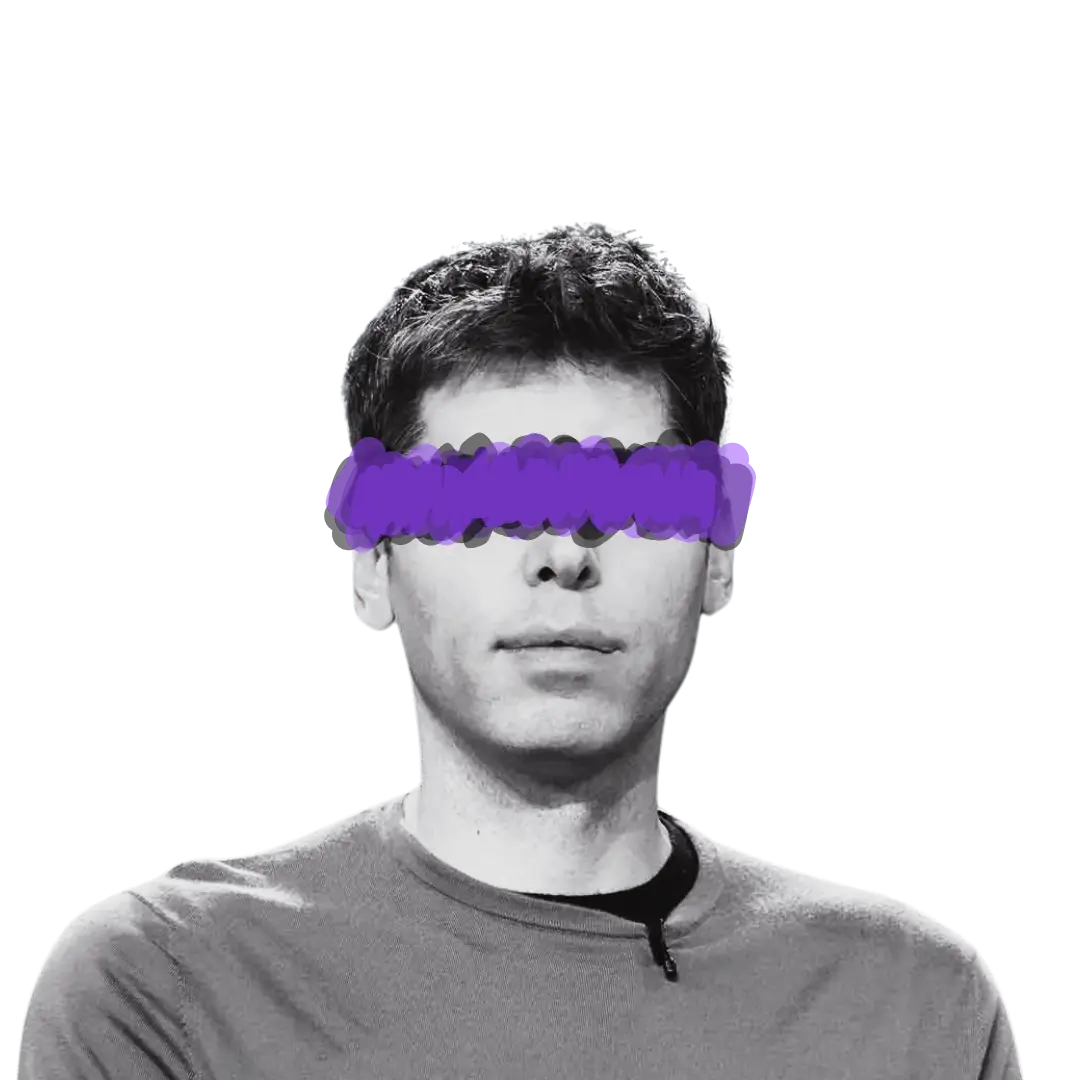
Jacob Ward — CNN contributor, founder of theripcurrent.com, and one of the few journalists actually sitting in the Oakland federal courthouse for Musk v. Altman — said something this week that the rest of the tech press is missing.
He said this trial is going to come down to vibes.
He’s right. And once you accept that he’s right, the next question is the only one that matters: whose vibes? Because two specific personality types are about to walk past a jury, and those types perform “I was the noble one” in completely different ways.
@byjacobward reporting from inside the Musk v. Altman federal trial in Oakland.
Where We Are Right Now
Federal courthouse in Oakland. Judge Yvonne Gonzalez presiding. Mark Savitt running point for OpenAI. Musk took the stand this week. Sam Altman is scheduled to testify next Thursday. Greg Brockman, OpenAI president, is expected to fill in the granular timeline of how the founding partnership fell apart.
The legal question is whether Musk was sincerely trying to build a nonprofit for humanity that Altman and Brockman then betrayed by turning OpenAI into a for-profit — or whether Musk wanted unilateral control, didn’t get it, and built xAI as the consolation prize while raiding OpenAI talent on the way out.
The legal question is not actually what the jury will decide. Jacob Ward is right about that part. Cap tables, capped-profit charters, side letters from 2017 — none of that is decidable from a jury box. What’s decidable from a jury box is which guy’s story I want to be true.
That’s a vibes contest. So let’s talk about whose vibes.
The Buildup, In One Paragraph
2015: Musk and Altman co-found OpenAI as a nonprofit, “for humanity,” explicitly anti-Google-DeepMind, explicitly not for profit. 2018: Musk leaves the board after losing an internal power fight (he reportedly wanted to merge OpenAI into Tesla). 2019: OpenAI creates the capped-profit subsidiary, takes the first Microsoft money. 2022: ChatGPT eats the world. 2023: Musk founds xAI. 2024: Musk sues, claiming OpenAI broke the founding charter. 2025–2026: Discovery, motions, and now this trial — the first time the original emails, texts, and term sheets are getting read into a public record under oath.
The whole arc rhymes with one of the oldest startup stories there is: two co-founders agree on a mission, both quietly believe they should be the one running it, neither says that out loud, and the partnership ends in court a decade later. What’s unusual is the stakes. They weren’t fighting over a CRM company. They were fighting over who gets to be remembered as the person who built the most consequential technology since the printing press.
That’s the part the personality types make legible.
The Two Types on the Witness Stand
| Founder | Enneagram Type | Core Drive | What That Looks Like Under Oath |
|---|---|---|---|
| Elon Musk | Type 5 - Investigator | Control through understanding | Literal, blunt, first-principles, flat |
| Sam Altman | Type 4 - Individualist | Significance through singularity | Searching, reflective, narratively aware |
Same trial. Same evidence. Two completely different performances of “I am the noble one here.”
Elon as a Type 5: First Principles Don’t Read as Sincere
Musk is a Self-Preservation 5 with a counterphobic 6 wing. The shorthand: he decodes systems, hoards mastery, and charges at threats instead of avoiding them. That’s why people keep mistyping him as a Type 8. The aggression is real, but the engine underneath it is “I need to understand this system better than anyone in the room.”
He has been open about being on the autism spectrum. That’s not a slur — it’s load-bearing context for what a jury is about to see. First-principles thinkers don’t tell stories. They reduce questions to their irreducible parts and answer the part. Asked “did you believe OpenAI was a nonprofit at the founding,” a first-principles 5 answers literally — which definition of nonprofit, in which jurisdiction, as of which board resolution — when the jury was hoping for something closer to “yes, with all my heart.”
That’s not lying. That’s a 5 refusing to round off the truth into a feeling. But on a witness stand, refusing to round off reads as evasion.
The other thing to watch with Musk: SP5s under cross-examination flatten. The voice goes monotone. The answers get shorter. The body language gets stiller. Their internal experience is “I’m conserving energy and protecting my position” — but the external read is “this man does not seem to care.”
In Northern California, against a Northern California jury, with Northern California opinions about Musk’s last five years of public behavior, that flatness is not going to be neutral.
Sam as a Type 4: The Most Dangerous Witness in Tech
Sam Altman is the cleanest example of a high-functioning Type 4 in modern tech. The Type 4 core is I need to be uniquely significant, and a 4’s superpower is reading the emotional temperature of a room and adjusting the surface in real time without it looking like adjustment.
Paul Graham once described Altman as someone who, dropped into a foreign country with no resources, would be running it within five years. That’s a 4 in healthy integration to Type 1 — strategic, principled-sounding, and exquisitely aware of what each person in the room needs to hear to stay aligned with him.
It’s also why Altman has, at multiple points, been quietly — and now loudly — accused of being a liar by people who’ve worked with him closely.
The Nature of Sam’s Lies
This is worth slowing down on, because most people get the kind of lying wrong. When you hear “liar,” you picture someone who knows that A + B = C and tells you A + B = D. That’s not what Altman does. That kind of lying requires you to consciously hold the true answer and the false answer in your head at the same time, and Sam’s psychology isn’t doing that.
Here’s what’s actually happening: a Type 4 in front of another person enters a kind of high-resolution emotional read. He’s not running through a checklist of facts and choosing which to disclose. He’s running through you — what you need, what you respect, what would make this conversation feel meaningful to both of you — and then producing the version of himself that lands in that read. He genuinely enjoys that exchange. The connection, the back-and-forth, the feeling of being the smartest, most generous mind in the room — that’s the substance of the interaction for him. The factual content is the medium, not the message.
The lie isn’t in what he says. The lie is in what he doesn’t follow up on. He’ll commit to a thing in a meeting because that commitment makes the moment work. Then the moment ends, the next moment begins, the next person needs a different version, and the original commitment evaporates because it was never load-bearing in his mental model — it was emotional scaffolding for a conversation that’s now over.
Someone — and the phrase has stuck because it’s accurate — described Altman as “unburdened by the truth.” That’s the perfect framing. He doesn’t carry the truth around as a constraint on what he can say next. The truth is one of several inputs to a performance, and the performance optimizes for resonance, not consistency. That phrasing pattern-matches to Type 3 (the Achiever, who shape-shifts to win), and it can read as 3-coded — but it’s also unmistakably 4-coded. A 3 lies to win. A 4 lies to connect, to feel uniquely understood, to be the one whose presence in the room mattered most. Altman’s pattern is the latter. The 2023 board called it “not consistently candid” because they were trying to be polite. The honest version is: he produces a different Sam for every audience, and none of those Sams are explicitly false in the moment, but stacked on top of each other they don’t form one human being.
A 4 doesn’t experience that as deception. A 4 experiences it as meeting people where they are. The OpenAI board, in November 2023, experienced it differently — “not consistently candid” was the exact phrase. Five days later he was back, because the version of Sam that the company, Microsoft, and the press needed in that moment was the wronged visionary, and a 4 can become that version at speed.
Why This Trial Is Different
Here’s the part that should make Altman’s lawyers nervous. Most of his pattern has never been called out in real time. The criticism comes after — board statements, retrospective essays, “people who used to work with him” pieces. The performance happens, the room buys it, and the receipts only get stacked weeks or months later, by which point he’s already in the next room running the next performance.
Cross-examination is the first environment in his life designed to break exactly that pattern. A good Musk lawyer doesn’t have to call him a liar. They just have to ask the same question four different ways an hour apart and let the four different Sams contradict each other on the record while he’s still in the chair. That’s the first time the next-room reset doesn’t work. That’s the first time the audience for his last performance is still in the room for his current one.
Whether his 4 holds up under that kind of structural pressure is the actual unknown of the entire trial.
Now put that 4 on a witness stand against a 5.
He’s going to be searching. Reflective. He’s going to look at the jury when he answers. He’s going to acknowledge complexity — we were all young, we all believed something, things changed, I’m still trying to understand it myself. He’s going to make his own ambition sound like reluctant duty, and he’ll do it without anyone in the room being able to point at the moment he did it.
That is going to land. The jury is going to like him.
Why This Specific Collision Was Always Going to End in Court
There’s a tidy version of this story where two co-founders just had a strategic disagreement. That’s not what happened. What happened is that the two psychological needs at the center of OpenAI were structurally incompatible from day one, and neither founder could see it because each one assumed the other would eventually defer.
A Type 5’s deepest need around an important system is to control it through understanding. Not for ego — for safety. A 5 cannot tolerate being downstream of a system they consider critical and don’t fully grasp. That’s the engine behind Musk’s “merge OpenAI into Tesla” pitch in 2018. It wasn’t a power grab in the way the press framed it. It was a 5 trying to pull the most important system in the world inside the perimeter he could actually defend.
A Type 4’s deepest need around an important project is to be the irreplaceable author of it. Not the manager. The author. The one whose name is on the thing. A 4 can share authority. A 4 cannot share authorship. That’s why Altman, after the 2023 firing, didn’t quietly take the Microsoft offer and start fresh. He came back. Because a 4 doesn’t leave the center of their own story.
You cannot put a 5 who needs to control the system and a 4 who needs to be the author of the system on the same cap table and expect it to last. One of them has to lose, and neither of their psychologies allows losing. So you get exactly what we got: a slow, then sudden divorce, an industry-defining lawsuit, and now a federal jury in Oakland trying to decide which one was telling the truth about the original promise.
They were both telling the truth. They were just telling two different truths, because they’re two different types.
Under Stress: Where Each Type Goes When Cornered
The Enneagram has a piece of mechanics that matters more than any other for predicting trial behavior: each type has a specific direction it moves when stressed, and that direction is not “more of the same.” It’s a different type entirely, expressed in a worse form. If you know the arrows, you can read the testimony before it happens.
Sam Altman, as a 4, disintegrates to Type 2 (the Helper) under stress. That sounds counterintuitive — going to the “people-pleaser” doesn’t sound like a stress response. But disintegrated 2 is not healthy 2. It’s the needy, possessive, “look how much I sacrificed for you” version of 2. It’s the person who responds to being cornered by suddenly producing a long list of all the suffering they did on your behalf and how unfairly they’re being treated for it.
Watch the November 2023 firing arc through that lens. Altman did not lash out. He did not threaten. He did not weaponize Microsoft against the board (his team did that for him, and he kept his hands clean). What Sam did was perform wounded. He gave the kind of interviews where his voice softened. He posted in the register of a man who couldn’t believe what was happening to him. The narrative that calcified within 72 hours wasn’t “the board overreached” — it was “look what they did to Sam.” That’s a 4 in stress-2: turning the room into people who needed to take care of him.
Now scale that up to a federal courtroom. If a Musk lawyer manages to land a real hit — a contradiction Altman can’t smooth over, a 2017 email that doesn’t match his testimony — Altman’s stress response is not going to be defensive aggression. It’s going to be a pity party. He’ll get smaller. He’ll get gentler. He’ll talk about how much he’s sacrificed for the mission, how lonely the position has been, how often he’s been misunderstood. It’ll be subtle. It’ll be effective on at least three jurors. And it’ll be a 4 doing exactly what 4s do when they’re losing: making the room feel guilty for hurting them.
Elon Musk, as a 5, disintegrates to Type 7 (the Enthusiast) under stress. Healthy 7 is curious, multi-tracked, joyful. Disintegrated 7 is scattered, impulsive, and chaos-seeking — the type’s appetite for new stimulation runs without a filter. For a 5 already living in a fortress of mastery, going to stress-7 means abandoning the perimeter and chasing whatever shiny thing produces a hit of relief from the pressure.
You don’t have to squint to see this in Musk’s biography. Every period of acute stress in his life has been followed by some combination of: a new company nobody asked for, a new public feud he didn’t need, a new child with a new partner, a new substance, a new platform purchase. The 5-to-7 disintegration is not metaphorical with this man. It is documentable in the public record, year by year. When the system inside him is overloaded, the 5 stops conserving and the 7 starts spending — wildly, in every direction, simultaneously.
So if cross-examination genuinely rattles him — not just annoys him, rattles him — the stress response won’t be in the courtroom. It’ll be in the next 96 hours after the courtroom. Expect a 3 a.m. X spree. Expect a brand-new product announcement that wasn’t on any roadmap. Expect a feud with someone who had nothing to do with this trial. The 5 keeps it composed on the stand. The 7 unravels publicly the next morning.
This matters for the trial because it predicts the second-order vibes contest. The jury sees the testimony, but the country sees what happens after. A 4 in stress-2 produces sympathy in the days following testimony — soft posts, vulnerable interviews, a curated kind of woundedness. A 5 in stress-7 produces chaos in the days following testimony — public outbursts, impulsive moves, exactly the behavior that re-confirms every pre-existing prejudice against him.
If you want to bet on this trial, don’t bet on the testimony. Bet on the week after.
How the Vibes Contest Actually Plays Out
Jacob Ward framed it as “neither of these guys is exactly a shoo-in for the vibes contest” — Musk reviled in NorCal, Altman blamed for upending society. He’s right that neither one is a hero. But vibes contests don’t reward the most likable person. They reward the person whose self-presentation matches the kind of mistake the jury wants to forgive.
Here’s what each type is going to look like under cross:
Musk’s testimony will sound like: flat, technical, occasionally sardonic, increasingly impatient. He’ll correct the lawyer’s framing of questions. He’ll cite numbers from memory. He’ll say “that’s not accurate” instead of “that’s a lie.” When asked about his motives, he’ll talk about the system — about safety, about alignment, about timelines — and not about himself. The jury will read that as either brilliant and uncompromising or cold and dodging. There’s no middle.
Altman’s testimony will sound like: measured, almost gentle, full of phrases like “the way I remember it” and “I think what we all believed at the time.” He will not contradict Musk directly. He will contextualize Musk — frame the disagreements as honest, frame himself as someone who learned from them. He will not raise his voice. He will not look angry. He will look thoughtful. The jury will read that as either humble and genuine or too smooth to fully trust. There’s no middle there either.
The structural advantage is Altman’s. Type 4s perform sincerity for a living. They can’t help it — it’s the muscle they exercise every time they walk into a room. Type 5s perform precision, and precision is the wrong vibe for this courtroom.
The structural disadvantage for Altman is reputation drift. The “not consistently candid” board statement is in the public record. The pattern of allies-turned-skeptics — Helen Toner, Ilya Sutskever, the entire pre-2023 safety team — is also in the public record. A clever Musk lawyer doesn’t need to attack Altman’s testimony. He just needs to set up a quiet contrast: here’s what Sam said in 2017. Here’s what Sam said in 2019. Here’s what Sam said in 2023. Now here’s what Sam is saying today. If those four versions don’t stack, the 4’s biggest weapon — narrative coherence — turns into the case against him.
That’s the actual fight. Not Musk’s character vs. Altman’s character. Musk’s flatness vs. Altman’s stack of past Sams.
The Memory Angle Jacob Ward Raised
One of the best things in Ward’s coverage is that he pulled in Karim Nader’s 2000 reconsolidation research — the finding that retrieving a memory changes the memory, every time. He’s using it to suggest that both Musk and Altman probably believe their own conflicting versions of 2015 because they’ve each told their version to themselves so many times that the original is gone.
That’s true. It’s also type-specific.
A Type 5’s memory-rewrite tilts toward systems and intentions. They remember “I was the one who saw the risk earliest, I was the one whose framework was right, I was the one who tried to lock the safety in.” The emotional details fade. The structural narrative sharpens.
A Type 4’s memory-rewrite tilts toward meaning and self. They remember “I was the one who carried the original spirit of the thing, I was the one who held the team together, I was the one who suffered for the mission.” The structural details soften. The personal narrative sharpens.
So when both men get up there and tell their versions of how OpenAI was founded, both versions will be sincere reconstructions — and both will be incompatible with what’s actually in the discovery emails. The jury isn’t going to catch them lying. The jury is going to catch them remembering the way their type remembers.
What to Watch For
A few things that will tell you, in real time, how the vibes contest is going:
- Does Musk’s lawyer let him talk? If they keep him on tight yes/no answers, they’re protecting him from his 5-flatness. If they let him explain, they think he’s winning the room.
- Does Altman cry? Not literally — but does his voice catch, does he pause, does he visibly struggle with a question? A 4 in healthy mode will modulate that perfectly. A 4 under pressure will overdo it, and the jury will feel it.
- Who blinks first on the original mission? Whichever founder first concedes “we both believed it at the time, and we both drifted from it for understandable reasons” — that founder wins. Because that’s the move that makes the other guy look like the one with the grudge.
- What does the judge do with motive evidence? Yvonne Gonzalez has already struck one Trump-adjacent line of attack on Musk. If she keeps protecting both founders from cheap-shot character attacks, the trial stays on the documents — and the documents are messy enough to favor the better storyteller. That’s Altman.
The Punchline
Jacob Ward is right that this trial will come down to vibes. What he’s too generous to say — and what your type lens lets you see clearly — is that the vibes are not symmetric. A Type 4 walking into a vibes contest against a Type 5 is bringing a sword to a math test.
Unless Musk’s legal team can keep him off the stand long enough to let the documents speak — and unless they can quietly assemble the past-Sams contradiction stack — the personality math says Altman wins this jury.
The personality math also says it won’t matter. Because the part of this story that the jury can’t reach is the part Ward already named at the top: both of these men were noble at the start, both of them got acquisitive in the middle, and both of them are now fighting over the credit. A 5 wants the credit because it proves he was right about the system. A 4 wants the credit because it proves he was the one. The jury picks the better performance. History picks neither.
We’ll be back when Altman takes the stand next Thursday. That’s when the actual collision happens.
Source for the courtroom reporting: Jacob Ward, CNN contributor and founder of The Rip Current, who has been filing daily on-the-ground updates from the Oakland federal courthouse. His on-the-bench observation that this trial will come down to vibes is the reason this piece exists. Personality typing on Musk and Altman draws on prior 9takes analysis — see The AI Wars: Why Personality Types Determine Who Gets to Build God for the longer treatment.