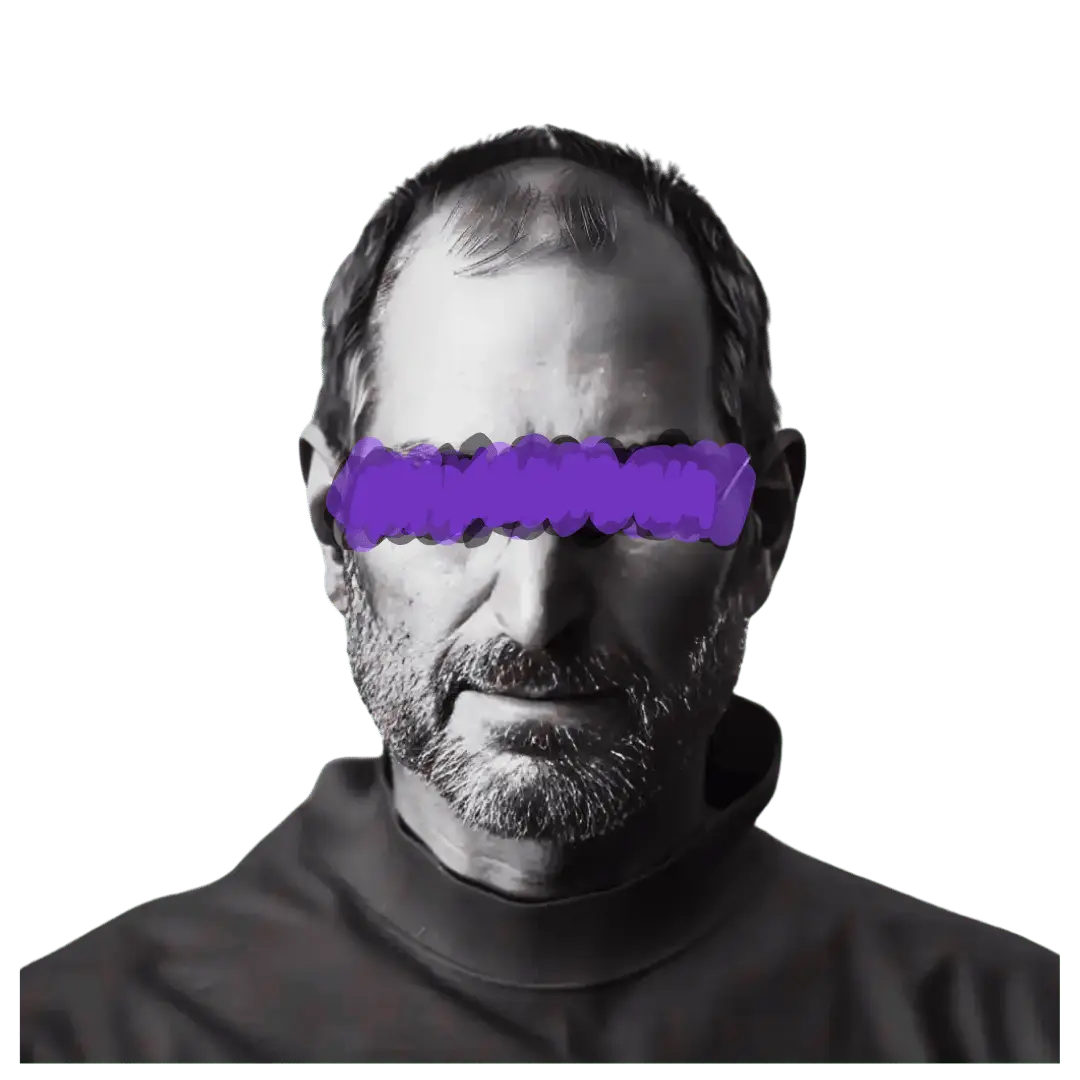
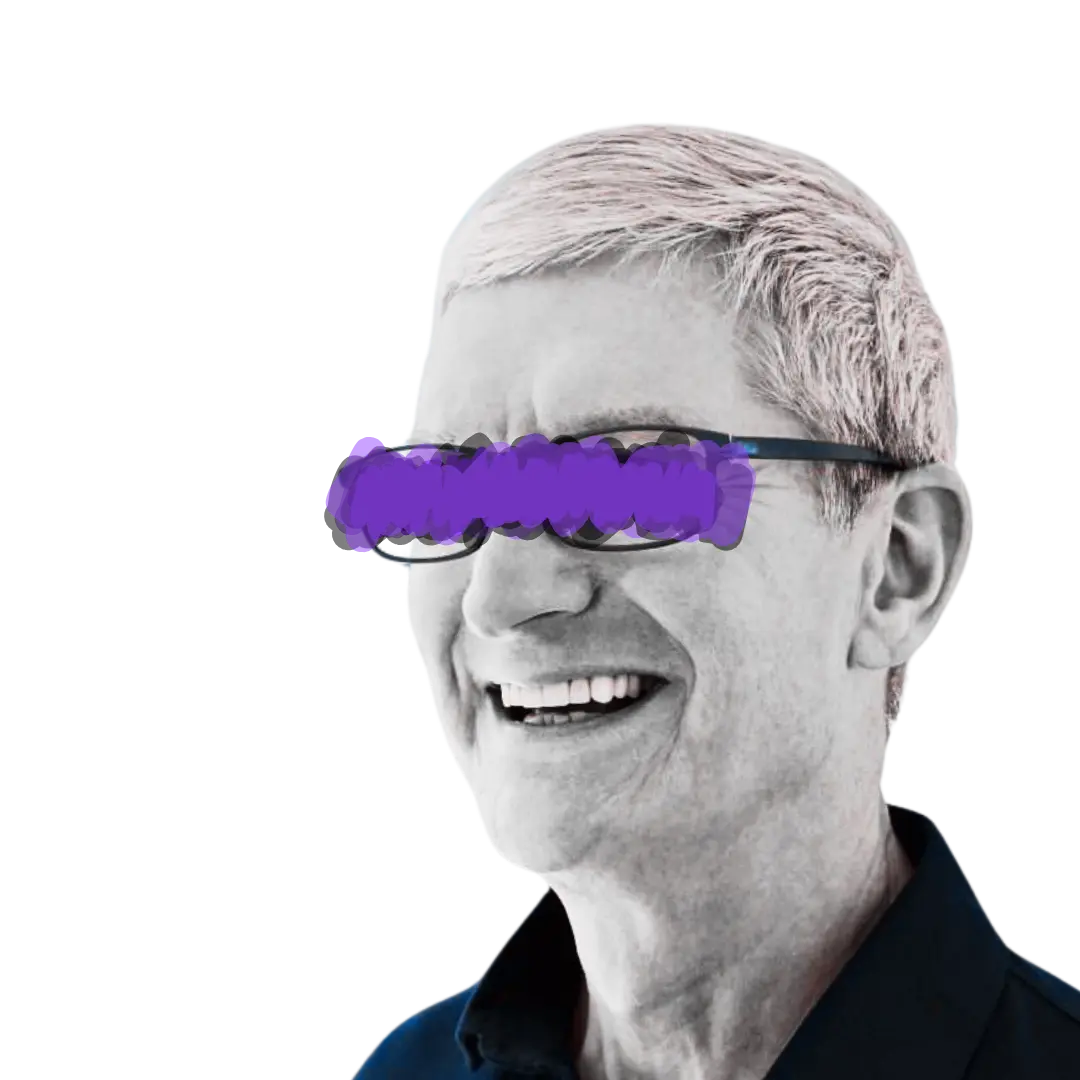
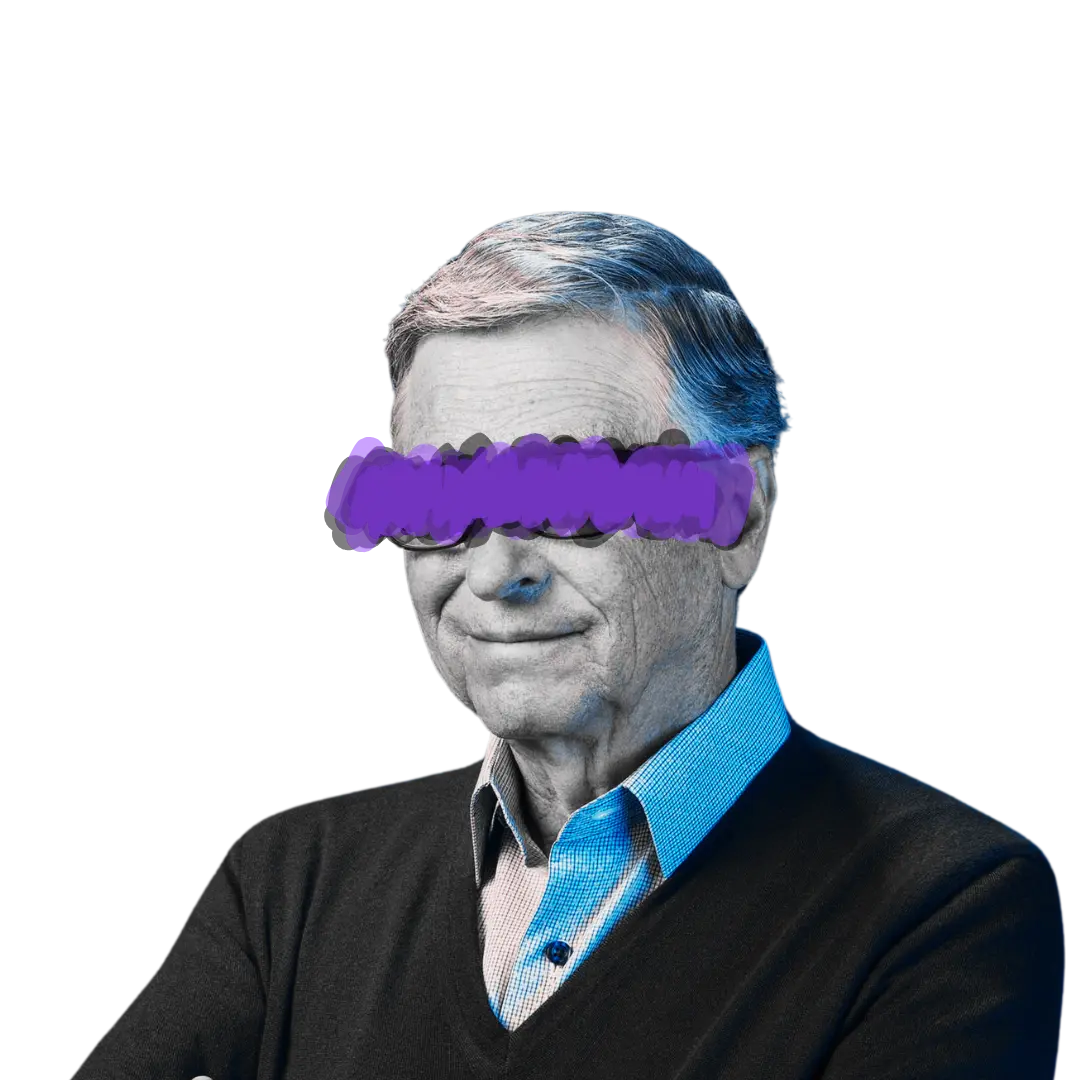
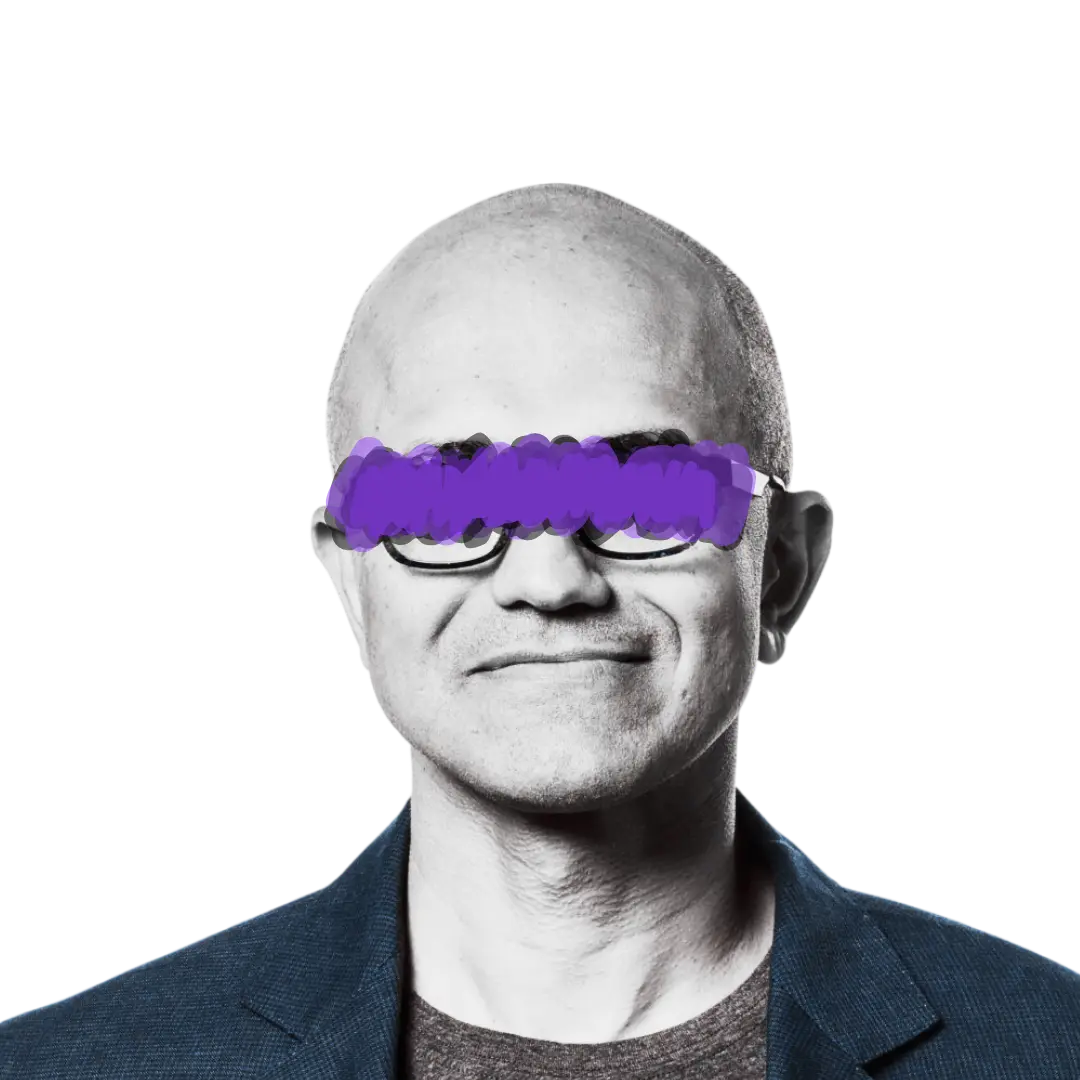

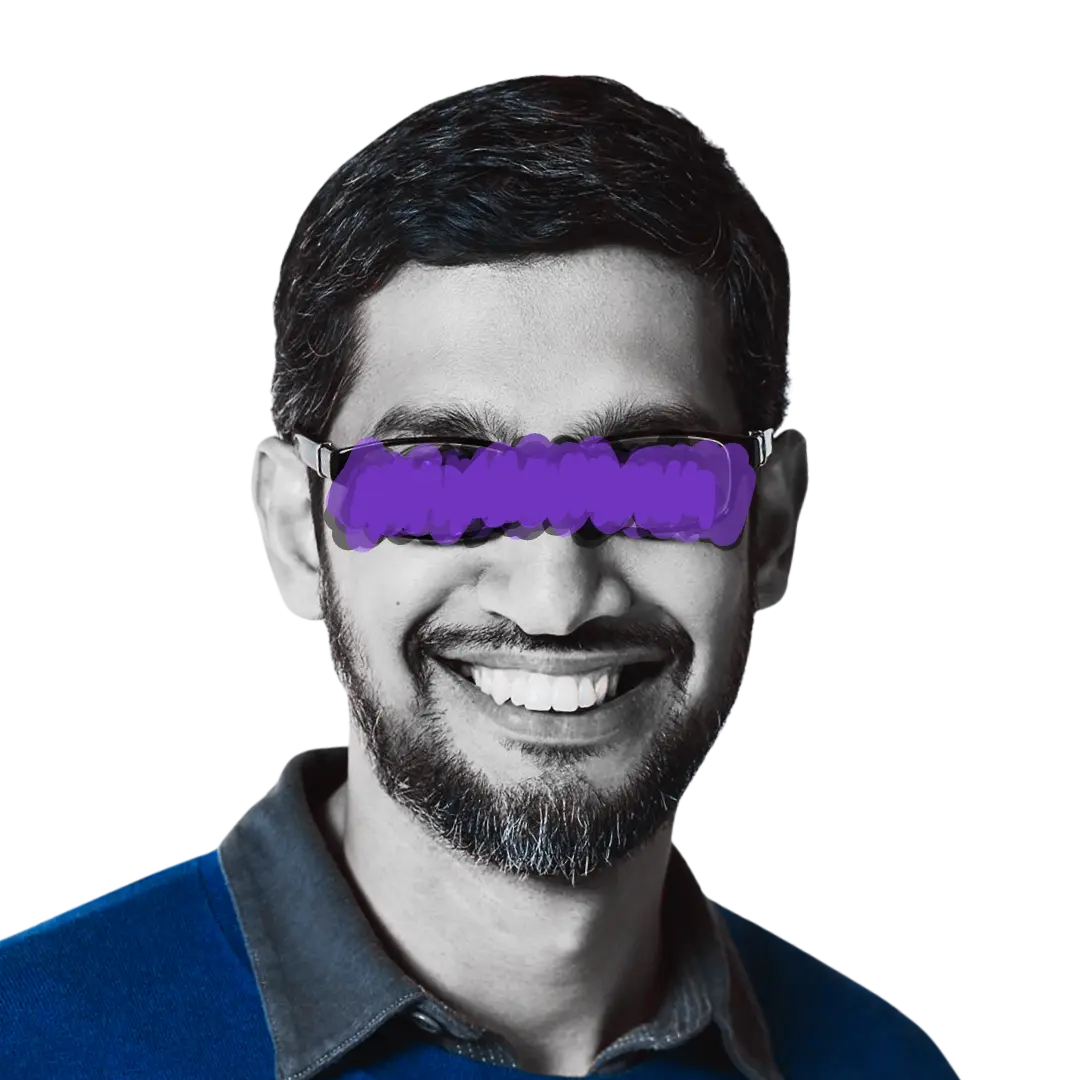
Every tech giant faces the same crisis: the founder leaves. And the personality type of whoever replaces them tells you everything about what the company actually values, and what it fears.
This isn’t about management philosophy or board politics. It’s about the psychological DNA of a company, and whether the next leader preserves it, evolves it, or kills it.
Four successions. Four personality patterns. One framework that explains why some companies survive their founders and others become Yahoo.
The Succession Map
| Company | Founder Type | Successor Type | What Changed | What Stayed |
|---|---|---|---|---|
| Apple | Steve Jobs (Type 1) | Tim Cook (Type 1) | Volcanic intensity → Measured discipline | Uncompromising standards |
| Microsoft | Bill Gates (Type 5) | Satya Nadella (Type 5) | Knowledge hoarding → Empathetic systems | Intellectual rigor |
| Amazon | Jeff Bezos (Type 8) | Andy Jassy (Type 3) | Confrontational dominance → Adaptive execution | Competitive intensity |
| Page (5w6) & Brin (5w7) | Sundar Pichai (Type 9) | Experimental ambition → Diplomatic stability | Engineering culture |
Here’s the thesis: companies don’t replace founders with the best available leader. They replace founders with the personality type that compensates for the founder’s biggest weakness. Jobs’ volatility gets replaced by Cook’s discipline. Gates’ emotional detachment gets replaced by Nadella’s studied empathy. Bezos’ confrontational dominance gets replaced by Jassy’s execution focus. Google’s scattered ambition gets replaced by Pichai’s consensus.
Boards don’t think in Enneagram terms. But they’re doing Enneagram selection anyway. They look at the founder’s shadow, the thing that made the company great but also made it fragile, and they pick someone who integrates it.
The four stories below are the evidence.
Apple: Type 1 → Type 1 (Same Religion, Different Preacher)
Steve Jobs dropped an iPod prototype into an aquarium. Bubbles floated to the surface. “Those are air pockets,” he said. “Make it smaller.”
His engineers had told him it was impossible. The laws of physics, the limitations of current components, the timeline: none of it registered. There was a right size for this product. The prototype was not it. End of discussion.
That’s Type 1 in its most concentrated form. The gap between “what is” and “what should be” was physically painful for Jobs. He cried over font kerning. He rejected prototypes hundreds of times. He screamed at people he respected because their work wasn’t right yet, and the “yet” was the only mercy his type offered.
Then Jobs died. And Apple’s board faced a choice that would determine whether the world’s most valuable company would survive its founder. Jobs had personally recommended Cook and prepared the succession plan. The board had already given Cook deliberate test runs as acting CEO during Jobs’ medical leaves in 2009 and 2011.
They chose another Type 1.
Why That Wasn’t Obvious
Most companies replace visionary founders with operational steadiness. A Type 3 achiever. A Type 5 systems thinker. Someone who can “run the machine” the founder built.
Apple’s board understood something most boards don’t: Apple IS the missionary. Remove the moral conviction behind the products and you have a very expensive consumer electronics company competing on specs.
Tim Cook doesn’t cry over font kerning. He doesn’t scream in meetings. But when the FBI demanded Apple build a backdoor into the San Bernardino shooter’s iPhone, Cook’s response was immediate and absolute: no. Not “we’ll consider it.” Not “let’s find a compromise.” No. This is wrong. We will not do it.
That’s a 1’s moral architecture operating at institutional scale. Jobs applied his 1 to pixel-level product perfection. Cook applies his 1 to institutional integrity: privacy as a civil liberty, carbon neutrality as a deadline, accessibility as a human right. These aren’t marketing plays. They’re a 1’s conviction that companies, like products, should be made correctly.
What Shifted
The trade-off was aesthetic, not functional. Jobs had a dramatic streak that turned product launches into cultural events: the turtleneck, the “one more thing,” the sense that you weren’t watching a business presentation but witnessing something important happen. Cook’s 1 runs quieter. Apple under Cook feels more responsible but less magical. The products still meet an exacting standard. The theater around them doesn’t.
The lesson: sometimes the right succession isn’t a different type. It’s a healthier version of the same type. Apple didn’t need a new psychology. It needed the same psychology with fewer tantrums.
Microsoft: Type 5 → (Type 8) → Type 5 (Same Engine, Better Fuel)
In the 1990s, if you worked at a competitor and Microsoft entered your market, you updated your resume. Not because Microsoft’s products were better. They often weren’t. Because Bill Gates would study your product, understand it more deeply than you did, and then dedicate Microsoft’s full resources to crushing you.
That’s Type 5 as a competitive weapon. Gates didn’t just want to win. He wanted to understand the problem space so completely that winning was inevitable. His office was stacked with technical papers. He took “think weeks” where he disappeared to read hundreds of internal memos. He interrogated employees with questions so pointed they felt like traps, because they were.
Microsoft under Gates was a 5 fortress: brilliant, analytically ruthless, and so focused on competitive dominance that it drew antitrust litigation from the U.S. Department of Justice.
The Ballmer Interlude: When the Type Doesn’t Match the Culture
Steve Ballmer was a Type 8: raw force, territorial instinct, volume as a management philosophy. The “developers developers developers” performance wasn’t enthusiasm. It was an 8’s need to dominate the room through sheer intensity. Ballmer threw chairs in meetings. He allegedly screamed “I’m going to fucking kill Google” while picking up a chair and hurling it. That’s 8 energy operating at full volume.
The problem: Microsoft’s culture was built by a 5 for 5s. The engineers who made Microsoft great valued intellectual rigor, analytical depth, and being the smartest person in the room. Ballmer’s 8 energy was foreign to that DNA. Microsoft under Ballmer missed mobile, fumbled social, and watched Google and Apple eat its relevance while the CEO’s management style confused force with strategy.
This is the cautionary tale. An 8 leading a 5 culture is like putting a boxing coach in charge of a chess team. The intensity is real but the type of intensity is wrong.
Nadella: The 5 Who Did the Inner Work
Satya Nadella is a Type 5. Same as Gates. But a 5 who had done something Gates never prioritized: integrating the type’s emotional blind spot.
Nadella’s son Zain was born with severe cerebral palsy. In interviews, Nadella describes this as the experience that taught him empathy, not as a feeling, but as a framework. He studied it. He read about it. He made it systematic. That’s the most 5 thing imaginable: encountering an emotional reality you can’t solve with analysis, and then building an intellectual structure around it anyway.
“Hit Refresh” (Nadella’s book and his thesis for Microsoft) is literally a 5 updating their mental model. Gates’ model was “win through dominance.” Nadella’s model was “win through platform.” Same analytical rigor. Fundamentally different orientation toward the world.
He almost didn’t get the job. Gates recently revealed that the board nearly passed over Nadella because his leadership style, characterized by empathy and humor, clashed with Microsoft’s historically aggressive culture. The board had to overcome its own bias toward the existing archetype. When Nadella was named CEO, Gates simultaneously stepped down as chairman to serve as “technology adviser,” and John Thompson (former Symantec CEO) replaced him, a restructuring of the power dynamic that gave Nadella room to operate.
The results were immediate. Nadella embraced open source, heresy under Gates. He partnered with Linux. He put Microsoft Office on iPhone. He pivoted to cloud with Azure. He invested $13 billion in OpenAI. Each move represented a 5 recognizing that a knowledge fortress is stronger when it has doors.
Microsoft’s market cap roughly 10x’d under Nadella, from the hundreds of billions under Ballmer to multiple trillions. Not because the strategy was brilliant. Analysts had been screaming “cloud” for years. Because only a 5 could change a 5 culture from the inside. A different type would have been rejected like a mismatched organ transplant. Nadella spoke the language, understood the values, and redirected the analytical obsessiveness without breaking it.
Amazon: Type 8 → Type 3 (Same Intensity, Different Wiring)
Jeff Bezos had a habit that terrified his senior executives. When a customer complaint reached him, he’d forward it to the responsible team with a single character: ?
That question mark carried more force than any memo. It meant: I see this. You should have seen it first. Fix it now and explain to me why it happened. The ”?” email became Amazon’s most feared internal communication, not because of what it said, but because of the Type 8 personality behind it.
Bezos didn’t manage through systems. He dominated through presence. Everyone at Amazon knew that any failure of customer experience could summon the ”?” from a man who thought in centuries but noticed same-day delivery delays in real time. He built a 10,000-year clock inside a Texas mountain and once spent an afternoon personally reviewing the placement of buttons on a Kindle screen. An 8’s drive to control their domain operates at every scale simultaneously.
The Chop
Andy Jassy spent years as Bezos’s “shadow,” attending every meeting, absorbing the founder’s decision patterns at a molecular level. Then Jassy took what he’d learned and built AWS from scratch, writing a vision document for an “Internet OS” that went through 31 revisions. Internal Amazon employees thought the idea was, in Jassy’s own words, “nutty.”
But the anecdote that reveals Jassy’s type isn’t about his relationship to Bezos. It’s about a conference room outside his Seattle office called “The Chop.”
AWS decisions ran through The Chop. Teams spent weeks preparing dozens of revisions of Amazon’s famous six-page narrative documents. During meetings, up to 50 people from legal, product, and finance sat in complete silence for up to 30 minutes reading printed copies. Jassy took notes in pencil and always spoke last.
A former AWS director described the dynamic: “If you’re not prepared for a meeting with him in the Chop, and especially if you try to mask that lack of preparedness with smooth talking, he’ll know and he will make it clear.” Another former senior employee: “He will rip something apart. But if you can justify your decision, even if he disagrees with you, he will respect you.”
That’s a Type 3, not an 8. An 8 dominates through force of personality: you feel their presence before they speak. A 3 evaluates through performance: show your work, justify your results, earn your standing. The Chop wasn’t Bezos’s ”?” email, which carried power through implied threat. The Chop was a meritocracy with teeth, where preparation was the currency and execution was the verdict.
Jassy’s Amazon: Achievement Over Intimidation
Since becoming CEO in 2021, Jassy has reshaped Amazon through execution-focused moves: over 27,000 layoffs to sharpen operational efficiency. A five-day return-to-office mandate that 91% of surveyed employees opposed, and that Jassy refused to soften, responding: “This is very much about our culture and strengthening our culture.” A massive AI pivot, pouring billions into AWS AI services and a strategic partnership with Anthropic.
A Type 8 would have framed these as acts of dominance: “we’re taking control.” Jassy frames them as acts of optimization: “we’re performing better.” Same outcomes, different internal wiring. The 3 adapts to what winning looks like right now. When growth was the metric, Jassy built AWS into a juggernaut. When efficiency became the metric, he cut faster than almost any CEO in tech.
What Amazon Gained and Lost
Amazon under Jassy is more operationally disciplined and less personally volatile. The company no longer orbits one man’s intensity. Decisions are driven by preparation and performance data rather than by the emotional force of a question mark from the founder’s email.
What’s less clear is whether Amazon under a 3 can still make the kind of leaps an 8 makes instinctively. Bezos funded the 10,000-year clock because he was drawn to century-scale problems. He bought the Washington Post because media is a power vector worth controlling. He launched Blue Origin because space was the next frontier to conquer. An 8 takes territory no one else is even looking at.
A 3 optimizes territory already held.
The early returns under Jassy are strong: AWS dominates, the AI pivot is real, the stock hit all-time highs. But the 10,000-year clock sits in its Texas mountain, and nobody at Amazon is building another one.
Google: Founders → Type 9 (Different Type, Different Soul)
Larry Page once told engineers to build products that would make people say “Oh my God, this is the future.” He meant it literally. Google X, the company’s moonshot lab, tackled self-driving cars, internet-delivering balloons, smart contact lenses, and life extension. Google under its founders was a playground for genius-level ambition where the only unacceptable idea was a boring one.
Sergey Brin rollerbladed through the office and interrupted meetings with tangential ideas that somehow connected to a project three teams away. Page set goals so ambitious they were functionally impossible, then funded them anyway. The founders operated as a pair of intellectually voracious Type 5s with the curiosity dial turned to maximum: every problem was interesting, every solution could be revolutionary, and money was just fuel for the next experiment.
Then they handed the company to Sundar Pichai.
The Diplomat’s Rise
Pichai’s path to CEO tells you everything about his type. He didn’t build a moonshot. He built Chrome, and the way he built it reveals more about his personality than any product spec.
CEO Eric Schmidt didn’t want a browser. He’d lived through the browser wars of the 1990s and explicitly told the founders: “We’re not going to take on Microsoft. We’re not going to do a browser or OS.” The opposition was firm, coming from the top.
Page and Brin went around Schmidt, quietly hiring engineers to work on what would become Chrome. When Schmidt was eventually brought into a room to see the working prototype, his reaction was: “Those a–holes. I knew they were going around me.” But the demo was so good it changed his mind.
Where did Pichai sit in this drama? Not at the top, making enemies. Not at the bottom, following orders. In the middle: the operational leader who managed Chrome’s development, built consensus across teams, and navigated internal politics without creating casualties. Colleagues described him as emphasizing “substance over overt style.” One called him “like the Aaron to Larry’s Moses,” the trusted lieutenant who understood the vision and translated it so everyone else could get on board. Larry Page said Pichai had “a tremendous ability to see what’s ahead and mobilize teams around the super important stuff.”
The tell: when asked about Pichai, a Google VP offered a line that could serve as the Type 9 mission statement: “I would challenge you to find anyone at Google who doesn’t like Sundar.”
Then he led Android through its explosive growth phase, not by confrontation but by building partnerships, managing carrier relationships, and creating an ecosystem that everyone could join. A Type 9’s specialty: make something that works for everyone.
When Google’s board looked at their company, they saw a dozen ambitious projects pulling in different directions, internal politics rivaling a small nation, and regulators in every major government sharpening their knives. They needed someone who could hold it all together without breaking anything. And because the founders’ dual-class share structure gave Page and Brin majority voting control regardless of board composition, Pichai’s selection was effectively the founders’ choice. They picked the one type that specializes in exactly that.
The AI Moment That Exposed the 9’s Limitation
November 2022. OpenAI launches ChatGPT. Within weeks, it becomes the fastest-growing consumer product in history, built on Transformer architecture that was invented at Google. The existential irony wasn’t lost on anyone.
Google had the talent. The data. The compute. The foundational research. What it didn’t have was a leader whose type is wired for war.
Pichai declared “code red.” Google rushed out Bard (later Gemini). The response was solid but measured. Diplomatic. A 9’s answer to an existential threat: acknowledge it, assemble consensus, allocate resources, move forward without panicking.
Compare this to how an 8 like Bezos or a 5 like Gates in his prime would have responded to a direct threat to their core business. There would have been no measured response. There would have been immediate, overwhelming, possibly irrational force, and that irrational speed might have been exactly what the moment required.
The Trade-Off Google Made
Google under Pichai is stable, profitable, and widely criticized for being boring. That’s not a failure of leadership. It’s the predictable result of choosing a Type 9 to lead a company that needed stability more than vision.
The founders’ scattered ambition was Google’s greatest strength and its greatest liability. Moonshots are thrilling but expensive. Internal chaos is creative but unsustainable at scale. Regulatory threats demand diplomacy, not disruption. Pichai solved every problem the founders couldn’t.
The cost: Google no longer feels like the future. Apple’s 1→1 succession preserved the company’s soul. Google’s founders→9 succession changed it. Apple is still about uncompromising standards. Google is no longer about moonshots. It’s about maintaining what already works, and hoping that’s enough.
Going deeper: The Google story has a third act this section doesn’t fit. Page (5w6) and Brin (5w7) didn’t stay retired. When ChatGPT shipped, the founders came back, and Google became the only Big Tech company where that happened. Read the full personality breakdown of all three eras → Google’s Three Personality Eras.
The Counter-Example: When a Different Type Is the Right Call
The four stories above might suggest that same-type succession is always best. It isn’t.
In 1993, IBM was dying. Founded by Thomas Watson Sr., a paternalistic, detail-obsessed leader who established rules down to dark suits and white shirts, IBM had promoted exclusively from within for decades. By the early ’90s, the culture had calcified into billions in annual losses and talk of breaking the company into pieces.
The board did something unprecedented: they hired Lou Gerstner, a complete outsider: McKinsey consultant, American Express executive, RJR Nabisco CEO. The first outsider ever to run IBM. He was the opposite of everything IBM’s culture had been: customer-obsessed, results-driven, impatient with process. He fired 35,000 employees who had been accustomed to lifetime tenure. He killed OS/2. He reversed the proposed breakup. He shifted compensation from individual to corporate performance. His philosophy: “People do what you inspect, not what you expect.”
Gerstner turned IBM around because IBM’s culture wasn’t just failing. It had become the failure. The internal psychology that built the company had become the thing destroying it. No same-type successor could fix that because the type itself was the problem.
This is the honest version of the succession framework: same-type works when the company’s core psychology is healthy but the founder’s expression of it was too raw. Different-type works when the psychology itself has become pathological. The hard part is knowing which situation you’re in.
The Meta-Pattern
Three ways succession plays out:
Same Type, Better Integration (Apple, Microsoft). The successor shares the founder’s core type but has done more inner work. The company’s soul is preserved. The rough edges smooth out. This works when the company’s identity IS its psychology.
Different Type, Same Intensity (Amazon). The successor brings different psychological wiring but maintains the company’s competitive energy. The soul shifts slightly. This works when the company’s identity is built on intensity itself rather than on one specific flavor of it.
Different Type, Different Intensity (Google, IBM). The successor brings a fundamentally different psychology. The company’s soul changes. This works when the company has genuinely outgrown the founder’s personality, but it risks creating something the founders wouldn’t recognize.
The Board’s Blind Spot
There’s a variable nobody discusses: the board’s own personality composition shapes who they pick. When Microsoft’s search committee evaluated over 100 candidates, they nearly passed on Nadella because his empathy and humor clashed with the aggressive culture they were accustomed to. It took activist investor pressure and a restructuring of the board’s power dynamic to make the pick work. Apple’s board, by contrast, executed a succession plan Jobs had personally designed: they were selecting for his judgment, not their own comfort.
Boards full of 3s and 9s will instinctively select for operational stability. Boards with 5s and 8s might tolerate more edge. The “right” successor depends partly on who’s doing the choosing, and whether they can see past their own type’s preferences.
The AI Question
The tech industry systematically replaces creative intensity with analytical stability. Founders cluster around Types 1, 5, and 8, driven by conviction, intellectual mastery, or competitive dominance. Successors cluster around Types 5, 3, and 9, driven by systems thinking, achievement, or consensus.
This was probably the right trade for the last two decades. Founder energy doesn’t scale. The intensity that builds a company from nothing can destroy it at 100,000 employees.
But AI is changing the calculus. The next decade may reward speed and aggression over stability and consensus. If that’s true, Google’s succession problem isn’t unique. It’s a preview. Every steward-led company is betting that the world will continue to reward careful optimization. If the world shifts to rewarding bold, fast, founder-style moves, then the entire steward model faces the same tension Pichai faces with AI: the right temperament for the last war, not the next one.
Paul Graham’s “founder mode vs manager mode” essay was really about this. “Founder mode” is 5/8/1 energy. “Manager mode” is 9/3 energy. The whole debate is about personality types dressed up as management philosophy, and whether the era of the manager-steward is ending just as the industry finished selecting for them.
The Takeaway
Next time you see a CEO succession announcement, skip the press release. Skip the analyst commentary about “strategic vision” and “operational excellence.”
Look at the personality type.
The resume tells you what the successor has done. The type tells you what the company will become.
These typings are based on extensive analysis of public behavior, interviews, and decision patterns, not clinical assessments. We could be wrong about any individual. But the succession patterns hold regardless of whether we've nailed every type perfectly.
This post is part of the Tech Titans Through the Enneagram series.