


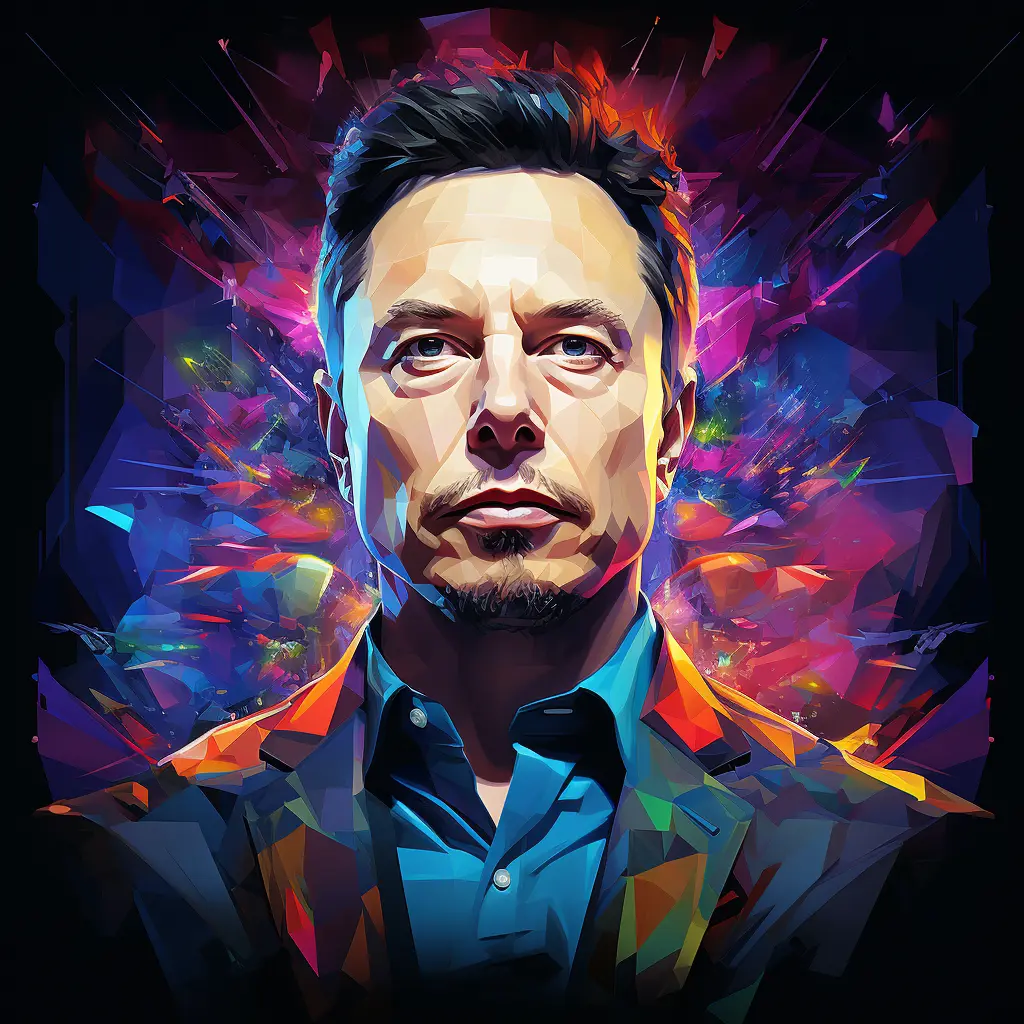
You scroll, you buy, you argue. You use these products every day and never stop to ask why Facebook feels like being watched, why Amazon feels frictionless, or why Twitter felt like a bar fight with the door locked from the inside.
Because platforms aren’t neutral. They’re psychological projections of the people who built them. And the four men who shaped modern consumer tech—Zuckerberg, Bezos, Dorsey, Musk—are wired in fundamentally different ways.
A note on scope. This post focuses on the four consumer platform emperors whose personality types are most legibly stamped into their products. Apple, Microsoft, and Google each deserve their own analysis—and the Founders vs Stewards chapter in this series already maps Steve Jobs, Tim Cook, Bill Gates, Satya Nadella, and Sundar Pichai. Snap (Evan Spiegel) is the interesting outlier—the one big consumer platform of this era that doesn’t feel like a 5 or an 8, which is a post in itself. ByteDance/TikTok is its own animal: an algorithm-first design that arguably bypasses the founder-personality question entirely, which is precisely why it’s eating everyone else’s lunch. Here, we’re looking at the four platforms that feel like their founders because they basically are their founders.
The Platform Emperor Personality Map
| Leader | Enneagram Type | Core Drive | Platform Built | Platform Personality |
|---|---|---|---|---|
| Mark Zuckerberg | Type 5 - Investigator | Mastery through knowledge | Facebook / Meta | Surveillance as connection |
| Jeff Bezos | Type 8 - Challenger | Control and self-protection | Amazon | Dominance as convenience |
| Jack Dorsey | Type 5 - Investigator | Understanding systems | Minimalism birthing chaos | |
| Elon Musk | Type 5 - Investigator | Decoding all systems | X (formerly Twitter) | Engineering over discourse |
Mark Zuckerberg: The Type 5 Who Engineered Friendship
Here’s the irony: the most reserved, cerebral personality type on the Enneagram built the world’s largest social network.
Zuckerberg didn’t build Facebook because he loved people. He built it because human connection was a problem he could engineer. That’s a Type 5 move—take something messy and emotional (friendship, dating, social status) and convert it into a system with inputs and outputs.
Look at Facebook’s DNA. The News Feed isn’t a place for connection—it’s an algorithm deciding what you should care about. The Like button isn’t affirmation—it’s a training signal. Every feature treats human emotion as something to be captured, measured, and fed back.
That’s not sinister. That’s just how a 5 sees the world.
The Acquisition Pattern: Absorbing What You Can’t Predict
The Cambridge Analytica scandal is the headline. The acquisition pattern is the thesis.
In April 2012, Zuckerberg paid $1 billion for Instagram—a 13-employee photo app that had been live for 18 months. Eighteen months later, he tried to buy Snapchat for $3 billion and got told no. In February 2014, he paid $19 billion for WhatsApp. Two existential threats. Two checks. Both written before either company had a meaningful revenue model.
This is the purest 5 move there is. A 5’s deepest fear is being unable to understand a system. When something starts behaving in ways the model can’t predict—teenagers fleeing Facebook for Instagram, the rest of the world picking WhatsApp over Messenger—the 5 doesn’t out-build it. The 5 absorbs it. Bring the unpredictable thing inside the system you already control, and it stops being unpredictable.
A Type 8 in Zuckerberg’s seat would have crushed Instagram with a clone. Bezos would have shipped a knockoff at half the price. Zuckerberg wrote a check, kept the founders quiet, and routed every photo through the same data pipeline as the rest of the empire. Different psychology, same outcome—except Zuckerberg’s version doesn’t make headlines until a regulator notices.
Receipts: From Emotional Contagion to Cambridge Analytica
Two of the biggest Facebook scandals of the last decade tell the same story from opposite ends. They’re not the same kind of thing—and that’s the point.
In 2012, Facebook’s own data team ran an experiment on 689,000 users without their knowledge. They tweaked News Feeds to see whether they could make people feel happier or sadder. They could. The study was published in 2014, the public was horrified, and Facebook essentially shrugged. Internal A/B test, perfectly within terms of service, emotions are just inputs.
In 2014, an outside researcher named Aleksandr Kogan built a Facebook app called “This Is Your Digital Life”—a personality quiz. Users took it, and the app harvested not just their data but the data of all their friends. Around 87 million profiles ended up in a political targeting operation that would later work for the Cruz campaign, the Trump campaign, and Brexit. That wasn’t an internal experiment. That was a third-party exfiltration of data the platform should never have exposed in the first place.
The vector was a personality quiz. On a platform built by a 5. Weaponized by a firm whose entire premise was that you could model the voting public as a psychological system and nudge it. The Type 5 thesis showed up wearing its own clothes.
Different incidents, opposite legal exposure, same diagnosis: Facebook treated emotional manipulation as a feature spec because that’s what it was to the people running it. When the Cambridge Analytica story broke in 2018, Zuckerberg’s response wasn’t emotional. It was procedural. An audit. A congressional hearing delivered with the affect of a very well-prepared student defending a thesis. The man was processing public outrage as a problem spec.
That’s the blind spot at planetary scale. Not malice. Not even indifference. Just an incapacity to feel the thing the public was feeling.
The Zuckerberg Pivot, And Where It Showed Up
Then something shifted. The hoodie-wearing CEO started showing up in jiu-jitsu tournaments, oversized t-shirts and chains, competing in MMA under a fake name, posting flag-waving wakesurfing videos that went viral for being aggressively sincere. In Enneagram language, this is a 5 integrating toward 8—moving from pure mind into body, from observation into physical assertion. The payoff is the rear naked choke: one of the few domains where you cannot think your way out of what’s happening to you. You can’t A/B test a chokehold. You submit or you escape.
Then watch where that integration energy actually went at the company. Llama, Meta’s open-source language model line, was Zuckerberg’s call—and it broke from every other major lab’s playbook by dumping the weights into the world for free. That’s a 5-going-8 move: stop hoarding the system, start using its release as a weapon against competitors who can’t match the price of free. Threads launched in July 2023 in roughly the time it takes most teams to schedule a kickoff meeting—a 5 watching another 5 implode at X and moving in to capture the spillover. By October 2025 Threads had 150 million daily active users and had quietly passed X on mobile DAU. The same observation-machine DNA, but for the first time Zuckerberg was punching instead of just measuring.
Meta is still the same architecture—still the world’s most efficient behavior-capture system. But for the first time, it’s being run by a guy who looks like he can take a hit.
The Metaverse as a 5 Fantasy
The metaverse makes zero business sense to most people. But it makes perfect psychological sense for a Type 5.
A 5’s core need is to master their environment. Reality is messy—too many variables, too many irrational humans. A virtual world? You design the physics. You set the parameters. You build the system from scratch.
The metaverse isn’t a business strategy. It’s a personality type made architectural. A world where a 5 doesn’t have to deal with the chaos of reality because he is reality.
Jeff Bezos: The Type 8 Who Ate Commerce
Bezos operates on a completely different frequency than the 5s in this analysis. Where they retreat to understand, he charges to dominate.
For a one-liner on his typing: Type 8s are driven by control and a fear of being controlled. Everything about Bezos’s operating style—the empty chair in meetings, the six-page memo format, the now-famous question-mark emails forwarded to executives at 3am—is an 8 testing whether the people around him can handle direct force. For the full profile, see Jeff Bezos. Here we’re asking a more specific question: what does an 8 build when you hand him a browser and tell him to sell books?
“Your Margin Is My Opportunity”
That’s not a business strategy. That’s an 8’s worldview in six words.
Amazon is the purest expression of 8 psychology ever shipped at scale. The original URL wasn’t amazon.com—it was relentless.com, and it still redirects to Amazon today. The name was the thesis.
Two of Amazon’s 14 leadership principles tell you everything you need to know. Customer Obsession—not because customers matter emotionally, but because controlling the customer relationship means controlling the market. Have Backbone; Disagree and Commit—8s respect confrontation; if you won’t push back, they don’t trust you. The rest of the list is variations on the same theme.
Prime: Lock-In Disguised as Generosity
If you want the 8 masterstroke, it’s not the Kindle and it’s not AWS. It’s Prime.
Launched in 2005 as a $79/year free-shipping subscription, Prime looked, for years, like Amazon paying you for your loyalty. Bezos was famously cagey about Prime’s profitability because the profitability wasn’t the point. The point was that once you’ve paid the $79, every purchase decision in your life starts running through one question: is it on Amazon? The membership is the leash, dressed up as a perk.
That’s a perfect 8 trade. Give the customer something they think is generosity. Take their default behavior in return. By 2025, Prime had over 200 million members worldwide and the average Prime member was spending more than double what a non-Prime customer spent. The 5 wants to model your behavior. The 8 wants you to never have to make a decision in the first place.
The Washington Post: Territory in Print
In 2013, Bezos paid $250 million in cash for The Washington Post. The price was a rounding error on his net worth, and he made the deal personally—not through Amazon. Read the move as an 8 acquiring territory, not a tech CEO acquiring a media play. Print circulation was already collapsing. What he bought was institutional reach, a newsroom in Washington, and a relationship to political power that you can’t build by writing checks to a PAC.
Years later, Musk would buy Twitter on a similar instinct: own the room, control the conversation, shape the air the lawmakers breathe. The 8 buys influence in the open and signs his name to it. The 5 buys the protocol underneath the room and rewrites the physics. Both moves stamp a personality type onto a media institution, but the body language is completely different.
The Frictionless Has Costs
Frictionless for whom? Prime gets your package to your door in twelve hours because somewhere, in a fulfillment center, a worker is being timed by a wrist scanner that flags any pause longer than seven minutes as “Time Off Task.” In 2018 a story broke that some Amazon warehouse and delivery workers were urinating in bottles to avoid breaking pick rates. The company called it “absolutely not true.” A 2021 internal memo, leaked and later confirmed, showed that Amazon executives knew it was true. Bezos had stepped down as CEO weeks earlier.
That’s the dark side of the 8 platform that the customer never sees. The “frictionless” experience is friction reallocated—pushed off the customer and onto the workforce until it disappears from the brand entirely. A 5 platform makes you the product. An 8 platform pulls the friction out of your life by stacking it onto someone else’s. Both are extractive. Only one of them gets called convenient.
Fear vs. Discomfort: Why Bezos Lands Different Than Zuck
Here’s the distinction the headlines never quite nail. Bezos inspires fear. Zuckerberg inspires discomfort. They’re both exercising power, but the mechanisms are opposite.
An 8 tells you to your face that he’s going to crush you, and part of you respects it. You know where you stand. Bezos walking into an AWS meeting, printing out a competitor’s pricing page, and asking “so when does this stop being embarrassing” is terrifying—but legible. You can brace for an 8. You can even counter-punch. 8s like being counter-punched.
A 5 doesn’t tell you anything. A 5 quietly collects every data point about your life—your location, your friends, your hesitations, your late-night scrolls—and models it back to you in ways you can’t articulate. You leave a Facebook session feeling subtly worse about yourself and you can’t say why. That’s the discomfort. 5 power is ambient. It doesn’t look like power until you notice you can’t leave.
Fear you can act on. Discomfort you just absorb. Facebook makes you the product. Amazon makes you the addict. Same extraction, opposite psychological mechanism.
The 2021 Step-Down (And the Blue Origin Callback)
In 2021, Bezos stepped down as Amazon CEO. On paper, it looks like Dorsey leaving Twitter. It isn’t.
He didn’t step back to meditate. He stepped back to push Blue Origin harder, to keep funding longevity research via Altos Labs, to launch the largest sailing yacht ever built for a private owner, and—crucially—to try to beat Elon Musk to space. Blue Origin vs. SpaceX is the rivalry inside this very post: an 8 who will not concede a single domain (rockets, AI, media, infrastructure) to the 5 who got there first. Bezos isn’t competing with Musk because he needs the money. He’s competing because an 8 cannot tolerate watching another founder colonize a frontier with his name on it.
That’s the 8’s “retreat.” It looks nothing like a 5’s. Stepping down freed Bezos to expand on more fronts at once, not fewer.
Jack Dorsey: The Type 5 Who Built the Town Square Then Left
Dorsey is the most puzzling figure in this group. He co-created one of the most influential communication platforms in history—and kept losing interest in running it.
Twice. Arguably three times, if you count what happened next.
That’s not a management failure. That’s a personality type expressing itself perfectly.
The Minimalist Paradox
Dorsey’s personal life is a study in reduction. Ten-day silent Vipassana retreats. Ice baths. Intermittent fasting pushed to one meal a day. A uniform of plain black clothes. Walking to work. A beard that looks less styled than simply not-prevented.
This is the 5’s paradox. Type 5s conserve energy. They simplify. They withdraw to preserve their inner resources. Dorsey built Twitter as a beautifully minimal concept—140 characters, say what you’re doing—and then the messy, irrational, emotional reality of human behavior turned it into a hellscape.
A 5 builds the system. A 5 does not want to manage the humans inside it.
Why Dorsey Kept Leaving
Pushed out in 2008. Came back in 2015. Left again in 2021. Meanwhile he was running Square (now Block) on the side—and that’s the part that makes the type click into place.
5s are drawn to building systems, not maintaining them. The intellectual challenge of creating Twitter was energizing. The human management—content moderation debates, political pressure, the constant demand to referee how strangers talked to each other—was draining. But here’s what’s interesting: while Twitter chewed him up, Block thrived under the same guy. Why? Because money is a system that behaves predictably. Payment rails respond to math. Fraud responds to models. The variables are bounded.
Humans aren’t. Humans show up to a 5-designed system and immediately do things the 5 didn’t account for, and there’s no patch you can ship that closes the bug. Dorsey didn’t fail at running Twitter because he was a bad CEO. He drained out because he was a 5 running a system whose primary input was emotional irrationality—and he kept escaping back to Block, where the inputs made sense.
The Protocol Chapter: Bluesky, Nostr, and a 5 Going All the Way
Here’s the part that confirms the entire thesis. After leaving Twitter for good, Dorsey didn’t retire to a beach. He started funding and building protocols instead of products.
He backed Bluesky, an open social protocol that spun out of Twitter as an internal R&D project. He sat on its board until 2024, then walked away from that too. He shifted his support toward Nostr, a censorship-resistant messaging protocol with no central company to run. Through Block, he keeps writing checks for decentralized internet infrastructure. In public comments he’s said, more than once, that he regrets Twitter ever became a company—that it should have been a protocol from day one.
Protocols are the purest form of 5 architecture. No users to moderate. No community manager inboxes. No political blowback when something goes viral at 2am. Just a specification—run by whoever runs it, governed by math instead of people.
Read that again. The 5 who got exhausted managing humans went and built infrastructure where the humans are somebody else’s problem. The thesis is self-reporting.
And here’s the twist: it’s working. Bluesky crossed 30 million users in January 2025 and 40 million by October of the same year. Nostr is still niche. The protocol-not-product bet is starting to pay off in the one metric that matters—people actually using the thing. But notice what had to happen for it to scale: Bluesky had to grow a moderation team, write a terms of service, and start making the same uncomfortable judgment calls every other social platform makes. Even Dorsey’s clean 5 architecture has to eventually touch humans. The humans always show up. He just engineered things so this time, they show up to somebody else’s inbox.
The Irony of @jack
The man who gave the world a platform for constant self-expression is someone who barely wants to express himself at all. His own tweets were sparse. His public appearances were quiet, almost monastic. He built the world’s microphone and then whispered into it.
That tension—between the product’s loudness and the founder’s quietness—is why Twitter always felt slightly unmanaged. Because for a 5, a well-designed system shouldn’t need constant intervention. The moment it does, the 5 is already out the door.
Elon Musk & X: When a Very Different Type 5 Takes Over
Then Musk bought Twitter for $44 billion. What happened next is arguably the most expensive personality experiment ever run—though “experiment” probably gives it more intention than it deserves.
Musk’s typing is contested—you’ll see 5w6, 7w8, and 8w7 from credible practitioners—but the cleanest read is a 5 whose stress response looks like a 7: first-principles obsessive at Tesla and SpaceX, scattered and impulsive since 2022. That’s what the Enneagram predicts under load and it tracks the timeline. Working model, not settled doctrine.
Same Type, Opposite Expressions
Dorsey and Musk are both systems thinkers. Both intellectual withdrawers. But they express their 5-ness in completely opposite ways.
Dorsey’s 5: Withdrawal-oriented. Conserves energy. Builds minimal systems and lets them run. Seeks simplicity.
Musk’s 5: Expansion-oriented. Treats every system as a thing to decode and dominate. Confronts publicly. Seeks total comprehension of every domain he touches.
Dorsey is the 5 who meditates. Musk is the 5 who sleeps on the factory floor. Both are trying to master their environment. One does it by reducing inputs. The other by consuming everything.
Why the Takeover Was Destined to Go Sideways
Musk treated Twitter the way he treats SpaceX: identify inefficiencies, cut ruthlessly, rebuild from first principles. Walk into the office, print out engineers’ recent commits, fire the ones whose code he doesn’t respect.
The problem is that human discourse isn’t a rocket. You can’t A/B test social norms. You can’t optimize the messiness of how people talk to each other—they’ll optimize against you faster than you can ship the change.
This is the 5’s blind spot made spectacularly public. 5s believe that if you understand a system well enough, you can control it. Musk understood rockets, electric cars, tunnels, and brain interfaces. He assumed social media was just another system. It’s not. Social media is human emotion at scale, and human emotion is the one system that actively resists engineering.
The Stress Arc
Watch what a 5 under acute stress actually looks like:
- Renaming Twitter to X—an impulsive rebrand of one of the most valuable word marks in tech history
- Launching and reversing features within the same week
- Public fights with the advertisers keeping the lights on (famously telling a room of them to go f— themselves, on camera)
- Daily pivots between content strategies, payment systems, and AI integration
- Features announced as imminent that quietly never ship
That’s not a strategy. That’s a 5 in disintegration, bouncing between ideas because none of them solve the fundamental problem: human behavior can’t be engineered. Not by anyone. Certainly not from a CEO’s chair during a leveraged buyout.
Worth noting: you can also read the whole purchase as less “personality study” and more “leveraged bet on free-speech ideology that ran into bank loan payments.” The types don’t explain everything. They explain why it felt the specific way it felt—scattered, combative, technical in a very 5 way, and lonely in a way that sits under all of Musk’s public life.
Four Men, Four Platforms, Zero Emotional Fluency
Here’s the uncomfortable pattern. Three 5s and an 8. Not one of these personality types is naturally oriented toward understanding human emotion from the inside. The 5s treat human behavior as data. The 8 treats it as leverage. None of them treat it as, well, human. That’s why every platform keeps running into the same walls: addiction, misinformation, toxicity, loneliness, teen mental-health crises. These aren’t technical failures. They’re personality blind spots scaled to planetary size.
And yes—four men. The absence of women in the founder seats of these specific platforms is its own essay, but it’s worth naming, because the closest thing to a counter-example is sitting on the same family tree. MacKenzie Scott, who divorced Bezos in 2019 and walked away with a 4% Amazon stake, has since given roughly $26 billion to over 2,000 nonprofits—much of it without strings, much of it to historically underfunded organizations. That’s not 8 territory. That’s a different psychological architecture using exactly the same money. The man who built the platform was extracting at scale; his ex-wife is redistributing at scale. Same fortune. Opposite operating system.
What You Actually Do With This
Once you can see the type behind the platform, you can use the platform on your own terms instead of its:
- Facebook / Meta will never solve loneliness. It was built by a 5. It will always optimize for engagement, not connection. Use it for logistics—events, groups, messaging—and log off before the feed starts modeling your mood.
- Amazon will never stop extracting. It was built by an 8. Every friction you feel is intentional loyalty pressure. Buy what you came for. Don’t browse.
- X will never stabilize. It’s run by a 5 in chronic stress. Treat every feature change as temporary, every policy as reversible, and every headline it generates as downstream of one man’s mood.
- Whatever Dorsey builds next will probably be a protocol, not a product. That’s safer for you, because a protocol can’t have a bad quarter and decide to monetize your outrage.
Knowing the type isn’t a conspiracy theory. It’s an operating manual. The platforms aren’t going to change personalities. You just stop being surprised when they act like themselves.
This post is part of the Tech Titans Through the Enneagram series. For Apple, Microsoft, and Google, see Founders vs Stewards. For the AI race, see The AI Wars.
Rabbit Holes Worth Exploring
- Platform as Personality Test: Could you predict someone’s Enneagram type based on which platform they prefer? Do 5s gravitate toward X’s information density while 8s prefer Amazon’s action-orientation?
- Content Moderation Is a Type Problem: Moderation requires emotional intelligence, nuance, and empathy—skills 5s and 8s systematically undervalue. Is this why every platform gets it wrong?
- The Counter-Example Worth Studying: Pinterest (Ben Silbermann, often typed 9) and Airbnb (Brian Chesky, often typed 3) are the cleanest non-5/non-8 consumer platforms at scale. Pinterest feels like a quiet creative scrapbook. Airbnb is built around hospitality, status, and reputation games. Different types, different smells. Worth a whole post on whether the type-shapes-product thesis holds in reverse.
- Bezos’s Alexa vs Zuck’s Quest: Both pivoted to hardware. Bezos built a surveillance microphone for your kitchen. Zuckerberg built an entire alternate reality. Same goal (platform lock-in), completely different type expressions.
- Where’s the Type 2 or 4 social network? What would a platform built for relationship instead of data or dominance even look like? (Part of why every attempt—Path, Ello, Peach—got eaten by the 5s.)