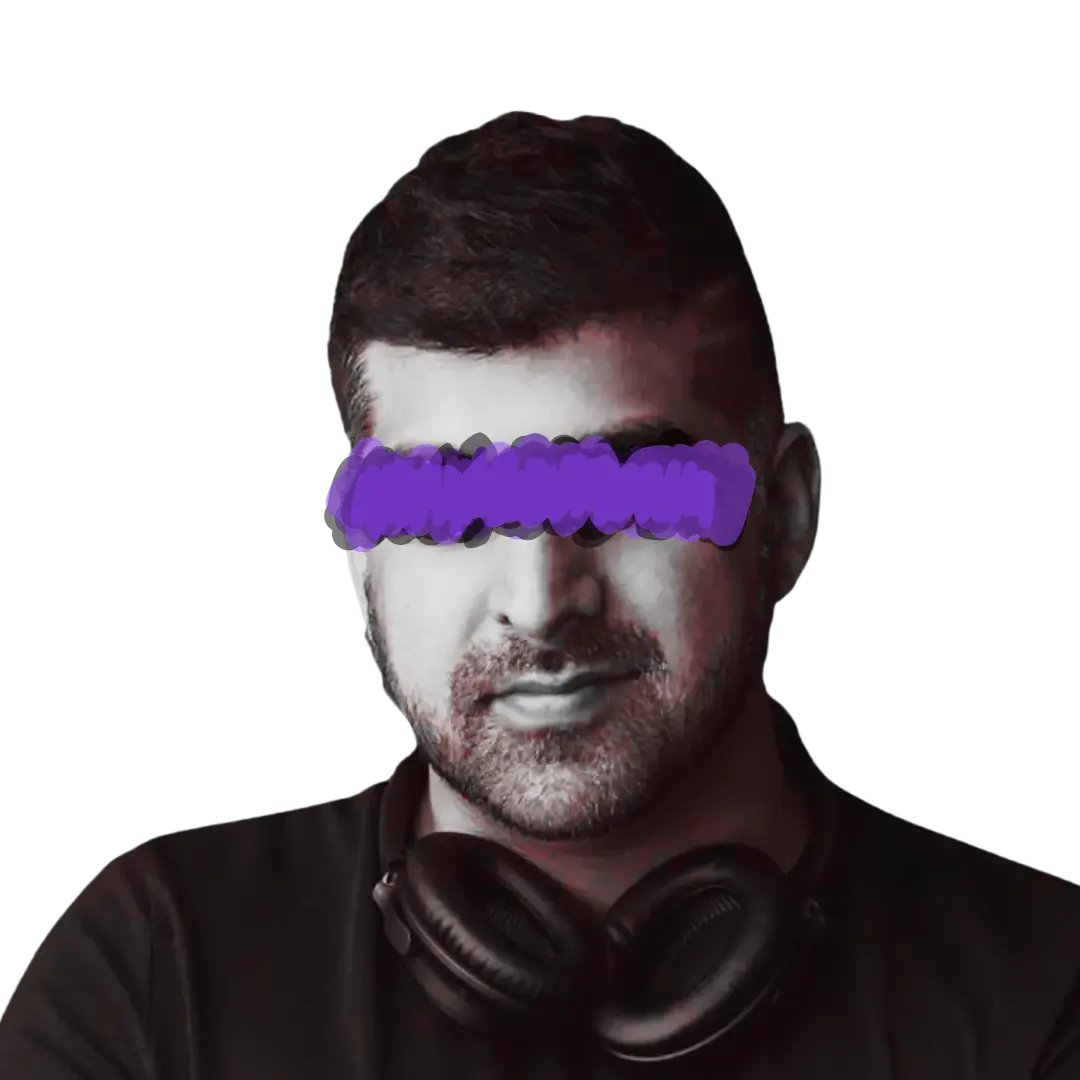
"I don't know much, but I know one thing: the ordinary life isn't for me."
Shaan Puri didn't say that. A stranger at a casino did, some guy he'd never met, making conversation at a table in the middle of nowhere. Shaan was in his early twenties. He kept the line for sixteen years.
That's the thing about Shaan Puri that most people miss. The guy who sold companies to Twitch and built My First Million into one of the biggest business podcasts on YouTube, who turned a metaverse tweet thread into a reframing clinic, is still carrying a stranger's line in his pocket like a talisman. Still needing the reminder.
He has built an entire philosophy around movement. New ventures, new chapters, new identities. He calls life "seasons of a TV show." He's started a sushi restaurant, a live-streaming app, a social network, a crypto newsletter, a baby clothing brand, and a venture fund, all before 37. But his most honest moments, the 2 AM essays, the podcast episodes where the performance drops, reveal someone wrestling with the question all that motion is designed to outrun.
What happens when you're brilliant at starting new chapters but you've never finished reading the book you're already in?
TL;DR: Why Shaan Puri is an Enneagram Type 7
- The movement is the tell. Nine countries before high school, serial ventures as an adult, a philosophy that treats "safety" as a serial killer of ambition.
- He engineers his emotions. A 90-second suffering budget, deliberate reframing, and a baseline he shifted from anxiety to joy, live on a podcast with Tony Robbins.
- The anti-hustle hustler. Calls himself lazy, works in lion-like sprints, quietly runs a $25M baby brand nobody in his audience knows about.
- The partnership that sticks. His longest commitment is a podcast with Sam Parr, an Enneagram 8 whose directness counterweights Shaan's restless energy.
- The tension beneath the frameworks. A rocky relationship with his father, a decade of being "B+" at his dream, the one part of his life he can't reverse-engineer.
Shaan Puri's Childhood Across Nine Countries
By the time Shaan Puri finished high school, he'd lived in nine countries. Started in Texas, finished in China, with Australia in between. His father ("incredibly inspiring," Shaan would later write) moved the family for work. His mother guided him to "walk on the right path." The family was warm, close, and conventional in ways that would later feel constraining.
He landed at Duke on a biology track, completed every pre-med requirement, and then, with one credit left, took a class called "Getting Rich." Taught by a woman who'd ridden the dot-com boom and real estate boom to retire by 30. Compound interest, mortgages, entrepreneur war stories.
He never went to medical school.
He graduated, moved to Boulder, Colorado, rented the worst two-bedroom apartment he could find: $466 per person, three people deep, furnished with free Craigslist desks and Target air mattresses. Had a pet mouse named Marty. Won $10,000 in a poker tournament and used it to travel Australia. Poker taught him "strategy, thinking in probabilities, controlling his mind, and figuring out if others are lying."
Then he and two Duke friends started Sabi Sushi, "the Chipotle of sushi." Customizable rolls, a rented kitchen, online delivery. Won the Duke Start-Up Challenge. Failed because people only order sushi once every three weeks.
"The company didn't work out, but I had amazing sushi every day for lunch," he'd later write. That's the public version. The private one: "At the time, I felt like I was striking out. Over and over again."
Why Shaan Puri Spent a Decade Feeling "B+"
After the sushi restaurant closed, Shaan moved to San Francisco at 24 with no job and no contacts. He skipped resumes entirely, researched the portfolio companies of Michael Birch (founder of Bebo, sold to AOL for $850 million), and cold-emailed ideas for improving them. Birch hired him into Monkey Inferno, his startup studio. Six months later, Shaan was CEO of the 20-person company.
Then came Blab, a live-streaming group video chat app that reached millions of users in under a year. The format was unsustainable. "The emotional cost of being entertaining in a live format is too high," Shaan wrote in his post-mortem. He killed it.
Then Bebo. Birch had bought the company back out of bankruptcy for $1 million, down from the $850 million AOL originally paid. Shaan led the revival through multiple pivots before landing on esports tournaments. In 2019, Twitch acquired Bebo for $25 million.
The decade between that sushi restaurant and the Twitch exit was, by his own assessment, "B+ at it." Not bad. Not great. Adequate. Ten years trying to be a great founder and CEO, and he was fine.
"Follow through is a motherf*cker," he wrote in a raw essay on Medium. Instead of executing on a solid, proven strategy, he'd search for new ones. Surrounded by Silicon Valley overachievers, he "felt worthless whenever he'd hit a plateau."
The shift came when he stopped trying to be the thing he was B+ at and started doing the thing he was A+ at: communicating. The podcast. The tweets. The newsletters. The writing. He didn't discover his talent. He stopped forcing the wrong one.
What is Shaan Puri's Personality Type?
Shaan Puri is an Enneagram Type 7
The pattern hides in plain sight. Not in the exits or the follower count, but in the way Shaan has structured his entire life around one principle: never get trapped.
Enneagram Sevens run on a core fear of being trapped in pain. They reframe suffering, treat life as a series of experiments, and keep moving before the current situation goes stale. Their superpower is enthusiasm. Their blind spot is what they leave behind.
The evidence in Shaan's case is unusually explicit, because he's unusually self-aware:
- "Safety is a serial killer." His words. The safe path "murders your ambition, murders your sense of adventure." For most people, safety is a goal. For Shaan, it's the threat.
- He builds chapters, not empires. The sushi restaurant, the apps, the newsletter, the fund. The pattern is rotation. Each venture is a season, and when the season ends, he moves on before the credits roll.
- "Enthusiasm is borrowing from the future." He named the Seven's core mechanism without realizing it: burn excitement about potential outcomes as fuel for present action. Positive emotion is a strategic resource he deploys.
- Anti-goals before pro-goals. His "Kickoff Doc" for every project starts with what he doesn't want to happen. Define the pain to avoid before the outcome to pursue. That's a Seven's native lens. The world sorts itself first into pain to dodge, then into possibility to chase.
- The metaverse thread. In October 2021, Shaan tweeted a thread reframing the metaverse not as a place but as a crossing point, like the singularity in AI. It went viral because of the reframe, not the information. That's the Seven move: take a concept everyone is arguing about and show them they're asking the wrong question entirely.
- "Find what feels like play to you, and work to others." His approach to content ("write like you talk," study comedians, make business entertaining) is a Seven's survival strategy. If the work stops being fun, the Seven stops showing up. So he redesigned the work until it was fun.
- He calls himself lazy. Sevens don't grind. They sprint, rest, sprint. He calls it "working like a lion": sit, wait, sprint, eat, rest, repeat. The opposite of the Gary Vee school of relentless daily output.
Under sustained pressure, Sevens slide toward Type 1 patterns: rigid, perfectionistic, frustrated with their own follow-through. The decade of being "B+" was exactly this. Compulsive search for new strategies instead of executing proven ones. The worthlessness that crept in every time momentum stalled.
The deepest tell is what he does with pain.
Shaan Puri's 90-Second Rule for Suffering
When Shaan Puri gets upset, he sets a timer. Ninety seconds. He allows himself to feel the negative emotion fully, anger, frustration, disappointment, whatever it is. Then he redirects.
By 40 seconds, the intensity usually fades on its own.
He has literally quantified his relationship with suffering. Not suppressed it. He's explicit about feeling it fully. But he's contained it. Bounded it. Built walls around it so it can't spread.
Another technique: instead of saying "I feel anxious," he says "I'm choosing to feel anxious." The reframe gives him an exit door he can see at all times. The emotion is a state he's occupying, not a condition he's trapped in.
Before the timer, before the reframes, the baseline was different. In a 48-minute episode of My First Million where Tony Robbins coached him live, Shaan admitted that his "emotional home" was stressed and anxious. Not occasionally. Not situationally. That was the default address he came back to every night.
Robbins dismantled Shaan's emotional operating system piece by piece on air. The most revealing moment: Shaan admitted he was at "level two" love with his girlfriend (now wife), "transactional trading love, tit for tat measurements." He consciously decided to move to level three: unconditional.
Love described like a product roadmap. That tells you everything about how his mind processes the messiest parts of being human.
After working with Robbins, his emotional home moved from "stressed and anxious" to "joy and curiosity." But the engineering of it is the point. Shaan didn't arrive at emotional stability naturally. He built it the way he builds companies: with frameworks, a willingness to tear everything down, and the assumption that the first version never works.
"Quality of life has very little to do with your house, car, and accomplishments," he's written. "The quality of your life is the quality of the emotions you have on a day-to-day basis."
He means it. He just needs a framework to get there.
How Shaan Puri Built Milk Road and Bums & Roses
The Milk Road is the purest expression of how Shaan Puri operates at speed.
In early 2022, he co-founded a daily crypto newsletter with Ben Levy. Within three weeks: 16,000 subscribers. Within ten months: 250,000. His growth hack was audacious: deposit $1 million into a public crypto wallet so readers could watch the investment in real time. When crypto crashed and the wallet lost 70% of its value, signups multiplied. People couldn't look away.
In January 2023, less than a year after launch, he sold the Milk Road to Bitfo for a reported eight-figure sum. "The Milk Road was a one-year project," he said on Mixergy. Build, extract, exit. The lion ate and went back to rest.
Then there's the business he doesn't talk about.
Bums & Roses is a premium bamboo baby clothing brand that his wife, Sonia, started after they had their first daughter. Late-night Photoshop sessions while the baby slept, a breakout print design named after Guns N' Roses, a slow build through a 70,000-member Facebook community doing weekly limited-edition drops. It does $25 million in annual revenue. Shaan is a co-founder on the LLC filings. The brand's website doesn't mention him once.
He has never named it on My First Million. When asked about it on Mixergy, he said only, "I also created an e-commerce brand. Spoiler, even when the business is good, physical products are a pain in the ass."
The silence is deliberate. He kept the brand separate to maintain clean data: if his 500,000 podcast listeners flooded the site, he'd never know whether the business worked on its own merits.
But think about what that means. Shaan shares everything publicly. His net worth. His emotional breakdowns. His "B+" failures. His transactional love patterns. He let Tony Robbins coach him on-air. Yet the slow-growth, operational, deeply unsexy baby clothing company, the one that requires steady daily execution instead of lion-like sprints, is the thing he protects. Sevens guard what actually works by keeping it away from their own restlessness.
His investing runs on the opposite instinct: total transparency. His All Access Rolling Fund raised $2.5 million in 21 days. Every single investor was a Twitter follower or podcast listener he'd never met in person. Parasocial trust converted into actual capital. His philosophy: "I don't believe in an investing thesis. The best thing you can do is say I'm open, and I'm here to listen."
No thesis. No constraints. Curiosity and optionality, forever.
Why My First Million Is the Partnership That Should Be Impossible
The thing that should be impossible about Shaan Puri is My First Million.
A guy who can't sit still, who has never run the same company for more than a few years, who treats every venture as a season of television, has been recording a podcast with the same co-host since 2019. Over 200 million YouTube views. More than 25 million downloads a year. Seven years and counting.
The origin was accidental. After the Twitch acquisition, Shaan launched the show but needed distribution. Sam Parr, then running The Hustle with over a million subscribers, agreed to a deal: Shaan handles content and production, Sam brings the audience, revenue split 50/50. Early episodes featured guests. Then a guest didn't show up one day, so they just recorded the two of them talking. Those episodes blew up.
What makes the partnership work is the collision of their types. Sam is an Enneagram 8: direct, confrontational, intensity-addicted. He cold-emailed the same person fifty times, told HubSpot to stop wasting his time, described being unhappy 80% of the time as "thrilling." Where Shaan generates ideas at machine-gun speed (wouldn't it be cool if, what if someone built, imagine this), Sam pressure-tests them with blunt force. What would that actually cost? Who's the customer? Is that legal?
Sevens and Eights are both assertive types on the Enneagram. They share forward energy; neither sits back and waits. But the engine differs. Shaan moves toward possibility. Sam moves toward control. Shaan reframes. Sam confronts. Shaan asks "What if?" and Sam asks "So what?"
Shaan has described Sam as someone openly and generously enthusiastic about other people ("this guy's amazing, this guy's an artist"), which runs against the perception of Eights as guarded. The warmth is real. The respect runs both ways.
What the partnership reveals about Shaan matters more than what it produces. His longest commitment is a relationship with someone whose temperament is the exact opposite of his own. The Seven who can't stop moving found a reason to stay in the same room, every week, for seven years.
The Relationship Shaan Puri Still Can't Solve
At 35, Shaan wrote an essay called "Don't Be an Asshole, Call Your Mom."
He admitted he wasn't sure of his parents' exact ages. "My parents are getting old. I'm 35, and they're 65. Or maybe 63?"
He described his relationship with his mother as "like talking to a friend who just happened to wipe your butt when you were a kid." He recorded a two-hour private podcast with her about her life story. Bought her a calcium CT scan for heart health screening and a two-month personal training package. He wrote that parents "are the only people on earth who care about you more than you even care about yourself."
Then, in one paragraph, the tone shifts:
"For me, I have a much more rocky relationship with my dad. I haven't cracked this nut, but I know the right thing to do is to build a bridge with the 'other parent' too."
One paragraph. No framework, no system, no reframe. The man who has built frameworks for suffering, love, work, identity, and daily energy has one relationship he can't engineer his way through. He has never dedicated a podcast episode, a tweet thread, or an essay to his father specifically. The man whose career moved Shaan through nine countries, who shaped the restlessness before Shaan chose it for himself, sits in a conspicuous gap in an otherwise transparent personal narrative.
His family has told him he comes across as "rude to people." The directness that serves him in business cuts differently at home.
This is where the Seven pattern gets uncomfortable. Shaan's ideal day, as he's described it: "Ride bike to drop off kids at school. Watch the bachelor with my wife at night." His morning routine includes three minutes of gratitude where he visualizes his kids and wife laughing. The domestic life is genuinely present, but always framed as bookends around the work.
When asked about parenting, he said, "The best thing to do with kids is to be a kid. How do I play with you, which is what they all want?" His current priority is spending time with his three children "while they still value his friendship," which is a very Seven way to frame fatherhood. Enjoy the season before it ends.
The same man who treats ventures as chapters treats parenting as a chapter too, one he's aware has an expiration date. His four "Kings," the identities he's actively building toward, are Generous, A Teacher, Habitually Fit, and Mastering Meaning. Notice what's missing. "Great dad" and "great husband" aren't on the list, even though he's separately named both as priorities. The frameworks that organize everything else can't quite contain this part.
There's a poster above his desk: "Who am I becoming?" He's chosen those four Kings. "These are the four things that I care about right now in my life," he's said. "I don't know how long this chapter lasts, maybe it's six months, maybe it's six years."
Even the poster is a Seven's question. Not "who am I," which would require sitting still long enough to find out. "Who am I becoming." In transit. Always the next version.
What Shaan Puri Wants in His Next Era
In early 2025, Shaan Puri started coaching basketball at a local high school. Unpaid. Four days a week. Thirty-minute drive each way. Fifteen hours a week. He breaks down game film, helps players stay eligible, and applies the same framework he used as a CEO: identify three priorities and reinforce them until the 42nd repetition. "Reminders matter a hell of a lot more than some new strategy," he's said.
This isn't his first time. During his "strategically broke" year in his mid-twenties (total income $700 a month), he was the head basketball coach at a school for autistic children. $35 an hour, two hours a week. The impulse was there before the money.
His current team lost its preseason game by 30 points. They won their first official game by 30, complete with a Gatorade shower.
"When I tell you that this is the most fun thing I've ever done in my life," he said, "I am not lying."
He sees sports as "a life simulation": individual effort inside a team, habits tested under pressure, consequences you can't reframe away. When asked why coaching hits harder than philanthropy: "Donating to solve world hunger sounds big but feels small. Coaching 12 local high school kids sounds small, but feels very big."
He's calling this "The Next Era," ages 37 to 40. The podcast still runs. The fund still invests. The baby brand keeps growing. But the center of gravity has moved. He's writing One Hour Books ("bite-sized books with all the info you need, without the fluff"), and when asked what money is actually for: "The value of money is what you can say no to."
In 2016, at 28, Shaan wrote an essay about what he wanted out of life. Years later, he found it again and tweeted: "I'm surprised I 'had the answer' back then. Nothing I wanted has really changed."
Nine countries. A dozen ventures. Three exits. Five hundred thousand followers. A complete rewiring of his emotional operating system. A high school basketball team that gives him Gatorade showers.
And nothing he wanted has really changed.
Is the reinvention taking him somewhere, or has the reinvention itself become the destination? Does it matter, if the guy coaching teenagers for free at 37 is the same person who kept a stranger's line about the ordinary life not being for him?
He's been carrying that line for sixteen years now. No framework. No system. No timer. Just a sentence from a stranger, held quietly while everything else kept changing.
Disclaimer: This analysis of Shaan Puri's Enneagram type is speculative, based on publicly available information, and may not reflect the actual personality type of Shaan Puri.
What would you add?