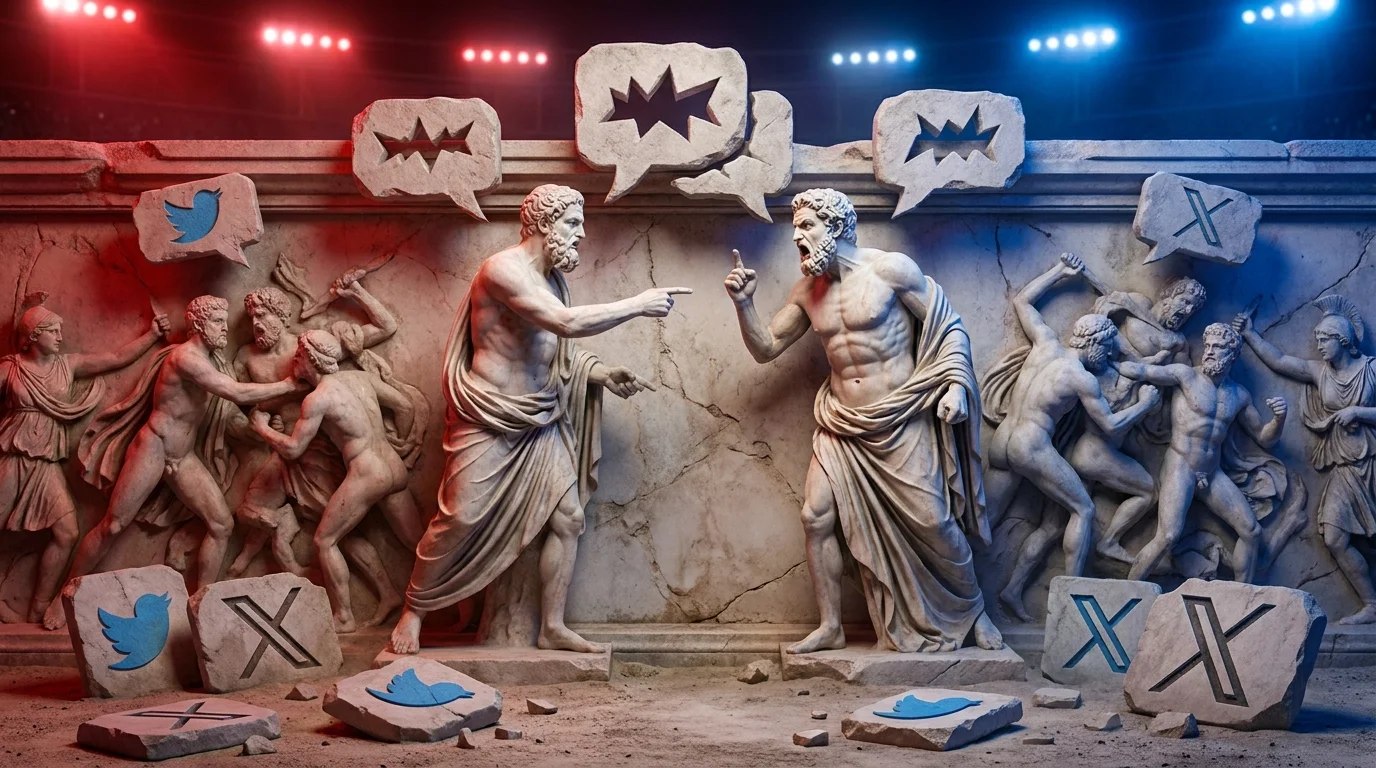
You open the app to check news. Two hours later, you've argued with strangers about something you didn't care about yesterday, your heart rate is elevated, and you feel worse about humanity.
This isn’t a bug. It’s Twitter working exactly as designed.
But the toxicity isn’t random—it follows personality patterns. Certain Enneagram types dominate the platform, and their psychological traits create the combative environment we all complain about while continuing to scroll.
Why Twitter Attracts Certain Types
The Platform’s Psychological Design
Twitter’s features create specific psychological pressures:
| Feature | Psychological Effect | Types Attracted |
|---|---|---|
| Character limit | Forces strong positions, removes nuance | 1, 8 |
| Public replies | Creates performance pressure | 3, 8 |
| Quote tweets | Enables public criticism/dunking | 1, 8 |
| Trending topics | Rewards controversy | 8, 7 |
| Follower counts | Visible status metrics | 3 |
| Real-time feed | Constant stimulation | 7, 6 |
| Anonymous accounts | Enables aggression | 8, 6 |
The Dominant Three
Type 8: The Platform’s Royalty
Type 8s are Twitter royalty because the platform rewards their natural style: direct, forceful communication that doesn’t hedge or apologize.
When Elon Musk told advertisers leaving X to “go f**k yourself” at the DealBook Summit—that’s Type 8 Twitter energy in its purest form. No calculation, no spin, just raw confrontation that generates massive engagement precisely because it’s shocking. Conor McGregor calling opponents “inbred hillbillies.” The Wendy’s brand account declaring “National Roast Day” and openly attacking competitors. Trump announcing actual policy via tweet before his own communications team was briefed.
Type 8s dominate because they’re unbothered by the thing that keeps other types awake at night: criticism. They take strong stances, respond aggressively to disagreement, and genuinely enjoy the combat. The most viral tweets almost always carry this energy—bold, confrontational, unapologetic.
Type 1: The Correctors
Type 1s can’t resist Twitter because there’s always something wrong to correct. The “well actually” reply? That’s a Type 1 unable to let wrongness stand.
They fact-check misinformation, build threads that systematically prove points, and make moral pronouncements on current events. The short format allows for clear moral statements, and the platform is an endless supply of errors to fix. The problem: the wrongness never ends. Every correction leads to more wrongness, and Type 1s burn out from the impossibility of fixing everything.
Type 6: The Watchdogs
Type 6s stay because they need to monitor threats in real-time.
They share warnings, build protective communities, document receipts for future reference, and stay alert to shifting loyalties. The “I’ve been saying this for months” timeline archaeologist who pulls up old screenshots? Almost always a Type 6 who kept the receipts.
The trap: anxiety keeps them scrolling for the next threat. They can’t log off because something might happen. And on Twitter, something always happens.
The Other Six
Type 3 (Achiever): Treats Twitter as a game to optimize. Studies what performs, curates a personal brand, watches follower counts like a stock ticker. Type 3s don’t start fights—they study which fights get attention and position themselves accordingly. They pivoted seamlessly when the algorithm changed under Musk, because adapting to new success metrics is what they do.
Type 7 (Enthusiast): Loves the constant novelty, jumps from trending topic to trending topic, gets bored and moves on before investing in any single fight. Provides the platform’s wit and humor—the jokes that cut through outrage. Their weakness is shallowness: they generate engagement but rarely depth.
Type 4 (Individualist): Wants authenticity on a platform that rewards performance. May build a devoted niche following through genuine emotional expression, but feels chronically misunderstood by the broader audience. Gravitates toward subtweets and indirect expression. Often threatens to leave, posts about leaving, then stays.
Type 5 (Investigator): The noise-to-signal ratio is nearly unbearable. Prefers long-form analysis, which Twitter’s format actively punishes. May maintain a small account for sharing research or lurk with no followers at all. If they do post, it’s a thread dense enough to be a white paper.
Type 2 (Helper): Gives too much emotional energy to strangers who will never reciprocate. Takes negativity personally, gets hurt by drive-by cruelty, and absorbs the platform’s hostility like a sponge. The most likely type to respond earnestly to someone who’s trolling—and the most damaged by the interaction.
Type 9 (Peacemaker): The constant conflict is genuinely exhausting. May lurk extensively but rarely post. When they do, it’s too balanced and nuanced to gain traction in a world that rewards sharp takes. Often the first type to quietly deactivate.
The Toxicity Cycle
How Twitter Creates Conflict
Step 1: Algorithm rewards engagement Step 2: Conflict generates more engagement than harmony Step 3: Confrontational content gets boosted Step 4: Platform becomes dominated by confrontational types Step 5: Others adapt by becoming more confrontational Step 6: Cycle intensifies
The Psychology of Going Viral
What goes viral on Twitter:
- Bold positions and takedowns (Type 8 confrontation)
- Moral clarity (Type 1 righteousness)
- Community threats (Type 6 warnings)
- Outrage (all combative types)
What doesn’t go viral:
- Nuanced takes (too long, too boring)
- Admissions of uncertainty (reads as weak)
- Peace-seeking posts (no engagement hook)
- Genuinely kind content (except occasionally for contrast)
The Performance Spiral
Because Twitter is public, users perform for audiences:
Type 8s perform strength and dominance Type 3s perform success and influence Type 1s perform moral superiority Type 6s perform community protection Type 4s perform uniqueness and depth Type 7s perform wit and novelty
The performance becomes more extreme as users compete for attention in an increasingly noisy environment.
The Silent Majority
Here’s what makes Twitter’s toxicity even stranger: most people on the platform never contribute to it.
Pew Research found that the top 25% most active users produce 97% of all tweets. Nearly half of all accounts post fewer than five times per month. The 90-9-1 rule applies everywhere online, but Twitter makes it visceral: 90% lurk, 9% occasionally engage, 1% generate almost all the content.
The toxic culture you experience is manufactured by a tiny fraction of users—but it shapes the environment for everyone. Lurkers consume outrage as a spectator sport, their engagement (scrolling, lingering, clicking) feeding the algorithm without ever typing a word.
Lurker psychology maps across types. Type 5s lurk because they prefer observing to participating. Type 9s lurk because posting means risking conflict. Type 6s lurk while monitoring threats they never publicly flag. Type 4s lurk because they’ve decided no one would understand anyway. But regardless of type, lurkers aren’t passive—their attention is the fuel the algorithm burns.
Twitter Archetypes
The Reply Guy
Usually: Type 1 or Type 3 Behavior: Responds to popular accounts hoping for engagement/acknowledgment Psychology: Type 1 needs to correct or contribute; Type 3 needs association with successful accounts
The Quote Tweeter
Usually: Type 8 or Type 1 Behavior: Adds commentary to others’ tweets, often critical Psychology: Type 8 loves public confrontation; Type 1 can’t resist correcting
The Thread Creator
Usually: Type 1 or Type 5 Behavior: Creates long explanatory threads Psychology: Type 1 needs to comprehensively address wrongness; Type 5 enjoys sharing expertise
The Doomscroller
Usually: Type 6 Behavior: Can’t stop checking for new threats/news Psychology: Anxiety about missing something important; hypervigilance
Why “Good Twitter” Doesn’t Last
BookTwitter started as readers sharing recommendations and connecting with authors. It became a cancel-culture minefield where minor slip-ups ended careers and 280-character tweets were weaponized out of context. Science Twitter gave researchers a way to share findings with the public—until anti-vaxx mobs made posting pro-vaccine content dangerous enough that Nature reported thousands of scientists cutting back on X. Black Twitter created #BlackLivesMatter and #OscarsSoWhite—some of the most culturally significant activism of the decade—then watched the community fracture as hate speech spiked post-acquisition, driving over 115,000 account deactivations in a single day after the 2024 election.
The pattern is always the same:
The algorithm doesn’t support them. Positive content generates less engagement than conflict.
Conflict invades. Someone from combative Twitter finds the peaceful space and brings their energy.
Users get corrupted. After enough exposure to confrontational content, non-confrontational types start adopting combative styles.
Attention scarcity. “Nice” accounts can’t compete with controversy for algorithmic distribution.
Twitter Spaces—the live audio feature—briefly hinted at a different dynamic. Research shows hearing someone’s voice makes them seem more human and mentally capable than reading their text. But even Spaces eventually replicated text Twitter’s mob dynamics, with pile-ons and performative aggression in audio form. The architecture makes sustained positivity nearly impossible at scale.
The Elon Effect
What Actually Changed
When Elon Musk bought Twitter, the changes weren’t just cultural—they were mechanical.
Staffing gutted. The workforce dropped from 8,000 to under 1,500. Content moderation teams were decimated. The Trust and Safety Council—responsible for policies on hate speech, child exploitation, and self-harm—was dissolved entirely in December 2022.
Algorithm restructured. When Twitter open-sourced its algorithm in March 2023, the mechanics became clear: Blue subscribers get a 4x algorithmic boost within their network, likes get a 30x boost, and links to external sites are actively deprioritized. The platform was redesigned to keep you scrolling, not clicking away.
Moderation policies stripped. COVID misinformation policy—removed. Crisis misinformation policy—removed. Election outcome misinformation policy—removed. The concept of “informational harm” was eliminated as a category entirely.
The measurable result: A UC Berkeley study published in PLOS ONE found hate speech was 50% higher in the eight months post-acquisition, with engagement on hateful content jumping 70%. Transphobic slurs tripled. On acquisition day alone, hate terms were tweeted 4,778 times between midnight and noon—versus a prior peak of 84 per hour.
How This Shifted the Type Distribution
The moderation rollback didn’t affect all types equally:
Type 8s got the platform they always wanted—fewer guardrails, more direct confrontation, explicit “free speech” positioning. Previously banned accounts (Trump, Andrew Tate, Kanye West) were reinstated, bringing massive confrontational energy back.
Type 1s lost their enforcement mechanism. When the platform itself stopped correcting misinformation, Type 1s had to choose between doing it themselves (exhausting) or accepting the wrongness (unbearable). Many left.
Type 6s split into hostile camps, with loyalty tested along political lines. The tribalism intensified because the moderation that once kept extremes in check was gone.
Type 3s scrambled to understand new success metrics. The old playbook—engagement through quality content—was disrupted by pay-to-play verification and algorithmic changes favoring subscribers.
Whether this is better or worse depends on your type. For Type 8s, it’s more comfortable. For Type 1s, it’s a nightmare. For everyone, it’s measurably more hostile. (For more on how personality shapes the tech leaders building these platforms, see the Tech Titans Through the Enneagram series.)
Healthier Twitter Use by Type
Type 1: Two Replies and Done
Mute keywords that trigger your correction instinct. Give yourself a rule: two replies max, then walk away. If someone doesn’t get it after two exchanges, they won’t. Unfollow accounts that exist solely to be wrong—you’re feeding their algorithm.
Type 2: Turn Off Stranger Notifications
Turn off notifications from people you don’t follow. Never reply to someone with more than 50K followers—the mob dynamics aren’t worth your emotional energy. Channel your helpfulness into DM conversations with people you actually know.
Type 3: Hide Your Metrics
Use third-party tools to hide follower counts. Post one thing per week that you know won’t perform well but is genuinely you. Track how little your follower count affects your actual life over 30 days.
Type 4: Curate Ruthlessly
Follow fewer than 200 accounts, all in your niche. Turn off retweets from accounts that bring mainstream discourse into your feed. Stop trying to be understood by everyone—find your people and ignore the rest.
Type 5: Add Friction
Use lists instead of the main feed to curate exactly what you see. Set a 15-minute timer. Delete the app and only access via browser—the extra friction cuts usage dramatically.
Type 6: The “Will This Change My Day?” Test
Before scrolling, ask: “Will anything I see here change what I do today?” If no, close the app. Mute breaking news accounts—you’ll hear about real emergencies through other channels. Most of what you’re monitoring will never affect your life.
Type 7: Finish Before You Jump
Follow five topics, not fifty. When you feel the urge to jump to a new trending topic, finish reading the thread you’re on first. Don’t tweet about something until you’ve thought about it for at least ten minutes.
Type 8: Pick Battles That Matter
Mute anyone under 1,000 followers who’s clearly baiting you—they’re borrowing your audience. Save your energy for confrontations where something real is at stake: a policy, a person, a principle. Some stranger’s bad take isn’t worth your time.
Type 9: Delete for a Week
Your peace matters more than staying informed. If you’ve been lurking without posting for months, that’s your answer. Delete the app for one week and notice how little you miss it.
The one-sided emotional bonds you form with people you follow online aren’t limited to Twitter — they shape how you consume all media. See Parasocial Relationships by Enneagram Type for the deeper pattern.
FAQs
Why can’t I stop checking Twitter even though it makes me miserable?
Variable reward schedules (sometimes good content, sometimes bad) are addictive. For Type 6s, there’s also anxiety about missing threats. For Type 3s, there’s fear of missing opportunities. The platform is designed to be hard to quit.
Is Twitter getting worse or am I just noticing it more?
Both. The platform has genuinely changed (moderation, algorithm, user base), AND your tolerance for its psychological cost may have decreased. Burnout is real.
Can I use Twitter without getting sucked into the toxicity?
Possible but difficult. Requires ruthless curation, strict time limits, and likely muting/blocking liberally. Most people who try eventually either get sucked in or leave.
Why do some people seem to thrive on Twitter drama?
Usually Type 8s who genuinely enjoy conflict, or Type 3s who’ve figured out how to monetize the attention. For these types, what looks exhausting to you is energizing to them.
Should I delete my account?
Depends on your type and what you’re getting from it. If the psychological cost exceeds the benefit—information, community, professional necessity—then yes. If you’ve found a sustainable way to use it, no.
Disclaimer: This analysis of Twitter personality types is observational and speculative, not based on tested typing of specific accounts.