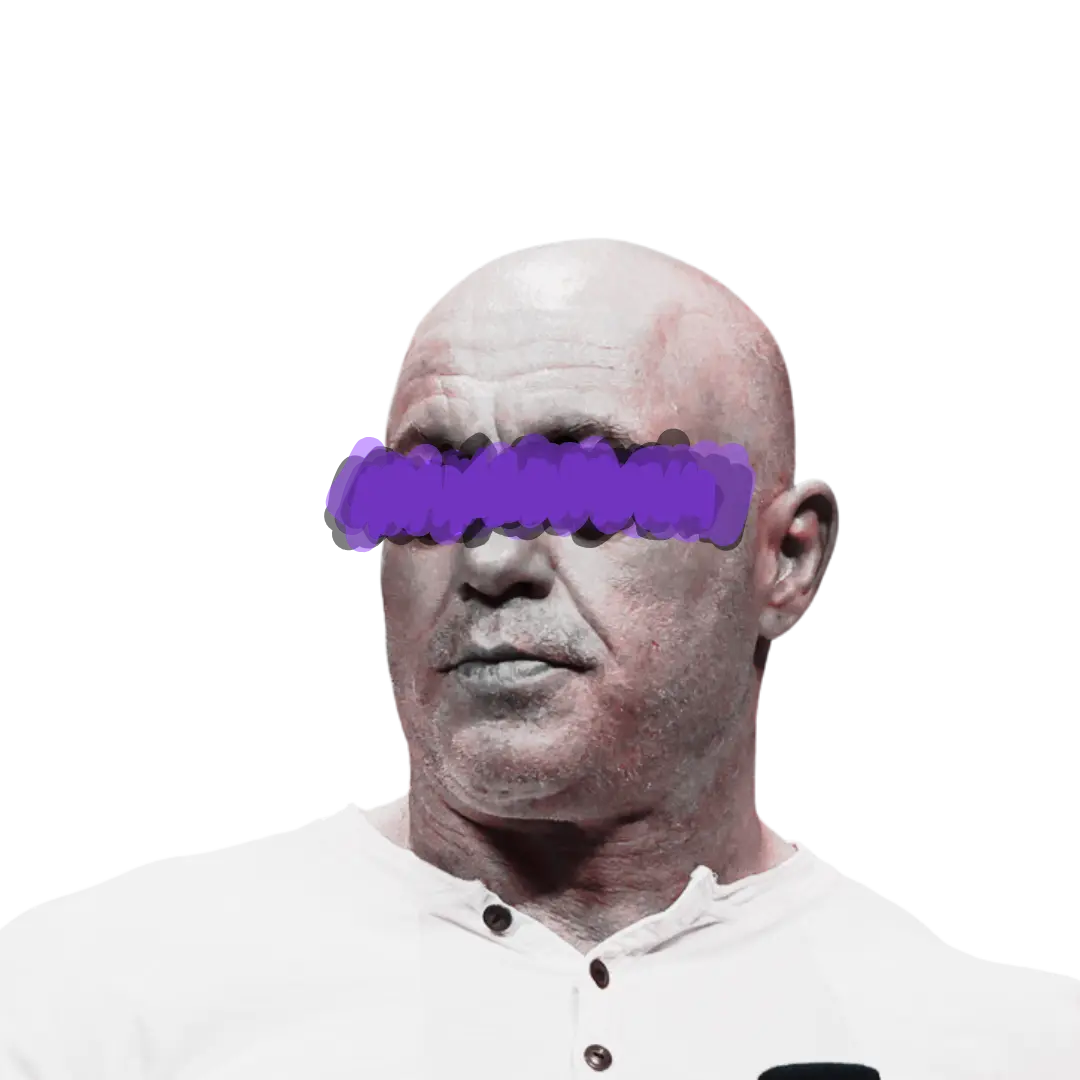


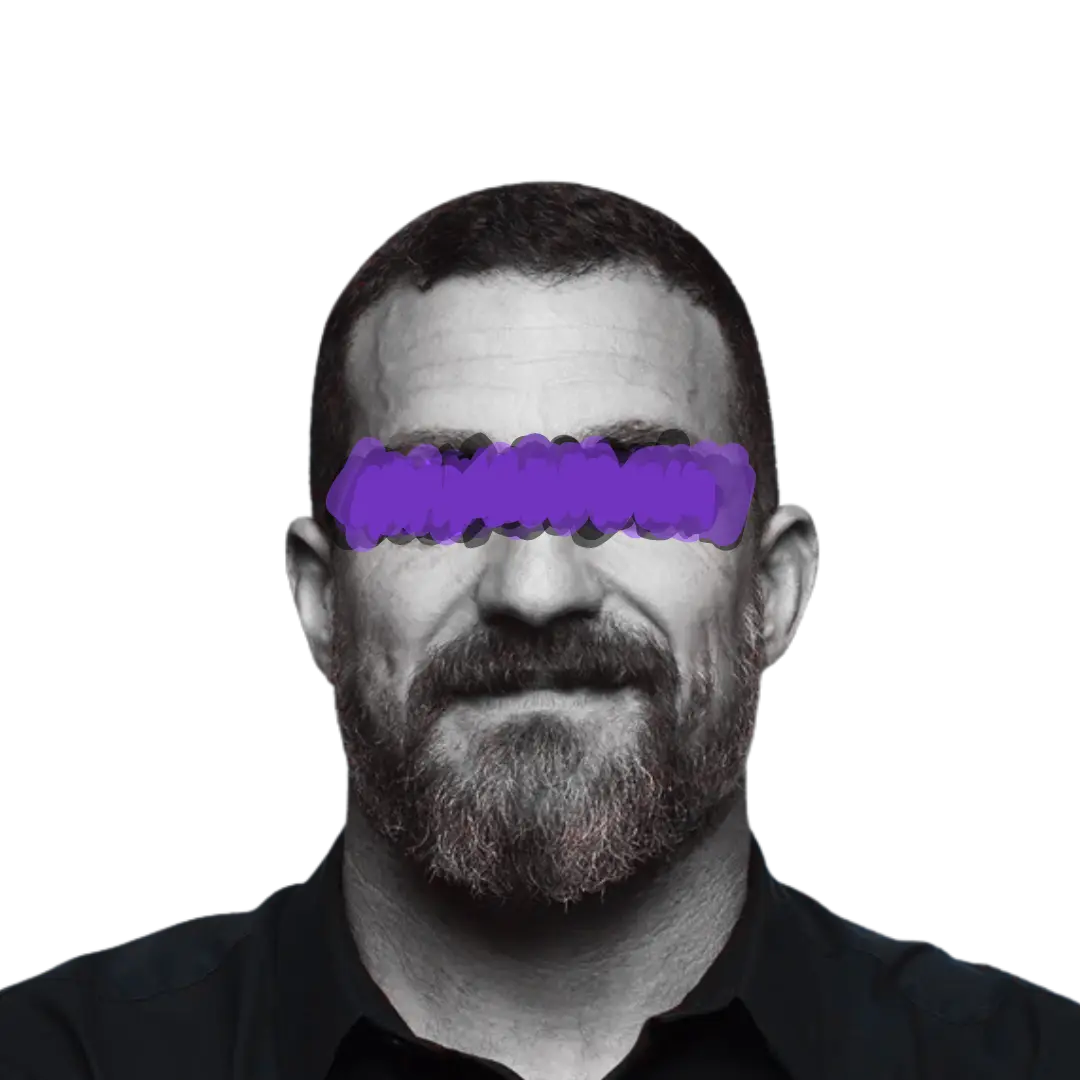

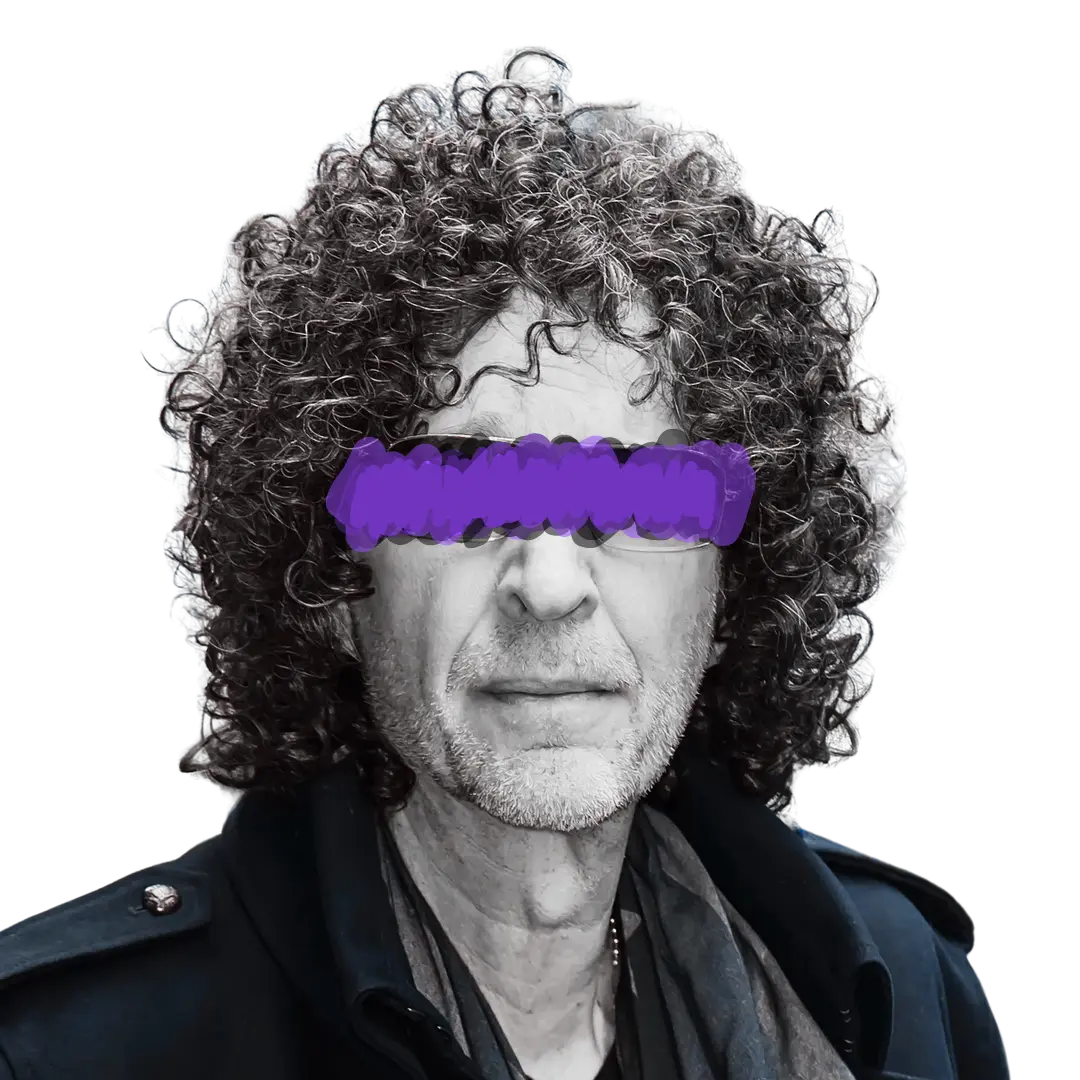
Rogan doesn't cover "comedy and MMA and politics and aliens" because those topics are related—they're not. He covers them because they all satisfy the same psychological need: a Type 8's hunger to pressure-test everything.
Lex Fridman doesn’t interview scientists and philosophers and dictators because he’s eclectic. He does it because a Type 5 needs to understand the world at the deepest possible level, regardless of domain. Alex Cooper didn’t build a sex-and-dating empire because she saw a market gap. She built it because a Type 7 can’t stop chasing the next taboo. Andrew Huberman didn’t turn neuroscience into a morning routine because the topic was trending. He did it because a Type 5 needs to map the system they live in—and the most urgent system to understand is always their own nervous system.
The topics are the surface. The personality is the engine.
This is a map of that engine—across the biggest podcasters working today, spanning six Enneagram types, multiple podcast niches, and both sides of the gender divide.
The Full Personality Map
| Podcaster | Enneagram Type | Podcast | Topic Gravity | Interview Style |
|---|---|---|---|---|
| Joe Rogan | Type 8 — Challenger | The Joe Rogan Experience | Power, combat, who’s real | Pressure test |
| Dave Portnoy | Type 8 — Challenger | BFFs / Barstool | Sports, business, dominance | Confrontation |
| Sam Parr | Type 8 — Challenger | My First Million | Business, deals, survival | Brute-force honesty |
| Lex Fridman | Type 5 — Investigator | Lex Fridman Podcast | Truth, meaning, consciousness | Philosophical excavation |
| Shawn Ryan | Type 5 — Investigator | Shawn Ryan Show | Military, intelligence, survival | Operational patience |
| Andrew Huberman | Type 5 — Investigator | Huberman Lab | Neuroscience, protocols, the body | Clinical translation |
| Alex Cooper | Type 7 — Enthusiast | Call Her Daddy | Sex, relationships, drama | Chaotic energy |
| Theo Von | Type 7 — Enthusiast | This Past Weekend | Trauma, absurdity, life | Storytelling riff |
| Dax Shepard | Type 7 — Enthusiast | Armchair Expert | Vulnerability, psychology, honesty | Confessional |
| Brittany Broski | Type 7 — Enthusiast | Broski Nation | Obsessions, culture, chaos | Enthusiasm tornado |
| Shaan Puri | Type 7 — Enthusiast | My First Million | Ideas, trends, what’s next | Riff machine |
| Chris Williamson | Type 3 — Achiever | Modern Wisdom | Self-improvement, optimization | Benchmark interview |
| Howard Stern | Type 6 — Loyalist | The Howard Stern Show | Fear, taboo, power dynamics | Counterphobic interrogation |
Look at the distribution. Five Type 7s. Three Type 8s. Three Type 5s. One Type 3. One Type 6. No Type 1s, 2s, 4s, or 9s in the top tier. That’s not an accident. It’s a pattern that tells us something fundamental about what podcasting is as a medium—and who it selects for.
The Interrogators: Type 8s
Joe Rogan. Dave Portnoy. Sam Parr.
Three men who turn every microphone into a lie detector. Their core wound is vulnerability itself—if you can withstand a Type 8’s pressure, you’ve earned their respect. If you can’t, they know you’re not worth their time.
This is why Rogan’s show works as a format. A three-hour unedited conversation is a Type 8’s dream setup. No editors to manage him. No producers telling him what to ask. No time limits forcing fake wrap-ups. The length is the point—it takes three hours for people to drop their masks, and an 8 is patient enough to wait for it. When Rogan pushes back on a guest mid-sentence, it’s not rudeness. It’s a dominance calibration. He’s checking: are you real, or are you performing?
Rogan is specifically an 8w7—a Challenger with an Enthusiast wing. That’s the wing that produces his comedy-club curiosity on top of the combat instinct: one hour on psychedelic toad venom, the next hour grilling a politician, the next on MMA technique. An 8 without a 7 wing wouldn’t bounce that wide. Portnoy, by contrast, reads closer to 8w9—the territorial 8, the one who builds an empire and defends it rather than chasing the next frontier.
Dave Portnoy runs the same operating system in a different arena. Barstool Sports is an empire built on Type 8 energy—confrontational, unapologetic, loyalty-based. Portnoy’s pizza reviews aren’t food criticism. They’re power demonstrations. He walks into any restaurant in America, rates the pizza to its owner’s face, and doesn’t flinch. His feuds with the NFL, with business rivals, with basically anyone who crosses him—these aren’t strategic. They’re the Type 8 wound expressing itself: nobody controls me, nobody deceives me, and if you try, I’ll make it public.
Sam Parr runs the same 8 operating system in business media. His co-host Shaan Puri (a Type 7) once described Sam’s approach as “brute force”—and Sam has said he’s angry 80% of the time, “at something, or I’m like ‘this could be better’ and ‘this sucks’ and ‘we’re going to die, we’re going to go out of business.‘” That’s the 8’s engine. The anger isn’t dysfunction. It’s fuel. (We’ll return to him below in the My First Million dynamic section, where the 7/8 chemistry actually shows up on air.)
What 8s Talk About and Why
Look at the topics these three men gravitate toward:
- Power dynamics: Who has it, who’s faking it, who earned it
- Combat and competition: Rogan’s UFC obsession, Portnoy’s sports empire, Sam’s business war stories
- Authenticity tests: All three of them are constantly evaluating who’s real
- Control and independence: Rogan’s Spotify deal, Portnoy’s Barstool buyback, Sam’s serial entrepreneurship
These aren’t random topic choices. They’re the same psychological need expressed through different content: I need to know what’s real, who’s strong, and whether I’m being controlled.
The 8 podcaster doesn’t interview. They interrogate. And millions of people tune in because they want someone else to do the confronting they won’t do themselves.
The Investigators: Type 5s
Lex Fridman. Shawn Ryan. Andrew Huberman.
Three people who’d rather listen for four hours than talk for four minutes. Their core wound is the fear that they don’t know enough to handle reality—so they accumulate knowledge until their internal model is airtight. The 5’s nervous system is literally regulated by understanding. Learn enough, and the world stops being scary. Don’t learn enough, and the world is a threat every minute of every day.
Lex Fridman — The Philosophical 5
This is why Lex Fridman tells guests “I love you” and interviews Putin with the same unshakable calm. It’s not naivety. It’s a Type 5 who has processed the situation so thoroughly in advance that nothing can rattle him. His preparation is the armor. By the time the camera turns on, Lex has already thought through every possible direction the conversation could go. The interview itself is just the 5 testing his internal model against reality.
Lex’s topic range—AI researchers, comedians, heads of state, mixed martial artists, philosophers—looks random until you see the pattern. Every guest is a doorway into a system. He doesn’t care about the person’s fame. He cares about their domain. What does this person know that nobody else knows? What framework do they use to understand their corner of reality? The 5 wants to collect these frameworks like puzzle pieces until the whole picture comes together.
Shawn Ryan — The Operational 5
Shawn Ryan is the same type, but the military version. A former Navy SEAL and CIA contractor who lets guests unspool entire operations before stepping in with a clarifying question. It’s not that he doesn’t talk—he does, he jokes, he pushes back when something doesn’t line up. It’s that he consistently lets the other person do the excavating, and when he asks, he asks once and then waits. Not the performative pause of a talk show host—the operational patience of someone who learned that in intelligence work, the person who talks least learns most.
Ryan’s topics—special operations, intelligence, government coverups, survival—are a 5’s dream content. These are domains where incomplete information gets people killed. Where understanding systems at the deepest level is literally life or death. His podcast is an intelligence briefing disguised as entertainment.
Andrew Huberman — The Biological 5
Andrew Huberman is the version of Type 5 that aimed the searchlight at the human body. Tenured neuroscientist at Stanford. Launched Huberman Lab in early 2021 and vaulted it into one of the top health and science podcasts in the world. His childhood tells the type story in one beat: as a kid he developed a grunting tic he could only suppress two ways—hitting his head during sports, or learning something new and talking about it. He picked the second, and never stopped. Knowledge wasn’t a hobby. It was how his nervous system regulated itself.
That’s the 5 in its purest form—understand the system deeply enough, and you can survive anything. Everything Huberman does on air follows that logic: morning sunlight in the first hour, caffeine delayed 90 to 120 minutes, cold exposure for dopamine, Non-Sleep Deep Rest for recovery. Every protocol is a 5 mapping a biological variable they can control, then handing the map to the audience so they can control it too.
The most revealing fact about him is not on the podcast at all. He has done therapy twice a week since he was a teenager. Thirty-plus years. With the same therapist. He worked an extra job at Thrasher Magazine as a broke postdoc just to afford the sessions. Nothing says “5” like the willingness to commit to one deep system for three decades while the rest of the world flips providers every year.
The 2024 New York Magazine piece by Kerry Howley—the one that reported allegations of multiple simultaneous relationships none of the women knew about—fits the 5’s stress pattern rather than breaking it. Under pressure, a 5 moves toward unhealthy 7: scattered attention, stimulation-seeking, compartmentalization, escape into novelty. It was the same mind that built his empire, running the disintegration move instead of the growth move. A 5 is never less of a 5 than when they’re spinning. They’re just running the broken version of the program.
The Three 5s: Same Engine, Different Fuel
All three are deep listeners. All three read voraciously. Lex and Shawn Ryan both practice martial arts—what the Enneagram calls a 5 “integrating toward 8,” which just means a healthy 5’s growth move is into the body and the direct, confrontational present, not further into their own head. Huberman runs the same move through a different door: the body as a scientific object, exercise as a protocol, sleep as an engineering problem. Three different routes into the same 5 medicine—get out of the head, into the physical world.
Their expressions split cleanly:
- Lex approaches the world through philosophy. Why does anything exist? What is consciousness? What does love mean? His 5 energy lives in the abstract.
- Shawn approaches the world through operations. What happened behind the scenes? Who gave the order? What does the classified version say? His 5 energy lives in the concrete.
- Huberman approaches the world through biology. What is the nervous system actually doing? What’s the measurable protocol? How does the body generate the mind? His 5 energy lives in the physical substrate.
Same core wound. Different investigative beat.
The wings fit the split. Lex reads as a 5w4—the Investigator with an Individualist wing, which is where the melancholy, the philosophical longing, and the “I love you” as a real sentiment all come from. Shawn Ryan reads as a 5w6—the Investigator with a Loyalist wing, which is where the operational paranoia and the fixation on protecting his own come from. Huberman reads closer to 5w6 as well—the methodical protocol-builder, the 30-year therapy commitment, the loyalty-shaped discipline of someone who decided early that the system will save you if you let it.
The Experience Collectors: Type 7s
Alex Cooper. Theo Von. Dax Shepard. Brittany Broski. Shaan Puri.
Five people who cannot sit still—and turned that restlessness into empires. Their core wound is deprivation: the fear that pain will trap them, that life will become limited, that they’ll be stuck in suffering. They cope by going forward—more experiences, more stimulation, more stories.
Five of the twelve biggest podcasters are Type 7s. That’s not random. Podcasting is a 7’s natural habitat: unstructured, story-driven, no boundaries, new guest every week. A 7 doesn’t need a teleprompter. They need someone to sit across from them and say “what happened next?”
But look at how differently five Type 7s express the same core drive:
Alex Cooper — Radical Vulnerability
Alex Cooper channels her 7 energy into radical vulnerability about sex, relationships, and emotional chaos. Call Her Daddy became a cultural phenomenon because Cooper made the things people whisper about into the things she shouts about. That’s pure 7—running toward the taboo because the alternative is being boring, being restricted, being normal. Her $125 million SiriusXM deal and expansion into The Unwell Network is classic 7 scaling: one experience isn’t enough, I need to build an entire universe of experiences.
Theo Von — Absurdist Storytelling
Theo Von channels his 7 energy into absurdist storytelling that reframes trauma as comedy. His father was 70 when he was born. His childhood in rural Louisiana was chaotic and drug-adjacent. A different type might have processed that through therapy. Theo processes it through riffing—turning every painful memory into a Southern Gothic fairy tale that makes you laugh so hard you forget he just told you something devastating. His podcast feels like sitting with someone who is running from pain at the speed of light and leaving the most beautiful exhaust trail behind them.
Dax Shepard — Radical Honesty
Dax Shepard channels his 7 energy into radical honesty. Armchair Expert is what happens when a Type 7 decides that the most interesting experience available is telling the truth about himself. His public disclosure of his relapse, his conversations about addiction, his willingness to be vulnerable with millions of listeners—this is the 7’s reframe turned inward. Instead of running from pain, he runs toward it, because he’s discovered that honesty is more stimulating than avoidance. This is what healthy 7 integration looks like.
Brittany Broski — Uncontained Enthusiasm
Brittany Broski channels her 7 energy into pure discovery. She went viral with the kombucha reaction video—a face that said “I just tasted something and I cannot physically contain my response to it”—and built an entire brand around that same impulse. Her podcast gives her permission to be obsessed with whatever she’s obsessed with this week: a new show, a new book, a new internet rabbit hole. The topic is almost beside the point. The enthusiasm IS the product. This is the 7’s gift in its rawest form—making a stranger feel like the thing they’re excited about is the most important thing in the world, and pulling the audience in with them.
Shaan Puri — The 90-Second Budget
Shaan Puri channels his 7 energy into business ideas, bouncing from concept to trend to “what if we did THIS?” at a pace that leaves his Type 8 co-host Sam Parr either energized or exhausted. He built and sold The Milk Road, a crypto newsletter, in roughly ten months—trend-surfing at the speed a 7 naturally moves. His most revealing quote is about suffering: he’s said he gives himself a “90-second budget” to feel bad about something, then moves on. That’s the 7’s entire operating system in one sentence. The pain gets acknowledged, briefly. Then the attention snaps forward, toward the next possibility, because that’s where the 7 actually lives.
Why 7s Dominate Podcasting
The medium selects for this type because of two things other types can’t replicate:
- Emotional range without depth commitment. A 7 can go deep for 10 minutes and then pivot. Podcasting allows this. A book doesn’t. A lecture doesn’t. Only a podcast lets you cry about your childhood and then pivot to ranking fast food within the same hour.
- Energy is the product. Listeners don’t tune in for information. They tune in for the ride. And nobody gives a better ride than a 7.
The Optimizer: Type 3
Chris Williamson.
The man who turned self-improvement into 800+ episodes and a clinical study of himself.
Type 3s are the Achievers. Their core wound is worthlessness: the fear that without achievement, they have no value. They cope by becoming exceptionally good at reading what an audience wants—and then becoming that thing. Where a 5 like Huberman collects knowledge to understand a system, a 3 like Williamson collects knowledge to become a better version of himself. Same inputs, different use. Huberman delivers protocols because understanding demands it. Williamson delivers protocols because progress demands it.
Chris Williamson’s biography is a Type 3 arc. Nightclub promoter for a decade. Love Island contestant in 2015, which he later called “a mini existential crisis.” Then a hard pivot into self-development that produced Modern Wisdom—now over a billion downloads. He’s said: “I made myself into a club promoter, which I needed to do to make a successful company, but that perhaps wasn’t fully aligned with who I truly was.” That’s a 3 recognizing the gap between the identity they constructed for success and the person underneath it.
The Inward-Facing Achiever
What makes Williamson different from the other podcasters on this list is that his Type 3 is turned inward. He’s not performing success for the camera the way Gary Vee does—he’s genuinely trying to optimize himself, and he happens to do it publicly. He had bloodwork done, found his testosterone at 495 ng/dL, followed a protocol, and documented doubling it to over 1,000 ng/dL in six months. He created an annual review template that hundreds of thousands of people have completed. He’s spoken about studying which shoulder classmates carried their bags on as a kid—a 3 observing social patterns at an age when most kids are playing.
His key quote says it all: “You don’t gain self-confidence by shouting affirmations in the mirror. You gain self-confidence by having an undeniable stack of proof that you can do the things that you say you can do.” That’s pure 3 philosophy. Confidence is earned through measurable achievement, not feeling.
Every guest on Modern Wisdom is a benchmark. Every conversation is data collection. The topics he returns to—fitness, psychology, dating, career optimization—all map to the 3’s core question: how do I become the best version of myself? At 800 episodes, he reflected on “the curse of competence”—where your abilities don’t limit your direction, your choices do. That’s a healthy 3 recognizing the trap of their own type.
The difference from Type 7 podcasters is the direction of the energy. A 7 like Theo Von explores outward for the experience itself. A 3 like Williamson explores outward to bring something back—a framework, a hack, a principle that makes him measurably better. The 7 says “that was wild.” The 3 says “that was useful.”
Williamson is, on this map, a Type 3 of one. The fact that no other Type 3 cracks the top tier of long-form interview podcasting is itself a data point—3s tend to build brands (personal coaching, speaking, books, newsletters, product lines) rather than sit in a room asking other people questions for three hours. That the one 3 who made it work did so by interviewing 5s and 7s and using them as raw material for his own optimization tracks perfectly with type.
The OG: Type 6
Howard Stern.
The most afraid man in every room he ever dominated.
Type 6s are the Loyalists—driven by a deep anxiety about security, trust, and whether the people around them are safe. Their core wound is fear itself. They cope in one of two ways: phobic 6s move away from fear (cautious, rule-following, security-seeking). Counterphobic 6s move toward fear (confrontational, provocative, testing boundaries to prove they’re not afraid).
Howard Stern is the definitive counterphobic 6. He built the most confrontational show in broadcast history—decades of pushing every boundary, saying the thing nobody else would say, creating content so provocative the FCC spent years trying to shut him down. But his therapist—whom he’s spoken about extensively—was the first person to tell him: “I take you seriously.”
That sentence reveals everything. A counterphobic 6 provokes because they’re terrified of being dismissed. Stern’s entire career is a fear response turned inside out: if I’m the most outrageous person in the room, you can’t ignore me. If I ask the question nobody else will ask, you have to acknowledge I exist.
Stern pioneered the format that Rogan perfected—long, unfiltered, confrontational conversations. But the psychology is completely different. Rogan confronts because 8s enjoy confrontation. Stern confronted because 6s need to prove they can handle it. Rogan pushes back because he respects strength. Stern pushed because he was terrified of weakness—his own.
The topics Stern gravitates toward—sex, taboo, celebrity vulnerability, power dynamics—are all anxiety domains. He asks famous people about their insecurities because a 6 needs to know: are you as scared as I am? Are you as broken as I am? Or am I the only one?
The My First Million Dynamic: 7 + 8
Shaan Puri and Sam Parr deserve their own spotlight because they’re one of the best examples of how podcasting chemistry is actually personality chemistry.
Shaan is the Type 7 idea machine. Sam is the Type 8 reality check. And the tension between them is the show.
When Shaan pitches a business idea, it comes wrapped in enthusiasm, lateral connections, and the infectious energy of someone who just discovered something. When Sam responds, it comes filtered through the 8’s BS detector: would this actually work? Who’s tried it? What could go wrong? Their business histories tell the same story. Shaan created The Milk Road, a crypto newsletter, grew it to 250K subscribers, and sold it in ten months—fast, trend-surfing, idea-first. Sam built The Hustle from a hot dog cart and cold emails over years of grinding, then sold it to HubSpot. The 7 surfs. The 8 bulldozes.
The dynamic even produces real conflict. In Episode 619—literally titled “Is This The End Of The Pod?”—they aired a full post-mortem of a fight they’d had the day before. Sam apologized for being irritable. They analyzed the disagreement using Gottman’s relationship frameworks. Sam described feeling physically awful afterward. They turned the rupture into content—which is itself the 7/8 dynamic in microcosm. The 8 brings the intensity, breaks something. The 7 reframes the wreckage into a lesson and keeps moving.
This pattern—Type 7 paired with a grounding type—echoes what works on Breaking Points with Krystal Ball (Type 1) and Saagar Enjeti (Type 7). The 7 opens the aperture. The grounding type pressure-tests what comes through. Without the 7, the show is too heavy. Without the anchor, the show is too scattered.
Dream Crossover Episodes
Part of what makes the podcast ecosystem fascinating is how incompatible these hosts’ styles are. Their audiences barely overlap, and switching hosts would create psychological collisions that would be genuinely hilarious to witness.
Lex Fridman hosts Call Her Daddy. He’d tell the caller “I love you” before asking about their situationship. He’d try to explore the philosophy of ghosting. He’d pause for 30 seconds of contemplative silence after someone described their ex. The audience would be bewildered. Lex would be earnest. It would be the most accidentally wholesome episode in podcast history.
Alex Cooper sits in on the Shawn Ryan Show. A Navy SEAL is describing a classified operation in Fallujah. Alex responds with “Wait—hold on—did you like… did you have a girlfriend during this?” Ryan just stares. The 7’s need for emotional connection meets the 5’s need for operational precision. Two completely different definitions of what’s “interesting.”
Theo Von co-hosts My First Million. Sam pitches a business acquisition. Theo responds with a 4-minute story about his cousin who tried to sell tamales out of a hearse in Covington, Louisiana. Shaan is crying laughing. Sam is confused. The audience doesn’t know if they’re listening to a business podcast or a therapy session. It would be the best episode of either show.
What Your Podcast Rotation Reveals About You
Here’s the part where the lens flips.
You don’t just listen to podcasts for information. You listen because a particular host’s personality wiring matches the one you need. The host processes the world the way you wish you could—or the way you already do and need validated.
If you listen to mostly Type 8 hosts (Rogan, Portnoy, Sam Parr): You value directness and distrust polish. You’re probably skeptical of institutions, tired of being managed, and drawn to people who say the thing everyone’s thinking. You want someone to confront the world on your behalf.
If you listen to mostly Type 5 hosts (Lex, Shawn Ryan, Huberman): You value depth over speed. You’d rather understand one thing completely than skim ten things. You probably feel like the rest of media is shallow and want someone who takes ideas as seriously as you do. You want someone to think with.
If you listen to mostly Type 7 hosts (Cooper, Theo, Dax, Broski, Shaan): You value energy and stories over analysis. You don’t necessarily want to learn—you want to feel. You want to laugh, gasp, cringe, and connect. The podcast is a vibe, and you’re there for the ride. You want someone to experience life alongside.
If you listen to mostly Type 3 hosts (Williamson): You’re in optimization mode. You’re looking for frameworks, not feelings. Every episode is a tool, and you’re building something. You want someone to help you get better.
If you listen to Type 6 hosts (Stern, or its modern equivalent): You want someone to ask the uncomfortable question you can’t ask. You need a proxy for your own anxiety—someone who’ll confront power on your behalf while making it entertaining enough that the fear becomes bearable.
The podcast you skip to first on Monday morning? That’s your type’s comfort food.
The Mixed Rotation
If your rotation is mixed across types—Rogan on Monday, Lex on Wednesday, Theo on Friday—you’re probably using different hosts to regulate different internal states. Rogan for when you want to feel bold. Lex for when you want to feel calm. Theo for when you want to laugh at the worst parts of being alive. A mixed rotation isn’t indecision. It’s a self-regulation system. Your subscription list is a medicine cabinet.
The Shifted Rotation
If your rotation has changed over time—say, you were a pure Type 7 listener five years ago and now you mostly queue up 5s—that usually tracks a life shift. More depth, less chaos. More internal, less external. People tend to migrate toward hosts whose type matches the version of themselves they’re currently trying to become. Your podcast library ends up being a quiet record of your own arc: which episodes you skipped, which ones you replayed, which hosts you eventually stopped needing.
The Parasocial Flavor of Each Type
Part of why podcasting hits so hard is that every regular listener ends up feeling like they have a specific kind of friend—and the flavor of that friendship is almost entirely shaped by the host’s type. Podcasting isn’t a content business. It’s a friendship-simulation business. And each type delivers a different friendship.
- The Type 8 host is the friend who’ll defend you in a fight. Rogan would, in theory, back you up at the bar. Portnoy would go to war for Barstool. The parasocial covenant a Type 8 makes with their audience is I will confront what you can’t.
- The Type 5 host is the friend you text at 2 AM with a weird question. Lex, Shawn Ryan, and Huberman all radiate that. You feel like you could send them the strangest possible question about consciousness, operational security, or dopamine cycles and they’d actually think about it before answering. Huberman’s specific parasocial flavor is the friend who happens to be a scientist—and who will tell you exactly when to drink your coffee.
- The Type 7 host is the friend who’ll drag you to the bar in the first place. Theo, Cooper, Broski, Dax, Shaan—they’re the person you want narrating a Friday night. The parasocial gift is pure energy: they’re running fast enough that you feel fast too.
- The Type 3 host is the friend who’ll text you their workout protocol. Williamson gives you systems as a form of personal-development contagion. The parasocial gift is here is what I’m becoming—you can become it too.
- The Type 6 host is the friend who says the thing nobody else will say. Stern made 40 years of career out of that specific gift.
Nobody tunes in for the information alone. They tune in for which friend they want in the earbud today.
The Missing Types: Who Doesn’t Podcast?
Here’s the ghost in the data: Type 1s, 2s, 4s, and 9s are almost completely absent from the top of the podcasting landscape. That absence is revealing.
Type 1s — The Perfectionists
Type 1s (The Perfectionists) struggle with the unstructured long-form format. A podcast is messy. You can’t edit a live riff. You can’t footnote a spontaneous take. 1s need to be correct, and long-form conversation rewards being interesting. Krystal Ball is the exception in the interview tier—but notice that Breaking Points has more structure than any other show on this list. Brené Brown is another instructive case: her “Unlocking Us” and “Dare to Lead” podcasts were research-based, meticulously structured, footnoted—and she halted both indefinitely in early 2023 without explanation, going dark for over a year. A 7 or 8 would never voluntarily disappear. A 1 stops when the format can’t meet their standard.
But 1s absolutely do thrive in a different podcast tier: the news and journalism wing. Michael Barbaro’s The Daily at the New York Times, Ezra Klein’s show, Kara Swisher’s interviews—these are shows built around editorial rigor, structured segments, fact-checking, and edited audio. That’s a Type 1’s natural home. The freeform “three guys talking for three hours” format repels 1s. The “25-minute meticulously produced episode with a clear argument” format attracts them. Same medium, different architecture.
Type 2s — The Helpers
Type 2s (The Helpers) tend to put others first. They make incredible producers, editors, therapists, and behind-the-scenes operators. But a podcast requires you to be the center of attention for hours, and 2s are uncomfortable claiming that space for themselves. Oprah is the closest thing to a Type 2 mega-podcaster—and her format is built around elevating other people’s stories. Mr. Rogers, the definitive 2, built an entire career on the same instinct: making someone else feel seen. The podcaster-as-protagonist model runs against the 2’s grain.
Type 4s — The Individualists
Type 4s (The Individualists) want to be unique and authentic, but the content machine of weekly episodes can feel like factory work to a 4. Marc Maron (WTF) is the exception that proves the rule—his show works because he made his brooding self-examination the format itself. But most 4s don’t have Maron’s willingness to grind it out weekly for fifteen years. Alanis Morissette launched “Conversation with Alanis Morissette” in 2016—deep, therapeutic conversations about spirituality and recovery. It published irregularly, never achieved mainstream podcast scale, and remains a niche product despite her fame. Lana Del Rey and Fiona Apple, both enormous 4 artists with rich inner worlds, have never launched podcasts at all. The medium demands regular output and public consistency that clashes with a 4’s need for creative control and emotional authenticity per-moment.
Type 9s — The Peacemakers
Type 9s (The Peacemakers) avoid conflict, and podcasting increasingly rewards taking a strong position. 9s also struggle with the self-promotion required to build an audience. They’re the type most likely to have great insights and never share them publicly. Keanu Reeves—no Instagram, no Twitter, no podcast, no carefully curated public persona—is the 9’s relationship with the attention economy in one person. Notice that several top comedians are 9s (Dave Chappelle, Shane Gillis)—standup gives them a format where “just being themselves” IS the product. But neither has launched a personal podcast despite being massive names who would instantly have audiences. Hosting requires more initiative and assertive content generation than a 9 typically musters.
The absence isn’t about capability. It’s about fit. The long-form solo/duo interview tier—the format this map is mostly about—selects for assertiveness (8s), intellectual hunger (5s), and restless energy (7s), with a scattering of 3s and 6s at the edges. If you don’t have those traits dialed up, you can still podcast—but the algorithm and the audience will find someone who does.
The Genres This Map Undercounts
A few corners of podcasting deserve their own map, not an attempt to squeeze them into this one:
- Political commentary — Tucker Carlson, Jordan Peterson, Ben Shapiro, Patrick Bet-David. This is its own ecosystem with its own personality patterns, its own distribution rules, and its own type mix. Trying to analyze it alongside Rogan and Lex would make this piece about 15,000 words and still not do the category justice. It’s a future post.
- True crime — Ashley Flowers (Crime Junkie), Karen Kilgariff and Georgia Hardstark (My Favorite Murder), the team behind Morbid, the anchor archetype of Sarah Koenig on Serial. This is one of the biggest categories in podcasting by total listens, it is overwhelmingly female-hosted, and it runs a completely different interview engine than the shows above. That’s most of why the “not enough women at the top of podcasting” observation is partly an artifact of which tier you look at. True crime has the women. The long-form interview tier just doesn’t.
- News and journalism — Michael Barbaro’s The Daily, Ezra Klein, Kara Swisher. Covered in the Type 1 section above, but worth repeating: when the format is structured, the 1s show up. The absence of 1s in the top of the landscape is an absence in one tier, not the whole medium.
- Ensemble shows — SmartLess, Pod Save America, Pardon My Take, Conan O’Brien Needs a Friend. Group dynamics are a different beast than solo or duo interviews. Three 7s together produces something different than a 7 next to an 8 or a 5 next to a 6. The chemistry rules shift when you add chairs.
- Comedy podcasts as a tier — Marc Maron’s WTF (the mentioned 4 exception), Bill Burr’s Monday Morning Podcast, Conan’s friendship show. These are neither strict interview shows nor news nor true crime. They’re comedian-brained, usually 7-heavy with 4 and 6 accents, and they ride on the host’s standup voice rather than a guest pipeline. For that branch, see the Comedy Kings Enneagram analysis.
Each of those deserves its own full treatment. What this map covers is the specific tier where personality IS the product—where there’s no editorial layer between the host and the audience, and the entire show lives or dies on the host’s type.
When the Heat Comes: Type-Based Crisis Response
How a podcaster handles controversy is the clearest window into their type. The mask comes off when the cancellation mob arrives.
The 8 Doubles Down
The Type 8 doubles down. When Rogan faced the Spotify/COVID backlash in early 2022—Neil Young pulled his music, hundreds of doctors signed an open letter—Rogan posted a ten-minute video that was pure 8. He defended his guests. He disputed the concept of “misinformation,” arguing that today’s misinformation sometimes becomes tomorrow’s accepted science. Then he made a tactical concession—agreeing to have mainstream experts follow controversial guests—just big enough to survive, not big enough to look like submission. He never fully apologized. He reframed the entire thing as proof he was the one asking the real questions. The 8’s crisis playbook: never submit, make one calculated concession, keep your power.
The 5 Withdraws and Reframes
The Type 5 withdraws and reframes. After Lex Fridman’s Zelensky interview and Putin interview plans drew fire from multiple directions, his response was textbook 5. He went quiet. Processed. Then released a measured statement redefining the terms of the debate: if you want drama rather than wisdom, “this show is not for you.” He acknowledged criticism and said “I will do better”—but on his terms, not the mob’s. The 5’s crisis playbook: withdraw to process, respond with a principled framework, maintain emotional detachment.
The 7 Turns the Page
The Type 7 turns the page. When the Call Her Daddy split went nuclear in 2020—co-host Sofia Franklyn publicly accused Cooper of betrayal—Cooper took the deal Sofia rejected and never looked back. She reframed the loss as growth, went solo, and sprinted from a Barstool deal to a $60M Spotify deal to a $125M SiriusXM deal. When asked years later if she’d pick up Sofia’s call, Cooper said: “I don’t think there’s anything to say. It’s kind of done.” A 4 would have written an album about it. A 6 would still be processing it. A 7 turned the page before the ink was dry.
That same Type 7 crisis pattern shows up again in the Alex Cooper vs Alix Earle split, where a media builder’s need for forward motion collided with a Type 9 creator’s need for relational safety.
The 6 Confronts Their Own History
The Type 6 confronts their own history. When a 1993 blackface clip resurfaced in 2020, Stern said on air: “The shit I did was fucking crazy. I was able to change my approach, able to change my life.” He credited his therapist for helping him realize he couldn’t be “insane completely 24 hours a day.” Over the years, Stern has personally apologized to David Letterman, Kathie Lee Gifford, Adam Sandler, and others he targeted. The counterphobic 6 who spent decades testing every boundary ultimately needed to repair every bridge he burned—because a 6’s deepest need is trust and security, and you can’t have that with a trail of destruction behind you.
A Quick Note on Video
Nearly every host on this list has gone video. Rogan, Lex, Shawn Ryan, Huberman, Cooper, Theo, Dax, Williamson, Broski—all on camera. The notable holdout is Howard Stern, still primarily audio on SiriusXM. That tracks: video removes the protection of the audio curtain, and for a counterphobic 6 who built his empire on the voice-as-weapon, being fully visible changes the power dynamic. For everyone else, video adds a data layer—body language, facial reactions, tension—that serves the 8’s dominance-signaling and the 5’s appetite for information equally well.
What This All Means
Podcasting isn’t just a media format. It’s a personality type marketplace.
Every host’s Enneagram type is their competitive moat. Rogan can’t be out-Roganed because nobody else has his specific 8 energy. Lex can’t be out-Lexed because nobody else has his specific 5 patience. Alex Cooper can’t be out-Coopered because nobody else has her specific 7 recklessness.
The hosts who struggle are the ones trying to be a type they’re not. A 5 trying to be entertaining like a 7 comes off as awkward. A 7 trying to be deep like a 5 comes off as shallow. A 3 trying to be confrontational like an 8 comes off as performative.
The lesson for anyone building a podcast—or choosing which ones to listen to—is the same: authenticity isn’t a content strategy. It’s a personality structure. And the podcast ecosystem has gotten so competitive that only the people operating from their genuine psychological core are surviving.
Your favorite host isn’t popular because they chose the right niche. They’re popular because their niche chose them.
One Honest Caveat
This is a map, not a diagnosis.
Nobody is purely one Enneagram type. The best hosts probably survive partly because they can code-switch out of their dominant type when the moment demands it—a 7 who can briefly go deep, a 5 who can briefly perform, an 8 who can briefly soften. And plenty of readers will push back on individual typings here. Some people read Lex Fridman as a 9 instead of a 5 (the peacemaker energy, the “I love you” to every guest, the conflict-avoidance with Putin). Some people read Andrew Huberman as a 3 instead of a 5 (the brand-building, the image discipline, the optimization packaging). Some people read Chris Williamson as a 5 instead of a 3. Some people read Howard Stern as an 8 instead of a 6. Those debates are worth having and they don’t break the framework—they refine it.
The point isn’t that the labels are final. The point is that when you zoom out on a host’s topic choices, interview moves, and crisis responses over years, a personality signature emerges. Once you see it, you can’t unsee it. That’s what this map is for: not to put anyone in a box, but to name the box they keep climbing back into.
For the bigger picture — why millions of men now trust podcasters more than therapists, professors, or priests — see Podcast Bros: Inside the Movement That Replaced Mainstream Media.
Rabbit Holes Worth Exploring
- The Podcast Duo Formula: Shaan + Sam (7+8). Krystal + Saagar (1+7). What makes certain Enneagram pairings create magic on mic—and which pairings consistently fail? Is there a formula for podcast chemistry?
- The Female Podcaster Gap: Alex Cooper and Brittany Broski are the only women on this list. Is the “long-form conversation” space structurally biased toward male communication styles, or is there a wave of female hosts about to break through in a different format?
- Podcast Voice as Type Indicator: Rogan’s boom. Lex’s whisper. Theo’s drawl. Stern’s nasal confrontation. Can you identify someone’s Enneagram type just by how they speak into a microphone?
- The Monetization Personality: Rogan took $250M from Spotify. Lex stayed independent. Alex took $125M from SiriusXM. Sam sold The Hustle to HubSpot. Does Enneagram type predict how a creator monetizes—and who “sells out” vs. stays indie?
- Podcasting as Therapy Replacement: Theo’s show feels like a confessional. Dax’s feels like group therapy. Stern literally talks about his therapist on air. Are millions of people using podcasts as a proxy for the psychological processing they won’t do in an actual therapist’s office?
- The Algorithm-Personality Feedback Loop: YouTube and Spotify algorithms push you toward more of what you already watch. Does this create personality echo chambers—where Type 8 listeners only hear Type 8 perspectives, and Type 5 listeners only hear Type 5 perspectives? Is the algorithm making us more “typed,” not less?
- The Next Generation: Who are the Type 1, 2, 4, and 9 podcasters who haven’t broken through yet? Is there an untapped audience waiting for a host whose personality type isn’t currently represented at the top?